Showing posts sorted by relevance for query gloucester. Sort by date Show all posts

Sunday, September 21, 2014

Diversion, Gloucester - Charles Olson

First, how could Gloucester be a diversion? In fact, it is where the Cape Ann crew, led by Thomas Gardner (1624), spent their "almost" idyllic time. And, it is from there that the crew, now led by Roger Conant (1626), went to Naumkeag, soon to be Salem. So, the area ought to be of interest to the TGSociety.

Further, the area was visited by people from Winthrop's boat (1630) when they were partying in celebration of making a successful voyage. Notwithstanding that, the place (Essex County's southern shore) was seen as disagreeable, so the power core moved west. Those who partied at Cape Ann, picked, and enjoyed, the fresh strawberries (extolled by Anne Dudley Bradstreet) of June. And, there are many more stories to tell.

Speaking of which, in the context of earlier research, I ran across Charles Olson (Worcesterite by birth, but Gloucesterite by choice) a couple of times. Then, I ran across him, again, today on another topic. This time, I stopped to look more closely.

And, the look motivated several things, a couple that we follow up on here. The following links are a good introduction. The first link is to a guide; the last two are a description of a meeting and a book review. The other three are to Charles' own writings (small sampling).
Having run across this, the notion strikes me that we need to encourage, support several types of works that would relate to Thomas and the Cape Ann crew. And, this approach would allow for a better presentation of insights in a persistent manner (not talking technology). 

Now, that is a fairly open bit, yet, we'll contrast it further (below). However, there is enough given to motivate (I might dabble myself).  

[Note: 07/15/2015 -- see Remarks] As opposed to some more logistic/numeric approaches (consider, if you would, the emphasis on DNA (and similar studies) to fill in our being as it has been framed and given to us by the collective of our ancestral mix), we need to not lose our soul, so to speak (no disrespect to genealogy's attempts to make itself more empirical). Too, though, the above suggestion would help in creating emergent views from the minimal basis (see earlier reference to Tabla Raza). We also used paleoichnology as an example; principally, the ability to use knowledge, plus limited data, to develop a reasonably founded view of a complex system, such as were the dinosaurs.

This is sketchy, from certain aspects. It is not from the tone of someone such as Charles.

Aside: Essex County, of course, is the principal focus, where we let Salem (rightly or wrongly) shine (Gardner's Beacon has many meanings). We mentioned Ipswich, earlier. As it were, Gloucester was as important in that research (adjointness). So, we are giving it more attention. But, there will be more to come: Newbury and the other northern "buries" (several); Lynn, of course; Andover, well, we did mention that; and more.

Remarks: Modified: 04/23/2021

09/21/2014 - Idyllic? No church, no state, benign leader, adults surviving, effectiveness on display. First occurrence within the English culture? Albeit, short of duration. As Roger brought John L. and more. When Roger came, the boisterous group was not cowered by the elements nor by the American Indians. ...

07/15/2015 -- Paleoichnology deals with "trace fossils" which have been found. Some findings have more to tell us than others might. However, the sparsity of the fossil has not impeded conjectures that, then, allow modern models to come about. And, some of these are fairly elaborate. ... Do we not, as a public consumer, take a lot of these at face value? Oh, how would we be critical if not an expert? ... Now, similar techniques can get various labels that are more pejorative than not. Say, "wishful" thinking of families about their ancestors. Reaction to that has caused over-emphasis, we will show, on supposed "empirical" methods (even though, the deepest look ought to make one aware of quasi-empirical concerns). ... So, in our new work (Sherborne, Dorset), we will be using abductive means which were legitimatized by a Thomas descendant, namely Charles Sanders Peirce. ... Stayed tuned.

08/29/2016 -- More on Cape Ann, 1623.

06/06/2018 -- Need to prepare for 2023/4. Some, of literary inclinations, have looked back 200 years: American Jeremiad. But, we need to go back to the Cape Ann times and before.

01/05/2019 -- About the same time as I wrote this, a site via WordPress appeared: Enduring Gloucester. How did I miss this? I guess, the focus on the western expansion that still has tales needing telling. There are posts on Charles Olson.

01/13/2019 -- Left a comment about this post at the Gloucester post.

Sunday, May 30, 2021

Enduring Gloucester

TL;DR -- The 400th is coming up for Cape Ann. The strain of the virus has muted lots of activity. Part of this motivated a broader view that looks across the centuries (400th, 300th, 250th, 200th, 100th) with respect to families and individuals. Lots of questions have been asked over the years. Good answers are wanting yet. One fact is that Gloucester is a core subject now and into the future. 

--

Before Covid came around, planning was going great guns as 2023 approached. The "Enduring Gloucester" website reported on this activity and mused about Cape Ann history. 

In 2020, the Plymouth festivities were quite constrained compared to the planning that that occurred. 2021 has been fairly muted so far. However, as we look forward, our thoughts are to look across the broad spectrum of years so as to tell tales that can carry forward with some support. Broad spectrum? Yes, our focus is on the 400th, 300th, 250th, 200th, and the 100th. That is embrace the whole of the experience.

Here are the contexts for each: 400th (Cape Ann); 300th (need to pull this out; it would have been only a few years post the Salem Village mania), 250th (DAR/SAR provide the proper framework with this); 200th (the western expansion dominates, but a whole lot was going on with the industrial revolution); 100th (those who cared sought to fill in the pieces; one example was the Old Planter's Society). Now, we are doing this again with technology as an assistance.

So, we are starting a concentrated effort that will continue until 2023 and, then, beyond. One hundred years ago, Dr. Frank started The Massachusetts Magazine. Using the web, we will have something similar. One of our tasks is to document Thomas and Margaret better. Another is to look at the work done over the years and keep the information available accompanied with an objective summary. That is, the "What we know now?" will be a theme/meme now and in the future. 

Along that line, here are two of many attempts: What we know (Nov 2012); Gardner FAQ (Mar 2015). As mentioned, there are a lot more which we will organize.

In the mean time, here are some of the external sources that we will reference.

1907 Postcard - Celebrating Cape Ann Settlement

  • The Settlement of Cape Ann: What is the Real Story? -- Mary Ellen Lepionka is researching the Cape experience. We used her post to comment on two of our posts.
    • Diversion, Gloucester - Charles Olson (Sep 2014) -- Olson was a poet who adopted and moved to live in Gloucester. He wrote about the Cape Ann experience which got our attention. As well, he is remembered in Gloucester and is mentioned in material related to the history.

      Cape Ann, Retrospective (Apr 2016)  -- after a lot of research, we got to where we saw Thomas and Margaret staying in Cape Ann with the house as Roger went to what became the Salem area (Massey's Cove).

  • Rev John White MA (1574/5-1648) --  this site documents the life of Rev John White including listing his sister who married a Thomas Gardner who apparently came over to Cape Ann and went back. At that same site, there is a link to this post "Members of the Dorchester Company 1624-1626" which gives the names and some information about all of the investors. So, the information is very pertinent. We have started to look at names and relationships. For instance, Roger Conant had an uncle who was involved. 

Gardner Research will carry the load in reviewing reports from others as well as doing original research which would include funding scholarly studies and writings.

Remarks: Modified: 07/14/2024

08/09/2021 --  Gloucester's clock has 509 days to 2023.  

03/27/2022 -- A recent article was about the Gloucester summer home of the family of T.S. Eliot (Wikipedia, WikiTree). T. S. had an extensive New England heritage as did his friend, Ezra Pound

07/14/2024 -- See updated comment: Why is 2024 quiet?


Monday, August 9, 2021

Gloucester 400

TL;DR -- Gloucester, where it all started, gets to kick the can first. Wait, where's Weymouth in the planning? So, we can talk of a countdown. At the same time, SAR/DAR look to their 250th. Then, all of the towns of Essex County (most anyway) can do their festive best. And, Boston? Of course. 

--

As a reminder, we point to the Dorchester Company's role in motivating the Cape Ann venture. Things are progressing to 2023. Gloucester unfurled their 400th flag the other day (August 1). Lots of news and reports have been collected. 


As of today, we are 509 days from 2023 (start of the celebrations). Too, today, SAR's clock shows 4 years, 10 months, 25 days

There will be many 400ths as we saw with Plymouth in 2020 between the 400th of Gloucester and that of the 250th of SAR/DAR and later. Those will be interesting decades. 

Some posts with a Cape Ann (and Gloucester) theme:

Looking forward to the next two years after having spent a decade of getting familiar with the territory. And, it will be good to discuss the long reach of New England, the heritage of the Cape Ann venture. 

Remarks: Modified: 03/07/2026

08/11/2021 -- Weymouth is 2022 (FB). So, they're up first. 

12/06/2022 -- Weymouth is ending this month; Gloucester is next. 

03/07/2026 -- We are back at it, having spent some time looking at AIn't, buckets'o'bit' and such with respect to technology going wild, perhaps. Our put is that Thomas were here in the beginning. So,we will look at our reasons for such a statement. Too, besides the 400th (Salem, 1626), we will pay attention to the 250th as it goes through the long years of the Revolution. 


Wednesday, April 10, 2019

Gloucester, 400th planning

We have just became aware of the Gloucester 400th planning committee's work. That will be a continuing theme.

These are the announcements, in order by time.
It was great to see the progress. We intend to be more aware and support the effort.

Remarks: Modified: 04/20/2019

04/20/2019 -- FB page: Gloucester 400. Also, we are looking, in parallel, at the 200ths (see General Lafayette) as the 400ths weave (see The 1st Year) through the coming years.

Tuesday, May 23, 2023

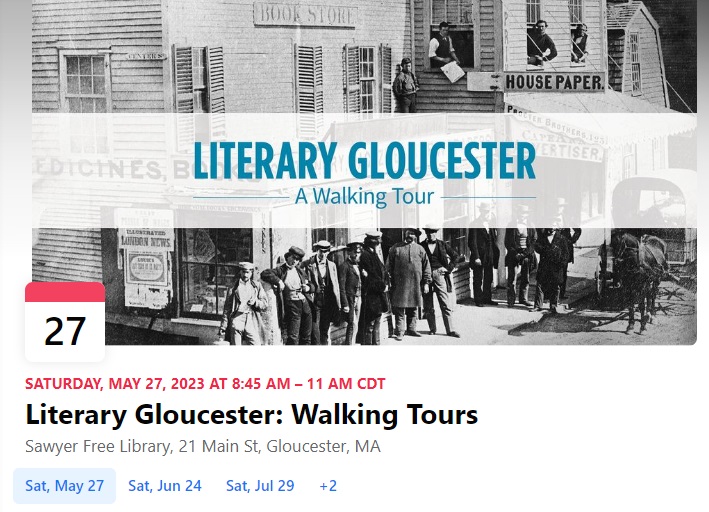
Literary Gloucester

TL;DR -- Activities continue in Gloucester in commemoration of their 400th. Coming up this weekend is a tour related to literary activity that took place in the area. Familiar names were mentioned, so we went to look at our posts. 

--

We share this as a marker of the 400th of Gloucester which has been going on this year. With the warmer weather, a serious of tours are planned. One caught our attention as some of names have been mentioned in this blog. First, a quote from the site:

Gloucester has been home to great writers since at least the early nineteenth century when Judith Sargent Murray penned her feminist poems. T.S. Eliot, Nobel Prize winner, spent nearly every summer of his boyhood in Gloucester and themes of the sea often turn up in his poetry. Charles Olson and Vincent Ferrini maintained a poetic dialogue in the 20th century on just what it meant to be a good citizen. Add to these the authors who blew into Gloucester to write one work, like Rudyard Kipling and his “Captains Courageous,” Henry Wordsworth Longfellow with “The Wreck of the Hesperus,” or even genre horror author H.P. Lovecraft with “The Shadow over Innsmouth.”


The first name that comes to fore is Charles Olson about whom we wrote in 2014 and whom we mentioned a few times after that. T. S. Eliot had been mentioned as a friend of Ezra Pound. Then, we ran into H. P. Lovecraft as a possible subject late last year. H. W. Longfellow had been mentioned in the context of the start of The Atlantic. Too, he is related to Benjamin Wadsworth, former Head of Harvard. 

We will look further into the matter, starting with getting acquainted with the work of the Gloucester Writers Center

---

Note: See the post "In summary" with regard to pending changes in the stories of Thomas Gardner and Margaret Frye and their origins. 

Remarks: Modified: 05/23/2023

05/23/2023 -- 


Thursday, August 25, 2022

Essex County, then and now

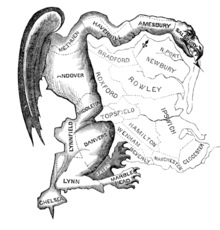
TL;DR -- Little Essex gives unending reason for research. It was used for the purpose of discussing the gerry-mander phenomenon. This post looks at views of the county in terms of maps of its internal boundaries. There was a lot of shuffling in place, with lots of the changes happening early. We will be looking at that further. 

---

We have had a few posts about the subject, Essex County; two of the posts mentioned the Essex National Heritage Area. The latter has been sponsoring events related to the upcoming 400th, such as a photography contest which resulted in tremendous photos of the little county that nestles in the northeast part of Massachusetts. 

Expect that we will always include Essex County in our work as Thomas and Margaret started their American lives in Gloucester which celebrates its 400th next  year. So, there will no ending to tales of the county even when we look at the western part of the U.S. in all of its grandeur. Our work has shown us the long reach of Essex County, Massachusetts, and New England. 

Of late, we relooked, in a post, at the Gerrymanding theme which comes and goes from time to time, usually around election events. We had seen the graphic before and enjoyed knowing more about the subject. 

Today's theme is just that. Let's look at a graphic from FB. 

 For more detail on the map, see the FB images: then (1692) and now. When we were first researching the topic of Thomas Gardner (Salem Planter), we noted that the cities/towns of Essex County cover the whole thing. Out west? Many places have huge counties with cities/town sparsely around and about. So, one finds many lonely places (long roads to nowhere, some say). But, even back east, one can find the unpopulated areas. 

Back in the day, people went to the wilderness to pioneer. We have lots of examples of that, as western movement was there from the beginning: let's look at Virginia. Up north, we had Ipswich Canada fairly early. BTW, the theme of America's Lost Generation will be considered more thoroughly. It's related to the frontier and is seriously misunderstood. 

Now, back to Essex county. Notice how almost all of the larger areas were split. Salem grew into Peabody, Danvers, and Middleton. Lynn split into three. Ipswich, Andover, and Newbury were trimmed. Only Gloucester remained somewhat intact, though it lost Rockport. 

Salem suffered more loss in this sense? Not really, as the place still shines in the American imagination. Too, That was the 2nd place for Thomas and Margaret. So, many more things to look at and consider are there, awaiting attention. 

Some of the changes happened early enough that the resulting entity can celebrate their 400th no long after others. Some changes were done much later. Lots to look at.  

Remarks: Modified: 08/27/2022

08/26/2022 -- We need to mention the 400ths that are coming up, some of these have already started, such as Weymouth (Norfolk County) this year as the first one post Plymouth's celebration. Gloucester's starts in January of 2023. 

08/27/2022 -- Put link to the Lost Generation post related to the frontier. 


Thursday, March 9, 2023

Margaret, equal partner

TL;DR -- 100 years ago, Margaret got some attention. Then, modern research threw her out. We got her back. Now, we'll make her presence ubiquitous (normally used for computing, of late). Too, the women of Cape Ann will get attention this month to establish a basis for future work. The order goes, Cape Ann --> Essex County --> Massachusetts --> New England, and then a long reach across the U.S. over time and a huge interior. All having been noted here will be further explored. 

---

As time goes by, so too do the Awareness Months. March is Womens History Month. So, this month, we are continuing that theme as we started last year by bringing women into the discussion. We will be looking at another mathematician later, as we did last year with Emmy Noether. Too, we will be adding a post about a Native American tribe that Yankees going west encountered. 

Today, we think that it's time to bring Margaret some attention. Hence, we have changed our header at both sites (traditional, portal) to read as this image says. 


It notes that the Society is "For ... Thomas Gardner (implied &) Margaret Fryer ... Planters (Cape Ann, Salem)" as both were instrumental in getting the thing done. We're here. Also, we will be looking deeply at the history of Cape Ann and its families (many modern sites with photos of paintings done in the area of Gloucester will be linked below - coming soon).  

Too, after looking at Gloucester's 400th commemoration activities this week, we started to research possible topics to represent what the Society is about. And, per usual, Roger Conant's theme came up which was the focus 100 years ago. He is mentioned in a huge plaque plus some smaller ones in the Gloucester area. Too, he is in lots and lots of write ups as the first name of the effort. There was the theme of Beverly Planters as an example.

That is, in terms of history, we pinpoint a few to carry forward the message. But, some, like Rev. Hubbard, actually talked to Thomas Gardner and mentioned him and John Tylly. Lots of the pruning was due to technology and other limits. 

So, our theme being technology, we have to think about how we can tame the beast for the future where a sustainable mode is left for the progeny. Can we do it? Yes. But, pondering all of the possible stories, we settled on featuring Margaret, mother of the children. BTW, there is no issue with Conant taking the heat. That let's us do our own truth assessment using means outside of the normal. 

After all, Roger is on Ann's ancestors' list. Too, Seeth married a son of Roger and had a child. He married a daughter of Richard More, that puzzle of the Mayflower mindset. Other stories abound some of which we have covered in posts, like James Bryant Conant of Harvard. 

But, back to Margaret, she had another wife on board with her. Roger was here, single. Thomas Gardner and John Balch brought their families. Margaret, the mother of nine children (start with Thomas and follow the links), eight of whom had progeny. Sarah (Gardner) Balch's mother-in-law came with Margaret on the same ship in 1624. 

We are researching progeny of each child, for Sarah:
  • Benjamin Balch (c. 1730s) – first Chaplain, Continental Navy; William Balch (c. 1770s) – first Chaplain, U.S. Navy. His father was first chaplain of the Continental Navy; his grandfather had been a chaplain in the Royal Navy; Adolphus Greely (c. 1840s) – American Polar explorer, recipient of the Medal of Honor; John Henry Balch (c. 1890s) – United States Navy, World War I, Medal of Honor, Lieutenant, World War II. 
Seeth (Gardner) Grafton married (first) Joshua Conant, son of Roger Conant. Their sister, Miriam (Gardner) Hill married twice. One of her progeny was the namesake of the Haskell Indian Nations University in Lawrence, KS about which we have written a lot. 

There were later arrivals in time before Endicott came over. Some of these families went over with Salem. We'll be looking more thoroughly of pre-and-post-Massey's Cove in more ways than merely noting that Cape Ann was close to paradise or the Glory of Cape Ann

Remarks: Modified: 03/13/2023

03/13/2023 -- See "New not old planter" post with regard to research findings. Thomas and Margaret have children registered in England until 1633. 


Friday, August 26, 2022

Essex County timeline

TL;DR -- Starting with the Plymouth colony (2020), there will be celebrations until 2073 for settlements across Massachusetts. Weymouth followed that this year (2022); Gloucester will be next (2023) with a special focus since that was the location of the Dorchester attempt. Then, we will have Salem (2026) and more. Those last two are of Essex County; hence, we will use this focus to explore more closely the site of the start of the U.S. as this effort was a lead in to the Massachusetts Bay Colony which then formed the core of New England (arguable assertion, of course). Let's put it this way, lots of the other colonies were the result of friction with the Massachusetts way, even to the extent of what is now Maine being under the thumb of Boston. 

---

We posted last time about the Essex National Heritage Order and their Facebook page which shows two maps of Essex County, 1692 and now. This got us to thinking of the 400ths that are coming up. That 400ths post shows a timeline for Massachusetts (from Wikipedia) which covers all of the settlement's towns prior to 1673. We mentioned that Weymouth (Norfolk County) had their look back this year, 2022. Next up is Gloucester (Essex County) which has picked 1623 (some argue 1624) with respect to the arrival of Thomas Gardner's crew. The arrival particulars are still being researched as we continue to study information as it becomes available with digitization efforts. 

The 400ths list is fairly long, so this post pulls out Essex County locations so that we can track events specific to the County. This list is in process and will continue after the 1673 cutoff of the Wikipedia listing. 

That list indicates that there could be sixteen celebrations from next year until thirty years hence. Some will be in the same year, such as Lynn, Saugus, Manchester-by-the-Sea, and Marblehead in 1629. There were latter starts of towns which split from those on the list. We will look at those, too. 

We are talking the context of early New England, in particular, the Cape Ann Settlement (Wikipedia) related to the establishment of the Massachusetts Bay Colony which was the Dorchester Company venture lead by Thomas Gardner. 

 As this graphic shows, there were settlements prior to 1640 along the east coast. The English colonies are colored. Other colonies were of Swedish, France, and Dutch origins. Those of Spain are south of this area and not shown.  

Remarks: Modified: 08/26/2022

08/26/2022 -- We will compare New England north with the south, in several ways. Expect some look at population counts and such through these first few decades. The focus for this is the inception of the effort with discussion of pros and cons, successes and failures. Too, we need to bring in what was going on back in England and Europe. Then, expect a whole different look when DAR/SAR kick in for their 250th events in 2026. You know, before that, we'll have 2025 and Henry III of England's support of the Magna Carta. It all goes together with respect to talking intelligently about the American dream. 

Sunday, July 14, 2024

Why is 2024 quiet?

TL;DR -- 2023 saw Gloucester, MA celebrate its founding in terms of arrival of a crew from England. 2024 continues that activity, somewhat. 

--

We have had several posts on Gloucester, MA who did their 400th last year. The Cape Ann crew arrived in 1623, overwintered, and others showed up in 1624. 

So, the modern Gloucester continues their celebration into the 2nd year. What happened to the TGS, Inc. involvement? We support their lookback. Dr. Frank and Ann have ancestors who were with the original crew. Two that come to mind are Conant and Woodbury. There are other families. 

What of Thomas Gardner? In 2018, there was an article that we commented at: The Settlement of Cape Ann: What is the Real Story?

300th celebration of the
Cape Ann arrival

Recently, we commented again. Here is the content of our comment: 
So, we have research to do. And, we are reconstructing our sites and blogs to fit the story. 

With respect to Thomas and Margaret, we will be looking for evidence that he came over here alone, at least twice, before he came over with Margaret and the children except Seeth who was born here. 

In the meantime, watch WikiTree for commentary and research results as well as our legacy site. 

Now, Chelsea, MA has its 400th this year. We will look at that shortly since the date is set for September 21. There have been activities so far this year that we can catch up on. 

Also, there are other towns to celebrate over several years: Quincy (2025); Salem (2026)

400ths for Massachusetts 

Remarks: Modified: 07/14/2024

07/14/2024 -- Aside: the Salem History for the 400th does not mention Gardner. The 300th had a focus on the old planters who were not of the group associated with the Beverly land grant. The 200th would have been after the Revolution and 1812 Conflict and probably muted. The 100th? Worth looking into. And so, for the 500th, will we have something to add? As in, look to fill in some of the missing pieces. 


Wednesday, August 11, 2021

Context, New England

TL;DR -- 2020 was for Plymouth; 2023/4 was for Cape Ann (Salem). For the latter, Gloucester 400 became the focus which chose 2023. Before that, Weymouth (Wessagusset Colony) will come into sight as their time will be 2022. After that, lots and lots of towns will celebrating. Starting with Weymouth, we will highlight the area and its people with the intent of lifting personal tales into the public awareness from the long histories of families here from the beginning. 

--

Earlier, we looked at the 400th planning for Gloucester. That is the Cape Ann area which is part of Essex county. There will be a lot of attention on that county as we look at the decade of entries. We had a post that showed a graphic (early post, Jan 9, 2011) which can be used to remember the towns of Essex county. 

Essex County

The year for Gloucester was 2023. We knew that there was another which turns out to be Weymouth which is in Norfolk County and has 2022 as its year. We will be looking further at Weymouth which is 11 months away from their celebration, as Wessagusset Colony which had been a commercial venture. 

For now, we wanted to start to relook at New England, as a whole, continuing the theme of this post (Inflow and then ebb). By 1630, when Winthrop arrived, the inflow was ready to, and did, increase. After about a decade, there was a tightening of the inflow. That cut the dynamics and reduced the marrying pool for several generations. 

Of note will the the 250th related to SAR/DAR which was handled by the sixth generation


Remarks: Modified: 08/14/2021

08/11/2021 --


Thursday, December 8, 2022

1623 to 2023

TL;DR -- It has been twelve years since we began our effort. The 400th is now showing on the horizon. It's time to stop, reassess, and prepare for the future. Definitely, we can compare what we know and how versus the comparable periods in the past. At the same time, the 500th and its requirements can be considered. As, a 100-years focus for a project has come forth as necessary for us to do technology correctly. That is one focus that we adopted. 

---   

In Massachusetts, Gloucester is starting their 400th in a mere 22 days. Can you believe it? Here is a link to the stories that they have been collecting at their site (www.gloucesterma400.org). 

When we started this work a decade ago, we had a lot to learn which entailed reading, on-line, in libraries, general books and articles, plus visiting places to get acquainted. Along the line, we have posted here plus put out the Gardner's Beacon and The Gardner Annals. And, we have corresponded with lots of people. We have two websites and several blogs. We wrote on existing topics (Charles Olson, Worcester born and of Gloucester by choice) and ventured into other areas, such as technology

Back then, our timeline started with 1624 as that is what Dr. Frank used in his books following work being done in England. Since then, there has been other work done that added more flavor. A crew stayed over for the winter of 1623/24 with an arrival the next spring of another group of ships (one of which was the Zouch Phenix). Thomas Gardner is mentioned as being on a passenger list, however there are arguments that claim no such list existed. Margaret Gardner was noted for not being the mother of the children mentioned by Dr. Frank. That was clarified further. 

We have more tools now, such as WikiTree's support for genealogy. But, we saw lots of other work and must gather these to create a view of the knowns as of this time, the 400th. We can remind ourselves that the 200th was coincident with the start of the new country, U.S. In that regard, we have been setting up means to know how New England's influence has evolved over the whole period since the colony started and from the beginning of the country that we know. That involves knowing more about the interior and its history. 

But, as we came through the years, things stood out so as to allow us to categorize. We will get into that further. But, let's mention some that will have continuing attention with a little commentary. 

  • What we know -- We wrote on this, first, in 2012. It precipitated the creation of a FAQ.  We will continue that effort and keep this collection up to date. 
  • What's new - This was an early effort and has been through several changes. One aspect that will be continued is the Recent finds overview. 
  • Gardner's Beacon - We started with a PDF and a web page and have started to convert over to a database driven by one of the known platforms while keeping control via our own rented virtual server. The Gardner Annals has incorporated issues of Gardner's Beacon in a printed format. But, other approaches are being explored as we look for a good way to go toward the future. In any case, we will balance various media yet keep the printed variety present for several reason, such as support for research and its necessity for handling provenance. 
  • Long reach of New England - This entails keeping aware of the many ways that life and changed over the periods since Cape Ann and the later Revolution. Not only must we consider the vast interior and its lure, but the scope is international as well. 
  • But, Cape Ann and specifics - From details of Rev. John White to the families and their descendants (John Goff), there will be research to be done. Our interest runs from providing funding to coordinating presentation and analysis of results. 
  • The Massachusetts Magazine -- Dr. Frank and friends published this periodical for over a decade which was to be the official voice of the Old Planters Society. Here are a few links to posts related to the Old Planters: Old Planters, Beverly (2011); Old Planters, Massachusetts (2012); "Old" in New England (2021). 
Needless to say, for the 300th, there was a lot of effort put into genealogical research and publication. As said, the 200th was overshadowed by concerns for getting the U.S. going properly. The 400th will be about history and bringing information into a better mode for continued work down the pike, which implies 100 years plus (we will cover this under technology, in contexts such as discussing content versus configuration). 

We are using 1624 as our date while being cognizant of the overwintering party. But, we have other commemorations that will ensue, such as the arrival of Roger Conant (1625) and the movement to Naumkeag/Salem (1626) with parallel efforts applied to the other locations where collateral families were involved early on (say, Ipswich).  

Remarks: Modified: 12/20/2022

12/20/2022 -- Gloucester is preparing for the kickoff of 2023. 

Theirs is the first commemoration in Essex County, MA. Which is our original focus, like this: Cape Ann (Glouceser), Salem, Essex County, Massachusetts, New England. 


Friday, November 24, 2023

Gloucester, 2nd year

TL;DR -- Gloucester did their 2023 lookback. Now, we're heading toward 2024. We have more information and will be taking a re-look at research. Were there two Thomas Gardners? Some have suggested this, over the years. But, that notion never shuffled up in attention. This and other questions are on the table for Gardner Research. 

---

Of course, we know that there was a party that over-wintered in the winter of 1623/4. Then, there were parties who came over in 1624. Plus, there would have been regular traffic from here to there. This year, Gloucester 400 looked at the original arrival. Except, it was not as there had been regular fishing expeditions sent here for several years before that. 

This year, fishing was a large focus, especially as it pertains to generations over the years since 1623. We expect that this will continue with the second year, as the 1624 party is recognized with less hoopla as is expected after the exhilaration of the the first year. In other words, now, let's get down to business. For one thing, we will be scrutinizing our posts (this blog) and editing/'updating with the new information. As well, as research continues, we will point to the work of others

Looking forward, by 1626, the failure of the effort was known. By then we will be looking at Roger Conant's move over to Naumkeak with part of his crew where he overwinterd at Massey's Cove. This was when the first controversies about Thomas Gardner cropped up, according to our records. He was not on the list of Roger Conant's for the old planters which we called Old Planters, Beverly.  

On the other hand, we did a recap of what we knew (based upon twelve years of browsing the material with respect to Thomas Gardner) in December 2022. We mentioned our FAQ and the work related to "whence" which was still open. We delayed digging further until March of this year when we had decided that Thomas' wife (Margaret, equal partnerMargaret (Fryer) Gardner) was to be the focus. 

Why the delay? Our initial thrust in the year was historic (see January 2023). Then, we found out about ChatGPT which had been released by OpenAI in Nov of 2022 (our first post on the subject was 2 Feb 2023). While we were getting familiar with the new AI and discussing issues, Bob Dunlap who is a Thomas and Margaret descendant, was wading through scores of images that were the digitization of the records of Sherborne, Dorset, UK. In doing this work, he found interesting information. We summarized this in a post: New not old planter. In summary, he found records about Thomas and Margaret plus all of their children, except for Seeth who was born in Salem, MA in 1636. 

After looking at the material, we proposed this: Old, and new, planter. We have many reasons for this point of view. Rev. Hubbard was the source for Thomas Gardner being involved with the Cape Ann venture. His reference does not suggest that it was not the Thomas extant in Salem when Hubbard was doing his work. Too, Thomas could have come over a couple of times. One of these would have been in 1624. In the records, there are gaps between children that would have allowed Thomas to have been away. But, the issue is open. 

Margaret, and the children at the time, would not have come over. Or, "may not" as we have to dig into this. In the meantime, we will report the determination of the Great Migration project at WikiTree. They pulled out another node and created two "Thomas Gardner" records. Here are a few words from each of the profiles. 

  • Thomas Gardner (abt. 1592 - 1674) - Thomas Gardner has recently been proven to be from Sherborne, Dorset, England with the discovery of the baptism of seven of his children.[1] He was baptized on 30 October 1591 in Sherborne.[2] This fits well with his deposed age of "about 69 years" on 26 November 1661.[3][4] Anderson states that Thomas Gardner's origins are unknown, but that was of course before the discovery of the baptism of his children.[5] Anderson also equates him with the Thomas Gardner who immigrated in 1624, though this is certainly incorrect as this Thomas Gardner had children born at Sherborne continuously until 1633. ... 
  • Thomas Gardner (1600 - aft. 1625) - Thomas came to New England as part of the Dorchester Company's failed attempt to establish a fishing colony on Cape Ann. The effort was funded by the Dorchester Company of Adventurers whose chief advocate was the Rev. John White of Dorchester, England.[1] Gardner was appointed as one of the overseers of the fishing colony.[2] It is not known if Thomas Gardner was among the first 14 men who arrived in Cape Ann in the fall of 1623; it is more likely he was in the group of 32 that arrived in 1624. ...


In short, we will start a major update in 2024 of our records and posts. Many issues remain to be researched. Until those are resolved, we will assume that there was one Thomas. That he was here more than once will be looked at thoroughly. 

On the other hand, that there were two Thomas Gardners in early Salem is not a new subject (Two Thomas Gardners in Salem; Back to DNA). What happened was that technology allowed access to the records. Bob Dunlap ought to be congratulated for wading through the non-indexed material. 

Remarks: Modified: 07/14/2024

07/14/2024 -- See updated comment: Why is 2024 quiet?

Sunday, December 23, 2018

History and Cape Ann

While reviewing former posts, in the reorg effort, a post from 2011 on John Tylly got me looking at what became of him. That led to a reread of material on Cape Ann as this was the original demarcation point. Below is the beginning of a list of books in order of publication.

However, there have been articles by Mary Ellen Lepionka that caught my attention. For instance, from February of this year: The Settlement of Cape Ann: What is the Real Story? It provides a broader scope that we can learn from.

More reading to do:
The Colonial Dames have a Cape Ann Chapter that is based in California. 

We will continue our research on John Tylly, as one who needs to be remembered.

Remarks: Modified: 01/13/2019

01/13/2019 -- Left a comment at the 'Settlement' article: On Thomas and Margaret

Sunday, March 1, 2020

Families at Cape Ann

Note (03/14/2023) -- See this post: New not old planter

---

The post "Families at HSBG" looks at one of the cemeteries in Salem, MA and considers the burials in the perspective of family internments being scattered across several cemeteries. The idea is to bring these folks together into modern-media modes so that we can see the story. After a few of these studies have been done, we can discuss how to continue.

But, something comes to mind? Is there some comprehensive, coherent look at the families that were at Cape Ann? In particular, who was there early on? We have had some general looks so far: Cape Ann, Retrospective, et al. These were brief themes, dealing with specifics such as the living conditions, the house, the first year, and such.

At our portal, we have started little snippets related to this: https://www.tgsoc.org. There was one attempt at listing who was there when Roger Conant led some over to the area that became Salem (Old Planters):
  • Allen, Balch, Conant, Cushman, Gardner, Gray, Jeffrey, Knight, Lyford, Norman, Oldham, Palfrey, Patch, Pickryn, Winslow, Woodbury. 
We looked at the Old Planters Society that was started by Col. T.W. Higginson and Frank A. Gardner, MD.

But, our interest here would be families. And, we might use Endicott's arrival as the cut point, for instance.  The Old Planters Society used the time before Winthrop and the area outside of Plymouth. Besides those from Plymouth, how many families were at Cape Ann, early? It looks like Margaret was with Thomas. Frances Rose-Troup also mentioned that there were two Thomas (father and son). The elder one returned to England. How many wives came? We know that Agnes Balch came with her husband.

And the view would be other than this -- The Making of an American Thinking Class: Intellectuals and Intelligentsia. No, we are looking at the doers. Early on, my thought would have been "backbone" which is an important contributing factor to any endeavor.

This look is another iteration however with more of a focus. It seemed like a good time to relook at what's available to see what we might have missed before. We found two books that we not noticed before. Each has a little about the early time before the Naumkeag move.
Both mention Thomas Fryer (1860 -- pgs 69, 110, 203; 1892 -- pgs 26, 44, 90) who is thought to be the brother of Margaret. Of course, it has only been recently where we established good grounds for matching up Thomas and Margaret. That is, we started in 2010; we resolved the Margaret issues for ourselves in 2018 (actually 2014, but it took a while to settle in).

Besides books, there are many sites with information that needs to be considered. One example is a look at Roger Conant's contribution through street names in Beverly, MA. Then, we ran into a write up about Rev. John White who is not an uncle: John White, Patriarch of Dorchester. This post provided a good overview of the Cape Ann effort.

Again, we will be identify families and what happened. Example: John Tilly. But, too, we will summarize information for families such as that of Sarah (Gardner) Balch (February of 2011).

Remarks: Modified: 03/14/2023

03/01/2020 -- Image for the index added.

03/19/2022 -- Nice to see research on the family of John Tilly. NEHGR, Winter, 2022 has an article on John and his family by Clifford L. Stott. The title is "Rev. William Tilley of Broadwindsor, Dorset, and His Sons in New England: John, Nathaniel, and William." Identifies his child and more. 

03/04/2023 -- Thomas Gardner and Margaret Fryer and kids got here after 1630. So, not at Cape Ann. That is, the early sons. However, we can still do Cape Ann families as two of the daughters married sons of Cape Ann families, Conant and Balch. Plus, Ann as several of these families in her lineage. 

Sunday, December 25, 2022

New Hampshire

TL;DR -- ME has been in sight since the beginning. NH only has had passing reference as we studied Cape Ann in relation to 400 years. They have 2023 for their commemoration, as does Gloucester. We look at a few of the posts over the years that mentioned our scope. In our future research, we will balance the view across the local territory and further, in this context: the long reach of New England.  

--

We have had a 400th focus for a while as we watched other celebrations (Plymouth - 2020, Weymouth - 2022). Gloucester comes up in a few days. Our start was with a focus on Cape Ann and Essex County

Then we extended our view to MA and New England. Incidentally, ME was involved due to its association with MA. After looking at the long reach of New England in the interior and the west of the U.S. and around the world, we now have a U.S. focus through the 400 years where we consider details through time of the other colonies (like New Spain) as well as the events related to populating the interior (Frontier century).  

Recently, while looking at the Northwest (as seen in the time of the Revolution), we saw Rhode Island being represented out west, in the form of a Governor of the Territory of Michigan. Having looked at the family involved and tying things back to Massachusetts, we thought to fill in the gap by looking at a family that had long been in RI (see H.P. Lovecraft). We had mentioned that we needed to bring in the surrounding States, such as CT (a little later), NH (which we had already touched upon), ME (which we have covered many times) and VT (already noted in looking at western movement). We will get these posts better categorized and related as we work the 400s going forward. RI and CT do not come up on the 400th list yet, that we know of. We should have looked north, again. 

Today, we saw (on FB) that the northern neighbor whom we associate with Rev. Bachiler is on the 2023 list. That was good to find out. We will spend more time researching the Rev. and his cohorts, but he was mentioned recently in this post (see Two Houses) which was motivated by research on New Hampshire families where it was noted the Gilman family was of interest with regard to the Revolution (both sides, plus the Society of Cincinnati). Nathaniel Ladd was one of the builders. We also had looked at the Dudley family who hung out there. 

Rev. Hubbard, friend of the family, weighed in on the controversy of when did NH start. John B. Sanborn (several posts) was born in NH. Sam Webber, Head of Harvard, was born in Essex Co, MA, but his family moved up north. Lots of Ann's folks did the same. 

Hence, in a few days, we'll have another commemoration to add to the list. As well, we need to find a time line for NH similar to the one for MA. 


This was a great reminder as it expands the scope at a good time, that is, when Essex County starts its long-awaited commemorations. 

Remarks: Modified: 12/25/2022

12/25/2022 --


Tuesday, March 29, 2022

Who's on first?

 TL;DR -- So, 1st governor? That has been mentioned. Today, we find another view brought into the mix after a decade of research. We really appreciate this addition. 

--

We have several themes involved with the work of Gardner Research. One of these motivates the post. But, let's look at another one first. It has to do with the families at Cape Ann some of whom moved over to the area that became Salem. Some went back, such as John Tilley who was featured in a recent NEHGR article. A little later, of the first class at Harvard, the majority went back. Some not to return such as George Downing. With regard to Harvard, we had people coming over just to attend. 

Our interest is to find the Cape Ann families and their modern offspring. Say, like this view of the signers of one of the documents related to the Revolution (see Different Scopes). To that we would add some material about Loyalists. In one of these posts (see Two Houses), we match up the two sides, one of which was a Founder of the Society of Cincinnati.   

Okay, let's go to the other theme after listing a few posts that we have had related to Cape Ann. 

Now, the new theme? 1st Governor. Of what? Well, the role would apply to New England, of the north, principally that which got Massachusetts going. And, it dealt with families here. In fact, with regard to  Cape Ann, Gardner was thrown into the mix in a discussion amongst members of the extended collection of Winthrops, Bradfords, Endicotts, and others, such as Cabot, Conant, and Crowninshield. There is no order implied in this listing. 

With respect to research, this would involve George's offspring (early son) though the writer of their book was an offspring of Samuel. To date, we have covered a lot of material in the past decade with a stack of research still to do. 

Including, and relates to the new theme, the Dorchester CompanyFrances Rose-Troup left the results of her research. There has been some since that time. The issue of Thomas and Margaret has been settled. And, we have 400 years of data to look at. So too, supporting SAR/DAR's 250th, we have the 5th generations's revolution to look at, say, Cape Ann to Patriot. Then, we have the 200th which is of the frontier and the huge interior that was carved to pieces; the 100th would look at the continual influx of newbies plus events such as the Spanish flu

So, the theme of today? We earlier had commented at a post of the Streets of Salem blog dealing with Gloucester (Enduring Gloucester) and what went down there, and when. Per usual, our focus was on what happened here. That is due to an adage saw earlier that said that Yanks ought to deal with the stuff over here (say, yeah, Massachusetts records) and the Brits would take care of their side. As well, for a long while, the people here self-governed. We'll get more in that, with the occasional meddling of a Governor sent over say, the bickering families of Nantucket (see John's visit to New York), taxes (see John Wise's jailing), and more (blogs for all of these).  

This year, there was mention of the 'real' first governor, as in being appointed over there. The commenter (David Cuckson had written a book on the subject). He mentioned Sir Walter Erle (WikipediaWikiTree) as having the role as appointed by Rev. John White, himself, about whom we have had several posts, since one sister married a Thomas Gardner and another married into a family that came over here. 

We appreciate now getting another view established that was not given proper attention.  

Remarks: Modified: 03/25/2022

03/24/2022 --

Wednesday, April 21, 2021

400ths - Timeline

TL;DR -- 400ths, we have touched on that for a while. Last year, a major 400th was cancelled, in terms of people being involved personally. That might be the case for a bit more. However, virtual is what we need to have for a focus going forward, in terms of persistence. Persistence? Yes, even DARPA is thinking of 100-year time frames now. About time. The B52 is over 60 years old, still performing. 

--

Which one? By right, we need to include Morton and others twixt the Mayflower crowd and Cape Ann's invasion. So, let's do that. As well, after Morton and Cape Ann, we would have a series of events related to the towns/cities as they became organized. See Timeline of Settlement on Wikipedia. Starts with Weymouth (1622) goes through Ipswich (1633) and Woburn (1640) ending with Worcester (1673). Altogether, there are over 70 towns/cities. 

Timeline of Settlement
Massachusetts Bay Colony

What we would like in terms of focus? Several things. One would be a living book related to the descendants of Thomas and Margaret with information about collateral families. Too, more interaction with descendants (friends) of other Cape Ann families. 

On the other hand, the internet is a mess. The TGS can show by example. Who wants to really tackle the beast? This is imperative, as do we want the likes of Musk, Bezos, and others ruling our life via their insidious cloud which stifles, actually suffocates us, many ways? 

For Thomas and Margaret and those related to the early endeavors, we need a living book. The concept of multi-media seems quaint, but there are lots of way for us to go (including educational games). Actually, ought to go.

The main drift? Truth engineering and its requirements. Lots to do and discuss (in that order, discussion needs to be about things of substance, as in concrete - to now, lots and lots of computer stuff is pure flimflam even things mathematical). 

-- Families --

Some families have been researched. There are many ways that information has been presented. We want to have a properly filled in look at the progeny Thomas and Margaret and have started with WikiTree. But, issues of technology will always be on the table. 

Then, we need a general focus with respect to modern events as they relate to the past. One might use Amelia Earhart as an example. William Coffin Coleman is another that is pending some work. 

-- Technology --

We will recap what has been thought about so far with respect to the 400ths and other anniversaries. Too, we need to think of presence every day. And, that presence ought to be of use. Even DARPA (behind technology for decades) is thinking of systems in terms of 100 years. So will we. 

--- Our posts on 400 --

As we see with the portal to truth (https://TGSoc.org), we have a text scroll with tidbits from various TGS publications. This can become a multi-media affair which will persist and become a backbone for future presentations. 

Remarks: Modified: 03/21/2026

08/13/2021 -- Updates: Gloucester after Weymouth for the 400ths. The 250th of the sixth generation? SAR/DAR. 200ths: Michigan, Carving the land, Missouri and the west

03/21/2026 -- Added "timeline" to Title.