Showing posts sorted by date for query richard iii. Sort by relevance Show all posts

Wednesday, August 26, 2026

Announcement

TL;DR -- Our cousin, DTG, has switched to another LLM with provenance on his mind. One area of focus will be Dorset in the time before and after the Dorchester Company's effort on these shores. 

--

Announcement, at WikiTree

This is the "announcement" mentioned in WikiTree as a Comment in the Thomas Gardner (of Salem) Profile. It pertains to the two-person choice and how we will proceed in our work using modern techniques. 

David Todd Gardner, for the past two years, has been working with one of the GenAI/LLMs (we'll reveal later). We had reported on his work with the Richard III incident. Was there a Gardner involvement? The TGS blog has posts on this topic. 

DTG noted by Mar/Apr of 2025, that that LLM (using the vernacular of those heavy into "agentic AI" which I will write about, too, having spent several decades in KBS/KBE where knowledge systems were powerfully effective with precision that engineers dream about. Of course, the approach was engineering support. What happened there? Essentially, for those interested, digital engineering came forth but is now being seen as messy. Lots to discuss there.) was more than 95% not verifiable. Actually, less than 2% was okay. 

Typical. Frustrating. ... But, on discussing this result, we agreed that DTG would start over and put more emphasis on provenance. How to do that is an ongoing task to figure out. 

How does this pertain to this Profile? Well, the US gave the world this stuff; the US ought to help clean it up. And, the US of 250 years (ink on paper, folks, the turmoil went on until 1783)? It was principally New England (south - VA and north - MA) that got it started. 

Back to DTG's work. He is now using Gemini/Gemma. And, DTG reports seeing records related to a bankruptcy of the Dorchester Company that references Thomas Gardner. Well, we knew a Thomas was here. 

Now, we don't need to conjecture, yet. But, on the coming over, being brought back from here to there for that review would bring an interesting set of conditions. 

Related post in the blog: Modern techniques. Also,we will report our progress in DTG's blog as well as our own. 

A whole lot of adjustment will become known with respect to this technology. How much real reward can result from the efforts? At least, the work will be entertaining.

Remarks: Modified: 08/30/2026

08/30/2026 --  Truth Engineering, a historic view -- post to summarize and to start to bring the old back to fore for several motivations. 


Modern techniques

TL;DR - Techniques related to research will continue to changte along with technology as it progresses by whatever means drives that energy. So, with respect to "origins", we are seeing an LLM used to ferret out information from that time based upon records that were digitized. Of late, information about the children was discoverd in recently digitized records. On the other hand, there was a house associated with Thomas Gardner. A proxy for this? Of course, the Fairbanks House, oldest wood structure in the US.  

--

Some background on the "Announcement" today at the Thomas Gardner (of Salem) Profile of WikiTree. 

Back in the beginning, I puzzled about missing information. Say, as compared to some families with respect to origins. The NEHGS series (Anderson) had come out before our time. Some of the information in that series conflicted with what we saw with Dr. Frank's efforts. We had started there, as he was 1st cousin of a grandfather. 

But, we had more than those 2 books, we had the articles in The Massaschusetts Magazine (principally from Dr. Frank's sister, Lucy Marion Gardner - Lucie following Sidney, May, 2017) where she picked up the work of Sidney Perley, the great walkabout of Essex County. There was more. Having started in 2010, the internet had only a few years of Web 2.0. Older material was there. I have pointers based upon general trolling back when the "search engines" were behaving. Too, there were notes from families about the material that they had accumulated (some living in the UK, and even near to Dorset). 

Early on, we knew that there would be the 400th. We'll look at that. How would it compare to the 300th and the Pageant of Salem (6 Jun 2018)? As we went to look at that effort where people of Salem played roles from 300 years prior, we added the Label of OpEd (Opinions count?, Dec 2023) as we explained after the 2023 reveal of data from Sherborne, Dorset, UK.  

As an aside, we added "OpEd" to this post in order to associate it with the ongoing research. Okay, to the gist of the matter. We look at two items which represent a slew of potential work and information. It's a matter of work. 
  • Let's start with Gardner Family Trust (Apr 2026). In late Mar of 2025, we heard from DTG about his work with one of the GenAIs that had come on the scene in late 2022. 
    • I was not paying close attention to that crowd (and still consider the release to be premature). The 400th of Gloucester was approaching and we were considering what to do. Having finally settled on the notion of featuring Margaret (wife of Thomas Gardner and mother of the children that we know), we were working on that set of material. On 1 Feb 2023, I heard of that release from a friend and went to look (mainly focusing on ChatGpt and Bard).This is all documented. 
  • So, I knew of the AI/ML hype (biological pipedream); due to having known this stuff for decades I was amazed and appalled at the uses that people were discovering. So, mark that up for human creativity and the US as founded by those ones of Cape Ann. Anyway, DTG's work was along this line. He had found lots of information from digitized records in the UK; retrieved the scanned data, used OCR to transcribe, and then even worked translations (from Welsh, Latin, et al). It was remarkable. ... A little later, after some scrutiny, it was hard to tell the reality with most of the content being fictional. ... We discussed matters and decided for him to start over while concentrating on provenance. 
  • Of late, DTG has switched to Gemini/Gemma. As such, he has been verifying the information. He confirmed the news about the Gardner involvements at Bosworth and Richard III's demise. There has been a lot of information on the London side of the family. Too, he found Thomas of Sherborne. ... Now, keeping this brief, for now, one bit of information deals with a bankruptcy of the Dorchester Company in which Thomas Gardner is involved. That has my focus, right now. 
  • Thomas was here, at Cape Ann. Now, was Margaret and the three boys here. If so, John was born here. The family went back. Or if he came alone, she had John in the UK. His baptism was delayed until Thomas returned. We favor that the family came over. Thomas and family then came back with the children except for Seeth who was born in Salem. 
Now, technology will be the key. We are doing this right. Who knows what data will come to fore. The information of the births was a nice surprise as John, himself, said that his father had told that they came from Sherbourne. Sure enough. The response of WikiTree? The two person split is okay, for now. But, as we find out more, we'll make sure that it is published. 

A recent post looked at the Fairbanks house which is in Dedham, MA. It dates from the 1630s. The image is from the website for the Fairbanks House. 

Jonathan Fairbanks (WikiTree) came to Boston in 1633, stayed a few years, and settled in Dedham in 1636. 

Remarks: Modified: 08/30/2026

08/30/2026 --  Minor correction, will be back for more. 

Saturday, July 25, 2026

Ah, gaming as progress

TL;DR -- We picked technology. GenAI/LLM came along and offerer itself for analysis. Okay. But, let's drop to the chip level in order to set some groundrules prior to serious discussion. 

--

Gaming? That which wastes time of the youth. The lure of Hollywood. Busyness and the machinations that are to take money from your pocket. Which of these? 

We have to set the ground rules first. That will take some time. And today, we look at technology. 

We need to get a discourse going with respect to GenAI/LLM and how to handle the messes that have accumulated over the past three years. A discipline that has been ignored will get some attention. Namely, knowledge based engineering (KBE) and its high-performance computing cousin (HPC). These two need to make up in order to bring peace and order to things computational.

Our human cousin, DTG, will serve as the master due to his 50+ years of researching the topic of All things Gardner. DTG brought us clarity with respect to the dynamics of history related to King Richard III of England. Too, he has ventured along the long threads of Gardner as a name. 

But, technology first. Browse and ask us to clarify the relationship or whatever of the following:  


This is one of the progressive steps beyond what Nvidia is trying to wrought upon the earth. Notice that there are several subjects that we will be covering in more depth. "graphics" is obvious to the gaming crowd; our technology focus will concentrate on the geometric aspects of such. That is, structure is at the core of all things related to knowledge. 


How is this? To be discussed will be a patent in the context of this post. Essentially, it demonstrates modeling for filtering and smoothing data in areas requiring high precision. The above link mentions this topic too, as well as both GPUs (graphics unit) and HPC. 

The discussion will stress "jerk" and the differences being ignored by the biologist as they pursue power without proper insight. That is written thus to be a hint. 

Remarks: Modified: 07/26/2026

07/26/2026 -- Input links. 

Saturday, July 11, 2026

2,000 years of history?

TL;DR -- DTG has been releasing under Gardner Family Trust. This post announces a recent one that has a long historical view. This hypothetical work has a basis that is beyond the current influences of SciFi that are so problematic. But, we have work to do in this area. 

---

With the U.S. government buying into what I have been calling 'tAIn't, and the DoW diving in big time, can we go wrong following them? Well, we ought to be be aware. So, here is an example that I have been paying attention to. 

David Todd Gardner contacted me in the early 2010s, about the time that the body of Richard III was discovered. Briefly, people reading historical documents used modern techniques to pinpoint where the body would be if it had not been moved according to contemporary accounts. 

That's the key here? Are there records that will influence the historical view? Suppose some might have been found in Wales? 

Let me make a comment with respect to the 250th. Last year, we went to reference the papers of General Nathanael Greene which were just recently published. The first efforts (about 1/2 of the amount) were published after the 200 (1976). The research began a few decades after the Revolution was over. Slowly, people gathered documens which were mostly related to northern New England. The rest of the material related to Greene's term as General was mostly about southern New England. 

And, Greene won the war by cornering Cornwallis in 1781. The treaty was not signed until 1783. And, this guy got no notice for about 200 years? Washington was the one who put him in charge of the Southern Campaign. 

As we go through the six years of the conflict after the Delcaration celebrated lately, we will find research pulling out lots of interesting information. 

Unfortunately, the likes of Grok will add huge amounts of uncertainty, of a new type. More on that. 

So, DTG published this post under Gardner Family Trust. 


Using Grok for certain functions, DTG has pulled out and published information that had been largely stored in Wales. Grok was great at transcribing, it looks like. DTG, used OCR for the text processing. Then, having trained his system, DTG had Grok match up his material with known material. 

That is the point. What is published is generally a small set of the total information. Additionally, the profession of history, like any other, puts efforts into finding generalizations that work. Too, as this type of work progresses, algorithms come to fore, many through identification of patterns. 


But, taken too far, there is no provenance trace for the majority of this work. So, the caveat would be to consider the work as conjecture. But, pay attention as it may provide something useful. We cannot handle that type of judgment a priori. 

And, if that is not understood, we, at TGS, will go into that as necessary. There is reason that some companies are hiring philosophers. But, my counsel to them is that they are looking for good old autodidacts who have waded through all of these fields looking for the nuggets. And, finding them. 

As such, DTG's Grok work deserves some attention which we intend to provide as we go forward. For one thing, auxillary topics will be discussed. One example, the hype of recent vintage seems to have been driven by marketing or even SciFi interest. Whereas the preferred modes ought to relate to science that has sloughed along for over a century.  

Remarks: Modified: 07/04/2026

07/04/2026 --

Sunday, April 26, 2026

Gardner Family Trust

TL;DR -- This post announces the Gardner Family Trust site and provides notice of the first post which deals with Gardiner, MT which is a historic site near Yellowstone National Park which saw a lot of history that we can and will study. But, the choice of this example deals with the history of the Gardner family over more than a millenium and is a U.S. example which represents continuing work in the history the U.S. presented in a modern way through progressive means. 

---

In an earlier post this month, we wrote of our joint efforts with David T. Gardner: On Gardners, redux. We here at the TGS, Inc. are fairly new to this work. David on the other hand as been at this since his youthful days. Prior to our contact with David, we had applied this adage to our work:

Americans need to focus on their side of the pond and get their several generations of genealogy documented to be correct. In other words, let the orginis be done by those over there. For one thng they have better access to records. 

Even though we had a late start, by that time the influence of the internet was growing as the industry kept the thing going while supporting work of millions of users. One large impact was that the ISPs were digitizing documents and records. Our results of our 2014 work on the marriage of Thomas and Margaret was a result. At the same time, we had posts on the subject of Origins and What we know (see FAQ). 

Recently, we looked at an organization started after the 2nd World War by members of the FASG (Society of American Genealogist). One of their members wrote the background whose first paragraph covers some of the historic dynamics as shown in this image (left - a page from the paper; right - transcription). 


---

In that same spirit, we are supporting the efforts of David to publish his work with respect to history and the Gardners: Gardner Family Trust. As we have mentioned, we had looked at the battle of Bosworth and about the death of King Richard III. The news at the time was loaded with reports on a body being found and identified. At the time, we loosened our American focus to provide information that we thought was pertinent to our work. 

Last year, David was able to start to use one of the GenAI/LLM to assist in his work. For one thing, lots of that work is transcribing old documents into a workable shape while ensuring that the fidelity of the representation is sound which task includes fixing things as necessary and then doing OCR on the updated image of the document. 

Along that line, the TGS interest in technology comes into play. We published an overview in December of 2025: Research, using the internet and AI. David has collected a lot of material. Our focus will be to help him with his analysis of provenance and general truth of the newly digitized as well as documents from earlier work. 

There is a lot to do which we will raise the priority on. So, going back to the theme of over there and/or here, we will take the latter for a while. As David provides new posts, we will be doing a regular walkthrough and discuss the ins and outs to emphasize, for one thing, the 250th and its significance. 

This post is an introduction. We will follow with regular reporting and commentary on methods and ways to handle the new information going forward in order to leave a proper legacy for Gardners and their progeny everywhere. 
   
----

For his 1st post, David writes of Gardiner, MT through which Gardner River flows. We have had many posts on rivers including Gardner River  and the area, Yellowstone, plus. It is a beautiful area with lots of history. We are grateful to have David's contributions. 

Gardner Family Trust
Gardiner, Montana: 
Still Operating in 2026


There were several reasons for chosing this site. We are dealing in endless history, in a sense, where technology will allow us new views to hopefully fill in missing information. But, the choice of this example deals in particular with the history of the Gardner family over more than a millenium and is a U.S. example which represents continuing work in the history of the U.S. presented in a modern way through progressive means where people rise to attention. 

Note: More detail will be forthcoming as we shadow David's work with the Gardner Family Trust with documentation of provenance, method, annd tradeoffs that might have been made. 

Remarks: Modified: 04/26/2026

04/26/2026 -- 

Thursday, April 17, 2025

King Slayer's Court, redux

TL;DR -- Bosworth and Gardner came up after we had looked at a Welsh family who had purportedly been involved in the battle. We assisted getting the information published in a blog, Gardner's Beacon, and The Gardner Annals. Recently, new information is available which is potentially remarkable in both its content and in its history. In other words, King Slayer's Court has been updated. 

--

Back in the prior decade, we looked at All Things Gardner as we heard from many families and tried to make sense of all of the data. As we worked, we tried to lay down data to serve as milestones and even guideposts, eventually. 

David T. Gardner contacted us about his research on Bosworth. We helped him get organized (31 Dec 2017) for posting to his blog:

  • King Slayer's Court (Top 10 Finds) (05/10/2025 - missing URLs removed - search at King Slayer's Court) -- This site has been updated recently to catch up with information flow from research, see "Top 10 Finds To Date: April 15th 2025". The stories about Wyllyam Gardynyr have been within David's family for generations. He took advantage of the emerging technology to dive deeper. The find of Richard III"s body was a boon since it brought attention to the importance of Bosworth as well introduced data that science could help interpret. Richard III was re-interned with ceremony fitting a King. In the meantime, there have been publications about Gardiners and the Tudors. For instance, Douglas Richardson had ventured into the area. I talked to him briefly about the work with David. He was interested. ...
The emergence of what became known as GenAI/LLM occurred in November of 2022. Since then, the world has coped with the introduction and all of the ramifications that are huge. We have paid close attention and see that 2025 has created a split: believer (many are using the technology in daily business - the jury is still out (I say, expect some surprises that were predictable); sceptic (many have reactions that might not be balanced). 

---

Where we stand? Having been involved with advanced computing throughout John's career, he reminds us that the introduction of this new technology was not considered (lengthy discussion). Too, this stuff, at its basis, is emergent from buckets of bits from which we ought not expect intelligence to display itself (that discussion will continue). So, he is not sceptical so much, as cautious, given his experience plus having been trained in the culture (Greco-Roman - classical) that fostered the development of science. One thing that seems to have been introduced along with the scientific ability? Marketing and creative writing took upon themselves the abilities enabled by technology in order to introduce newer, and more powerful, techniques. We have not recovered from that. And, must for a sustainable economy, with computing and technology as important players. That is, there is no fair balance establish between the top-down view of marketing and that necessary bottom-up one of engineering/science. 

---

David reports that he found that Grok (of xAI) allowed image processing which brought up several things formerly missed. OCR is one of the capabilities. It helped determine that a "C" rather a "G" got a lot of data miscategorized. Other means, or reaons, for the material having been ignored need discussion, too. 

After opening that door, Grok was "prompted" to pursue various avenues and report then. Right now, this activity has generated a lot of output which needs to be scrutinized.

The "10 Finds" (above) is an example of some coming overviews which will allow discussion while data gathering and research run along. For us, we will review the activity to date and determine how to proceed. 

This is one type of area that we want to use an "AI" for as well as looking at the multiple layers of code involved with any computational event. These are wide-open areas of research requiring strict scrutiny. 

At the same time, as things go toward the more creative (and there are many reasons that this might be acceptable), we would wish that the GenAI/LLM (or other tool) involved in such activities be identified. Some are calling for all artificial output to be watermarked some way. 

As said, this is a totally new area. 

Remarks: Modified: 01/03/2026

05/10/2025 -- URLs disappeared; removed pointers.  

05/11/2025 -- New work starting; created a Bosworth label. 

05/27/2025 -- David T Gardner discovered that GenAI/LLM led him astray. We will let him tell the tale. Essentially, David's work over the decades has resulted in several documents that suggest more work needs to be done. But, the notions related to his theme of Gardynyr killing Richard III have some merit. That work will continue. The confabulations from technology are another matter that have our interest. 

01/03/2026 -- We will be updating the status of this work. For now, here are some posts: Welsh poems; Sir Christopher Gardiner; King Slayer's Court I; ... A new science?; ..., 

Wednesday, April 2, 2025

Bosworth through the eyes of technology

TL;DR -- Bosworth? Know about it? This is where the Tudors came to be as the Plantagenets were cut out of the game (of Thrones). Well, only the male lineage. The female portions always live on. Recent abilities allow new insights into the 22 Aug 1485 event which is a mere 125 years from the colonial start (fuzzy numbers suffice). Abilities? GenAI as a mathematical marvel? Finally, we have a chance to look at the capability with the intent to tone down the hype that is missing the point of it all. 

---

This post has two purposes. One deals with the latest rage of technology that is commonly known as AI (we will use GenAI). We have argued that the current phenomenal abilities of GenAI are not due to some critter which is "sentient" but that they represent long years of mathematical work culminating in a mode that is suitable to exercise by the circuitry and software of computing. As such, this post will provide the start of a necessary bit of discussion. The second purpose is to point to recent work that uses GenAI and that represents an opportunity to look at the good, the bad, and the ugly. 

Let's start with the announcement of genealogical/historical research results. We link to two posts (05/10/2025 - missing URLs removed - search at King Slayer's Court). 
  • 1 - Updated Press Release: A 540-Year Conspiracy Unveiled – The Lost Ledgers of Bosworth Rewrite History (Bedtime story; Lost Ledgers; Untold story) 
  • 2 - Untold Story: The Death of Richard the III (pdf), By Sir Wyllyam Gardynyr  
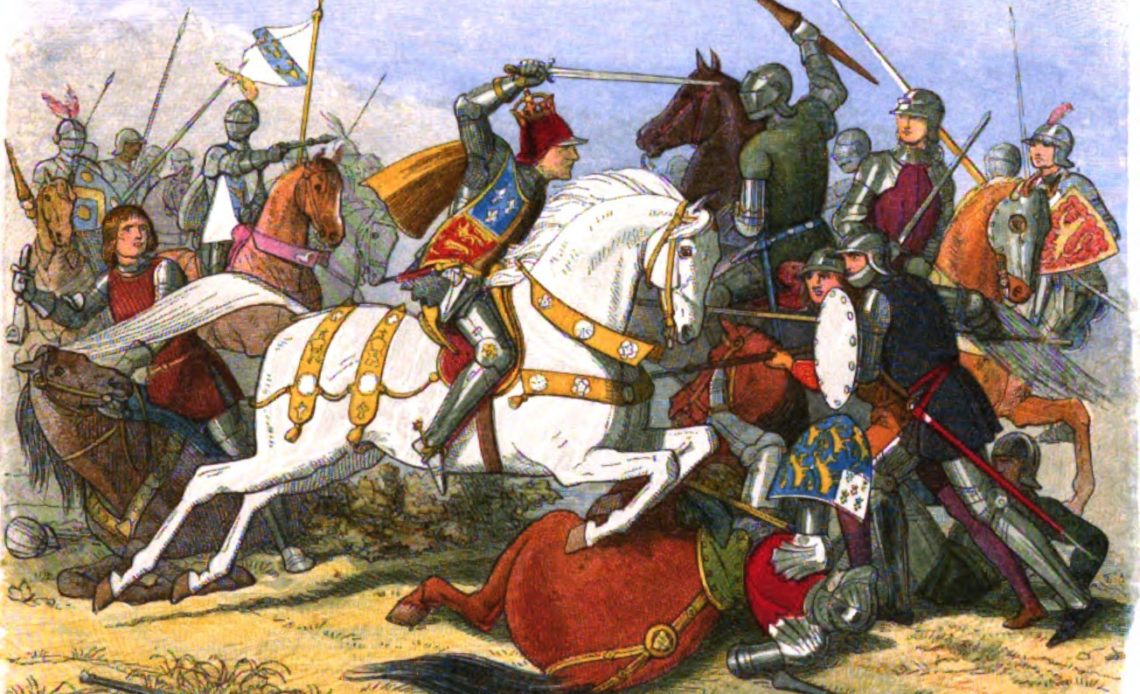
The first post looks at decades of research that started from hearing family stories. The topic deals with the Battle of Bosworth where King Richard III was killed. As a reminder, research determined the spot where his remains were placed after the Battle. In 2012, after much research with respect to location, they dug through the surface of a parking lot and found the body. Subsequent analysis indicated that the remains were of the King. 

Too, his skull had been fractured. The tales of the family involved the details of how a member (yoeman - commoner) struck the blow. That has been scoffed at over the centuries and over the decades that David T. Gardner did his queries. 

The second post takes informaton provided by GenAI based upon sources that finally were digitized and pulls them into a narrative as if written by Wyllyam Gardynyr. As we do our analysis, we will help sort the various attempts at presentation into a scheme where veracity is measured and reported. That is, as with most things, we see the tip of the iceberg. That itself will become clear with GenAI as we proceed in a mature manner. 

We first heard from David in 2014 as a comment to our post, Historical Genealogy. That post was from November of 2010 when we had first started doing research. David's comment was in 2014. We noticed and responded in 2016. At that time, we started to correspond and did this post: King Slayer's Court. We started to look at David's work and published a few of his articles. Per usual, he was bumping up against official opinions. Through digging, he kept finding information pointed to his family's tales being right. 

So, let's switch to technology. We have had lots of posts on GenAI. There many of examples of GenAI that are available. Opinions about this phenomenon of the past two years (first released to public use in November of 2022) vary with sides drawn. It has good and bad properties. On the good side, it resonates with people but is thought to lead them astray. But, the best part is that the underlying mathematics is worthy of our attention as it represents what can be done. 

Needless to say, these open issues will continue to be on the radar for several reasons that we have tried to address. But, getting back to David's work, he had made progress hearing from groups like the Richard III Society and from experts dealing with the history of Westminster. But, recently, a GenAI was tried which had digitized sources from the time period and location. 

On honing in via queries (some say, prompts), David pulled out documents that confirmed what he had been looking for. Ostensibly, we will add and explain below. 

In the meantime, David has written several articles that will be released over the few days and weeks. These deal in detail with Bosworth, but there is additional detail that deals with the Gardner family and the unknown dynamics of this Battle that was the last one of the War of the Roses. So, this is significant both for the history of England as well as for the opportunity to look closely at GenAI from a perspective that is serious. 

Genealogy is not an easy study in terms of trying to prove lineage of a person. The U.S.A. will see the 250th this year of activities related to its start. This month, in fact, was when the Battles of Lexington and Concord happened in Massachusetts between English troops and the supposed rabble rousers of the colonials. We have had many posts on that theme: Two houses, for example, looks at one family and their activity from the start (400 year vew) and during the revolution. One house is associated with the Society of Cincinnati whose members are males with direct descendany from a Revolutionary War Officer. There are many such organizations, such as the Daughters of the American Revolution. 

But, the Bosworth event was in the late 1400s which is three to four generations before the colonial effort took place. From a technology sense, this opportunity (for me) is priceless. For one, it shows technology allowing better document handling; then, there is the indexing and search facility that allows documents to be matched up; too, the prose generation abilities are nice. But, that brings up one huge focus which will be to scrutinize all of this and determine where things might have gone awry which puts an onus on creativity as this is an open field of study.  

Definitely, mathematics will be lifted to scrutiny in a manner not available before. How that will work is manifold in scope but overdue for attention. 

Let's use this post as a starting point: 22 Aug 1485. We'll end this post with an image (missing image from Chronical of England site run by Royal Central). 

Note: This activity on the part of our organization pertains to truth engineering. 

Remarks: Modified: 01/03/2026

04/04/2025 -- Press release disappeared; put in other links. 

05/10/2025 -- URLs disappeared at King Slayer's Court. Removed pointers. 

05/11/2025 -- New work starting; created a Bosworth label. 

05/27/2025 -- David T Gardner discovered that GenAI/LLM led him astray. We will let him tell the tale. Essentially, David's work over the decades has resulted in several documents that suggest more work needs to be done. But, the notions related to his theme of Gardynyr killing Richard III have some merit. That work will continue. The confabulations from technology are another matter that have our interest. 

10/29/2025 - Missing image (pointer for site not there; site gone) removed. 

01/03/2026 -- We will be updating the status of this work. For now, here are some posts: Welsh poems; Sir Christopher Gardiner; King Slayer's Court I; ... A new science?; ..., 


Monday, March 17, 2025

Finally, DNA?

TL;DR -- Since 2013, we have been studying material and collecting supporting information. Too, we have read results far and wide. This approach is an example of technology being used many times from a pure marketing thrust. We do need a balance of business and science. However, we never had this figured out in our cultures; the computer, especially with GenAI brought in, exacerbates potential problems. The strategy to manage that consists of mature processes and models. And so, let's open this can of worms and look at it regularly. 

---

In 2013, when we were newbies of three years, we started to get queries about DNA, in particular, specific questions about the Gardners of which there are many (Gardners & Gardners). This list has post that were on the topic of DNA.

03 Apr 2015   Richard III and Gardner
14 May 2016  DNA and genealogy  
31 May 2016  Admissibility
04 Jan 2017    DNA, again
07 Dec 2018   DNA in use
29 Jun 2019    Back to DNA
24 May 2020  Major players
04 Jun 2020    Back to DNA, II

Of late, we have reason to get back to this topic. The post from 14 May 2016 has a list of pointers to other blogs and sites that provide necessary information pertaining to the DNA projects, the technical concerns, the mathematical modeling, and especially the computational support that is involved with this type of analysis. 

Remarks: Modified: 03/17/2025

03/17/2025 -- 


Friday, October 1, 2021

History of Harvard

TL;DR -- Over the decade of research, we have run into Harvard lots of times. And so, we need to collect those things seen and written about in a sequence that depicts several things. One of these would be the influence of the times upon Harvard and vice versa. The 1600s got us bogged down. We will be at this for a while updating this post and creating others. 

--

This is one of our quests related to the upcoming 400th. We have some time but need to get to work early since there is a lot to do. Harvard has several histories. This one is from the view of the families here for 400 years with members related to Harvard several ways which will be further categorized as we find material. Anyone interested in helping, please contact us. 

We will start with this brief list in a temporal order. It follows, somewhat, the order in this Quora article titled: What is the coolest obscure historical fact you know? We chose the topic of Harvard having a parallel history with the U.S. 

Note: We will be editing this post continuously. As topics become too big, we'll split out other posts. The motive is to cover the whole of the history from the time of Nathaniel (kin) until the present time with a focus on people other than Harvard staff and students, most of which will be American. 

Which this guy was firstly. That is, he was here before he went back over there. 

Count Rumford
See our first look at the guy

This guy funded the secular revolution at Harvard. How did they go adrift? Of course, one has to also ask, did they? Lots to discuss. 


                                                                12. Joseph Willard, - Eliphalet Pearson, 
25. Derek Bok, 26. Neil Rudenstine, 27. Lawrence Summers, 
28. Drew Gilpin Faust, 29. Lawrence Bacow 

In its own words: History of the Presidency. Goes back to Dunster. Also, Hasty Pudding, of which many on this list were members. 

Topical items, mostly. This will be a list to motivate future research. Will add the date it was entered.

Remarks: Modified: 07/30/2025

12/06/2021 -- Add Eliphalet Pearson. Changed pointer for Eliphalet to Wikipedia. ... Add in Samuel and Joseph Willard. 

12/10/2021 -- Add Nathan Pusey who followed James Bryant Conant. 

12/11/2021 -- Add numbers, format, add Henry Dunster (kin). Add John Winthrop as acting at two different times. 

12/15/2021 -- Add link for Joshiah Quincy, III. His mother is hugely of New England pedigree. 

12/24/2021 -- The feed finally provided me with a page. Had been looking at the Hasty Pudding material. Harvard material on Rumford and his daughter. 

01/06/2022 -- We'll have to build a source list, starting with Richard Norton Smith's The Harvard Century: The Making of a University to a Nation (1998) and Elizabeth Tucker's Campus Legends: A Handbook (2005) (quote: Goat's dung and mackerel guts rival modern "fast food" legends in the degree of disgust that they inspire. From this account and others, it seems clear that America's first college students enjoyed telling stories that highlighted -- and probably exaggerated -- the most shocking details of their miserable meals at college) which can be previewed. ... Add Charles William Elliott.  

01/17/2022 -- Add Samuel Webber. There is conflicting information about him published. So, we will check that out. Too, he's of a family that is little known, comparatively. Then, his mathematical interests are appealing, for several reasons.  

01/23/2022 -- Add Charles Chauncy who followed Henry Dunster. It was in Chauncey's term that the first Native American graduated, in 1665. 

02/05/2022 -- Add Samuel Locke. We are now talking about periods related to the Revolution (250th coming up). 

02/09/2022 -- Add Leonard Hoar. He initiated the Catalogue. 

02/16/2022 -- Add Increase Mather and put in link for Samuel Locke. Add a little verbiage for the 1800s. 

03/09/2022 -- Add Drew Gilpin Faust. First woman President. Next up will be to get the narrative up to date. Started the topical list (nice to know of the Gazette). Add John Leverett.

04/05/2022 -- In preparation of bringing in another Head, changed the list to have three per line, for now. 

04/07/2022 -- Add Benjamin Wadsworth whose time was of the early transformation to modern moral declination (complexity, our forte). 

04/18/2022 -- Add Urian Oakes, the 4th Head. 

04/24/2022 -- As we involve Harvard in our look at the U.S. through time, we will bring in the English aspect via comparative views about Oxford and Cambridge. 

04/29/2022 -- Add Edward Everett. #16 of 29 or so. Not quite the middle, but close enough. 

05/02/2022 -- Add link to Harvard's report on slavery. 

05/17/2022 -- Add John Rogers. 

06/28/2022 -- Add Edward Holyoke. Corporal punishment pops up? 

07/16/2022 -- Add Samuel Langdon, D.A.R. Patriot. Irritated Harvard Tories. 

07/22/2022 -- Add Nathaniel Eaton. 

08/13/2022 -- Add post on Cornelius Conway Felton. 

08/31/2022 -- Add Jared Sparks. 

09/01/2022 -- Add James Walker. 

09/17/2022 -- Add John Winthrop (twice in an interim role). 

10/15/2022 -- Add Thomas Hill. This brings us to the 1930s, or 300 years. That's enough. Let's go back and start with the interesting folks and their times. 

10/31/2022 -- Add Derek Bok. Now, will do the two final ones (Rudenstine and Summers). We want to help make the 400ths a time of reflection and regaining of knowledge. 

07/30/2025 -- George Washington stayed at two houses related to Harvard during the Siege of Boston. 


Monday, August 23, 2021

22 Aug 1485

There was a memorial ceremony at Bosworth. Richard III died 22 Aug 1485. 

FB: Richard III Society 
Websites: Richard III Society
Richard III Society - American Branch

The American Branch is open to membership by any interested party. 

This represents what the web/cloud can be. People organizing for various reasons. But, too, supporting research will be a regular activity. 

We have had several posts on this subject. Richard III and Gardner was a 2015 summary. In a 2019 post, we touched upon some of the history of the search for the remains of Ricard III. The writer, Philippa Langley, encouraged the researcher. As a reminder, the remains had been covered by a parking lot. 

In that same post, we mentioned our problem of determining what happened to the remains of Thomas after his Burial Ground had been diverted to commercial use without due respect for the prior burials. 

The internet will continue to scale down the world; at the same time, research will boom and scale things back up. The demands for proper handling of information will grow as will the means for doing so, using technology still mainly a dream. 

Remarks: Modified: 01/03/2026

10/01/2021 -- Changed image. Former one disappeared. 

05/11/2025 -- New work starting; created a Bosworth label. 

01/03/2026 -- We will be updating the status of this work. For now, here are some posts: Welsh poems; Sir Christopher Gardiner; King Slayer's Court I; ... A new science?; ..., 

Saturday, March 6, 2021

Prior and next

TL;DR -- Opinions always follow a spectra mode. How these look in the aggregate can be a thing of beauty. There is never any nestling around a center point, for long. A recent event (one-sided deal, per usual, via the idiot tube - never had a TV until later in life). Turns out, that someone claiming a lowly mode (poor is me) actually has Ed III in the past. To some, in the U.S., that means something. But, rather than diving into that, we bop over to the Magna Carta which is of interest to more people. Again, though, this is from the English experience. And, during the 2000s, there will be many times for us to consider the document, its meaning, those who were there then, and what happened later over the centuries. 

---

So, a duality of several that we will always see. There are lots of these, such as those things that cause controversy. Such as? The US and UK conflict that seems one-sided, with an American citizen dissing HTMQ. Turns out that the one has a link back to Ed III (we wrote of him earlier). This heritage review was developed by Gary Boyd Roberts and Christopher C. Child of the NEHGS. The page has a link to a graphic which is interesting. On a further note, since the graphic is only of one of her lines, we thought to provide an ahnentafel courtesy of Famous Kin. So, there is a lot to discuss as we will be working with our kin there as the 400ths come up just as did the Plymouth folk the past few years. 

So, the prior? About seven to six years ago, there was much interest in the Magna Carta for which we had post here (John and his friends). That event came and went. HTMQ made several appearances during the festivities. Then, the thing was done but with another round in 2025 to celebrate the involvement of Henry III. For Americans, there is a special interest since it is noted that the related thinking was an influence upon the U.S. Constitution 800 years after the fact. And, there will be many more occurrences as we go through time of looking back at this document. 

So, that is the next, with 2025 being on the horizon already. What does this mean? Well, in the U.S., people can find out their family's connection by looking at gateways who are those who came over with this pedigree in their knapsack (or the equivalent). Of those, some already knew 400 years ago. Some were recently discovered to have a connection. Two examples are Mary (Gye) Maverick and Richard More. She was the wife of a Rev. on Winthrop's fleet whose name is now associated with actions, say like the one alluded to above. Richard More, as a kid, was on the Mayflower with his sisters. He married in Salem and is an in-law. There are many more examples. 

WikiTree has what it calls the Magna Carta Project. Using the gateways, they have Magna Carta Trails which go from the gateway to someone involved in the 1215 activity, as a Surety (see list on this page). One thing the team does is work the Magna Carta Base Camp. They have completed trails for many gateways of which there are several hundreds. They have a bunch that are in the process and some being prepared to be scrutinized. 

Why the interest? These are documented lines when they are done. Where else can one go to find this on-line? For Mary, this is her trail. Notice that her nodes for Bigod are 100% verified. However, therre are other trails. For Richard, his trails are in progress. Lines from both of these are in this graphic. 


So, another reason to show this. It's an example of very good work which is what we expect from Gardner Research when doing comparable types of things. One goal might be to do this for the first three to five generations starting from Thomas and Margaret. 

Remarks: Modified: 03/08/2021

03/07/2021 --  Updated Richard's line to show Bigod. 

03/08/2021 -- Put in the TL;DR, later better than never. 

Tuesday, July 21, 2020

Murrey and blue

TL;DR -- We found a new blog, today. 'new' in that it's less old than our own. We expect good things to be read at murrey and blue. Of course, this note being done later, we can fix an oversight: somehow, we forgot to mention William Marshal (without whom we would (might well) be speaking French - having lost the language of King Alfred the Great).

---

We had a question recently about motives for people coming to New England, early on. We, more or less, have liked the overview given by the author of Albion's Seed which we first read in 2016 while first exploring all of the ways that New Englanders continued to move after their arrival. We can map out the movement through time. For Virginia, one can see a map that shows the extent of its reach plus the counties defined at the time from the beginning. The expansion was west, at one point, with a limit of the Rockies and points west later on. But, we know that there were eventual constraints, with  West Virginia being one of these.

In Albion's Seed, early New England (Thomas Gardner et al) were reconnaissance. The real deal started with Winthrop who represented on pathway of which were were three more. After the Revolution (coming up 250 years ago), the expansion started in earnest. However, there were facilitating changes, such as the establishment of the Cumberland Pass through which we had people going west. There is a lot to look at. In the case of one family, we found a hanging of an abolitionist minister out in Texas before the major conflict that split the country in the mid-1800s. Three years ago, we looked at the experiences of Col. T. W. Higginson a little further north. There have been conflict and turmoils continually throughout the U.S. history and before.

On FB, recently, we saw a post from the Richard III society. We have had posts about him as it involved the long War of the Roses whose aftermath was of importance. Too, his body was found and re-interned which brought Richard III's life back to attention which got several posts here. Too, other blogs came into existence. One of these is "Murrey and blue." 'Murrey' describes a color that comes from the mulberry fruit.

The post asked: What really happened in 1385, when the Earl of Stafford’s son and heir was killed on a Yorkshire road ...? It was the first time that we read this blog which covers the subject well with illustrations. A name caught our eye: John Holand. The family was familiar for several reasons.

As an aside, it was nice to see history covered, as the whole of the themes related to this was muddied by the Game of Thrones playing loose. We can say that the media, such as blogs, that are coming to fore will allow a more full look at history in ways not possible before technology got off the ground. And this 'murreyandblue' blog gets into detail that is quite refreshing.

Back to the theme, John's father was Henry Holand of a Lancastrian family. Henry married Anne of York. His territory included Dorset which got us to look at the Domesday Book of this region. One of our goals is to keep a long view of history as we proceed with learning more about Thomas, Margaret and others of the Cape Ann venture. So, we expect that we will be looking further at this blog and its cohorts as we pursue our studies further.

There is another view of motivation: The Great Puritan Migration. I like this blog, however, I don't know that we can assume that Thomas and Margaret came here for religious reasons. We had a post dealing with Origins - motivations. One thing looked at were the beheadings associated with the War of the Roses.

Another good one is that from the New England Historical Society. There are a lot more blogs to look at.

Postnote: Back in Holand's ancestry one will find several characters from the time of King John and the MC. We have had posts on those topics. One name to bring forward beyond the interest that has been shown in literature and the arts? William Marshal.

Remarks: Modified: 07/22/2020

07/22/2020 -- Added an image and a TL;DR.

Saturday, December 28, 2019

Decade start

So, we have four days left in 2019, including today (12/28/2019). After Christmas, periodicals start to review the past year. Like the USA Today reviewing all of those lost during 2019. It's interesting. The article published in the 12/22 edition but was updated. Don Imus is included now. He was 79. Why mention him? He was a Marine (U.S.).

When a '9' year rolls around, then the decade can be reviewed. For instance, the movies of the 2010s. That then gets pushed further (our love of abstraction and its levels) to things like the best of all of the Star Wars movies (11 releases - starting in 1977 - remember where  you were? Elvis died that year - we have not seen any of these - in the theaters, perhaps, on the telly).

Our last post said that we are going to be reviewing our work over the past decade (Elizabeth (Gardner) Dabney Bridges Stevens), but no timeline was given. It will be an on-going thing. In this case, 'Elizabeth' was picked due to a recent article (NEHGS - American Ancestors) got us looking at our records. Too, it got us looking further at WikiTree where we're supporting the documentation of descendant of Thomas Gardner (and looking at origins, to boot). All of this type of non-profit work needs regular attention and energy applied.

But, let's step back. Was the first year zero? No. That whole concept came later after lots of thinking and discussion. In a technology sense, we'll get back to that (one of our goals will be supporting research - via technology as well as with other means - lots to report, over time - the theme with this little discussion). So, being more humanistic-ally oriented, we are suggesting that we don't have four days to get things done before the new year. In fact, 2021 will be the start of the decade. We'll have some things done by the 1st (we hope). The reviews of the decade will go through mid-year, at which point, we'll transition to what's next over the next decade. Then, next year, at this time, perhaps, we'll have a better framework from which to launch to the future.

Now, let's back up another way. From the beginning, we heard of Bosworth. There was a Wikipedia page that was later removed. Our first post on this was Historical genealogy. This will be a theme going forward. Other posts were: Richard III and Gardner (Richardson points to this topic in his books), King Slayer Court (tone of all things Gardner, supporting the work of David T. Gardner), and a few more.

On of these looked at the discovery of a body that is believed to be that of Richard III (A new science?). With DNA, we are taking a technical focus so as to remove that which leads to hype. Want to know a parallel? AI (which will come into our focus, too). Hence, our first post was a summary: DNA and genealogy.

So, it was interesting to run across John Ashdown-Hill's review of the Richard III study. It is dated 22 May 2017, so is recent. He was encouraged by historian, Philippa Langley, who asked him to lay out his arguments for where to look and why (Clare Priory). There is more information in the Wikipedia article. A subordinate page looks at the discussion of who of Henry Tudor's men was responsible for the fatal blow.

This example is one of many themes that relate to the history and genealogy of Thomas Gardner and his wife, Margaret Fryer. Technology has allowed a huge change in mode from the time of Dr. Gardner (1907 chart) a 110 years ago. It's anyone's guess about 100 years from now. However, just like we can refer to, and respect, his work, the current work can be of the same quality.

Too, we can change to other modes, such a historic fiction. We'll publish part of a novella, situated in Ipswich, MA in the next issue of The Gardner Annals.

Remarks: Modified: 01/05/2020

01/05/2020 -- We have reviews on a continual basis. One of the first post of last year was this one: Tenth year.

Monday, September 9, 2019

Edward III and Boris

I couldn't resist this. Earlier, I did an answer on Quora to this question:
First, note that it says 'related to' not 'descendant from.' So, that is one key. Another is that modern technology allows a little more precision in this type of search. Of course, there are more things to discuss, but let's avoid those this time. The answer allowed me to feature WikiTree using Dr. Frank A. Gardner's lineage to the extent that we know it (we extended this last fall using his notes about his mother's heritage). Later, I was able to see his father's notes in an early copy of the 1907 book (given to Stephen Wilson Gardner by Dr. Frank).

The work, notes, books and such went along with a burst of energy and activity related to genealogy and family history motivated, in part, by the 300th celebration. Now, we have the 400th look-backs either coming up or having already started, such as the Mayflower activity. Due to several factors (location, family ties, and more), the Mayflower descendants have been more scrutinized than many others. Yet, the information is not entirely complete according to one blog post. We will get back to that, take the case of Richard More who will be mentioned in a coming post. We looked at him earlier: seemingly lost, rediscovered, related to the family, etc.

In fact, Richard came up as I was going through notes to find the earliest Mayflower connections with the children of Thomas and Margaret, eight of whom had children. Richard's daughter married the son (Joshua Conant) of Thomas' daughter (Seeth). Further, Richard's sister-in-law married a Woodbury so there are all sorts of relationships to follow through on. Even with technology, those things are tedious and error prone: tired/old eyes, say, or quality of the provenance of the material being used.

Oh for a good database to start with. Well, there are several, hence the Mayflower reference. We can use those as a yardstick for comparison. There is more, as many who came over had known histories. The Mayflower look back is considering their ancestors in this regard. And, their data can be used for studies, such as mentioned in this answer:
There is a chart to a related theme of 'How long is a generation?' The data from the 'fifth generation' from the Mayflower one provides a view that only technology can give us. We need to keep that in mind.

Everyone, for the most part, has Edward III as some focal point, for Americans. Later ties are clearer and less prevalent. Earlier ties are associated with huge amounts of hits. BTW, WikiTree's efforts at their Magna Carta Gateway study are apropos. Lineage path by lineage path, the route from Gateway Ancestor to a Baron is being confirmed, using Richardson's books, for one.

What of the other side of the waters? Well, this recent blog post looks at one person of current interest: Edward to Boris, how many times? The author did the generation length study mentioned above. He references work by both Douglas Richardson (mentioned above) and Gary Roberts.

Relevance? This same type of work and technology needs to be done with Thomas, Margaret and all who relate to them. What Edward III studies allow is sufficient material that has been scrutinized for centuries. Getting away from that brings in all sorts of uncertainties that can be interesting in themselves.

BTW, Boris, of course, is the newly appointed (as of August 2019) U.K. Prime Minister Boris Johnson. He has an American Ancestry. But, we can use this work for other families, too, as Gateway Ancestors left family in the old country.

It's nice to see this type of thing where news motivates research and holes close. Then, the small folk can leverage off the work of the big-time folks ;>).

There are several hundred mappings from Boris to Ed III. The post's image looks at one. That is one aspect of the situation. Say, for lineage? One maps directly. Or with the one with the most documentation. Maybe, later, one goes back and fills in collateral information. But, other people (cousins) can leverage off of this work, if they have siblings of someone on a pedigree line.

We'll have several posts later related to this 'open issue' for Gardners.

Remarks: Modified: 10/11/2025

10/11/2025 -- Updated link to the "How many times ..." article for Boris. 


Tuesday, May 7, 2019

Which railroad?

We are in the process of finding maps close to the area of Gardner's hill. This was precipitated by seeing an early edition of Dr. Frank's 1907 book. Here are two posts to note:
  • How close is close, III? -- wherein we compare Sidney's walkabout with Google, again. 
  • Stephen Wilson Gardner -- original post with a photo of the dedication to Dr. Frank's father plus our attempt at a photo of the plate. There are other posts between these two. 
This map is really instructive. It shows the railroad that might have been seen in the 1848 view (2nd image - a decade before the Civil War). It looks like the choo-choo was either Salem & Lowell or the Essex. The Wakefield Branch is on the other side of the church. 


As an aside, Gardners left Salem. John and Richard went to Nantucket. Thomas Jr. went north. We need to look closer at that. George went to Connecticut leaving his daughter, Ruth, behind. That left Samuel and Joseph. Joseph was kill in the King Philip war. So, Samuel bore the Gardner name; he acquired most of what Thomas left in terms of real property, including Gardner Hill. 

Remarks: Modified: 05/08/2019

05/08/2019 --

Monday, January 7, 2019

Gems of Salem

Gardner Research started in 2010 from a blank slate, more or less, using the wonders of the www; in other words, trolling the waters of the internet to see what we could find. The result? Lots of stuff, some of which we have organized. And, there is a lot more work to do.

As we have seen, records get digitized and come online. Sherborne, Dorset is an example as their records allowed us access to lots more about Margaret and Thomas. See the discussions on WikiTree. Notice two things: this is a profile of Thomas sponsored by a Great Migration Project using Anderson's book (1986); Margaret is given as Thomas' spouse and mother of the children. As well are records coming on-line, people write.

A very good example, that is relevant, is salem.wickedlocal.com. Early on, we saw an article by John Goff: Looking at Salem’s beginnings: The White and Gardner family contributions. This article published in 29 Dec 2007. That was eleven years ago; we saw it four years later and noticed that it mentioned Rev. John White.

One of our first activities was to start the Thomas Gardner (planter) page on Wikipedia and have added several other pages or links. A good example might be when there were news stories about Amelia Earhart's plane. Gardner Island was mentioned; so, we had to look at that (as we have with other areas: Gardner Junction, Gardner, CO, Gardiner, OR). And, John got into that story, too.

I well remember John's first email. He congratulated us as he had run across our Wikipedia tagging (put link to Thomas Gardner's page in that of Gideon Gardner). I do not know if he wrote about Gardner Island, but we did discuss Gardner's Beacon. And, John was kind enough to contribute articles as well as provide other information to support our research (thank you, John). I thought that it might be a good task to itemize John's work, especially as it relates to Gardner studies. See the list below which is provided as a reminder to us to look further into the articles. On the list, too, are Salem articles that mention Gardner.

First, though, here are a couple of examples of overlap interest. On our Gardner Gate page (portal to truth), we just did a summary of some pre-arrival information (1 March 2013 - the 2nd most read post) pulling information from a series of Gardner's Beacon issues. Then, I just found this article by John -- Salem’s forgotten French heritage (7 June 2008) -- in which he details French activities in the area that became Salem. He mentions the discussions with the American Indian. There are several articles that we will look at further.

But, another example, is the work that we did to track down information about the owner of the barque, Bostonian, that wrecked (Oct 1850) at what became Gardiner, OR (update - 30 October 2018). The original work was done in 2014 with an article published in The Essex Genealogist. The owner was a descendant of George of Rhode Island, though, two of his wives were descendants of Thomas Gardner of Salem. But, as well as the family information, there is a whole lot to discuss about the time (More on the Gold Rush 31 Mar 2016).

Here, I see that John wrote about a response to a query (1990s) from San Francisco (NAUMKEAG NUGGETS: Salem in the California Gold Rush 5 Jun 2015) about a ship that they discovered. It had been built in Salem.

From what I have seen, hundreds of ships were abandoned as crews rushed off to pan gold. That makes the Bostonian different in that not only did it bring supplies from Boston to San Francisco (July 1849 to January 1850 voyage - only four passengers - it was loaded), it went then to New Zealand (that was interesting, verifying that part of its journey), returned to San Francisco, and wrecked in Oregon is October of 1850.

Many went to California by land. We have researched that avenue, as well, due to our interest in the western expansion. Too, New England (and Salem) had the reach of a long arm. A third way to the gold fields was boating down to Central America, trudging across, then boating back up to what is now known as the Left Coast. This went both ways (many lost their fortune in that journey).

There are other examples in an endless set of things to research. So, gems, indeed. Finally, to a partial list of John's Gardner touch. Each item is marked by date; there is no obvious order, yet.
Remarks: Modified: 08/27/2022

02/08/2019 -- Recently, we got registered with Google as non-profit and have put a search facility on the sites. They are (will be) ad-free, once I get the administrative stuff completed. On the search page, I mention our manual effort at indexing. Now, we can get more serious. I extended the above list with some hits from searching on John Goff.

02/08/2019 -- Put photo of John Goff from 5 Jun 2015 article, Naumkeag Nuggets.

09/03/2019 -- Like the way John writes (see image). He mentions Sidney which is good. Dr. Frank and his sister, Lucie, picked up Sidney's work after he stopped his Essex wanderings and writings. This is an example of John's view (seen after I had, more or less, determined the same thing).


It was in this house where Thomas and Margaret enjoyed Cape Ann's wonderful life (posts search on Cape Ann).

04/20/2021 -- John mentioned in a Melissa Berry article (with reference to Richard Davenport). On New France and New Spain. We see it more out west.  ... Added link to page of Gideon Gardner, who was namesake of Gardner Island (by either Joshua Gardner or Joshua Coffin). 

08/27/2022 -- Finally, added John to the Descendants of Richard. Just for the record, search results on John Goff  (23 posts) in this blog.