Showing posts sorted by relevance for query eaton. Sort by date Show all posts

Friday, June 23, 2017

Gardner Research citation

Until a few days ago, we thought that we were the only defenders of Nathaniel Eaton. Along that line, we, recently, did a post on Nathaniel Eaton and noted his academic accomplishments which were substantial. Yet, he is vilified via Harvard's view related to tales told. Or, so it seems to go. Too, notice that we remark, in the post, about Dr. Frank's ignoring this subject.

Then, very recently, we were contacted by David Danielson Eaton who is a descendant of Nathaniel and is member of The Eaton Families Association (EFA). This group has been at it since 1884 and so will be of interest. Too, they have a connection with descendants of Theophilus Eaton. He was the brother of Nathaniel. We got an update to Nathaniel's Wikipedia page.

As an aside, as the Gardner Research article (next) was being prepared, the Eaton group was writing about Nathaniel (newsletters for members only). We have a copy of an article published by the EFA in defense of Nathaniel (Barbara Fitzsenry The 'New' Etonian (June 2015) "A Discussion of Nathaniel Eaton's Reputation as Seen by History").

This article was not seen prior to the Gardner Research article about Dr. Frank being a descendant: TGA Vol. II, No. I "Benjamin Brown Gardner (and Nathaniel Eaton)" which was published too in TEG 35:1. In our article, we commented that Nathaniel's experience at Harvard needs another look; there have been many posts alluding to this theme.

In a coming TGA, we will reprint parts of the EFA paper. Too, though, we learned that the Gardner Research article had been referenced in an Eaton article in The American Genealogist (see image).


As an aside, many early writers noted that Anna, the daughter of Benoni who was a son of Nathaniel, died young. But, we referenced the notion of H.H. Crapo and the Knapp family that Anna married and had offspring. Too, we have this excerpt from a New Haven meeting in which Anna's information is corrected in pencil: The family of Nathaniel Eaton (at the Boston Library, available via archive.org).

No doubt, there is a lot to the stories and their provenances. But, it will be good to have Nathaniel get another hearing. Expect this theme to be continued in the near future.

One motivation. This may have been an early witch hunt. Dr. Frank's ancestors can tell us of that. As well, the whole theme applies to today (various ways). To us, it is another example of New England's long reach.

---

Note (01/06/2022 - see Remarks, this day, for the motivation for the addendum) -- We have seen two The Harvard Crimson (thecrimson.com) that were dated 2014 and 2019. We never thought to check further as there were plenty of other fish (gutted?) to fry. Too, we were confirming information about Benoni and lots of other persons of that time and place. Imagine Benoni's life, in Cambridge after his father left first, then his family (who were shipwrecked?). Whatever the tales, the phenomenal aspects are our main interest. But, to be complete, we did a search and found these tales, from the past: 23 September 1940, 5 November 1940, 10 December 1949, 25 September 1979, and 14 February 2007. There are many more links listed by Google to a specific query (the harvard crimson - eaton - pudding - dung); it would be interesting to extend this research (future grant). At least one mentioned the PhD and MD degrees, later extended. There wasn't much on Eaton's Virginia time with a supposed new family. On the other hand, the tale is there. Let's leave this, for now - see Richard Norton Smith's The Harvard Century: The Making of a University to a Nation (1998) and Elizabeth Tucker's Campus Legends: A Handbook (2005) (quote: Goat's dung and mackerel guts rival modern "fast food" legends in the degree of disgust that they inspire. From this account and others, it seems clear that America's first college students enjoyed telling stories that highlighted -- and probably exaggerated -- the most shocking details of their miserable meals at college) which can be previewed. 

Remarks: Modified: 01/06/2022

08/03/2017 -- What is the coolest obscure history fact you know? This question, on Quora, seemed a good place to present some of research findings. Nathaniel's experience is first, since the answer deals with Harvard and its roles. Not to condone bad behavior, however we need to look at this from Nathaniel's side, too. He was highly educated before coming over here. He met up with uncouth youth of the colonies. Now, here is an issue. Do you realize how Captains on ships treated their measly sailors? Not well. One might say torture. Too, slavery has been the norm for mankind for a very long time. Seems to sit well with some cultures, even today, that is, misbehavior there on the part of slavers, of several type. Incidentally, look at how the Puritans handled their misfits. Say, Quakers? The look from now to then, seemingly celebrated each year at the esteemed institution, is (has been) one-sided.

08/09/2017 -- In the School of Tyrannus (2014). Left this comment (Some of the 'apologies' (see latest updates on the Wikipedia page for Nathaniel) may have come from descendants (via Benoni who was left in Cambridge). Over the years, several have researched the matter which, to me (an outsider, and in-law, and johnny-come-lately), does need another look. See thomasgardnerofsalem for an overview.) on the page. There needs to be an engaged discourse.

08/06/2018 -- Added Benoni Eaton, son of Nathaniel Eaton and father of Anna (Eaton) Knapp to WikiTree.

09/27/2018 -- Nathaniel Eaton in the U.S. Christian Encyclopedia.

02/28/2019 -- Corrected a typo.

10/10/2021 -- The Count features in our history of Harvard (a special project dedicated to Nathaniel Eaton). 

01/06/2022 -- Refresh on Eaton (7 Nov 2019), balanced with Dunster (our series on the History of Harvard) who was next. 

Monday, September 30, 2019

Nathaniel Knapp

We want to continue with Dr. Frank's line so that we can show a filled in tree with collateral families handled as we would like to see. Earlier, we looked at his mother, Marion Wallace Woods. A related line of research is looking at Dr. Frank's two wives.

Nathaniel's daughter, Rebecca, married Simon Stacy Gardner and was an ancestor of Dr. Frank. Also, Nathaniel Knapp was a descendant of Nathaniel Eaton, first head of Harvard. Nathaniel Eaton will be the subject of a lot more study, and discussion.

In his monographs on the Siege of Boston, Dr. Frank mentioned that the officers of the Revolution got their experience fighting for the King in the French-Indian War. One battle was the Siege of Louisbourg that occurred in present day Cape Breton Islands.

Nathaniel Knapp was of Newbury and served in that battle. His diary from the time was published later. It starts on March 27, 1758. It would be interesting to match these entries with other sources. For instance, in late September and early October, as we are now, he mentions Admirals Boscawen, Wolfe, and Hardy.

The Diary goes until July 14th of the next year. On the 13th, he was on his way from Boston where they arrived on the 12th to Newbury and stopped to spend the night with his uncle, John Knapp. They got to Newbury on the 14th and had roast lamb.

Need to go back through this and do a little indexing. He mentions the Isle of Shoals and other landmarks. Some of the activities could bear a closer look.

---

The above mentions that Nathaniel spent the night with his uncle, John, so I went looking for that person. That brought up an issue.

Turns out that there is some research to do with this family. With regard to the Eaton pedigree, there was a child named Benoni Eaton Knapp, baptized in 1744, so that is a very early reference to Nathaniel Eaton who was Benoni's father. As well, the mention of Nathaniel Eaton in this book points to Anna Eaton as daughter of Benoni.

But, there are two views to look at further.
  • 1896 Book, Ould Newbury: Historical and Biographical Sketches by John James Currier -- this source says that the son of Nathaniel who was Nathaniel, too, was at Louisbourg. 
  • 1909 Book, Knapp Family in America by Arthur Mason Knapp -- Nathaniel Knapp on page 13. Has a son Nathaniel (see page 20). The Knapp book says that the elder Nathaniel was at Louisbourg. The elder Nathaniel had a brother, John. But, the elder Nathaniel also had an uncle, John, son of Isaac (page 9). 
I looked, WikiTree doesn't have this information. So, we'll look further. Unfortunately, Dr. Frank does not have much information about this family. Methinks that he didn't want to open the door to Nathaniel Eaton (who was the laughing stock of Harvard and others - at the time - we'll get back to that).

Remarks: Modified: 10/10/2021

10/10/2021 -- The Count features in our history of Harvard (a special project dedicated to Nathaniel Eaton). 

Friday, October 1, 2021

History of Harvard

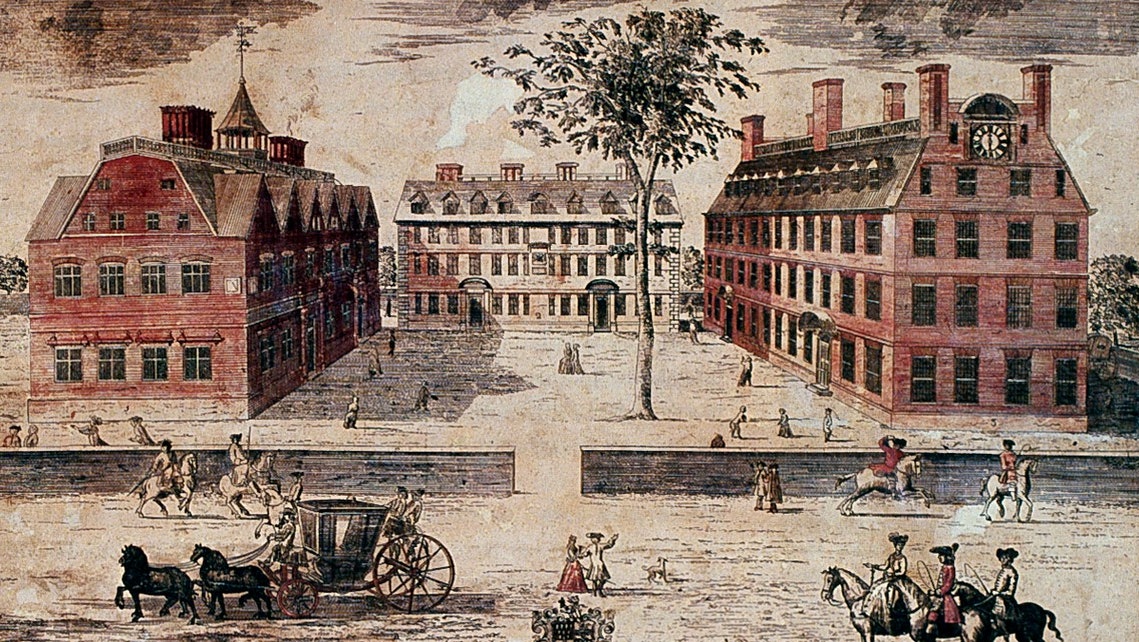
TL;DR -- Over the decade of research, we have run into Harvard lots of times. And so, we need to collect those things seen and written about in a sequence that depicts several things. One of these would be the influence of the times upon Harvard and vice versa. The 1600s got us bogged down. We will be at this for a while updating this post and creating others. 

--

This is one of our quests related to the upcoming 400th. We have some time but need to get to work early since there is a lot to do. Harvard has several histories. This one is from the view of the families here for 400 years with members related to Harvard several ways which will be further categorized as we find material. Anyone interested in helping, please contact us. 

We will start with this brief list in a temporal order. It follows, somewhat, the order in this Quora article titled: What is the coolest obscure historical fact you know? We chose the topic of Harvard having a parallel history with the U.S. 

Note: We will be editing this post continuously. As topics become too big, we'll split out other posts. The motive is to cover the whole of the history from the time of Nathaniel (kin) until the present time with a focus on people other than Harvard staff and students, most of which will be American. 

Which this guy was firstly. That is, he was here before he went back over there. 

Count Rumford
See our first look at the guy

This guy funded the secular revolution at Harvard. How did they go adrift? Of course, one has to also ask, did they? Lots to discuss. 


                                                                12. Joseph Willard, - Eliphalet Pearson, 
25. Derek Bok, 26. Neil Rudenstine, 27. Lawrence Summers, 
28. Drew Gilpin Faust, 29. Lawrence Bacow 

In its own words: History of the Presidency. Goes back to Dunster. Also, Hasty Pudding, of which many on this list were members. 

Topical items, mostly. This will be a list to motivate future research. Will add the date it was entered.

Remarks: Modified: 07/30/2025

12/06/2021 -- Add Eliphalet Pearson. Changed pointer for Eliphalet to Wikipedia. ... Add in Samuel and Joseph Willard. 

12/10/2021 -- Add Nathan Pusey who followed James Bryant Conant. 

12/11/2021 -- Add numbers, format, add Henry Dunster (kin). Add John Winthrop as acting at two different times. 

12/15/2021 -- Add link for Joshiah Quincy, III. His mother is hugely of New England pedigree. 

12/24/2021 -- The feed finally provided me with a page. Had been looking at the Hasty Pudding material. Harvard material on Rumford and his daughter. 

01/06/2022 -- We'll have to build a source list, starting with Richard Norton Smith's The Harvard Century: The Making of a University to a Nation (1998) and Elizabeth Tucker's Campus Legends: A Handbook (2005) (quote: Goat's dung and mackerel guts rival modern "fast food" legends in the degree of disgust that they inspire. From this account and others, it seems clear that America's first college students enjoyed telling stories that highlighted -- and probably exaggerated -- the most shocking details of their miserable meals at college) which can be previewed. ... Add Charles William Elliott.  

01/17/2022 -- Add Samuel Webber. There is conflicting information about him published. So, we will check that out. Too, he's of a family that is little known, comparatively. Then, his mathematical interests are appealing, for several reasons.  

01/23/2022 -- Add Charles Chauncy who followed Henry Dunster. It was in Chauncey's term that the first Native American graduated, in 1665. 

02/05/2022 -- Add Samuel Locke. We are now talking about periods related to the Revolution (250th coming up). 

02/09/2022 -- Add Leonard Hoar. He initiated the Catalogue. 

02/16/2022 -- Add Increase Mather and put in link for Samuel Locke. Add a little verbiage for the 1800s. 

03/09/2022 -- Add Drew Gilpin Faust. First woman President. Next up will be to get the narrative up to date. Started the topical list (nice to know of the Gazette). Add John Leverett.

04/05/2022 -- In preparation of bringing in another Head, changed the list to have three per line, for now. 

04/07/2022 -- Add Benjamin Wadsworth whose time was of the early transformation to modern moral declination (complexity, our forte). 

04/18/2022 -- Add Urian Oakes, the 4th Head. 

04/24/2022 -- As we involve Harvard in our look at the U.S. through time, we will bring in the English aspect via comparative views about Oxford and Cambridge. 

04/29/2022 -- Add Edward Everett. #16 of 29 or so. Not quite the middle, but close enough. 

05/02/2022 -- Add link to Harvard's report on slavery. 

05/17/2022 -- Add John Rogers. 

06/28/2022 -- Add Edward Holyoke. Corporal punishment pops up? 

07/16/2022 -- Add Samuel Langdon, D.A.R. Patriot. Irritated Harvard Tories. 

07/22/2022 -- Add Nathaniel Eaton. 

08/13/2022 -- Add post on Cornelius Conway Felton. 

08/31/2022 -- Add Jared Sparks. 

09/01/2022 -- Add James Walker. 

09/17/2022 -- Add John Winthrop (twice in an interim role). 

10/15/2022 -- Add Thomas Hill. This brings us to the 1930s, or 300 years. That's enough. Let's go back and start with the interesting folks and their times. 

10/31/2022 -- Add Derek Bok. Now, will do the two final ones (Rudenstine and Summers). We want to help make the 400ths a time of reflection and regaining of knowledge. 

07/30/2025 -- George Washington stayed at two houses related to Harvard during the Siege of Boston. 


Friday, March 31, 2017

The Hebraist

In his 1907 book, Dr. Frank filled in part of Samuel's tree down to his parent's generation; the 1933 book expanded upon the descendants of George (see comparison of persons in the 1907 and 1933 books). At each generation in his line, he briefly mentioned some of the colonial ancestors of the wives.

Here is an example showing Abel who was the great-grandson of Thomas through Samuel and Abel's son. Abel married Priscilla Stacey. Dr. Frank mentions some names, such as Rev. William Worcester.
Now, when he gets to Abel's son, Simon Stacey Gardner, he only mentions the parents of Rebecca Knapp. Now, her father, Nathaniel Knapp, was of Newbury and has a diary published related to his experience in the Second Siege of Louisburg (Nathaniel's Diary, Wikipedia). Given that Dr. Frank did a series of monographs on the Revolutionary effort in Massachusetts, one wonders why he didn't look further at Rebecca's pedigree. I certainly did, as a newcomer to all of this. Dr. Frank, himself, mentions that the 1758 events were considered a training ground, somewhat. As in, the King's troops learned what they needed to get free.

I am sure that Dr. Frank did look at this part of his history. He could have been mentioned some names, many from the Newbury area. But, he wished to ignore one. Who? On a closer look, we see Nathaniel Eaton. Nathaniel Knapp was a grandson of Benoni Eaton, son of Nathaniel. Benoni had been raised in Cambridge after his family had left. We discussed Nathaniel Eaton earlier when we filled in the ahnentafel for Dr. Frank's grandfather, Benjamin Brown Gardner (TGA Vol II, No 1 - May 2015).

So, given the time of Dr. Frank, who would have wanted to mention Nathaniel Eaton? Well, we will, now. A post (Benjamin Brown Gardner) from that time provides a little information about Nathaniel. After his Harvard ordeal, Nathaniel was in VA for a while. Then, he was at Padua and got two more degrees (MD, PhD).

And, so given that Nathaniel is yearly on the hook (one-sided affair), perhaps, we can re-look at the whole thing and tell the tale properly. It is interesting that in the Wikipedia article, there is some allusion to Nathaniel, perhaps, enduring an early witch hunt.

This time, the study will be done by a descendant. All sorts of viewpoints have been expressed over the years. Below, there are pointers to recent material provided mainly as an example. In doing a brief search, I have found that the subject has been much debated over the years. So, we will be collecting these thoughts and writings.
    Williams, G.H. (2014) - Divinings: Religion at Harvard, ... - evidently Nathaniel was on the same boat as John Harvard. Nathaniel's brother, Theophilus, and friends fled south and were founders of New Haven, CT. ... Nathaniel was no slouch (he studied under William Ames at Franeker).

    Celebrate Boston - quotes Dutch visitor to Harvard. "We found there," our Dutchman reports, "eight or ten young fellows sitting around smoking tobacco, with the smoke of which the room was so full, that you could hardly see, and the whole house smelt so strong of it, that when I was going up stairs, I said this is certainly a tavern . . . We inquired how many professors there were, and they replied not one, as there was no money to support one. We asked how many students there were. They said, at first, thirty, and then came down to twenty: I afterwards understood there were probably not ten. They could hardly speak a word of Latin, so that my comrade could not converse with them." Why mention this? Nathaniel, evidently, had some runup against youth who may have been rebellious (much discussion will arise here); a question to explore is this, was Harvard the first true experience of the ensuing sense of freedom that is only the privilege of the 1% (or less)? Of course, the Dutch visitor was much later (1680); yet, given the scene, one has to wonder (say, my query asking a comparison - John Gardner and the Merrimack River).

    Love it or loathe it: It's Harvard's birthday - mentions Eaton and the early years. Too, puts things into perspective.
Aside: Look on the Talk page of the Wikipedia article (find JMSwtlk) for recent entries, such as students complaining about having to eat the same food as did Nathaniel's Moor.

Last year's research also brought up another character that needs another look. Namely, Sir Christopher Gardner. There are conflicting viewpoints. Gardner Research wants to help set the record straight, or to as close as may be done at this late date.

Remarks: Modified: 10/10/2021

04/04/2017 -- The topic of late? Bro' culture of Silly Valley. Plus, frat house thinking. Was this an American phenomenon? If so, Harvard got it started early. Imagine. Someone with a PhD level educational experience being short-tempered with brats. Ah, do we not see that every day? But, to think, nothing new under the sun. And, America's roles are sorely in need of further analysis. BTW, I was in the U.S. Army as a 17-year-old, hence my particular characterizations of the matter. We really need a draft and some type of national service. How else can a proper understanding get a basis (that is, what is 'America' and why?)?

06/19/2017 -- There has been a lot of Eaton family research. Hopefully, we can get Nathaniel another look or two. From such, what will ensue?

09/27/2018 -- Recently, put Benoni in WikiTree, ancestor of Dr. Frank. An earlier post about a citation in TAG.

03/07/2019 -- Added an image from this post to our portal to truth.

10/10/2021 -- The Count features in our history of Harvard (a special project dedicated to Nathaniel Eaton). 


Friday, July 22, 2022

Rev Nathaniel Eaton

 TL;DR -- The year of 1636 followed Winthrop's arrival closely. There are many factors to consider with respect to those times and their interests to the problems of today. We have another go-around coming up with a new twist, technology. Going forward, new ways to know will be emerging; yet, reflection on history will be a continuing theme. We will continue to look backward and forward. 

--

Our Heads of Harvard (Wikipedia) work is progressing. It was only recently that we thought to bring in Nathaniel Eaton (Wikipedia, WikiTree). We now know sufficiently enough to discuss him and his times. Of late, Nathaniel came to fore while we looked to add Edward Holyoke to our list.  

Portrait of Nathaniel Eaton
accidentally painted on a
John Harvard Olympus Cigar label
in place of Harvard's founder
John Harvard 

We learned early in our work that Nathaniel Eaton (Benjamin Brown Gardner) needed to be on the ancestor list having been ignored for several generations. Once we made this find, we started to consider why he had been cancelled (using the modern  concept). We looked at his academic record, for instance (The Hebraist). We read lots of stories, some of which were fairly new rehashes of questionable value. But, at the time, we were in a position of trying to fill in gaps. 

Then, we realized that others had been looking at the guy, too. In fact, they referenced our digging into the details concerning the son left behind and his progeny. That citation was in The American Genealogist. This article and the referenced article are now in the database of the NEHGS with appropriate bit of index information to support future research. The below image shows the first page of the TAG article plus the page that references the article that Thomas Gardner Research, Inc. published in The Essex Genealogist. 

There has been more research done since then which we will get back to. But, all along, our thought was about the veracity of statements, especially from the youngsters. Some have studied the relationships twixt the institution and the students along Harvard's history. We will look at that, as well. Let's leave this, for now, with a quote from the prior post dealing with Holyoke. 
    Edward was also associated with changing the "intellectual climate" through several means such as having a focus on merit rather than pedigree, stressing scholarship, and removing flogging (which was a very much unanticipated theme). With regard to the last, Eaton ran into issues due to being abusive. In her article titled "The Dilemma of Corporal Punishment at Harvard College" that appeared in the History of Education Quarterly ( 1974, Cambridge University), K. C. Moore looks at the issue which is easy to "pass over" for several reasons. With respect to the Eaton incident, one might make comparison with other situations such as the U.S. Navy (and other organizations of the like). We have an eye witness account by Richard Henry Dana (Two Years Before the Mast), who had been at Harvard, of a flogging at sea almost two hundred years later. 
On another note, this series of posts has been quite instructive for several reasons. It's 400-year coverage of the U.S. allows us to relook at themes that are broad and deep. For instance, New England turned out to have a very long reach both across the interior of the country as it was developed and around the world. As the 250th looms, this viewpoint will be significant. Too, though, we are at the threshold of the remembrance of things related to the Cape Ann's venture. Hence, we can say that we are looking forward to the next few years (decades). 

When we started our research in 2010, things were hugely different from what we see now. From time to time, we see older sites still extant. Hopefully, some of those may persist. Otherwise, we can hope to learn from "wayback" approaches. 

Remarks: Modified: 07/23/2022

07/22/2022 -- 
 

Sunday, January 18, 2015

Benjamin Brown Gardner

We're working on an article about Benjamin Brown Gardner who was the grandfather of Dr. Frank A. and who was married to Lucy Foster Wilson (see image of tombstone, below). While doing the research, we have started to fill an ahnentafel (see draft).

One name that came up was Nathaniel Eaton (#84) whose story has been told many times and ways; these stories, too, lead to even many more interpretations. So, we will have to weigh in, from the position of descendants.

For now, here is a little preview.
Padua 
  • Nathaniel was an interesting character who deserves more study. He was the brother of Theophilus Eaton (Deputy Governor of the Eastland Company) and of Samuel Eaton (A.B. Harvard 1649) and a scholar. 
  • He was the “first head of Harvard College; removed from office September 1639, fled to Virginia, ... took degrees of Ph.D. and M.D. at Padua in 1647” and was arrested for debt.  
  • After the move to Virginia in 1640, he sent for his wife and kids; their ship disappeared, and Nathaniel's family never arrived.  
  • Nathaniel's son, Benoni, was left behind, when his mother left for Virginia, in Cambridge under the care of Dea. Chesholme and the Church and has descendants.   
As with many persons who are not around to argue their position, a lot has been said and written without retort or clarification. Per usual, we are gathering all that we can find. However, even in the discovery state, the discussion can proceed.

Remarks: Modified: 11/03/2021

01/21/2015 - All sorts of juxtapositions existed then which can tell us about now (nothing new under the sun?). Nathaniel's life seems a crux of several of these. His accomplishments at the University of Padua denote talent that is beyond the norm. Was his experience "the first witch hunt" as some claim? "Just what are the real tales" and "how we ought to view them?" are still open issues. ... As said, we are gathering all references to Nathaniel that we can find, in order to tell the definitive story (as much as we can, so long after the fact). ... The WSJ, last year, reviewed 'Ebony & Ivy' in which we see that Nathaniel owned a slave who served Harvard students. Too, though, note one student, later, talking of trading slaves from his dorm room. Also, an abolitionist thrown out due to his view in the 1830s? 'Bondage' is the theme, in one sense, as in, are we not all bond servants of something (note: are birds free from the chains of the skyway? - or such, thanks BD). ... One fact? The 400th will be much more interesting than the anniversary a century ago. Have you noticed all of the Magna Charta (800th, this year) mentions coming out of the woodwork? ... Speaking of which: Harvard and Slavery (event).

01/21/2015 -- Nathaniel Knapp, grandson of Benoni Eaton.

01/22/2015 -- Eaton Genealogy. ... Nice writeup on Nathaniel.

01/24/2015 -- February 2015 issue of TEG will have the article on BBG which shows his line to Nathaniel.

02/07/2015 -- In the What-is-new folder, added a mention of a preview of the upcoming TEG issue and of Henry Howland Crapo (Certain Comeoverers Vol II) who is a Nathaniel descendant.

02/27/2015 -- See TEG, Vol. 35, No. 1 (also TGA, Vol. II, No. 1 - pg 6). Discussion continues.

03/12/2015 -- Grave stone, Harmony Grove Cemetery, Dr. Frank's grandmother. See above for her sourced ahnentafel.

11/03/2021 -- Added link to post on Lucy Foster Wilson Gardner with a portrait of her. 

Monday, May 2, 2022

Legacies of Harvard

TL;DR -- Recently, President Bacow released a report by a committee that looked at Harvard's involvement with slavery. The report is about the first phase of an on-going project that associates with our interests in Harvard as an archetype, of sorts. 

--

Legacies? There are many. This post deals with a recent report which is very much apropos for further discussions about the History of Harvard (our look). But, there are many other legacies to note, many of which will deal with the U.S., in particular, while others are of a more universal flavor. 

Report by 
Harvard Radcliffe Institute
Quote: On April 26, 2022, Harvard President Larry Bacow released the Report of the Committee on Harvard & the Legacy of Slavery. 

The site's concern is the first phase of a project for which it provides a message by Bacow and identifies the Committee. There is other information available such as the following:

The list includes the "Enslaver," the "Harvard Affiliation(s)," the "Enslaved Persons," the "Documentation Dates," and any "Memorialization(s)." The first line is for "Nathanial Eaton (1609-1674)" who was "Schoolmaster (1637-1639)" and who owned "The Moor". The list has footnotes that have extensive links. 

We will follow the progress of this Initiative, as it is an example of Harvard and the history of the U.S. through time. Also, the timeline, explicitly, includes the first Head who was the first "enslaver." What we see in the table is that the next row is Increase Mather (who was involved from 1686 to 1701). That points to little to none slavery involvement in New England early on. 

That needs to be studied. Casting Eaton as a sole rogue may have been fun, but the research needs to expand due to Harvard's senior, and influential, roles, across the board. 

So, we can say that this gets Eaton listed in a different context. 

Remarks: Modified: 05/02/2022

05/02/2022 --  On the names, we can look at absences as well as presences. There was a run of Heads that can be looked at. The only 'Gardiner' was in the Perkins family. Other than that, 'Gardner' does not appear. Nice bit of research that has been sorely needed for a while. Appreciate the focus on the American Indian experience. Now, how about the Quakers? 

Sunday, November 16, 2014

Documenting research

The overall discussion is what is necessary to show lineage (this post has a link to the prior post). There are two examples provided: verbose and very terse (is not the strong, silent type an American icon?).

We are close to proposing a reasonable approach, based upon the ahnentafel format and a hyper-linked set (ah, hypercard, where art thou?) of supporting material. Granted, there will be some missing information such as one would like to know (sensitive stuff about individuals), however there are many ways to go about this (G+, FB, etc.) such that duplication of effort is not necessary.

Too, we take the security/privacy issues to heart, strongly (as would Thomas, I would be). So, that larger picture will continue to be in focus.

Aside: popular media abounds with stories of hacking, et al. Where was the media interest over the time frame of the internet's expansion/evolution(?) from the wild west frontier to its current state of disarray?

---

Earlier, I used Dr. Frank's line: grandmother and aunt. I have just completed the ahnentafel for his grandfather, Benjamin Brown Gardner which will be published soon. In his 1907 book, Dr. Frank has a summary of ancestors, and early arrivers, for each of the spouses who married into the Gardner family. Except for one, Rebecca Knapp's (spouse of Simon Stacy Gardner) heritage is strangely missing.

We have filled that in and have found it to be interesting (for one, Nathaniel Eaton - who needs to have his story retold and appreciated).

Mind you, when I say ahnentafel, I mean a fully sourced lineage. Too, thankfully for Dr. Frank, the vast majority of the material is on-line (which is to be expected as we (and society) progress).

---

Dr. Frank did seminal work. It is very much appropriate that we use him as the focal point to describe, analyze, discuss, and, hopefully (as in not be like Congress) resolve these matters.

Remarks: Modified: 02/27/2015

11/16/2014 - For the two ahnentafel charts mentioned above, we intend to have a hyperlinked version on-line. Some of the source material is freely available; others of it are not (we will provide the URL anyway as a point in time marker). Persistence is the name of the game; fluidity seems to be the major vogue; ...; structure ought not be held as inimical (not categorically) by web heads (old guy talking here) or anyone else.

11/18/2014 -- Inspired by Nantucket work.

11/25/2014 -- Will be doing a special study of Nathaniel Eaton who was a graduate of Padua University and ancestor of Dr. Frank A. Gardner and many more. One thing we will present are Harvard Crimson articles (over the years, the tone differences are interesting). ... This story needs to be told from a neutral viewpoint that presents all of the sides. Take the "rod and child" view so prevalent in Christianity and so much in the news (NFL and more). Or, the right of naval captains to flog. Not to mention that both Winthrop and Endicott and more did not abstain from the practice (Quakers and more). We have a long list to consider. Then, take Rev. Nathaniel Ward's (uncle in the long chain of lineage) son who was flogged. For theft. Note, that Nathaniel Eaton is quoted in this article about his belief in his "absolute right" to punish, ... By the way, heard anyone talking of an elected official adopting an emperor's stance, of late? ... Dr. Frank did not elevate awareness of his ancestor due to his times (and, he was of Harvard). ... Yes, the Gardner story is central to all themes, of the U.S. story and beyond. ... Related view (America, Thanksgiving, ...).

02/27/2015 -- Discussion continues.

Wednesday, March 24, 2021

Hectoring

TL;DR - Tongue in cheek? Perhaps. Academic look at something from 400 years ago had an impact of several varieties on my self. The Hector? 1637 trip. Davenport was one passenger. Another, Theophilus Eaton. Who? Bro of Nathaniel Eaton of Harvard fame (or infamy to some) about whom we will wax eloquent at some point. And, Nathaniel? In the lineage of Dr. Frank and Ann and many more. Anyway. Winthrop's observation at the time is of essence to the discussion. 

---

The recent American Ancestor (NEHGS), per usual, had timely and interesting articles. One of the articles motives this post for a number of reasons. First, the post and author are as follows: 

  • Deconstructing the Hector "Passenger List" by Dr. Andrian Brockett. 
  • See details of the research at this site:  The Hector 'Passenger List' 

The author's career had a "paleographical and historical" interest. One of his goals is maintaining his "rigorous academic approach in genealogy" which is nice to see. I have been looking for an opportunity to raise the sights of genealogists to consider more than their plodding ways. 

Actually, from where I sit, some genealogists think that their collection of papers prove an existence. Whereas, we really need to have more respect for those of the past in ways not considered. The issue is what does this mean and how do we attempt such a thing. 

Earlier, I had a post in which I referenced Ichnology (see Remarks 04/25/2014) in which I alluded to the fact that we build large models of the old and gone beasts even to the extent of postulating motion. And, from the minimal of fact. Imagination at work? Yes, same goes from mathematics and all of the science based upon it. Some might use magical (you have to listen closely to catch this as it is anathema in the academic world); myself, I would prefer creative. 

Now, after that bit of an introduction, there was the boat, Hector, that arrived in 1637. Two passengers were Rev John Davenport and Theophilus Eaton. Theophilus is kin being the brother of Nathaniel who had a run in with the Massachusetts folks. Stories remain to be told (Gardner Research citation). Actually, we have a  lot more than this to discuss with Harvard, in time. 

Too, one might mention that Winthrop only noted five as those were of his class and recognized as such by himself, albeit with some tension that bears a little attention. 

In short, bring on the academic flavor. At the same time, let's get into advanced logic and more. 

Remarks: Modified: 04/20/2021

04/20/2021 -- For more about this issue, see post on Abraham and Robert. 

Saturday, December 11, 2021

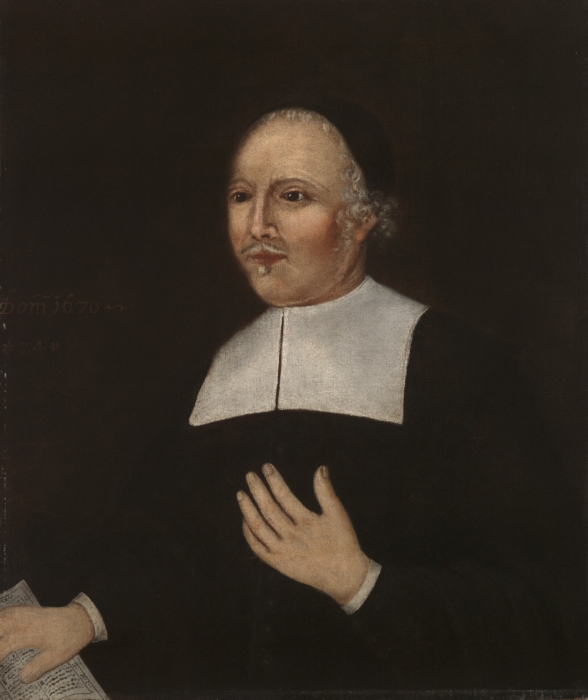
Henry Dunster

TL;DR -- Henry Dunster is the 1st Head of Harvard, coming in not long after Nathaniel Eaton's tenure was ended. Dunster had fallings out with the Puritans, as well. 

--

We have been adding Heads of Harvard to a list while taking an initial look at each with respect to time and affiliations, including family and New England. Our research started with a recent one, comparatively, and we have done a few more. But, we missed the first one and are correcting that oversight with this post. As mentioned, we mostly are using links, in our posts, to Wikipedia and WikiTree for the first pass and will be diving deeply into the term of each along with our review of U.S. history from the time of the revolution until the time that the frontiers were mostly settled. That get us from 250 years ago (plus or minus a few years) to the early part of the 20th century.  

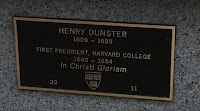
Well, our list of heads is in our post titled History of Harvard. We were adding numbers to show where there are still gaps and noticed that we ought to include #1, Henry Dunster to anchor the list. Dunster held the position from 1640 to 1654. He took over after Nathaniel Eaton found himself facing the first American cancel culture. We need to discuss that and will, at some point. 

Dunster came over in 1640 after teaching for a time. He earned his bachelor's and master's degree from Magdalene College, Cambridge. Dunster experienced some controversy in conflict with Puritan views which led to him leaving the position in 1654. 

Henry Dunster (WikiTree - Dunster-36) requires a little work on his Profile. But, that there is a lack of interest in researching seems apparent for some of these profiles (we have only looked at a small set of the total). 

We will get back to his term as we look at a few more profiles and establish a framework for our study. We started this review with Count Rumford's contribution as a key item. However, going back before the U.S. Revolution will require more concern about English culture and its influences.  

Remarks: Modified: 12/15/2021

12/15/2021 -- Added the TL;DR line.  

Monday, May 21, 2018

1907 chart

Dr. Frank took the time to fill in his ancestral chart using a approach patented by Rev. F.W. Bailey. So, we have an early 1900s analog of a printout from one of the modern apps. And, it is in his hand. I checked what he had against what I found out in my research. We agree. I just have access to more information, due to technology.

Nowadays, we can work from our desk whereas he had to travel and thumb through documents, many times. We have access to books that were being written in his time, albeit many of these are not worth much. Alas. Dr. Frank may have known several of these authors and have known their results. But, his efforts were contained to work in New England. The 1907 book dealt mainly with the family of Samuel.

Note: See "person list" for names in the 1907 book compared to those in the 1933 book (Gardner Memorial).

These are the main pages of the book that Dr. Frank filled in. Following are the ahnentafels for his Gardner grandparents. We will prepare these for his mother's side.
Cover of book
Gardner 
Woods

Again, one reason for starting with Dr. Frank was to leverage off of his work. In his 1907 book, we had the children and grandchildren for the other children of Thomas and Margaret. We really need something that pulls together the first three or four generations.

I propose using The Gardner Annals. We will be printing Volumes III and IV, soon. There is still time to offer something. An ahnentafel is easy to write.

Aside, Dr. Frank does include Anna Eaton. So, he knew. This subject will be further researched. That is, Dr. Frank and his cousins being descendant of Nathaniel Eaton. Yes, a story that needs a relook. Looks like fun.

It might be of interest to know that we intend to cover the Sir Christopher Gardner story, to boot.

Remarks: Modified: 03/14/2019

09/07/2018 -- Finally got around to filling in Dr. Frank's tree, using WikiTree. His Gardner line is fairly complete, in terms of data entry. Starting to fill in his Woods (maternal) line using Dr. Frank's handwritten notes. The focus now for this work is having nodes (profiles) in place and linked. Then, we'll add bios, etc., plus verify sources (as in, this will be the 'bible' of his lineage - we fill in sources as we go - to be extended later with further research by Gardner Research). Finding interesting stuff: Dr. Frank is a descendant of Demaris, too, the last wife of Thomas. 

03/14/2019 -- On WikiTree, added information about Dr. Frank's first wife: Caroline Louisa Read who was the daughter of John Franklin Read and Caroline Louisa Chase. Changed burial for Pauline Gardner Donnell, his daughter, to Newcastle, ME.

Wednesday, October 5, 2022

U. S. and Harvard, II

TL;DR -- We can split the group of Heads into three eras by a major event. The Revolutionary War (Declaration of Independence) ends the Colonial period. Then, we go until 1900 covering a century of frontier living with respect to the interior. From there, we stop at 2000. We have looked at some of these periods, already having spent some time roaming the interior, with the last two being restricted to virtual looks. 

--  

We had an earlier post on this subject (U.S. and Harvard, I) that was motivated by History of Harvard (ours) in the 1900s. Another interest behind the stop and look had been our experience in looking for the pedigrees of these folks, many of whom are of New England families. A few were new arrivers. 

This time, we are looking at generations using fuzzy founds, which result in three categories: Colonial, Revolutionary War to 1900, and, then, post 1900. Let's look at each of these and identify the Heads as they relate to the period.  

  • Colonial - The fifth generation was heavily involved with the war that ended this period, however the fourth provided crucial leadership. After all, they had been trained by the Crown to fight in the French-Indian affair. 
Here we start with the era of Eaton (0th) and Dunster (who was on 1st) and end with Samuel Langdon who was the 11th). The count? Eleven if Eaton is excluded. But, Samuel Willard brings it to twelve. 
  • Revolutionary War to 1900 - This period saw the U. S. Civil War which was an affair of the 8th generation. C. E. Eliot (21st) came in right after this conflict and was there until the end of the period. There were seven Heads from the turn of the century (1800 or pre-Lewis/Clark) until the Civil War. This is a period of huge adjustment. Was that later one (from the Civil war on) larger?  

With this, we have the eras of Langdon (11th) and Willard (12th - his ggp was a Head, as well) in the beginning; the twentieth century found C. E. Eliot still as the Head. Count? Eleven (see image). 
  • From 1900 to 2000 - A period of huge changes, all around. We have not touched upon this as of yet, due to privacy concerns. As in, going to 1900 excludes most of the living who are in the sets of interest (Cape Ann, Essex County, Massachusetts, New England, U. S., where this series applies to both space and time). But, we can research and protect the living (the Census waits 70 years - data from the collection of 1950 recently released; we can be a little more current). 
Here, we have a start with C. E. Eliot continuing his reign and an end Neil Rudenstine (26th). Count? Six.  

Even with the first period, we can cover a lot of area due to the presence of other colonial efforts: Spain, France, and others. The last period seemingly has no bounds as development in the U.S. continues at a pace that is astounding, especially since the influx of people never really slowed down much. In that middle period, we have dared to tread for several reasons. In terms of the theme here, we will finish up the Heads and then make sure that we have appropriate information for each about heritage and family history. Then, we will venture into the various research schemes that are pending.  

Remarks: Modified: 10/07/2022

10/07/2022 -- Aligned the image with the Revolutionary War bullet.

Friday, February 24, 2017

U.S. and us

Research continues. There is a lot to do as the scope keeps expanding. Part of this is due to just becoming aware of what was there and to the queries about things Gardner.

As well, I am looking further into Nathaniel Eaton. His experience can stand as the dart board for a whole lot of discussion; and, this bit of debate would be apropos to our times. Pending is a further look at Sir Christopher Gardner. The tales that are commonly told are both off the target and incomplete. So, we will weigh in there. Seems that there might be a relationship with Thomas. We'll see.

Mentioning Eaton. He came up since Harvard has lots of appeal and gets a lot of attention. As it ought. Why? It comes out of the New England experience. And, despite some arguments otherwise, those times of 400 years ago have meaning for us now.

And, getting to Harvard, we will be looking at one early graduate (pre-1700). He was said to be an inspiration for the Declaration of Independence. Now, the Philly crowd (my characterization) gets a lot of attention. Genius, we hear. And, the Constitution. Stands as God-given, does it not? However, those later guys relied upon work done prior to their time. I have a little better grasp of that now having looked at parallels twixt the Massachusetts (and its surrounds) and Virginia (and its surrounds) experiences. Some were in both places, such as our friend, Nathaniel.

About the inspirational guy, as said by Sibley, Calvin Coolidge, and others. Sibley said that they republished this guy's books in 1772 as debate fired up. We are talking Rev. John Wise from that interesting place called Ipswich. We will get more into that.
John's wife was the daughter of Thomas Gardner of Roxbury. So, as this chart shows, there was a merger of the two Gardner families just before the U. S. Civil War.

Chris Chester (Descendants of Alice Freeman - ancestry's support for rootsweb went) has an interesting site. He decided to document descendants of Alice. We were happy that we could add information about daughter, Mary, who was the oldest. BTW, the Hodgkins is brother of the Colonel featured by David McCullough in his look at 1776.

Now, John is also noted for being jailed during the tax turmoil in the 1680s. That is, he led the first tea party, so to speak. Dudley had these guys fined. The Governor had them jailed. Later, John sued Dudley and won; the claim: not allowing rights of habeas corpus. 

So, "all things Gardner" covers a lot of territory. 

Remarks: Modified: 10/29/2023

03/01/2019 -- Changed the image as we are building an index by images at our portal to truth. 

10/29/2023 -- Changed link from "storiesfromipswich.org" to "historicipswich.net" (for Rev. John Wise). Removed link to Chris Chester's site at rootsweb. 

Wednesday, February 9, 2022

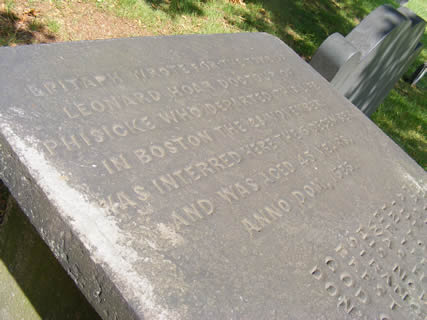
Leonard Hoar

TL;DR -- As we walk the halls of the Heads, our fashion is not random but sensitive to the current research theme. The last Head was in his role during the turmoil prior to the Revolution. This post looks at an early Head who was before the time of insanity, namely Leonard Hoar. He was the first to be a late entry. 

-- 

There are not many Heads of Harvard (Wikipedia) to cover, so this series has a limit. But, our interests are several: 

As we have gone through the names where the focus was related to the context of interest at the time, we have done posts consecutively. This will happen now where we do this post and get off onto other topics that can bear our attention. The last post was on Rev. Samuel Locke. He was in the role of Head during the turmoil leading up to the Revolution. We have written of the training ground for the upheaval. That is, the French and Indian affair afforded the colonials an opportunity to learn military manners under the auspices of the Crown against which they would rebel. 
Leonard Hoar
FindAGrave

Now, we step back and look at the earlier times and a training ground, of sorts. Leonard Hoar (Wikipedia, WikiTree) was the third Head. Or the fourth, if we count Eaton. This post will begin the presentation of the case of why Nathaniel is important to the History of the U.S. Hoar followed Chauncy and Dunster. The thing to note is that Eaton, Dunster and Hoar incurred some type of controversial reactions by those of the time. 

The image on the left is from the 2nd catalog and shows a lot of familiar names, one of which has been mentioned here with respect to the Revolution: Rev. John Wise. 

It is that theme that leads to the "training ground' statement. Not long after Hoar's death, we had the witch hunt. One colleague of Hoar's participated, namely Cotton Mather. In short, those who disliked Hoar shunned him; he had a reaction which needs further study. A little look at the controversies over the years.

Oh yes, the witch hunt? We know lots more about that now due to recent research that filled in details related to the persons involved. That type of historical perspective will continue to progress and offer us a much fuller sense of the reality. 

Leonard Hoar was a late comer, so to speak. He actually had been a student at Harvard, left the country, and came back. And, he was of noted abilities. Lots to look at as we proceed. 

Remarks: Modified: 06/28/2022

06/28/2022 -- Added link to, and image from, the FindAGrave profile of Leonard Hoar and added link toe New England Historical Society article (Harvard Student Beaten in 1674, President takes Fall). 


Tuesday, April 24, 2018

NEHGS as mentor

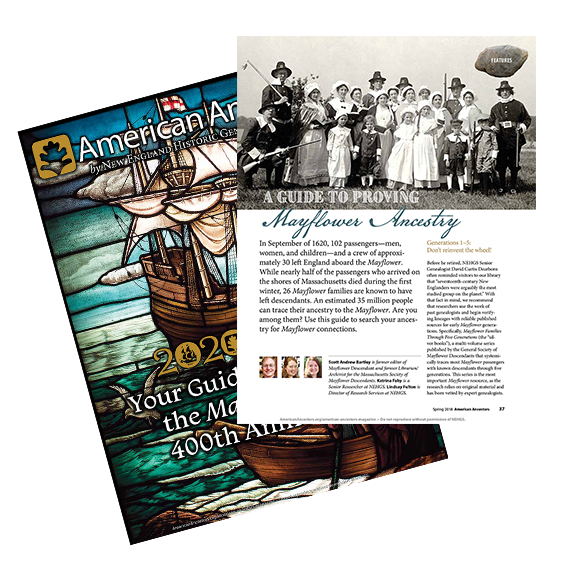
I have been reviewing the Spring 2018 issue of NEHGS' American Ancestor and was given a much needed shot in the arm. The topic deals with the upcoming celebrations of the 400th of Mayflower event which are centered around 2020. Frankly, the scope was quite good, and we can look forward to more of this over the next couple of years and beyond.

Can't wait for all of the settlements to have their party: Timeline of settlements (from Weymouth (1622) to Worcester (1673). And, after. Of course, the list is incomplete (Wikipedia requires continual editorial help).

So, why a shot in the arm? Well, I'm in my 10th year of this work which I have done independently, but I already knew research, mathematics, and computing (which gives the particular bent of my posts). Of course, I started with ancestry[.]com but was off of it soon due to a remark by a D.A.R. registrar. Never looked back. Rather than research other options, I started my own format (works for me) and have millions of items to organize. As I have worked applications (a good exercise and test) to lineage groups (including GSMD), I got the chance to hone the material. As well, I did Dr. Frank's line which I have in ahnentafel (sourced) form (his two paternal grandparents - BB Gardner and LF Wilson).

Along that line, I just looked at a genealogy chart handwritten by Dr. Frank in 1907 (thereabouts). His father's line agrees with what I documented. However, I have more. I noticed that some Mayflower people are now mentioning John Billington (see NEHGS, above). I get to bring up Nathaniel Eaton (friend of John Harvard and first head of his school). And, I have a lot of material including a paper written by a member of The Eaton Families Association. The next TGA (print of Vol III and Vol IV) will include an article on this.

Essentially, Dr. Frank did not expand this tree, publicly. I can see why given what I have read out of Harvard. But, the whole story bears significance of some turmoils now. Just as the 200th of the western expansion pre-dated the major conflict twixt the north and the south, the 400th had lots to tell us about the U.S. and what it might be about. But, just in himself, Nathaniel is interesting (holder of several degrees, including M.D. and Ph.D); his Catholic leanings may have played a large part in his treatment, especially that which might be termed propaganda.

I have done the genealogy of enough now to have covered New England and Virginia and its environs. That leads to things that we ought to be doing. We need an effort to publish the first five generations from Thomas and Margaret. I finally got a chance to look at the Silver Books. Too, we need to go back and re-look. David T. Gardner, from a Pennyslvania Gardner family, has looked at how he might relate to Thomas. See King's Slayer Court. This was the first part that was published in TGA Vol. III. This and the next part will be in the print version (before summer 2018). BTW, mentioning propaganda, David has found some interesting Tudor material (interpretation will always an issue - like the ad, what's in your wallet? - how do you see this is not something to leave totally to experts). Thomas is almost a tabla rasa from what I have seen.

Yet, there is a lot that ought to be collected and organized. That is one task; as well, weighing in with a proper view ought to be more easily done when is little negative influence (such as, Endicott hanging Mary - no last name is needed).

So, we can watch the NEGHS over the next couple of years and learn a whole lot.

Too, we can look at the particulars that Thomas and Margaret bring to bear. Has that sort of thing not waited long enough for some attention?

Remarks: Modified: 01/10/2022

12/30/2018 -- The 400ths will be one theme next year. 

01/10/2022 -- Changed the NEHGS image which disappeared. This year, it's Weymouth's turn. 

Wednesday, May 23, 2018

Review of TGA, Vol. IV, No. 1

We had our first print of the TGA, last year, when we did Volumes I and II (in black and white) with the first three Volumes of Gardner's Beacon.

We are finalizing the latest issue of The Gardner Annals which will be Volume IV, Number 1. As soon as we are done with that, we will prepare to print Volumes III and IV of the TGA.   We will do the next printing in color. Too, if there is interest, we can reprint Vols I and II in color.

As a reminder, the following is the Table of Contents for TGA, Vol III. With TGA Vol III and Vol IV, we will include issues from Volumes IV through VII of Gardner's Beacon.

In Vol. IV, we carry forward two of the articles. "Thomas Gardner and the Tudors" is an extension of "Bosworth and Gardners" which is being done by David T. Gardner of the Pennsylvania family. Then, we look at the remainder of the volumes of The Massachusetts Magazine that was published by Dr. Frank and friends from 1908 to 1918. A new subject article looks at a correction made to The Essex Genealogist which led to several articles from Gardner Research. Finally, we briefly look at current research that will be published in future issues: a continuation of the "Flyover country" work about the lonely grave of a Mayflower descendant out west (who cares? when there is partying going on back in Plymouth?), then we take a look at the founders of The Atlantic which started in Boston, of course, we look further at the Magna Carta, and take some time to refresh what is known about Nathaniel Eaton which the proviso that we will get the record filled out further (he is an ancestor of Dr. Frank).

In terms of The Massachusetts Magazine, for which we will publish the Table of Contents the remaining issues, here are some particulars to be dealt with.
  • Dr. Frank gathered old and new friends in order to do this publication. The old timers were from the era of the Civil War: Thomas Wentworth Higginson, F. B. Sanborn, and F. M. Thompson. Dr. Frank had an article in every one of the issues and did his pieces on those regiments at the Siege of Boston.  
  • Dr. Frank's sister, Lucie, helped edit and contributed articles. Of note is that she picked up the work of Sidney Perley who retired. Then, she reported on the groups that were meeting, such as the Old Planters Society. 
  • There were several other contributors. From reading these, we learned of Count Rumford, traversals out west (bleeding Kansas - Higginson and further west - F. M. Thompson). Too, we read of a friend of Ethan Allen who was here during the American Revolution (J. Hector St. John). And, we now know the Brit (R.A. Douglas-Lithgow, M.D. LLD) who wrote the History of Nantucket.    
  • We pondered about the demise of the magazine which was popular. No doubt, the Spanish flu pandemic of 1918 was a factor.  
From looking at magazines of the time, we learned about the dialog (yes) related to various parts of U.S. history that ought to be known. And, we found out about the Lyceum movement of the early 1800s. The impact was seen even out in Kansas (1890s). We will take time to look at various attempts, such as the Spirit of '76 that was adopted by S.A.R. yet failed.

Gardner research interests are varied. One of these would be doing the first five or so generations for each of the children. Now, how to get that further along?

Remarks: Modified: 09/30/2018

06/18/2018 -- The Gardner Annals, Volume IV, Number 1,  published. Contents: The Massachusetts Magazine,  updating an article in the Essex Genealogist, Gardner and the Tudors, and Pending Research: Pseudo-wall, The Atlantic, Nathaniel Eaton. 

09/30/2018 -- The print version is at the printers.