Showing posts sorted by relevance for query dar. Sort by date Show all posts

Saturday, April 30, 2022

Daughters of the American Revolution (D.A.R.)

TL;DR -- We have been touting the series of celebrations that arise through time where we are at an unique state of such. That is, the U.S. start is coming up on 250 years. Then, we have the ongoing 400th anniversaries being recognized. The 300th is too raw, as of yet, but we'll get there. Then, we have the 200th of the Jefferson deal, followed by the 100th of those who were less than a handful of generations back. For each, we can have a focus. This post is about the 250th celebrations. 

--

Our look at the U.S. is from the viewpoint of 400 years of family history, where family encompasses literally 1000s of families. Some of these are involved with Harvard, which, thankfully, has been there from the beginning. 

Then, there is the 250th coming up that celebrates the split with the old King's realm. This is where D.A.R. comes in. As does, too, we might add, the view of S.A.R. (Sons). Then, there is C.A.R. (Children). These organizations are merely 125 years old, at most which means that they were not brought to be until 125  years after the start of the Revolution. 

Now, we have had several posts on these groups (search on DAR; we also use D.A.R.). One important one looks at several early loci with respect to Patriots, say Cape Ann to Patriot. This would be a subset of DAR's membership, since many Patriots were recent arrivals in the early to mid 1700s. 

We, at the TGS, Inc., like to add in that we are interested in Loyalists, as well. And, we need to keep a broader focus with concerns about New Spain, New France, and other attempts. 

Now, back to DAR. We were motivated to do this post due to a query about DAR being right-winged which seems to have gotten a lot of press. Gosh, it's non-political for the most part, as an organization. That is, one might say that it's of both wings. There will be members of various persuasions, however they get along as we would expect of a collection of mature Americans. Now, given the question, a quick search brought up several articles and books. 

This is a brief list meant to be illustrative of the discussion. The coverage by time is deliberate.

  • Case for and against DAR (1953) ... we start with what might be called a look at the "old" DAR. 
  • DAR-lings of NY (2003) ... some notion of the current state of multiversity. DAR has extended the definition of what is a Patriot. Rather than just boom-boom people, many types of support are recognized including the old folks who kept the administrative things going in the time of the turmoil (see note about Loyalists below). 
  • Who's a DAR? Answer grows more diverse. (2021) ... even more modern view.  
Before going on, look at this view of the same family with a Patriot and Loyalist mentioned. The former? One of the founders of the Society of Cincinnati. The latter? A decorated general of the earlier conflict, namely the French-Indian affair where the Crown trained the American officer corps (see Regimental History Series) very well, indeed. In this case, the former worked with Washington. The latter lived in peace unlike the reality of many loyalists who were abused. 

Now, the gist: DAR at Encyclopedia[dot]com. This quote got our attention. 
  • The constitution of the DAR mentioned three main objectives of the society: (1) to perpetuate the memory and spirit of the men and women who achieved American Independence; (2) to promote institutions of learning so that the young and old can develop the largest capacity for performing the duties of American Citizens; and (3) to cherish, maintain, and extend the institutions of American freedom and to foster true patriotism and love of country.
We'll leave it at that, for now. As, there are plenty of references to Winthrop's "city on a hill" concept, by allusion for the most part. Too, that the beacon (we chose Gardner's Beacon as the label for our newsletter) beckons and that many follow the call, pertains to much more than the dream of coming to the U.S. and exploiting the situation to screw people for the purposes of richness, fame, power, or what have you. 

You know, one approach to obtaining citizenship is to serve in the military. The reality is that only about 7% of the population does that. In WWII, Harvard had a huge percentage of its students enlist. At the same time, Hollywood actually tried to be part of the action (rather than the fantasy).  

Yes, Harvard (our History of Harvard) seems to have divorced itself from the country of its beginnings, but they do have a responsibility which accrued to the early start. That is something to put on the table for discussion. 

Remarks: Modified: 04/30/2022

04/30/2022 --

Wednesday, September 18, 2013

Resources and more

While reading through Massachusetts Soldiers and Sailors in the War of the Revolution (MS&S, a 17-volume compilation authorized in 1891 - see below for on-line access to all volumes), I was struck by several things. For one, how can we thank those who put together this wonderful resource? The page count is above 17,000 which represents the effort to identify the patriots in one area (Massachusetts). For instance, New Hampshire's patriots are not included, though Maine is well-represented.

Too, the Gardner listing (Volume 6) starts on page 258 with Aaron and ends with William on page 282 (not counting other spellings, such as Gardiner). Then, one has to wonder which of these are descendants of Thomas and Margaret (finding out can be put on the task list; the thing would be to start with those that Dr. Frank identified).

---

I got to MS&S as I was looking for patriots who were identified in a tree but did not appear in the D.A.R. database (see below). D.A.R. adds patriots when a new application proves the pedigree and provides the service record. D.A.R. suggests that people who were born between 1710 and 1765, as a rule, might be eligible as patriots if they meet the requirements.

Given someone born mid-1900, that would be 8 to 9 generations back. Given that women can be patriots, too, there could be 256+ people on that person's tree who are possible D.A.R. patriots. Of course, various factors reduce that number to something like 30, or so, for the max (assuming that you can prove the lineage and afford the genealogical fees). The number is large enough to keep one busy for awhile (lifetime?). 

The D.A.R. effort at a database is nice in that it will provide proven lines and allow future researchers to do tree matches to fill in holes. The DB is available for search by the public at the following link.

      http://services.dar.org/public/dar_research/search/?Tab_ID=1

Searching with "Gardner" for 'Ancestor Last Name' brings up 162 hits. That's a good number as there are about 7 or so people per page, for 24 pages. Does that indicate that the Gardner descendants have been fairly active in applying to D.A.R., as a whole?

---

Index to on-line volumes (thanks to archive.org - seventeen volumes)

       Massachusetts Soldiers and Sailors in the War of the Revolution

       v1 (A - Ber), v2 (Bes - Byx), v3 (C - Cor), v4 (Cos - Dry), v5 (Du - Foy),
       v6 (Fr - Gy), v7 (Ha - Hix), v8 (Hm - Jy), v9 (Ka - Lsu), v10 (Lua - Mop),
       v11 (Mor - Paz), v12 (Pea - Raz), v13 (Rea - Sey), v14 (Sha - Sth),
       v15 (Sti - Toz), v16 (Tra - Whe), v17 (Whi - Z)

Remarks:

06/05/2018 -- Referenced in Gardner's Beacon, Vol. VIII, No. 1 (June 2018).  

01/20/2021 -- Of late, we are appreciating D.A.R. as of the middle. That is, we're 250 years from the rebellion; we are 400 years from the early entry which goes back a little further. We are interested in establishing family threads from 1775 both ways. By family, we are talking the whole of the colonial experience, north and south. Of late, Ann performed the duties of Registrar for a DAR Chapter, while being Treasurer, too. It was a learning experience with regard to process, time required to do it right, possible modes of computational support, and more. John's suggestions with regard to a common database, which was held in the framework of the Hereditary Society Community's discussion, pertained to proving once for future reference. The Societies don't seem to like that idea. But, we will get back to this discussion soon, as 2020 did get everyone's attention about cloud'd work and its need (as well, as it's lack of maturity). Too, taking DAR as an example, if each generation of applicants proved the first four of their heritage, it would not be long before a substantial amount of applicants would only need to do a generation or two. At the other end, the Thomas Gardner Society is interested in increasing the coverage of the Patriots with respect to the number in MS&S who have no DAR reference. 

Modified: 01/20/2021

Saturday, July 1, 2023

247th of U.S.

TL;DR -- With the approaching 250th of the United States and the time of the year, the focus is on Patriots and their times as well as their progeny since then to now. This year is the 247th of the start of the revolutionary activity that was public. There had been prior activity that was taken by the ardent though at considerable risk to themselves and their families. 

---

In the colonies, here, there were stirrings earlier, but it was in July of 1776 when those there got to the notion of independence, what it might mean, and started the process. This was the time of the remaining of the 4th generation, the majority of the 5th generation, and the starting of the 6th generation. 

As we have noted, it was the 5th that bore the responsibility of establishing the United States. 

Today, we gather research material, such as Dr. Frank's writings to support future research work with regard to the three generations. Below, we provide information from the 1907 edition. The 1933 edition is about the family of George Gardner, who as a 2nd generation son of Thomas Gardner and Margaret Fryer. 

We point to The Massachusetts Magazine in which Dr. Frank wrote, for each issue, about the regiments that served at Bunker Hill. Works of Dr. Frank include the following:

In the 1907 book of Dr. Frank, the 5th generation starts with #87 Habakkuk Gardner (1707-1763) who died before the start of the Revolution. Next was #90 Capt. John Gardner (1706-1784) who served both in the French-Indian conflict as well as supported the Revolution. The last person in this generation in the book was #137 Samuel Gardner (1763-1796). 

Before we sample some of the Patriots from the 5th generation, let's look at other resources. Some of these will be by region, such as the original colonies that became States. Researching the Revolution brings one into contact with lots of information. Some States made an effort early to gather data from records with regard to their citizens. This list is from Massachusetts. There are seventeen volumes. Below we will be looking one of these, Volume 6 (Fr - Gy), where we will find information on the Gardners. 

Index to on-line volumes (thanks to archive.org - seventeen volumes)
Massachusetts Soldiers and Sailors in the War of the Revolution

       v1 (A - Ber), v2 (Bes - Byx), v3 (C - Cor), v4 (Cos - Dry), v5 (Du - Foy),
       v6 (Fr - Gy), v7 (Ha - Hix), v8 (Hm - Jy), v9 (Ka - Lsu), v10 (Lua - Mop),
       v11 (Mor - Paz), v12 (Pea - Raz), v13 (Rea - Sey), v14 (Sha - Sth),
       v15 (Sti - Toz), v16 (Tra - Whe), v17 (Whi - Z)

First, though, let's point to two other resources. The Daughters of the American Revolution (D.A.R.) and the Sons of the American Revolution (S.A.R.) both accept applications from descendants of Patriots. One of the contributions of these groups is that they help verify lineage. Right now, we are talking over 12 generations for many of the older folks up to 17 generations for the younger set. For the latter, D.A.R. has an organization called Children of the American Revolution. 

These are the research facilities offered by both groups which we will use below. 

Now, using generation five, let's look at those whose service was mentioned in Dr. Frank and link to the on-line information about descendants. Both groups will show lineage details except for the last three generations. 

Though both the fourth and the sixth generation have Patriots who supported the Revolution, our current study focus is on the fifth. 
We have used one book and have included only Patriots that are in the MS&S and the DAR database which means that a female descendant has applied successfully. In our research, we have found many Patriots who are not documented in the normal fashion. Then, some did not have descendants, or the descendants have not applied successfully. 

Using the 1933 book, we can add a few more Patriots. These follow the descendants of the daughters. In this case, we use information from Dr. Frank and MS&S and/or DAR and/or SAR. 
For this month, we will look more at Patriots after having a post that gathers all of the material about the Revolution that we had had so far in our thirteen years of work. 

Too, we will be looking at earlier incidents. We already have looked at the Crown's training of the officers via their involvement in the French-Indian conflict. But, some events like the Boston Tea Party are of interest. There is now an effort by the NEHGS to find descendants of the participants. 

Remarks: Modified: 08/26/2023

08/26/2023 --

Thursday, November 11, 2010

RD example, using gateway

We have seen that genealogy can involve a large number of families and individuals. That is, Thomas Gardner of Salem has thousands (100s of) descendants that could be named. So, one on-going exercise might be to look at the disparate trees that come from research by various families and try to merge these.

D.A.R. has a project that is along this line where threads, from the member to the patriot, are documented at each generation. Then, these ought to establish a tree that has some strength when joined together.

Our problem is that we have to go back before the time of the American Revolution which is the focus of D.A.R. For instance, in Dr. Frank A's tree, there is an ancestor who was at Bunker Hill, 1775 -- Thomas Gardner descendant of Thomas Gardner of Roxbury. What is the relationship between the Salem and Roxbury families? As well, there are many other patriots in the D.A.R database who are documented.

Now, if we could start with a database, like the D. A. R. one, then it might be a little easier. Then, assuming that the different families have done a good job going back from the D.A.R information, we could attempt the a merge, with caution. Some other groups seem to offer this type of possibility, such as the descendants of Newbury founders.

For several reasons, trees that have some RD link seem to be more full and better documented. But, too, having the RD list makes it easier as then the work is just going back to the gateways. Which, with a D. A. R. basis, one is only talking about 100 years or so to fill in.

In this post, we look at a couple of trees that show convergence to a royal gateway for a Thomas descendant. There are many more that we hope to itemize in a separate post.

In this case, the individual is Charles Francis Adams, Jr. (b 1835 - Civil War General) who is a descendant of Thomas Gardner of Salem through his son, Richard. Charles' maternal great-grandfather is Nathaniel Gorham, Jr (of course, also a Thomas descendant), who was a signer of the U.S. Constitution. One of Charles' paternal grandfathers is John Quincy Adams, the 6th U.S. President.

Now, let's look at two of the many trees that have Charles in them. And, remember, each family only expands to the extent necessary for their work (it is rare to find a fully developed tree; is one goal here to get all of Thomas' descendants to 1900, for example?).

One tree is from the Dowling family which shows Elizabeth Coytmore as great-grandmother of John Quincy, the forebear of the President. Elizabeth is on the gateway list maintained by the Brookfield Ancestor Project.

Who is Elizabeth? She descends from Edward III of England. We will look for further information on her.

However, another tree (01/03/2013 - removed link as database is gone) expands the mother's side more and shows Myles Standish, who is also on some gateway lists. Myles is well-known from all the Thanksgiving stories in which he features.

Remarks:

09/09/2021 -- We have been working with the team at WikiTree on several themes. One deals with Gateways and uses Magna Carta Barons as a focus. For each Gateway, a particular path is followed and brought up to date. See Trail Tracks. 

07/20/2013 -- Interesting work, and related database, at PASE.uk, including a database built upon the Domesday Book (can identify old families).

01/06/2013 -- Ten years ago, The Atlantic had a nice article on Humphry's work. I ran across his site in the last couple of years, at some point, so it was nice to run across the article.

01/03/2013 -- One of the rootsweb databases disappeared which is good as it demonstrates the need to consider persistence (both short and the longer term).

04/30/2012 -- We see, in the tree examples, two of the early Thomases (of Salem and of Roxbury). That was not planned, but it is of interest for a couple of reasons. Many have these two related to each other; another view says not. After a couple of years of experience now, these types of nuances become more apparent.

01/14/2011 -- Improve the discussion of a ratcheted method where attempts at closing a gap (more extrapolation than not) would have a stronger basis. Added links.

11/23/2010 -- Necessary studies include prosopography. Charlemagne features so heavily in the royal trees due to the amount of sponsored work related to identifying his descendants.

Modified: 09/09/2021

Monday, January 13, 2025

The Carters

TL;DR --  Many families have long ties of family history going back over the 400 years. Then, the Revolution came 150 years later. Recently, President Jimmy Carter passed on. We got motivated and looked at his ancestry and that of his spouse. They have New England ancestors from the early times. They have cousins, too, the singing Carter family one of whose members married Johnny Cash. There are many families that we can consider as we did with the Adams family (of the 2nd President of the U.S.). And, there are other groups and evnts to commemorate. The U.S. has many organizations devoted to keeping this type of history alive. With technology, things will get even more interesting. 

--

We have always paid attention to collateral families. With WikiTree, many families can trace a relationship map that goes beyond blood connections and in-laws. One can see cultural ties through time that will become more visible as people become aware, via technology, of them and their importance. 

The 250th of the U.S. (which starts in April of this year and goes until the 250th of the end of the Revolutionary War) will be several years in duration and will generate interest in research. The Carters are an example family that we can pay attention too. Our ancestor, Thomas Gardner, was in north New England. The ancestors of the Carters was of the New England of the South (Virginia, &c.). There are ties between the regions and families that have already been touched upon. We'll pull those together this year as we pay attention to the 400th families who continued here until they helped the U.S. get started.

Just as we did with the Adams family (Another Adams), where we associated Pres. John Quincy Adams with his later cousin "Grizzly" Adams (of TV fame - except that was an actor playing a role - Grizzly Adams was a real dude), we can look at the Carters. Johnny Cash married June Carter (Wikipedia) who was a descendant of Thomas Carter. This family was hugely successful in music. 

These Carters have many cousins in the U.S. and elsewhere. People might talk of the distance of the relationship, but relattionship can have meaning in terms of the U.S.  

Recently, President James Earl Carter (Wikipedia) was in the news, having died in December with a recent Day of Remembrance being held in the U.S. in which there was a service at the National Cathedral in Washington, DC. According to WikiTree, President Carter has an interest family tree. His ancestor, Thomas Carter, came into Virginia in 1635. There was major amount of arrivals in the north in that year, too. 

For now, putting that aside, let's look at the First Lady: Eleanor Rosalyn Carter, has a New England pedigree, as well: Wikipedia; WikiTree. We will start with her as she has Patriots that have been proven for membership in the Daughters of the American Revolution who has, with others, been working to organize remembrance of the start of the U.S. for several years now. We will look at those activities as well as what is needed to carry on the work. 

The First Lady Carter had these Patriots (quick survey, so not complete).
D.A.R.'s records represents the work that goes into proving history and genealogy which represents lots of hours spent by volunteers. 

---

Additionally, there is an organization that has a broader role than D.A.R. with many other organizations as members. Named The Hereditary Society Community (HSC) of the United States, this collection of groups meet yearly in Washington, D.C. and are another example of continued interest and research. 

Of interest is one historic event that the HSC honors and which influenced the U.S. Namely, we will see a reflection this year on one (in 1225 AD) of several attempts in old England to establish a Magna Carta. 
Most attendees at HSC meetings from the U.S. have heritage back to the 400-years-ago arrival as well as having an ancestor who was at the 1215 event at which King John sealed the deal. These were barons who were to see that John behaved. Up to 2015, there was a major effort to document these folks on Wikipedia. As well, WikiTree had a project to prove the ancestors on this side of the pond. 

---

President Carter was a definite technologist. Too, he had different views that we can discuss. His willingness to pick up a hammer at an old age tells a lot about his character. 

The past two years of GenAI have brought to the fore issues needing discussion and resolution. Our take on that matter is that there is a balance to be attained. We would like to phrase it in those extremes of the modern time: screen or hammer. If that does not make sense, we definitely have some work to do to establish the definitions of the imperatives that living successfully and sustainably requires. 

Remarks: Modified: 01/13/2025

01/13/2025 --  

Thursday, October 31, 2019

Real daughters

Earlier, we pointed to the work that D.A.R. (Daughters of the American Republic) was doing to preserve history. The example was a history of a small western town: Locales and their history Essex and Plymouth Counties of Massachusetts (the two originating locations) had plenty of exposure from the very beginning. Even now, though, there are new publications, to wit the group on Facebook titled New England Family Genealogy and History (which we follow and contribute to). There is an associated site that publishes old pictures which generates research and commentary.

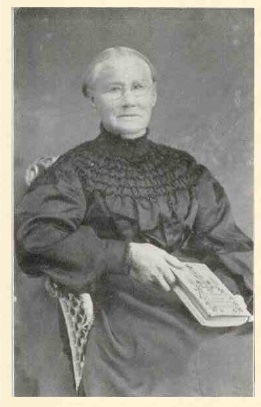
Jane Sellers Nighswonger
D.A.R. has had a history focus from the beginning as well as being involved in contemporary affairs such as charity work and support for veterans affairs. Part of that focus pertains to the organization, itself.
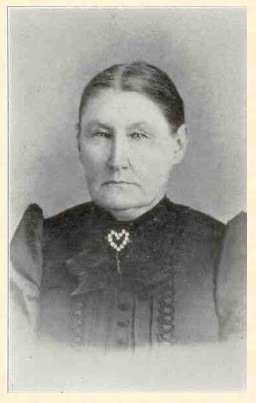
This post is about examples of some members who have the label of 'Real daughter' as they are direct offspring of a patriot. In D.A.R. parlance, 'patriot' are military as well as civilian.

The Eunice Sterling Chapter in Wichita, KS has a couple real daughters whose images are shown. They were sisters. Jane was born in Tennessee; Cyntha was born in Illinois.

Cyntha Ann Sellers Buffington
Their father, Howell Sellers, was born in 1762 in North Carolina. He served with the South Carolina troops.

It is interesting that when Jane joined D.A.R. (she was first) in 1896, she was #14475. This was six years after its start. D.A.R. recently passed one million members since its start.

This post is a brief view but goes along with our interest in the western expansion (example: 3 Trails) which included many who have ties with Cape Ann families which we will study along with our looks at descendants of Thomas and Margaret Gardner.

Remarks: Modified: 10/31/2019

10/31/2019 --

Sunday, April 4, 2021

In the small

TL; DR -- Note that the SAR/DAR databases are useful. Looking at William Gardner who is mentioned by SAR, not DAR. There are several families involved in this study. And, there are documents from the time as William was an agent for the new country in New Hampshire. Need to settle Williams ancestry. 

--

Lately, we found out that SAR has been updating their website with information about applications. Earlier, we referenced NSDAR and their database in terms of research. In summary, these two organizations have a focus that starts with the Revolution and comes forward. Both provide information about members and their Patriots. One can see relationships between families which can help applicants. Also, the information has been proven though one needs to consider guidelines and rules with regard to the use of this information. 

Too, one can see where there is an absence. It turns out that a recent research project dealt with a Patriot that is in the SAR database with no applications node but is missing from the one of NSDAR. So, we will be looking at that more closely. 

  • SAR entry - William Gardner who was featured in our last post: Wentworth-Gardner House, in Portsmouth NH. There were several William Gardners, but we know that this is the right William (P-164166) due to the birth and death years. The record shows his early service, which was when he had a rank of Ensign. 

Taking the case of DAR further, their database is built from applications. The interesting aspect is that they have used the same approach for over 100 years, though there have been changes in technology as we all know. However, consistency and stability are two requirements not always being met by computer systems, so DAR's efforts in this regard is to be appreciated. So, yes, our technology focus? It will continue. 

However that will be addressed later. Our next post will summarize what we have learned about William Gardner. Basically, later than shown in the SAR database, he was a supplier. He and General Washington had some disagreement. Hence the title of this post. We all think of the Revolution and the U.S. in terms of the Commander in Chief and the first President. However, lots and lots of other people were involved. 

Some get attention. We will be adding to that mix as we continue our research. As well, Alexander Hamilton exchanged some letters with William. We will be digging deeper into that. Again, 'in the small' really deals with where the rubber meets the road. With respect to William Gardner, we found some information on his children and later life. There are a few official documents that mention him (Letter to GW, 16 Aug 1779).  

In the large, though, supplying the Revolution was difficult for many reasons. We will be looking at that. There is some mention that William paid out of his own pocket. We all know that there were funding issues. Actually, we might just pop forward and compare notes about this issue in the time of the U.S. Civil War. We already looked at Col. Thomas Wentworth Higginson's effort at raising troops. 

Lots of error-full events now result from knowledge of scale being lost. One might say that we see top-down impositions as fault causers. Too, though, too much fantasy (SciFi, what have you, Hollywood, ...) is the same issue. Hype versus reality with respect to AI. Sheesh, just caught the esteemed WSJ adding to the problem. Never thought that we would see that. Oh yes, scale? The whole of the internet has raised that to levels unanticipated the past couple of decades. 

You see, with regard to the U.S., history might have periods, however there are persistent themes (memes) the whole of the way from then to now. That's why the upcoming 250th is important (a chance to redo some analysis). Of course, the 400th looks at that which started the thread toward the Revolution. 

Remarks: Modified: 04/09/2021

04/09/2021 -- Added the TL;DR. 


Thursday, October 28, 2021

Cape Ann to Patriot

TL;DR -- The Mayflower group has a database that identifies the passenger who arrived in 1620 that was the ancestor for a Patriot (SAR/DAR) whose descendants have applied for membership. At the same time, the Mayflower has a published database of applications that were successful and were dated before 1900. That gave us a chance to raise the issues of Lyman Porter, again, who is in the database as is one of his offspring and his brothers. Not to beat a dead horse, we then mention that we are working similarly with a focus on the Cape Ann entrants whose arrival will be celebrated in a mere one year and two months. 

---

This post is the 1st of a series about technology a lot of which has to do with computing. The pace of change has accelerated since the PC came on the scene in ways that are obvious. You know, there was progress before then which is embedded in the current modes if you know where to look. So, advances always come from prior work. One motivation for this series was to look at AI through the eyes of the IEEE Spectrum. We'll do that in the next post. 

For starters, lets look at a couple examples of late. The Mayflower group recently announced their new database which one can title Passenger to Patriot. That is, Patriots that are defined by DAR/SAR applications are linked back to their relations on the Mayflower. We, actually, have been doing that with the Cape Ann crowd. Whenever we see some who seems to have New England links, we follow those back. In doing so, many times, we get to a family who came early into Essex County of Massachusetts. And, we document the finding to an extent as well as push them on our research stack. 

Lyman Porter, Record
Now the other thing to note is that the Mayflower applications can be accessed on-line now. That is, those applications that were prior to 1900. A query will return information from Family Search who is sponsoring the query and which will show the line from the Passenger to the person used in the query. So, on doing a search, Lyman Porter is there, as is his daughter and some of his brothers. We will get back to this topic. Also, we will look further at the Mayflower Descendants database. 

Aside: The two ladies about whom our Alden post was done were in their 90s at the time. Both now? Deceased. But, they know. 

Needless to say, links from the databases of New England to those related to DAR/SAR work would be very helpful to researchers. All of us who have been around a while have seen several generations of approches over the past two and one-half decades. Some of these are still around. Some early ones are even now influencing current work. 

Our portal to truth (https://TGSoc.org) is an example. Our development notes indicate how the effort has paralleled the general progress, in a minimal way. That is one key item to discuss. Too, we have had discussions about content versus configuration which too easily get conflated. In fact, the separation was dropped of late with the mania and approaches that we have seen associated with artificial intelligence (AI). That will be covered in the next post. 

It is comforting to see that those embedded enablers are still there. In fact, some old systems were identified last year due to COVID issues as they needed special attention using talents long gone away. On the other hand, we do need to keep honing systems, albeit we have seen the impact of loss of cultural views and any historical appreciation of why things might have been done the way they were. 

In other words, we learn from history; or, we are supposed to. Computing had just been too new to allow much analysis along that axis. That lack will be recognized in the next few years. How things will play out is not known, understandably. Yet, we can hope for the best in new technology as we stay in tune with progress while, at the same time, giving content the respect that it deserves. 

Postnote: Looks like the NEHGS did the work for the Passenger to Patriot. Nice to see the continuity of the work. 

Remarks: Modified: 04/19/2022

10/30/2021 -- Added the TL;DR.  

11/01/2021 -- Added the postcard from the NEHGS: Pilgrims to Patriots. 

04/19/2022 -- Message for today, from D.A.R. 247 years ago. (requires a login) 

Tuesday, October 27, 2020

Middle and out

TL;DR -- Lucie and DAR tells us a lot.  

---

Our lives have two views that are archetypal, up and down. The wag might say, well, there's around, like the clock. That is true. But, we are going to look, for now, at lineage in relation to people who have helped the U.S. get to where it is. We can use DAR for establishing some mileposts as lineage moved along. Basically, we have a tree with up and down. We are all looking at the 250th coming up based upon 1776. We are interested from there back to the early 1600s and before. 

Actually, we will look this way, too; but, that brings in the around, namely, spanning across trees. One benefit of the modern modeling modes, using the computer, facilities like that of ancestry[.]com can give you these little shaking leaves. Early on, we learned that a lot of those are bosh. And, until some method gets established for common proof schemes, there will be issues. So, table that, for now, as we look to link from the Revolution back to the beginning. 

Take their database, as a start. At this page (genealogy), one can get to a search option on their database. Now, this is open with general information about the persons noted. To get more specific, one has an option to purchase a copy of a record. We are not looking at anything other than the bare necessities provided by the default display, right now, so let's use an example. Lucie M Gardner, Dr. Frank's sister, is a member (can be retrieved publicly) with Simon Stacey Gardner (available off of Lucie's record) as her Patriot. Now, let's look at Simon, first. What you see is some detail about Simon such as his wife (Rebecca Knapp) and children, albeit only the ones for which there have been applications are listed. The database can provide a record copy for each of these that can be purchased that will provide more information. Sometimes, that would include all of the children and their spouses. 

So, let's look at Lucie, next by picking her number. She was the first application for Simon and through his son, Jonathan. Now, if you scroll though the lineage (Lucie's lineage), between Lucie and Simon Stacey Gardner are her father (Stephen Wilson Gardner), grandfather (Benjamin Brown Gardner) and great-grandfather (Jonathan Gardner). There are dates and places, usually, provided by the lineage report. 

Aside 1: This information has been scrutinized quite a bit. One can read about the application process (see above node) and get an idea. However, after more than 100 years of honing the process, the databaser has good data. 

Aside 2: We have been working to document Benjamin B Gardner back to Thomas and all of his other ancestors on WikiTree (Gardner-5912). Between Benjamin and Thomas, we find Jonathan, Simon Stacey, Abel, and Abel. For some of the other family members, we have added them (see the Ahnentafel - handcrafted). But, there is a lot more work to do.  

A couple of years ago, we used Dr. Frank's handwritten notes to update his lineage on WikiTree. His father's lineage is the same as Ann's grandfather's Gardner line. What we did independently, starting in 2010, with nothing other than the 1907 book, filled in Ann's whole tree. This work agreed with Dr. Frank's work done 100 years before (that we did not have), except we had a lot more information. In the good Dr.'s day, there was no Xerox as we see now and no web (it required searching through physical files). In his notes, Dr. Frank had included the lineage of his mother, Marion Wallace Woods, which compared well to work that had been done on WikiTree. 

Before going on, one might pause and look at the state of the information. The data record for Lucie would be fairly sparse, and we will look to see if we can provide more information. Coming forward 100 years, though, later applications filled in the information further. 

Aside 3: If you look at Lucie's lineage (#82537) and some of the later ones, you will see the benefit of the process which improves the data as time goes on. The newer applications might have those  earlier and later generations further documented. And, those improvements would have been collected through other applications that happened during the 100 year period. 

As there can be other family members who are Patriots, the organization encourages members to do supplementals. Now, from that, one can talk about span (see above, archetypal) as future applicants would have more information to leverage. But, this is a work in process. 

Aside 4: BTW, Ann has done and assisted with ten successful supplementals this past summer. It is from that experience that we can tout that the database has good data. Also, we can mention that in one case there were no documents at all added to the application; basically, the application was done by matching up nodes from the database. As far as we know, there is no other organization that has accomplished what we see. That is, verified data being used rather than adhoc collections. 

Aside 5: As you look at the database, you might see comments in red which indicate that some problem has been found with an application. Ann had a chance to handle a couple of those, to boot.

Aside 6: Since we are dealing with generations going back and looking at both genders being descendants, there would be added complications. Some worry about those types of lines, to wit the Mayflower Society 5th generation books that carried lineages from 1620 through five generations. These have been digitized and are available at the NEHGS. Coming forward, we have a different concern. Ann has done several dozen applications for herself, family, and friends. In some cases, the same information has been sent (personal data being handled how?) whereas one could easily conceive of a database that would certify using once proven data. Most of these groups tout that they do not trust others and require their own thing. As does DAR, incidentally. So, we argue that such an attitude is actually quite limiting. The 100+ years of experience helps demonstrate some of the needed capability. A few years ago, we proposed this discussion under the auspices of the Hereditary Society Community and got some interest. Also, we heard the arguments (no one talked the technical issues which are there and real; no, the objections were of the habitual nature, if you look closely - not-invented-here). We'll continue to pursue the discussion.   

So, we're interested in a middle-out approach which we can describe and defend, as needed. But, for now, we're looking back. The forward look will only come from an new view, say another Thomas descendant whose tie to Thomas we need to assess. But, on looking back, there are lots and lots of people who are not members. Usually, they have to assess (then prove) their heritage, to the Revolution. 

We are interested in how many Patriots are missing. That is, just using the Massachusetts book, one can see that it's huge compared to who's been used to establish membership. And, in the work with supplementals, Ann has shown new children for an existing Patriot plus a new Patriot. Again, this type of thing is an ongoing work. 

So, Patriot? We need to look at DAR's definition. We have seen Loyalists of various types. After all, that whole time before 1776 was of the King or Queen (several). Notice that link uses plus or minus. Right now, we're looking back. Coming forward, we are going to go deeply into the frontier. Why? It's been botched, somewhat. Lots to discuss. 

Remarks: Modified: 11/10/2020

10/31/2020 -- Shift focus a little to be general. 

Saturday, January 18, 2025

Mary Gardner Boylston

TL;DR -- People. A proper focus. As we will show. The internet will allow this to come forth. On the other hand, records have been kept for centuries across the world. With respect to the U.S. which has its 250th coming up, we can go back to the 400th before. And, for some, back across the waters to the never peaceful Old World. We look at a couple of example families in which a tie-in with the 2nd President is featured. That type of threading can be done across many other countries. The computer? It's more than a seat for generating mania about "abstracted nonsense." 

---

This post continues the theme of the 400th and 250th which relates to the founding of the U.S. This year has a major date for the 250th: Lexington and Concord. This battle led to the Boston event a month later. But, leaping forward, the conflict continued until 1783: Treaty of Paris. This type of post will have three topics covered. One will be an event. Another will be some details with respect to people involved. The third will deal with family or as some might argue, genealogy. Now, fortunately, Wikipedia has kept improving over the years, so their pages will feature heavily. This link goes to a timeline that is remarkably demonstrative of how to do things (I may be an editor, but there is no bais here). 

----

When we started the Thomas Gardner Society in 2010, we knew a little about history and genealogy having started in the work in 2009 after retirement. Our first post was in 2011 (25 Sep 2010) after we had done some work, including a successful application to D.A.R. (DAR) (250th of the Revolution coming up in April) and for a few societies of the Heritage Society Community of the US (HSC) (400th of New England). One might say that we showed what we learned by going through the scrutiny of the organizations. 

But, many HSC applications have more generations to cover than does that of DAR. By our count, we say that the Revolution was done by the fifth generation. Below, we will look at that generation after considering the second generation. Below we will look at two families: Gardner; Adams. For a while, we will do all of our charts using the female side. The reason for this will be apparent at some point. 

---

We have looked at the Adams family more than once: 

  • Adams cousins -- looks at President John Quincy Adams and his cousin from the frontier, Grizzly Adams. 
  • Another Adams -- looks at a generation or two later with respect to the development of Los Angeles and California as well as a tie into several modern firms, such as American Express. Business is a proper occupation of the New World. 

Mentioning the Revolution, the first U.S. President was George Washington (whose birthday is celebrated in February). The second was John Adams. Later, John's son, John Quincy, was President. There will be time spent on looking at the pedigree of many prominent individual as we did with the Harvard President collection (see History of Harvard). We started that after reading of a cousin and decided to go through the list so as to know the lineage of eacn. 

--- 

Now, we would like to look at an example which includes several families. For each, the 1st generation would have come over the waters 400 years ago. Of course, there was a continual stream of immigrants over the centuries. We will look at the complete period from inception to now as we do these posts. 

2nd Generation -- In the 2nd, there were two sisters in the Gardner of Roxbury family with other siblings. Here is a pointer to the WikiTree profile for each. 

Mary was older and married a Boylston while Abigail married into the Wise family. Abigail's husband, Rev John Wise (1652 - 1725 -- Harvard graduate), is known as one inspiration of the Declaration of Independence. 

5th Generation -- Coming forward in time to the 5th, Mary's line had John Adams (1735 - 1826. Her sister-in-law, Sarah (Boylston) Smith (1642 - 1711), was the forebear of Abigail Quincy (Smith) Adams (1744 - 1818) who was the well-known wife of John Adams. 

In that same 5th generation of John and Abigail Adams, the family of Mary's sister, Abigail Gardner Wise, had Susanna (Wise) Swasey (1744 - 1821) who was married to Major Joseph Swasey (1750 - 1816). Their daughter, Abigail (Swasey) Hodgkins (1774 - 1822) married Joseph Hodgkins (1768 - 1825). His uncle, Joseph Hodgkins (1743 - 1829), was featured in several publications.

  • Joseph Hodgkins - Wikipedia: The letters between Hodgkins and his wife, Sarah, have served as an important historical footnotes since the early 1900s[2] for understanding the Revolutionary War and have been featured in such books as the Library of America's The American Revolution: Writings from the War of Independence, David McCullough's 1776, and Ray Raphael's A People's History of the American Revolution.
Abigail Wise (Hodgkins) Graves (1803 - 1879), daughter of Joseph Hodgkins and Abigail Swasey (6th generation) was the 3rd great-grandmother of Alfred L. Gardner (11th generation). 

Nine generations
---

With respect to the HSC, John Wise (1652 - 1725)  was the grandson of Alice Freeman Thompson Parke who is the ancestor of many American families of note: Firestones, Fords, McCormicks, Rockefellers, Tiffanys, Whitneys, and J.P Morgan. In Alice's progeny, we can also note Princes William and Harry through their mother, Princess Diana. 

We have an interest in technology which of late has filled the news space with advanced software which is, supposedly, heading toward an artificial general intelligence. Expect that theme to be regularly discussed. Genealogy and history are properly candidates for technology assists. We already see that. This example of a research paper on Alice's children and their offspring is a look at four generations.   

An underlying lack of the sense of foundations is our prime concern where the mathematics involved in the modern systems needs more attention paid to its use. Making decisions about the future using systems and processes that are not understood ought to raise a flag not unlike what Ralph Nader did back in the 60s with regard to an automobile. 

---

We expect the next eight years to be fun. One hundred years ago with the 300th anniversay (see Remarks: 01/18/2025 - below), WWI was a damper. We will look at that further. Too, current technology has helped research to improve from what we saw 100 years ago. Hence, we have newer information to incorporate in our database which will necessitate updates of existing documention some of which can be 150 years old. There is no end to the work. 

But, technology brings problems, too. This is an old theme which generates interminable interest. 

With respect to the marketing of AI, there is a cultural split almost everywhere one looks. That is, bifurcations seem to be natural. An important one today is the gap between science/engineering of computing (which spawned GenAI in a troublesome manner) and marketing which has almost diametrically opposed views. 

From a truth engineering sense, both are errant. What is the common ground that if defined can be spread around for more clarity on issues of a complex nature (such as, what's at the bottom? Chaos?). 

Remarks: Modified: 09/11/2025

01/18/2025 --  Pageant of Salem is an exmple of the events from 1924. It provides a good view of the thinking at that time. Now, 100 years later, we know more since we have digitized copies of old documents coming on line. See this post: 250th and more. 

09/11/2025 -- Did a summary post on Rev. John Wise. 

Saturday, August 12, 2023

Cols. Joseph Hodgkins, Nathaniel Wade

TL;DR -- After reading of the Society of Cincinnati, it seemed apropos to find a case close to home with respect to finding some to add to the prospectii list. In one case, only the daughter had children some of whom have descendants alive today. The other has male descendants bearing the name. In the first case, there is another organization that may offer memberhip. In the other case, a little more research work is required.   

--

The subject matter of this post deals with close relatives and demonstrates various types of studies that can be done to find interesting stories. We begin with the story of one book that led to a TV series. 

Part of this motivation was the prior post on the Society of the Cincinnati which organization allows one member (male) per each Patriot that is qualified. The qualification, briefly, is being an officer for the Continental Army. There are additional requirements, one of which is having served to three years. At the same time, the daughters have their own organization but allow multiple members for each Patriot. Our interests, in part, deal with the time and conflict, in general, the unfolding of the U.S. from them to now (we're talking 247 years), the movement of families, and historic/genealogical studies and consequence of these research, such as related memberships.  

So, it didn't take long to pull this example which deals with our favorite town, Ipswich MA, after Salem, of course. The post looks at two families who are related, but there are many others involved. 
  • Let's start with the book, 1776, David McCullough, which deals with the times and letters of Col. Joseph Hodgkins (WikiTree) and his wife Sarah Perkins. Hodgkins served under Col. Nathaniel Wade (WikiTree). They were both at Bunker Hill and served for more than three more years. Joseph and Sarah had children, however only one daughter had children who grew to adulthood. She married the son of Col. Wade, and they had children with descendants who are alive now. 
  • Society of the Cincinnati membership claims comes down through the sons. So, that would not be a sustainable claim. On the other hand, female descendants of Joseph and Sarah would be eligible for the Daughters of the Cincinnati should they be able to prove their lineage. Our  hope will be find an extant male descendant of an officer who meets the prospectii requirements. 
  • The blog, Historic Ipswich, provides commentary and a copy of some of the letters. We have had used this blog as a resource several times. Our last post was on the founding of Ohio by a team of veterans from Ipswich. But, the Smithsonian Museum of American History displays a house that was taken from Ipswich. 
  • Taking this a little further, we can look at the D.A.R. and S.A.R. databases. Col. Joseph Hodgkins is not in the D.A.R. database, but Col. Nathaniel Wade is there with several applications being done by his descendants including through his son, Nathaniel who married Hannah Hodgkins. For the S.A.R. database, Joseph Hodgkins has a record but no applications. S.A.R. has been trying to identify all Patriots. The Col. Nathanial Wade record shows no applicants with the Wade name. 
This is an example of how families were involved in the Revolution. The two Patriots were from the same town and served together. Their children married. There were many cases like this. So the families kept an association through the years. D.A.R. allows supplemental applications after a primary one is verified and one becomes a member. 

One motivation can be membership approval. However, the larger picture related to history is very much tied into the families who were there. That type of research will be better served with the improvements in technology than we had before where paper chasing was the theme. But, the larger problem was figuring out where to find the paper as well has hoping that such might exist and actually be of use. 

Now? One of our interests is technology for reasons that John has dealt with that for decades. STEM is pushing this type of thinking without any regard for other issues. Such as? Take philosophy which was thrown to the background (for reason that can be discussed). See the Knowbility post. It's a beginning. Briefly, one problem is that assumption computing have no basis. Oh sure, these issues can supposedly be overcome through demonstration. But, rationalaity is going to have to be deconstructed and put back on its pedastal. That work has been waiting in the wing for several decades now. 

Remarks: Modified: 08/12/2023

08/12/2023 --


Friday, February 28, 2025

E Pluribus Unum

TL;DR -- The NEHGS has a 10 Million Names project to identify the Americans of African descent who were here from the 1500s and 1865. D. A.R. has a project to identify and document Patriots of Color. The databases can be accessed at either site. 

---

Black History Month ends today. We report on recent work of the NEHGS and D.A.R. with respect to the identifying unknown patriots. 

  • E Pluribus Unum - "has been a motto of the United States since the earliest days of the Republic. But in practice, the history of the country has often overlooked the participation of certain groups, including the vital contributions of people of color and women to the War of Independence and the founding of the United States."
  • 10 Million Names -  "collaborative project dedicated to recovering the names of the estimated 10 million men, women, and children of African descent who were enslaved in pre- and post-colonial America (specifically, the territory that would become the United States) between the 1500s and 1865."
  • Daughters of the American Revolution: Patriots of Color, 1712 – 1888 database - "was originally released in 2021 on the DAR’s Genealogical Research System (GRS) website and is filled with more than 6,500 names of individuals of African, Native American, Iberian, Latin American descent, or of multiracial ancestry who served in or supported the American Revolution. The names and sources tied to the names can assist researchers in their quest to uncover important facts about heritage or more general information about the Revolutionary War."
  • American Ancestors Database News: Daughters of the American Revolution: Patriots of Color, 1712 – 1888 - "This database encompasses a less-examined aspect of the American Revolution: the Black, Native American, and mixed-descent participants. For the patriots that can be found here, the information available is extremely varied and comes from many diverse sources. There were both free Black and enslaved Patriots, and these entries sometimes only include a first name, or a first name and their enslaver’s last name as parenthetical information. Native American participants may be listed under their indigenous names and their tribal affiliation will be provided when known. These entries cover the original thirteen colonies as well as some of the frontier areas, such as the “Old Northwest,” which encompasses most of the Great Lakes region."

This watercolor from the American War of Independence is by Jean Baptiste Antoine de Verger (1762-1851). The watercolor shows the variety of soldiers fighting for American independence, depicting, from left to right, a black soldier of the First Rhode Island Regiment, a New England militiaman, a frontier rifleman, and a French officer. Public domain, via Wikimedia Commons.

Remarks: Modified: 02/28/2025

02/28/2025 -- 


Friday, April 29, 2022

Edward Everett

TL;DR -- As we pursue the list of Heads, the sampling has been informal. Today, we pick by family name and look at Edward Everett who had quite a career outside of Harvard. He disliked the 'rowdy' students, one report said. But, he helped get an applied focus in place, namely science and engineering. Harvard over the 400 years of the U.S.? Significant in many ways. 

--

Our look at the Heads of Harvard (Wikipedia) has been quite cursory so far. This one was interesting due to Edward Everett (Wikipedia) being about half-way from the start to now. Just a quick review brought up several topics to pursue. For instance, he has a solid New England pedigree; his wife has one that is even more complete. So, we will venture further in that domain than we have before, at some point. This post is a mere summary. 

Initially, the interests for looking at the Heads were several, but we can start with this list: 

After completing a first pass through the list, we will tie U.S. generations back to these Heads in terms of general views of the U.S. For instance, D.A.R., in an overview of their mission, stresses the upcoming 250th where the U.S. split from European influence, somewhat. It still had to contend various ways. On the other hand, D.A.R. notes that the whole idea of an American Spirit has lapsed. To us, that has been apparent for some time. Does having an old pedigree mean anything?

Okay, Harvard? Early on, it might have argued about a universal view where country was mere borders established somewhat arbitrarily. That universal view would have been heavily Christian. Later, a more technical spirit emerged. That encouraged the elite view that was there from the beginning to take strong hold. Hence, Harvard is of the world's upper crusts, somewhat. 
 
Edward Everett
Aside, we'll go back to Rev. John Wise to found a proper discussion, at some point. A pamphlet of his was reprinted by Patriots over 250 years ago. What does this have to do with Everett? He would have been a progeny of those of that time. Too, he lived in the era of the Civil War. 

For some Heads, WikiTree had little information which is usually the case where there are no children involved. That is not the case, now: Edward Hill Everett (Everett-650); Charlotte Gray Brooks (Brooks-2069). However, the WikiTree Profile of Brooks has no regular interest. When we talk New England, the basis, for us, is Cape Ann, or, one might say, Essex County. Brooks has many threads from that little locus. 

But, Harvard is more than involvement with the trivia of everyday life. Oh? We will discuss that notion, too, as the changes seen on the horizon now indicate that some lessons to be learned were not, both here and elsewhere. So, Harvard dropped the ball? 

One commenter expressed that Everett grew dissatisfied with the Head role fairly quickly (one alleged factor? rowdy students). His time in the office was close to three years. One achievement was getting the Lawrence gift applied. 

Remarks: Modified: 04/30/2022

04/30/2022 -- For starters, we can take a brief look at the Daughters of the American Revolution. There are three looks at different times, 1953, 2003, and 2021. Plus, the Encyclopedia's coverage considers some of the history plus the mission. D.A.R. has evolved like the rest of us. 

Monday, September 20, 2021

Patriot to Passenger

TL:DR -- We have always tried to keep the spectral moments in mind, such as 100, 250, 300 and 400. Of course, what was happening in any place at those times. The 250th is coming up soon which SAR/DAR as a reminder. There is a database being worked with ties Patriots (who have been proven or not) with Passengers on the Mayflower. We have identified some of these with regard to Cape Ann but are motivated to do more. 

--

We just took a look at the new website for the Mayflower Society which is oriented toward the mobile, and app, configuration. Nice. From a technology sense, we will keep choices related to these matters on the table for discussion. For many reasons that a few posts here looked at, such as the theme of intelligence and artificial approximation of such.  

We ventured down the 'Join us' line of menus and got to something of interest. Several of our posts discussion the 250th coming up (DAR/SAR) and the 400th. The Revolution was borne by the fifth generation with the fourth and sixth contributing their parts. We have been supporting the work of DAR/SAR and were happy to see the Patriot to Passenger database. 


We have been tracing both Patriots and Loyalists and will continue. Lots of work to be done.

Remarks: Modified: 11/01/2021

10/28/2021 -- The MF PDF was moved. Link's URL updated. 

11/01/2021 -- Turns out that NEHGS has a project, too.