Showing posts sorted by relevance for query ipswich. Sort by date Show all posts

Saturday, August 2, 2014

Sign of the times

Researching Ipswich is an interesting task. They have the largest collection of early 1700 (plus or minus) houses in one area (see Ipswich walking tour). Each of these houses has a history which, then, can help build the picture of a family. And, Ipswich had enough of these houses that one could be disassembled and put in the Smithsonian Museum of American History.

---

Mother obtaining guardianship
The image is from a 1761 Ipswich court record of a case in which a mother obtained guardianship of her son. Now, this son was over 14 years of age but was still a minor. And, his father had died, leaving three small children (but, he left land for his wife), when the boy was one year old. So, the mother had raised him for 13+ years prior to this request. Okay, she did have to establish her right to the obligation, given the times. As well, she had to have a couple of character witnesses. 

Another point, though, is the next thing we know is that the young man is in the Ipswich military; the time frame was the latter days of the French & Indian war. He is on several rolls including that of Capt. Nathan Brigham's company. So, being a minor, the young man needed someone to sign him up; his father was deceased. 

As an aside, some have said that this bit of friction involving the French was a training ground for the Revolution as many younger males were enlisted, trained, and learned from the experience. So, England trained its own rebels, so to speak. But, too, the revolution could have started in Ipswich, a recent columnist noted, almost a century earlier, to wit, Rev. John Wise's (1687 arrest by Gov. Andros - see Remarks, 08/02/2014) experience (he married Abigail Gardner who was a descendant of Thomas Gardner of Roxbury). 

---

There are more details in an upcoming article (TEG 34). But, the young man was signed up as John Leatherland, son of Sarah. Usually, the younger enlistees were noted as son of the father. That type of recorded association can be a nice genealogical boost. John, the enlistee in 1761, had been born in 1744. His parents were John Leatherland and Sarah Kimball, of Ipswich.

His great-grandniece married a Thomas Gardner of Salem descendant. 

Remarks: Modified: 09/30/2014

08/02/2014 - Book Review, WSJ, 07/25/2014: The Revolution might well have happened a century before it did. When word reached Boston in April of 1689 that James II had fled England and that William of Orange had arrived from the Netherlands to take his place (the colonists didn't learn the news until months after it had happened), riots broke out across Boston. "The Body of our People," one observer noted, were encouraged to "assert our Liberties against the Arbetrary Rulers that were fleecing them." Already many colonists could think of colonial authorities—governors, even local authorities—as agents of a foreign power.

09/19/2014 -- Sarah (Kimball) Leatherland is mentioned in Gardner's Beacon, Vol. IV, No. 3. Today, I found out about Stories from Ipswich: Sarah Goodhue is Sarah Kimball's grandmother; I found this story on FB through Nutfield Genealogy. Sarah Kimball will feature in an upcoming issue of The Gardner Annals. The article will also appear TEG 34 (November edition).

09/30/2014 -- Sarah is featured in The Gardner Annals (Vol. I, No. 2).

Thursday, December 1, 2022

Perspective, a necessity

TL;DR -- Ipswich has been a topic from time to time. It had shipwrights. Of course, different size of vessels were handled. There were no biggies like Boston (MA) or Bath (ME) or Norfolk (VA). Other examples of industry and technology can be used. But, Ipswich led the way to the expansion across the interior that we saw for over a century. We will be looking at that, as after all, New England has a long reach. Ipswich has done well for itself. 

---

As technology runs toward the future, we always get to states where we get locked in. We cannot go back. Technology is great, except for when it doesn't work. If the problem is solvable, then we have a glitch and a correction. If the problem is systemic or not resolvable within a reasonable timeframe and costs, we have adjustments rise as imperatives. Learning drives technology; unlearning drives recovery from technology's failures. 

The U.S. is about the best example that we have for several reasons. We have already addressed technology as being our main focus. We have 400 years of data to ponder, in this regard. But, just those pieces of evidence from the past 250 years is worthy of study, too. And, commemorative moments, such as we are having now which will last decades are a time to reflect and learn from the past. We are surely in a different mode than the generation of the recognition of the 300ths. 

Today, we are featuring Ipswich which does not come to bear until later, but it does involve Essex County. Reminder, Cape Ann (Gloucester) has their moments in 2023.  It was from Ipswich that a group went west. Gen. Rufus Putnam (Wikipedia, WikiTree) was one of the leaders of the effort. Let's look at some particulars. 

Historic Ipswich is a website that has been quite a motherlode of information. Of course, we are interested due to the many families in the heritage who had Ipswich connections. For one, Rev John Wise has an interesting bunch of  events in his life that we can learn from. We have been looking at shipbuilding in little Ipswich as well as similar work in the County (see Newbury Essex County MA).

The website has looked at Putnam's effort: Ipswich to Marietta, December 1787. First, they show the result of contention between the States with regard to this unsettled land to the west. We mentioned that in the last post about Family Search and their great support for research. Then, the post has the photo of a plaque that notes the endeavor. What? That got our attention, as we have been looking at the western expansion and its frontier century, including lost generations that plague genealogists who have no imagination. Why say that? These people were. Some were newcomers, true. Many were representative of the long reach of New England. Along with technology (and its specifics), our interest deals with identifying the examples of that reach plus the evidence now of its continuing existence. 

Then, the post looks at an effort in 1937 to redo the trek while documenting the effort. For one thing, they provide the map that gives details of the geography. That was great to see as we have looked at the west and its rivers and its great expanse and the carving that was inevitable. Lots of this was with a focus on St. Louis, the gateway. Putnam kept a journal. There were other reports written. In short, it was a great find that was more special since it involves little Ipswich (influence a huge multiple of its size). 

Now, let's look at perspective. Technology makes people lazy; oh, managers will say that it increases productivity. In terms of the former, heard of AI? It's a huge scam which we will show as we go along. Yes, balancing mathematics with knowledge with respect to culture that the broad history of U.S. allows. After all, we are a nation of immigrants. Luckily, we have two broad scopes, related to the colonial times versus later. Too, we have cultural associations with the old countries, for the most part. The list goes on and on. So, expect this theme to be recurrent. BTW, that which is being touted as AI is merely fancy math being exploited by computational prowess that came via modeling founded on (guess what?) mathematical modeling and the detailed work over the centuries. Yes, we will to touch upon all of that. 

For the time being, we will present the following map with some commentary afterwards. 


This graphic shows a map from the prior post which has one view of the partitioning before the carving that was involved in establishing the States. 

1) deals with the Michigan Territory (again, the prior post) that we just offhandedly dismissed as practice for the carving. Our only excuse was that we were dealing with the broad expanses beyond the Mississippi River, but that was not correctly assumed. We have to step back given that the focus of DAR/SAR is the upcoming 250th of the U.S. Besides, we have to give generations credit. This deals with the fifth and the sixth where the latter is the first of those that were heavily in the lost side of things. 

After all, people moved and did so quickly, once the way was set. Say, thanks to the likes of Daniel Boone and Jedediah Strong Smith. The former was doing his exploration prior to the Revolution. The latter was directly connected with St. Louis and its influence. We will go into that deeply. 

A point to make is this: that trek from Ipswich was difficult. Hence, there were real reasons why it took months. In fact, it was practice for the challenges of going even further which was all the way across the continent. On the right is a modern image with routes and times. Even today, travel is difficult. Try driving diagonally across West Virginia. It's fun; but, don't expect to make record time (except, perhaps, max time which is open). Those mountains run further north. By the time that they would use the Ohio, they had already trekked some distance. 

We will take the time to go into this further, since it does set the stage for later developments out west. 

2)  This view trails the other by only a couple of decades. Missouri, the starting point, was a State in 1821. By then, most of the issues related to the green area had been resolved. But, it was 1804 when Lewis & Clark did their venture from D.C. through St. Louis to the west coast. At that time, mountain men (trappers, explorers) and American Indians were mostly in the area. Except, that had been activity from the west coast in (New Spain), some of which got away from the coast. Too, the northern explorers had been more adventurous than those of New England. Boone in the south went further west than did those up north. Lots to discuss. 

Taking the same approach, notice that we are now in the middle of the country covering only a fraction of the area. Here, the issue is that folks would have followed a similar path down the Ohio River to the Mississippi River and then St. Louis and finally the Missouri River west. But, that was on to a starting point. There were several trails. This example uses that which went to Santa Fe in New Spain. One thing to note is that Santa Fe was the terminus of another trail that came up from the south. Too, there were trails out of the east through Texas to consider. 

But, taking that one small portion which involved about four hours of driving now, it took three weeks for a wagon train to cover that area with a daily grind of a few miles. Notice, too, that we are talking the plains portion which is supposedly flat. It isn't. You can still hurt yourself by falling off of a cliff at various places.  

In all of this travelling, rivers were both a barrier and a boon. In these graphics, they are not shown with any clarity, but, even recently, we have seen examples of traffic snarl ups due to bridge damage. One time, we were across the river from where we wanted to go. Okay. There was no ferry. This is a form of technology to note. So, the solution, since we didn't have a helicopter that would pick up the car and deliver us to our destination, was to backtrack to where we could follow a road that went over the river and then get back to where we needed to go which was a stone's throw (well now, as it was broad). 

During the times before bridge technology really advanced, one waited out water. Incidentally, here in the west, there are uncountable number of places where high water will stop traffic. And, in many others, the water comes up to the edge of the road. One hopes that the road engineers did a good job with the base. And, that's not mentioning storms such as we will be seeing with winter setting in. It does not even have to be like the recent dump on Buffalo, NY. A few inches can be catastrophic. 

 Oh yes, real examples. There is a method to that madness. AI and other computer has gone off the rail since a proper basis was lost. Yes indeed. We have seen so many examples of modeling gone wild (like the kids at spring break) due to a lack of grounding which comes about for several reasons. One of these is a lack of respect for the need. Some of that might be generational; a lot of it has to due with the computer being too new for us to really have a grasp of how truth engineering is necessary. Too, what John von Neumann wrought will bitt us until we learn several lessons that have been pending for a long time. 

You know, we are looking at the U.S. and its growth. But, at the same time, the world of thought was changing. There and here. Say, for the latter, Charles Sanders Peirce. But, parallel to the U.S. and its experiences, the world was changing, too. There is not end to that type of analysis. 

Remarks: Modified: 06/08/2023

12/16/2022 -- Rutland VT is hosting the Smithsonian's roving display:  The Smithsonian comes to Rutland. They are reading and discussing McCoullough's book The Pioneers as Rutland is on the pathway west. 

06/08/2023 -- Updated the URL for the Historic Ipswich post. It was originally dated in 2019. The 2022 update removed the older post. One of the technical concerns is that source linked by an URL can disappear or have some other issue, like the information changing drastically. Or, as we might wish not happen, contain undesirable information. In this case, an easy fix. 


Friday, December 25, 2020

Thomas Franklin Waters

TL;DR -- About Ipswich, MA which was the hometown of T. F. Waters and the subject of his research.  

---

T.F. Waters was the first editor of The Massachusetts Magazine (first issue was January 1908) that was started by Dr. Frank and friends who were Charles Alcott Flagg (last post), Albert W. Dennis, Lucie M. Gardner, and others. We will spend a little time looking at some of the details concerning the publication of the TMM by looking at those involved, including their lives. 

In an earlier post (Sings of the times, 2014), we were discussing research in Ipswich and mentioned a few families that were in focus. We heard from Gordon Harris who does several things, including work to restore properties in Ipswich about which we will write more. But Gordon has a website that is loaded with information (Historic Ipswich) in which he has a list of houses. His earlier note mentioned one house that was connected with the families that we were researching: 5 County Street. 

Today, we looked at that more thoroughly as we are going to concentrate on the time around the Revolution which is coming up for another memorial (250th). And, that will involve  looking at the related properties. As we were enjoying the look at the writeup on the house, a map was shown that is reminiscent of what Sidney Perley did in Salem and elsewhere. 

But, the author of the map was T.F. Waters. That got our attention. He was a major writer on Ipswich and will feature more in the future as we expand on the expected themes. 

Ipswich - land grants

As we mentioned before, it was the 4th and 5th generations which saw the Revolution through by enduring the turmoil and hardship. 

Remarks: Modified: 12/26/2020

12/25/2020 -- 

Saturday, August 12, 2023

Cols. Joseph Hodgkins, Nathaniel Wade

TL;DR -- After reading of the Society of Cincinnati, it seemed apropos to find a case close to home with respect to finding some to add to the prospectii list. In one case, only the daughter had children some of whom have descendants alive today. The other has male descendants bearing the name. In the first case, there is another organization that may offer memberhip. In the other case, a little more research work is required.   

--

The subject matter of this post deals with close relatives and demonstrates various types of studies that can be done to find interesting stories. We begin with the story of one book that led to a TV series. 

Part of this motivation was the prior post on the Society of the Cincinnati which organization allows one member (male) per each Patriot that is qualified. The qualification, briefly, is being an officer for the Continental Army. There are additional requirements, one of which is having served to three years. At the same time, the daughters have their own organization but allow multiple members for each Patriot. Our interests, in part, deal with the time and conflict, in general, the unfolding of the U.S. from them to now (we're talking 247 years), the movement of families, and historic/genealogical studies and consequence of these research, such as related memberships.  

So, it didn't take long to pull this example which deals with our favorite town, Ipswich MA, after Salem, of course. The post looks at two families who are related, but there are many others involved. 
  • Let's start with the book, 1776, David McCullough, which deals with the times and letters of Col. Joseph Hodgkins (WikiTree) and his wife Sarah Perkins. Hodgkins served under Col. Nathaniel Wade (WikiTree). They were both at Bunker Hill and served for more than three more years. Joseph and Sarah had children, however only one daughter had children who grew to adulthood. She married the son of Col. Wade, and they had children with descendants who are alive now. 
  • Society of the Cincinnati membership claims comes down through the sons. So, that would not be a sustainable claim. On the other hand, female descendants of Joseph and Sarah would be eligible for the Daughters of the Cincinnati should they be able to prove their lineage. Our  hope will be find an extant male descendant of an officer who meets the prospectii requirements. 
  • The blog, Historic Ipswich, provides commentary and a copy of some of the letters. We have had used this blog as a resource several times. Our last post was on the founding of Ohio by a team of veterans from Ipswich. But, the Smithsonian Museum of American History displays a house that was taken from Ipswich. 
  • Taking this a little further, we can look at the D.A.R. and S.A.R. databases. Col. Joseph Hodgkins is not in the D.A.R. database, but Col. Nathaniel Wade is there with several applications being done by his descendants including through his son, Nathaniel who married Hannah Hodgkins. For the S.A.R. database, Joseph Hodgkins has a record but no applications. S.A.R. has been trying to identify all Patriots. The Col. Nathanial Wade record shows no applicants with the Wade name. 
This is an example of how families were involved in the Revolution. The two Patriots were from the same town and served together. Their children married. There were many cases like this. So the families kept an association through the years. D.A.R. allows supplemental applications after a primary one is verified and one becomes a member. 

One motivation can be membership approval. However, the larger picture related to history is very much tied into the families who were there. That type of research will be better served with the improvements in technology than we had before where paper chasing was the theme. But, the larger problem was figuring out where to find the paper as well has hoping that such might exist and actually be of use. 

Now? One of our interests is technology for reasons that John has dealt with that for decades. STEM is pushing this type of thinking without any regard for other issues. Such as? Take philosophy which was thrown to the background (for reason that can be discussed). See the Knowbility post. It's a beginning. Briefly, one problem is that assumption computing have no basis. Oh sure, these issues can supposedly be overcome through demonstration. But, rationalaity is going to have to be deconstructed and put back on its pedastal. That work has been waiting in the wing for several decades now. 

Remarks: Modified: 08/12/2023

08/12/2023 --


Wednesday, May 18, 2016

The almost forgotten

Prior to (northern) New England and its history, we had the southern "New England." Of late, I have had the opportunity to look further at that era and area. Not only did some come up north from Virginia, many New Englanders went south.  This movement started early. Below are a few tidbits that have special interest as they show parallels. 
    -- As there was western movement early in Massachusetts, so too was there a western push down south. In Massachusetts, we can use the example of Ipswich Canada which was an effort sponsored by people in Ipswich. The ancestors of Susan Graves supported the effort. The first husband (Joshua Johnson) of her great-grandmother (Elizabeth Pushee) was killed. They had married in Groton. Elizabeth moved back to Ipswich proper.

    In Virginia, we know about Jamestown (capital of Virginia Company) being founded in 1607. There was an effort to move west in order to claim land. Because travel is facilitated by roads, there were early efforts to clear paths just as there were in early Massachusetts. Dr. Frank writes of the work of Thomas and his sons doing surveying for this effort. In Virginia, one road was nicknamed "Three Notch'd Road." It ran from Richmond to the Shenandoah Valley by 1730.

    By the early-1700s, there was regular correspondence between western counties and Williamsburg (capital of Virginia Colony). And, this facilitated expansion. James Madison's family moved out west in the 1730s. Monticello dates from the 1760s. 
    -- New England in the north has its Paul Revere. New England in the south had two (Francis and Jack). Francis Salvador rode 30 miles in South Carolina in 1775. He died in the ensuing battle but has not been forgotten (see military.com).

    Jack Jouett did his ride of 40 miles in Virginia in 1781. Part of his ride was along the Three Notch'd Road. Lafayette, himself, was familiar with that road. We think of the Marquis as being up in the north; but, he did, later on, spend time in Virginia. 
Just as the northern New England has its sources for historic and genealogical research, so, too, does the southern New England. One very good resource is the William and Mary Quarterly which has been very helpful.

Remarks: Modified: 11/20/2017

05/30/2016 -- Bill O'Reilly's latest books has a story about the Swamp Fox (Francis Marion) and General Richard Richardson (findagrave). The former's harassment of the British down south helped Washington get things together in the north. 1780 was the time. Richardson was dead. His widow sent a son to war Marion about the size of a loyalist's unit. In retribution, Colonel Tarleton destroyed the widow's property after digging up her husband's grave.

08/26/2016 -- Of late, we have been researching Gardner families in the south. That would include PA and NJ as well as those areas further south, VA and NC. Of those southern Gardners, some went down after being in New England. Others came into the southern region. Then, there were families that came up through the Caribbean. This post looked at some similarities and barely scratched the surface. Soon, we'll post some thoughts on the times around Rev. John Wise's tax rebellion (IPswich, MA - peaceful albeit the good Reverend was thrown into the clink) and the King Philip War. Down south, we had Bacon's Rebellion.

09/09/2016 -- Seeing a writeup of the oldest bridge, in Philly, PA, got me to looking at the eastern King's Highway (Charleston to Boston). Being western by birth, the CA version was familiar (El Camino Real).

11/20/2017 -- We will be looking more closely at the south.

Friday, November 20, 2020

America's Lost Generation

TL;DR -- There seems to be a common problem for some families who had the frontier experience that is harder than that of the wilderness in terms of tracking. As the edge moved west, consistent paperwork lagged. To be expected. 

---

The computer has brought forth lots and lots of stuff. Some might be good; a lot is not. However, research reports can be on the good side of things. And, in history/genealogy, the web (computer's gift) has brought lots to bear. For instance, this post from 2014 talks a little about research being done by NEHGS staff on their ancestors. The image on the left came from this post. It shows the arrival years. Notice the peak around 1635. And, the drop off at 1640 is obvious. The image on the right shows the spread of the 5th generation taken from the research of the GSMD (How many years are there in a generation?). This work was in 2018. Both of these came from the Vita Brevis blog that started in January 2014. 


Seeing these types of analysis got us to thinking about our own data and blogs. We started to look at generations, for instance, and will continue. But, for different groups of generations, we need to dig deeper. This is an example. We have seen 'lost' used several times in modern history usually in an economic sense. Japan experienced one of these, very recently. Some wondered about the 2008 downturn. Now, we will have unseen effects from the COVID19 situation. 

But, we are using it in the genealogy/history sense. The 5th generation bore the brunt of the Revolution. The 6th generation were those too young to participate. However, by 1800, they were adults. Ignoring the War of 1812 for this view, we can see that lots of that generation moved taking the 7th generation with them. Our focus is the western expansion where people from the northern and the southern New England met up in the west and intermingled.

By way of comparison, we also include the 4th generation who provided the leadership in the Revolution having been trained under the auspices of the King. That is, the story will pick up with the 5th but have material about the influence of the 4th. Below are some examples including some that are post-Revolution period across several families who were spread around. What we have noticed is that there were many families who moved once peace was settled, and Thomas Jefferson opened up the west. The experience of those families resulted in an informational gap that researchers will have to fill in. The issues get more difficult as the movement went further west. 

  • John Sayward (4th gen) - His parents were in Gloucester where he was born, but they had come down from Maine due to troubles up there.  John left the area but did not go far. He was in Ipswich and tracked down through a friend, John Leatherland, with whom he served in the French/Indian affair and whose sister, Elizabeth, he married. John Sayward also served in the Revolution. See TEG, Vol. 34:4 (TGA Vol I:2). 
  • John Graves (5th gen) - His parents went out in Ipswich Canada. What? Turns out that this is upper Worcester County. Indian problems sent the family back to Ipswich. See TEG, Vol. 34:2 (TGA, IV:1). This is an example of the early western movement. 
  • Early Ipswich family (5th gen) -- Went south to CT under the auspices of the church. Then, one side went west to NJ; the other returned to MA. 
  • Lyman Porter (7th gen) - His father was the 6th gen and went out west. Lyman married into a family that was out of both north and south New England. Lyman is buried in NE. His wife, Caroline, is buried in Los Angeles CA. See TGA Vol. III:1.  See Remarks (11/01/2021) about the new MF database of applications to 1900 where on can look up names. Sure enough, Lyman is there with a daughter and brothers. We will use Lyman as the core of the Lost Generation.  
  • Family out of NC (7th gen) - Post the revolution, the family went to TN (following Boone). There, they were involved in establishing a church that spread through TN, the surrounding area, and overseas. The next generation took the family (6th gen) to the western edge of MO in the 1820s which is quite early and where they continued the church work which included circuit riding to visit pioneering families (sometimes being away months at a time). Then, there elements of AR, OK, and early TX.  
  • Family out of MA (6th gen) - They moved west through NY, OH, and IN. The western trek through succeeding generations include IA, NE, SD, ND, and MT. 
  • Family out of MA (6th gen) - Stopped in NY. Then, a generation moved south and then west. However, the MA-NY movement has not been established in detail as of yet. The case, though, illustrates the issues.    
So, the 'lost' could apply to several generations, albeit we will look at the ones that had descendants coming toward this time. The pattern would be that the movement would lead the paper mill which does the churning in establishing being and identity. One question is how long was that lag before the bureaucracy caught up. Well, that depended upon the location. Too, in many cases, there was an early death. Like with Lyman's daughter and son-in-law, they had a child who was very young when she died and he not long after. But, he lived long enough for a step-mother to come into the picture. The probate records suggest the tale. 

We are taking this focus as we have seen these gaps enough to suggest an interesting pattern. Besides, it makes the drudge work of tracing people more fun; this can provide lots of potential stories to research and write. 

BTW, everyone say brick wall. We say, lots of those walls are not 'brick' at all (also, TGA, Vol IV:1) but are contrived by  mindsets. 

Remarks: Modified: 07/11/2024

05/02/2021 -- We need to move to a focus on the frontier century where lots of families obtained their hole in the paper trail. But, these can be bridged. As well, we can look at modern examples as a type of juxtaposition: Two different times. 

11/01/2021 -- So, now the MF people have a database of those in applications to 1900. And, guess who is there? Lyman and his daughter, Anna. These are the father and sister of Chloe. And, the applicants who were in their 90s? Deceased. Now, with regard to why people were lost? We were looking at a family where one of the boys went from NC to AR. This was almost two decades prior to the Civil War. On the modern map, that distance is over 900 miles through woods, over mountains, and across rivers. Oh, go home for the weekend by flitting over the interior of the country on an aeroplane? Then, there is the fact that these families were in several states. 

07/11/2024 -- Image missing, Vita Brevis, at NEHGS. 

Tuesday, May 17, 2022

John Rogers

TL;DR -- As we continue or pace through the terms in an other-than-linear manner, we next see John Rogers who as born in England, was a graduate of Harvard, married into the Dudley/Bradstreet mix, worked with Rev. Hubbard come into his brief term as Head. Of note will be the Ipswich influence, that is, the Ipswich of Essex County of Massachusetts. 

--

Our look at the Heads of Harvard (Wikipedia) has been driven by different factors since we started the work. This one allows us to finish the early Heads with John Rogers (Wikipedia), so that we can start looking at periods. He came as a youngster from England with his parents but attended Harvard. 

Initially, the interests for looking at the Heads were several, but we can start with this list: 

As we complete a first pass through the list, we will tie U.S. generations back to these Heads in terms of general views of the U.S. For instance, D.A.R., in an overview of their mission, stresses the upcoming 250th where the U.S. split from European influence, somewhat. It still had to contend various ways. On the other hand, D.A.R. notes that the whole idea of an American Spirit has lapsed. To us, that has been apparent for some time. 

Does having an old pedigree mean anything? John Rogers married into a family that lived in Ipswich. This Essex County town is of importance to us for several reasons which we will get into. For the Heads, we like to provide WikiTree information: John Rogers; his wife, Elizabeth Denison. Her grandfather was Gov. Thomas Dudley. Too, John had William Hubbard, as in law. 

John Rogers' term which started after that of Urian Oakes was brief. Increase Mather came into the office next. 

Remarks: Modified: 06/28/2022

06/28/2022 -- Updated the typo in the Wikipedia reference. 
 

Tuesday, July 1, 2025

Rev. John Wise

TL;DR -- Everyone talks of the 250th. Wait a moment. That's a year away. And so, let's use the coming days to look at the Revolution in new ways that represent the marvels of the modern times.While, at the same time, look to the idiciocies that potentially loom and recognize them for what they are. We suggests a focal of the human variety. Aside: in 2026, we have the 400th of what became Salem. 

--

Now, we are a few days prior to the commeration of the signing of the Declaration of Independence. Lots has been written and said about that event. Some people have been mentioned (too many to list). Many (most) were not. Even Dr. Frank's look at the Siege of Boston only mentions the officers. 

And, at the same time, we are approaching one year to the 1776 event's celebration. Meanwhile, we can use this year to dig in. Sometimes, we'll dive deeply. Mostly, we expect to mention pending research items that would keep us busy for a very long time. 

So, this week's look back is from the timeframe of 249 years having elapsed. The 250th, then, is next year. What else is associated with 2026? Well, 100 years ago, Salem celebrated its 300th. You see, the country was too new to do the 200th. Besides, the War of 1812 had just ended. "Manifest destiny" was beginning to bloom. All of that is already on the list. The next year, we will specifically deal with the Revolution and the 365 days leading up to the big split on paper. 

Given the times, Salem MA sponsored a pageant which was a play about the early days leading up to the establishment of the Naumkeag settlement. Cape Ann has been mentioned a lot here; since last year, we are in a new era there as digital records indicate that some of the information might have been other than correct. Typical. 

Anyway, the Pageant of Salem was performed in the towns of Essex County and elsewhere. Of note, most of the characters were played by descendants. We can look at that closer. Too, many of those of the time of the 300th were descendants, too, of participants in the Revolution (both sides - warning, we also look at Loyalists - say, Count Rumford who gave money to Harvard so that that provincial institute could modernize - needless to say, Rumford and later Gibbs will again get time in the spotlight this year). 

Recently, we looked at a Roxbury (muddy waters, whatever, Suffolk County) family who married into a family at Ipswich (Essex County) or was it the other way: Gardner married Wise. In this case, Abigail Gardner was the sister of Mary Gardner Boylston. They were both grand aunts of a causalty (Col. Thomas Gardner) of Bunker Hill which we just looked at. 

---

Abigail married Rev. John Wise. Who is this guy? Well, large male. Harvard graduate. As we see, Reverend. Was in an area of what was/is known as Ipswich. That little place on the waters even produced seagoing vessels. The American spirit, so to speak. 

But, this is about John. He has lots of tales about him. One dealt with his early years when he was out with a hunting party. They ran into some Native Americans so as the potential for violence rose. But, John's party negotiated a wrestling match with John being chosen. The tale notes that the Reverend-to-be won and did so by throwing his opponent several feet in a remarkable feat of strength. 

Ipswich MA
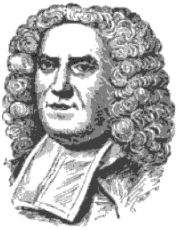
One can just imagine this guy. Not like John Adams who fled the farm to be a lawyer. Nope, Rev John was involved with physical labor all of this life. And, he was noted to be an inspiration of the Declaration of Independence. The image is about the 1689 event where the colonials rebelled against taxes. Mind you, from 1620 until later in the 1640s, the colonials were more or less here and living freely. We will look at what led up to this event. Why? When the Patriots were getting hot-headed (again, a cousin, Samuel of the beer), someone published a pamphlet written by Rev. John decades prior.  

We need more types like Rev. Wise, especially in the age with the digital illusions grasp people psychologically and wreck havocs on lives that way. And, let's count the other ways of mischief. Don't doubt that we can do this. Well, that needs to be our technology focus which will go forward with our arguing the importance of psychology and other studies that deal with humans. 

---

Aside: We have waited a whole for this: in 2026, we have the 400th of Conant's moving from Cape Ann to Naumkeag which became Salem: Massey's Cove. 

Remarks: Modified: 07/01/2025

07/01/2025 -  


Saturday, November 22, 2014

Web site

Status: 11/23/2014 - 0600 PST, site is up and running

---

Web site availability reports ought to be regularly supported. Today, I noticed that the thomasgardernsociety.org site was down about 10:00 PST.  As of now, 15:25 PST, it was still not accessible. The service provider has a general comment about no ETA.

webhostinghub notice
of outage
However, they did say that there would be periodic updates. Well, five hours is way too long for such a period, IMHO. But, we'll have to see how this goes. 

The last noticeable outage was in June of this year. Prior to that, there had been no down times that were significant. Meaning, one expects to have tie ups due to several factors that users need to know.

On the other hand, the whole notion of who owns what is an on-going debate (part of the "neutral net" arguments, to boot). We have dealt with this the sense of content versus configuration, for one.

Web presence, that persists and evolves, will be an integral part of any communication strategy in the future. How this looks may differ wildly from our current level of technology, but some of the issues will remain hotbeds of discussion.

---

A note went out yesterday about the TEG publication. The note points to our repository of papers. The email server is co-joint with the web traffic handler. Is that good? Well, all sorts of questions will be addressed.

Status: (see FB)
      Under the auspices of Gardner Research, sponsored by the Thomas Gardner Society, Inc. 

      Switlik, John M. "John Sayward/Soward of Gloucester/Ipswich" The Essex Genealogist (TEG) Vol. 34, No. 4, November, 2014, page 210; In 1791, John Graves of Ipswich, MA married Elizabeth Sayward. Who was she? To answer that question, we need to look at Elizabeth’s parents. The article shows that her parents were John Sayward and Elizabeth Leatherland, of Ipswich, and, then, answers the question: who was John Sayward?

      Includes ahnentafel of an aunt of Dr. Frank A. Gardner, author. An earlier article covered his grandmother, Lucy Foster Wilson. Next up, his grandfather, Benjamin Brown Gardner.
Remarks: Modified: 11/23/2014 

11/22/2014 -- Started a post on the technical blog, using Word Press. The general topic is content management, however content, as an abstraction, has many levels. The discussion started two years ago when we had to move off of Microsoft's site and has continued. ... There are many troubles that we see with computing; now, some of these are old and gnarly, while others are due to the recent technological advances. You see, value from change is not always a positive thing. We will go more into that.

11/22/2014 -- 18:37 PST, still down.

11/23/2014 -- 06:00 PST up and running; need to check email status

Tuesday, September 30, 2014

The Gardner Annals, Vol I No 2

This post introduces the second issue of The Gardner Annals (Volume I, Number 2). This issue provides a look at part of an extended family; as well, ahnentafel charts (fully sourced for births and deaths) for two individuals cover six generations. In one case, the ahnentafel is fully defined. Several Cape Ann families are represented.


The Gardner Annals supports the interests of the Thomas Gardner Society, Inc.'s purpose: to honor the accomplishments of the Cape Ann party and to promote, and to sponsor, scholarly research of a cultural, biographical, historical, and genealogical nature, with an emphasis on, but not limited to, the origins and the lives of New England immigrants.

Submissions of articles for consideration are encouraged: algswtlk[at]aol[dot]com.

Remarks: Modified: 11/21/2014 

11/21/2014 - Switlik, John M. "John Sayward/Soward of Gloucester/Ipswich" The Essex Genealogist (TEG) Vol. 34, No. 4, November, 2014, page 210; In 1791, John Graves of Ipswich, MA married Elizabeth Sayward. Who was she? To answer that question, we need to look at Elizabeth’s parents. The article shows that her parents were John Sayward and Elizabeth Leatherland, of Ipswich, and, then, answers the question: who was John Sayward?

Includes ahnentafel of an aunt of Dr. Frank A. Gardner, author. An earlier article covered his grandmother, Lucy Foster Wilson. Next up, his grandfather, Benjamin Brown Gardner.

Tuesday, October 31, 2023

Little Essex, town and county

TL;DR -- One might say, Halloween thoughts. But, no, we're talking the eve of All Saints Day. Nutfield Genealogy mentioned, as will be eternal, Essex of Essex County, that little place. And, the theme was of the time. So, we looked at Essex and what we have researched, with lots more to do. Then, there is a comment that brings things forward to now. As in, the 400 years of progress has not been in vain. 

--

Per usual, we ran across a post that was relevant to today, the eve of the All Saints Day as well as containing seeds for future research. Let's recap a few things and follow that up with a few things that need more attention. 

"Little Essex" refers both to a town and a county. Essex County contains Salem and surrounds. Also in Essex County, one finds Essex the town. We have written a little about both. Here are a few examples. 

  • Essex County, then and now (Aug 2022) - Shows a graphic (map) of the area as it was in 1692 and as it is now. 
  • Shipbuilding in Essex (Sep 2022) - This was an interesting find. We had not thought of that sized vehicle being made in that area.
  • Newbury Essex County MA (Oct 2022) - Later, we went back and looked at this area which handled much larger vessels. 
  • USS Merrimack (1798) (Jun 2012) - This may have been the ultimate find which pertainted to a gift from the folks of Newburyport to the new country.  
  • Shipwrighting (Jun 2021) - Interesting technology. We were impressed by the capability of the group that came very early, into Popham, established a colony, and built a boat (Virginia) that was seaworthy sufficiently to cross the Atlantic several times. Maine has been featured in a post.
As an aside, we have been fascinated by the big iron ship work in Bath, ME and almost went that way. However, it was the ships of the sky that was our lives where weight is a major concern. We will get back to these topics from a technology perspective. 

--

With respect to the times, we point to a post that was at the Nutfield Genealogy site in Apr 2010: Body Snatchers 1819. Our first post was in Sep of 2010. Several things caught out attention. For one, John Wise was of Essex (Chebacco Parish of Ipswich - see image). We have featured Ipswich quite a lot (Ann's heritage is full of families in Essex (all over the place). More below on Rev. John.

But, it's of interest to dive into the details which we will gloss over except for this. The person involved was banned and went to DC. Oh, how timely? That's not political. Then, his efforts led to what is now the George Washington University down there by the Foggy Bottom and other stations of the Metro of the area. 

BTW, notice that some places have gotten more attention, like LA of late and San Francisco and the large interior of the US, as these are where we lived or spent working time. Ann grew up in Essex County (Salem, of the day, too, to many - we think Andover) and went west. John grew up in the middle of the country and lived mostly in the west with some east coast times thrown in. We would like to feature more about places with Gardner descendants (or those of Essex County or MA or New England) live now and how they (or their families) got there. Ann's work with D.A.R. has helped us fill in some pieces of the puzzle. And, mentioning D.A.R? The 250th of the US is coming up; so too, Gloucester (little site of great expanse) of little Essex County MA looked at its 400th this year. 

---

Rev. John Wise was an Indian wrestler. There is, at least, one story of his prowess. But, he was also a farmer and a Harvard graduate and a minister. Too, he was the inspiration for the Declaration of Independence. This influence came though he lived over 150 years prior. Technology would come into the discussion. In the time of the turmoil (say of Samuel Adams), Rev. John's books were republished. Our final bullets relate to this. One is from this blog. The other comes from the Ipswich MA site. 

Remarks: Modified: 10/31/2023

10/31/2023 -- 

Monday, December 28, 2020

Revolutionary experiences

TL;DR -- Some Patriots and the Rhode Island event.  

---

So, finally, to the work of the other day after a few diversions: Recognition of Dr. Frank, Charles Alcott Flagg, and, then, Thomas Franklin Waters. These three were related to the motivations for this post which includes looking around for details that might be of interest. 

Below is a collection of entries related to service during the Revolution that was  documented after the fact. Partly, this is motivated by the interests of DAR and SAR, but there are larger issues that we wish to address, in the future. There are entries from the records of two individuals. The records start in 1775. There are several entries for one of the individuals. Finally, we end up with the Battle of Rhode Island and after. It may be interesting to note that there were three more years to go. The conflict went until 1783. 

Too, this is a cursory look which is meant to suggests where we will put some attention, since we can no longer ignore the details. For one thing, the 250th is coming up. So, we would like to be prepared. Then, as we mentioned earlier, history is told by the upper crust. Looking at some details related to other folks is something that can now be facilitated by the computer.  

In our work, we would not look through related documents such as Dr. Frank did with his study of Massachusetts regiments. Unlike Dr. Frank's day, we now have printed or digital records to access, thanks to those forward-looking people who got this work done. Too, like the RI event, we need to stop and consider what the record entry was referring to. Given that, our focus will be on the individuals, who will not be identified in the beginning.

The examples are 1) an older Major (Essex Co) and 2) a younger Private (Plymouth Co) who became a Corporal, both lived in Massachusetts. 

  • Ipswich. Major, Col. Henry Jackson's regt.; Continental Army pay accounts for service from Jan. 1, 1777, to July 9, 1778 ; reported resigned July 9, 1778;
    also, return certified at Camp near Morristown, April 30, 1780, of officers and men belonging to Col. Lee's, Col. Henley's, and Col. Jackson's regts., and men belonging to Massachusetts in Col. Henry Sherburne's regt., who were incorporated into a regiment under the command of Col. Henry Jackson, agreeable to the arrangement of April 9, 1779; rank. Major; residence, Ipswich;

  • Pembroke. Private. Capt. Freedom Chamberlain's co., Gen. John Thomas's regt.; muster roll dated Aug. 1, 1775; enlisted May 3, 1775; service, 3 mos. 6 days; also, company return dated Roxbury Camp, Oct. 6, 1775; also, order for bounty coat or its equivalent in money dated Camp at Roxbury, Nov. 9, 1775;
    also, Private, Capt. Amos Turner's co., Col. Titcomb's regt.; service from April -, 1777, to the middle of June, 1777, 2 mos. 6 (also given 2 mos. 7) days, including travel (120 miles) out and home; company detached from militia and marched to Tiverton, R. I.;
    also, list of men mustered by James Hatch, Muster Master for Plymouth Co., to serve until Jan. 1, 1778, or during the war, endorsed " July -, 1777;
    " Col. Robinson's regt. ; enlisted by Capt. Stowers ;
    also, Corporal, Capt. Seth Stowers's co., Col. J. Robinson's regt.; enlisted July 1, 1777 ; service, 6 mos., at Rhode Island;
    also, descriptive list of men raised in Plymouth Co. for the term of 9 months from the time of their arrival at Fishkill, agreeable to resolve of April 20, 1778;
    Capt. Bonney's co., Col. Cushing's regt.; age, 19 yrs.; stature, 5 ft. 11 in.; complexion, light; residence, Pembroke; arrived at Fishkill June 10, 1778 ;
    also, list of men returned as received of Jonathan Warner, Commissioner, by Col. R. Putnam July 20, 1778 ; engaged for town of Pembroke ;
    also, Private,Capt. John Turner's co., Col. John Jacobs's regt. ; enlisted Sept. 4, 1780 ; discharged Oct. 30, 1780 ; service, 1 mo. 27 days; regiment detached from militia to reinforce Continental Army at Rhode Island for 3 months.
Both records specify the organizations that the person was associated with. The records in the enlisted example indicate multiple musterings, through time which agrees with the history of the organization (Wikipedia). We see several things to research further: Massachusetts Line was used for the military organizations of that state; Morristown, NJ was considered the headquarters across the colonial States; the relationships, and how closely they might be, as we continue our studies of collateral families.

This was a brief look at military records as detailed by the Massachusetts project. From that, we can consider other details of the individual's life. For instance, taking the private, what did he do between his militia stints? And, in the locations where the service is depicted, what were the events? How did the locals fare? 

There is really no end to what can be considered of interest. McCullough, with others, has shown us that. And, we have on-line resources with which to do the work, including publishing research results. 

Remarks: Modified: 12/16/2022

12/16/2022 -- Changed pointer on the Battle of "Rhode Island" to Wikipedia. 

Sunday, June 17, 2012

Gardner's Beacon, Vol. II, No. 3

It was not long after the end of the Revolutionary War that events started to lead to the conflict of 1812. The young country had its hands full on several fronts. Defining how it was to be was one of these. Too, it was a new type of thing, a democracy in evolution, that needed to be spelled out. Are we not still at that?

Then, there was harassment coming from the north and on the sea that rankled the American populace. Following the War of 1812, a couple of generations later, was a succession of states that led to a Civil War. It is of interest to see the seed for some of this earlier in the century.

The USS Merrimack (1798) was a gift from the shipbuilders, and others, of Ipswich to the U.S. Navy to help handle the sea issues, such as piracy and privateering by the French. See XYZ Affair at the U.S. State Department.

---

See Vol. II, No. 3 of Gardner's Beacon for a brief look at the War of 1812 and New England's roles.


Remarks:

03/09/2019 -- Add in a reference to the Quasi-war (and the XYZ Affair) with France that was during the last years of the 1790s.  

Modified: 03/09/2019

Thursday, August 25, 2022

Essex County, then and now

TL;DR -- Little Essex gives unending reason for research. It was used for the purpose of discussing the gerry-mander phenomenon. This post looks at views of the county in terms of maps of its internal boundaries. There was a lot of shuffling in place, with lots of the changes happening early. We will be looking at that further. 

---

We have had a few posts about the subject, Essex County; two of the posts mentioned the Essex National Heritage Area. The latter has been sponsoring events related to the upcoming 400th, such as a photography contest which resulted in tremendous photos of the little county that nestles in the northeast part of Massachusetts. 

Expect that we will always include Essex County in our work as Thomas and Margaret started their American lives in Gloucester which celebrates its 400th next  year. So, there will no ending to tales of the county even when we look at the western part of the U.S. in all of its grandeur. Our work has shown us the long reach of Essex County, Massachusetts, and New England. 

Of late, we relooked, in a post, at the Gerrymanding theme which comes and goes from time to time, usually around election events. We had seen the graphic before and enjoyed knowing more about the subject. 

Today's theme is just that. Let's look at a graphic from FB. 

 For more detail on the map, see the FB images: then (1692) and now. When we were first researching the topic of Thomas Gardner (Salem Planter), we noted that the cities/towns of Essex County cover the whole thing. Out west? Many places have huge counties with cities/town sparsely around and about. So, one finds many lonely places (long roads to nowhere, some say). But, even back east, one can find the unpopulated areas. 

Back in the day, people went to the wilderness to pioneer. We have lots of examples of that, as western movement was there from the beginning: let's look at Virginia. Up north, we had Ipswich Canada fairly early. BTW, the theme of America's Lost Generation will be considered more thoroughly. It's related to the frontier and is seriously misunderstood. 

Now, back to Essex county. Notice how almost all of the larger areas were split. Salem grew into Peabody, Danvers, and Middleton. Lynn split into three. Ipswich, Andover, and Newbury were trimmed. Only Gloucester remained somewhat intact, though it lost Rockport. 

Salem suffered more loss in this sense? Not really, as the place still shines in the American imagination. Too, That was the 2nd place for Thomas and Margaret. So, many more things to look at and consider are there, awaiting attention. 

Some of the changes happened early enough that the resulting entity can celebrate their 400th no long after others. Some changes were done much later. Lots to look at.  

Remarks: Modified: 08/27/2022

08/26/2022 -- We need to mention the 400ths that are coming up, some of these have already started, such as Weymouth (Norfolk County) this year as the first one post Plymouth's celebration. Gloucester's starts in January of 2023. 

08/27/2022 -- Put link to the Lost Generation post related to the frontier. 


Tuesday, October 11, 2016

NEHGR 2016

A few articles researched and written under the auspices of Gardner Research are in a reference list in the latest issue of the NEHGS Register. These appeared in The Essex Genealogist in 2014.

NEHGR Summer, 2016
Links to the articles are provided in this table.

Title
TEG copy
The Gardner Annals
Ahnentafel
The Graves family of Ipswich 34 (May) Vol IV, No. 1 - II  ...
The Trials of the Wilson family 34 (Aug) Vol I, No 2 - II Lucy F. Wilson
John Sayward/Soward of Gloucester/Ipswich 34 (Nov) Vol I, No 2 - III Susan C. Graves

Lucy F. Wilson is the grandmother of Dr. Frank (review plus his ahnentafel).

Remarks: Modified: 12/07/2018

10/11/2016 -- Two more articles referenced in Summer 2017.

12/07/2018 -- Wrote of the TEG experience, first article, in TGA, Vol IV, No. 1.

Friday, February 24, 2017

U.S. and us

Research continues. There is a lot to do as the scope keeps expanding. Part of this is due to just becoming aware of what was there and to the queries about things Gardner.

As well, I am looking further into Nathaniel Eaton. His experience can stand as the dart board for a whole lot of discussion; and, this bit of debate would be apropos to our times. Pending is a further look at Sir Christopher Gardner. The tales that are commonly told are both off the target and incomplete. So, we will weigh in there. Seems that there might be a relationship with Thomas. We'll see.

Mentioning Eaton. He came up since Harvard has lots of appeal and gets a lot of attention. As it ought. Why? It comes out of the New England experience. And, despite some arguments otherwise, those times of 400 years ago have meaning for us now.

And, getting to Harvard, we will be looking at one early graduate (pre-1700). He was said to be an inspiration for the Declaration of Independence. Now, the Philly crowd (my characterization) gets a lot of attention. Genius, we hear. And, the Constitution. Stands as God-given, does it not? However, those later guys relied upon work done prior to their time. I have a little better grasp of that now having looked at parallels twixt the Massachusetts (and its surrounds) and Virginia (and its surrounds) experiences. Some were in both places, such as our friend, Nathaniel.

About the inspirational guy, as said by Sibley, Calvin Coolidge, and others. Sibley said that they republished this guy's books in 1772 as debate fired up. We are talking Rev. John Wise from that interesting place called Ipswich. We will get more into that.
John's wife was the daughter of Thomas Gardner of Roxbury. So, as this chart shows, there was a merger of the two Gardner families just before the U. S. Civil War.

Chris Chester (Descendants of Alice Freeman - ancestry's support for rootsweb went) has an interesting site. He decided to document descendants of Alice. We were happy that we could add information about daughter, Mary, who was the oldest. BTW, the Hodgkins is brother of the Colonel featured by David McCullough in his look at 1776.

Now, John is also noted for being jailed during the tax turmoil in the 1680s. That is, he led the first tea party, so to speak. Dudley had these guys fined. The Governor had them jailed. Later, John sued Dudley and won; the claim: not allowing rights of habeas corpus. 

So, "all things Gardner" covers a lot of territory. 

Remarks: Modified: 10/29/2023

03/01/2019 -- Changed the image as we are building an index by images at our portal to truth. 

10/29/2023 -- Changed link from "storiesfromipswich.org" to "historicipswich.net" (for Rev. John Wise). Removed link to Chris Chester's site at rootsweb. 

Monday, March 13, 2017

Thomas Gardner of Roxbury

There are always questions coming up with respect to "all things Gardner." Dr. Frank summarized what he knew about colonial Gardner families in both versions of his book. See image from the 1933 edition: Gardners and Gardners.

This post is about part of the family of Thomas of Roxbury. One of his sons-in-law is the Rev. John Wise. In this post, we will pull together a few things related to Rev. John in order to set the stage for further discussion.

But, first, let's look at his grandmother, Alice Freeman. This graphic (adaptation from Chris Chester's site on Alice Freeman) shows how she relates, as well, to some descendants of Thomas of Salem.

Alice was coined uber-mother by Gary Boyd Roberts of the NEHGS. Her daughters are the forebears of many prominent New England families. Too, Alice is from an ancient Anglo-Saxon line. So, we will be looking at that further.

One purpose for the image is to show the timeline that ends near the middle of the 20th century. Since then,we have several more generations at hand. What is coming up will be the 400th of those first entrants and their lives. You know, the 300th needs some attention, as effects from the War of 1812 were wide-spread (see Gardner-Pingree House).

Now, Rev. John, who was from Ipswich in MA, was called one of the inspirations for the Declaration of Independence (DoI), by President Calvin Coolidge. In the Stories from Ipswich blog, there was some discussion about the motivation for the comment. This image provides a snap of the post showing words from Rev. John and the DoI.


Given the times, we see a lot of interest in the subject. An example is the musical, Hamilton. Alexander is of the Philly crowd (see How powerful is the U.S. Constitution?). But, lots happened before then to set the stage.

As Dr. Frank mentioned in his series of monographs related to the Boston Massacre, many at that event had trained militarily and served under the King (see Regimental History Series).

Now, Rev. John is of interest due to his being both a Harvard graduate and a working man. That is, the Rev. put his muscles to work (those other than the brain). Of course, at the same time, there were clergy who only diddled in religous issues. Too, we had lawyers. But, somehow, the lessons from Rev. John have been lost on the populace. He was no pretend Lord of the realm.

Remarks: Modified: 07/03/2017 

07/03/2017 -- We mention Rev. John in the summer issue of Gardner's Beacon.

Saturday, July 11, 2020

American Ancestor database

TL;DR -- Wherein we see that our publications make it into the NEHGS database.  

---

We will be getting back to our bibliography and other collections in the near future as we work toward defining our 'app' view. There was a query the other day about the motivations for people coming here. We mentioned Albion's seed where the Plymouth, Cape Ann and are Massachusetts efforts were seen as reconnaissance. Nice to be pigeon-holed. But, we have written other posts on this theme: Black death, Origins - motivations, and more.

But, the discussion got back to this History of Massachusetts post: The Great Puritan Migration. We like the site; too, we get a local focus which is nice, albeit we do have to broaden the scope as we go forward. That is, of the underlying database which needs to be inclusive. Then, filters would be one of the many options offered to tailor views. Of course, always have some thread back to Thomas Gardner, Cape Ann, and those early times. With we need to add, filler material that follows families all the way to now. We have already started this with The Gardner Annals.

Recently, the American Ancestor's database was updated with TEG vol 34 issues. It was in the Spring of 2014 that we put out our first article in a common framework. That went on for over a year after which we got involved in activities that were associated with the purpose of a wider view. Too, it was then that the Quora facility became more popular, hence we have published many posts there that relate to the themes of our research. Plus, Quora is an interdisciplinary framework upon which are great looks at any of the technological advances that face us while many times being a puzzle. One truth is, 'code' is needed for proper management of truth, or maintenance, in other words.

So, due to the availability of the first three articles, here is a pointer to them within TEG v34 (each link requires one to be logged into NEHGS' site). Next up, we hope would be Vol. 35 with more articles, one on Dr. Frank.


Remarks: Modified: 11/10/2020

07/12/2020 -- Earlier notifications dealt with the articles being indexed within the NEHGR: v34 in 2016, v35 in 2017. 

Thursday, July 31, 2025

Cannons from Ticonderoga

TL;DR -- George Washington took control of the Revolutionary Army on 3 Jul 1775. He spent 11 months in the Boston area. Henry Knox convinced Washington that he could bring cannons from Fort Ticonderoga which Ethan Allan had captured earlier in the year. Knox succeeded, and the cannons were placed on a hill overlooking the British encampment which resulted in the evacuation of Boston.  

--- 

Early, in our research, we saw a reference in Joseph Felt's book on Ipswich to cannons from Fort Ticonderoga being used at Boston during the Revolutionary War. This British fort has been captured by the Green Mountain Boys of Ethan Allen. 

Traversing winter landscape
in New England pulling cannons
(took months)

Yesterday's look at George Washington's role during the Siege of Boston got us to look further. Below, we summarize what happened and provided links to further research. 
  • Washington Takes Command of the Continental Army - Massachusetts History's overview. 
  • Henry Knox Trail - this page shows commemorative markers along the route taken by Knox. 
  • The Knox Trail - report by the Hudson River Valley History organization about the 1926/7 effort by the States of New York and Massachusetts which provided the map below. 
  • The guns of Ticonderoga - gives an overview of the event, with the consequence of the British rmoving their huge force and ships. 
  • Dragging cannon from Fort Ticonderoga to Boston, 1775 - letter from Knox to Washington written along the way. 
  • Henry Knox Cannon Trail - there are two Revolutionary War Routes in the Hudson River Valley covered in the page. The second is the Washington-Rochambeau Revolutionary Route related to northern events in the war during which the French joined in the fray. After success in the north, the majority of the focus was the south.  

There's a lot more to look at. But, the cannons had arrived by March, later than expected. Once they were in place, the British commander opted for them to leave. But, looking at the size of the equipment available to the British, one is amazed by the success of the maneuver. 
  • On the night of March 4, the cannons were moved into position on Dorchester Heights, overlooking the city and the harbor. On March 5, when British General William Howe learned what the colonists had done, he exclaimed that “these fellows have done more work in one night than I could make my army do in three months.” On March 6, 1776, he gave the order to prepare for evacuation. On Saint Patrick’s Day 1776, 120 ships carried 9,000 British soldiers, 1,200 dependents, and 1,100 Loyalists out of Boston. On the deck of one ship, the merchant George Erving told other Loyalists, “Gentlemen, not one of you will ever see that place again.”
Remarks: Modified: 08/26/2025

08/01/2025 - Edit typos; changed Felt's book from Salem to Ipswich; added image of the cannons being pulled by oxen, horse, and men. 

08/17/2025 -- Spelling change: Massassachusetts to Massachusetts - I'll blame it on repeating characters forming repetition of a group of characters ;>). Though I have the writing assist turned off. Errors let the world know that the typist was human. Being a touch typist, there is always some delta difference twixt what the mind thinks and then imagines and then what the fingers do and finally how the magic of input from keystroke to blips on the screen for the eyeballs to see as empirical evidence. 

08/26/2025 -- Turns out that a church in Trenton, NJ was site of some of the fighting: St. Michael's. We did a post on that today.