Showing posts sorted by relevance for query motivations. Sort by date Show all posts

Tuesday, August 4, 2020

Origins and motivations

TL;DR -- As we go forward, we want to keep ties with older material so as to have a cohesive view always in place. From time to time, that type of review would be published via The Gardner Annals. However, a focus is providing constant entries via a portal to truthful tales of the past and to a discussion of their current relevance.

--

We have had several posts on two subjects: origins and motivations. The former subject covers several areas, especially issues related to 'whence' (that is one huge thing to learn about Thomas and Margaret). The latter considers all of the factors that might have resulted in reasons to leave. Of course, we have the work of Frances Rose-Troup to look at, albeit an update is in order.

All of our posts accumulate, and contribute, toward a growing knowledge base, using the modern parlance. That is, we have such an intent. With several years under the belt, we can, from time to time, look at a topic with regard to its relevance and to concerns over the years of our study. That is, we might be more regular and looking at status and focus.

These four posts are of interest.
  • Black death (Nov 2012) -- In the 1300s, the plague killed 50% of an area in Weymouth which is located in the southwest. There were outbreaks in the 1600s and the 1700s. Of course, there were issues in the New World, too. But, we need to remember this contributor to turmoil
  • Plus or minus the arrival (Mar 2013) -- As we get more attuned to the look backs, we will also keep aware of what was going on back in the Old World. For instance, Baruch Spinoza was born in 1632 which is two years post the arrival of John Winthrop. We can remind ourselves of events along the whole of the timeline. 
  • Origins - motivations (Mar 2013) -- There are many ways to slice various looks at the past which is what can make history interesting. We now have technology that allows even more types of variety in presentation
  • General crisis (Mar 2019) -- Globally, the 17th century was stressful in several ways that bear some attention. This post was a year prior to our recent experience with COVID-19. In the 19th century, we had the Spanish flu; before that, about 200 years, we had an epidemic in New England. 
A huge theme for us is the pending 250th of the U.S. which fits nicely into the other areas of concern. Along with that major event, we have to focus on what went on before, especially from the viewpoint of Cape Ann and Massachusetts; as well as, we can provide a means to look at how the U.S. has unfolded over the past two decades with the expectation of contributing to necessary analysis and change.

Remarks: Modified: 08/11/2020

08/11/2020 -- We have used categories in the post. We also have used pages which allow some structure. Then, we have the other media to consider. One thing is definite, we will have lists of important topics. On these, we will find Origins and Motivations.

Wednesday, March 6, 2013

Origins - motivations

We brushed upon origins a few times: Historical genealogy, How many wives?, and Black death.The first post of this blog asked about the ancestry of Thomas and Margaret.

As mentioned in the last post, we are looking at different periods that relate to lives of Thomas and Margaret. And the period right around the arrival (+/- 50 years) is a current focus.

And, motivation for leaving is always a concern. This post looks at an issue that culminated around the time of Thomas' great-grandfather. The influence from the particular conflict was deep. In fact, about that time, over a century of conflict came to an end.

Of course, after the peace, turmoil continued which we'll get into. For now, let's consider the case of the bickering cousins. In a sense, all the conflicts on UK (and related areas on the continent) soil were of this type. However, this one had very close cousins at each other's throat (extreme sibling rivalry -- gosh, are we any better today?).

So, it was a blood war, but not between rival clans. No, it was cousins vs cousins. There is not any reason to see this as unusual, as we'll also look at many conflicts between brothers before we're done.

People beheaded
War of the Roses
Aside: In looking at origins, this particular topic is important but is not the only one. We're starting with it due to entanglements. I don't know just how much we appreciate the reality on this side of the pond. That gaming has taken up the theme, partly encouraged by the Game of Thrones series (I liked the first two books; am not a gaming type; haven't seen any of the TV stuff), may tell something. Go to Google (or Bing), and look at War of Roses (images) and note the gaming interest.

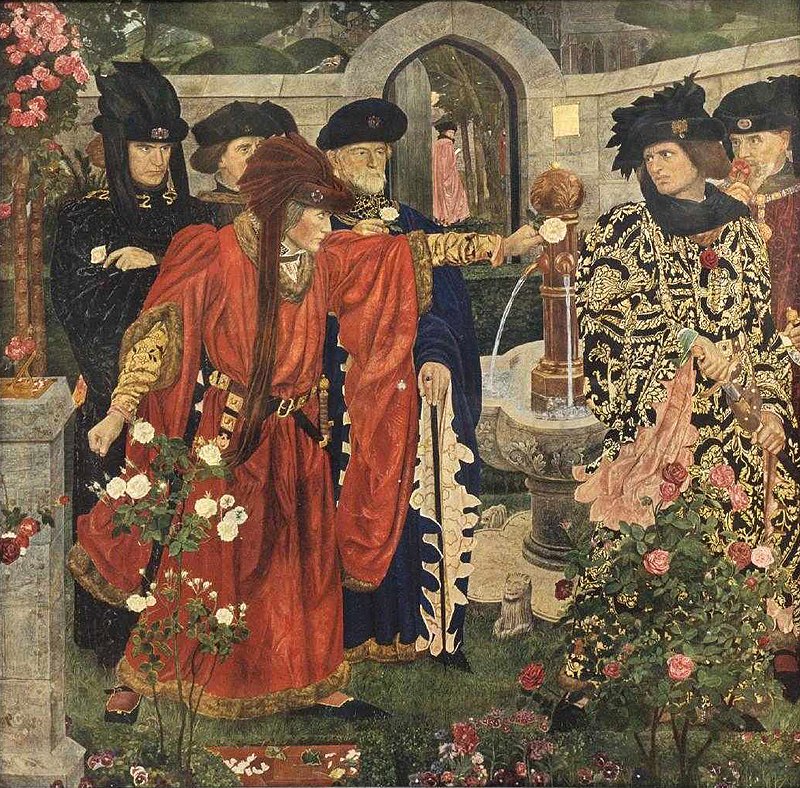
So, this image has a list of people who were beheaded during the period of the War of the Roses. It's not a short list, by any means (see the Wikipedia page). The two images on the side are the following: Choosing of the roses (below) and The execution of Edmund Beaufort, 4th Duke of Somerset (above). Edmund is in both of these paintings. He's on the right of the Choosing scene and the main character in the other. But, this is only a list of the noble class victims. There were many other casualties, such as the Two Princes. Too, what was the havoc wrought upon the general populace, of all of the classes?

---

This is one little example. Does England look to be a pleasant place to be? One can appreciate the dreams of freedom that pushed people off its shores, even if these were illusory at the time (did you know that there were early hippies - Merry mount). Yet, there was a less oppressive nature in group that came with Thomas and Margaret than later (of course, about now, we need to mention that Plymouth's involvement will be covered, to boot). It was not long before a hammer was sent over (another whole story). One can also understand the appeal of the Quaker point of view which figured heavily in Thomas' later life through the influence of his last wife and in the lives of some of the progeny.

So, we've barely kicked off a look at origins with a brief touch on motivations.

---

As said before, whatever the motive, Thomas came here, raised a family thereby leaving a legacy, supported the founding of the civilization that became the U.S., and has tales to tell about his life and character. It is for us to discover these and preserve them for posterity.

Remarks:

04/04/2025 -- David T. Gardner has been exercisting Grok with prompts and reports finding documents that support his claim about Wyllym Gardynyr (see King Slayer Court blog). ... We have begun to incorporate changes into the structure and context of the blog. See Restart, somewhat

08/11/2020 -- We have used categories in the post. We also have used pages which allow some structure. Then, we have the other media to consider. One thing is definite, we will have lists of important topics. On these, we will find Origins and Motivations.

07/21/2020 -- The theme carries on in our work.

07/16/2016 -- Related work: Gardiners and Gardners.

07/12/2015 -- Okay, turtle speed. But, we get there. Announcing a new project: Sherborne, Dorset. No doubt, it is about time. When finished with the data collection and analysis, we will present the strongest story (the prerogative of the family) that the facts, and abductive reasoning, will support. As such, we hope to demonstrate some very much needed research viewpoints.

02/12/2014 -- The motivations theme will arise, recurrently, as we look at telling the stories.

06/15/2013 -- John Farmer wrote that Thomas was from Scotland. Origins are, and will be, a focus.

03/31/2013 -- The recent Gardner's Beacon issue looks at priors. On the War of Roses, not only were the participants blood relatives, they were Christian, ostensibly. So, an Easter thought is in order: was not their behavior as far from what Christ would have wanted as was possible? Then, again, how close to such an ideal was the Crusader behavior of their ancestors? 

Modified: 04/04/2025

Thursday, June 27, 2019

True stories

We are reviewing our material and looking at common themes, such as houses. While researching for Gardner's Beacon, Vol. IV, No. 1, we wrote this post: No shadow over Thomas. The gist of the matter was that a researcher was talking about the motivation for the land grant to the Beverly group, Conant, Balch, Woodbury, and Palfrey. It was noted that the gents were worried of losing privileges.

Thomas isn't recorded as having any reservations. So, we need to discuss that. Endicott called him Mr. Gardner. Whether we're talking strength of character, being knowledgeable, pedigree, or some combination of those and other factors, we have found no bad mouthing of Thomas. Well, Anderson noted the thing of some grave conflict. But, that was son Samuel's doing. Thomas was dead at that point.

So, what is this all about? Well, a recent comment, in a blog, says that Roger found a mess when he appeared at Cape Ann. What? They were quite well and taking care of themselves. From notes for Gardner's Beacon, Vol. II, No. 6.
    That brings up a new view though. Thomas' crew put together a house their first year. Too, they did come prepared and were successful in establishing themselves. The only failure was not having sufficient output to send back to the capitalists in England. What White may have wanted was for them to send what they needed to sustain themselves, but reasonable folks do not do that without the threats of the taxman or strong arm (those who came here were not serfs, in other words).

    When Conant showed up, he didn't find starving people. He found a boisterous group. The use of insubordinate shows White's failure (hey, some descendants of Thomas, such as Dr. Frank, have White on the tree more than once). The effort was not a military expedition. It was a plantation building effort.
We also addressed that, here Cape Ann, Retrospective and elsewhere. We need to focus on the events prior to 1623/24 plus a few years after. And, that means looking at the whole of the affairs.

Take Thomas Weston. Briefly, he is run up the mast several ways. The Maypole affair is associated with his group. But, this was a legit attempt at establishing a colony. We'll get back to this below.

First, there are several motivations, but we know of two that need to be re-addressed. Take Sir Christopher Gardiner. When we first read of him, we only saw the Winthrop-influenced take on the matter. Then, we ran into a re-write that is not generally used. And, found another. That is, the story that is told is not the right one. Propaganda?

Then, after we found out that Dr. Frank was a descendant of Nathaniel Eaton, we saw that he had not raised that to general awareness. Why would he? It's a mess, Harvard (and, we'll retell this story from the perspective of descendants). We have written several posts about this plus one summary overview of Nathaniel's life.

Okay, there had been several attempts prior to the Dorchester effort: Sagadahoc (1607-1608), Plymouth, and Wessagusset (1622-1624). Some minor ones will be added as we continue. And, we want to address these as well as other motivations. For instance, we have these notes for Gardner's Beacon, Vol. III. No. 3:
    Every March small ships of between thirty and eight tons, manned by crews of twenty to forty men and boys ... carried salt, provisions, equipment. Brought material for their boats. Took two months to get here. Put their boats together and fished.

    Split the work between fishing and salting. Fill the hold and return in autumn.

    Crews were gathered yearly by the master. Principally young, fifteen to twenty-five years old. Many were trying to get money to get established in their home area.

    At first, Newfoundland. Then, Gulf of Maine.
There were lots of reasons for people coming over. Whence, origins, and motivations will be a theme for further research for a long while.

Remarks: Modified: 12/29/2020

06/28/2019 -- Added image so that we can index.

12/29/2020 -- A few edits as this is on the image at FB with respect to this date in 1674 (death of Thomas Gardner in Salem, MA). 

Tuesday, August 11, 2020

Reasons ... for New England

TL;DR - Why did people come here? That is, to this side of the pond. Lots of reasons. Boone is an example of a later arrival who made good.

--

Recently, we revisited the topic of Origins and Motivations. In that post, we listed earlier posts dealing with the subject. As we proceed, we will be pulling posts from the past, into some type of cohesive view as this allows us to reflect on what we have seen as well as think about the future. And, we need to consider post-virus realities, for various reasons such as our sanity.

Speaking of reasons, we had a query about the motivations for New England. Our response went along this line which follows what we have run into the past decade.
    Rose-Troup (she researched the Dorchester Company in England for years), Albion's Seed (nice look at the paths that led to the U.S. from England), and on Dorset (great countryside).
However, let's broaden the scope. As a first step, we can look at the view of the Revs. White, Winthrop, and Higginson. At The Winthrop Society's site, we find this document: "Reasons for the Plantation in New England". It has a list of Reasons and then some Objections. We will go back through these, but let's look at one Objection.


In the introduction, we are told that the author is not known but that later edits were done by John Winthrop. The changes are in the hand of his son.
    Redacted and introduced by Marcia Elaine Stewart.

    The following document was found among the papers of Governor John Winthrop. Other abridged versions are known, and variously ascribed to Rev. John White, John Winthrop or Rev. Francis Higginson. While the true originator may never be known, suffice it to say that this copy was written in the hand of Forth Winthrop, son and sometime secretary of the future Governor, and has marginal notes by the elder Winthrop, dated 1629. It was evidently a widely distributed and influential piece of propaganda in furtherance of the proposed settlement of Massachusetts Bay, judging from the number of copies in various forms which are still extant, along with numerous responses pro and con penned by various interested worthies of the day. The Rev. John White probably conceived the initial nine arguments, but we suspect, due to the legal style of its arguments, that Winthrop has here substantially amplified it to its present form with the addition of the objections and answers. In any event, it is surely an expression of Winthrop's own views on the subject, and is of great significance in revealing the motivation of the colonists.
Now, we picked this objection since we have looked at the topic, example: The First Year. We quote Anne Bradstreet's reaction to the new environment. Now, why mention this? As people went west, or to any of the newer areas, it was the same thing (like Yogi said, deja vu, all over again).

Too, though, this type of material allows to discern some of the thinking of the time, especially since there is more of a meditative tone than the modern mind might like. Yet, are we missing something?

Remarks: Modified: 08/28/2020

08/28/2020 -- Daniel Boone will be a focus, for a while. Quaker family that came into PA pre-Revolutionary times. 

Saturday, July 11, 2020

American Ancestor database

TL;DR -- Wherein we see that our publications make it into the NEHGS database.  

---

We will be getting back to our bibliography and other collections in the near future as we work toward defining our 'app' view. There was a query the other day about the motivations for people coming here. We mentioned Albion's seed where the Plymouth, Cape Ann and are Massachusetts efforts were seen as reconnaissance. Nice to be pigeon-holed. But, we have written other posts on this theme: Black deathOrigins - motivations, and more.

But, the discussion got back to this History of Massachusetts post: The Great Puritan Migration. We like the site; too, we get a local focus which is nice, albeit we do have to broaden the scope as we go forward. That is, of the underlying database which needs to be inclusive. Then, filters would be one of the many options offered to tailor views. Of course, always have some thread back to Thomas Gardner, Cape Ann, and those early times. With we need to add, filler material that follows families all the way to now. We have already started this with The Gardner Annals.

Recently, the American Ancestor's database was updated with TEG vol 34 issues. It was in the Spring of 2014 that we put out our first article in a common framework. That went on for over a year after which we got involved in activities that were associated with the purpose of a wider view. Too, it was then that the Quora facility became more popular, hence we have published many posts there that relate to the themes of our research. Plus, Quora is an interdisciplinary framework upon which are great looks at any of the technological advances that face us while many times being a puzzle. One truth is, 'code' is needed for proper management of truth, or maintenance, in other words.

So, due to the availability of the first three articles, here is a pointer to them within TEG v34 (each link requires one to be logged into NEHGS' site). Next up, we hope would be Vol. 35 with more articles, one on Dr. Frank.


Remarks: Modified: 11/10/2020

07/12/2020 -- Earlier notifications dealt with the articles being indexed within the NEHGR: v34 in 2016, v35 in 2017

Sunday, September 11, 2022

England and US

TL;DR -- The transition of the U.K. from the reign of Queen Elizabeth II to that of Charles III allows us an opportunity to stop and consider the long-time relationships between them and us. We can track the 400 or more years of involvement; there is a 250th coming up of the resolution of our conflict; we are family, many ways, and therefore more for being allies than not; our cultural themes match up deeply; and more. The next few years will allow lots of discussion to come to fore. Too, it will be interesting to look at all aspects of our relationships. 

--

Coronation
2 June 1953
Queen Elizabeth II's passing requires some reflection on our part about the long-time relationship between the colonies (and the U.S.) and the United Kingdom. Her recently-celebrated reign was 70 years long. With the inception of the reign of Charles III, we can look further at the 400 years of history, especially in terms of our good times and bad. 

From our start with the work of the Thomas Gardner Society, Inc, we followed the adage of letting those over there worry about the details on their side of the great waters while we looked at the American side. That limiting choice helped us in the early years to keep a focus, but we always had questions come up from our readers. Origins was a common theme for query. Questions of origins are for the most part associated with motivations

Too, as we got toward 2015, the focus on the Magna Charta ramped up. It was in this context that we got familiar with the scope of research being supported by the internet so that a major author could mostly work out of Salt Lake City but publish details about records that were in England. Of course, there has to be local work, as well, which we will be looking into.   

As an example, it was in 2014 that we saw that Sherborn records were being digitized which led to more information about Margaret Friar's life and her marriage to Thomas Gardner. At that time, we started the WikiTree effort, mainly due to the quality of genealogists working there.     

As we know, the 250th of the Revolution is coming up which marks the violent split of our two worlds. After that, there was a slow reconciliation, post the 1812 deal, which got us back to being strong allies as one would expect within families. For instance, the Cornwall Duchy is where one finds Dartmoor Prison which held Americans. So, we can look at many events in our research. The story of the HMS Resolute is an example.   

Below are two graphs. One shows the Monarchs from the time of Alfred the Great (lower graph) to Anne. This graph has Charles II who was the son of Charles I who was beheaded. There are two Cromwell terms on the lower graph. We have barely touched upon the subject of the English Civil War which played out here, too. Part of this graph, too, covers the colonial period. 

The upper graph goes from Queen Anne to Charles III. Her son died leaving George I as the main choice for King. From that time, we can track down to the turmoil of the split in two generations. Anne is a good place to start this graph. Her conflicts bled over here and motivated a Pamphlet War. It was this conflict plus the French-Indian affair that trained the colonials in military matters sufficiently to pull off a revolution.  

Monarchs, from 1707

As we consider motivations, there are many years and events to consider. For instance, it was the time of John, a few generations past William I, who is noted for sealing the Magna Carta. His son, Henry III, reinitiated the document. Henry VIII, much later, started the Ancient and Honorable Artillery Company. Descendants of some of the members came to New England and founded the A&HAC of Massachusetts which is still an active group. There are many family relationships that are known, including there being U.S. ancestors of those in England. William Churchill is an example.  
The sons of Charles III are descendants of several families who immigrated to New England. 

Canadian Psychologist, Jordan Peterson, remarks that the U.S. and the U.K. have similar government divisions, namely the legislative, executive and judicial. The U.K. has an additional one which we might call symbolic and which is fulfilled by the Royal Family's involvement via the Monarchy role. 

One wonders about the absence of potential for that type of symbolic unification here. How is that void handled? The rich, famous, athletic, intelligent, military, religious, or other of a long list? 

Remarks: Modified: 09/11/2022

09/11/2022 -- 


Saturday, December 31, 2011

Posts of interest - 2011

Did a summary of summaries in December 2019. Started metrics a little later: the metrical.  

---

As a means (an attempt) to freeze a point in time (which we know is not possible), the last post of 2011 will list the top four posts in terms of having been read (well, views, anyway). Perhaps, this will be a yearly event.

Aside: As said in Mission and Method, posts are to contribute to a theme, though there may be divergent ones from time to time. Blogs allow categories, but these are problematic since they collect and present in a time order. From time to time, there ought to be a super-post that gives a more coherent view (here is an example - Truth, Fiction, and Finance). Perhaps, that type of thing will be done more often in the coming year.

Of course, I would be derelict if I didn't opine on why the interest.

Posts of interest, as of today:
  • -- Gardners and Gardners -- what's in a name? I have found off-spring for a lot of those on Dr. Frank A's list. Some writers have suggested relationships between these Gardners. Of course, there are some not in the book (they now appear in internet searches -- what would Dr. Frank A. think of the new resources?). One of our goals is to look further at these types of things. It cannot be done without going back across the water. Following paperwork can be problematic, as the genealogists know. Conjectures are nice, if supported; in fact, we'll have an example of that shortly in regard to Thomas and Margaret. There are too many gaps, in many cases. We can't just fill these in without some thoughtful reason. Some families have on-going research that is supported by DNA analysis. One that I found to be interesting is the Gordon family's work. 
  • Historical genealogy -- it is interesting that a very recent, and popular, series of books (at least, one of these was filmed) by a Santa Fe writer was based upon the War of the Roses. However, the tales were fantasized such as to appeal to the modern mind. Actually, just re-looking with a new eye ought to be very informative. That is one of our goals.
  • Welcome -- being a new blog, this post would still pop up. At some point, hopefully, another thread will supersede. Any predictions? 
  • Two generations -- we use nine children, as did the Great Migration study (six pages on Thomas). Some have added others. We will include all of the grand-children here, at least in a list, this coming year. We, inadvertently, had one featured this year: Ruth Gardner. That was due to my happening upon Frances Hill's book.  
Recaps: 2018, 2017 (missing), 20162015201420132012, 2011.

Remarks: Modified: 07/30/2021

12/29/2012 --  Summary - 2012.

02/26/2013 --  See Wikipedia for a discussion about William Gardner whose page has been deleted.

12/15/2018 -- Added in links to recaps from the beginning.

12/29/2018 -- This post is the 2nd most read of all time, after the post on the marriage of Thomas and Margaret.

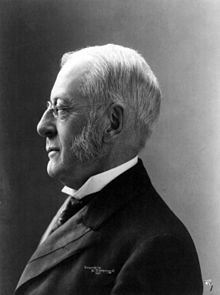
01/12/2019 -- To support an indexing by thumbnails, we needed an image. This post was multi-themed, so none stood out. However, motivations are always on the table as is the 'whence' issue. The image is from a post in 2013, however this post is still on the most-read list and is a good marker for us in continuing our work. The post: Origins - motivations. We started this blog from a blank state; we found out in our research that Thomas is a hard nut to crack. He was here, left progeny, but never left us his writing (beyond a signature). But, he was supportive of Conant when he arrived, Endicott when he arrived, Winthrop when he arrived. But, Thomas could only endure one session of the General Court. That is a story to look further into (we will). Later, changed to the image of Archbishop Gardiner.

Friday, June 7, 2024

National Rose Month

 TL;DR -- We are trying to have a monthly theme related to remembrance. June has Roses on its list. 

-- 

Last year, we started a list of topics for a regular awareness by month; in November, we honored American Native American heritage month. Every month has a list of topics to remember. In the US, May has Mother's Day. Then, June has Bride's month and Father's Day. 

But, June is also the Month for Roses. They're blooming in many parts of the U.S. which has quite a variety of zones for plants. Let's look at these as defined by the USDA (/Department of Agriculture). 

Hardiness zones 

Many botanical gardens in the US have sections where roses are grown and shown. Too, there are societies devoted to study and appreciation of the plant. For those wanting to grow roses themselves, one option is to put in bare rooted plants. 

----

Finally, back to genealogy and history, we leave with the painting of the rose choice in the garden. 

Wars of the Roses

Earlier, we wrote of the the Wars of the Roses as an example of motivations (Origina - motivations) for leaving England. 

Remarks: Modified: 06/07/2024

06/07/2024 --

Friday, June 14, 2013

Origins, again

Note: See this post: In summary. We have new information about the baptisms of the children and are in the process of researching to establish a proper narrative. For now, see comments at the WikiTree profile for Thomas Gardner. We will start with Rev. Hubbard who was there (1680 manuscript). 

---

To date, sources for the blog post and Beacon issues have been textual. The technical resource for these were several, including databases. That is, digitization projects have made many books available. There are several different copies of Dr. Frank's book (my favorite is at archives.org). Various groups, including collateral families, have websites. Some of these use database technology. rootsweb is another example.

A few days ago, knowing that we need to upgrade the TGS site to use more modern techniques (let's say that it is now, being generous, late 1990s). I started to look at options. Too, media types abound; genealogy might be dragging its feet (On blogs and other modern means), however presentation of this material will need to grow with advances. The NEHGS' emphasis of the relationship between history and genealogy gives more than enough motivation.

---

So, what if there were something presented about Thomas and Margaret using modern methods. Videos come to mind; too, though, gaming needs serious attention. So, I went looking to see what might be on youtube with regard to the Planters of New England.

Essentially, it was disappointing. Here are some examples why: NaumkeagSyracuse seriesEndicott, etc.

---

But, then I got side-tracked. I ran across a BBC series on the History of Scotland. I started in the middle and bounced around. Now, some experts harp at the series. To me, it was an eye-opener. As I listened, I went and researched what I was seeing. As well, trying to understand what it might have been like to live then. That is, preparing to address Thomas' decision to leave and to make a live elsewhere.

Here are links to the Scotland series on Youtube (the first part) and a Wiki page that summarizes the videos.

Is there something similar about Ireland? Yes (YoutubeWiki).

England? Yes, again (YoutubeWiki). Actually, I was looking at England first. Someone had a series that had little introductions to the Monarchy, in sequence. When I got to Ed I, the Hammerer, I searched on that. The above Scotland series popped up in that the presenter (Scottish) said Hammerers (plural). He added in Alexander (knocking the heads of his own people).

---

While looking at the videos on Scotland, I was paying attention to changes that were coincident with Thomas' time here. I had mentioned that before, several times, such as motivations. Given the annals framework that is being used for the Beacon, we can now do an issue pulling together some of this in a year-by-year fashion. That is, relate things at home to what was going on here.

Keeping in mind, please, that we're are still trying to figure out the ancestry of this couple.

---

While looking at the Ireland series, the presenter talked about how James I/VI sent Planters to Ulster. The idea was to colonize the incorrigible Irish and teach them how to be civilized.

Disclosure: the tone is set from a mixed heritage, including Irish -- from what I've seen, there are not saints in any of these people - except for St. Margaret, perhaps - but, we still must honor (Commandment - way back to Moses) -- nod to the U.S. Father's Day which is approaching. Too, today it's like the same old thing over and over again. What lessons may we learn from Thomas and Margaret?

---

Finally, but this is just a start, how the English (Elizabeth's bad side was quite apparent, too) thought of the Irish seemed real similar to me to how some settlers felt about the Natives as they arrived here. A lot of these opinions were written, so we have a record.

But, recall, if you would, that the Gardners, early on were on a friendly basis (story of John, for instance).

---

Too, are there other videos that we can add to our list? Games were mentioned. Think how the Game of Thrones books spawned off all sorts of things. Our purpose would be to teach the proper history (whatever that might be).

Remarks:

06/20/2023 -- Added note about the narrative situation. 

08/11/2020 -- We have used categories in the post. We also have used pages which allow some structure. Then, we have the other media to consider. One thing is definite, we will have lists of important topics. On these, we will find Origins and Motivations.

07/16/2016 -- Related work: Gardiners and Gardners.

07/12/2015 -- Okay, turtle speed. But, we get there. Announcing a new project: Sherborne, Dorset. No doubt, it is about time. When finished with the data collection and analysis, we will present the strongest story (the prerogative of the family) that the facts, and abductive reasoning, will support. As such, we hope to demonstrate some very much needed research viewpoints.

07/12/2015 -- We mention abductive approaches (my career was spent in advanced computing - software and modelling, essentially). Please refer, at least, to C.S. Peirce's (we mentioned him in an earlier post - Benjamin Peirce) work in the area. [Love it: From Ugly Duckling to Swan]

10/13/2014 -- Tabula raza, and more, will be of concern.

09/28/2014 -- A week ago, the record for the marriage of Thomas Gardner and Margaret Friar was discovered in Sherborne by John Cook of Minneapolis, Dorset files. This sets a type of focus. Looks as if some transcription work might be in order.

08/22/2013 -- The start of a look at what was what in early Salem (and New England) as far as Gardners is concerned.

08/07/2103 -- During a period of browsing classes, documentaries, and the like, I have run across many videos (youtube) that apply to our themes. One that I have not watched in its entirety deals with re-creating a Tudor Christmas feast using techniques and tools from the period: BBC UK. I'm putting it here as it nice to think of the cooler holiday period during the heat of August (say, put a snow scene on your desktop). Too, in 2011, the December Gardner Beacon issue had a theme of Tudor Christmas but also asked the question of Thomas' and Margaret's first Christmas here. That Christmas would have been before the heavy Puritan (wet) blanket descended upon those who were able to get themselves free from the old country.

06/17/2013 -- In the Great Migration write-up, Thomas' origins are noted as unknown.

06/15/2013 -- Was there a Thomas and a Thomas?

06/15/2013 -- Speaking of the NEHGS, what we are doing is historical genealogy (as of today, that post is the all-time most-read post). Coming in second is Old Planters, Beverly. Looking at origins would encompass the whole bit, out of which would then come the real story. That has not been done, that I can see, as of 2013 is not troublesome. Things come forward all the time. Too, has anyone surveyed the work to date in a comprehensive manner (meaning, of course, scholarly)? One goal will be to start, and sustain, such studies that would augment what has already been done as well as explore holes (which have to be defined, for starters). In the meantime, we'll try to document Thomas' life (such as, pulling out things related to character) and progeny. Also, we ought to look more closely at Damaris Shattuck and Thomas. That he married a Quaker and didn't suffer the wrath of the likes of Endicott says something (Mary Dyer was hung in 1660).

06/14/2013 -- As an afterthought, I ought to have used Barbarian in this post. Wiki has a nice little write-up on the term and its usage. While mentioning Wiki, please visit the Thomas Gardner page. It's a little over three years old and needs to be modernized (brought up to date - civilized?), too.

Modified: 06/20/2023

Monday, December 28, 2020

Revolutionary experiences

TL;DR -- Some Patriots and the Rhode Island event.  

---

So, finally, to the work of the other day after a few diversions: Recognition of Dr. FrankCharles Alcott Flagg, and, then, Thomas Franklin Waters. These three were related to the motivations for this post which includes looking around for details that might be of interest. 

Below is a collection of entries related to service during the Revolution that was  documented after the fact. Partly, this is motivated by the interests of DAR and SAR, but there are larger issues that we wish to address, in the future. There are entries from the records of two individuals. The records start in 1775. There are several entries for one of the individuals. Finally, we end up with the Battle of Rhode Island and after. It may be interesting to note that there were three more years to go. The conflict went until 1783. 

Too, this is a cursory look which is meant to suggests where we will put some attention, since we can no longer ignore the details. For one thing, the 250th is coming up. So, we would like to be prepared. Then, as we mentioned earlier, history is told by the upper crust. Looking at some details related to other folks is something that can now be facilitated by the computer.  

In our work, we would not look through related documents such as Dr. Frank did with his study of Massachusetts regiments. Unlike Dr. Frank's day, we now have printed or digital records to access, thanks to those forward-looking people who got this work done. Too, like the RI event, we need to stop and consider what the record entry was referring to. Given that, our focus will be on the individuals, who will not be identified in the beginning.

The examples are 1) an older Major (Essex Co) and 2) a younger Private (Plymouth Co) who became a Corporal, both lived in Massachusetts. 

  • Ipswich. Major, Col. Henry Jackson's regt.; Continental Army pay accounts for service from Jan. 1, 1777, to July 9, 1778 ; reported resigned July 9, 1778;
    also, return certified at Camp near Morristown, April 30, 1780, of officers and men belonging to Col. Lee's, Col. Henley's, and Col. Jackson's regts., and men belonging to Massachusetts in Col. Henry Sherburne's regt., who were incorporated into a regiment under the command of Col. Henry Jackson, agreeable to the arrangement of April 9, 1779; rank. Major; residence, Ipswich;

  • Pembroke. Private. Capt. Freedom Chamberlain's co., Gen. John Thomas's regt.; muster roll dated Aug. 1, 1775; enlisted May 3, 1775; service, 3 mos. 6 days; also, company return dated Roxbury Camp, Oct. 6, 1775; also, order for bounty coat or its equivalent in money dated Camp at Roxbury, Nov. 9, 1775;
    also, Private, Capt. Amos Turner's co., Col. Titcomb's regt.; service from April -, 1777, to the middle of June, 1777, 2 mos. 6 (also given 2 mos. 7) days, including travel (120 miles) out and home; company detached from militia and marched to Tiverton, R. I.;
    also, list of men mustered by James Hatch, Muster Master for Plymouth Co., to serve until Jan. 1, 1778, or during the war, endorsed " July -, 1777;
    " Col. Robinson's regt. ; enlisted by Capt. Stowers ;
    also, Corporal, Capt. Seth Stowers's co., Col. J. Robinson's regt.; enlisted July 1, 1777 ; service, 6 mos., at Rhode Island;
    also, descriptive list of men raised in Plymouth Co. for the term of 9 months from the time of their arrival at Fishkill, agreeable to resolve of April 20, 1778;
    Capt. Bonney's co., Col. Cushing's regt.; age, 19 yrs.; stature, 5 ft. 11 in.; complexion, light; residence, Pembroke; arrived at Fishkill June 10, 1778 ;
    also, list of men returned as received of Jonathan Warner, Commissioner, by Col. R. Putnam July 20, 1778 ; engaged for town of Pembroke ;
    also, Private,Capt. John Turner's co., Col. John Jacobs's regt. ; enlisted Sept. 4, 1780 ; discharged Oct. 30, 1780 ; service, 1 mo. 27 days; regiment detached from militia to reinforce Continental Army at Rhode Island for 3 months.
Both records specify the organizations that the person was associated with. The records in the enlisted example indicate multiple musterings, through time which agrees with the history of the organization (Wikipedia). We see several things to research further: Massachusetts Line was used for the military organizations of that state; Morristown, NJ was considered the headquarters across the colonial States; the relationships, and how closely they might be, as we continue our studies of collateral families.

This was a brief look at military records as detailed by the Massachusetts project. From that, we can consider other details of the individual's life. For instance, taking the private, what did he do between his militia stints? And, in the locations where the service is depicted, what were the events? How did the locals fare? 

There is really no end to what can be considered of interest. McCullough, with others, has shown us that. And, we have on-line resources with which to do the work, including publishing research results. 

Remarks: Modified: 12/16/2022

12/16/2022 -- Changed pointer on the Battle of "Rhode Island" to Wikipedia. 

Monday, October 24, 2022

Time lines

TL;DR -- The U.S. and its time lines and those of the world. Our timeline was prepared by the pre-school  of colonial life. This was unique when viewed properly. And. New England, in this sense, has a long reach which we have been discussing. The 400ths will allow us some markers with which to organize the information by, arbitrary as such might seem. 

-- 

This post covers an area of concern that will be in focus for a long while. We will mention Immanuel Kant, for one thing. That is 200 years ago, or so. One thing we will do is put events and people into perspective with regard to the 400 years on these shores. This will cover the broad scope due to the influence of New England and the U.S., but we have already started with mathematicians and philosophers. Those folks are of interest since the military and political people get lots of attention. And, we are picking up technology as our area of focus. We summarized part of this in our Gairdner Foundation post. Incidentally, both types deal with thinking and being smart humans with the math'ians being more practical many times, as mathematician, philosopher and cousin Charles Sanders Peirce showed. His work in logic is still very much apropos to this day and age's problems, as is the pragmatic view.  

Then take Spinoza, for instance. He has been mentioned in three of our posts: Spectral issues, Web'ing, and Origins and Motivations. Also, we mention Descartes and others. Mention? As in, name dropping? Nope. The mechanized age (though, Einstein showed us relativity) of the computational idiocies has thrown out the old timers. Why? Oh, digitize all of text, parse, model, and then spit out what humans will marvel at. 

We are not kidding, folks. This is what is happening. 

Any human knows the power of words; others know that that power does not come from mere textual manipulations even if what we see is somewhat syntaxy in mode. Consider that a brief reminder, like a blurb from advertising - oh, those folks, of something that needs serious attention. 

Paul Carus
Which brings us to the main theme, Kant. We will address this from one of his translators whose native tongue was German but who came over here and let down roots. That is, Paul Carus (introduced to C.S. Peirce by Judge Francis C. Russell - New England name) not only did a good job on Kant's Prolegomena, his commentary contributes to the discussion. Mind you, we are talking over 100 years ago. That is ancient to the Silicon Valley mind, it seems, though Stanford University (and Berkeley) is right there. 

If you look at Prof. Carus' profile on Wikipedia, one name pops out: C. S. Peirce (mentioned above). There was another name that we saw from New England with respect to translating Kant, Henry Cabot Lodge. BTW, earlier, we noted that young folks liked to translate Spinoza's Ethics which was written in Latin. One of those? George Eliot who worked from a German version. One New England contact there is R.W. Emerson who had been influenced by Kant. 

This post deals with occurrences before and around that which the 250th will commemorate. Kant's life was from 1724 to 1804. We will look at the generations that he spanned. Too, though, we can go back and look at things of influence. We already mentioned Winthrop's 1630 arrival as one milestone to use. Before that was reconnaissance according to the writer of Albion's Seed. And, we can come forward toward the explosion of knowledge and ability leading to the 21st century and its marvels.

But, with hapless souls, one might think, looking around. Using the timeline of the U.S. and its pre-school time, we can relook and learn, perhaps, things that were missed; or, we can recover things lossed in the shuffles that are always the case. 

Note: Carus' overview of Kant's look at his 2nd Critique is a good example of Kant's influence. It seems that you either love Kant or hate the guy's thoughts. 

Note: This is apropos. We will put a link to recent article that listed Americans (norte, U.S.) who are related to the Queen (QE II). There are two lists (more are possible) given in the article. One is of those who have common ancestors (the list is long, having families like Washington, Lee and too many to list). The other list? Those who are closer as a U.S. ancestor is shared with the Queen (QE II) and King Charles, in some cases, Lady Diana, too. Ann has ancestors on both lists. This happened as a colonial (or someone later) went back. For instance, Downing's Street namesake is a cousin-in-law. 

Remarks: Modified: 10/24/2022

10/24/2022 -- 

Friday, January 15, 2021

American Dream

TL;DR -- The American Dream? Starts where? Is?  

---

On social media, every topic expands many times its value. This is somewhat like the markets that puff up, mainly due to the ca-pital-sino (our own neologism and not the only one) where things inflate to the bursting point (expectation for this rises). 

There are lots of topics on the web (framework for social media) that are worth attention, some genealogy being an example. But, lots of disciplines have their presence as due various platforms for increasing awareness, such as BLM, of late. A real boon is that technical subjects are covered, many times to the nth degree. That is nice if one trusts the source. We have several posts related to technology (some of which needs to help to mature culture not merely disrupt it mainly for personal gain). 

Now, one topic that we have paid a little attention to is the 'American Dream' which seems to many to mean that one comes over here and gets rich (see ca-pital-sino which bears discussion). Some tout freedom. Per usual, Wikipedia weighs in nicely: American Dream. The web has made the appeal of the U.S. to be even stronger as part of the dynamics of this deals with that old 'grass in greener' (Holsteins really like that notion) phenomenon. But, it is more complicated than that. 

Getting back to Wikipedia, notice that the discussion starts post the American Revolution which was carried on by the 5th generation for the most part. We have several times reminded people that lots went down here on this side of the pond prior to the rebellion. So, we will be getting back to that with another twist related to the 'American' dream. 

For instance, the motivations for the Plymouth experience (off course'ness) differed from that of the Cape Ann venture. The latter is an example of an investment effort motivated, of course, by profit. Oh, wait. Lots to discuss there, as there are many considered opinions (yes, even educated notions are opinions - let's get to the basis of truth and knowledge - turns out that this subject will be one of our research foci going forward with an intent to support research). 

We have already moved about time and space with regard to study of the pre-rebellion time, both before and after. In fact, another focus deals with the western expansion which would include those 'American dream' chasers who came as the land opened up (say, John's folks - of the four grands, one was foreign born, three were here a generation or two prior to that; so, we are talking post the Civil War; principally, Polish and Irish). There have been several waves of incomers. 

Again in Wikipedia, they look at the 19th and 20th centuries. We'll be sure to pull the discussion back to the 17th and 18th. Wikipedia also mentions consumerism which turns out to be a huge driver, albeit we never got this right (diminishing quality is one of many problems). 

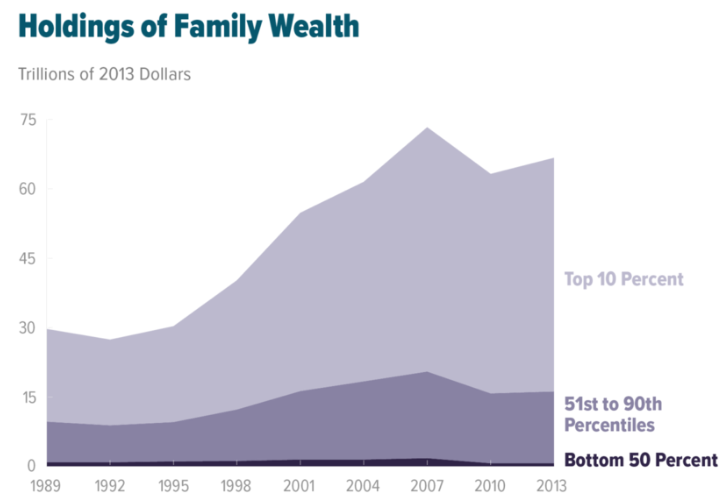
So, we can end with this graphic (wealth inequality). 

Wealth inequality in the U.S. - 2013

To be complete, we need to bring in later data, say 2020. The next chart comes from the FED of the US and shows from 2005 to 2020 (Q3). According to these numbers, the bottom 50% had a total of $2.36T out of $116.53T. 

Wealth percentile groups - U.S. to 2020 (Q3)

In short, 1/2 of the population might be pursuing that stupid dream that is now in vogue. We hope to change the focus a bit by balancing back beyond the rebellion time, somewhat symmetrically. The other 1/2 do not partake, so how are we any different than the 'developing' situation? We learn history in school and have a never-ending supply of books. 

What we don't have is a history that maps to regular people and their families. We have seen attempts of late, as we mentioned before that we see with McCullough's work. The web/cloud will facilitate a better attempt at this. We will support such research efforts several ways. 

Remarks: Modified: 01/08/2023

01/30/2021 -- Example of the before: The Pamphlet War (Tories and not - very familiar). 

01/31/2021- Example of the use of the American Dream: Cris Gardner. Gosh, lots of popular push behind the rags to riches stories which can be situated, many times, in the US scene. 

03/15/2021 -- This theme will continue: Victory Gardens. New Englander, out west in Detroit, helping to employ and feed the underworked and underfed. This was in 1893, long before WWI. 

01/08/2023 -- We had another icon (Charles Thomson) for our 250th (1774, Continental Congress) and 400th (Cape Ann as one of the first of the capitalization attempts of history). 

Thursday, June 1, 2017

The Old Planters Society

Thomas Wentworth Higginson was the first President of The Old Planters Society (TOPS) that instituted in 1899. Frank A. Gardner, M.D. was Vice-President. The members list consists of illustrious descendants of the early colonists (see below).

The following documents are found at archive.org.
In the pamphlet, published June 19, 1900, there is an overview of the society (page 11) and its motivations. We have seen this mentioned elsewhere, but one purpose was educational. And, one focus was to get those here before 1630 included in historical looks, excluding the "Mayflower people." 

The Thomas Gardner Society, Inc. agrees with this view and will carry this forward using The Gardner Annals. The issue for Vol. IV, No. 1 is in preparation.  


In that same section, we find the reading list of the Society. These are on our bibliography, but we will be looking at them again. 


Finally, the pamphlet starts out with a talk by Col. Higginson. It was titled "The Alliance between Pilgrim and Puritan in Massachusetts." The TOPS published many talks which we will document. 

Of note, briefly, though, is that in 1900, Col. Higginson was 77 years of age. Many other members were elderly.

Dr. Frank and his sister were much younger. Too, later, Lucie M. Gardner was Secretary of the TOPS. TOPS published via The Massachusetts Magazine (started printing in 1908) while it was published. Lucie edited a section that was titled "Pilgrims and Planters" that reported on meetings of the TOPS, offered commentary, and gave notice of the activity of other organizations, such as the Balch Family Association and The Gardner Family Association. The TMM ceased publishing in 1918. 

--

Earlier, we wrote of this group in a post (December 2012): Old Planters, Massachusetts. A corresponding post covered another group (May 2011): Old Planters, Beverly.  

Remarks: Modified: 11/20/2019 

06/14/2017 -- Thomas Wentworth Higginson and Bleeding Kansas. The Massachusetts Magazine (Vol. II, No. 2, pg 117)  reported that it was an official arm of the Old Planters Society.


06/04/2019 -- Sidney on the Old Planters Society via The Massachusetts Magazine

11/20/2019 -- Sidney on the Old Planters in his History of Salem (page 60).  Starting at page 68, Sidney publishes Dr. Frank's look at the early times of the Gardners.


Wednesday, October 13, 2021

Charles William Eliot

TL;DR -- CW Eliot's name came up earlier when we were looking at the effects of the gift to Harvard by Count Rumford. At that time, we merely noted that CW wished to obtain appointment to the Rumford Chair put into place by Benjamin Peirce (cuz). CW did not get that and went to spend time in Europe. That little sojourn was instrumental in later changes to Harvard that CW accomplished. Also, it was in the reign of CW Eliot that Leland Stanford came to talk using money to endow education. 

--

Today's browse brought up a familiar name which got us looking closer at the subject of Harvard in Massachusetts, in New England, in the U.S. and in the world. Earlier, we had posts that looked at James Bryant Conant (1893-1978, #23 1933-1953) and, then, John Thornton Kirkland (1770-1840, #14 1810-1828) due to topical reasons. Notice the numbers on the 2nd timeframe for each. It is their order in serving as Head of Harvard (see History of Harvard). Too, though, notice the time span with respect to their deaths which was over a century. We just looked at that. 

As the name that came up was Charles William Eliot (1834-1926. #21 1869-1909). Given the gaps that are still there, we have several more names to look at. The next one will be considered for his role in the split whose 250th is coming up (SAR/DAR). 

All three of these gentlemen are of early New England heritage, have family ties with Ann, and played a role in the History of Harvard. For instance, one ancestor is Thomas' 2nd wife, Demaris Shattuck. His WikiTree Profile is sparse to say the least. 

Charles was initially of interest for two reasons. There are more that will be looked at. But, he was a candidate for the Rumford Chair. The money for this came in during the time of John T. Kirkland. We will look at that from several angles dealing with the Count's work and writings plus topics still pending some type of discussion. When Charles did not get the chair, he went to Europe for a couple of years. One thing he looked at was the roles of the university in the culture. His study experience prepared him for his long tenure and resulted in his leading Harvard to the future. So, lots to look at there as we are on the verge of changes that are even more drastic. 

---

His biography at Harvard Square Library provides a wonderful take on Eliot's motivations for change. 

Remarks: Modified: 09/01/2022

10/30/2021 --  Added the TL;DR. 

12/11/2021 -- Added link to History of Harvard.

 01/06/2022 -- Leland and Jane Stanford visited Harvard in Eliot's time. Oh well, kind of liked the 'hick' story. Stanford, yeah. 

01/07/2022 -- Eliot started the Gold Coast scheme for housing which was halted by Lowell. ... Tributes to Charles William Elliott (The Massachusetts Magazine, Vol. II, No 2) by Edward J. James, Booker T. Washington, David Starr Jordan, Cyrus Northrup. 

09/01/2022 -- While doing post for Jared Sparks and James Walker, we ran into the Harvard Square Library which keeps us aware of Unitarian ways and their benefits. Harvard plays, specifically, in this arena. The HSL is now a regular resource. 


Wednesday, March 20, 2013

Gardner's Beacon, Vol. III, No. 1

See Vol. III, No. 1 of Gardner's Beacon for a continued look at the legacy of Thomas and Margaret () Gardner using an Annals format. This time the focus is on the period prior to the arrival in 1623/24, for the most part considering the context and motivations of the arrival. Future looks will be at the Dorchester Company and then at Thomas and Margaret, specifically.

---

The best known immigration event in the U.S., to many, is that of the Pilgrims and their Mayflower voyage. Too, Jamestown got recent recognition with the 400th anniversary of the settlement's start. In both of these attempts, the people involved endured a lot of hardship and suffering. It took years to become what might be considered successful.

We, across the distance of time, can easily ignore the troubles and look at the accumulated glory. After all, the majority of U.S. educated people can tell us the stories behind the first Thanksgiving, even if some of the details may be a little off the mark.

The fact is that New England, which was North Virginia, did not offer an easy time for any early settlement attempt. We will look at some of these over a fifty year period.

English transisitons
Aside: The original intent was to cover +/- fifty, but there is just too much information for that. So, we'll continue with this theme for awhile in the Beacon. Some of the views will cover a wide expanse of time while others are expected to zoom in on a particular period or series of events. There were many changes going on in England and the world. The image depicts changes on the throne for the period that would cover the life of Thomas and two generations before.

---

Comparatively, though it has been couched, by many, as being otherwise, the Cape Ann venture, led by Thomas Gardner, was successful in several ways. For one, those there made it through the winter. Then, they established themselves, built a great house, put up other dwellings, made plantings, and more. They were healthy enough to be rambunctious when relating to those who may have wanted to encroach (to wit, Roger Conant's peacemaking role). And, they did go on to found Salem.

In fact, when Winthrop showed up in 1630, he feasted on strawberries from Cape Ann. Most likely, these had been cultivated. He also was wined (or beer'd) and dined in a house (see Wikipedia) that was the first of its type in New England.

---

Be that as it may, to understand the origins, we need to look at those earlier times of exploration and of trial residence that went on for several decades. This look is not conclusive; to be comprehensive is beyond the scope of any Beacon issue. There is an intent to fund necessary research to fill in gaps about the lives of Thomas and Margaret including looks at the contexts, situations, and collateral families.

References:  see Sources (Current Issue)  

Remarks:

09/28/2014 -- A week ago, the record for the marriage of Thomas Gardner and Margaret Friar was discovered in Sherborne by John Cook of Minneapolis, Dorset files. This sets a type of focus. Looks as if some transcription work might be in order.  

03/18/2014 -- More thoughts on Cape Ann, Thomas and Margaret, and, not least, strawberries.

03/23/2013 -- Beacon issue, Vol. III, No. I, is available. 1st Edition still there in PDF format. This issue looks at events prior to the arrival. Looking at the arrival and early times in more detail makes it even a stronger thought that the group was overlooked and denigrated. That statement is not meant only in relation to Thomas. The whole group had their position in history lost. We'll re-look at all that has been said and reconstruct, as needed, a view that ought to be left for future historians to discuss.

03/21/2013 -- 1st edition (or draft) migrated in order to get all the pieces into place. The completion of edits will be noted by the removal of the watermark.

Modified: 09/28/2014

Wednesday, June 29, 2011

Gardner's Beacon, Vol. I, No. 2

Scores of nations celebrate an Independence Day. We all know of our own Fourth of July.

The motivations for freedom run deep and long, however early settlers were instrumental in establishing the basis for the American independence even though they were 150 years early. Due to conflicts in the mother country, there was a lot of latitude allowed to the colonials which they used to work issues of self-governance.

All of this, we'll look at further, using the context of Thomas and Margaret and their kids as the framework.

In fact, from where I sit, Thomas seems to be exemplary. He came over here to an unknown situation with his family, raised his family to productive adulthood, contributed to the commonweal, succeeded in the commercial environment of the time, was well-respected by his peers, and left a legacy for all time. The ultimate citizen, in a sense. That is why I refer to him as an example of the backbone of the economy. As well, he is definitely one of the founding fathers.

For starters, see Vol. I, No. 2, of Gardner's Beacon. Expect that there will be a continuing thread on this topic.

Remarks:

08/31/2011 -- Vol I., No. 3

Modified: 04/23/2012