Showing posts sorted by relevance for query origins. Sort by date Show all posts

Wednesday, March 6, 2013

Origins - motivations

We brushed upon origins a few times: Historical genealogy, How many wives?, and Black death.The first post of this blog asked about the ancestry of Thomas and Margaret.

As mentioned in the last post, we are looking at different periods that relate to lives of Thomas and Margaret. And the period right around the arrival (+/- 50 years) is a current focus.

And, motivation for leaving is always a concern. This post looks at an issue that culminated around the time of Thomas' great-grandfather. The influence from the particular conflict was deep. In fact, about that time, over a century of conflict came to an end.

Of course, after the peace, turmoil continued which we'll get into. For now, let's consider the case of the bickering cousins. In a sense, all the conflicts on UK (and related areas on the continent) soil were of this type. However, this one had very close cousins at each other's throat (extreme sibling rivalry -- gosh, are we any better today?).

So, it was a blood war, but not between rival clans. No, it was cousins vs cousins. There is not any reason to see this as unusual, as we'll also look at many conflicts between brothers before we're done.

People beheaded
War of the Roses
Aside: In looking at origins, this particular topic is important but is not the only one. We're starting with it due to entanglements. I don't know just how much we appreciate the reality on this side of the pond. That gaming has taken up the theme, partly encouraged by the Game of Thrones series (I liked the first two books; am not a gaming type; haven't seen any of the TV stuff), may tell something. Go to Google (or Bing), and look at War of Roses (images) and note the gaming interest.

So, this image has a list of people who were beheaded during the period of the War of the Roses. It's not a short list, by any means (see the Wikipedia page). The two images on the side are the following: Choosing of the roses (below) and The execution of Edmund Beaufort, 4th Duke of Somerset (above). Edmund is in both of these paintings. He's on the right of the Choosing scene and the main character in the other. But, this is only a list of the noble class victims. There were many other casualties, such as the Two Princes. Too, what was the havoc wrought upon the general populace, of all of the classes?

---

This is one little example. Does England look to be a pleasant place to be? One can appreciate the dreams of freedom that pushed people off its shores, even if these were illusory at the time (did you know that there were early hippies - Merry mount). Yet, there was a less oppressive nature in group that came with Thomas and Margaret than later (of course, about now, we need to mention that Plymouth's involvement will be covered, to boot). It was not long before a hammer was sent over (another whole story). One can also understand the appeal of the Quaker point of view which figured heavily in Thomas' later life through the influence of his last wife and in the lives of some of the progeny.

So, we've barely kicked off a look at origins with a brief touch on motivations.

---

As said before, whatever the motive, Thomas came here, raised a family thereby leaving a legacy, supported the founding of the civilization that became the U.S., and has tales to tell about his life and character. It is for us to discover these and preserve them for posterity.

Remarks:

04/04/2025 -- David T. Gardner has been exercisting Grok with prompts and reports finding documents that support his claim about Wyllym Gardynyr (see King Slayer Court blog). ... We have begun to incorporate changes into the structure and context of the blog. See Restart, somewhat

08/11/2020 -- We have used categories in the post. We also have used pages which allow some structure. Then, we have the other media to consider. One thing is definite, we will have lists of important topics. On these, we will find Origins and Motivations.

07/21/2020 -- The theme carries on in our work.

07/16/2016 -- Related work: Gardiners and Gardners.

07/12/2015 -- Okay, turtle speed. But, we get there. Announcing a new project: Sherborne, Dorset. No doubt, it is about time. When finished with the data collection and analysis, we will present the strongest story (the prerogative of the family) that the facts, and abductive reasoning, will support. As such, we hope to demonstrate some very much needed research viewpoints.

02/12/2014 -- The motivations theme will arise, recurrently, as we look at telling the stories.

06/15/2013 -- John Farmer wrote that Thomas was from Scotland. Origins are, and will be, a focus.

03/31/2013 -- The recent Gardner's Beacon issue looks at priors. On the War of Roses, not only were the participants blood relatives, they were Christian, ostensibly. So, an Easter thought is in order: was not their behavior as far from what Christ would have wanted as was possible? Then, again, how close to such an ideal was the Crusader behavior of their ancestors? 

Modified: 04/04/2025

Wednesday, August 9, 2023

To date, mainly

TL;DR -- This post looks at two major themes: origins and technology. There will be others to look at later. The issue of origins came about due to additional digitization of records which is an advance in several technologies. Going forward, technological improvement will be more generally available and useful to the point of being problematic since the matter of complication always lurks.  

--  

Right now, as we pull Gardner's Beacon, Vol. XIII, No. 1 together, we are looking at themes from this year's work and at major themes from the beginning. We have two huge changes coming. One deals with origins which has been a puzzle. This year we have need information to process which requires that we rework the story. The other category needing attention is our future focus in a world of increasing technology. Of course, the principal portions will deal with family and country. But, there is also culture and the roles of the U.S. Included here will be technology. 

With regard to origins, we applied a rule that we saw early: those here need to focus on U.S. records and do it right; that related to the other side of the big water is the responsibility of those there. With technology now, we can broaden our scope. In fact, we need to in order to fill in the pieces that have puzzled for centuries. Sherborn records have been quite helpful albeit shaking the foundation. Gardner research will step up to helping with the work and related discussions. We have used the WikiTree Magna Carta project as an example. However, ancestry's work on images is to be acknowledged. 

In terms of the second point, we have the colonial times to research, including New Spain: Hernando de Soto, for example. Then, there is the time of the colonies leading up to the Revolution whose remembrance is coming up in 2026 (247th of the U.S.). Along with the development of the country, we can look at education (Harvard and its Leaders, for example). 

After the Revolution, we have subjects like the frontier and lost generations to research. This came up while researching applicant heritages for DAR/SAR. Research now will have heavy computer assistance that will continue to get better over time. Noticable prowess that increases is one piece of evidence, such as we saw the the November of 2022 release of ChatGPT.  

---------

One of our recent posts has gone up the list of reads to be second overall since the beginning which was back in 2010. We went to look at the numbers by time and confirmed the report. The image shows the first five posts on the list (see the menu area on the right of the blog). The most popular is still about the marriage of Thomas and Margaret (2014). Since then, we have seen the baptism of all of the children come to the fore due to digitization. The second item is this post: A(rtificial) I(ntelligence) researched properly (2021). The occasion was the usual review that we have done with respect to choices along the way with respect to how we handle and manage technology. The thing to note is that the post was over a year before the arrival of ChatGPT. Later, posts cover the topic of the generative approach. We will use the term xNN/LLM as we discuss this further. Then, we have the one from yearend of 2011 where were going back over the activity of the year. The 2013 post (Plus or minus the arrival) was from our research dealing with origins. Turns out that this topic is still on the plate. Then, early on, we looked at Gardners of various types. That was in 2010. Again, this is a recurring theme.  

Remarks: Modified: 08/22/2023

08/22/2023 -- Added image and verbiage about technology, especially AI. 


Tuesday, August 4, 2020

Origins and motivations

TL;DR -- As we go forward, we want to keep ties with older material so as to have a cohesive view always in place. From time to time, that type of review would be published via The Gardner Annals. However, a focus is providing constant entries via a portal to truthful tales of the past and to a discussion of their current relevance.

--

We have had several posts on two subjects: origins and motivations. The former subject covers several areas, especially issues related to 'whence' (that is one huge thing to learn about Thomas and Margaret). The latter considers all of the factors that might have resulted in reasons to leave. Of course, we have the work of Frances Rose-Troup to look at, albeit an update is in order.

All of our posts accumulate, and contribute, toward a growing knowledge base, using the modern parlance. That is, we have such an intent. With several years under the belt, we can, from time to time, look at a topic with regard to its relevance and to concerns over the years of our study. That is, we might be more regular and looking at status and focus.

These four posts are of interest.
  • Black death (Nov 2012) -- In the 1300s, the plague killed 50% of an area in Weymouth which is located in the southwest. There were outbreaks in the 1600s and the 1700s. Of course, there were issues in the New World, too. But, we need to remember this contributor to turmoil
  • Plus or minus the arrival (Mar 2013) -- As we get more attuned to the look backs, we will also keep aware of what was going on back in the Old World. For instance, Baruch Spinoza was born in 1632 which is two years post the arrival of John Winthrop. We can remind ourselves of events along the whole of the timeline. 
  • Origins - motivations (Mar 2013) -- There are many ways to slice various looks at the past which is what can make history interesting. We now have technology that allows even more types of variety in presentation
  • General crisis (Mar 2019) -- Globally, the 17th century was stressful in several ways that bear some attention. This post was a year prior to our recent experience with COVID-19. In the 19th century, we had the Spanish flu; before that, about 200 years, we had an epidemic in New England. 
A huge theme for us is the pending 250th of the U.S. which fits nicely into the other areas of concern. Along with that major event, we have to focus on what went on before, especially from the viewpoint of Cape Ann and Massachusetts; as well as, we can provide a means to look at how the U.S. has unfolded over the past two decades with the expectation of contributing to necessary analysis and change.

Remarks: Modified: 08/11/2020

08/11/2020 -- We have used categories in the post. We also have used pages which allow some structure. Then, we have the other media to consider. One thing is definite, we will have lists of important topics. On these, we will find Origins and Motivations.

Monday, November 22, 2010

Historical genealogy

Notes:
  • The page on William Gardner (see below) was deleted from Wikipedia on 02/06/2013.
  •  See Remarks (02/06/2013 and 06/15/2013) for related discussion. A future post will take a brief look at origins (with a reference to this material).
  • See Remarks (10/10/2018) for recap. Some of the links in this post may be stale (will look for those, at some point)
  • See Remarks (12/28/2025) with regard to LLM (AI/ML) of so much attention the past three years and the trials of trying to bring this into historical/genealogical research. 
  • See Remarks (01/03/2026) pertaining to continuing work using GenAI/LLM plus having a focus on the quality of provenance information. 
---

The end of the middle ages can be linked with the War of the Roses. A key event was the Battle of Bosworth. Richard III of the House of York was killed at Bosworth Field; he was the last of the Plantagenet kings.
Battle of Bosworth 1485

Some say that William Gardner was one of the slayers of King Richard and that William later married Helen Tudor who was the granddaughter of Owen Tudor.

There are several questions to ask about William and Helen. Who were their children? What do we know of succeeding generations? It turns out that there are several viewpoints. Let's look at a couple of these.

In the Who's Who of Tudor Women by Kathy Lynn Emerson, we find this about William and Helen (c. 1459-1488). They were married before the Battle of Bosworth. Their only confirmed child was Thomas (c. 1479-1506) who was a Pryor at Tynemouth. Emerson also says that they were not parents of Stephen (d. 1555), Richard (1486-1546), William (1488-1549), or Alice (d. 1588) Gardner.

On the other hand, the Wikipedia article on Stephen Gardiner says that William was his father. Stephen was twice the Bishop of Winchester. Too, he managed to survive the turmoil of the times. Also, Richard and William (mentioned above) were brothers of Stephen.

I thought that it might be interesting to look at the results of the research of several families. There seems to be a common theme. As before, I have provided links to databases at rootsweb.
  • Dowling tree, descendants of Stephen Gardiner shows Lionel's line
  • Walker tree, descendants of Stephen Gardiner shows the Thomas of Salem's line
  • Knowlton tree, descendants of Stephen Gardiner suggests siblings for Thomas of Salem and ties in the Lionel line. The tree quotes Burke's Peerage and some genealogy work by Thomas Richard Gardiner.
  • Note: 01/03/2026 -- Rootsweb links to Stephen Gardiner changed. Will edit at some point. 
One goal is to fill in Thomas' and Margaret's ancestry. As well, looking at how the Gardner families relate will continue to be of interest.

Remarks: Modified: 01/03/2026

05/05/2011 -- Did Thomas of Salem have a sister, Rachel?

12/14/2012 -- This has been a popular post.

02/05/2013 -- Recent interest in Richard III has caused a renewed focus on information about his life. This post from about two years ago was motivated by a Wikipedia page whose content is now undergoing scrutiny. Since this discussion pertains to our work, we'll keep abreast of things as they move along. Note: there is a vote going on about the possible deletion of the page on William Gardner.

02/06/2013 -- The William Gardner page was deleted today (see discussion page). Also, see section on Wyllyam Gardynyr (archived 06 May 2013) under Richard III talk. When making the Remarks yesterday, I had not looked at the article since this post was done and was not aware of the expected time for the deletion. The William "wiki" page was one item on a huge pile of material to review that relates to origins (open topic, future consideration). Also, the author (of the William Gardner page) seems to have had more than one page deleted from Wikipedia. At this point, let me put a link to Wikipedia's Five pillars as a reminder about content to be put there.

06/15/2013 -- John Farmer wrote that Thomas was from Scotland. Origins are, and will be, a focus. ... As of today, this is the all-time, most-read post. Coming in second is Old Planters, Beverly.

06/15/2013 -- For the Wyllyam Gardynyr discussion, see prior version (archived 06 May 2013). At some point, I ought to see what the deleted Wiki pages were all about. That is, looking at origins would encompass the whole bit, out of which would then come the real story. That has not been done, that I can see, as of 2013 is not troublesome. Things come forward all the time. Too, has anyone surveyed the work to date in a comprehensive manner (meaning, of course, scholarly)? One goal will be to start, and sustain, such studies that would augment what has already been done as well as explore holes (which have to be defined, for starters). In the meantime, we'll try to document Thomas' life (such as, pulling out things related to character) and progeny. Also, we ought to look more closely at Damaris Shattuck and Thomas. That he married a Quaker and didn't suffer the wrath of the likes of Endicott says something (Mary Dyer was hung in 1660).

09/28/2014 -- A week ago, the record for the marriage of Thomas Gardner and Margaret Friar was discovered in Sherborne by John Cook of Minneapolis, Dorset files. This sets a type of focus. Looks as if some transcription work might be in order.

04/07/2015 -- We have more questions than answers (research raises both).

06/10/2016 -- There is more to the story than I realized: Bosworth and more. We will have more to add to the FAQ.

07/16/2016 -- Related work: Gardiners and Gardners.

10/10/2018 -- We just printed TGA Vols III and IV (available for purchase) which contains David T. Gardner's articles about the Gardners, Bosworth, and Tudors. As well, historical author, Douglas Richardson, has William Gardner in his books (Plantagenet Ancestry, Magna Carta Ancestry and Royal Ancestry) with his marriage to Helen Tudor (see Our Royal, Titled, Noble, and Commoner Ancestors & Cousins site).

10/11/2018 -- Most links work (not bad after 10 years). Resorted the Remarks to earliest to latest as this subject will be an ongoing one. And, we can just append a next comment. Just checked on page for Stephen Gardiner, the archbishop. It mentions William as possible father, whereas before it said that John was thought to be his father.

04/04/2025 -- David T. Gardner has been exercisting Grok with prompts and reports finding documents that support his claim about Wyllym Gardynyr (see King Slayer Court blog). ... We have begun to incorporate changes into the structure and context of the blog. See Restart, somewhat

12/28/2025 -- David T. Gardner made several attempts this year to bring LLM (AI/ML) into his work. We are helping to document at effort: Research using the internet, and AI

01/03/2026 -- We will be updating the status of this work. For now, here are some posts: Welsh poemsSir Christopher GardinerKing Slayer's Court I; ... A new science?; ..., 


Saturday, June 15, 2013

Thomas and Thomas

Doing research for the next Beacon issue (Spirit of Independence - during Thomas' time) involved a re-look at Felt's work. That is, his Annals has some interesting remarks about interactions of the colonists, in the sense of Salem's crowd, with the old country. Of course, some of his remarks cover the general area, such as goings-on in Boston.

---

The last post, here, dealt with Origins which is a continuing theme. Whence Thomas (and Margaret) is an open issue. Farmer mentioned Scotland; he published in 1829.
Felt on Thomas
and Thomas

Felt mentions Scotland and talks as if Thomas' father was here, too (see the image, pg 246). Curious.

Now, Felt was a little earlier, 1827, than Farmer. Was Farmer quoting Felt? But, he had sources of several sorts. He was looking at the records and talking to people. Felt's work would have been 150 years after Thomas' death.

We'll have to sort all this out. Right now, the idea is to gather. Think of it like using the brainstorming rules of thumb. Such as? Don't knock something during the collecting of ideas round. I'm doing that specifically due to the fact of all of the stuff that seems to have been done, disparate and disjoint as it seems to be.

With our access to technology, it's time to do a proper analysis. Too, ex post facto, there won't be book burning. No, anything shown to be without substance will be presented and its faults documented.

Aside: Perhaps, the one from Scotland is the senior Thomas. I have looked at material from Dorchester Company. The sister of John White, who married a Gardner, is not shown as having a Thomas. But, is this site the final authority?

---

On several pages early on, Felt reports book burning. Too, there is a lot about interaction with the Friends. Note the Remarks (06/15/2013) in the Origins post where Damaris is mentioned. She may have been excommunicated. Charles II's caution about handling the Friends may have been timely. Thomas' and Damaris' marriage will be looked at, as research for the next Beacon issue will cover the same ground.

---

John Goff has written about Felt.

Remarks:

10/13/2014 -- Tabula raza, and more, will be of concern.

11/13/2013 --  Phippen would be part of the slate fill.

08/25/2013 -- On a site dealing with descendants of Alice Freeman, Abigail Gardner is on the list due to marrying John Wise. Hence, her father and grandfather are there, too. Thomas (before 1595 to 1638), father of Thomas and Peter. The site, by Chris Chester, is wonderful in its use of sources; too, I really like the format. We need to do something similar for the Thomas Gardners.

08/22/2013 -- The start of a look at what was what in early Salem (and New England) as far as Gardners is concerned.

06/17/2013 -- In the Great Migration write-up, Thomas' origins are noted as unknown. The next Beacon issue will have a theme of the spirit of independence (early look).Also, Anderson, et al (in Great Migration) say that Banks has Thomas coming from Hurst, Martock (supposedly, Banks quoted no source).

Modified: 10/13/2014

Friday, February 9, 2024

Current status


TL;DR -- Two major things happened last year. Both dealt with technology. One had to do with the future as it might be influenced by computing. The other had to do with the influence of the computer on the past in terms of records. Then, we have all sorts of other themes at hand to consider. 

--

This post has the purpose to get the current status of the Thomas Gardner Society, Inc. on the table. There were two major things that happened last year. Then, we reacted to another change in the on-line environment. 

Caveat: This will replace the "In summary" post of last spring. 

First, the two things, as in order with respect to our focus, of note last year were: 

  • We became aware of the xNN/LLM maneuvering in late January and did a post on Febuary 1: ChaptGPT. Prior to that time, we had taken a hands-off approach to AI for reasons that are documented in later posts last year and before (actually). We knew that there was money involved with big names getting into action. But, it's a mess, folks, which we intend to bring to the fore as our major project. Let's table that for a bit. Too, there was the 400th of Gloucester last year (next bullet). Then, there is the upcoming 250th as noted by D.A.R. and S.A.R. which we spend a lot of time supporting. With respect to our research, see our category of the "Long reach of New England" which as been a theme for almost a decade. It got more attention when we considered that those on the Oregon Trail (some of them) had passed by the foot of Mount Oread which hosts the University of Kansas. And, that there had been a major effort on the part of New England to keep Kansas slave-free. Col. T. W. Higginson was out here. So was John Brown; we just had a post on his armed conflict with some people of out the south who were using Missouri as a staging ground for creating havoc with pioneers. Stay tuned on that. The other theme can be found after the next bullet.   
  • Okay, we were getting ready to write about Margaret Fryer the wife of Thomas Gardner. This was due to the fact that the 400th was collecting stories. And, our research had been effective is getting Margaret on the map. Anderson, and friends, had dissed her, essentially. But, then. We ventured to WikiTree which has been our research vehicle (for many reasons) and saw that someone had gone through the digital files of Sherborne, Dorset and found records for about all of the kids of Thomas and Margaret. Except, we might add, for Sarah who was known to have been born here in Salem in the mid-1630s. And, we saw that the WikiTree folks had split Thomas into two people. The one Thomas was the husband of Margaret. The other is an unknown. To us, we see these ones as the same. Thomas was here and went back. Hubbard suggested that. And, he was of the time and talked to the principals. Whatever turns out to be the fact, we'll adapt. But, right now, Thomas was at Cape Ann. Nothing really shows otherwise. But, how did we miss this? See the first bullet. Besides putting ChatGPT through its hallucinatory paces, we looked at others. Frankly, Bard of Google excels. We'll explain. The gist of the matter is that we can research from Salem to now. And, origins? Full of open issues which it is time for us to tackle. 
Another theme had been the west coast, principally San Francisco as we were looking at the quake and the aftereffects. But, Los Angeles got into the mix due to seeing that Butterfield (and others) had stopped in the Bunker Hill area to reprovision for further effort going north to San Francisco. Arriving there, they turned around and headed back to St. Louis by a long, arduous route. But, lots and lots of photos from various times started to crop up which made this theme even more important. 

This is cursory by purpose, as we'll have this research as a regular theme from now on. 

So, origins, for the most part, were not followed closely by us. We had concentrated on the generations from Thomas and Margaret until now. There are reaons for this. One dealt with the fact that research in the Old World was ongoing and best handled there. We, over here, have our own axes to grind. 

That was okay until now. We are henceforth taking origins to be a regular feature of our work. 

Remarks: Modified: 07/12/2024

02/13/2024 --  Added image. 

07/14/2024 -- Why is 2024 so quiet? 

Friday, June 14, 2013

Origins, again

Note: See this post: In summary. We have new information about the baptisms of the children and are in the process of researching to establish a proper narrative. For now, see comments at the WikiTree profile for Thomas Gardner. We will start with Rev. Hubbard who was there (1680 manuscript). 

---

To date, sources for the blog post and Beacon issues have been textual. The technical resource for these were several, including databases. That is, digitization projects have made many books available. There are several different copies of Dr. Frank's book (my favorite is at archives.org). Various groups, including collateral families, have websites. Some of these use database technology. rootsweb is another example.

A few days ago, knowing that we need to upgrade the TGS site to use more modern techniques (let's say that it is now, being generous, late 1990s). I started to look at options. Too, media types abound; genealogy might be dragging its feet (On blogs and other modern means), however presentation of this material will need to grow with advances. The NEHGS' emphasis of the relationship between history and genealogy gives more than enough motivation.

---

So, what if there were something presented about Thomas and Margaret using modern methods. Videos come to mind; too, though, gaming needs serious attention. So, I went looking to see what might be on youtube with regard to the Planters of New England.

Essentially, it was disappointing. Here are some examples why: NaumkeagSyracuse seriesEndicott, etc.

---

But, then I got side-tracked. I ran across a BBC series on the History of Scotland. I started in the middle and bounced around. Now, some experts harp at the series. To me, it was an eye-opener. As I listened, I went and researched what I was seeing. As well, trying to understand what it might have been like to live then. That is, preparing to address Thomas' decision to leave and to make a live elsewhere.

Here are links to the Scotland series on Youtube (the first part) and a Wiki page that summarizes the videos.

Is there something similar about Ireland? Yes (YoutubeWiki).

England? Yes, again (YoutubeWiki). Actually, I was looking at England first. Someone had a series that had little introductions to the Monarchy, in sequence. When I got to Ed I, the Hammerer, I searched on that. The above Scotland series popped up in that the presenter (Scottish) said Hammerers (plural). He added in Alexander (knocking the heads of his own people).

---

While looking at the videos on Scotland, I was paying attention to changes that were coincident with Thomas' time here. I had mentioned that before, several times, such as motivations. Given the annals framework that is being used for the Beacon, we can now do an issue pulling together some of this in a year-by-year fashion. That is, relate things at home to what was going on here.

Keeping in mind, please, that we're are still trying to figure out the ancestry of this couple.

---

While looking at the Ireland series, the presenter talked about how James I/VI sent Planters to Ulster. The idea was to colonize the incorrigible Irish and teach them how to be civilized.

Disclosure: the tone is set from a mixed heritage, including Irish -- from what I've seen, there are not saints in any of these people - except for St. Margaret, perhaps - but, we still must honor (Commandment - way back to Moses) -- nod to the U.S. Father's Day which is approaching. Too, today it's like the same old thing over and over again. What lessons may we learn from Thomas and Margaret?

---

Finally, but this is just a start, how the English (Elizabeth's bad side was quite apparent, too) thought of the Irish seemed real similar to me to how some settlers felt about the Natives as they arrived here. A lot of these opinions were written, so we have a record.

But, recall, if you would, that the Gardners, early on were on a friendly basis (story of John, for instance).

---

Too, are there other videos that we can add to our list? Games were mentioned. Think how the Game of Thrones books spawned off all sorts of things. Our purpose would be to teach the proper history (whatever that might be).

Remarks:

06/20/2023 -- Added note about the narrative situation. 

08/11/2020 -- We have used categories in the post. We also have used pages which allow some structure. Then, we have the other media to consider. One thing is definite, we will have lists of important topics. On these, we will find Origins and Motivations.

07/16/2016 -- Related work: Gardiners and Gardners.

07/12/2015 -- Okay, turtle speed. But, we get there. Announcing a new project: Sherborne, Dorset. No doubt, it is about time. When finished with the data collection and analysis, we will present the strongest story (the prerogative of the family) that the facts, and abductive reasoning, will support. As such, we hope to demonstrate some very much needed research viewpoints.

07/12/2015 -- We mention abductive approaches (my career was spent in advanced computing - software and modelling, essentially). Please refer, at least, to C.S. Peirce's (we mentioned him in an earlier post - Benjamin Peirce) work in the area. [Love it: From Ugly Duckling to Swan]

10/13/2014 -- Tabula raza, and more, will be of concern.

09/28/2014 -- A week ago, the record for the marriage of Thomas Gardner and Margaret Friar was discovered in Sherborne by John Cook of Minneapolis, Dorset files. This sets a type of focus. Looks as if some transcription work might be in order.

08/22/2013 -- The start of a look at what was what in early Salem (and New England) as far as Gardners is concerned.

08/07/2103 -- During a period of browsing classes, documentaries, and the like, I have run across many videos (youtube) that apply to our themes. One that I have not watched in its entirety deals with re-creating a Tudor Christmas feast using techniques and tools from the period: BBC UK. I'm putting it here as it nice to think of the cooler holiday period during the heat of August (say, put a snow scene on your desktop). Too, in 2011, the December Gardner Beacon issue had a theme of Tudor Christmas but also asked the question of Thomas' and Margaret's first Christmas here. That Christmas would have been before the heavy Puritan (wet) blanket descended upon those who were able to get themselves free from the old country.

06/17/2013 -- In the Great Migration write-up, Thomas' origins are noted as unknown.

06/15/2013 -- Was there a Thomas and a Thomas?

06/15/2013 -- Speaking of the NEHGS, what we are doing is historical genealogy (as of today, that post is the all-time most-read post). Coming in second is Old Planters, Beverly. Looking at origins would encompass the whole bit, out of which would then come the real story. That has not been done, that I can see, as of 2013 is not troublesome. Things come forward all the time. Too, has anyone surveyed the work to date in a comprehensive manner (meaning, of course, scholarly)? One goal will be to start, and sustain, such studies that would augment what has already been done as well as explore holes (which have to be defined, for starters). In the meantime, we'll try to document Thomas' life (such as, pulling out things related to character) and progeny. Also, we ought to look more closely at Damaris Shattuck and Thomas. That he married a Quaker and didn't suffer the wrath of the likes of Endicott says something (Mary Dyer was hung in 1660).

06/14/2013 -- As an afterthought, I ought to have used Barbarian in this post. Wiki has a nice little write-up on the term and its usage. While mentioning Wiki, please visit the Thomas Gardner page. It's a little over three years old and needs to be modernized (brought up to date - civilized?), too.

Modified: 06/20/2023

Wednesday, August 26, 2026

Modern techniques

TL;DR - Techniques related to research will continue to changte along with technology as it progresses by whatever means drives that energy. So, with respect to "origins", we are seeing an LLM used to ferret out information from that time based upon records that were digitized. Of late, information about the children was discoverd in recently digitized records. On the other hand, there was a house associated with Thomas Gardner. A proxy for this? Of course, the Fairbanks House, oldest wood structure in the US.  

--

Some background on the "Announcement" today at the Thomas Gardner (of Salem) Profile of WikiTree. 

Back in the beginning, I puzzled about missing information. Say, as compared to some families with respect to origins. The NEHGS series (Anderson) had come out before our time. Some of the information in that series conflicted with what we saw with Dr. Frank's efforts. We had started there, as he was 1st cousin of a grandfather. 

But, we had more than those 2 books, we had the articles in The Massaschusetts Magazine (principally from Dr. Frank's sister, Lucy Marion Gardner - Lucie following Sidney, May, 2017) where she picked up the work of Sidney Perley, the great walkabout of Essex County. There was more. Having started in 2010, the internet had only a few years of Web 2.0. Older material was there. I have pointers based upon general trolling back when the "search engines" were behaving. Too, there were notes from families about the material that they had accumulated (some living in the UK, and even near to Dorset). 

Early on, we knew that there would be the 400th. We'll look at that. How would it compare to the 300th and the Pageant of Salem (6 Jun 2018)? As we went to look at that effort where people of Salem played roles from 300 years prior, we added the Label of OpEd (Opinions count?, Dec 2023) as we explained after the 2023 reveal of data from Sherborne, Dorset, UK.  

As an aside, we added "OpEd" to this post in order to associate it with the ongoing research. Okay, to the gist of the matter. We look at two items which represent a slew of potential work and information. It's a matter of work. 
  • Let's start with Gardner Family Trust (Apr 2026). In late Mar of 2025, we heard from DTG about his work with one of the GenAIs that had come on the scene in late 2022. 
    • I was not paying close attention to that crowd (and still consider the release to be premature). The 400th of Gloucester was approaching and we were considering what to do. Having finally settled on the notion of featuring Margaret (wife of Thomas Gardner and mother of the children that we know), we were working on that set of material. On 1 Feb 2023, I heard of that release from a friend and went to look (mainly focusing on ChatGpt and Bard).This is all documented. 
  • So, I knew of the AI/ML hype (biological pipedream); due to having known this stuff for decades I was amazed and appalled at the uses that people were discovering. So, mark that up for human creativity and the US as founded by those ones of Cape Ann. Anyway, DTG's work was along this line. He had found lots of information from digitized records in the UK; retrieved the scanned data, used OCR to transcribe, and then even worked translations (from Welsh, Latin, et al). It was remarkable. ... A little later, after some scrutiny, it was hard to tell the reality with most of the content being fictional. ... We discussed matters and decided for him to start over while concentrating on provenance. 
  • Of late, DTG has switched to Gemini/Gemma. As such, he has been verifying the information. He confirmed the news about the Gardner involvements at Bosworth and Richard III's demise. There has been a lot of information on the London side of the family. Too, he found Thomas of Sherborne. ... Now, keeping this brief, for now, one bit of information deals with a bankruptcy of the Dorchester Company in which Thomas Gardner is involved. That has my focus, right now. 
  • Thomas was here, at Cape Ann. Now, was Margaret and the three boys here. If so, John was born here. The family went back. Or if he came alone, she had John in the UK. His baptism was delayed until Thomas returned. We favor that the family came over. Thomas and family then came back with the children except for Seeth who was born in Salem. 
Now, technology will be the key. We are doing this right. Who knows what data will come to fore. The information of the births was a nice surprise as John, himself, said that his father had told that they came from Sherbourne. Sure enough. The response of WikiTree? The two person split is okay, for now. But, as we find out more, we'll make sure that it is published. 

A recent post looked at the Fairbanks house which is in Dedham, MA. It dates from the 1630s. The image is from the website for the Fairbanks House

Jonathan Fairbanks (WikiTree) came to Boston in 1633, stayed a few years, and settled in Dedham in 1636. 

Remarks: Modified: 08/30/2026

08/30/2026 --  Minor correction, will be back for more. 

Wednesday, July 6, 2022

Gerry-mander

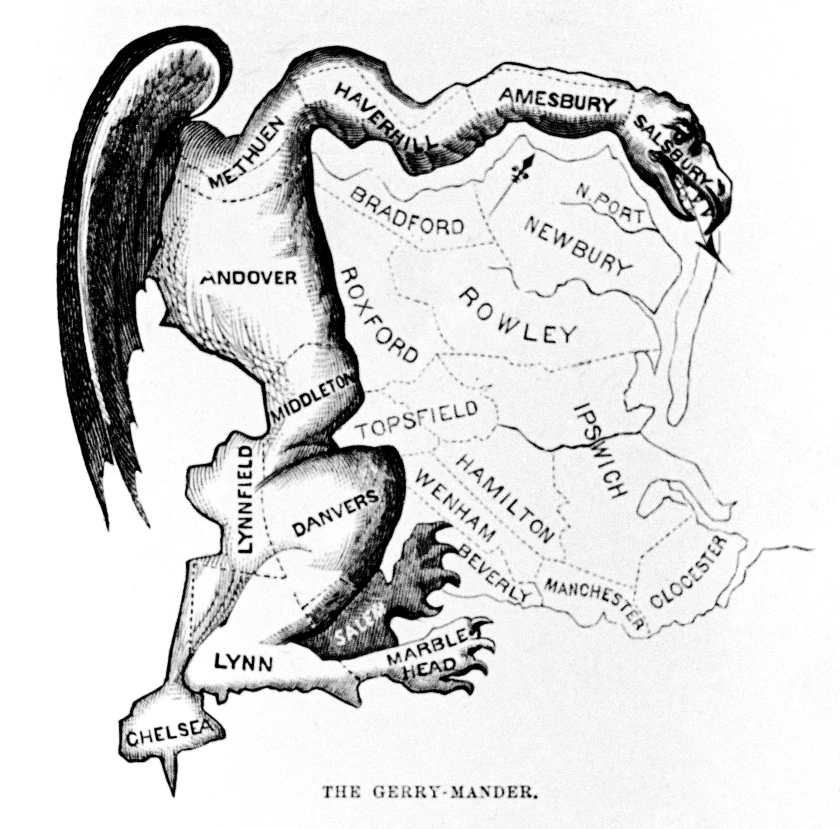
TL;DR -- Gerry was the Governor of Massachusetts. The image associated with the topic is of Essex County. There has been much discussion about the topic. We want to bring awareness to the origins, plus the milieu. For one thing, we are talking post Revolution and during the time of the 1812 conflict. Concerns then are familiar to what we see now. This is a common theme.

---

This topic has been on the table for a few years. Turns out that Massachusetts was the first site of the controversial method being applied. It got its name from the Governor of the time. But, the image that has come down from that time was of Essex County. We got reminded of image through a book review in a recent weekend edition of the WSJ. 

The following links pertain to the subject matter.
    -- South (east and central) Essex County (9 Jan 2011) -- At this time, we were getting acquainted with the layout of Essex County. From a western view, we expect large counties with a few towns. Except, of course, LA with it wide expanse differs. We had learned about Sidney's work. In short, though, little Essex County is interesting from several viewpoints. 

    -- Essex County (3 May 2019) -- Sidney Perley was the chief antiquarian for the County and did a lot of work. This post shows an announcement of his final bit of work. We wrote of this in a post titled "Sidney, his discontinuance." Sidney talked of how hard the work was. He traipsed through Essex County and other areas, researched records, drew up maps, and more. Dr. Frank's sister, Lucie, picked up some of Sidney's work (see TMM, below).  

    -- Sidney's Antiquarian (8 May 2019) -- We had pointed to a site that had Sidney's work available which disappeared. So this post provides links to Hathi Trust's copies. 

    -- TMM (Page), The Massachusetts Magazine (25 May 2015) -- Sidney mentioned this effort by Dr. Frank and friends and noted its relationship with the Old Planters' Society. We had gone through all of the issues and written some summaries. Lots more needs to be done, such as republishing parts of the work. We saw one example done with regard to Judge Thompson (Tenderfoot in Montana). 


    -- Where did the term come from? (Smithsonian, 2017) -- Given the upcoming 250th, we need to learn about Gerry and the times. 

    -- One person, one vote (L.A. Times, review, June 2022) -- This recent book looks at the topic, albeit without much notice about its origins. We, of course, want to preserve information about how all of this came about. The WSJ review provides another viewpoint. 

The Gerry-mander

Remarks: Modified: 07/06/2022

07/06/2022 --  

Friday, September 5, 2025

Fifteen years ago

TL;DR -- We started in 2010 with our website. The blog came about in Sept of that year. As we learned about history and genealogy, we custom built our website in a minimal fashion in order to spend more time on the domain knowledge. Time and technology has changed. The need for bespoke modes has not and will again be recognized. So, we'll continue down our nonAI approach. Pending research deals with origins. We touch upon the subject and our plan for the future. 

-- 

With the new world of computing being pushed upon us, mainly from the GenAI/LLM incursion on our thoughts in November of 2022 and the ramifications associated with its arrival, we are reorganizing our information. In fifteen years, we have ventured down many paths, made some discoveries, but found more questions than answers. We'll briefly look at origins and son John, because he and Richard were of Nantucket which kept good records.  

Our first post was on 25 Sep 2010 (Welcome). At the time, we had been using Blogger (later purchased by Google) for three years. According to our What's New page, our site was started in September of 2010. This was our first report on that page

09/01/2010 -- A blog will be started soon. Questions to ponder will be one topic, such as where was Thomas between 1626 and 1637 (freeman status)? Where is Thomas now (in terms of remains - or, at least, the stones of Abel, etc.) since pavement was put in over the old Gardner burial ground?

Just from the questions, one can see that we had already started to research. The Whereabouts of Thomas became a regular theme and is a now a meme of lost graves. But, number of wives was up there too. This we made progress on thanks to the internet and the appearance of digitized documents from Sherborne, Dorset, UK. 

Our site, originally, was on Microsoft's service of the time which we had for a couple of years. One reason for the choice was to use C# of Asp Net. MS provided their users with a nice tool for creating and managing the information related to small business. We liked that. But, MS decided to move to what became Microsoft 365. 

We decided to drop back to Linux given John's Unix background. But, it was clear. Given how much we needed to learn and organize, we had to spend lots of time on information (domain knowledge). There was little time for development and fiddling with the architecture or actions of the site. So, John snapped little graphics from the Microsoft site and use them in a new page where positioning was handled by the table facilities plus a little CSS. We are documenting this bit of activity (see "Requirement" on this page - technology and practice). Then, as we got better organized, we brought in JS to add actions to our site. 

Again, more time was spent above the floor of configuration and use for knowledge processing with the below the floor technology being done hurriedly. For a HTML editor, we used Sea Monkey. For JS and some HTML and CSS, we just picked up the file with Notepad. Testing was clumbsy in the beginning. But, Google's Chrome's support for the developer's needs improved through time. Once we got into the Google Development session, we were reminded of the full-blown workbench for the developer. 

However, that overload can interfere with proper focus on the knowledge involved. It's a case of hats with each dealing with some domain (technical or conceptual or ...), and the juggling of hats can be fun but eat a lot of time and energy. We'll be back on this topic due to LLM's (and its companions) influence on the environment of computing and on people's and user's understanding of such.  

 ---

On 13 Oct 2010, we mentioned the Folger family. Earlier that year, we had been in Salem, MA and saw a book on John, son of Thomas and Margaret. We have had several posts on John, such as this one: John Gardner and the Merrimack River. Here we asked the question: was John better off with the mathematicians who were doing the survey than his cohorts in Harvard learning about the number of angels on a pinhead? Or partying as we see higher-education affording the opportunity for youngster, many times for the first time. That type of question is as true now as it was then. 

So, we will look at John and the Folgers, primarily due to John's emphasis on the use of Sherborne on the Island of Nantucket. There is a reference to John saying that he heard of it from his father. For starters, here are two pertinent pages. 
As we go along, we will discuss a new format and how to structure it. AIn't is apropriate until we hear of substantive movement in the realizations from research. At the same time, we will lay out the basis for the current hype plus explain a working approach of which there will be many proposed over the coming years. 

Post note: Cannot let this post go without mentioning the 15 years of change. Quite frankly, we miss some of the sites that we saw in the 2010 timeframe that represented research by Gardner families over the years. Some sites are still there. Many are not. As we try to build a comprehensive database of Gardner information, we will attempt to disciover some of the older sites through services like the wayback machine (Intenet archive which we have used a lot). At the same time, we have to bring in the modern and futuristic modes being talked about and done. Quite frankly, maturity seems lacking in a lot of these approaches. But, that's a side issue. At regular points, we'll review our progress and trace the pros/cons. Right now, we see no reason to not continue with the bespoke approach. Anyone who wants to touch code can help. Tools? We have minimal but that can change. Vibe coding? Prompts? Some of that is reasonable. But, people are the core of interpretation and judgment. Not machines. Yet.  

PS (sort of thing): With the huge Rorschach Test thrown upon us about three years ago (Nov 2022) and the ramifications seen and potentially realized, I never went with the offer of LLM's enticement of  purty prose. Nope. Actually, except for spelling, these posts will not be checked except by human editors without tools other than pen (real or imaginary). Too, we retain the right to update grammar, et al, as time pases. All edits will be noted within remarks as we have been doing from the beginning. ... People are going to be the focus.   

Remarks: Modified: 09/06/2025

09/06/2025 - Spelling correction. PS added. 

Tuesday, April 25, 2023

In summary

Note (02/27/2024): See Current status

---

TL;DR -- Research continues on origins with a different focus. Now, we can look over the waters and see what happened over there during the time of the Dorchester Company. 

--

Recently, we found more information about 'origins' that shuffled the stack a little. As noted in the FAQ, we have found records about the baptism dates and place for more of the children of Thomas and Margaret. The indications are that most were born in Sherborne, Dorset, England. 

Earlier, we were able to settle the marriage issues. The Great Migration Project of NEHGS had proposed that Thomas had three wives with the mother of the children being UNKNOWN. In our research, we found that child John had noted that his father had told them about Sherborne being their prior home. Too, researchers had noted that Margaret Fryer had been mentioned over the years. 

As this icon shows, the marriage record had been digitized and indexed. A U.S. researcher found the record on AOL in 2014. See the post (Margaret, anew) which was written in the 2018 timeframe when WikiTree discussions led to having Margaret as the first wife and Damaris as second. 

We have changed the header graphic to remove Cape Ann. 

Thomas and Margaret
Planters of Salem, MA

Due to the recent work, there are now two profiles on WikiTree for Thomas Gardner. One is for the Salem family who seemed to have come over after the birth of Miriam who was born in Sherborn and that of Seeth who was born in Salem. 

The other profile is blank but for the Thomas Gardner who was here. Rev. Hubbard, and others, suggested that this was the same person. The Rev. is important as he talked to the principals and wrote of his findings, albeit his manuscript was two centuries in peril (went through the Revolution) prior to its publication. Too, some researchers in England noted that there was a relationship between the Thomas Gardner involved with the Dorchester Company's effort and a sister of Rev. John White. 

Many questions will be formulated and answered. If there were two Thomas Gardners, were they related? If so, how? 

Remarks: Modified: 12/28/2024

05/11/2023 -- A few typos corrected.  

12/27/2023 -- Add link for WikiTree Profile which has the details of this work. Don't agree with the interpretation nor the language of Joe. But, for now, we can work with the two records. 

02/27/2024 -- Added link at top for the "Current status" post. 

12/28/2024 -- See updates in GB, XIV, 1 for 2024 updates. 


Sunday, September 11, 2022

England and US

TL;DR -- The transition of the U.K. from the reign of Queen Elizabeth II to that of Charles III allows us an opportunity to stop and consider the long-time relationships between them and us. We can track the 400 or more years of involvement; there is a 250th coming up of the resolution of our conflict; we are family, many ways, and therefore more for being allies than not; our cultural themes match up deeply; and more. The next few years will allow lots of discussion to come to fore. Too, it will be interesting to look at all aspects of our relationships. 

--

Coronation
2 June 1953
Queen Elizabeth II's passing requires some reflection on our part about the long-time relationship between the colonies (and the U.S.) and the United Kingdom. Her recently-celebrated reign was 70 years long. With the inception of the reign of Charles III, we can look further at the 400 years of history, especially in terms of our good times and bad. 

From our start with the work of the Thomas Gardner Society, Inc, we followed the adage of letting those over there worry about the details on their side of the great waters while we looked at the American side. That limiting choice helped us in the early years to keep a focus, but we always had questions come up from our readers. Origins was a common theme for query. Questions of origins are for the most part associated with motivations

Too, as we got toward 2015, the focus on the Magna Charta ramped up. It was in this context that we got familiar with the scope of research being supported by the internet so that a major author could mostly work out of Salt Lake City but publish details about records that were in England. Of course, there has to be local work, as well, which we will be looking into.   

As an example, it was in 2014 that we saw that Sherborn records were being digitized which led to more information about Margaret Friar's life and her marriage to Thomas Gardner. At that time, we started the WikiTree effort, mainly due to the quality of genealogists working there.     

As we know, the 250th of the Revolution is coming up which marks the violent split of our two worlds. After that, there was a slow reconciliation, post the 1812 deal, which got us back to being strong allies as one would expect within families. For instance, the Cornwall Duchy is where one finds Dartmoor Prison which held Americans. So, we can look at many events in our research. The story of the HMS Resolute is an example.   

Below are two graphs. One shows the Monarchs from the time of Alfred the Great (lower graph) to Anne. This graph has Charles II who was the son of Charles I who was beheaded. There are two Cromwell terms on the lower graph. We have barely touched upon the subject of the English Civil War which played out here, too. Part of this graph, too, covers the colonial period. 

The upper graph goes from Queen Anne to Charles III. Her son died leaving George I as the main choice for King. From that time, we can track down to the turmoil of the split in two generations. Anne is a good place to start this graph. Her conflicts bled over here and motivated a Pamphlet War. It was this conflict plus the French-Indian affair that trained the colonials in military matters sufficiently to pull off a revolution.  

Monarchs, from 1707

As we consider motivations, there are many years and events to consider. For instance, it was the time of John, a few generations past William I, who is noted for sealing the Magna Carta. His son, Henry III, reinitiated the document. Henry VIII, much later, started the Ancient and Honorable Artillery Company. Descendants of some of the members came to New England and founded the A&HAC of Massachusetts which is still an active group. There are many family relationships that are known, including there being U.S. ancestors of those in England. William Churchill is an example.  
The sons of Charles III are descendants of several families who immigrated to New England. 

Canadian Psychologist, Jordan Peterson, remarks that the U.S. and the U.K. have similar government divisions, namely the legislative, executive and judicial. The U.K. has an additional one which we might call symbolic and which is fulfilled by the Royal Family's involvement via the Monarchy role. 

One wonders about the absence of potential for that type of symbolic unification here. How is that void handled? The rich, famous, athletic, intelligent, military, religious, or other of a long list? 

Remarks: Modified: 09/11/2022

09/11/2022 -- 


Sunday, April 14, 2024

Bamford UK

TL;DR -- A photo pulled one into research which got back to an old theme of William I's time which is way back. So be it, as we're looking at origins, more thoroughly. 

-- 

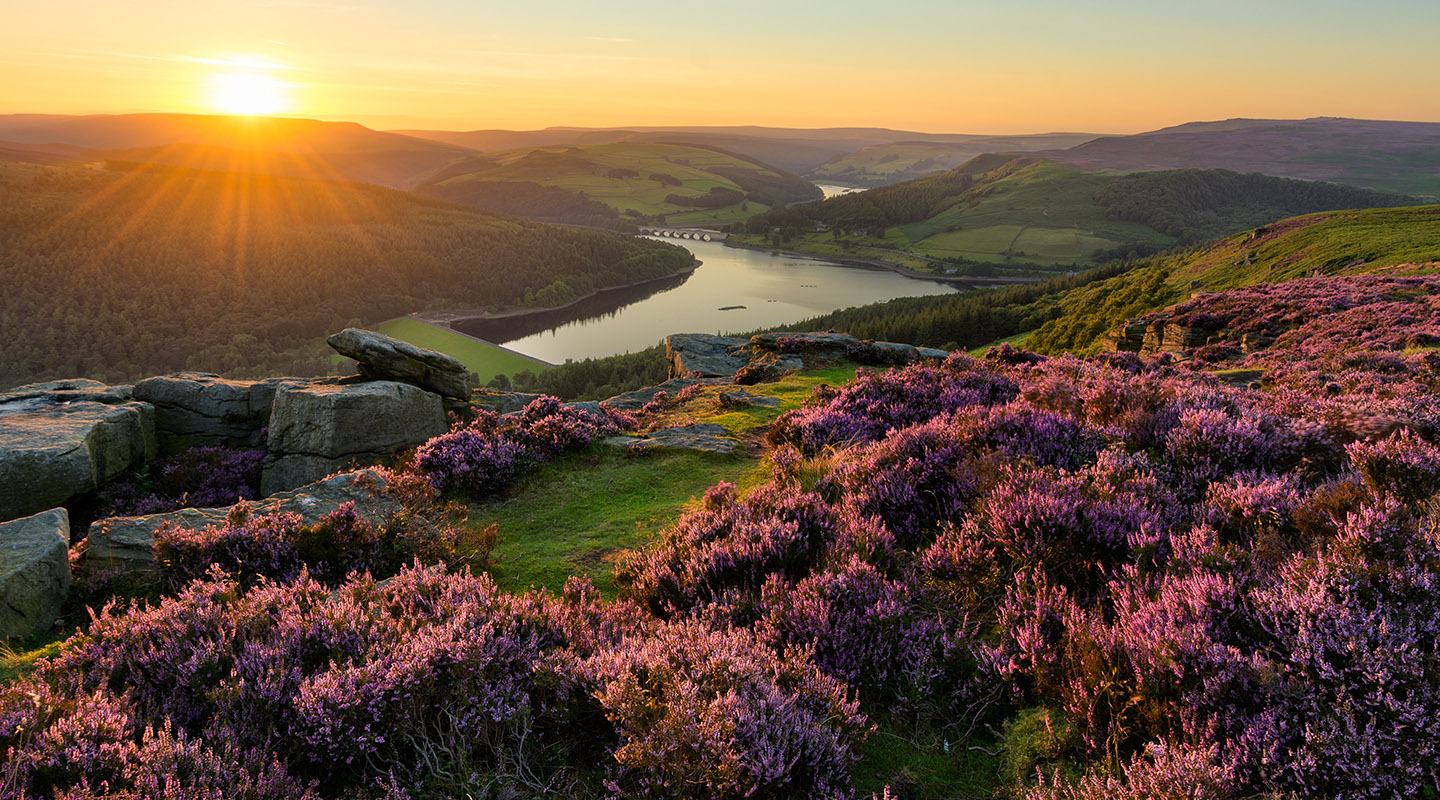
One of the irritants of the new way fostered by the errant release of TCPIP is a provider who pushes out photos for whatever reason. Usually, they don't say. Thankfully, I have mine filtered down to landscapes. So, it seems to be a game of: do you like this place? Loaded question. Well, after a few years, the thing has learned to not include people in the scene. And, location choice has been honed. 

Today was a charmer for several reasons. It was titled "Bamford UK" which looked to be north. So, I went to Wikipedia, first. The content was rather staid as I suppose we expect from an older English culture.

Bamford UK

What caught my attention was that the place had been included in the book of William I when he surveyed the land in order to rule better; one impact of this was the distribute his supporters across the land. Eventually, through his progeny, that came to include Scotland, Wales, and Ireland. And, too, we will have to look at the impact on the Continent. 

But, the main name was on the lists that I see of ancestors. Okay, what of the area? Well, Wikipedia, again, was ready to answer: Derbyshire Domesday Book - tenants. Of course, "in chief" is added as this was a land look not head count, specifically. Then, it was Banford. 

Again, lots of familiar names. We have addressed this effort of William before. This recent find is significant as recent events have changed our focus. We are no long only looking on the Americas. Now, we want to look at origins, in more depth, about which topic we have had lots of posts. 

Note, we know that Thomas Gardner was from Dorset which is in the southwest. But, there are lots of families in trees when going back that far, many of whom are from the north. And, we might like the beach. But, the northern mountains demand a little more attention. 

Remarks: Modified: 04/14/2024

04/14/2024 --  

Saturday, January 30, 2021

Research as a focus

TL;DR -- Lots and lots of things to look at with respect to 400 years plus or minus a century or two or more. And, an important one, the 250th, comes up which is now associated with a dancing Hamilton. Tsk. 

---

One of our common interests will be history from several perspectives; examples abound of how the cloud/web is enabling new looks at history that were not possible in the prior years. So, yes, some history can be informal, such as we find with the family looks that are so prevalent. There will be the academic looks that take another look at some area, from time to time. Then, we will have our own production which will come from sponsored work. To date, there have been a few recurrent themes; however, we expect to be adding more to the list, especially with regard to technology wherein the absence of ethical concerns might point to a lack of appreciation of history. 

And, in terms of the U.S., we are coming up on the 250 anniversary, almost concurrently with the upcoming 400th of the Cape Ann endeavor related to the arrival of Thomas Gardner and others. 

The following is a brief summary of some of the work to date with pointers to earlier posts, as well as to additional information. One thing that we will bring to fore is awareness of the generational aspects of the cloud/web which provides a more proper basis with which to do the necessary analysis. 

These are categorized, loosely, by themes. 

  • Quarrels - Some of these seem interminable, such as those of late with regard to elections. We can bring in a look at the Pamphlet War of 1707, between Rev. Cotton Mather and Gov. Joseph Dudley (see image). Joseph was a Royally appointed governor and American-born Tory.  
  • Whence issues - For instance, we had a couple of posts in 2020 about this subject which is a recurring theme: Origins and motivations; Reasons ... for New England. We have the 'Origins' issue since little has been discovered about Thomas' past. On the other hand, we might have identified his wife, Margaret Fryer. 
  • Comparative views - There is a quote from Benjamin Franklin that he had never heard anyone, whether sober or drunk, say that they would like to split from England. Yet, it happened. One area really needing attention is a more cohesive view of life before and after, including economic issues, daily life, and such. For instance, a book from 1995 gave an estimate of population for England and 'National income' for three periods (count, English pounds): 1086 (2.25m, 0.4m); 1300 (6m, 4.66m); 1470 (2.3m, 3.5m). Yes, the black plague had a devastating impact.   
  • New England view - We will look at this further, but let's use the History of New England (Wikipedia) to look at population growth. This page fits with our view of northern and southern New England. Here is a look at the population of Massachusetts Bay: By 1629 - 506; by 1640 - 8,932; by 1650 - 14,307; by 1670 - 30, 000. We stopped there at Thomas died in 1674.  
  • Family events - An example is the ordeal of 1692 and following. Example: Trials of the Wilson family
Of course, New England's early activity is considered reconnaissance (see Albion's Seed). So, we need to look at the whole picture before the Revolution. We know that coming this way has even more interesting material to cover. 

Mather vs Dudley

Remarks: Modified: 01/30/2021

01/30/2021 -- Oh yes, we need to thank Queen Anne for the Georges. 

Wednesday, May 21, 2014

Whence came Thomas and [Margaret]

One goal, all along, has been to tackle this issue. There has been a whole lot written about the subject (see comments on a massive collection) that I have seen the past few years. Anderson punted (Great Migration), but that he did was correct (the bracket around Margaret is a nod to the open issue) given what is known, definitely, at this time, and the genealogists' bailiwick. Some of the thoughts and talks were re-addressed when the Richard III discovery was in the news (and later).

We have been considering origins from various angles: motivation, the times, and more. Given the interest, and the amount of material, we will make it a regular topic.

---

Today, I ran across this findagrave page about the Thomas Gardner who died in 1635 (see Farmer and Frank). By the way, I really like the site and its intentions. Notice that the subject that we had multiple Thomas Gardners has been addressed (see summary in this post).

---

When putting together the annals look at Thomas' time for Gardner's Beacon, Vol. II, No. 6, it was interesting to see how references to Thomas, and opinions, changed over the years. Too, seeing the material in this format suggested the usefulness. Expect a more full "annals" to be collected.

Similar to this, there will be a list of things on the web. This work is for informational purposes only. Analysis will come later. Without a proper structure and indexing, there is just too much which can complicate matters more than necessary.

Much of the web material points elsewhere, so we will track those. Sound like a lot of work? Yes, but, taking incremental chunks will allow regular report. Of course, the question of resource comes up: yes, we'll collect elsewhere and point there from the blog.

Now, one benefit will be to collect look backs that were done in good faith. Notice that the annals report (see Beacon reference, above) lists various look backs that happened over the years. Fortunately, we had some that were almost current. Actually, Rev. Hubbard was of the time of Thomas' offspring. Some of these look backs go back across the pond.

Some proposals (conjectures?) appear to be interesting. Some have a lot of supporters. We will get these laid out, even those that have been shown to not have much (or little or no) support.

---

If you would like to contribute to the collection of material, please send an email. Especially, I would like to hear thoughts about Thomas' ancestry (John Goff's take, for instance). Actually, across the breadth of progeny, are there stories, etc., that ought to be brought forward?

Which brings up resource, again. We attempted, unsuccessfully, a Forum approach (see summary) last year. What method would be good to use (robust, secure, friendly, etc.)?

Remarks: Modified: 08/11/2020

05/22/2014 - Removed the redundancy from the title; kept it on the file (emphasis).

06/25,26/2014 -- rootsweb is back. Listing of 303 trees for Thomas (those with sources, showing descendants and providing the death year). ... Of the 303, 181 trees have parents for Thomas. ... Then, there are 43 trees with George being the grandfather of Thomas. ... See Whence came ...

07/02/2014 -- Featured in Gardner's Beacon (TM) Vol. IV, No. 2.

09/28/2014 -- A week ago, the record for the marriage of Thomas Gardner and Margaret Friar was discovered in Sherborne by John Cook of Minneapolis, Dorset files. This sets a type of focus. Looks as if some transcription work might be in order.

07/12/2015 -- Okay, turtle speed. But, we get there. Announcing a new project: Sherborne, Dorset. No doubt, it is about time. When finished with the data collection and analysis, we will present the strongest story (the prerogative of the family) that the facts, and abductive reasoning, will support. As such, we hope to demonstrate some very much needed research viewpoints.

08/06/2016 -- More on All things Gardners.

09/25/2018 -- Recently the Profile for Thomas Gardner on WikiTree changed to only have the two wives. This was due to research and discussion to which Gardner Research contributed. Earlier, there was a post that summarized the issue and accomplishment: Margaret, anew. Thanks are extended to all who made this update possible. The Profile is managed by the Puritan Great Migration Project sponsored by the NEHGS, publisher of the Great Migration books. So, Sherborne, as John said (see this page for images of documents).

08/11/2020 -- We have used categories in the post. We also have used pages which allow some structure. Then, we have the other media to consider. One thing is definite, we will have lists of important topics. On these, we will find Origins and Motivations.