Showing posts sorted by relevance for query westward. Sort by date Show all posts

Thursday, June 3, 2021

Western Expansion

TL;DR -- After mostly looking at coastal issues, we turned our attention to the western part of the country into which went a flow that was a mere trickle at first and then became a flood. Historians liked to use 'westward expansion' in their view from on high. We're on the ground and see a western expansion

--

We started off using "western expansion" looking at the phenomenon from the west and with a particular focus on the people involved. We used the phrase starting in 2016 to point to other posts (Jedediah Strong Smith, MH Gardner, Real Daughters). But, our first sense of the west was the lonely grave in Nebraska (Flyover country) and, later on the same theme, No brick wall

Today, we saw that many have used 'westward expansion' supposedly with this phrase due to Thomas Jefferson. However, Britannica uses 'westward movement' in their description. We like and will continue with 'western expansion' with an addition. 

It's time to map in historical information when it makes sense to do so. Each of the below links go to additional information that is pertinent. For each, we will put in a comment about the content. This list will be edited over time. We will start with Wikipedia's nice coverage of the timeline for which we will add events and their research on the trails. 

This image comes from an educational site and mentions the same routes that got our interest. There are more, again. But, this is a good start. 

Remarks: Modified: 01/07/2022

06/17/2021 -- Added the TL;DR. 

01/07/2022 -- We will use Harvard and the Boston Brahmins as the overarching thread under which reality (of people) exists. That is, lofty is without merit when metrics are involved, even those of the qualitative type. 

Friday, October 14, 2016

Another trail

Earlier, we looked at the western movement (Westward Ho) that started after Lewis & Clark let the easterners know about the huge country to the west. As well as going on land, there were ways by sea. One was long and around the Cape. The other consisted to two sails with an arduous crossing in Central America.

There was another trail. That followed by the Mormons (Mormon Trail). It had some commonality with the Oregon Trail, however the mode of travel was somewhat different after the earlier trips. Putting together proper supplies for the trip required funds.

There were many who wanted to go west, yet they could not afford to do it in the normal manner. So, they went on foot, pulling hand carts: Mormon handcart pioneers.

While researching the western flow, I ran across a book that provides information about those who took the journey. There is genealogical information; plus, their arrival and with what company is noted. Each year, people formed groups that traveled together.
Both of these reference Gardner/Gardiner families. Some of the families came from Europe. We will look at that further. The later issue of the book has more information with photos.

There were many New England families, such as Herber Chase Kimball. Herber was the grandfather of Spencer W. Kimball (LDS President 1973-1985).

The launching point for this moving over land was western Illinois. There were many New England families that were involved in the development of this and surrounding states. We will look at some interesting aspects of that.

Meanwhile, some links to further material.
An example of movement by sea is the Brooklyn that sailed New York to San Francisco in 1845.

Remarks: Modified: 10/15/2016

10/14/2016 -- 

Wednesday, June 15, 2016

Blogging and such

The availability of blogging has encouraged genealogists (2013 list) and others. We find blogs on all subjects. I like to find blog-like entries from the past.

Gardner Junction and its role has motivated a closer look at the westward movement. This junction was on the southern route west. Of course, Santa Fe was southwest of Kansas City. But, Oregon was west. The early travelers took this southern route until they split and headed back northwest. Later, the greedy call of gold helped develop other ways to go west. St. Joseph had been a terminal for the Pony Express. So, too, it was a starting point for a trail that met up with that taken by the southern route.

Aside: There were more bodies that headed west over the migration period than arrived in New England, and the middle states in the early years of the colonies. Too, these folks came from the whole range of the east coast. Hence, our interest. Prior to this time, there had been movement to the middle portion, say Ohio on south. Some stayed there. Many moved, again, once the U.S. got its western expansion thanks to Jefferson.

Also, the Mormons had been forced west and came to these parts out of Illinois through Iowa. There were many families related to Gardner on that trek. One thing of the Mormon migration was that they used hand carts to bring along their goods.

---

Now, to the theme of the post. Some of those who made the trek kept journals. Many entries are blog-like. This little bit from a traveler discussed the origin of the name of Lawrence, KS. One can just see the writer condensing some conversation with a local. We will be looking for more of these.

Written by Albert D. Richardson, 1867: ... first town in Kansas.... Pleased with the name, they gave it to their nascent city. Their first Herald of Freedom - for a newspaper is mothers milk to an infant town - bears the date Wakarusa, Kansas Territory, October 21, 1854. But the settlers soon learned this romantic legend of the origin and significance of the name: Many moons ago, before white men ever saw these prairies, there was a great freshet. While the waters were rising, an Indian girl on horseback came to the stream and began fording it. Her steed went in deeper and deeper, until as she sat upon him she was half immersed. Surprised and affrighted she ejaculated Way-ka-ru-sa!(hip deep). ... On reflection, the settlers decided not to perpetuate the story, and changed the name of their town to Lawrence, in honor of one of its most generous patrons, Amos Lawrence of Boston. 

This entry comes from a collection of traveler notes plus other material at oregonpioneers.com (OregonPioneers).

Amos Lawrence was of an old New England family. His family tree is full of collateral families that are interest to us.

The northeastern part of the Kansas Territory (KT) was settled by folks from New England, including many abolitionists. KT and Nebraska had been carved out of the Missouri Territory. By 1867, the turmoils of the Civil War had come and gone, except the whole issue of carpet baggers. Prior to then, though, the KT area was site of lots of armed conflict that we will look into. For the most part, New Englanders were involved. These events represent a crucial period of the U.S. history.

Remarks: Modified: 02/09/2020

11/22/2016 -- Final migrationflyover country.

06/17/2016 -- More on trails.

08/13/2017 -- Posts on Lawrence (and surrounds): Trails WestWestward HoBlogging and suchFinal MigrationThomas Wentworth HigginsonKansas and Lawrence.

02/09/2020 --  A couple more names: Gardner, IL; Gardiner, MT.


Saturday, June 11, 2016

Westward Ho

We already had the 200th of Lewis and Clark's venture west. They came through near where I was recently and spent three days resting and getting their supplies in order. Kansas created a park at Kaw Point to commemorate the event. Other locales established memorials over the length of the Lewis and Clark trek.

Coming up then, too, will be 200th anniversaries of the great migration to the west.

We will be doing more posts on this for several reasons. For one, a major point in the trek was the split at Gardner Junction where the Sante Fe trail went south and the Oregon trail headed north. For a long while, the Oregon and California trails were the same. Then, out west, some wanted to go to sunny California and the Spanish architecture. Others wanted to go to the gloomy north. 

Go spend some time in Seattle to see what I mean. Nice places, though.

Then, too, plenty of Gardner and related families came through this area venturing either way. We will get stories of these families and their ordeals.

A little further south, there was another set of trails that came out of Arkansas heading west. 

One important thing to remember is that even in this eastern region of Kansas, wagons had a problem fording rivers (say, the Wakarusa). For instance, near Lawrence, they had to dismantle wagons as much as they could in order to get the things down the cliffs and over to the other side. Of course, similar efforts were required for the wagon contents.  

Consider, if you would, what was coming up for these folks as they went further west and experienced the terrain found in present day Wyoming, Utah, Oregon, and, even, Idaho.

Major work. Every day.

Do we ever think of that as we buzz down General Ike's (BTW, a Kansas boy) roadways - our current Interstate system?  

Remarks: Modified: 08/16/2025

06/17/2016 -- More on trails.

07/16/2016 -- Gardner's Beacon, Vol. VI, No. 1

11/01/2016 -- On foot traverse.

08/13/2017 -- Posts on Lawrence (and surrounds): Trails WestWestward HoBlogging and suchFinal MigrationThomas Wentworth HigginsonKansas and Lawrence.

08/16/2025 -- Mentioned this topic in a look at the comparative flow of American Rivers. We will look at this topic further as an example of two roles of rivers: means of transport; barrier as was seen on all of the trails. 

Tuesday, November 1, 2016

Final migration

The first would be that covered by NEHGS via its Great Migration Project (pages on Thomas Gardner). We see the 400th anniversaries of these New England areas coming up soon.

At the same time, we can look at the 200th of the great movement west. This is called the final migration as it started to fill in the interior of the country that was shown us, in part, by Lewis and Clark via their expedition. The trails got explored and established. People got off of the trails at various points in order to set down roots. There are several stages to this long bit of history which we will look at.

Right now, and given the current turmoil, we wanted to provide some material about the long reach of New England (a favorite topic). In particular, we will look, in depth, at New England's involvement with what became bleeding Kansas, namely in the period prior to the Civil War (War between the States).

We just found out that a nice presentation of A History of Lawrence Kansas is available on the web. We will use this book a lot. The author, Richard Cordley, D.D., arrived in 1857 and wrote the history in 1895. Below are some excerpts.

To set the stage, let's do a quote. This is from Chapter 1 in which Cordley quotes from Whittier's poem, "Song of the Kansas Emigrant:"
    We cross the prairie as of old
    The fathers crossed the sea,
    To make the West, as they the East,
    The homestead of the free.
---

Remember, the context was after the Kansas-Nebraska bill was passed in 1854. The issue of slavery in new areas was still unresolved. So, New England took it west.


It was decided to establish a presence in the new region. Some had liked, or heard good things about, the area around what was named Mt. Oread. So, several parties were organized.

Now, remember, this is 1854. The trails had now been in use for over 20 years. So, there were modern means available to those who could pay. And, the New England parties were well funded.

After the first party left the Boston area by train, they went to Albany, New York to get Lake Erie passage to Chicago. The next step was traversing land to St. Louis. From STL to Kansas City, they could go by water. Then, they were back to the frontier experience.

"We prepared ourselves at once for starting. An ox team was purchased to transport the baggage and at ten o'clock Saturday evening we started on foot for our destination across the prairie. We traveled as much as possible during the night as the weather was very hot during the middle of the day. We saw occasionally a log house as we passed along, inhabited by farmers, of whom we obtained milk, etc. On the evening of Sunday we encamped on the lands of the Shawnee Indians. On Monday morning we started early, and in the evening arrived at the Wakarusa river, within ten miles of our destination. Here we camped, and the next day reached our new home."

They would have passed through Gardner Junction.

---

Of course, only a couple days of travel is nothing compared to the 1000+ mile trek of the Mormons, yet one has to give these gentle people some credit. They did it on foot.

And, these are all cousins. We'll be looking closer into that. There was one Conant. A lot of other old families were represented.

But, let just quote about their first day.
    This party arrived August 1st. They ate their first meal on the hill where the old University building now stands. Of course they held a "meeting" and "organized." Someone has said that "wherever two or three Yankees are met together there they hold a meeting and organize." The meeting chose Ferdinand Fuller as chairman. They were in good position to

    "View the landscape o'er," 

    which they proceeded to do. They also had some speeches, and discussed the merits of the location and the best methods of procedure. The situation seemed to please them, and they voted to "stay here." They named the bill on which they met "Mount Oread," a name which it bears "unto this day." They remained on the hill a day or two, and then moved down, and camped near the Kansas river a little west of where the bridge now crosses that stream. The members of the party spent several days "claim hunting," and selected claims all around the proposed town site. After this was done, about half the party returned east, with the intention of bringing their families in the spring.
Sound like the Plymouth experience? In fact, the "please them" refers back to Winthrop's early comment on the Boston area after he was turned off by Salem.

There are so many themes to follow in this regard. For one, many of the New Englanders had already settled in states going west, such as Indiana and Illinois. This year, we had the opportunity to look closer at some of these folks. Some families had gone south prior to their westward movement.

Remarks: Modified: 06/24/2022

08/13/2017 -- Posts on Lawrence (and surrounds): Trails West, Westward Ho, Blogging and such, Final Migration, Thomas Wentworth Higginson, Kansas and Lawrence.

12/30/2018 -- The 400ths will be one theme next year.

09/03/2019 -- More on the 3 Trails.

08/07/2020 -- In this post, we are looking at two disparate spots that share a name, however there are many points in-between. Like Eudora, KS. Where "The Wakarusa meets the Kaw" is on their history site and is an example of local lore getting some attention. See "Along the Western Trails."

06/24/2022 -- Updated links to Eudora's website as topic continues to be of interest: A Ride to Kansas

Saturday, June 18, 2016

Gardner's Beacon, Vol. VI, No. 1

The current issue of Gardner's Beacon starts to look at upcoming 200th anniversaries. More people went out west through the various trails (Westward Ho) than arrived both in northern New England and its southern counterpart. In those early days, there was motivation to go west. For one, claiming land would keep out settlers from other countries. In that case, there were conflict with the American Indian population and with other countries.

By the time of the end of the long American Revolution, people were ready to go west. Lewis and Clark helped capture the imagination. Families took the long trek to Oregon and California. During the gold rush, many 49ers went out by the trails.

An older trail, to Santa Fe, provided the starting point. But, as more people gathered, there were issues, such as a cholera outbreak, that establish another starting point, present-day St. Joseph, MO. Too, the 49ers were in a hurry and wanted to take some days off the trip.

The story would not be interesting without the people. That launching point for western expansion turned out to be where early conflicts started between pro- and anti-slavery proponents. "Bleeding Kansas" was more than a name.

And, New Englanders were heavily invested in the area, in terms of money and blood and sweat.

Of late, DNA has been put on the plate and will be getting more attention. Lots to discuss.

Charles Sanders Peirce (his father, Benjamin) did some marvelous work without much attention. He died destitute. He was the first to look at abductive approaches (see DNA above). Also, he was probably the best mind of that generation, though Eliot of Harvard did not think much of him.

---

See Vol. VI, No. 1 of Gardner's Beacon for a review of research to date. Sources: Oregon-California Trails Association (Trails, again).

Remarks: Modified: 04/23/2021

06/19/2016 -- Switched to larger font, two pages, and introduction to Charles Sanders Peirce.

Wednesday, March 18, 2015

TEG, Vol. 35, No. 2

Context: TEG, draft review copy

We are in the process of completing the article (theme, Research in Progress) on Henry D. Gardiner and his barque, Bostonian, for the upcoming issue of the TEG. Notice that details have been removed from these posts as we will reissue them under Gardner Research (at the TGS, Inc. site) in order to support the footnotes (as in, each footnote in the article will be augmented with images plus links to on-line material).

Here is a look at the Bostonian's timeline as of today.

Bostonian timeline, draft

Notice that it left Boston in the spring of 1849. The ship took 173 days to get to San Francisco. Four passengers left Boston, and four arrived at SF. Then, we see an ad in Aug 1850, of selling at the Jackson Street Wharf.

Before that, we see the Bostonian in New Zealand. Did they leave the booze in a warehouse and then return?

This plaque tells the tale as it was known earlier in the 20th century. The 1994 effort at filling in the application for Historic Places added in some detail. We have gathered others.

Gardiner marker

We left this comment at the Douglas County Historical Society page as they ought to be interested.
    Henry D. Gardiner, and his brother C.F., were the owners of the Bostonian. An article is scheduled to appear in The Essex Genealogist in May of 2015 that provides some background about the brothers. As well, it looks at Henry’s wives, two of whom were descendants of Thomas Gardner of Salem.
    Henry, himself, was a descendant of George Gardner of Rhode Island. His grandfather’s first cousin was Dr. Silvester Gardiner of Maine (see image in post). Silvester was the namesake of Henry and was the namesake of Gardiner, ME. So, the cities in ME and OR are named after someone in the same family.
    Then, there will be a timeline provided, based upon contemporary records, for H.D.’s and C.F.s’s barque. The Bostonian left Boston (May 1849 – there is a passenger list), was in SF (Aug 1849), and then, later, in New Zealand (April 1850) six months prior to shipwreck.
    The article will present what is known and will raise several questions that will need further research.
---

As well, the article will look at Henry and his brother, CF. Plus, two of Henry's wives were descendants of Thomas and Margaret.

We will add in a little about Henry and CF after the shipwreck which must have resulted in losses for them, albeit folks on the scene were able to salvage a lot of material with which to start the town.

George L. Snelling, purported nephew, remains a mystery. A Snelling returned to SF with the Kate Heath. George was postmaster of Gardiner, at least, through 1854. Then, what happened?

---

This is an example of westward movement that ties to New England and is thereby of interest. Too, we can see that facts are about, but they need to be gathered. Hence, motivation for research arises.

The idea, here, is to get the facts written up, in an organized manner, with supporting sources, and see where future research goes. Too, some dates do not line up. We will report what has been reported; future work will sort out the issues.

BTW, clipper ships made the around-the-Cape journey in about 1/2 the time or so. All sorts of nautical interests need to be studied (see sails - 03/09/2015).

Remarks: Modified: 08/17/2018

03/18/2015 - We will post a draft of the article as soon as it is ready for general review. ... Changed the updated timeline (the ad was 1850 not 1849).

03/19/2015 -- The Aug 1950 was noticed. We hope to get feedback from the draft article which will be out later today.

04/07/2015 -- Article submitted for review (see Timeline).

05/20/2015 -- TEG, May 2015, Vol. 35, No. 2, Pg. 31. The Gardner Annals, Vol. II, No. 1, (see TGA, Vol. II, No. 1 - pg 6) will publish the article in the near future.

08/17/2018 -- The 2nd wife of H.D. was Caroline B. Turner (see note this day at this post) of Maine and not Caroline C. Turner of Nantucket.

Tuesday, November 17, 2020

American tinkerer

TL;DR -- As we look at descendants, we cast a wide net including looking at those who have been identified by others. Except, these need to be proven. This is one case where the likelihood appears to be strong if someone does the work. 

---

Note: We started this post in an incremental fashion that was following up on a suggestion. For now, this is informational only and about a potential descendant of Thomas and Margaret. We had a similar incident with the 'Descendants of Samuel' page and left a note that points to a post about frontier issues. These are there for the middle ground (western expansion) folks and families. This particular one here deals with a family that came out west from upper New York. They had lived on the border of Massachusetts. On the MA side, we are talking Berkshire County, most likely. So, these two locales are close. More at the end of this post.  

---

There have been lots of these types of tinkerers over the past 400 years. Names stand out like Ben Franklin and Nath Bowditch. But, there are lots more. We have been going through the descendants of the children of Thomas and Margaret while covering the time from the beginning. Themes arose like generations where the 4th and the 5th bore the brunt of the Revolution. We picked the 5th since it matches up with the GSMD books. But, we can follow those generations forward and backward. 

So far, we know more of Thomas, George, and Richard. We know less about John, Sarah, Samuel, Miriam and Seeth. Despite Dr. Frank being a descendant of Samuel, we know less of his descendants than of the earlier boys. And, we are starting to fill in the gaps. This post is about a descendant of John. However, he also is a descendant of many families of Nantucket. 

Who is he? William Coffin Coleman was the founder of the Coleman Company. There is no American Boy Scout (probably male, too) that has not run across his lamp and other paraphernalia which is often associated with the outdoors, camping, fishing and such. This is a landlubber post; we will do more naval looks, too. 

William was born in New York, but his family moved to a southeastern country of KS. That area was oriented toward farming, but it was also how trains ran from points (ports) in TX to Kansas City and Saint Louis. As well, there were various types of mining (coal, chemicals) going on. His bio (Wikipedia) notes that he was in several places before he ended up in Wichita KS where the company was founded and existed for several years. 

We were looking at William with respect to John. See below.   

---

When we got to this point in the post, we went looking, again, and could not verify this line. Now, the last point of knowledge is the FindAGrave of William's parents. His father was Robert Russell Coleman; his mother was Julia Coffin. Robert and Julia were both born in New York. In the 1870 Census, they are in New York, still, and have his mother (Anna) with them. So, given the families, Coleman, Coffin, Russell and a couple of others, one thinks of Nantucket (then Gardner comes forward). However, there were Coffins in Essex Co, to boot. Both Robert and Julia are the 6th/7th generation. 

We have seen lots of frontier situations further west. This case is nice as it's like a lot of others seen and handled. Even in the east region (Essex Co), we have had to track people through different little locations. In the west, we had families out there early on. Ipswich (churches thereof) sponsored lots of pioneering efforts (need to get the old notes back up to fore - we're trying to curate through zillions of little data bits collected over a decade via the sea of the internet). Ann's greats were out west (upper New York) for a while and then back in Salem. One avenue would be to find a family where Robert fits. Reminds us of New Hampshire. In one instance, a kid was noted but said to have left the area. We wandered in the material westward and found that he put roots down elsewhere. Much like Lyman. Born in MA. Buried in a lonely area out west. We can track his steps in-between. He's fine. One daughter of his is ignored since she died young (being followed by a step-mother for her young daughter). No paper trail. Wait! We've been down that path. Our goal? Get these people, categorically, considered in a more proper light. For one, it's the American thing to do; too, it's the 'honor' part of that old adage that might have more basis than many allow.    

Remarks: Modified: 04/23/2021

11/24/2020 -- Referenced this in America's Lost Generation

Thursday, June 17, 2021

Paper Trails

TL;DR -- The Economist reviewed a book that reported on research using Post Offices as a proxy for studying population and movement. The demo and its code for the project is at GitHub with Harvard providing the data repository. This is an example of a growing trend related to reproducibility through time and across region. We look at maps that show the early start and the frontier century. We will revisit the theme as we dive further into research which will also look at nautical world as well as influences other than New England. 

--

We have followed New England's influence starting with the nautical experiences and then getting into the frontier times in the west. St. Louis will be a center point for the earlier part of the westward movement since it was involved in carving up (see Bent post on surveyor father and his trapper son) the huge pieces that were obtained via the Louisiana Purchase and later acquisitions. But, there was movement inward from the left coast, too, as well as from the south (giving us Texas, the great State) and its spheres. 

So, our research focus will include, then, four centers with Salem in the east (yes, we see Winthrop as a later arrival), St. Louis in the center, San Francisco out on the left coast, and somewhere in TX as a southern point. Perhaps, San Antonio. Too, rather than the esteemed heights of the historian (academic) as the focus, we are following families, especially in regard to the middle not being flyover country

The below is motivated by an article in The Economist (How the West was won). So, there is an aura (per usual, Brits, what else?) of judgment that seemed to waft from what the verbiage expressed. Okay, we like the mag, for depth of content and humor. Also, they are talking of a book, same title as the post. Here are some links related to the book and author. 

Now, with respect to GitHub, we have referenced this several times as it pertains to the work of Gardner Research and to the notions of the digital realm (for which we propose truth engineering as a necessity). Our portal (https://TGSOC.org) is a start on the long trek required. Expect the theme to continue. 

Before going further, we want to remind everyone of the Age of Colonialism. The U.S. did not run around the world competing with Europe. Rather, we had our own internal dynamics. The look at the carving of part of the hemisphere will cover that. The nautical? Ah, business on and enabled by the sea. Boston got its Brahmins. The left coast and Texas? We'll punt that to later posts. 

We did snap of Professor Blevin's graphic at dates that are pertinent to our work. We are diving, now, into the situation at the beginning of the wild west, and a little before as we recognize New France and New Spain. We want to go to about the 1850s where the middle was being used as a cultural battleground long before the Civil War. But, the graphic also includes the beginning (1792) and a couple of snaps from the 20th century. 

This page gives details about the analysis using Post Offices. The image below was created from snaps from that page. Note: the application is hosted at GitHub. 

This is only an introductory look. At the top is 1792 when the new country was getting its legs. There is a little dot out west marked by a red arrow (New Orleans? Too early; looks more like TX and too early; so stray dot?). The next row is our current interest which involves the early surveying times (1805) and the time of regular traffic via the trails (1855). The next row is our Frontier Century snap (1811-1921). Why 1811-1921? The snap was after a stop. The years are close enough for what we are doing now. After all, 1811 is one year before 1812's turmoil. 1921 is after both WWI and the Spanish Flu. Lots happened to families between that time. 

We will get more fine-grained later. Lots to discuss there. In the last row is 1990 which is interesting when compared to the 1921 snap. As one watches the graphic, dark regions become light as POs close for any number of reasons. The thing is that the highways become visible. 

Aside, Jedediah Strong Smith gets little respect for mapping out the CA Interstates ;>). He got us aware of the long reach of New England. But, too, he was around a whole lot of other folk that we have looked at and will continue to study. 

Remarks: Modified: 06/17/2021

06/17/2021 -- Added the TL;DR. 

Saturday, June 17, 2017

Judge Francis M. Thompson

Next up is Judge Francis M. Thompson of Greenfield, MA. This post continues our review of editors and contributors to The Massachusetts Magazine (started by Dr. Frank). Earlier, we looked at R.A. Douglas-Litghow, MD, LLDF. B. Sanborn, and Thomas Wentworth Higginson (Thomas brought troops and supplies to Kansas in 1854 from New England, among other things).

Among other accomplishments, Francis was author of The History of Greenfield (Vol I - google.com, Vol II - archive.org). We will look at that.

For now, we want to list the articles published in the TMM, in order of their appearance. Both Thomas and Francis were out west prior to the Civil War. Francis spent more time and was a pioneer in Montana. So, there is a lot to cover.

The articles were titled "Reminiscences of Four-Score Years" and started to appear with Volume V.
We will go through these in more detail as they pertain to the westward expansion. The Montana Historical Society Press published Francis' story (2004): A Tenderfoot in Montana. The reprint mentions that the text came out of The Massachusetts Magazine.


Remarks: Modified: 07/08/2022

06/17/2018 -- F. M. will be featured in The Gardner Annals, Vol. IV, No. 1

03/07/2019 -- Added image from this post to the index on our portal to truth.

10/28/2019 -- Mentioned the Judge in a comment at this post: Seeking refuge in the valley

07/08/2022 -- We're adding new material to another post and will link in here. The WikiTree of his father, John Thompson (Thompson-35810). F.M. is the 8th generation

Saturday, July 8, 2017

Kansas and Lawrence

Kansas was a project of New England. Lawrence, in particular, got special attention. In Robinson Park in Douglas County, there is a plaque that commemorates those families who were involved. Some of these came as pioneers. Some came to help and went back.

Plaque, Robinson Park, Lawrence KS
The plaque contains the names of those in the first two parties. Col. Thomas Wentworth Higginson came in two years later with more supporters under the auspices of The National Kansas Committee.

1854 was the year of first arrival. Rev. Cordley covered this in his History (Final migration). Two years later, Col. Thomas Wentworth Higginson came in with more supporters (Reinforcements).

Those on the Oregon Trail went right below Mt. Oread for twenty years, before this migration started, after they left Gardner Junction (map) having split with the folks headed to Santa Fe. There was continuing use of the Oregon Trail for a couple decades after this event.

In 1943, Louise Barry wrote 'The Emigrant Aid Company Parties' which is available at the site of the Kansas Historical Society. In her article, she provides some details about each individual.

The next issue of The Gardner Annals will have more information about The National Kansas Committee.

Views on the National Kansas Committee: Eli ThayerThaddeus Hyatt, Kansas Historical Society, Col. TW Higginson, FB Sanborn, Kansas Memory, KU in LK, Master's Thesis 1923 (Relief Work in Kansas), ...

Remarks: Modified: 07/27/2022

07/25/2021 -- Missouri is where the carving of the great U.S. landscape started. Driven, we might add, by New England. A hole exists in American history, namely the Frontier Century. We need to work on that. We'll think of some piece to honor George Kimball III who died this month in 2011, cuz of Ann several ways. 

05/06/2021 -- City of Lawrence voted to return the Big Red Rock to the Kaw Nation. 

08/07/2020 -- In this post, we are looking at two disparate spots that share a name, however there are many points in-between. Like Eudora, KS. Where "The Wakarusa meets the Kaw" is on their history site and is an example of local lore getting some attention. See "Along the Western Trails."

09/19/2018 -- Kansas saw the first case of the Spanish Flu (1918), several place. One of these was Haskell County, named for Dudley C. Haskell (descendant of Miriam Gardner).

07/23/2017 -- For those in Louise Barry's article, we need to update their information. The Thomas Gardner Society will be looking at those who were involved with The Massachusetts Magazine plus other information related to our interest. 

08/13/2017 -- Posts on Lawrence (and surrounds): Trails WestWestward HoBlogging and suchFinal MigrationThomas Wentworth HigginsonKansas and Lawrence.

03/12/2022 -- Hannah Ropes spends 6 months in Kansas with loaded pistols and Bowie knife. ..., Daniel Webster risks it all on the 7th of March. 

06/24/2022 -- Updated links to Eudora's website as topic continues to be of interest: A Ride to Kansas

Saturday, January 27, 2024

Longhunter

TL;DR -- Boone was there, in the times of the French-Indian affair, the Revolution, and after. He was of a type that can be known as longhunter. They wandered and brought back information. And, turned around and led people west. This post is of the 250th theme. We are about two years away from that celebatory event. 

---

Four years ago, COVID became a reality. There had been little glimpses earlier. People were talking about an illness in China. We came home from a regional jaunt and heard, on the news, that people had been identified in the area where we had bee as being diagnosed with the disease. Okay, not long after, there was the respite put into  place. Rather, it was lockdown with rules put into place which went on for a few months. 

We had already been supporting history and genealogy work. Some of this had the flavor of finding paths taken by families as they went west. Or, from our perspective, as they came west. Earlier, we had seen entry into flyover country from several directions. The Ohio River ran from PA down to MO. But, it was Daniel Boone (see post Boone himself and search results - Boone) who figured in a large way. He was involved in the Revolution. Prior to that, though, he had explored westward our of the southern states. 

As we had noted, our focus was on the coast for a long while as we caught up with the 400 years that had passed by. Dr. Frank's work was a launching point bot from the family research and The Massachusetts Magazine which printed for eleven years and was discontinued when the Spanish Flu hit as well as WWI came about. But, we had done some work with families who went west. See Flyover Country, for one. As an aside, we are considering how to update Dr. Frank's work with respect to recent findings brought to us by technology. 

Fortunately, about the time of the pandemic, we were getting more inquires with regard to people coming west. Here are some examples (these posts are not in chronological order): Jedediah Strong Smith; Judge Thompson; Col. T. W. Higginson; and St. Louis as the site of the partitioning efforts. Too, though, we tracked several families that followed Boone west. He, BTW, ended up in MO with his son coming further into KS. 
Boone, wandering

Now, let's look at Boone and what he represented. He was a longhunter. These guys went out on their jaunts for months at a time. And, during that period, they were self-sufficient. When they returned, they brought back information and some artifacts, such a pelts. 

We are talking about the area, for the most part, that was east of the Mississippi River. There were explorers out further west, some from the Candian regions. Jedediah was out in California in the 1830, by foot both his and his steeds. He passed through St. Louis on his way. Later on, as we know, two massive killing periods happened out west: beaver; buffalo. 

The numbers of venturers was small. But, where Boone was, a Cherokee chief by 1769 was complaing about the influx of the long hunters. Mainly, they were noisy. And, other stories abound. 

But, getting to our interests, we are finally concentrating on Tennessee. It is a huge state. All together, it touches nine states. Its northern neighbor, Kentucky, touches seven states. We follow families who went west through both of those areas. Too, their border was a dividing line during the U.S. Civil War. We have not discussed that topic in detail, yet, but intend to at some point. Since we're in KS, there is a pre-civil-war history involved with families in the area. 


Back to the longhunters, they are similar in spirit to those who sailed the seas as we saw with New England. We had an earlier post (Final migration) that quoted authors on the subject. There were many trails west, as the railroads later showed us. Jedediah, in CA, had travels that map out the current highway system. Culturally, we would point the travels of the Native Americans over their long time on the continent. 

Other types of early travelers have been touched upon during our research. About a century before the area depicted in the Flower Moon movie, a mission was established in SE KS to aid the Osage and, eventually, other tribes brought into the area. Several local sites were the local for negotiations and treaty agreements. 

Back east, the history goes back 400 years. In the interior, we are talking the long reach of New England over a 250-year period. A lot of families arrived later; but, many carry the history int heir genes over the entire period. Both require attention. So, there's no end to research. 

Lately, we have had a focus on CA, for several reasons. Some of the interest has to do with family being there early. But, we have seen lots of older photos being brought to the fore. Recently, we did a post about a photo taken in downtown LA in the 1880s. We have one from this week to add. But, the area of the photo was where Butterfield had his stage coming into the area prior to going up to San Francisco. His first arrival was in the 1850s. Change is on theme. Some things remain. Many, most do not. 

Society needs its adventurers. Of late, there are new types that we will be discussing. Despite that, we still need the old ways for many reasons. 

---

Example? Technology has developed a thrust and lust for the virtual. That theme needs constant attention for several reasons. One deals with the respect for the land and the people involved across all of the time frames that will be associated with the U.S. and its history. 

Now, AI and even AIn't? History can be retold in more interesting ways using technology. Yet, the truth of the matter remains an open issue that hopefully we'll be able to address more fully if we determine the necessity as we ought. 

Remarks: Modified: 01/27/2024

01/27/2024 -- 


Monday, May 22, 2023

Three years ago

TL;DR -- Three years ago, we were coping with changes due to the pandemic that cropped up and circled the world. One lasting theme was that we got into specifics. Starting with movement to get over the barriers from the east to the west (say, Boone), we incrementally have followed families as they ratcheted west (move, settle for a while, move). The interior is full of such families. 

--

We are approaching the Memorial Day weekend which starts the summer season. It's the first of three holidays with July 4th and Labor Day being the other two. School is out for most students. Vacations are on the horizon, usually. 

But, as a reminder, three years ago, a pandemic arose worldwide, with awareness of the situation becoming to the fore in March. Pandemic? We had already written of two: Throat distemper, Spanish flu. The latter coincided with the last issue of The Massachusetts Magazine. But, this was something new: sheltering in place with little public exposure. We adapted to new ways, that were supposedly temporary. 

These posts in these three months depict some reactions of the time:
  • March 2020 - This was the first effort at adapting to the new way. Where we lived, we have wide-open spaces and were out every day. Being older, lots of events in the public sphere managed access and time (a carry-over are the carts being filled with orders to be delivered that one see while shopping). But, the themes this month were retrospective, anyway since we were in our tenth year of blogging. 
  • April 2020 - Like being house bound, we took the time to review our ten years of research. One thing that came of that was the focus, for a few months, on the interior of the U.S. as it was carved under the control of St. Louis. We sampled various times and places related to the movement out west.  
  • May 2020 - Tales from the westward movement started to crop up. Just getting out of the east was problematic. The below quote? Trying to conquer the western portion of an Atlantic State. 
    • "One lady was quoted that she would hide her infant by a bush and follow the wagon up hill (with one task of chocking the wheels of the wagon if the horses tired). Once the hill (very large one) had been conquered, she went back down and came up with her child." A huge name involved with the escape was Boone of the south, who got people over the mountains into the area that launched the western movement. Boone himself, as an old guy, was all the way to what is now known as Kansas City. But, that was not even half-way to the west coast. 
There was a change in focus that has continued. We did not have an explicit post on Covid until later (June 2020 - Modes and protocolsThe future). We did several retrospectives over that time. Then, we wrote of a 100+ year old lady who application to the Mayflower Society (Deeper dive) never took, for several reasons (we have written of that here). She is now gone (and knows, Mayflower people). 

Actually, about that, one wonders how well the computer will be in doing some of this work (that is, genealogy). We already have many examples, so the topic will be on the table. 

Remarks: Modified: 05/22/2023

05/22/2023 -- 


Thursday, December 11, 2014

Gardner's Beacon, Vol. IV, No. 4

While researching for this issue, we were looking at the movement of Gardner families southward and westward. We know that Gardners went from Salem, MA to Nantucket, for instance. Too, there was migration from Nantucket to North Caroline. In short, we know that there are descendants of Thomas Gardner in every state of the US.

And, there are many Gardner families to consider. That subject is covered by our most-read post (Gardners and Gardners).  As Gardner Research works to identify all families and their relationships, the starting point is the list provided by Dr. Frank A. in his book.

---

On following Quaker migration, we ran across Gardner in New Jersey. Namely, Thomas Gardner arrived there from England in 1678. The below links provide some information about that community which was quite active.

Quakers of New Jersey: FoundingThomas Gardner house in Burlington1981 celebration.

Some settlers were new arrivals. Others had gone back to England from New England and returned further south. The Quaker tales such as these need to be told.

---

Introducing Janet Gardner's work: Quakers, the quiet revolutionaries. Janet has produced documentaries for several years. Her work is of interest to us.

---

During the effort to determine the namesake of Gardiner, OR who turned out to be a descendant of George of Rhode Island, we ran across another descendant of George. Jo Ann Butler has authored books using her ancestor, Herodias, as the focus. The viewpoint is appropriate, we feel. 

---

See Vol. IV, No. 4 of Gardner's Beacon for a recap of the accomplishments for the year, for a table of contents and an index for all issues, for a brief look at the Nantucket timeline, and more.

References: see Sources (Current Issue)  

Remarks: Modified: 03/02/2019

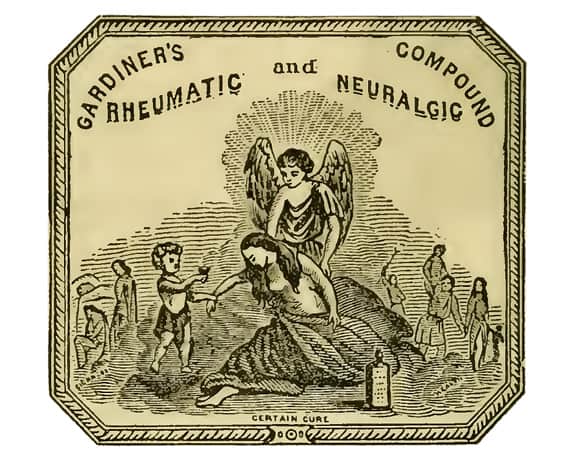
12/14/2014 - To follow the research about the namesake of Gardiner, OR and the owner of the barque that wrecked, the Bostonian, see the post on Henry D. Gardiner. A paper that summarizes the findings to date will be published by The Gardner Annals (and will be submitted to The Essex Genealogist). Recently, we learned that H.D., and his brother C.F, were also shipbuilders. They had quite an extensive commercial business, including the marketing of Gardiner's Rheumatic & Neuralgic Compound.

04/07/2015 -- Article submitted for review (see Timeline).

03/02/2019 -- Added the image as we are building an index via images at our portal to truth.


Tuesday, August 11, 2015

Gardner, KS

Earlier, we looked at places with the Gard[i]ner name. Then, we took Gardiner, OR and wrote about the person for whom the town was named, Henry Dearborn Gardiner (pg 31, v 35, no 1, TEG; pg 6, v II,n I, The Gardner Annals). That same family was the inspiration for Gardiner, ME.

So, talking of Oregon, there is a town on the trails (see next) in Kansas, named Gardner. It may have been named for Henry Joseph Gardner, Governor of Massachusetts (1855-1858) as there were many pioneers from Massachusetts in the area.

First, about the town. It was where three trails split into two: Santa Fe Trail, Oregon/California Trails. The Santa Fe Trail ended up in a city in one of the oldest areas of the U.S. The other two trails were coincident until much further west where the California Trail headed south; after going west out of Gardner for awhile, they headed up to Nebraska then west to what is now called Wyoming.

Now the Gardner was Henry Joseph Gardner who was a descendant of Richard Gardner of Woburn who is on the list provided by Dr. Frank (the Gardners and Gardners post is the most popular all time).

---

The mid-west and central parts of the country are full of displaced New Englanders. A little up the road from Gardner is Lawrence whose main drag is named Massachusetts.

Remarks:  Modified: 06/24/2022

04/02/2016 -- Map showing Gardner Junction and the split of the trails west of Gardner, KS.

08/13/2017 -- Posts on Lawrence (and surrounds): Trails WestWestward HoBlogging and suchFinal MigrationThomas Wentworth HigginsonKansas and Lawrence

10/26/2018 -- Map of Gardner Junction. 


08/07/2020 -- In this post, we are looking at two disparate spots that share a name, however there are many points in-between. Like Eudora, KS. Where "The Wakarusa meets the Kaw" is on their history site and is an example of local lore getting some attention. See "Along the Western Trails."

06/24/2022 -- Updated links to Eudora's website as topic continues to be of interest: A Ride to Kansas

Friday, January 7, 2022

Boston Brahmins

 TL;DR -- So, Brahmins of Boston and Harvard intertwine, many ways. We have used the concept a couple of times. Looking at A(bbot) Lawrence Lowell brings the notion to the fore. But, we use another example of an organization that is about as old. 

--

This is long overdue. Of course, Boston Brahmins is a known topic in the Northeast of the U.S. Not sure of elsewhere in the U.S. Prior to the work of TGS, Inc (org), the subject may have been addressed a time or two. But, looking at the history of Harvard (our view, across a multitude of families) brings it to the forefront. The Heads are the current focus with the latest one being A(bbot) Lawrence Lowell, in particular his change from the 'Gold Coast' coast mode that had been started during Eliot's (who was a Brahmin, too) term. 

So far, there have been only three posts mentioning the subject. One of these was the post on Lowell (prior to this one). Let's look at the other two. 
  • Magazines (5 May 2017) -- The Atlantic was exulting about their beginnings, at the time. And, as it says, a group in New England met and got the magazine started. These were Brahmins, for the most part. Later, the magazine left to go to D.C. which verges on the south. Our put is that they ought to have stayed in New England. Time will tell. We mentioned a few other magazines of the time, one of which was the Southern Literary Messenger (see Magazine: American museum). 
  • Paper trails (17 Jun 2021) -- Punned title, somewhat. The graphic shows U.S. Post Offices in operation at several decades over time. One can see the western expansion (the links discussed our usage) and more. Railroads are visible. Per usual, as we look at the west, New England is always an influence, whether Boston and its huge footprint or little Essex County, mother county of Salem, MA. 

Not to pick on the Brahmins, but they and Harvard represent the upper realms of New England. We look, as well, as the heart and backbone. One might look at how many Brahmins had representative property in the south. Many from the north went south and the west. 

BTW, we explain why we use western expansion rather than the hubristic westward expansion. 

Age of organization? Let's use the Ancient and Honorable Artillery Company of Massaschusetts. It is modeled on that of the Mother Country started by Henry VIII. And, it formed in MA in 1638. Our post ("Old" in New England) provides an overview. 

With respect to reality, we like to use this post: John Gardner and the Merrimack River

Currency of the notion? We do have one of Brahmin descent in the White House, now. 

Remarks: Modified: 01/07/2022

01/07/2022 --


Thursday, May 5, 2011

Times and more times

Recent events bring several things to fore, in the context of this blog. Earlier, it was noted that we want to look at early times for awhile before coming forward. Too, we ought to cut off about 1900, unless it deals with something of common knowledge or permission is granted. Then there would be the large middle periods, hopefully some attention being paid to various movements (westward, northward, ... - for instance, was there both blue and grey?) over the decades.

Early times would include information about the great migration and more, such as collateral families. The more later times would cover the wide net cast by Thomas and Margaret in terms of their progeny, such as Dr. Frank A, the John Lowells, Lucretia Coffin Mott, the two cousins, and more. For the middle times, the Nathaniels (Bowditch, Hawthorne) are good examples.

At all times, we'll keep things as coherent, as possible, knowing, though, that missing information cannot be recovered, many times. Yet, for some types of detail there is always hope.

In any case, at best, we can provide a fuzzy view. Hopefully, effort can bring things more into focus, except where there is no information. Some call that a brick wall, however a better metaphor might be a door: sometimes closed, perhaps at times ajar allowing a peek - we want wide-open doors, for the most part. But, some modern proof techniques, that deal with conditions of uncertainty, will have some usefulness, to boot.

---

Here are three items that will continue to bear some focus.
  • The wedding of last week caught a lot of attention. That the Duchess of Cambridge is a commoner was mentioned a lot. However, she is also an example of the RD work that will be on-going. Turns out that she is cousin to many Americans. Too, she is about a 15th cousin of the Duke. There has been some discussion of RD in these post; next up, will be a re-look at Simon Stacy (Samuel/Abel/Abel) with more information in this regard (several gateways). 
  • Along that line, some have proposed links between the early Gardner families. There are many ways to conjecture about this. One reasonable task might be to collect all of the different views that have arisen over time, that are documented. For instance, did Thomas have a sister Rachel who married Thomas Noble (we'll explore this further)? This listing is for research showing the descendants of Thomas and Elizabeth (White) Gardner (stale link - parents of Thomas) that include Rachel.
  • In regard to Margaret, Thomas Gardner's wife, some have her father as Thomas Frier (Ingersoll (stale) - here is the page for Thomas Gardner (stale) at the site, Margaret - at Ancestral Archives - stale). Of course, look at the Great Migration to see Margaret Unknown proposed as a second wife.
One effort will go into building a database starting with Thomas and Margaret that would include all of the collateral families. A wrinkle is how to resolve down to one tree a fairly disparate bunch of views. Or, since some are conjectures, can we really compare these (that is, need to allow multiple trees)?

Remarks:

03/19/2021 -- Add icon for the portal list. 

06/04/2019 -- For latest on Margaret, see post with regard to her parents. And, her WikiTree Profile which shows her as mother of Thomas' children.


Modified: 03/19/2021

Sunday, December 11, 2022

19th Century details

TL;DR -- Earlier we took a look at transcontinental travel in the early 19th century and its ardors. There was nothing easy about the ordeals, but people took up the gauntlet. Here we look at one site where travelers made their presence known and link to a map that has local details of interest. 

--

We have had several posts on trails. Recently, we looked at a well-known trail (to Santa Fe) as it was the terminus of another trail in New Spain which provided other trails such as that which provided a route used by the Butterfield Overland Mail Company in carrying mail, freight, and passengers from the east coast, through St. Louis and to San Francisco. This was pre-Civil War and was interrupted. Further north, the Pony Express went from St. Joseph, MO to California carrying mail. Butterfield established a new route up north using coaches. Mark Twain wrote of his journey on this route. 

There was another Butterfield in that area who was not related and who had a  Butterfield Overland Dispatch (using a post at the Legends of America site) through Kansas. Both of these Butterfield gents had investors back east. The amount of stations, equipment, horses and people required to have regular routes was tremendous. As we know, the rails of steel were going to play havoc with these routes. But, that was enough later for history to be made. 

As a reminder, at the same time, there was regular traffic from New England which moved south by sail to the area of Panama which involved going across land from ship to ship and then sailing back north. Of course, one could go around South America. We looked at this briefly when writing of the Bostonian (barque) that wrecked along the Oregon coast in 1850. The barque left Boston in July and arrived at San Francisco the following January. It was later seen in New Zealand and, evidently, carried goods to San Francisco before venturing north to its fate. Gardiner, OR resulted from that incident. The overland trails had as many dangers; but, even without those happenstances, the travel was arduous. 

Besides looking further at the specifics of these overland efforts where we find the two Butterfields, we want to bring in more detail as is required for doing history of the events better and for considering the people involved in a more respectful light. Also, the area in the center of the U.S. was very busy. For comparison, we looked at a railroad town and its specifics from the early 1900s (see KATY - western railroad). 

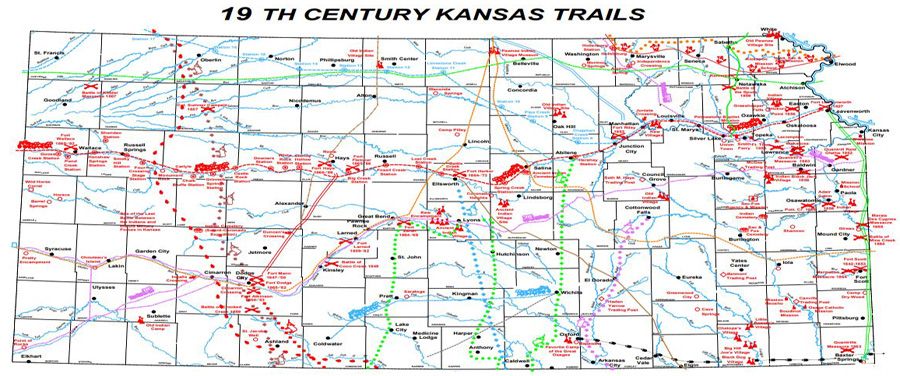
Let's start with a map that comes from KDOT (see 19th Century Kansas Trails). Notice that the Santa Fe and Oregon Trails come into the area in the northeast corner. The Oregon Trail splits off and heads northwest. Another trail in that area is the Butterfield Overland Dispatch which terminated in Denver, CO. The other Butterfield route would have been north of this area. 

Click for detailed 
map from KDOT

The map includes other trails of interest including those used by indigents and that related to the cattle trade where heads were brought as herds to a rail terminus for loading. As one looks at images, the wild west was in this area (see Dodge City). "Hell on the plains" might apply to our few decades of the web. 

Looking at some of the details, there was a military road (double green) that went from Ft. Leavenworth to Ft. Scott and further south. This was there early. We mentioned a Mission in the southeast corner (see Memorial Day 2022). Nathaniel Boone (son of Daniel) was in the area. Col. T.W. Higginson was in Lawrence and Topeka. Lawrence was founded as part of the abolitionists' interest in keeping Kansas free. Take a close look and note a trail (blue dashes) from Leavenworth which was originally for supplying Army posts as they expanded westward but ended up with a California connection

In a recent post, we looked at how Ipswich MA got Ohio going. That was not long after the Revolution and was similar many ways with what happened later out west. In fact, we included a graphic (map) showing both areas. So, we could look at this type of detail across the whole of the region. 

One of our interests is the long reach of New England. Both Butterfields were from New England (their relationship, if any, needs to be researched). For the most part, we will be taking time to link with both genealogical and historical information (see Lorenzo and Peggy). As well, we have a technology interest and want to include specifics of the reality of the earlier times. After all, everyone here had forebears who were alive then. The particulars of the American west are such that we can see the transitions clearly over the frontier century's span. We mentioned it before, but this map brings up the fact: going from the northeast (Kansas City) to Ft. Larned (south central, look for Great Bend) took three weeks of daily work on the Santa Fe Trail. 

One more detail, Jedediah Strong Smith was last seen in the area of Point of Rocks (lower left - southwest). He was killed by an indigent part. 

Remarks: Modified: 12/12/2022

12/11/2022 --