Showing posts sorted by relevance for query 250th. Sort by date Show all posts

Tuesday, June 10, 2025

250th, U.S. Army

TL;DR -- We have the 250th of the U.S. Army to celebrate this month. Later in the year, we will see the Navy and Marines feated with respect to their heritage. The Revolution was long going into 1783 so we have several more years to explore themes of Independence. 

--- Theme: 250th, Army, Navy, Marines. 

This month (soon) will be the 250th of the U.S. Army. "army mil" has information related to the anniversary that will be of interest over the next few years. An example, the presented timeline is wonderful. 

  • The first entry is from 24 Mar 1774 which was the Boston Port Act. Our post: Boston Tea Party. 
  • The next entry from 20 May 1774 is for the Massachusetts Government Act. 
  • Then,  there is an entry from 19 Apr 1775 for the Lexington & Concord incident. Our post: Where was Salem? 

The current entries are few and go up to 1789, but the site is undergoing updates. Hence, there will be lots of material to cover including those from this U.S. Army site. 

Other 250th sites:

https://www.navy.mil/Navy-250/ 

https://www.marines.mil/Marines250/   

We have been in the 250th mindset for a long while, from before this post on Real daughters who were children of Patriots and members of D.A.R. Also, D.A.R. had an initiative related to tracking lineage from a Patriot back to the Mayflower whose 400th was in 2020. We took that and adapted it to Cape Ann to Patriot. 

Remarks: Modified: 08/02/2025

07/15/2025 - Did posts on the Navy and Marines. So, we have this theme: 250th, Army, Navy, Marines. Plus, Ancient and Honorable. 

08/02/2025 - The U.S. Coast Guard has its 235th birthday celebration on 4 Aug 2025. 

Sunday, May 31, 2026

250th, 400th

TL;DR -- 250th? It's comiong up. We have looked for this for over a decade. Usually, a commemoration is an ending. The day comes; then the morrow bring reality back to mind. However, be aware that we have been doing post for the last year (having started ealier); the 250th will be the start of deeper dives into the history and events, with respect to people and families. That is, the door opens for a period that runs until 2083. 

--

A year ago, we started to have more posts on the 250th as we mentioned the U.S.Army. Before that, we wrote of the Battle of Lexington and Concord in 2024. 

In 2021, we had a list of celebrations, from 400th and then the 300th down to the 100th. For us, the 250th in July starts long years of review and recall as we contemplate the contributions of Patriots (say as defined by D.A.R and S.A.R. 

Earlier, we had a map that showed the changes over those long years of the Revolution which we have brought into this post. Since the web/cloud technology is a superb platform for information, we will cover a slew of topics with respect to families and their contributions to the founding of the U.S.


We have to end the day with a nod to the Marines: 250th, U.S. Marines. There are many themes to cover, and we will be back on a regular basis.  

Remarks: Modified: 05/31/2026

05/31/2026 --

Saturday, September 26, 2026

Philly

TL;DR -- Adaptability is a quality of life. With the 250th here, we have many ways to turn for material to consider.  Today, we let the announcement of the closing of a Museum give us pause as we consider the many roles of Philadephia. The public access might be stopped, but the Academy involved is now associated with Drexel University and will continue with its research. 

--

Our focus was Essex County of MA in the beginning. Then, surrounding counties were added. And, the State of MA. And, then New England and its genealogical and historical perspectives. Then, the northeast was the area. A sidetrack of "All Things Gardner" came to be due to queries from researchers. Then, the approaching 250th got the whole of the US in perspective driven by the years after COVID where we focused on the interior plus the left coast way out there. 

This past summe, we saw this theme, time and again: visitors come in; want to bounce out from NY to LA. By car. In a few hours. The social media is full of videos with this theme. Having driven all over the country from there are lots of tales that can be told. 

That's the interesting thing now. Communications has come a long way. Some still talk "literature" in terms of research in the academic style. Books, in a row. Libraries. Hopefull, that will not quit. 

But, the new index is on the buckets'o'bits with a little more. The training has lots of the "literature" plus flim-flam from 20 years of collecting tidbits on the internet, say with social media. Screen scraping became a way of life (though not condoned nor seeming allowed). 

---

Then the 250th came. Philadephia was the focus of activity then. We have had a few posts mentioning the town but will have more. 

Today, we mention an academy that was founded in 1812, in Philadelphia, with a museum that opened in 1828: Museum of the Academy of Natural Sciences.  In 2011, the Academy became associated with Drexel University. 


The Academy and its collection will still exist, though the Museum is closing to the public on 30 Sep 2026. 

As we have mentioned, the 250th event kicked off seven plus years of special interest. Philadelphia will feature in this blog until 2040 (and after). That was when the U.S. Capital was moved over to Washington D.C. 

From the end of the conflict in 1783 to 1790, Philly will  have governed. Too, we can go back now and look at the pre-Revolution time from the perspective of Penn's town.   

---

Back to the 250th, the President in 1812 was James Monroe from a southern state. In 1828, we saw the focus switch back north. The President was John Quincy Adams (cousin of Grizzly Adams). 

Remarks: Modified: 09/26/2026

09/26/2026 -- 

Saturday, July 4, 2026

Iron roads

 TL;DR -- Rails. Iron roads. Puffing motion. The early view. 

---

Wall Street Journal has had several articles on the 250th. Two days ago, they covered their view of the top inventions. We will go over this list. One issue had an image that we used in a post a while ago. Be mindful of the first year which was 1860, prior to the Civil War. By 1870, there was one thread out west. Then things boomed. 

Pace of change (29 Jun 2021)
Note comparison with the U.S. Post Office

Meanwhile, here are a few links to WSJ material. 

 As we have noted, the 250th needs to be in mind over the next few years, until the 250th of the 1783 peace treaty was signed with Britain. 

Remarks: Modified: 08/08/2026

07/04/2026 --


Wednesday, May 12, 2021

Upcoming celebrations

TL; DR -- As we go forward, there will be a full measure given across the centuries, from 100 years ago to 400 years ago (using 100th, 200th, 250th, 300th, and 400th). Some of the families were here the whole time. The area covered is huge, and the amount of events of significance is some type of phenomenal entity that has never been grappled with as is necessary. Hence, our announcement alludes to some start of activity; there is no end in sight; if done right, we can help set the stage for subsequent reviews of this type. 

--

Except, we are aware that some would not want us to celebrate due to the consequences of Europeans piling up over here. So, we use the notion in other than a celebratory fashion under the context of the 400th turnover of the yearly calendar since those early times. With respect to the larger scope, New Spain and New France are on their way to the 500th. 

It is time to get more regular with this topic, hence we want to lay out one perspective mentioned several times which does add some spectral elements to the matter. A fuller tone will be applied consistently. 

  • 400th -- Arrivals, for whatever reason.  Families spread out along the coast, such as Essex County filling in. Too, some went west and north. The NEHGS Great Migration (see WikiTree) was an effort to identify these families in two groups, before Winthrop and then from 1630 to 1640. Other efforts are being done. So, families can look at their kin. Culture, though, will play a huge part of our lookback. With technology, history can now, finally, be written from bottom-up where abstraction might stick its head around the corner from time to time, but we will see that specific tracings get some notice. 
  • 300th -- This period, not long after the Witch ordeal, is the wilderness era, as some of the 250th bullet would like us to remember. By the time of the rebellion, people had spread a little further such that the north and the south of New England ran along most of the eastern seaboard (south of Canada and north of New Spain). So, there was expansion to the west, a lot of this colonialization was organized to fit New England's goals which carried over to the 200th, to boot.  
  • 250th -- This is the SAR/DAR theme which we have mentioned, from time to time. So much is involved, that this one bullet would overwhelm the whole of the matter. It does for many folks, but we have the 150 plus prior years to cover. 
  • 200th -- This is about the frontier time, and there are many ways to go as we are talking the coastal folks, both sides, filling in the huge interior. There was a unfolding that we can get more familiar with. Too, there were many types of people, after all thirty some-odd States fill the interior. Early birds can be researched using some event like that addressed by the movie, The Revenant, especially the cast of characters that are mentioned. However, we're looking at the broader picture which would include many others, such as Jedediah Strong Smith, who caught our interest as an early explorer. Then, there were several decades of other persons that we can pay attention too. In this period, we saw the Civil War come around. 
  • 100th -- Right now, we cannot think of a better topic for focus than the effort by Dr. Frank and friends in establishing The Massachusetts Magazine, publishing this over a decade (quarterly), and thereby creating an opportunity for supporting research. Many contributors to the periodical were of the 19th century. However, there will be many more topics to look at. 

There have been several good histories of the U.S. available in book form. We are seeing new attempts using multi-media. This snapshot of the era of the 250th comes from a Wikipedia overview that is quite good and shows the population of the Colonies as will as the extension post the Treaty of Paris (1783). 

Our first post on the 400ths was early on 06 Jan 2013: 400th anniversaries. After that, there were a few more which we'll tie together. But, as we can see via the theme, we are looking across a wide spans of time. We expect that this will entail lots of interesting study and discussion. 

Remarks: Modified: 05/12/2021

05/12/2021 -- 

Tuesday, December 17, 2024

Battles of Lexington/Concord, MA

TL;DR -- This post has a 250th theme. Our work of fourteen years has generated a lot of data. With this anniversary, we will go back and connect with that done over 100 years ago. 

--

The title refers to the conflict in Massachusetts in April of 1775 between the military forces of England and the militas of New England. One might say that the 250th of the U.S. celebration can use that as a starting point. England's troops were pushed to Boston. And, later were allowed to leave that area, too. 

Now, in a real sense, the 250th started before. There were meetings several years in advance. We will name names as we look at the historical/genealogical aspects. Some events were well known: the Boston Tea Party. 

Where could the English troops go? North to Canada, for one thing. BTW, "troops" would include several types of military resources that the old country had. The whole of the time of the Revolutionary War has been researched and written about by historians. Our interest goes further as we have the genealogical and family historical aspect to cover, too. 

For instance, one of our tabs is "TMM" (The Massachusetts Magazine) which was an effort of a Thomas Gardner descendant. As an MD, he was a medical officer with a group in Salem MA; but, he did a lot of research which was done during the time of the late 1800s and early 1900s. We honor his work and will continue referring to it. 

On looking at the first issue of the TMM in 1908, we counted the number of refernces to Lexington. Every Issue (Quarterly) had an article on a military group (Regimental History Series, background and motivation) that had been at the Boston Siege. Most of these were at the earlier event, as well. 
  • See TMM tab and look at TMM, Vol I, 1907 provided by archive[.]org. Each Volume had four Issues. 
So, over 100 years later, in 2025+, we can continue the research with lots more facilities available. For one, the computer is now quite capable. We have more sources that are digitized (offical records; eye witness accounts; &c). In terms of personal experience, pensions were offered. Much of the data consists of application data. 

Regimental History Series, background and motivation

In terms of interest, the Thomas Gardner Society, Inc. has a mission related to honoring the start of Massachusetts, particularly after the establishment of the Plymouth colony. That is a 400-year view about which we have spent time and effort doing our own research. Now, we have the 250th arrive related to the Revolution and the start of the U.S.

At the same time, we have added Technology as a special interest. In particular, computational systems in all of their aspects will be the focus especially with respect to knowledge systems dealing with particulars from the specifics of mathematics up through the 12-floors of science using physics as an example, such as Gibbs and thermodynamics. 

Remarks: Modified: 12/18/2024

12/18/2024 --  Put in a link to the Gibb's post. 

Monday, December 23, 2024

250th and more

TL;DR -- 250th and 400th will resonate through the coming decades as we learn more about then and what might have been missed in the history taught as a general principle. 

---

Let's start by pointing to two private groups on Facebook. These two links are to public information about the groups. After this introduction, we can discuss the two anniversaries that are the focus of the groups and which have current attention. 

The focus of the first group deals with the start of the U.S. 
  • 250Years America's Founding (link) -- We have mentioned the 250th for some time. Organizations, such as D.A.R. have had this as a focus for over a decade. But, the time is coming up fast: Battles of Lexington/Concord. This part of the turmoil began on April 19, 1775. This group has been presenting information about the times before the turmoil. An example is that the Boston Tea Party was about a year before. After Lexington/Concord, the focus shifted to Boston where the British troops had settled surrounded by the patriots. And, a date that is honored every year is the July 4th signing of the Declaration of Independence. 

In a post this summer, the site offered the report, of General Gage who lead the British troops, about the battle of Bunker Hill. Prior to the opening of those hostilities, the General offered everyone a pardon except for two individuals, Samuel Adams and John Hancock. One we remember via beer. The other had the elaborate signature. 


 The second group goes back further to the first arrival on these shores of people attempting to start a new life. One might say that this is in regard to New England north however it covers most of the colonial activity along the east coast. 

  • New England Family Genealogy and History (link) -- This group has been around for nine years and helps with research in the New England of the northern colonial states. The group's purpose: Sharing Research, Stories, Photos & Family Data about New England (Maine, Massachusetts, New Hampshire, Vermont, Rhode Island and Connecticut). As such, it covers families from colonial times to the present. Here is an example recent post: Nutfield Genealogy. 

For both of these groups, the initial effort was before the anniversary to celebrate; work carried (or will carry) on after the anniversary. There is no end to this type of focus which will allow us to bring to bear the facilities of modern technology to fill in where history, as an industry, fails to take note. 

Remarks: Modified: 01/18/2025

01/13/2025 -- President Carter and Rosalyn both descend from New England (south). We look at a few of The First Lady's patriots. 

01/18/2025 --  Pageant of Salem is an exmple of the events from 1924. It provides a good view of the thinking at that time. Now, 100 years later, we know more since we have digitized copies of old documents coming on line. See this post: 250th and more for our research and pending edits. As well, this post is an example of what we will focus on: Mary (Gardner) Boylston.  


Tuesday, July 15, 2025

Navy and Nation, 250th

TL;DR -- The US Navy celebrates its 250th all year with visits to American cities. Their first vessel was owned by a veteran of Bunker Hill who was from Marblehead, MA. 

--- Theme: 250th, Army, Navy, Marines. 

We are in the year leading up to the 250th of the U.S. It took some effort to get the Independence sought with the Declaration that is celebrated. Conflict was regular and required organized support. Hence, the U.S. Army was founded last month, June 1775.  Later in that year, October, the U.S. Navy was founded. They are celebrating all year with a visit to 15 cities. 

We have mentioned the 1st vessel that was under their command: USS Hannah, schooner, owned by Col. John Glover of Massachusetts who also served at Bunker Hill. The schooner was ordered into service by Gen George Washington on 2 Sep 1775 a month before the official start. 

USS Hannah

Remarks: Modified: 08/02/2025

08/02/2025 - The U.S. Coast Guard has its 235th birthday celebration on 4 Aug 2025.  

250th, US Marines

TL;DR -- The 250th for the US Marines is in November of 2025. Their media page has a list of events for the year with a major kickoff occuring at Super Bowl LIX in New Orleans earlier this year. Featured at their site is a photo showing the change in rifles over the 250 years. 

--

The message from the US Marines on their 250th page: Once a Marine, always a Marine. Semper Fidelis and Happy Birthday! Their start was on 10 Nov 1775. 

The year, just started on 4 Jul 2025, leads up to the 250th of the Nation which will be celebrated in June of 2026. The Marine page shows a schedule for activities for the public in 2025. An early event was the celebration held this year at Super Bowl LIX which was held in New Orleans, LA. 

From the Marine media page: 
  • Since its founding in 1775, the United States Marine Corps has earned a distinguished reputation as one of the world's premier naval infantry forces. This legacy is built on an unwavering fighting spirit, strict adherence to the highest standards, and formidable marksmanship skills. This legacy was forged in combat using a tool of warfare that has evolved dramatically over the last 250 years - the rifle.
    Rifles used by US Marines
Remarks: Modified: 08/02/2025

08/02/2025 - The U.S.Coast Guard has a commemoration for its 235th on 4 Aug 2025.  

Saturday, January 18, 2025

Mary Gardner Boylston

TL;DR -- People. A proper focus. As we will show. The internet will allow this to come forth. On the other hand, records have been kept for centuries across the world. With respect to the U.S. which has its 250th coming up, we can go back to the 400th before. And, for some, back across the waters to the never peaceful Old World. We look at a couple of example families in which a tie-in with the 2nd President is featured. That type of threading can be done across many other countries. The computer? It's more than a seat for generating mania about "abstracted nonsense." 

---

This post continues the theme of the 400th and 250th which relates to the founding of the U.S. This year has a major date for the 250th: Lexington and Concord. This battle led to the Boston event a month later. But, leaping forward, the conflict continued until 1783: Treaty of Paris. This type of post will have three topics covered. One will be an event. Another will be some details with respect to people involved. The third will deal with family or as some might argue, genealogy. Now, fortunately, Wikipedia has kept improving over the years, so their pages will feature heavily. This link goes to a timeline that is remarkably demonstrative of how to do things (I may be an editor, but there is no bais here). 

----

When we started the Thomas Gardner Society in 2010, we knew a little about history and genealogy having started in the work in 2009 after retirement. Our first post was in 2011 (25 Sep 2010) after we had done some work, including a successful application to D.A.R. (DAR) (250th of the Revolution coming up in April) and for a few societies of the Heritage Society Community of the US (HSC) (400th of New England). One might say that we showed what we learned by going through the scrutiny of the organizations. 

But, many HSC applications have more generations to cover than does that of DAR. By our count, we say that the Revolution was done by the fifth generation. Below, we will look at that generation after considering the second generation. Below we will look at two families: Gardner; Adams. For a while, we will do all of our charts using the female side. The reason for this will be apparent at some point. 

---

We have looked at the Adams family more than once: 

  • Adams cousins -- looks at President John Quincy Adams and his cousin from the frontier, Grizzly Adams. 
  • Another Adams -- looks at a generation or two later with respect to the development of Los Angeles and California as well as a tie into several modern firms, such as American Express. Business is a proper occupation of the New World. 

Mentioning the Revolution, the first U.S. President was George Washington (whose birthday is celebrated in February). The second was John Adams. Later, John's son, John Quincy, was President. There will be time spent on looking at the pedigree of many prominent individual as we did with the Harvard President collection (see History of Harvard). We started that after reading of a cousin and decided to go through the list so as to know the lineage of eacn. 

--- 

Now, we would like to look at an example which includes several families. For each, the 1st generation would have come over the waters 400 years ago. Of course, there was a continual stream of immigrants over the centuries. We will look at the complete period from inception to now as we do these posts. 

2nd Generation -- In the 2nd, there were two sisters in the Gardner of Roxbury family with other siblings. Here is a pointer to the WikiTree profile for each. 

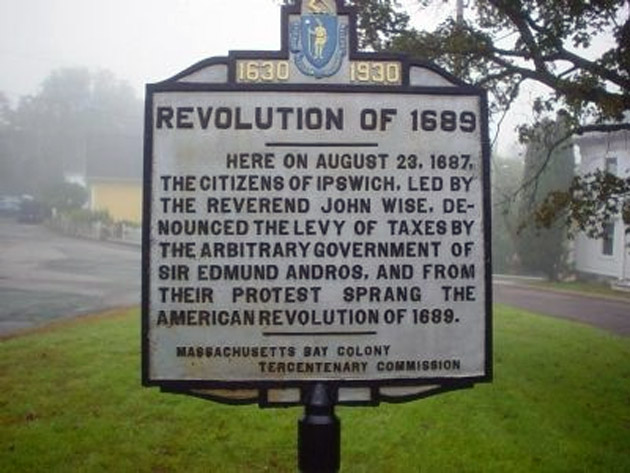
Mary was older and married a Boylston while Abigail married into the Wise family. Abigail's husband, Rev John Wise (1652 - 1725 -- Harvard graduate), is known as one inspiration of the Declaration of Independence. 

5th Generation -- Coming forward in time to the 5th, Mary's line had John Adams (1735 - 1826. Her sister-in-law, Sarah (Boylston) Smith (1642 - 1711), was the forebear of Abigail Quincy (Smith) Adams (1744 - 1818) who was the well-known wife of John Adams. 

In that same 5th generation of John and Abigail Adams, the family of Mary's sister, Abigail Gardner Wise, had Susanna (Wise) Swasey (1744 - 1821) who was married to Major Joseph Swasey (1750 - 1816). Their daughter, Abigail (Swasey) Hodgkins (1774 - 1822) married Joseph Hodgkins (1768 - 1825). His uncle, Joseph Hodgkins (1743 - 1829), was featured in several publications.

  • Joseph Hodgkins - Wikipedia: The letters between Hodgkins and his wife, Sarah, have served as an important historical footnotes since the early 1900s[2] for understanding the Revolutionary War and have been featured in such books as the Library of America's The American Revolution: Writings from the War of Independence, David McCullough's 1776, and Ray Raphael's A People's History of the American Revolution.
Abigail Wise (Hodgkins) Graves (1803 - 1879), daughter of Joseph Hodgkins and Abigail Swasey (6th generation) was the 3rd great-grandmother of Alfred L. Gardner (11th generation). 

Nine generations
---

With respect to the HSC, John Wise (1652 - 1725)  was the grandson of Alice Freeman Thompson Parke who is the ancestor of many American families of note: Firestones, Fords, McCormicks, Rockefellers, Tiffanys, Whitneys, and J.P Morgan. In Alice's progeny, we can also note Princes William and Harry through their mother, Princess Diana. 

We have an interest in technology which of late has filled the news space with advanced software which is, supposedly, heading toward an artificial general intelligence. Expect that theme to be regularly discussed. Genealogy and history are properly candidates for technology assists. We already see that. This example of a research paper on Alice's children and their offspring is a look at four generations.   

An underlying lack of the sense of foundations is our prime concern where the mathematics involved in the modern systems needs more attention paid to its use. Making decisions about the future using systems and processes that are not understood ought to raise a flag not unlike what Ralph Nader did back in the 60s with regard to an automobile. 

---

We expect the next eight years to be fun. One hundred years ago with the 300th anniversay (see Remarks: 01/18/2025 - below), WWI was a damper. We will look at that further. Too, current technology has helped research to improve from what we saw 100 years ago. Hence, we have newer information to incorporate in our database which will necessitate updates of existing documention some of which can be 150 years old. There is no end to the work. 

But, technology brings problems, too. This is an old theme which generates interminable interest. 

With respect to the marketing of AI, there is a cultural split almost everywhere one looks. That is, bifurcations seem to be natural. An important one today is the gap between science/engineering of computing (which spawned GenAI in a troublesome manner) and marketing which has almost diametrically opposed views. 

From a truth engineering sense, both are errant. What is the common ground that if defined can be spread around for more clarity on issues of a complex nature (such as, what's at the bottom? Chaos?). 

Remarks: Modified: 09/11/2025

01/18/2025 --  Pageant of Salem is an exmple of the events from 1924. It provides a good view of the thinking at that time. Now, 100 years later, we know more since we have digitized copies of old documents coming on line. See this post: 250th and more. 

09/11/2025 -- Did a summary post on Rev. John Wise. 

Sunday, May 30, 2021

Enduring Gloucester

TL;DR -- The 400th is coming up for Cape Ann. The strain of the virus has muted lots of activity. Part of this motivated a broader view that looks across the centuries (400th, 300th, 250th, 200th, 100th) with respect to families and individuals. Lots of questions have been asked over the years. Good answers are wanting yet. One fact is that Gloucester is a core subject now and into the future. 

--

Before Covid came around, planning was going great guns as 2023 approached. The "Enduring Gloucester" website reported on this activity and mused about Cape Ann history. 

In 2020, the Plymouth festivities were quite constrained compared to the planning that that occurred. 2021 has been fairly muted so far. However, as we look forward, our thoughts are to look across the broad spectrum of years so as to tell tales that can carry forward with some support. Broad spectrum? Yes, our focus is on the 400th, 300th, 250th, 200th, and the 100th. That is embrace the whole of the experience.

Here are the contexts for each: 400th (Cape Ann); 300th (need to pull this out; it would have been only a few years post the Salem Village mania), 250th (DAR/SAR provide the proper framework with this); 200th (the western expansion dominates, but a whole lot was going on with the industrial revolution); 100th (those who cared sought to fill in the pieces; one example was the Old Planter's Society). Now, we are doing this again with technology as an assistance.

So, we are starting a concentrated effort that will continue until 2023 and, then, beyond. One hundred years ago, Dr. Frank started The Massachusetts Magazine. Using the web, we will have something similar. One of our tasks is to document Thomas and Margaret better. Another is to look at the work done over the years and keep the information available accompanied with an objective summary. That is, the "What we know now?" will be a theme/meme now and in the future. 

Along that line, here are two of many attempts: What we know (Nov 2012); Gardner FAQ (Mar 2015). As mentioned, there are a lot more which we will organize.

In the mean time, here are some of the external sources that we will reference.

1907 Postcard - Celebrating Cape Ann Settlement

  • The Settlement of Cape Ann: What is the Real Story? -- Mary Ellen Lepionka is researching the Cape experience. We used her post to comment on two of our posts.
    • Diversion, Gloucester - Charles Olson (Sep 2014) -- Olson was a poet who adopted and moved to live in Gloucester. He wrote about the Cape Ann experience which got our attention. As well, he is remembered in Gloucester and is mentioned in material related to the history.

      Cape Ann, Retrospective (Apr 2016)  -- after a lot of research, we got to where we saw Thomas and Margaret staying in Cape Ann with the house as Roger went to what became the Salem area (Massey's Cove).

  • Rev John White MA (1574/5-1648) --  this site documents the life of Rev John White including listing his sister who married a Thomas Gardner who apparently came over to Cape Ann and went back. At that same site, there is a link to this post "Members of the Dorchester Company 1624-1626" which gives the names and some information about all of the investors. So, the information is very pertinent. We have started to look at names and relationships. For instance, Roger Conant had an uncle who was involved. 

Gardner Research will carry the load in reviewing reports from others as well as doing original research which would include funding scholarly studies and writings.

Remarks: Modified: 07/14/2024

08/09/2021 --  Gloucester's clock has 509 days to 2023.  

03/27/2022 -- A recent article was about the Gloucester summer home of the family of T.S. Eliot (Wikipedia, WikiTree). T. S. had an extensive New England heritage as did his friend, Ezra Pound. 

07/14/2024 -- See updated comment: Why is 2024 quiet?


Saturday, March 7, 2026

Salem, 1626

TL;DR -- The 250th is well-known by now. So, it's time to get back to the 400th. 

---

The 250th is everywhere now getting attention which is great. We are not yet to the Day of the Declaration of Independence so ought to be paying attention to the events that came before July 4 of 1776. Our last post on "Knox Sunday" is an example. We will have more posts with the team but have been covering the 250th for over a decade. 

May we step back to the 400th? With regard to Essex County of Massachusetts, the initial settlement attempt was in the 1623/24 timeframe. Gloucester celebrated their 400th in 2023. 

As the story goes (told by many), the crew that came over with attempt of Thomas Gardner, for a couple of years, made a go of it without much success. For one thing, the land was not suitable for farming. Evidently the fishing and some planting/forging went well for subsistence. But being a commercial enterprise, the "money" behind the effort expected early returns. 

Roger Conant came to town to get things right but could not overcome the obstacles; he got permission to move to what became Salem. 

Roger and some of his crew did that move in 1626. So, we have been waiting for this year. We wrote of the transition earlier in a post about Massey's Cove in 2019. We included this painting which was done in the 20th century to accompany an article on the perils of this attempt. 


Of course, later there were various criticisms of the painting. For one, the houses were better configured than we know from reality. We wrote of that recently quoting the reaction of Anne Bradstreet as she got off the ship that was with the Winthrop Fleet. This was her introduction to Salem.  

Anne noted that some in London had mislead them: Hype, 1600s. What we got out of the stories was that Winthrop was feated in the "Governor's" great house. Anne and others went to Cape Ann to pick wild strawberries. The Governor would have been John Endicott who came in to replace Roger Conant. 

---

Where was Thomas? Evidently, he had returned after his intitial effort to London. He and his family returned sometime before 1635 as his last child was born here. At the time of Cape Ann, it would have been Margaret and the older boys. See "Themes that persist" to watch for particulars as we go along. 

We have mentioned Roger Conant several times and will relook at the start of Massachusetts this year as we continue with the 250. As the commemoration of the Revolution continues through 2033, we will step through the early years of Naumkeag which became Salem in 1629. The next year, Winthrop came through and did not like the area. So, he went further down the coast to Boston. 

So, for the next few years, we will focus on the origins of the crew at Cape Ann plus resolve the issue of the unkown Thomas Gardner who was a Cape Ann in light of the Thomas Gardner who came over in the mid-1630. Ann is a descendant of Roger both Conant and Thomas Gardner. Those relationships will be looked at as well, as we go forward. 

With technology as a major focus, we will use some of the modern stuff. Mainly, it would be to discuss the issues related to use and misuse which is a common characteristic of people and their involvement with all matters of life, it seems. 

Remarks: Modified: 03/21/2026

03/08/2026 --  Some correction of typos and phrasing mishaps (as in, touch typist - fingers walking the keys following ruminations in the mind - one reason that publishing processes have proofreading - rather than the know-it-all-ish nature ot the buckets'o'bits). 

03/21/2026 -- Made link with Salem 400+. 


Saturday, June 21, 2025

Harvard, technology

TL;DR -- Harvard goes back 400 as does our focus. Of late, they have free courses that are pertinent to current technological events. We appreciate that. But, we also call attention to the 250th and remind of Rev. John Wise who was the inspiration of the Declaration of Independence. 

--

I wonder how many students at Harvard know that the money to move the institution from a clergy-focused mode to work in the emerging senses of science and engineering came from a Loyalist who went over to the older realms and used his talents: thermodynamics; system engineering; ... Count Rumford (our blog post) will be in focus from time to time. Of course, Harvard did the legal side of things early, as well. 

And, early? We're involved since the beginning: The Hebraist. But, lots and lots of the family went to Harvard over the years; lots and lots did not. So, we will provide a balanced view of 400 years that led to that which we will be commemorating: The 250th.  

Now, technology will be a huge focus. The GenAI/LLM mischief of late is an example of things that could have been (were) forseen. How was it missed? We have a good story to tell there. Meanwhile, to change subject somewhat, Harvard is providing free access to courses dealing with AI and related. 

Now switching gears, of the 250th, we have not even reached the point of the real split, yet. That will happen next year where July 4th is one known day every year celebrated. That we have eight years to look at the turmoil and rhetoric and activities and more in a new vein, brought by the internet, is daunting to think about. 

We will look at parallel events, such as the 200th and 300th of New England (which was huge in impact on the culture) of the U.S. Here's an example, dealing with Rev. John Wise. His pamphlet was republished when the fever of independence was starting to grow after the French, Indian affair. 

Ipswich: John Wise

Disclosure: All kinfolk, directly. But, we will honor everyone of New England who was not given proper attention by history in the sense before technology. And, the sense means sources with known provenance as well as discussions about issues. And, technology? Can be tamed. 

Remarks: Modified: 06/21/2025

06/21/2025 - 

Friday, April 30, 2021

Two different times

TL;DR - The 400th can be split into the 250th plus others on both sides of that divide. There are many categorizations for analysis that do not get much attention in prior times. For one reason, we did not have the data nor the technology. That has changed this time around. Essentially, Gardner Research is setting itself up to follow the series of 400ths that we will be seeing in New England as each of the towns takes a pause to look back at their history. At the same time, we can look from the 250th onward with respect to these families. 

--

The overarching theme of 400 years of history is and will be our focus. Extensions? Well, there are various areas that we can learn more about. But, our first area was Massachusetts. All matters considered were from that focus with Essex County as core for several reasons. And, unless some conceptual modification comes into play, extending the boundaries of our views will be from the area of New England including both the north and the south. 

One impact of that will be always looking at how the long reach of New England came into play in any situation across the country. Actually, given our use of both north and south, we pretty much cover the basis. New England south had its 400th in 2007 with Elizabeth II visiting. At the same time, Maine was on the agenda, albeit without much fanfare. They endured much better up there; the decision to not continue had to do with a death in the family of the leader that required him returning to England. 

There are several points in time that could attract our attention, so as to make things seem disjoint. However we will use an event whose 250th is coming up. Namely, nodding to SAR/DAR, we will use the fifth generation's involvement with the Revolution where aspects before and after will be part of additional research. Partly, the necessity for this comes from our personal orientation with respect to history. That is, dealing with families can throw light back into situations and allow us to relook at what might have been thrown out through the desiccation process of history that removes the juices of truth. 

Some have done this type of thing. For instance, the 300th lookback from 100 years ago had lots of activity of this nature. These were local in scope, due to many reasons, such as technology. Too, the flu pandemic had influence. But, we, as a whole, are also more knowledgeable now than ever, with communication schemes that have lots more potential than we have seen come to fore. Technology, then, will be a part of our focus, too. 

Now, this post looks at two different times. Both are post the Revolution and are separated by a couple of hundred years. Why these? We can show that the parties have ties back before the turmoil. That will be part of the 'long reach of New England' study. Too, though, they are only examples that can be quickly done. We have lots and lots of other types of categorizing to do and which make sense. 

Now, the first time extends our look at the early times of the U. S., especially those things dealing with the west which was where the three major groups (New England, New France, and New Spain) interacted. The post titled Frontier century gives a little bit of a background. Here we point to a few incidents and people during the time when the northern borders were fluid so that restrictions were loose. And, we need to look at New France's contribution which was earlier; the American spread across the wide expanse was not until after the conflicts with Great Britain were settled. 

Reminder: this is work being done by Gardner Research. Too, we will address all types of media. We did not see the movie nor read the book (yet), but the film Revenant dealt with the area of MT and SD and surrounds in the 1820s. People there were from New England (north and south) and New France. It is that latter that caught our attention with respect to this posts. Who were the people? Why were they there? And more. Too, though, we argue that the 'frontier' experience is not getting proper attention by those of the east coast. So, let's let descendants of early arrivers here tell their tale, so to speak. At the same time, we'll do the proper generalizations to get the knowledge respected. 

The second time is more recent and deals with the current landscape where a blue/red bifurcation is noticeable. From our perspective, we see two sides of a coin. So, let's get the 'coin' defined better to start to abate some of the conflict.  Too, leadership in the world that is wanting and needs attention will be more amenable to analytics in a sense that the U.S. will help define. 

Small steps being proposed? Yes. But, things are screwed up. Lessons to be learned have not be grasped. The 400 years as pertinent? Well, we have not seen a proper look at the preceding 150 years. Yet, there are a slew of families with that whole bit of years as part of their legacy. 

--- So, to the times. 

A. We have looked at several periods where the early players were the trappers and where the eastern link was via St. Louis (MO). New France was in the MO area concurrently with Thomas' later years in the 1670s and further west. We have seen much later activity, such as Judge Thompson's trek, which was mid-1800. But, we really need to back up. For now, here are links to material with some comment. Plus, we can say that seeing a painting by Paul Kane got the query started that resulted in this post. 

Alexander Mackenzie (1764 - 1820) - born and died in Scotland. He was on this continent several times. He came into New York with his father prior to the Revolution. However, his father had already served in the Brit military so was a Loyalist. He shipped Alexander north where the young guy got bit by the fur fever (what else was there to do?). Jumping ahead, his treks went north (to the Artic Ocean) and west (almost the Pacific where he had wanted to go before wandering north). Being persistent he was and is known to have been the first European to cross to the Pacific (close enough to see) from the east. This was 1793. The U.S. was twixt the Revolution and the War of 1812.  

David Thompson (1770  1857) - born in England; his entry was into Manitoba. But, he too headed west. David mapped the headwaters of the Mississippi which goes south. In the same area, many rivers go toward the Lakes. Later, David navigated the entire length of the Columbia River (see image) which is what got our interest as most of the river is in the U.S. This party established a fort in what is now the State of WA. 
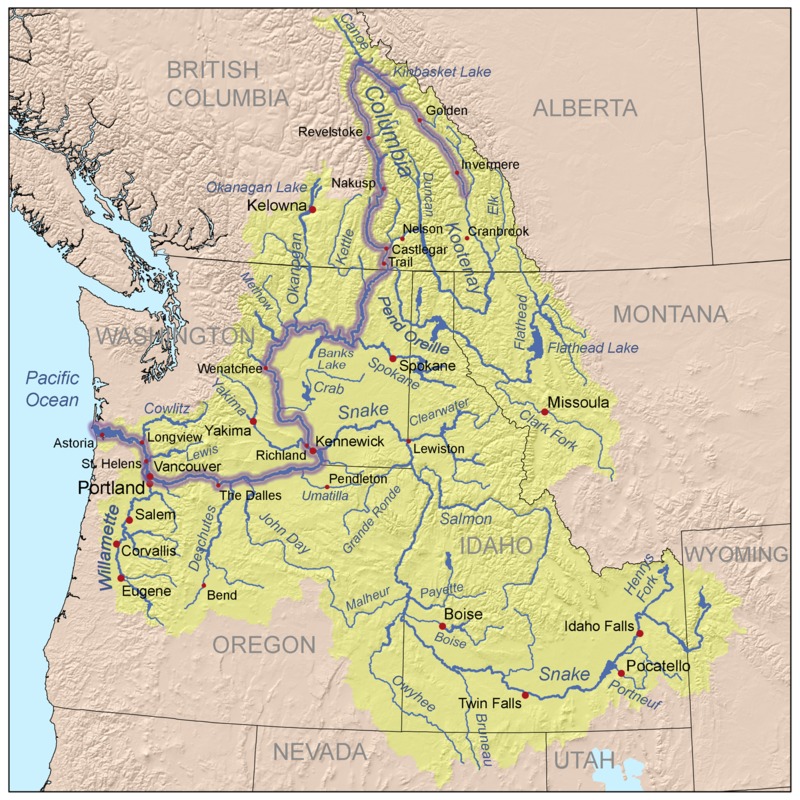
Thompson navigated
the entire Columbia 
River

Simon McGillivray, Jr () - was one of the managers of the Fort near Walla Walla (WA), serving in this capacity in 1831-1832. This was an early time when the Hudson Bay Company was still prominent in the area. Until the resolution of the boundaries in the 1840s, there were parties from both New England (and the U.S.) and Canada operating. A relation of his was Duncan McGillivray. 

Paul Kane (1810 - 1871) - he came into Canada from Ireland but did extensive travel here and abroad. Paul crossed the Rockies a few times. He did a lot of painting (sketching on site and doing the painting later). His painting of a buffalo hunt in SD which was done in 1846 got our attention for several reasons. 

B. Now, jumping ahead to the 20th century, we have several families that we can focus on in this regard. For now, this is a short list which would include William Coffin Coleman whose ancestry we are studying as it looks to be New England in general with particularities related to Essex Co, MA.  William was in the north and the south before getting into the central plains. 

A recent discussion got us thinking of the various threads that we can follow which would be families in the central areas from the beginning. Many of these have parts of their family that came in along the timeline, to now. We want to see that whole balance. 

So, these two gents are such where one side of their family is old New England while the other side is a recent import. This was a common occurrence. If we look at SAR/DAR, many patriots (and loyalists) were of one or two generations from the entry of their family. On the other hand, old New England (north and south) saw the fifth generation bear the brunt of the conflict with the fourth generation involved as leaders of various sorts. Too, though, some early members of the sixth generation were of sufficient age to contribute. 

This below pairing is of interest due to times that we are in. Too, one of the gents is of a family that stayed on the east coast. The ancestors of the other came to the wild west. And, for each, we have a much larger bucket of families to throw in. After all, when one takes the 400 years and considers what might be a generation, we can have 1000s of parental nodes, many of which can be known (see Numbers, again). 

John F. Kerry (1943 - ) - John is a descendant of Thomas Gardner, via son, George and is a representative of Winthrop-Dudley clan that has excelled in public service for the U. S. The ancestors of John's father, Richard John Kerry, were newbies. It was through his mother's (Rosemary Isabella Forbes') mother that John got his New England pedigree (WikiTree profile for Rosemary). John is still alive, however he is a public figure with documented histories available on the web. 

David Koch (1940 - 2010) - David's mother provides him the old New England heritage. His father, again, was of a newbie family (WikiTree profile for Mary Clementine Robinson).  

A quick glance at these two gentlemen and their families would bring out lots of differences some of which seem to generate a permanent bifurcation. That is one problem that Gardner Research is helping to work on. Similarities abound, of course. And, many of the seeming differences can be seen as 'spectral' in scope which points to one of our interests: the 400-year focus across families can now cover much more than was possible before. And, it's fortuitous that the capability of technology might just be ready for the work that is needed. 

Remarks: Modified: 08/15/2022

08/17/2021 -- We could do different scopes and themes. One constant will be showing related profiles from WikiTree. 

08/15/2022 -- Almost a year later. Haven't looked at this, however a new theme was the tying of earlier immigrant families to the time of the Revolution. Say, the Passenger to Patriot of the Mayflower focus where we have the Cape Ann to Patriot. 


Sunday, March 9, 2025

250 Years of Liberty

TL;DR -- The 250th lookbacks demonstrates modern technology and how it will allow better assessment of past events, especially with respect to people and their families. The massacre at Boston is an example. John Adams established a U.S. milestone, thereby getting some fame, though the initial reactions were not favorable. 

--

We have had several posts on the upcoming 250th which has been in focus for a while in terms of planning and reporting activity leading up to the event associated with Lexington and Concord. Planning started more than a decade ago, with groups such as the Daughters of the American Revolution.  

Another example event was the Boston Tea Party the 250th of which was in 2023. Given that we are one year from the Declaration, we will have regular reports of events from those times that got the U.S. going. At the same time, we will continue our focus on the post-Revolution activity leading to the expansion of the interior the U.S., especially the interior and the west (left) coast. 

Today, we will point to a couple of Facebook Groups which recently provided information about the Boston Massacre. 

  • 250Years America's Founding - This post (Judgement of Death) covers the Boston Massacre which was an event in 1770 that was confictual. Some Brit soldiers fired on people. John Adams (cuz) was appointed as defense. John wasn't popular for a bit. He and Abigail (cuz) left Boston so as to have some peace. Ah, America at its best. 
  • 250YearsofLiberty - This site has posts pertinent to the Revolution. Lots of things have happened to this day. We, then, have several years before peace came to be. The topic now is the Boston Massacre (Wikipedia) which happened March 5th. 
Concurrent with the Revolution, there will be continual reflection on towns coming into being 400 years ago. Coming up next year will be the movement from Cape Ann to what became Salem. We will relook at the upcoming timeline for communities in the area in a future post. 

The bloody massacre
Paul Revere (engraving)

Remarks: Modified: 03/17/2025

03/17/2025 -- Used Wikipedia for the image source. FB (Meta) is flaky. To the max. 


Sunday, July 6, 2025

Toward the 250th

TL;DR -- The 249th came and started the clock for the 250th and for activity leading up to the celebration next year. Not that there hasn't been activity to date. We need to remember the 400ths as well. 

---

We just had the 249th this weekend. On the 1st of July, our post was about Rev. John Wise who inspired the Declaration of Independence. On the 3rd of July, President Trump was at the Iowa State Fair to kick off the year up to 4th Jul 2026. "lookback" was used which is what we can do over the period of this 250th in the making. 

Earlier we had mentioned that on this date, the colonists were still involved with the Siege of Boston during which the battle of Bunker Hill was fought. There will be plenty of material to cover, on several levels. 

---

Let's stop to show a countdown which can be visited on several sites. 

America250, countdown

Countdown250 will be a regular theme. At the same time, we will bring in tidbits about the 400th of Naumkeag which was renamed to Salem, at a later date. 

Remarks: Modified: 07/15/2025

07/11/2025 -  Added link to the countdown. 


Saturday, July 17, 2021

Sons of the American Revolution

TL;DR -- Genealogists are not logical. This we will go into at some point. Many are patriotic. As we see with SAR and DAR. We are nearing the 250th of the Revolution that started the U.S. As such, there are lots of things to report and to discuss. Thinking of the 150th, which was 100 years ago, consider the state of technology? 

--

We could have titled this "Genealogists are not logical" but let's keep that for a later date. Today, we want to mention a page that pulls together the search methods for the

            SAR and DAR databases. 

We have mentioned these two before and like that there is a common reference point. Too, we can thread lineages from 400 years ago through those two to filter out interesting stories. 

The below list pulls together a few posts from the past as this will be a continuing theme. As well, the 250th is coming up and will be getting more attention as we go along. 

These are not in order.

  • In the small (April 2021) -- looked at an example of trying to find information on a patriot who had dealings with George Washington. 
  • Middle and out (October 2020) -- recap of several months of work on application research. It ain't easy. 
  • Locales and their history (October 2018) -- these groups help locals to document their history which ought to be appreciated by all. 
  • Spirit of '76 (March 2018) -- early attempts at publication deserve our respect. 
  • Revolutionary experiences (December 2020) -- some of the activity covered a wide range of area. 
  • Support specifics (October 2020) --  recap of resources found and utilized over the scope of our activity with regard to Gardner Research, including SAR & DAR. 

Both of these groups will be interesting to watch over the next few years as the 250th advances, arrives and wanders down the road. 

Remarks: Modified: 07/23/2021

07/23/2021 -- Add TL;DR and image for our portal (https://TGSoc.org).


Monday, August 9, 2021

Gloucester 400

TL;DR -- Gloucester, where it all started, gets to kick the can first. Wait, where's Weymouth in the planning? So, we can talk of a countdown. At the same time, SAR/DAR look to their 250th. Then, all of the towns of Essex County (most anyway) can do their festive best. And, Boston? Of course. 

--

As a reminder, we point to the Dorchester Company's role in motivating the Cape Ann venture. Things are progressing to 2023. Gloucester unfurled their 400th flag the other day (August 1). Lots of news and reports have been collected. 


As of today, we are 509 days from 2023 (start of the celebrations). Too, today, SAR's clock shows 4 years, 10 months, 25 days. 

There will be many 400ths as we saw with Plymouth in 2020 between the 400th of Gloucester and that of the 250th of SAR/DAR and later. Those will be interesting decades. 

Some posts with a Cape Ann (and Gloucester) theme:

Looking forward to the next two years after having spent a decade of getting familiar with the territory. And, it will be good to discuss the long reach of New England, the heritage of the Cape Ann venture. 

Remarks: Modified: 03/07/2026

08/11/2021 -- Weymouth is 2022 (FB). So, they're up first. 

12/06/2022 -- Weymouth is ending this month; Gloucester is next. 

03/07/2026 -- We are back at it, having spent some time looking at AIn't, buckets'o'bit' and such with respect to technology going wild, perhaps. Our put is that Thomas were here in the beginning. So,we will look at our reasons for such a statement. Too, besides the 400th (Salem, 1626), we will pay attention to the 250th as it goes through the long years of the Revolution. 


Thursday, June 12, 2025

Lord Fairfax

TL;DR -- Little known facts are around and about upon the landscape of the U.S. Our normal attention is west (west is best; east is least - sort of thing ;>). However, there has been and will be attention to the eastern activities as the western part came about 150 years later where the Revolution became a central theme. This post touches upon the time that Braddock came over. Evidences abound due to preservation efforts. Otherwise, the landscape has been abused (data centers abound, for instance). 

--

We had to mention the 400th (Jamestown, et al) so as to set a stage that will be permanent. We would not have had the 250th without the earlier phases. So, Fairfax? His name is all over northern Virginia as are others of the upper class (kin/cuz, as well). But, the main thread will be dual. For this post, let's use "French, Indian affair" which we have touched upon before. 

While researching people who went out west from the older east side of the country, we had to bring in other cultures, such as New France and New Spain. From each, the U.S.obtained land that had to be incorporated into the Union. Too, there had to be maps that to allow reasonable control of land use (or misuse). We looked at some of this in a post titled Practice for carving about the work that went on for decades, starting in St. Louis. 

Now, in the interior, we usually think about things that happened after Lewis & Clark and the War of 1812. However, there was earlier activity out there by Europeans, for the most part related to involvement as trapper, trader, and rancher. In that regard, prior to what we are now celebrating (the 250th anniversary), there was the conflict that trained colonists for the coming Revolution. 

Namely, we consider the French, Indian affair which seems to have been mostly forgotten. Dr. Frank wrote about this conflict in his series on the Regiments that were at the Boston Siege. But, stepping back, we have had posts on this affair.  A grandpappy kept a diary that was later published: Nathaniel Knapp's diary about his time with the Louisbourgh Expedition. Some who were involved participated in the later Revolution, many times in a leadership role. 

--- 

With the French, Indian affair, we have taken a New England focus since Quebec was the principal establishment of New France. But, the conflict involved all of the colonies. An example is Virginia. 

Today while at a park, we read a historic sign. It mentioned Braddock. But, being in Virginia, there were two other names of note: George Washington; Daniel Boone. We last mentioned the former (Washington) here in this blog in a post on Col. John Glover who was featured in the series by Dr. Frank. But, Washington mapped and surveyed the Potomac River which we have to consider further. This post is a start as we have covered many of the rivers of the west. 

Now, the latter (Boone) has been mentioned many times in posts about the early settlement of the west. Boone, well-known explorer: opened a pass; served in the French, Indian affair and the Revolution; settled areas from the east to western Missouri; ventured out into the west.  

---

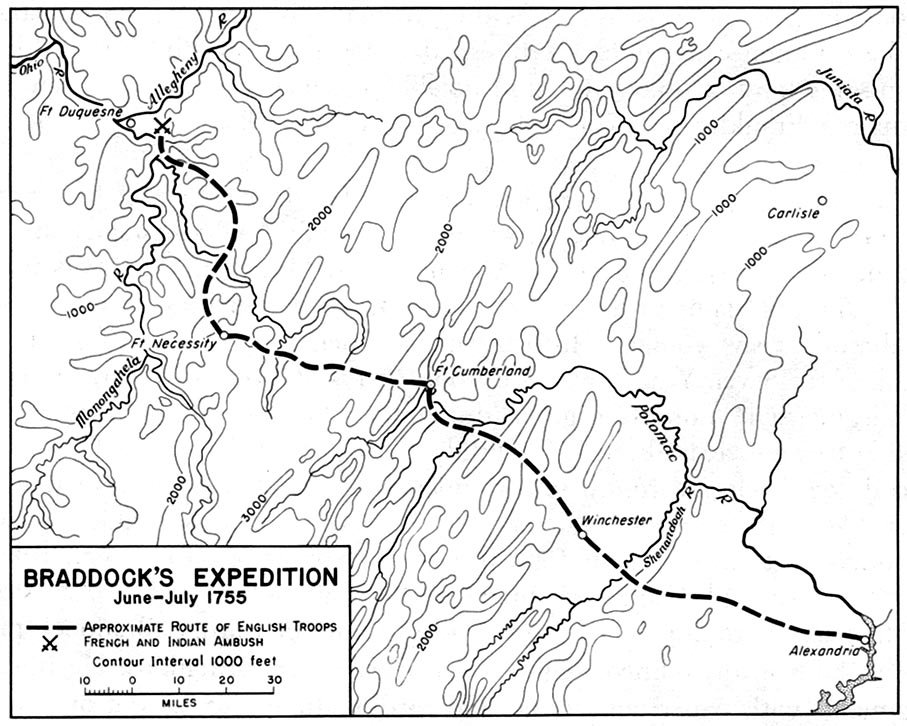
Washington was also involved with a conflict between the British and the French. The resentments that led to the Revolution are thought to have resulted with the arrival of Edward Braddock  and the reaction of the colonists to his methods. One of Braddock's early campaigns involved a planned attack on Fort Duquesne, French facility, near the start of the Ohio River. This expedition did not go well which left lasting impressions on both Washington and Boone. Braddock was mortally wounded which meant that he had no say in subsequent matters nor in the trashing of his reputation. 

---

Braddock arrival into Virginia was near Hampton Roads. After some meetings in Virginia, there was preparation for the attack on the Fort. Now, accomplishing this required going over a moutainous region that impeded traffic. Washington was familiar with the area due to his duties with the surveying crews that mapped the Potomac. 

But, let's look at the route that was set up for Braddock's forces by using a couple of images. 

Braddock's route from 
Alexandria, VA to Braddock, PA

Braddock's route from
Cumberland, MD to Braddock, PA

The first images shows the "approximate" route from Alexandria (on the coast) which is on the Potomac to the final destination near Fort Duquesne. It passes through the interior of Northern Virginia and climbs up into the Blue Ridge mountains. This map gives us the elevations. At Cumberland, the elevation is much higher, and we see the route through western Maryland into Pennsylvania. 

---

Braddock's route went through the Keyes' Gap which is over 900-feet high. Formerly, that route from Alexandria to the mountains was called Vestal's Gap. Parts of the trail can be seen in eastern Loudoun County of Virginia. This area is near Dulles Airport outside of Washington, DC. 

The route follows an old Indian trail which is 65 miles in length from Alexandria to the  mountains. 

---

In terms of historic preservation, Loudoun County has provided historical markers with notes in the area. Too, they have a website which is of interest. This is an example of the web/cloud being useful to education at several levels. One example (2019, LoudounNow): 
  • In Our Backyard: Preserve the Vanishing Vestal’s Gap Road - property of Lord Fairfax, originally, almost 400 acres are preserved surrounded now by heavy residential and commercial development including Dulles International (and recently, the heavy foot of data centers trample the countryside). Pieces of the trail still exist (with an interest not unlike those remnants that we can see of the Santa Fe and Oregon trails in the middle of the country. 
We have written of New England (south) for several reasons, such as people from New England (north) going south. As well, the culture is the same. The south was more swashbuckling and plantation driven, not that the north was heaven on earth, let alone a beacon as desired by John Winthrop. 

Now, finally, for this post, the Native trail ran from the coast up into those things called the Blue Ridge mountains where we find things like the Shenandoah River and artifacts related to the Civil War that was mentioned on historical markers too. Right by the above-mentioned site runs a modern highway that was prototyped (real life) in the early 1800s since the traffic was heavy. It bears the name, in areas, realated to one of the early towns. 
  • Leesburg, Virginia - county seat of Loudoun County. Town of the Carters, Lees, and Masons. was in an area that was good for farms and plantations. In the War of 1812, federal documents were brought from DC for safety. 
As we proceed being involved with the eight years of the 250th and then the long trek to 1820 and Boone's western influence taking hold, there is no end to the topics to cover. One theme will always relate to the influence of New England and it families that contributing to the establishment of the U.S.  

Remarks: Modified: 06/26/2026

07/31/2025 - One of the Lord's American cousins was George Washington. We need to look more closely at the relationships between those here 400 years ago and those of the 250th being celebrated.

06/26/2026 - Updated URL for the Wikipedia image (one change - number of pixels).