Showing posts sorted by relevance for query virginia. Sort by date Show all posts

Wednesday, May 18, 2016

The almost forgotten

Prior to (northern) New England and its history, we had the southern "New England." Of late, I have had the opportunity to look further at that era and area. Not only did some come up north from Virginia, many New Englanders went south.  This movement started early. Below are a few tidbits that have special interest as they show parallels. 
    -- As there was western movement early in Massachusetts, so too was there a western push down south. In Massachusetts, we can use the example of Ipswich Canada which was an effort sponsored by people in Ipswich. The ancestors of Susan Graves supported the effort. The first husband (Joshua Johnson) of her great-grandmother (Elizabeth Pushee) was killed. They had married in Groton. Elizabeth moved back to Ipswich proper.

    In Virginia, we know about Jamestown (capital of Virginia Company) being founded in 1607. There was an effort to move west in order to claim land. Because travel is facilitated by roads, there were early efforts to clear paths just as there were in early Massachusetts. Dr. Frank writes of the work of Thomas and his sons doing surveying for this effort. In Virginia, one road was nicknamed "Three Notch'd Road." It ran from Richmond to the Shenandoah Valley by 1730.

    By the early-1700s, there was regular correspondence between western counties and Williamsburg (capital of Virginia Colony). And, this facilitated expansion. James Madison's family moved out west in the 1730s. Monticello dates from the 1760s. 
    -- New England in the north has its Paul Revere. New England in the south had two (Francis and Jack). Francis Salvador rode 30 miles in South Carolina in 1775. He died in the ensuing battle but has not been forgotten (see military.com).

    Jack Jouett did his ride of 40 miles in Virginia in 1781. Part of his ride was along the Three Notch'd Road. Lafayette, himself, was familiar with that road. We think of the Marquis as being up in the north; but, he did, later on, spend time in Virginia. 
Just as the northern New England has its sources for historic and genealogical research, so, too, does the southern New England. One very good resource is the William and Mary Quarterly which has been very helpful.

Remarks: Modified: 11/20/2017

05/30/2016 -- Bill O'Reilly's latest books has a story about the Swamp Fox (Francis Marion) and General Richard Richardson (findagrave). The former's harassment of the British down south helped Washington get things together in the north. 1780 was the time. Richardson was dead. His widow sent a son to war Marion about the size of a loyalist's unit. In retribution, Colonel Tarleton destroyed the widow's property after digging up her husband's grave.

08/26/2016 -- Of late, we have been researching Gardner families in the south. That would include PA and NJ as well as those areas further south, VA and NC. Of those southern Gardners, some went down after being in New England. Others came into the southern region. Then, there were families that came up through the Caribbean. This post looked at some similarities and barely scratched the surface. Soon, we'll post some thoughts on the times around Rev. John Wise's tax rebellion (IPswich, MA - peaceful albeit the good Reverend was thrown into the clink) and the King Philip War. Down south, we had Bacon's Rebellion.

09/09/2016 -- Seeing a writeup of the oldest bridge, in Philly, PA, got me to looking at the eastern King's Highway (Charleston to Boston). Being western by birth, the CA version was familiar (El Camino Real).

11/20/2017 -- We will be looking more closely at the south.

Thursday, June 12, 2025

Lord Fairfax

TL;DR -- Little known facts are around and about upon the landscape of the U.S. Our normal attention is west (west is best; east is least - sort of thing ;>). However, there has been and will be attention to the eastern activities as the western part came about 150 years later where the Revolution became a central theme. This post touches upon the time that Braddock came over. Evidences abound due to preservation efforts. Otherwise, the landscape has been abused (data centers abound, for instance). 

--

We had to mention the 400th (Jamestown, et al) so as to set a stage that will be permanent. We would not have had the 250th without the earlier phases. So, Fairfax? His name is all over northern Virginia as are others of the upper class (kin/cuz, as well). But, the main thread will be dual. For this post, let's use "French, Indian affair" which we have touched upon before. 

While researching people who went out west from the older east side of the country, we had to bring in other cultures, such as New France and New Spain. From each, the U.S.obtained land that had to be incorporated into the Union. Too, there had to be maps that to allow reasonable control of land use (or misuse). We looked at some of this in a post titled Practice for carving about the work that went on for decades, starting in St. Louis. 

Now, in the interior, we usually think about things that happened after Lewis & Clark and the War of 1812. However, there was earlier activity out there by Europeans, for the most part related to involvement as trapper, trader, and rancher. In that regard, prior to what we are now celebrating (the 250th anniversary), there was the conflict that trained colonists for the coming Revolution. 

Namely, we consider the French, Indian affair which seems to have been mostly forgotten. Dr. Frank wrote about this conflict in his series on the Regiments that were at the Boston Siege. But, stepping back, we have had posts on this affair.  A grandpappy kept a diary that was later published: Nathaniel Knapp's diary about his time with the Louisbourgh Expedition. Some who were involved participated in the later Revolution, many times in a leadership role. 

--- 

With the French, Indian affair, we have taken a New England focus since Quebec was the principal establishment of New France. But, the conflict involved all of the colonies. An example is Virginia. 

Today while at a park, we read a historic sign. It mentioned Braddock. But, being in Virginia, there were two other names of note: George Washington; Daniel Boone. We last mentioned the former (Washington) here in this blog in a post on Col. John Glover who was featured in the series by Dr. Frank. But, Washington mapped and surveyed the Potomac River which we have to consider further. This post is a start as we have covered many of the rivers of the west. 

Now, the latter (Boone) has been mentioned many times in posts about the early settlement of the west. Boone, well-known explorer: opened a pass; served in the French, Indian affair and the Revolution; settled areas from the east to western Missouri; ventured out into the west.  

---

Washington was also involved with a conflict between the British and the French. The resentments that led to the Revolution are thought to have resulted with the arrival of Edward Braddock  and the reaction of the colonists to his methods. One of Braddock's early campaigns involved a planned attack on Fort Duquesne, French facility, near the start of the Ohio River. This expedition did not go well which left lasting impressions on both Washington and Boone. Braddock was mortally wounded which meant that he had no say in subsequent matters nor in the trashing of his reputation. 

---

Braddock arrival into Virginia was near Hampton Roads. After some meetings in Virginia, there was preparation for the attack on the Fort. Now, accomplishing this required going over a moutainous region that impeded traffic. Washington was familiar with the area due to his duties with the surveying crews that mapped the Potomac. 

But, let's look at the route that was set up for Braddock's forces by using a couple of images. 
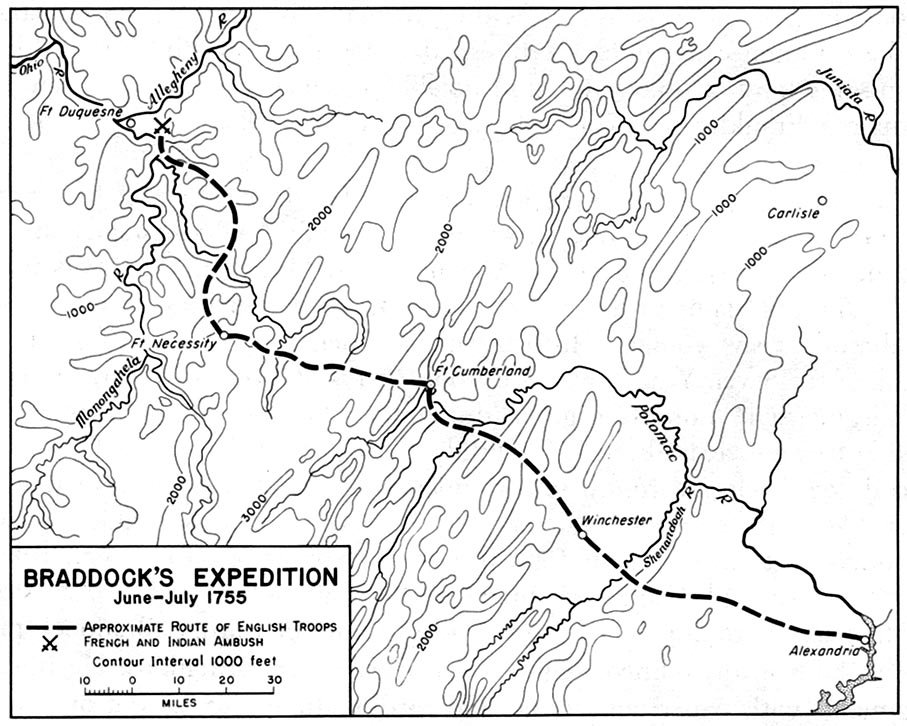
Braddock's route from 
Alexandria, VA to Braddock, PA

Braddock's route from
Cumberland, MD to Braddock, PA

The first images shows the "approximate" route from Alexandria (on the coast) which is on the Potomac to the final destination near Fort Duquesne. It passes through the interior of Northern Virginia and climbs up into the Blue Ridge mountains. This map gives us the elevations. At Cumberland, the elevation is much higher, and we see the route through western Maryland into Pennsylvania. 

---

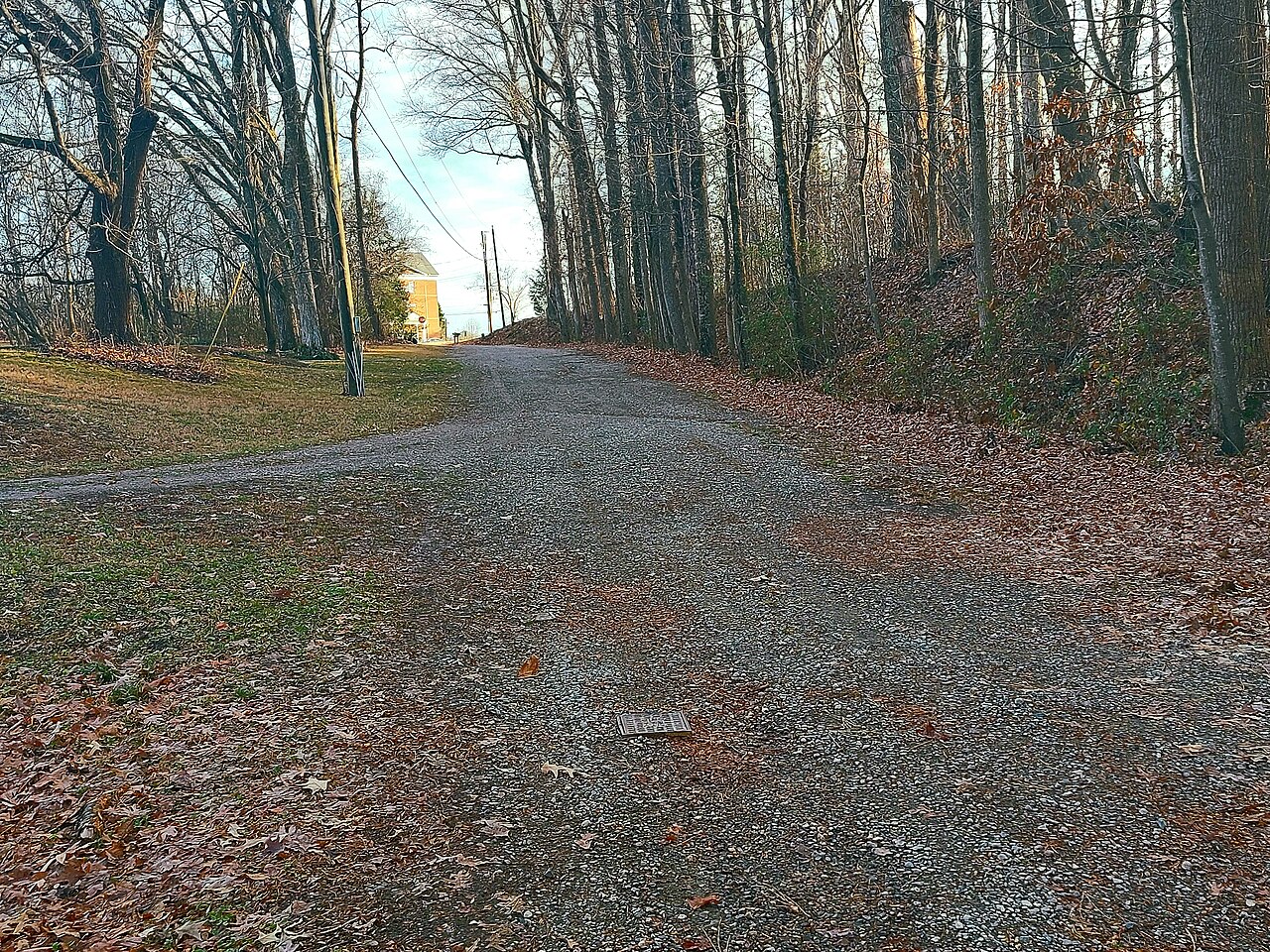
Braddock's route went through the Keyes' Gap which is over 900-feet high. Formerly, that route from Alexandria to the mountains was called Vestal's Gap. Parts of the trail can be seen in eastern Loudoun County of Virginia. This area is near Dulles Airport outside of Washington, DC. 

The route follows an old Indian trail which is 65 miles in length from Alexandria to the  mountains. 

---

In terms of historic preservation, Loudoun County has provided historical markers with notes in the area. Too, they have a website which is of interest. This is an example of the web/cloud being useful to education at several levels. One example (2019, LoudounNow): 
  • In Our Backyard: Preserve the Vanishing Vestal’s Gap Road - property of Lord Fairfax, originally, almost 400 acres are preserved surrounded now by heavy residential and commercial development including Dulles International (and recently, the heavy foot of data centers trample the countryside). Pieces of the trail still exist (with an interest not unlike those remnants that we can see of the Santa Fe and Oregon trails in the middle of the country. 
We have written of New England (south) for several reasons, such as people from New England (north) going south. As well, the culture is the same. The south was more swashbuckling and plantation driven, not that the north was heaven on earth, let alone a beacon as desired by John Winthrop. 

Now, finally, for this post, the Native trail ran from the coast up into those things called the Blue Ridge mountains where we find things like the Shenandoah River and artifacts related to the Civil War that was mentioned on historical markers too. Right by the above-mentioned site runs a modern highway that was prototyped (real life) in the early 1800s since the traffic was heavy. It bears the name, in areas, realated to one of the early towns. 
  • Leesburg, Virginia - county seat of Loudoun County. Town of the Carters, Lees, and Masons. was in an area that was good for farms and plantations. In the War of 1812, federal documents were brought from DC for safety. 
As we proceed being involved with the eight years of the 250th and then the long trek to 1820 and Boone's western influence taking hold, there is no end to the topics to cover. One theme will always relate to the influence of New England and it families that contributing to the establishment of the U.S.  

Remarks: Modified: 06/26/2026

07/31/2025 - One of the Lord's American cousins was George Washington. We need to look more closely at the relationships between those here 400 years ago and those of the 250th being celebrated.

06/26/2026 - Updated URL for the Wikipedia image (one change - number of pixels). 
Friday, June 3, 2022

Fifteen colonies

 TL;DR -- When Dr. Frank was working on his research, over one hundred years ago, the limitations of the time are apparent. Now, with the internet and its communications, we can do a much better job. Part of this will be covering the wide-spread of the U.S. and beyond. And, the Carolinas will be one focus. Fifteen colonies? Will be looked at next. 

---

No doubt, our focus was New England, from the beginning, due to the Cape Ann connections. So, that perspective might be attributed to we being newbies to this type of research. However, it was not long before we were looking west and south. One pull was following New England movement thus, with Virginia being an early destination for people who kept moving. We learned early of some of the parallels between the two regions, especially those of the time of the Revolution (250th coming up). We will have a coming post on this theme. 

Recently, after running into a Boston-themed blog (once again; first saw it several years ago), we got to thinking of the regional comparisons. An event was the motivator: getting gunpowder from English stores. Turns out that there is a similar story in the south. One noted source is J. F. Dorman who wrote Adventurers of Purse and Person, Virginia, 1607-1624/25. He writes that George Jackson of Norfolk (later Williamsburg) is known to have accomplished such a feat. We will look into that further. 

J.F. Dorman, 
on Virginia/Bermuda connection

For now, we are leaving a comment about the Virginia connection since there were comments related to that before (the "Boston 1775" blog dates back to 2007). 

..., Pointer to comment made by TGS Researcher ... 

But, another issue comes to fore that had not been considered. We had been looking mainly at Virginia as a hub of entry. Then, we expected to be seeing migration south to the Carolinas. On looking more closely, we see two relationships that need attention. 

For one, Bermuda was connected with North Carolina; then the Bahamas were similarly associated with South Carolina. Our main view of the Bahamas was their use as a backdoor, early on, when someone wanted to leave and come over but could not get the required permission. So, they staged themselves through the Bahamas. However, now we know a little more and saw that some tried to get Bermuda involved in supporting the Patriots. Assuming there was similar efforts with the Bahamas, we could have had fifteen colonies rather than thirteen. Different dynamics? 

Incidentally, these historical bits come up from following families as they moved. Some can be confirmed, albeit the further west that one goes, the harder the chore. What we see, though, is that the clues are there: albeit, many east coast mindsets think of the woods outside of coastal New England as the frontier. 

We beg to differ: Frontier century. 

Back in the late 1800s and early 1900s, when Dr. Frank was working, he mainly did his own line plus those that he heard from. But, our work is finding people widely scattered. Case in point is the lowly grave out west of a descendant of the Mayflower crew as well as being of Cape Ann. We'll feature him in the next post. 

Remarks: Modified: 06/11/2022

06/11/2022 -- Added pointer to the comment to the Boston 1775 post on Bermuda as source for gunpowder, from the British store of such. 
 

Monday, November 20, 2017

Southern New England

Having been given a chance to look at descendant lines from Virginia, I had to take advantage of learning about its History. As I read, parallels with Northern New England stood out. For instance, in the south, there was early migration out west just as we saw in Massachusetts. Too, there were two  rides similar to Paul Revere's. One of them saved Thomas Jefferson. Then, the themes related to Albion's Seed apply to our work.

Today, I picked up a book that I had purchased in D.C. back in 1997. I lived in Virginia for a while. Too, I visit the area often. 1997 was 12 years  before I started to do this historic genealogical work. And, it has taken a while for me to get to read it. Til now, it sat on the shelf.

The book? It had been copyrighted in 1957. The author is Charles E. Hatch, Jr. The title: The First Seventeen Years, Virginia 1607-1624 (text version of the book, archive[.]org) There are various on-line versions that one can find on the web. Some of these have a preview mode.

It was this content on page 23 that got my attention.
    Participation in the affairs of government was another element in the new Company approach. Soon after his arrival, Yeardley issued a call for the first representative legislative assembly in America which convened at Jamestown on July 30, 1619, and remained in session until August 4. This was the beginning of our present system of representative government. The full intent behind the moves that led to this historic meeting may never be known. It seems to have been another manifestation of the determination to give those Englishmen in America the rights and privileges of Englishmen at home that had been guaranteed to them in the original Company charter. It seems to be this rather than a planned attempt to establish self-government in the New World on a scale that might have been in violation of English law and custom at the time. Whatever the motive, the significance of this meeting in the church at Jamestown remains the same. This body of duly chosen representatives of the people has continued in existence and its evolution leads directly to our State legislatures and to the Congress of the United States.
That is, in 1619, Virginia had the first meeting that relates to our current way of life. This was before the arrival of the Mayflower. As the northern crowd gets into the mood (and the tone ramps up, I can hear it out hear in the netherlands, already) of celebration, we ought to juxtapose the whole scene with southern incidents, albeit not with any direct time association. In fact, as I read, parallels are all over the place.

Too, the Mayflower destination was more southern than not.

Many families had representatives in both the north and the south. Some of those who have both pedigrees had ancestors who met while heading west. One example is covered in the article on our flyover country.

Remarks: Modified: 11/24/2022

11/22/2017 -- Looking at parallels will also consider differences: Dales' code (Laws, Divine, Moral, and Martial).

07/27/2018 -- Some editing. Added links, like this one: What is an American?

03/07/2019 -- Added image from this post to our portal to truth.

05/24/2022 -- Melissa Davenport Berry article on the Queen's visit to the area in 1957. 

11/24/2022 -- Thanksgiving Day. The first one was in Virginia. Also, they had food problems like we saw with Plymouth later and even Cape Ann when too many people came over. 


Tuesday, November 21, 2017

First Thanksgiving

So, keeping our southern cousins in mind, we can look at their early experiences and compare those with the Mayflower group and the Cape Ann Group and other early arrivers, including Samuel Maverick who explored the area that became Boston very early.

And, in 1619, they were thankful. Here are their words (Hatch, pg 45).

    A number of the papers concerned with the initial establishment of Berkeley Hundred survive and at least give an insight into what was intended. The undertaking was expected to reflect "to the honor of allmighty god, the inlargeinge of Christian religion and to the augmentation and renowne of the generall plantation in that cuntry, and the particular good and profit of ourselves, men and servants, as wee hope." There was a very special instruction, perhaps, of some unusual note: "wee ordaine that the day of our ships arrivall at the place assigned for plantation in the land of Virginia shall be yearly and perputualy keept holy as a day of thanksgiving to Almighty god." Was this the first specific Thanksgiving Day in America?
Albeit, this was twelve years post the first entry. Next up, we will recount the number of new arrivals and the deaths over that first decade.

The Virginia effort was commercial. Some of the issues were the capitalists looking for profit. The Mayflower was a flight to and from whatever. Lots to read there and discuss. Then, Cape Ann was, again, commercial. And, the capitalists, in their cushy environment, wanted their payback. So, the U.S. was down the line, quite a ways, however a proper look at our history ought to start with Virginia, especially the Roanoke effort. Too, Maine was settled, albeit briefly, in 1607.

Remarks: Modified: 11/24/2022

03/01/2019 -- Added the image. We're building an index by images at our portal to truth

11/23/2019 -- Lots of 400ths to celebrate.

11/25/2021 -- We'll have another issue of Gardner's Beacon, soon. Recently, we saw this reminder of the Thanksgiving in Maine in 1607. The colony was short lived but full of lessons, even a seaworthy ship built. This is from four years ago before the acceleration of planning for the 400th that was to be in 2020. Then, COVID came along. Next year, Weymouth has their deal then followed the next year by Gloucester. We have written a lot about Maine as it paralleled Virginia. In many cases, the same people. ... Great article, on the subject: Thanksgiving Mayflower Story. 

11/24/2022 -- Who was first? Who cares? Now, the importance of farming in order for the people to live? That deserves attention; we'll address that as a technology theme. 

Tuesday, October 13, 2026

People to know

TL;DR -- Today's subject comes out of a recent issue of The Economist. It about the descendant of New England families that went west into Kentucky, out of Virginia. One of them had gone south out of Massachusetts. Wendell Berry was 

---

The subject of this post came from a rambling bit of stuff. I saw an issue of The Economist recently and started to read due to the cover page. Yearly, I get the "Double Issue" at the end of the year which has the normal articles plus timely articles of length. The British way of seeing things is always nice to encounter. Too, the writers are referred to in the 3rd person. Some columns are regular topics: the U.S. (Lexington & Concord); European stuff (Charlemagne); ... 

The weekly covers the world, in more depth than with others which reminds us of our privileges. This issue looked at childbirth deaths, using information from Nigeria. Of course, technology is covered; we'll pay more attention to topics, especially MSET+ (or last post touched upon that - 12 Oct 2026). 

They have a memorial article every week. This one was very instructive. Wendell Berry lived in Kentucky on the land where he was born. Though, being a writer and professor, he traveled the world. But, he came back home. There is a lot that we can discuss about his life and work. 

For now, some particulars: 

Those last two links are to WikiTree where Gardner Research does our research. The family of both parents were early to Kentucky. We will look further at those pedigrees. Both families were out of Virginia which is New England south, to us. His father's line has families out of Massachusetts and Connecticut.  

As we go through the seven years of the 250th, we will be looking at families who have ties back to the era plus we will emphasize the 400th which goes on for a few more years up in New England north. Hence, "People to know" is an endless set that will unfold over the next few years. 

Interestingly, we picked childless couples earlier. An example was Ann and Joseph (of the house - she that married Simon - after he signed a prenup - Joseph had been killed in an early war with the natives). The reason is that those with children, many times, are recognized and represented via modern means, such as WikiTree. Those without are missing. We will go back and collect these posts in order have a continual theme to address. 

Remarks: Modified: 10/13/2026

10/13/2026 -- 

Sunday, June 3, 2018

What is the American?

Back in December, I was reading a book review and noticed reference to 'martial law' being imposed in Virginia. The punishment was quite extreme, however we know that even the Puritans up north were well capable of meting out harsh treatment.

Recall that Virginia is New England (south) and is very much of interest. One might argue about different world views, however the same little island was the source for these people. Yes, we are talking the same people. And, they had the first Thanksgiving down there.

Too, there are lots of other parallels that we can look at. Northern families went south and west. The big conflict (still apropos, today) caught up many families and ought to be in our sight.

So, we have central themes to explore. As I have been reading The Massachusetts Magazine (have been through most of the issues - we will cover all articles and republish through time), themes/memes related to other issues came forth.

For instance, a 2011 book (Foster, Thomas A: New Men: Manliness in early America) quoted J.Hector St. John De Crevecoeur (who was written about by F.B. Sanborn):
  • What then, is the American, this new man? He is an American, who, leaving behind him all his ancient prejudices and manners, receives new ones from the new mode of life he has embraced.
Foster's book looks at both Virginia and the north. The former was military in scope from the beginning. We know of the Mayflower passenger and crew. Cape Ann was commercial. But, this is a topic that ought to, and will, get more attention.

BTW, Hector came over here as a young man, with introductions, and went to various locales during the time of the conflict with England. His essays are very much of interest.

----
An example of an American would be F. B. Sanborn. He was remembered in The Massachusetts Magazine, Volume X, No. 4.


---

There was never 'martial law' in the north that I have found. Rather, the north had the notion of liberty. In 1868, John Ward Dean published A Memoir of the Rev. Nathaniel Ward, A.M. He dedicated the book to Samuel Gardner Drake. Who was Nathaniel (besides a brother of an ancestor)? He wrote (compiled) The Body of Liberties (1641). This is a 'bill of rights' over 100 years prior to the Philly's crowd prancing around.

---

In regard to the Memoir, who was John and Samuel? Samuel Gardner Drake was an antiquarian in Boston. Also, Samuel was one of the founders of the NEHGS. His parents were Simeon Drake and Love Muchamore Tuck. Where did Gardner come from? Love's brother, Samuel Jones Tuck (of Boston), married Judith Gardner (of Nantucket) daughter of Uriah Gardner (b 1716) and Judith Bunker (d 1789). So, Judith was a descendant of Thomas and Margaret.

John was of Maine (History of the Dudley family, Librarian of the New England Genealogical Library) and was a member of the NEHGS. John has an extensive list of books on-line (UPenn). John is a descendant of Nathaniel Ward through a granddaughter, Mary, who married Benjamin Woodbridge. Mary was daughter of son, John (1609-1693).

---

This post was introductory covering a lot of territory. Before ending, here are a few items related to Samuel's namesakes. His first name came from his mother's brother. His middle name came from his uncle's wife.

Samuel's uncle: Samuel Jones Tuck - findagrave (we like this effort and try to support it); Tuck book, Love #100, Samuel #99.

Samuel's aunt: Judith Gardner's tree (Manning - we know, rootsweb had a major outage - months - so, how to correct for that?), notice major Nantucket, and Quaker, families 

I will experiment with this type of thing that would be a footnote for an ahnentafel (NEHGR reference - 2016). Over the past few years, I have collected thousands of these for the tree (with auxillary families) that I built by hand. Not only do they need to be organized to support other research, we need to check consistency twixt these things through time. Yes, lots of work.

Remarks: Modified: 01/06/2019

06/04/2018 -- Add in the remembrance of F.B. that was in TMM, Vol. X, No. 4.

06/06/2018 -- Need to prepare for 2023/4. Some, of literary inclinations, have looked back 200 years: American Jeremiad. But, we need to go back to the Cape Ann times and before.


Sunday, January 18, 2015

Benjamin Brown Gardner

We're working on an article about Benjamin Brown Gardner who was the grandfather of Dr. Frank A. and who was married to Lucy Foster Wilson (see image of tombstone, below). While doing the research, we have started to fill an ahnentafel (see draft).

One name that came up was Nathaniel Eaton (#84) whose story has been told many times and ways; these stories, too, lead to even many more interpretations. So, we will have to weigh in, from the position of descendants.

For now, here is a little preview.
Padua 
  • Nathaniel was an interesting character who deserves more study. He was the brother of Theophilus Eaton (Deputy Governor of the Eastland Company) and of Samuel Eaton (A.B. Harvard 1649) and a scholar. 
  • He was the “first head of Harvard College; removed from office September 1639, fled to Virginia, ... took degrees of Ph.D. and M.D. at Padua in 1647” and was arrested for debt.  
  • After the move to Virginia in 1640, he sent for his wife and kids; their ship disappeared, and Nathaniel's family never arrived.  
  • Nathaniel's son, Benoni, was left behind, when his mother left for Virginia, in Cambridge under the care of Dea. Chesholme and the Church and has descendants.   
As with many persons who are not around to argue their position, a lot has been said and written without retort or clarification. Per usual, we are gathering all that we can find. However, even in the discovery state, the discussion can proceed.

Remarks: Modified: 11/03/2021

01/21/2015 - All sorts of juxtapositions existed then which can tell us about now (nothing new under the sun?). Nathaniel's life seems a crux of several of these. His accomplishments at the University of Padua denote talent that is beyond the norm. Was his experience "the first witch hunt" as some claim? "Just what are the real tales" and "how we ought to view them?" are still open issues. ... As said, we are gathering all references to Nathaniel that we can find, in order to tell the definitive story (as much as we can, so long after the fact). ... The WSJ, last year, reviewed 'Ebony & Ivy' in which we see that Nathaniel owned a slave who served Harvard students. Too, though, note one student, later, talking of trading slaves from his dorm room. Also, an abolitionist thrown out due to his view in the 1830s? 'Bondage' is the theme, in one sense, as in, are we not all bond servants of something (note: are birds free from the chains of the skyway? - or such, thanks BD). ... One fact? The 400th will be much more interesting than the anniversary a century ago. Have you noticed all of the Magna Charta (800th, this year) mentions coming out of the woodwork? ... Speaking of which: Harvard and Slavery (event).

01/21/2015 -- Nathaniel Knapp, grandson of Benoni Eaton.

01/22/2015 -- Eaton Genealogy. ... Nice writeup on Nathaniel.

01/24/2015 -- February 2015 issue of TEG will have the article on BBG which shows his line to Nathaniel.

02/07/2015 -- In the What-is-new folder, added a mention of a preview of the upcoming TEG issue and of Henry Howland Crapo (Certain Comeoverers Vol II) who is a Nathaniel descendant.

02/27/2015 -- See TEG, Vol. 35, No. 1 (also TGA, Vol. II, No. 1 - pg 6). Discussion continues.

03/12/2015 -- Grave stone, Harmony Grove Cemetery, Dr. Frank's grandmother. See above for her sourced ahnentafel.

11/03/2021 -- Added link to post on Lucy Foster Wilson Gardner with a portrait of her. 

Friday, February 26, 2021

Research notes: Rivers

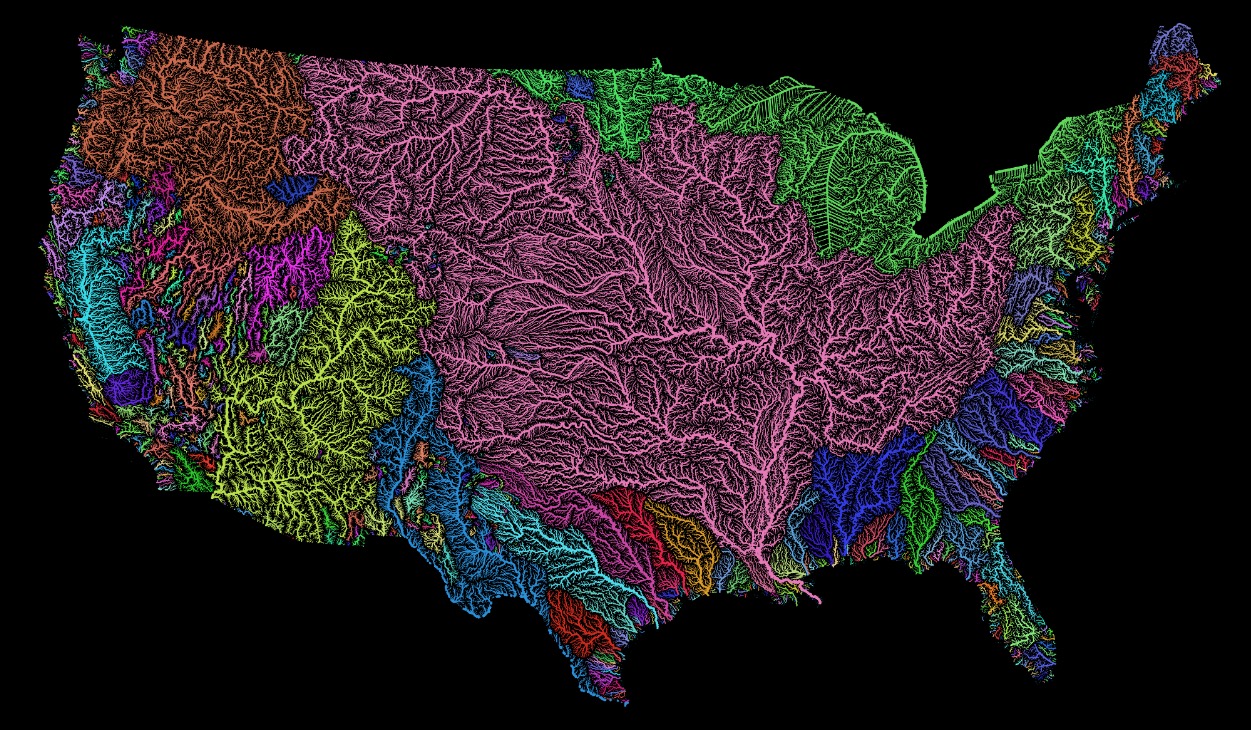
TL;DR -- The rivers of Yellowstone are featured. Too, there is a map of the water basins of the U.S. showing the large size of the Mississippi River and all of its inflowers. 

---

After focusing on the east coast as we got ourselves familiar with the Cape Ann venture, we started to follow western movements which had an early start that accelerated after the U.S. was formed. That change of scope led to us looking across the whole country to the west coast where people could have arrived by one of two ways, by water or by land. 

There are many maritime associations in New England to consider. Example posts are Gardner-Pingree house, The Gardiner that was, Whaling Gardners, and others. With Dr. Frank's TMM, we got acquainted with the long reach west of New England after the Revolution. However, going back in time, one sees the need to look at New France and New Spain. In particular, there was activity related to the fur trade that is within our scope; with that, we get into land movement and rivers. The major waterways were those of the Mississippi which cover the continent from Pennsylvania to Idaho. The former has ports; the latter is next to states with ports. In the below map, the Mississippi basin is colored pink. 

See Grasshopper Geography 

The following pertains to the upper left part of the pink area which is Wyoming and Montana. For reference, Gardner River starts in that region, flows into the Yellowstone River which joins the Missouri River in its long journey to the Mississippi. This area was a major playground for the trappers. 

Fur trading started early in the east (New England and New France) as traders bought furs from the American Indians. But, there was more demand than the American Indians could, or wanted, to provide. Hence, in the early part of the 1800s, we see the fur companies having their own trappers which changed the dynamic quite a bit. As well, we have events which gave stories (such as The Revenant or Grizzly Adams). 

There are many rivers in the Yellowstone basin with a lot more to look at; in the meantime, let's just consider some detail. There are two major rivers from the same location but going to the Missouri in two different directions. 

In this area of interesting rivers, we have a couple more. 

  • Lewis River, flows into the Snake River that goes to the Columbia River and the Pacific. This area is colored orange in the upper left of the map. 
  • Green River, flows into the Colorado River, then to the Gulf of California. This river basin is colored yellow in the lower center of the map. 

With respect to nearness, one motivation for relooking at the western rivers was learning of the portage of two-plus miles between the Fox River and the Mississippi that Joliet and Marquette took in their trek for New France. Essentially, they went from the Great Lakes almost to the end of the Mississippi River.

With regard to the Yellowstone area, the sources for these rivers are close in crow-flying terms (assuming they could get that high). Too, the comparison looks at the sources of the feeders/tributaries. So, taking the Lewis which goes to the Snake, at one point the waterways are with two miles of each other when looking at the boundaries of the Shoshone Lake (Lewis River) and the Yellowstone Lake. That is due to the width of the lakes. A comparison of the inlet positions shows the delta to be less than ten miles. 

However, travel between these two would be arduous, at best, and nearly death-defying in others. That is, before helicopters allowed types of leapfrogging not known to the trappers. The America Indians were in that area a lot, making use of what the valleys offered.  

---

Actually, we are remiss in not looking at the eastern part of the Mississippi system. Let's start with West Virginia which was part of Virginia until the Civil War. This list of rivers shows that most of the State's waterways drain into the Ohio which took lots of traffic west. Joliet and Marquette blew right by the Ohio's inlet to the Mississippi, but they were coming from New France. The other destination for the waters of West Virginia? The Chesapeake Bay, with  most of it going through DC's Potomac River which President George Washington was very familiar with. 

Remarks: Modified: 05/15/2021

02/27/2021 -- Changed to using American Indians. Added the TL;DR line. 

05/15/2021 -- Added link to later post that mentions The Revenant. 

Monday, January 13, 2025

The Carters

TL;DR --  Many families have long ties of family history going back over the 400 years. Then, the Revolution came 150 years later. Recently, President Jimmy Carter passed on. We got motivated and looked at his ancestry and that of his spouse. They have New England ancestors from the early times. They have cousins, too, the singing Carter family one of whose members married Johnny Cash. There are many families that we can consider as we did with the Adams family (of the 2nd President of the U.S.). And, there are other groups and evnts to commemorate. The U.S. has many organizations devoted to keeping this type of history alive. With technology, things will get even more interesting. 

--

We have always paid attention to collateral families. With WikiTree, many families can trace a relationship map that goes beyond blood connections and in-laws. One can see cultural ties through time that will become more visible as people become aware, via technology, of them and their importance. 

The 250th of the U.S. (which starts in April of this year and goes until the 250th of the end of the Revolutionary War) will be several years in duration and will generate interest in research. The Carters are an example family that we can pay attention too. Our ancestor, Thomas Gardner, was in north New England. The ancestors of the Carters was of the New England of the South (Virginia, &c.). There are ties between the regions and families that have already been touched upon. We'll pull those together this year as we pay attention to the 400th families who continued here until they helped the U.S. get started.

Just as we did with the Adams family (Another Adams), where we associated Pres. John Quincy Adams with his later cousin "Grizzly" Adams (of TV fame - except that was an actor playing a role - Grizzly Adams was a real dude), we can look at the Carters. Johnny Cash married June Carter (Wikipedia) who was a descendant of Thomas Carter. This family was hugely successful in music. 

These Carters have many cousins in the U.S. and elsewhere. People might talk of the distance of the relationship, but relattionship can have meaning in terms of the U.S.  

Recently, President James Earl Carter (Wikipedia) was in the news, having died in December with a recent Day of Remembrance being held in the U.S. in which there was a service at the National Cathedral in Washington, DC. According to WikiTree, President Carter has an interest family tree. His ancestor, Thomas Carter, came into Virginia in 1635. There was major amount of arrivals in the north in that year, too. 

For now, putting that aside, let's look at the First Lady: Eleanor Rosalyn Carter, has a New England pedigree, as well: Wikipedia; WikiTree. We will start with her as she has Patriots that have been proven for membership in the Daughters of the American Revolution who has, with others, been working to organize remembrance of the start of the U.S. for several years now. We will look at those activities as well as what is needed to carry on the work. 

The First Lady Carter had these Patriots (quick survey, so not complete).
D.A.R.'s records represents the work that goes into proving history and genealogy which represents lots of hours spent by volunteers. 

---

Additionally, there is an organization that has a broader role than D.A.R. with many other organizations as members. Named The Hereditary Society Community (HSC) of the United States, this collection of groups meet yearly in Washington, D.C. and are another example of continued interest and research. 

Of interest is one historic event that the HSC honors and which influenced the U.S. Namely, we will see a reflection this year on one (in 1225 AD) of several attempts in old England to establish a Magna Carta. 
Most attendees at HSC meetings from the U.S. have heritage back to the 400-years-ago arrival as well as having an ancestor who was at the 1215 event at which King John sealed the deal. These were barons who were to see that John behaved. Up to 2015, there was a major effort to document these folks on Wikipedia. As well, WikiTree had a project to prove the ancestors on this side of the pond. 

---

President Carter was a definite technologist. Too, he had different views that we can discuss. His willingness to pick up a hammer at an old age tells a lot about his character. 

The past two years of GenAI have brought to the fore issues needing discussion and resolution. Our take on that matter is that there is a balance to be attained. We would like to phrase it in those extremes of the modern time: screen or hammer. If that does not make sense, we definitely have some work to do to establish the definitions of the imperatives that living successfully and sustainably requires. 

Remarks: Modified: 01/13/2025

01/13/2025 --  

Wednesday, October 19, 2022

Newbury Essex County MA

TL;DR -- Ships made and used. New England. We're back to that after our jaunts through the interior. But, we'll keep both in mind going forward. In Massachusetts, we focus on little Essex County. Even there, the shipbuilding efforts have continued over the 400 years. Maine will be in the scope, too; after all, they endured the onus of Massachusetts for a long while.  

--- 

New England and its nautical modes is a no-brainer, that is, when one considers the coastal area. Same goes for our Essex County, the primary entity in Massachusetts. That is, again, until Winthrop arrived in 1630. There was Plymouth, of course. And, people had scattered around the region, like Weymouth which commemorates its 400 this year (2022). Per usual, we will be looking at Weymouth, again, due to the associations/relationships with those there in the context of the 400ths which will cover several decades. 

Folks in Essex County helped fill in the interior of the U.S. over time. To consider that entails covering a very large area. Two memes apply: long reach of New England; frontier century. Both by land and by sea pertain to the two memes over time. Thomas Gardner Research has noted by the seafaring ones have lots of press. Where there are deficits of information is in the large interior. To the extent that we can claim to have discovered a lost generation or two where our work has merely touched the tip of an iceberg. Fortunately, technology is moving to where we can handle the work to fill in the missing pieces. The interior is not just "flyover country" as was a meme several years ago. 

But, back to the sea and its charms. Before getting back to Essex County, there was a documented building of a vessel in Maine in 1607: Virginia, a pinnace (Gardner's Beacon, Vol. III, No. 1); Popham Colony (Wikipedia -- first English ocean-going vessel built "in the Americas."). The Wikipedia article gives an off-handed review. This vessel actually sailed from Maine to Virginia, to London, and elsewhere. This accomplishment needs more attention. 

That's New England, north as we call it. Coming back to Massachusetts and Essex County, we can look at the northern end, namely Newbury. We have mentioned it a few times. For instance, Dr. Frank and Ann have lots of ancestors from there. Nathaniel Knapp is an example. We wrote of Caleb Haskell who is from Newburyport (close enough). 

Newbury will have its commemoration is 2035. Being up top, we can jump over to New Hampshire to add in more goings-on over time, say like this post, Two Houses. But, let's give Newbury some attention, finally. 

Today, we saw an article by Melissa D. Berry: Tales of Infant Boat Industry in Massachusetts. The article looks at Newbury's  involvement, in a big way, with the creation of vessels for water transportation. By 1749, the region had produced "over 600 vessels." The Merrimack (1798) came from the folks up there in northern Essex County as a gift to the cause for which we'll have a 250th very soon.  

Recently, we had a brief look at the smaller work of cousins a little further south: Shipbuilding in Essex. Where Essex, in this case, is the former Chebacco where Rev. John Wise preached and rebelled. That latter had to do with tax impositions almost 100 years before the little tea party in Boston. John's pamphlet (see The Rev. John Wise of Ipswich) was republished to inform the later folks of what happened before, as well as to inspire Thomas Jefferson. 

We will step back to the beginning to look at the types of efforts. Housing was a huge emphasis, for a while. There was regular traffic bringing in goods of various types. Some artifacts had to be done locally. Too, exporting happened fairly quickly. Of course, we will continue the overviews of the 400 years of interest. 

Getting back to New England, in the context of Maine, we need to specifically point to Bath (John almost went there - to deal with the heavy stuff as compared to the lightness of aero ways). This little brochure is about the First ship of Maine (of course, Popham's). Their claim s that 4,000 ships have been built over the 400 years. Astounding.    

Remarks: Modified: 10/19/2022

10/19/2022 -- 

Sunday, December 30, 2018

400 or so

The theme of 400 has been constant for a few years, covered in many posts. Some of these posts are mentioned below, in no particular order. Each will be revisited for updates.

An example would be Plymouth's plans (both sides of the pond). We can use that as a something to watch and learn from.
  • Our first mention of 400 years (we have a page listing various 400th commemorations - from 2013) was in 2011 while musing about Thomas as an example of the backbone of the country. The thinking still applies but can be improved with the new insights gained since then (a boatload - after all, I was still a newbie in 2011). By 2013, we were thinking about specifics: 400 anniversaries. We had read of events in Salem a 100 years ago, in which the family participated: Dr. Frank, Ann's grandfather, others. Unfortunately, by this time, Dr. Frank's The Massachusetts Magazine had hit the dust. We will have much more on that.
  • We all remember Jamestown's shindig (2007). The Popham Colony of Maine would have been celebrated, too. Naturally, we had to mention that Kansas had a 400th back in the mid-1900s, celebrating the Spanish explorers who were looking for El Dorado (now a town).
So, by generation (using an average of 25 years) count, we would have sixteen. I looked at one line that consists of fifteen generations. Of what? The American experience which we will have as a topic next year. One of our topics, too, will be Historical Puzzles of which there seems to be no end. A very important one will be addressed, initially, in January of 2019 (please, stay tuned).

But, we would be remiss without mentioning the Final Migration. Yes, just as we look at the arrival by water, we can look at the western migration. Those early attempts will be in focus, as movement away from the coast happened almost immediately both in Massachusetts and Virginia. Of course, the 'final migration' was after the Revolution. So, that theme will continue (Dr. Frank's TMM had an article on this conflict every issue for a decade quarterly), too.
  • And, Gardner is found everywhere. In Kansas, where the Sante Fe and Oregon (California) trails split was at Gardner, KS. The Oregon wagons went just south of Mount Oread, home of the University of Kansas (founded, of course, by New Englanders as was the town of Lawrence). One can think of the students seeing the itinerants go by (actually, stopping there at a major camp site). But, we find that all locales, 100 years ago, got interested in their history. That has been constant. This book was written by a Chapter of D.A.R.: Illustrated History of Early Wichita.
  • BTW, the long reach of New England is part of our research interest: Col. Higginson, Lyceum, Judge Thompson, and more. We even carry it down to New Zealand and other places.
Of course, the overall theme is culture/history/technology which will be further discussed as the overarching concept for carrying research into the future. In that will be people, leading to genealogy. Of late, we have rediscovered WikiTree (original look, 2014). It was used to settle, somewhat, the wives issue (Margaret anew). We also have used it to expand Dr. Frank's tree using his hand-written notes for his mother's line. Turns out that he is descendant from both wives of Thomas.

Lots to do. And, we can keep it fun.

Remarks: Modified: 11/23/2019

07/17/2019 -- Changed to using commemoration.

11/23/2019 -- When was the first Thanksgiving? Virginia can make the claim.

  
11/26/2019 -- Salem is throwing its hat in the ring. 

Sunday, November 20, 2016

Flyover country

Last post, we mentioned a lonely grave. It is in Nebraska. This is a photo. As suggested, it's out in the middle of nowhere. And, the type of cemetery is a common thing in this part of the country. People drive by, at a high rate of speed. The stones sit.

But, this is not entirely wilderness. It is highly productive farm land.


Back east, settlement was dense, in terms of area being covered. Essex country in Massachusetts has no really open areas. That is, everything is identified by one of the communities. Granted, through time the boundaries of those communities changed, say as new ones were defined. But, no place was left untouched by human feet. 

Out here, it's wide open. The past century plus, things have been mapped. We have counties that cover the territory. These collect into states. And, given the recent situation (for instance, look at the red/blue map by county), these areas, and their residents, need some attention. You know, the "red" folk love it out here. Americans really ought to know this part of the country better. And, we can use New Englanders as the main thread in order to do this. 

As an aside this area is near the Oregon Trail as it wound its way from Gardner, KS to the Platte River. So, this area saw the travelers going by. Lots to tell, there. 

---

Now, the grave is of a descendant of John Porter of Salem. Buried here was Lyman (d 1898) who was born in Wendell, MA (he is also a descendant of John Alden - his offspring, who precipitated the work, is also descendant of old guy Brewster and others). Why, and how, Lyman ended up here is a story that will be told, in part, in the next issue of The Gardner Annals. The story has more appeal in that his children represent a merge of lines from northern and southern New England (that part which we know as Virginia and its neighboring states - see Albion's Seed). This happened post the revolution, however the Virginian folk were from the very early times, to boot. In this case, the joining up was via Kentucky.

In terms of the Society, Lyman's ancestor (Joseph) married a daughter of William Hathorne. Joseph's brother married another daughter. These two lines merge in a descendant of Lyman. As well, one of William's sons (Joseph's brother-in-law) married a granddaughter of Thomas Gardner. That couple gave us Nathaniel Hawthorne. Joseph's sister married a granddaughter of Thomas Gardner. Joseph's niece (daughter of his brother) married a grandson of Thomas Gardner. And, this is not the whole shebang. So, you see, all of this relates from the beginning to what we are interested in. 

And, that little bit is only one of several other (actually, very many) threads that we can follow.  

Before, we mentioned the long arm of New England. Lawrence, KS ( Final migration, remember that, Jayhawk'ers) was formed in order to bring anti-slavery settlers out west. There were armed Quakers out here having fun. There were Quakers in Virginia (and other southern states). In short, a whole lot of American History was not (has not been) told, properly. New England researchers can help fill in. 

So, we get a chance to add to the mix. And, having these long threads of 100s of years are going to be important. All along, new folks were coming in, just as we see now. So, the fabric of the American people is a lot more than has been described.

---

Aside: I have an interest due to being born in the west, having attended KU (whose students do not, for the most part, realize that their hill overlooked the major campground of the Oregon-bound trains), living all over the country, working in all aspects (government, business, non-profit) of our economy, seeing the interplay twixt us and the world (especially Europe), following the mischief of finance, and then falling into the opportunity to see the fleshed version of the long American experience.  

---

It is interesting that Lyman's brother is already in the Mayflower organization roll. Too, one of his daughter's is in the roll. The thread that we researched was the eldest daughter of Lyman and his wife, Caroline. That daughter (d 1872) is the 3rd-great-grandmother of root of the thread being used for the study.  

Remarks: Modified: 11/01/2021

11/22/2016 -- Discussions (questions) on another forum brings up just how much this relates to the red/blue split that is dividing the country. So, we need to get to that, at some point next year.

12/18/2016 -- Article published in The Gardner Annals, Vol. III, No. 1.

11/20/2017 -- We will be looking more closely at the south.

11/01/2021 -- So, now the MF people have a database of those in applications to 1900. And, guess who is there? Lyman and his daughter, Anna. These are the father and sister of Chloe. And, the applicants who were in their 90s? Deceased. 

Friday, January 28, 2022

Schools, New England and beyond

TL;DR -- Education has been of prime concern from the earliest days of New England. Boston Latin School and Harvard date from the 1630s. Technology and its growing impact will put even more emphasis on education. So, both will be recurring themes. A brief look considered how quickly colleges were instituted as new areas were developed. Using only a few states, we can see that the march of admission of States associates well with the establishment of the educational focus in its regions. 

--

We have had posts related to the long reach of New England, in particular the eastern part, starting with Essex County for obvious reasons. Too, we have an interest in technology and its influence on people, including research related to acquisition of sufficient information and knowledge in order to have some semblance of control so as to foster the American experience. Harvard has figured heavily as we can watch its evolution through history along with that of the U.S. as a whole. For balance, we have started to consider MIT, as well, from its 1865 inception. 

Over the past couple of years, we have dived into the western movement, keeping in mind the New England connections, time frames, and the various paths taken across the wide expanse. That research got us looking at the expansion of technology's impact, both before and after the appearance of the railroad. The major part of the U.S. obtained after colonies expanded was partitioned by efforts of both a technical and cultural natured coordinated out of St. Louis, MO. Too, we looked at the early partitionings related to New Spain, New France and others. 

One aspect of New England was the emphasis on education. Two schools were early, being established in the 1630s: Boston Latin School (1635) and Harvard (1636). According to one survey, the next college in Massachusetts was established in 1784 (Becker of Worcester). On the other hand, William and Mary of Virginia started in 1693. 

In this posts, we are starting to look at education, at a higher level, over the span of the 400 years. Having looked at the very early starts, the following table considers a few of the U.S. States which are of special pertinence to the topic. Namely, we look at these by order of the admission of the State to the Union. Too, there are links to two reports: Top Universities, List of Universities from University Review. 

For each of these, we provide the year of admission, name of the State, number of ranked universities, the university, year the university started, and where it is. 

After this brief look at higher ed, we can consider education as a whole, Massachusetts was early in emphasizing its importance. Cities were to have Latin schools. Two are still in existence, Boston (1635) and Roxbury (1645). That habit continued as States were developed and joined the Union. 


We mustn't forget The New England Primer. 

Remarks: Modified: 01/28/2022

01/28/2022 -- 

Tuesday, July 21, 2020

Murrey and blue

TL;DR -- We found a new blog, today. 'new' in that it's less old than our own. We expect good things to be read at murrey and blue. Of course, this note being done later, we can fix an oversight: somehow, we forgot to mention William Marshal (without whom we would (might well) be speaking French - having lost the language of King Alfred the Great).

---

We had a question recently about motives for people coming to New England, early on. We, more or less, have liked the overview given by the author of Albion's Seed which we first read in 2016 while first exploring all of the ways that New Englanders continued to move after their arrival. We can map out the movement through time. For Virginia, one can see a map that shows the extent of its reach plus the counties defined at the time from the beginning. The expansion was west, at one point, with a limit of the Rockies and points west later on. But, we know that there were eventual constraints, with  West Virginia being one of these.

In Albion's Seed, early New England (Thomas Gardner et al) were reconnaissance. The real deal started with Winthrop who represented on pathway of which were were three more. After the Revolution (coming up 250 years ago), the expansion started in earnest. However, there were facilitating changes, such as the establishment of the Cumberland Pass through which we had people going west. There is a lot to look at. In the case of one family, we found a hanging of an abolitionist minister out in Texas before the major conflict that split the country in the mid-1800s. Three years ago, we looked at the experiences of Col. T. W. Higginson a little further north. There have been conflict and turmoils continually throughout the U.S. history and before.

On FB, recently, we saw a post from the Richard III society. We have had posts about him as it involved the long War of the Roses whose aftermath was of importance. Too, his body was found and re-interned which brought Richard III's life back to attention which got several posts here. Too, other blogs came into existence. One of these is "Murrey and blue." 'Murrey' describes a color that comes from the mulberry fruit.

The post asked: What really happened in 1385, when the Earl of Stafford’s son and heir was killed on a Yorkshire road ...? It was the first time that we read this blog which covers the subject well with illustrations. A name caught our eye: John Holand. The family was familiar for several reasons.

As an aside, it was nice to see history covered, as the whole of the themes related to this was muddied by the Game of Thrones playing loose. We can say that the media, such as blogs, that are coming to fore will allow a more full look at history in ways not possible before technology got off the ground. And this 'murreyandblue' blog gets into detail that is quite refreshing.

Back to the theme, John's father was Henry Holand of a Lancastrian family. Henry married Anne of York. His territory included Dorset which got us to look at the Domesday Book of this region. One of our goals is to keep a long view of history as we proceed with learning more about Thomas, Margaret and others of the Cape Ann venture. So, we expect that we will be looking further at this blog and its cohorts as we pursue our studies further.

There is another view of motivation: The Great Puritan Migration. I like this blog, however, I don't know that we can assume that Thomas and Margaret came here for religious reasons. We had a post dealing with Origins - motivations. One thing looked at were the beheadings associated with the War of the Roses.

Another good one is that from the New England Historical Society. There are a lot more blogs to look at.

Postnote: Back in Holand's ancestry one will find several characters from the time of King John and the MC. We have had posts on those topics. One name to bring forward beyond the interest that has been shown in literature and the arts? William Marshal.

Remarks: Modified: 07/22/2020

07/22/2020 -- Added an image and a TL;DR.