Showing posts sorted by relevance for query magna carta. Sort by date Show all posts

Thursday, February 27, 2025

Robert Charles Anderson

TL;DR -- Robert Charles Anderson was a Fellow of the Society of American Genealogists. We look at his lineage and then one ancestor in particular. As well, the American Dream? What of the English-American basis that set the tone 250 years ago? On this side, we kept the interest in the Magna Carta whose 800th of the original sealing was observed in 2015 and which is again in focus. Last time, it was King John; this time it will be his son, Henry III. In this context, we look at President Carter's lines. That gets us back to Anderson's connection with Thomas Cranmer, Archbishop of Cantebury, who assisted Henry VIII in establishing the Church of England. Many Americans, like Anderson, descend from his brother. These long threads of lineage speak of many things, many of which pertain to modern issues and choices to be made. 

--

This post is the first of a new series and honors a recently deceased member of the NEHGS who worked in genealogy and heritage: Robert Charles Anderson (WikiTree). He was the lead in their Great Migration Study Project (WikipediaAmerican Ancestors). This project produced several volumes of biographical and historical information. 

The Puritan Great Migration project at WikiTree is atempting to capture the pedigree and descendants of each of these immigrants. That effort and the NEHGS continue their research as indicated by this post at the Vita Brevis website: Everything You Need to Know About the Newest Great Migration Book.

Anderson also joined the American Society of Genealogist and served as President from 1989 to 1992. This obituary is from the SAG site. 

We will look at one of Anderson's ancestral family (in the time of Henry VIII) below. Before that, we will touch upon a few topics such as the Magna Carta, President Jimmy Carter's lineages, and some of the Magna Carta folks who will feature the rest of the year. 

---

We really do need the theme of American Dream, even as we have thought. You know, over the 400 years, lots of folks came here, so there would be a dream per lots of people and lots of family. We somewhat look at the cardinality of that number of lots and lots below. 

We can broaden the view and concentrate on English-American dreams and stories. At some point, the focus of the scope will be European. There will be stories that will look at the 400+ years in terms of a person, their heritage (lineage), up to the arrival (400 years ago), and then back to the origins. For now, we will limit the go back to King John's time and that of his son, King Henry III using the theme of the Magna Carta. Have you heard of that?

We supported the 800th anniversary of the 1st sealing (in 2015). This was a big deal to those who wrote the foundational materiall for the U.S. (250 years ago). Now, ten years later from 2015, there will be celebration of John's son Henry III taking an interest in the Magna Carta document. 

Note: we recently mentioned the Magna Carta in our writeup of Presiden Jimmy Carter (The Carters). We had a link to this report (Magna Carta (800th Anniversity). Ancestors who carried the Magna Carta lineage have been put into a "gateway" category. The Magna Carta project at WikiTree has been verifying at least one lineage of each person in the category. Using that resource, let's step through research results. 

  • Category:Gateways Ancestors - We know that President Carter's ancestor was Thomas Carter of Virginia (WikiTree). But, let's go to Famous Kin (caveat: all claims need scrutiny which is what the WikiTree project for Magna Carta is all about). Presiden Carter has these links: John Fitz Robert; William Malet; Gilbert de Clare; Saher de Quincy; Roger le Bigod; ...   

Gilbert de Clare (Wikipedia) was of a family (de Clare) that came over with the Norman Conquest of William the Conqueror who was a kinsman. There were 25 Sureties who took up the onus of seeing that King John kept his agreement. The history from that point to now is very much of interest. 

Having completed the look at President Carter, let's get back to Anderson and his heritage. 

---

Using the WikiTree information, we can look at one line of Anderson's through his third-great-grandfather Howard Gay. Of interest was that Ander was related to one of the Archbishops of Cantebury, Thomas Cranmer, through his brother the Archdeacon. Cranmer was burned at the stake by Mary, Queen of the Scots. 

Lineage thread from Anderson
to Thomas Cranmer,
Archbishop of Cantebury,
showing 15 generations

We ran into this martyr early in our research and noticed the open issues that needed resolution. We didn't venture far into those issues as there are many Americans who descend from Thomas Cranmer (see Foxe's Book of Martyrs). These things are best worked correctly (our latest open question deals with origins - not in terms of location but of the logistics involved - how many times did Thomas come over here?, was it only once?). But, having this linkage back to Cranmer confirmed by Anderson's work has a lot of meaning for us. 

That is some of the type of work that the SAG does. We will be using Anderson's lineage to look at other issues related to questions needing this research. 

---

The American dream, again? The English connections go much further than than the generations around the efforts to establish colonies in New England. We have our shared heritage which needs to be brought to awareness. We have been trying to do that sort of thing. Needless to say, the type of research that will be requied will use technology (such as, computer modeling) which then fits well with our themes. So, expect us to pay more attention to technology in and of itself as well as its usages, including discussions of what the U.S. is all about. 

Too, the phenomenal world of people and their generations carries a lot of informaton through time in ways that we have not been allow study due to various factors. Those factors? We will address them philosophically in a manner necessary for smart living. Why? Because of the change in the dynamics that we see with the 21st century, we have to go back and considered what we did not learn as we ought to have in the 19th and 20th centuries. 

We might add, quite frankly. As, generations of people  represent being and real matter. From that dynamic, humans evolved to where we are now. The past two centuries have seen acceleration along several fronts which we need to look at. One huge area needing attention is mathematics. How long thing analysis will take is anyone's guess. First? Demonstrate the necessity of such an effort.  

Remarks: Modified: 02/28/2025

02/27/2025 -- 


Saturday, March 6, 2021

Prior and next

TL;DR -- Opinions always follow a spectra mode. How these look in the aggregate can be a thing of beauty. There is never any nestling around a center point, for long. A recent event (one-sided deal, per usual, via the idiot tube - never had a TV until later in life). Turns out, that someone claiming a lowly mode (poor is me) actually has Ed III in the past. To some, in the U.S., that means something. But, rather than diving into that, we bop over to the Magna Carta which is of interest to more people. Again, though, this is from the English experience. And, during the 2000s, there will be many times for us to consider the document, its meaning, those who were there then, and what happened later over the centuries. 

---

So, a duality of several that we will always see. There are lots of these, such as those things that cause controversy. Such as? The US and UK conflict that seems one-sided, with an American citizen dissing HTMQ. Turns out that the one has a link back to Ed III (we wrote of him earlier). This heritage review was developed by Gary Boyd Roberts and Christopher C. Child of the NEHGS. The page has a link to a graphic which is interesting. On a further note, since the graphic is only of one of her lines, we thought to provide an ahnentafel courtesy of Famous Kin. So, there is a lot to discuss as we will be working with our kin there as the 400ths come up just as did the Plymouth folk the past few years. 

So, the prior? About seven to six years ago, there was much interest in the Magna Carta for which we had post here (John and his friends). That event came and went. HTMQ made several appearances during the festivities. Then, the thing was done but with another round in 2025 to celebrate the involvement of Henry III. For Americans, there is a special interest since it is noted that the related thinking was an influence upon the U.S. Constitution 800 years after the fact. And, there will be many more occurrences as we go through time of looking back at this document. 

So, that is the next, with 2025 being on the horizon already. What does this mean? Well, in the U.S., people can find out their family's connection by looking at gateways who are those who came over with this pedigree in their knapsack (or the equivalent). Of those, some already knew 400 years ago. Some were recently discovered to have a connection. Two examples are Mary (Gye) Maverick and Richard More. She was the wife of a Rev. on Winthrop's fleet whose name is now associated with actions, say like the one alluded to above. Richard More, as a kid, was on the Mayflower with his sisters. He married in Salem and is an in-law. There are many more examples. 

WikiTree has what it calls the Magna Carta Project. Using the gateways, they have Magna Carta Trails which go from the gateway to someone involved in the 1215 activity, as a Surety (see list on this page). One thing the team does is work the Magna Carta Base Camp. They have completed trails for many gateways of which there are several hundreds. They have a bunch that are in the process and some being prepared to be scrutinized. 

Why the interest? These are documented lines when they are done. Where else can one go to find this on-line? For Mary, this is her trail. Notice that her nodes for Bigod are 100% verified. However, therre are other trails. For Richard, his trails are in progress. Lines from both of these are in this graphic. 


So, another reason to show this. It's an example of very good work which is what we expect from Gardner Research when doing comparable types of things. One goal might be to do this for the first three to five generations starting from Thomas and Margaret. 

Remarks: Modified: 03/08/2021

03/07/2021 --  Updated Richard's line to show Bigod. 

03/08/2021 -- Put in the TL;DR, later better than never. 

Thursday, February 17, 2022

Magna Carta, technical

 TL;DR -- We saw the 800th of the Magna Carta a few years ago. Another event looking back comes in 2025, two years before the 250th of the U.S. Revolution. In any case, technology has created new Lords and such that are outside of any constraint. Or so, some of them might think. One gross case was observing an auto-truck with attitude on a public highway. This was not the first time nor was it the only location where we have watched such shenanigans, of which there are several other cases. Whatever, technology seems to have gone wild as do the youngsters every spring break. That, folks, is not a sustainable state of affairs. 

-- 

We were involved with the Magna Carta celebration in 2015 several ways. Jon Gardner attended the ceremony at Runnymede and wrote a report for The Gardner Annals, Vol. III, No. 1. We helped edit generational material in the bios of the Sureties found on Wikipedia. Along that line, Wikipedia started its Magna Carta study

The Magna Carta was an early English document which specified constraints for the King that were expected to be followed. The authors were Lords who were dissatisfied with the notion of unlimited powers for the King. After some conflict, the Magna Carta was drawn up and sealed by King John in 1215; this was celebrated, after much planning, in 2015 under the auspices of Queen Elizabeth II and the American Bar Association. Another historic reflection will be done in 2025 to celebrate King Henry III declaring his support for the document and its intent. 

Not only were restraints specified for royalty, there were conditions set for the aristocracy. This brings us to the topic. 

The other day, we followed an auto-truck (to be autonomous, at some point) on an Interstate highway. How this entity was identified can be explained, but there was more than one. But, with regard to one that got our attention, the thought was "auto-truck with attitude" for several reasons. In a technical sense, a data-driven process under the name of machine learning looks at data and obtains useful information that is actionable. An example? The technique is applied quite generally, of late, and was behind the first computer's winning of the Chinese game of Go.  

That win got a lot of attention and spawned lots of copy-cat efforts which led to new definitions and approaches for what we call AIn't. We have had several posts on the subject, but the one dealing with "How dumb is AI?" is a good start on looking at the matter. Just let us say that there is little science in this effort which has been marketed with glee and mischief (when one considers constraints that apply to truth in advertising). In short, technology has gone wild, of late. 

AIn't is only one of several examples. The Internet, in general, is a mess of gigantic proportions. Does one even have time to do a litany of the issues? Well, one inhibitor? The effort and time needed to try to establish a stable basis is a huge detractor with costs that seem unbounded in a few of the cases that have been studied. Our response, in the workings, will be to assume that technology and its sustainable use is a worthy subject for attention and with enough purpose for establishing a mission focus. 

Back to the truck event that we watched unfold, briefly. The thing would not have passed a driver's test. That is, no truck being driven by a human in such a manner would be seen as desirable. And, given that the human doing the driving is the responsible party, a license would not be forthcoming based upon what we saw. Too, though, this is only one example. There were other trucks. Two of them played a tandem chase, blocking two lanes of traffic, for miles. 

Was there any indication that the road was a test site? As in? Student drivers go around in a marked car. Testing is usually done in a private area. Test tracks and sites support the need. When we say that this is not isolated? We mean that we have seen it in several states. Are these types of test runs made public? 

There are many motivations for auto-trucks being sought as something beneficial. For one, we have a shortage of drivers. Too, supposedly, the auto-truck would have a better driving record. Oh yes, have you read of accidents? One thing is certain, the modes for the accidents of these types of vehicles is different. And, deadly, as such occurrences can be for human drivers. 

One thing needs to be added, these were not loaded. The out-of-control modes observed would be very problematic with a loaded trailer bringing in potential instability. Lots of effort has gone into training humans to be safe with their truck driving. Of course, we did have an incursion of untrained drivers due to circumstances that were associated, in part, with a new class of accidents. 

Okay, an artificial vehicle with attitude? Like a Lord of old? We have a whole new class of Lords which are the big-pocketed lords of industry. Are they amenable to looking at restraints that would make sense and produce mature behavior?  

auto-trucks are only one example. There are many more approaches pending, as no restraint seems to be taken in determining the future. It's wide-open. In fact, there is this moral: go fast and break things. 

Oh, Lord (proper use), deliver us. The whole of social media can be a mess beyond salvation, sometimes. Choices by Lords are hugely responsible for the problems.  

One might say that the virtual appeals to the reptilian brain and gets responses thus. Stimulus-response, with little judgment applied. The modes do not augment the abilities attained with any type of cognitive oversight. Actually, it's more functional with input matching up with an output, with the pairing having been determined by prior training based upon data. And data? Suspect, for many reasons. 

So, we have a multitude of issues that need attention on a continual basis without any existing paradigm being there that will not work without serious adjustments. And, judgment to do this modification? Whence might come this? 

If one looks at the problems, we have seen lots of examples of progress being effective as well as efficacious for everyone. In fact, a notion of the every human as King/Queen is not counter to how we might think about the future. Turning this to technology, the user seemingly has been given great ability and authority. But, not really, as the chains that bind given the situation are onerous, indeed. 

Remarks: Modified: 02/17/2022

02/17/2022 --

Friday, May 9, 2025

Eric W. Gardner

TL;DR -- Eric Wright Gardner, descendant of two sons, George and Samuel, of Thomas and Margaret, died recently. We offer condolences to the parents, family and friends of Eric and provide some information about Eric. His father wrote of the Magna Carta for The Gardner Annals in 2016. In that regard, we find ourselves at another milestone for that memorable document. 

--

We have covered a sampling of descendants through the generations since time of Thomas Gardner and Margaret Fryer. Our brief look at each of the children and their descendants can be considered a start. 

As an example, the following link is to information about the 5th son and his descendants over the four centuries.  

Samuel Gardner -- Dr. Frank, the author, whose work led to the 1907 and 1933 books is of this line. As well, Dr. Frank was an editor, and a major force behind the publication, of The Massachusetts Magazine.  

Today, we commemorate Eric W. Gardner (1965-2025) who is a descendant of both George and Samuel, through his mother and father, respectively. In terms of the book, the 1933 edition was of the family of George while the 1907 book principally covered known descendants of Samuel. 

Obituary

A nephew of Ann, Eric grew up in Fort Worth, TX and attended school in TX and OK. Eric's career as a weatherman was inspired by Harold Taft of Fort Worth and took him from Texas to Wyoming, Montana, and South Dakota where he was a meterologist at KOTA-TV of Rapid City. 

Eric's other interest were music, cooking, and wine. With his musical interest in the piano, Eric continued his involvement by helping to arrange local performances for visiting pianists. He held regular broadcasts concerning recipes, healthy eating, and cooking lessons. He was knowledgeable about wine and arranged local support for wineries of NAPA Valley and other locations.   

---

Eric's father, Jonathan Gardner, authored our article on the Magna Carta (800th Anniversary), The Gardner Annals, Volume III, Number 1. In 2025, we have the celebration of the 810th aniversary related to King Henry I, son of King John, and his interest in the Magna Carta which needs an update related to technology (Magna Carta, technical).  

Remarks: Modified: 05/21/2025

05/21/2025 - Visitation/Memorial, today. Guestbook


Monday, January 13, 2025

The Carters

TL;DR --  Many families have long ties of family history going back over the 400 years. Then, the Revolution came 150 years later. Recently, President Jimmy Carter passed on. We got motivated and looked at his ancestry and that of his spouse. They have New England ancestors from the early times. They have cousins, too, the singing Carter family one of whose members married Johnny Cash. There are many families that we can consider as we did with the Adams family (of the 2nd President of the U.S.). And, there are other groups and evnts to commemorate. The U.S. has many organizations devoted to keeping this type of history alive. With technology, things will get even more interesting. 

--

We have always paid attention to collateral families. With WikiTree, many families can trace a relationship map that goes beyond blood connections and in-laws. One can see cultural ties through time that will become more visible as people become aware, via technology, of them and their importance. 

The 250th of the U.S. (which starts in April of this year and goes until the 250th of the end of the Revolutionary War) will be several years in duration and will generate interest in research. The Carters are an example family that we can pay attention too. Our ancestor, Thomas Gardner, was in north New England. The ancestors of the Carters was of the New England of the South (Virginia, &c.). There are ties between the regions and families that have already been touched upon. We'll pull those together this year as we pay attention to the 400th families who continued here until they helped the U.S. get started.

Just as we did with the Adams family (Another Adams), where we associated Pres. John Quincy Adams with his later cousin "Grizzly" Adams (of TV fame - except that was an actor playing a role - Grizzly Adams was a real dude), we can look at the Carters. Johnny Cash married June Carter (Wikipedia) who was a descendant of Thomas Carter. This family was hugely successful in music. 

These Carters have many cousins in the U.S. and elsewhere. People might talk of the distance of the relationship, but relattionship can have meaning in terms of the U.S.  

Recently, President James Earl Carter (Wikipedia) was in the news, having died in December with a recent Day of Remembrance being held in the U.S. in which there was a service at the National Cathedral in Washington, DC. According to WikiTree, President Carter has an interest family tree. His ancestor, Thomas Carter, came into Virginia in 1635. There was major amount of arrivals in the north in that year, too. 

For now, putting that aside, let's look at the First Lady: Eleanor Rosalyn Carter, has a New England pedigree, as well: Wikipedia; WikiTree. We will start with her as she has Patriots that have been proven for membership in the Daughters of the American Revolution who has, with others, been working to organize remembrance of the start of the U.S. for several years now. We will look at those activities as well as what is needed to carry on the work. 

The First Lady Carter had these Patriots (quick survey, so not complete).
D.A.R.'s records represents the work that goes into proving history and genealogy which represents lots of hours spent by volunteers. 

---

Additionally, there is an organization that has a broader role than D.A.R. with many other organizations as members. Named The Hereditary Society Community (HSC) of the United States, this collection of groups meet yearly in Washington, D.C. and are another example of continued interest and research. 

Of interest is one historic event that the HSC honors and which influenced the U.S. Namely, we will see a reflection this year on one (in 1225 AD) of several attempts in old England to establish a Magna Carta. 
Most attendees at HSC meetings from the U.S. have heritage back to the 400-years-ago arrival as well as having an ancestor who was at the 1215 event at which King John sealed the deal. These were barons who were to see that John behaved. Up to 2015, there was a major effort to document these folks on Wikipedia. As well, WikiTree had a project to prove the ancestors on this side of the pond. 

---

President Carter was a definite technologist. Too, he had different views that we can discuss. His willingness to pick up a hammer at an old age tells a lot about his character. 

The past two years of GenAI have brought to the fore issues needing discussion and resolution. Our take on that matter is that there is a balance to be attained. We would like to phrase it in those extremes of the modern time: screen or hammer. If that does not make sense, we definitely have some work to do to establish the definitions of the imperatives that living successfully and sustainably requires. 

Remarks: Modified: 01/13/2025

01/13/2025 --  

Tuesday, March 8, 2022

Gairdner Foundation

TL;DR -- Themes become memes and endure. Technology assists, in ways we do not even think about. But, will. For good or bad, we have to look at matters related to progress and change. Looking back can provide a framework which offers types of insights that we need to hone. With respect to medical research, the Gairdner Awards foundation is an example of successful handling of a particular focus. We will be looking more at that. 

--

We have mentioned this organization a couple of times in the blog but ran into their work almost in the beginning. Early on, we had lots of questions about the name and the families and started to look at All things Gardner. 'Gairdner' is obviously close to 'Gardner' and other variants of the name. This family is from Scotland. What caught out attention, though, was their work in supporting medical research. From the start, we have had research as a focus. Initially, there was a lot to do to fill in what for what we didn't know and are still working that. 

Why? The more we find out, the more questions arise. Too, it is our experience that the U.S. plays an unique role in the world which might be associated with the Americas, in general. So, issues of history, culture, and family will continue to get attention (see post on Culture, History, and Technology). It may not have been apparent, but we see technology, in general, a being of prime importance going forward. 

We have had several post related to the theme of technology. Here are a few: 

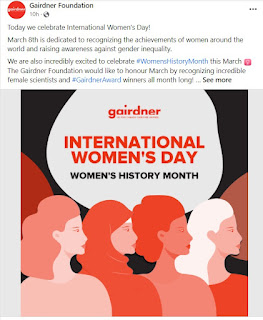
Now, getting back to the Gairdner theme, we were on Facebook and saw their hashtag post on Women's History Month. This is an image of the Gairdner Awards FB feed. 


They will be offering awards to women scientists, so we will stay tuned. 

From Streets of Salem: Books for Women's History Month, 2022

Remarks: Modified 12/22/2023

03/09/2022 -- Added book list. Of the categories needing attention, a "Magna Carta, technical" sits on the top. Not many make the effort to know: how all of this stuff works?; why it is like it is?; are there other alternatives?; and such. Rolling with the crowd, being controlled by those who can do so, lazing in the aura of gaming with its biochemical impacts, being impinged in unknown ways from the proliferation of material that impacts energy, and more. Research options abound. 

03/25/2022 -- Wikipedia article on the company. Ninety-seven Gairdner Laureates have won the Nobel Prize. ... Collected some information on James Arthur Gairdner (his parents, his service record). 

12/22/2023 -- THE FUTURE OF AI IN SCIENCE AND MEDICINE, talk at Gairdner Foundation, Oct 25, 2023. 

Monday, March 8, 2021

Edward III

TL;DR - Some in the U.S. like to compare their heritages, especially when royals lurk there. This has gone on from the beginning with some families making claims very early. Some of these were confirmed later. Some went out of style. Imagine that: make a claim, then have to retract. One ought to have kept quiet (like a current pair are not doing - but they have the pedigree). But, we're above all of that (thankful for no connection at all - Irish/Polish). On the other hand, we notice good research reporting and want to encourage this, even adopt the best ones. WikiTree stands out for many reasons. 

---

Using an informal survey, it looks like Ed III has a place of being the last of the royals on pedigrees. There are some who have later characters, however, Ed III seems to stand out. We can go back to Richardson's work (or that of others) to confirm. 

Or use WikiTree. Recently, while looking at the Magna Carta work, we mentioned progress that is observable. Today, following up on some controversy that seems to bifurcate further those on either side of the big waters, we went to look at the status of dealing with Ed III's descendants. Let's just look at two sources, for now.
  • Wikipedia - Edward III of England - according to this write up, he had 8 sons and 5 daughters. One thing that the Magna Carta event helped come about was the linkage in Wikipedia between generations which was a nice feature for a researcher to find. For the recent event, Lionel, Duke of Clarence, was the precipitator of a line that had a later member coming to New England. 
  • WikiTree - Ed III past five gens - this effort pulls together work from disparate groups. We like the approach as it could be used for documenting early colonials, such as Thomas Gardner of the Dorchester Company's efforts at Cape Ann. 
As an aside, in Ed III's time, there still was a claim to the French throne (see image). A few centuries later, the arena was in the New World: New France


It is always good to see the internet used as it ought to be. This work is an example. 

Remarks: Modified: 03/08/2021

03/08/2021 --  


Saturday, April 18, 2026

Illegitimates, Royal family

TL;DR -- We ran across the one heritage group in the U.S. that claims the most stringent application process which keeps their membership small. We will use RBs here. After a brief review of technology of late, we look at heritage societies as they exist in the U.S. Many of these go back to the colonial era. At the same time, there is a huge chunk that goes back before the moment of "origins" into the far reaches of the History of Britain and of Europe. The 250th has direct bearing on those studies, such as the interest of the ABA in the heritage of the Magna Carta. Our contribution to history will be via the Gardner Family Trust with its focus of 2,000 years. 

--

We have seen so much sillyness the past few years that one might wonder if there is more or have we seen everything of that nature. There was a time when we took computation more seriously. 

But then, GenAI/LLM happened. It has been only a little over four years now, but the related work goes back one decade for the main focus and back to the 1950s altogether with interesting progress throughout the whole of those seven decades. 

One of those areas of work was Knowledge Based Engineering (KBE) the public awareness of which was never known or was lost in the shuffles of time. 

But, the lessons of KBE were not lost, as my survey over the past few years has shown. The phenomenal world contains lots of remnants from that period ('80s, '90s) in various shapes which include academic involvement and classes plus companies representing operational knowledge improvements of various types through their intellectual property and activity. 

Phenomenal? I use that a lot with a meaning related to things that we can sense in the world. That is, these are "real" and not our mental images. As if, their presence conveys that something is there in the world. Of late, there has been attention given to "twins" which are digital models of the "real" thing which is then represented in bits and heated moments by circuits processing such things. We call those circuit conglomerates computers. Much to discuss. 

---

Now with respect to this organization, we see people as phenomenal. They are here, have a history in terms of their genetic lineage, can name some of their ancestors, and then leave us (some having then a phenomenal legacy for us to consider). We have mentioned the Hereditary Society Community which consists of groups with different historic and genealogic focus. Each of these Societies have an application process and an associated list of people. If one is a descendant of one of those people, then one can join if an application shows direct lineage from the applicant to the person of the past. 

Many groups have a U.S. or colonial theme. Examples of this are the Daughters of the American Revolution, The General Society of Mayflower Descendants, The Society of Cincinatti, and such. With regard to the group honoring Cincinnatus, there are two houses that are associated with Ann's family: see TGS post, Two Houses

Some groups use "Gateway" to represent the bearer of heritage information that continues on the other side, as in prior to their immigration to the colonies.  We recently wrote of that: see post, Gateway Ancestors, redux. Here, the Magna Carta groups stand out. 

The rest of this post is about one of those groups. 

---

We recently were reminded of this group as they had their annual meeting in Washington, DC. We took a little time to look at their website (Illegitimates or RBs) and found an on-line tutorial about the application process involved which is one of the stringent. Many early members were associated with the Society of American Genealogists. So, it is no surprise that that they would start an effort to firm up the application process. 


Having done tons of applications over the years while helping people join societies, we are sensitive to the arguments which we will be looking at in more detail in later posts. Today we want to introduce the video that is quite interesting with its coverage of historical issues as well as the discussion of the research and documentation process as well as a look at how things are evaluated. 

The video --- Webinar: Finding Your Bastard and Your Line: Tuesday, November 18, 2025. 

Let's start with a discussion related to American History. In the video, go to 12:33 and find the first page of the "Background" overview. The story of Americans visiting England is quite instructive as those here were thought of as "rustics" mostly. Whereas, the list of Gateways shows that many families had a heritage worth looking into. Well, everyone's family has that quality. Rather, people here have the same genetic involvement with the history of England as do folks there.

But, the U.S. offered more which we expect will be more publicly discussed during the long run of the 250th celebration. Frankly, we are still over two months from the Declaration of Independence. After that, expect a continual review to be part of our days until after 2033. 

With technology and mature computing, the amount of new documention to be attained will be without limit, with quality material rising to the top of the heap of attention. 

---

The Royals (all over Europe) are (have been) an interesting bunch. With respect to "Gardner" and command/control, we have stumbled around the "origins" aspect for a bit and will be more focused with the advent of David T. Gardner's new site: Gardner Family Trust. His theme is "2000 Year History". 

Remarks: Modified: 04/19/2026

04/19/2026 -- Changed links that did not copy corrrectly: Two houses, Society of Cincinnati.  


Sunday, April 16, 2023

Arab History Month

TL;DR -- So, following technology and its changes, we will be changing our goals, somewhat. That is long term. Of immediate concern is the new month and its focus for history. Arabic Americans and their contributions will be looked at further during the year. To begin, we will look at the History of Mathematics which discipline is behind all of this technology that we see. 

--

We have been pursuing insight into the lessons from new data. As we said, now we can start to look at origins with some semblance of locations of interest. From the beginning, we followed the adage for Americans to look at their own stuff and leave the Brit stuff for those over there. Technology has changed that considerably which we will be addressing as well. 

Along that line, the emergence of new toys of technology had us doing research which has been a huge time consumer. So, expect that lots of posts will provide an overview of findings, opinions, and positions. 

One thing certain? I'll be writing of AIn't, regularly. Not that there is not machine intelligence. The whole concept of intelligence is open and needs more study. But, we do see behavior that appears to  be consistent with intelligence which is really easily mapped back to semantically tuned databases. That is, technology (lots to discuss there) is the basis. 

We are not dealing with any type of new life form or latent being emerging out of the shadows, not that such will (could) not happen at some point in the future. 

---

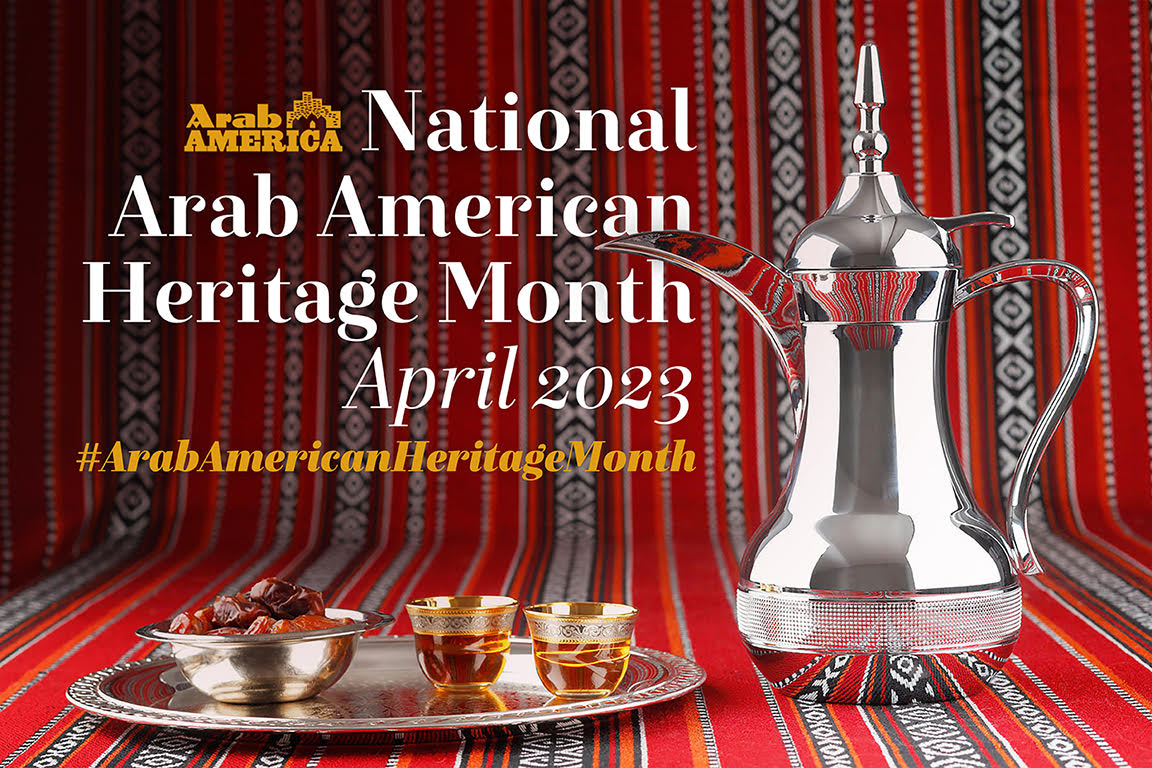
National
Arab American
Heritage
So, stepping back to normalcy, we have a month to celebrate as planned for this year (Awareness months). Last month was Women's History Month

Right now, we will mainly focus on the mathematical contributions out of the Arabic culture (article from MathTutor at the University of St. Andrews - Scotland). These are tales that need to be told. 


Over the rest of the year, we will look at other aspects of Arabic culture and the U.S. 

---

An example of technology is what can be done now with the web. WikiTree has been our mode for some time. It is there that we saw the report on the children of Thomas and Margaret Gardner being born in Sherborn, Dorset, UK. But, there have been many ongoing projects of this sort. 

One of renown dealt with the Magna Carta which is coming into focus, again, in 2025. One of the team members of the Magna Carta Project on WikiTree, Michael Cayley, is a cousin of Arthur Cayley, who is one of the mathematicians behind some of the newest AIn't methods. 

So, lots to look at there. What would old Arthur think? 

BTW, yes, AIn't is not (ain't) a typo.  

Remarks: Modified: 04/16/2023

04/16/2023 --

Monday, May 4, 2026

Attainder grudge

TL;DR -- Gardner Family Trust has produced its research results and allows us an opportunity to vet this with regard to provenance and other criteria. It is a first, in a sense, as the computer algorithms (associated with AI) are to be scrutinized, as well. We are fortunate to be using historic data which has meaning beyond the normal. 

---

As we saw with the recent visit of King Charles to the White House, the U.S. and the UK have a history which we all know from our American history. Some families have more stories than others. We recently pointed to a post in the blog Gardner Family Trust dealing with the western U.S. From the TGS view, we got reminded by the movie (The Revenant) that was of the mountain man era. 

There was a Gardner in the area and the new blog has some information about that part of the family. Another post was about Silvester Gardner and a namesake who owned the ship, Barque Bostonian (see the Gardiner that was), that sank and caused Gardiner, OR to come to be. 

With respect to provenance and other dutiful notions, we need to establish links to documents that are of value themselves with respect to what information that they provide. Of late, we see projects using GenAI/LLM, about which we have had many things to say, for research, analysis and presentation. In fact, when you look at coding (programming), some teams generate huge systems and only check via test. 

Note: A bit of progress to now has been proving programs so as to establish some notion of stability, maturity, and such, usually with respect to requirements that come from the world of humans. That side of things has gotten ignored; expect that it will come back into vogue. 

In the meantime, while we are verifying Gardner data on this side of the pond, let's look back. We will use this post: The Merchant-Coup Thesis: The Gardiner Syndicate and the Tudor Usurpation of 1485. The notion is that a grudge led to the involvment of the Gardner family with the conflict at Bosworth. But, of interest is additional history gathered from a new look at historical records. This conjecture will be looked at in detail. 

Accompanying the referenced thesis post is one with more clarification: The Fenland Grievances: Lancastrian Merchants' Reckoning and the Yorkist Toll, 1461–1485. The intriguing thing is that we know that history is written topdown. And, we know how personal insights or reports on occurrences do not survive the cuts that force everthing into some envelop of generalization. 

The computer can help us change that limitation. At the same time, we have to be careful so as to not introduce error through lack of proper knowledge which is the case due to those events being past any potential of redo as one would expect in the laboratory situation. 

Before going on, there is a third site that lays out a historic view of the London area while considering the existence of a middle class that persists across generations. And, "Gardner" as a name can represent such threads which is seen as plural as no one line exists across time that we know of. Even modern genetic processing has its issue with respect to using biological markers to bring such a feat to reality. 

See Merchant Coupe Thesis. This site provides an overview of the approach and the basic rationale for the choices that are being made in this retrospective. The scene is London for the culmination of a long series of events, but the overview covers many countries and generations. 


After two U.S. themed posts, we have our first one focused across the pond. So, let's now pull out our pencils and papers and make notes. Meanwhile, TGS will get deeper into the technical aspects with a balance of ensuring timely release of information that can show some type success after undergoing a bit of exercises related to vetting.

A last remark? We have many posts about the Magna Carta which was celebrated more by Americans than by the Brits in the past; that is, until the Americans made the effort. Queen Elizabeth II gave land to the widow of Pres. John F. Kennedy, after his assassination. That site was the focus of the 201 commemoration which was attended by a TGS representative.  

Remarks: Modified: 05/04/2026

05/04/2026 -- In commeration of Erik W. Gardner (1965-2025). His father and mother attended the Magna Carta event. 


Sunday, February 1, 2026

Gateway Ancestors, redux

 TL;DR -- Hereditary societies co-mingle regularly. Technology comes in and complicates matters. We cope with whatever in this sense, but there are ways to ease the burden. We look at the update of the HSC website and its list of gateway ancestors. 

---

We have had a lot of posts dealing with things going back to former times as this search on "Hereditary Society" shows. Our first one was in 2013 (Hereditary  Society communities) when we had come back from attending meetings for the third year. 

There are two things to look at today. The HSC has a new website and an updated page for Gateway Ancestors. As we might expect with continuing research, their list has been and will be kept up to date. People are added; sometimes, they take a name off the list. 

Also, Heritage is nothing new to the U.S. or the colonies from which it sprang. A list of the organizations under the HSC includes one from 1637: Ancient and Honorable Artillery Company of Massachusetts (A&HAC). It's the oldest chartered military organization in the U.S. Last year we had a post on this organization.  

AHAC in London with
English Peers

1896
The A&HAC was founded in England in 1537 (during the time of the long bow) by a royal charter from Henry VIII under the name of Honourable Artillery Company (HAC). "It's the oldest regiment in the British  Army." And, it "can trace its history back as far as 1087." Many colonists were members before coming over and sought to preserve the heritage. 

An associated organization is the Order of Descendants of the AHAC which is open to males who have a genealogical lineage back to one of the original members of the AHAC. The group for women is National Society Woment Descendants of A&HAC. This is the list of the "eligible ancestors" from the colonial times. 

There are other organizations related to the start of the U.S. that we will get back to in the near future, such as D.A.R and S.A.R. The 250th of the Revolution has been in the news for a year. Come 2033, we will be looking for the start of peace which was broken by the 1812 event but eventually the two sides of the English heritage settled their differences.

Now, to the second item, way back in 2010 (in our third month of blogging for TGS), we had this post: RD example, using gateway. This is an old post and needs some update, but looking at the HSC's updates brought this to mind. The post mentions the Brookfield Ancestry Project which deals with the Magna Carta legacy. We liked this site. However, nowadays, one finds that on WikiTree, the Maga Carta Barons have been getting attention. The project has been proving "gateways" who formerly were identified by independent research and publication. Some of these books became out of date; many might be in need of some moderization. 

But, we can compare these two efforts, as in Brookfield and Wikitree side-by-side. We know of some newer names on the gateway list that come from recent findings. On the removals, there is no place to go to find out the final story. Right now, the HSC can be considered up to date. On the other hand, the in and out of the situation is situational. A publication on the Plantagenets, for instance, will have many who have a wide-range of ancestors. However, those who do not have as much right to look for confirmation via publication. 

With technology changing and the emergence of AI/ML (or GenAI/LLM), it will be interesting to see how things like provenance play out in terms of necessary source references. We are neutral on that at the moment and conform to the organization's wishes. 

But, we also did our "portal to truth" with respect to tackling now only the gateways, but heritages on this side of the waters. I got shot down for suggesting a national database. D.A.R. provides one with respect to their membership. And, they do have a "Passenger to Patriot" project (Mayflower). We started one titled "Cape Ann to Patriot" to go back further. 

---

As an aside, we looked at the Society of Cincinnati which is U.S. based and founded right after the Revolutionary War ended. We have had several posts on different subject. For instance, two of the houses of the organization are associated with Ann's family. 

Remarks: Modified: 02/01/2026

02/01/2026 -- 

Sunday, September 11, 2022

England and US

TL;DR -- The transition of the U.K. from the reign of Queen Elizabeth II to that of Charles III allows us an opportunity to stop and consider the long-time relationships between them and us. We can track the 400 or more years of involvement; there is a 250th coming up of the resolution of our conflict; we are family, many ways, and therefore more for being allies than not; our cultural themes match up deeply; and more. The next few years will allow lots of discussion to come to fore. Too, it will be interesting to look at all aspects of our relationships. 

--

Coronation
2 June 1953
Queen Elizabeth II's passing requires some reflection on our part about the long-time relationship between the colonies (and the U.S.) and the United Kingdom. Her recently-celebrated reign was 70 years long. With the inception of the reign of Charles III, we can look further at the 400 years of history, especially in terms of our good times and bad. 

From our start with the work of the Thomas Gardner Society, Inc, we followed the adage of letting those over there worry about the details on their side of the great waters while we looked at the American side. That limiting choice helped us in the early years to keep a focus, but we always had questions come up from our readers. Origins was a common theme for query. Questions of origins are for the most part associated with motivations

Too, as we got toward 2015, the focus on the Magna Charta ramped up. It was in this context that we got familiar with the scope of research being supported by the internet so that a major author could mostly work out of Salt Lake City but publish details about records that were in England. Of course, there has to be local work, as well, which we will be looking into.   

As an example, it was in 2014 that we saw that Sherborn records were being digitized which led to more information about Margaret Friar's life and her marriage to Thomas Gardner. At that time, we started the WikiTree effort, mainly due to the quality of genealogists working there.     

As we know, the 250th of the Revolution is coming up which marks the violent split of our two worlds. After that, there was a slow reconciliation, post the 1812 deal, which got us back to being strong allies as one would expect within families. For instance, the Cornwall Duchy is where one finds Dartmoor Prison which held Americans. So, we can look at many events in our research. The story of the HMS Resolute is an example.   

Below are two graphs. One shows the Monarchs from the time of Alfred the Great (lower graph) to Anne. This graph has Charles II who was the son of Charles I who was beheaded. There are two Cromwell terms on the lower graph. We have barely touched upon the subject of the English Civil War which played out here, too. Part of this graph, too, covers the colonial period. 

The upper graph goes from Queen Anne to Charles III. Her son died leaving George I as the main choice for King. From that time, we can track down to the turmoil of the split in two generations. Anne is a good place to start this graph. Her conflicts bled over here and motivated a Pamphlet War. It was this conflict plus the French-Indian affair that trained the colonials in military matters sufficiently to pull off a revolution.  

Monarchs, from 1707

As we consider motivations, there are many years and events to consider. For instance, it was the time of John, a few generations past William I, who is noted for sealing the Magna Carta. His son, Henry III, reinitiated the document. Henry VIII, much later, started the Ancient and Honorable Artillery Company. Descendants of some of the members came to New England and founded the A&HAC of Massachusetts which is still an active group. There are many family relationships that are known, including there being U.S. ancestors of those in England. William Churchill is an example.  
The sons of Charles III are descendants of several families who immigrated to New England. 

Canadian Psychologist, Jordan Peterson, remarks that the U.S. and the U.K. have similar government divisions, namely the legislative, executive and judicial. The U.K. has an additional one which we might call symbolic and which is fulfilled by the Royal Family's involvement via the Monarchy role. 

One wonders about the absence of potential for that type of symbolic unification here. How is that void handled? The rich, famous, athletic, intelligent, military, religious, or other of a long list? 

Remarks: Modified: 09/11/2022

09/11/2022 -- 


Thursday, March 18, 2021

Foreign incursions

TL;DR - We had our head in New England for a long time. Much to learn. Then, we lifted our sights to other areas. There were many incursions over time, from the view of the American Indian population. How they mapped back to the Old World differed but in interesting ways. For New Spain, we don't usually think of the Pacific Northwest. Anywhere is Spain is like this? Of note, is while the quibbling was being done in the East (the Revolution), a Loyalist was making his way west out of New France. Took several trips, including a sojourn in London. But, he got coast to coast in the real way, on foot. Listen up, those who see the heart of America as flyover country. 

--

We know that this continent was populated prior to the incursion by Europeans. Our focus, from the beginning, has been efforts related to the establishment and development of New England. Of late, we decided to broaden our scope for the future which got us looking at the other colonial experiences, such as New Spain and New France. There were other countries involved early on which we will get to. The motivation, though, is to have a more full picture across time and space. 

We are taking New Spain first, since it is less known. England and France have a history going way back: Edward III had a claim to the French throne. William I invaded England from France. And, in the New World, France diddled with the English from the beginning. As well, the Magna Carta times involved activity by King John and his family with respect to property rights in France. 

We have thought of New Spain, mostly, with respect to the Louisiana Purchase which dealt with the middle region of the country. But, there was also the southwest and the west coast that we need to consider. In this post, we will take a look at the Pacific Northwest. Using Wikipedia, we see the history view starting with the indigenous peoples. Then, there is some coverage of European exploration starting with Drake for the English. New Spain paid more attention to area. 

But, it is nice that the Wikipedia's page looks at the first crossover from the east. This was done by Alexander Mackenzie and was fairly late, considering the early activity related to the fur trade. Mackenzie was Scottish and returned there after his trek. He came over before the Revolution and was sent north to Montreal as his family were a loyalist. We have looked at one Gardner loyalist family. 

As we have seen, New France ventured much further west than New England. They had water that they would travel on going west. It was from that region that Joliet and Marquette ventured down to what is now Arkansas. Later, it was from the western end of Lake Superior that MacKensie went west to Alberta. The first excursion from there to find the Pacific got to the Artic Ocean. That was in 1789. After going back to Great Britain in 1791 and returning the next year, to attempt to get to the Pacific. Ignoring some details, for now, he ended up in what is now British Columbia and can be known to have made the first coast to coast trip across the interior (that is, north of Mexico - and we might add, New Mexico - not the State, but the whole southern region). 

Next up, we need to look at southern New Spain as there was regular traffic from Florida all the way to California, by boat and foot. We will do a few of these posts, using old maps: Maps of Early America 1400-1800.

Remarks: Modified: 09/25/2021

03/18/2021 -- For starters, let's look at two routes: San Antonio TX to San Diego CA and the Butterfly-Overland route that took over three weeks to go from San Francisco CA to St Louis MO. We can look at these both ways: back to the American Indian trails; the modern highway system as we did with Jedediah Strong Smith

03/24/2021 -- Added the TL:DR. 

09/25/2021 -- We can look further at Oregon, by water and by land

Friday, October 9, 2020

Support specifics

TL;DR -- We have ten years under our belt with respect to things pertinent to TGS, Inc. futures.  

---

We have mentioned that we look to the NEHGS as a 'mentor' from afar. That is, we pay attention to what they do. For one thing, their NEHGR is still around; Dr. Frank's TMM ran into the events (pandemic) of 1918. Too, the NEHGS did well getting the various parties to coordinate with respect to the Mayflower lookback. The conditions of Covid-19 got in the way of the partying, but the acknowledgement has taken place. Lots of good information was brought out that will facilitate further work. 

In addition, we have looked at the methods used to establish membership criteria for various groups, such as the GSMD. Their efforts at proving lineage is captured in a set of books that cover five generations. In the past, one found these in libraries. Now, the NEHGS provides on-line access through their American Ancestor database. Another research group of note is the LDS (Family Search). There are many others, but the list is too long for this post. 

Before getting to the specifics (this and the next post), we need to mention the Hereditary Society Community. The HSC consists of societies whose purpose is honoring heritage and, for one thing, the culture of the U.S.A. HSC society members gather each spring, in Washington DC, for their annual meeting. An example member would be Mrs. Philip Wendall Bernstoff (Betty Jane James) who was in the same DAR Chapter as Ann. 

Ann has just completed a series of tenures as Historian, Librarian, Treasurer and Registrar for a local DAR Chapter. For several months this year, Ann did the work of both Treasurer and Registrar. Now that this work is winding down, we will have more time for the Thomas Gardner Society, Inc.'s work which would include documenting descendants of Thomas. So far, we have been posting a list of names that came from the Wikipedia collection. The latest post was "Descendants of Samuel". But we want to expand upon the work of Dr. Frank as well as get several generations filled in. 

Part of the work this year as Registrar included working on over twenty applications in the NSDAR context, completing most of them, and concluding with acceptance via the review process. Some of the applications were for new members. The majority were what are called supplemental applications that are done by after membership is attained. That is, one uses a Patriot to join. Then, other Patriots in one's tree can be identified and proven. For an effort related to process improvement, Ann worked on almost twenty supplemental applications with eleven of these being completed for a review process. Ten have already been verified and are in the final stages. 

That depicts work effectivity. As well, we have completed over thirty applications in other contexts for various individuals. Too, we have done preliminary work for a score of others. Given the experience, we are ready to set up some conditions for applying to the Thomas Gardner Society, Inc. Stayed tuned.  

With regard to approaches, we have had discussions on this topic where technology is brought into play. Many efforts seen on the public approaches (Ancestry, ...) follow less rigor than one would like to see. As we mentioned earlier, we took the notes that Dr. Frank wrote up about his mother's genealogy and compared it with what had been done on WikiTree (WT). WT is where the Great Migration Project (NEHGS) has been working. For instance, the Thomas Gardner profile there is owned by the GMP. There are lots of missing pieces, including descendants. Samuel's line is fairly sparse. 

Where does one go to find good information. Take an organization, for instance, which supports genealogy studies with their database which is public (Genealogical Research). One limit is that the database is based upon applications. With respect to the supplemental effort, this will fill in lines over time. In fact, it is quite possible now for one to build an application without needing any additional sources since one just matches up existing trees. 

On WT, there has been an effort to identify those involved with the American Revolution (example: Joseph Swazey 1750 - 1816). But, getting beyond New England, there are studies with respect to other interests, such as Magna Carta. As technology improves, we would expect to find better and better representations that can be trusted. That is one goal of the TGS, foster this work and the related discussions. It's one of our many goals. 

And, given that we're back to work, we'll be more regular: Gardner's Beacon, Vol X, No 1, soon. 

Remarks: Modified: 11/10/2020

10/09/2020 --

Wednesday, August 9, 2023

To date, mainly

TL;DR -- This post looks at two major themes: origins and technology. There will be others to look at later. The issue of origins came about due to additional digitization of records which is an advance in several technologies. Going forward, technological improvement will be more generally available and useful to the point of being problematic since the matter of complication always lurks.  

--  

Right now, as we pull Gardner's Beacon, Vol. XIII, No. 1 together, we are looking at themes from this year's work and at major themes from the beginning. We have two huge changes coming. One deals with origins which has been a puzzle. This year we have need information to process which requires that we rework the story. The other category needing attention is our future focus in a world of increasing technology. Of course, the principal portions will deal with family and country. But, there is also culture and the roles of the U.S. Included here will be technology. 

With regard to origins, we applied a rule that we saw early: those here need to focus on U.S. records and do it right; that related to the other side of the big water is the responsibility of those there. With technology now, we can broaden our scope. In fact, we need to in order to fill in the pieces that have puzzled for centuries. Sherborn records have been quite helpful albeit shaking the foundation. Gardner research will step up to helping with the work and related discussions. We have used the WikiTree Magna Carta project as an example. However, ancestry's work on images is to be acknowledged. 

In terms of the second point, we have the colonial times to research, including New Spain: Hernando de Soto, for example. Then, there is the time of the colonies leading up to the Revolution whose remembrance is coming up in 2026 (247th of the U.S.). Along with the development of the country, we can look at education (Harvard and its Leaders, for example). 

After the Revolution, we have subjects like the frontier and lost generations to research. This came up while researching applicant heritages for DAR/SAR. Research now will have heavy computer assistance that will continue to get better over time. Noticable prowess that increases is one piece of evidence, such as we saw the the November of 2022 release of ChatGPT.  

---------

One of our recent posts has gone up the list of reads to be second overall since the beginning which was back in 2010. We went to look at the numbers by time and confirmed the report. The image shows the first five posts on the list (see the menu area on the right of the blog). The most popular is still about the marriage of Thomas and Margaret (2014). Since then, we have seen the baptism of all of the children come to the fore due to digitization. The second item is this post: A(rtificial) I(ntelligence) researched properly (2021). The occasion was the usual review that we have done with respect to choices along the way with respect to how we handle and manage technology. The thing to note is that the post was over a year before the arrival of ChatGPT. Later, posts cover the topic of the generative approach. We will use the term xNN/LLM as we discuss this further. Then, we have the one from yearend of 2011 where were going back over the activity of the year. The 2013 post (Plus or minus the arrival) was from our research dealing with origins. Turns out that this topic is still on the plate. Then, early on, we looked at Gardners of various types. That was in 2010. Again, this is a recurring theme.  

Remarks: Modified: 08/22/2023

08/22/2023 -- Added image and verbiage about technology, especially AI. 


Saturday, June 20, 2015

Vicissitude and life's puzzles

In April, I listened to Douglas Richardson talk about his work. As well, I had a brief chat with him. He is a descendant of Damaris, Thomas' last wife.

One point that he wanted to make dealt with the "vicissitudes" of life. Earlier, I mentioned, while talking about numbers (meaning how many of your ancestors that you know), that Prince William has a fuller tree than most. Some of us have a very little tree.

The vast majority are in the middle; some there quibble about whose lineage is better (? - let's put it this way: that is my observation from six years of doing this type of research).

---

There will be lots to talk about, but, as a digression. we'll look at Elizabeth II. On Monday (June 15, 2015), she had her usual busy day. She attended the 800th celebration of the Magna Carta sealing. Later that day, she was garbed up for the Order of the Garter. ... I had wondered if Edward III had made that date. But, no, the Garter Day observance is on the Monday of the Royal Ascot week which is in mid-June. It is by chance that the MC 800th and Garder Day lookbacks fell on the day.

---

Now, about the Queen. This page on Wikipedia says a whole lot: Descent of Elizabeth II from William the Conqueror. It looks at the thirty-ish generations from the Norman to the present. And, there are several bits of analysis that relate to the theme.

If you look at the senior direct line, you will see several generations where the ancestor was not of the crown. Or, was crowned in other than England. Then, there is a table that shows why there was a gap (so to speak). A little further down, there are several "shortest paths" given that are of interest.

Finally, there are lines that show how she descends from various known royals, such as Alfred the Great; too, there are enough of these to be interesting from the viewpoint of our work, which is mapping those who came over (whether they stayed or not) back to those times.

---

The prime reason for looking at this is that these lines of Elizabeth II are proven. Of course, everyone here (in this day and age) descends from someone who was there (note the English monarchs of each generation - some material dates things relative to a reign) and who was involved. Knowing that there are threads of these types can help us to flesh out the past and to learn.

So, anyone filling in their tree needs to prove (provide sources for relationships, dates, etc.). We will explore how one does that a little more next time. In the meantime, work in progress can still support reporting a number (with the appropriate proviso). What we want, ultimately, is the best number that we can obtain, albeit a lot of times the work in progress has snags (the proverbial, to wit, the brick wall).

Remarks:  Modified: 07/11/2024

06/20/2015 -- With Dr. Frank's maternal grandparents as the root of the tree, we have five generations to consider. We have almost 100% known for Lucy and for Benjamin. In both cases, there is a name known for someone in the 5th generation, but we don't know the parents, yet. And, there are a couple of more unknowns in the 6th generation even though we know something about the related person in the 5th. It is in the 7th generation (not shown) where (currently) unknowns increase a great deal. ... In the table,  we show the counts for the generation of the parents, grandparents, etc. (out to the 3rd ggps). For Benjamin, that would be the generation of Samuel Gardner, son of Thomas and Margaret.

07/12/2015 -- Okay, turtle speed. But, we get there. Announcing a new project: Sherborne, Dorset. No doubt, it is about time. When finished with the data collection and analysis, we will present the strongest story (the prerogative of the family) that the facts, and abductive reasoning, will support. As such, we hope to demonstrate some very much needed research viewpoints.

03/30/2022 -- While researching for GB XII, 1, we were looking at the descendants of Miriam and added Lorenzo Dow who was an itinerant preacher (circuit rider). He married Peggy Dow who wrote Vicissitudes Exemplified (1814). 

07/11/2024 -- The website of DR vanished. Picked up one from Wikipedia.