Showing posts sorted by relevance for query cincinnati. Sort by date Show all posts

Saturday, August 12, 2023

Society of the Cincinnati

TD;DR -- We have had regular posts about the Revolution and descendants of the Patriots - D.A.R. and S.A.R. This post is about a Society that recognizes the officers of the Continental Army.  

--

We have run across the Society of the Cincinnati a few times in our research and have mentioned it in the blog (five posts). The latest post was from our helping a friend apply to the Baronial Order of the Magna Carta which is a member society of the Hereditary Society Community. At the time, we discussed a house in New Hampshire owned by the Society of the Cincinnati (Two houses) but did not look further at the Society. 

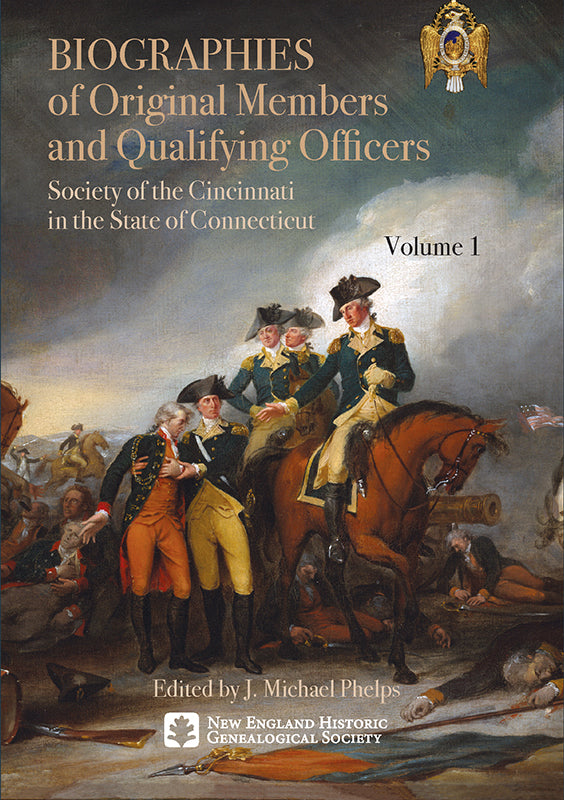
This post corrects that oversight and is motivated by research performed for a recent post (Knowability). We had been reading an editorial in the American Ancestor magazin and also saw an add for a recent book: Biographies of Original Members and Qualifying Officers

This is the intro to the Society at their website. 

The Society of the Cincinnati is the nation’s oldest patriotic organization, founded in 1783 by officers of the Continental Army who served together in the American Revolution. Its mission is to promote knowledge and appreciation of the achievement of American independence and to foster fellowship among its members. Now a nonprofit educational organization devoted to the principles and ideals of its founders, the modern Society maintains its headquarters, library, and museum at Anderson House in Washington, D.C.

The research arm of the Society has a list of the officers who have known descendants: The American Revolution Institute. Gardner Research will be pay ing more attention to the work of this Institute as we would like to identify officers who are not represented. There is a process that allows such work to be documented and verified. Like we have seen with the Daughters of the American Revolusion (D.A.R.) who honors Patriots who supported the Revolution, Patriots with known descendants who have joined D.A.R. are a small percentage of the total. A perusal of one research effort (Mass. Soldiers and Sailors) will give one an idea of the quantity of prospecti having a modern descendant who qualifies and can establish the fact.

The Society of the Cincinnati is for gentlemen. A comparable organization has been established for the ladies: Daughters of the Cincinnati

Remarks: Modified: 08/12/2023

08/12/2023 --


Cols. Joseph Hodgkins, Nathaniel Wade

TL;DR -- After reading of the Society of Cincinnati, it seemed apropos to find a case close to home with respect to finding some to add to the prospectii list. In one case, only the daughter had children some of whom have descendants alive today. The other has male descendants bearing the name. In the first case, there is another organization that may offer memberhip. In the other case, a little more research work is required.   

--

The subject matter of this post deals with close relatives and demonstrates various types of studies that can be done to find interesting stories. We begin with the story of one book that led to a TV series. 

Part of this motivation was the prior post on the Society of the Cincinnati which organization allows one member (male) per each Patriot that is qualified. The qualification, briefly, is being an officer for the Continental Army. There are additional requirements, one of which is having served to three years. At the same time, the daughters have their own organization but allow multiple members for each Patriot. Our interests, in part, deal with the time and conflict, in general, the unfolding of the U.S. from them to now (we're talking 247 years), the movement of families, and historic/genealogical studies and consequence of these research, such as related memberships.  

So, it didn't take long to pull this example which deals with our favorite town, Ipswich MA, after Salem, of course. The post looks at two families who are related, but there are many others involved. 
  • Let's start with the book, 1776, David McCullough, which deals with the times and letters of Col. Joseph Hodgkins (WikiTree) and his wife Sarah Perkins. Hodgkins served under Col. Nathaniel Wade (WikiTree). They were both at Bunker Hill and served for more than three more years. Joseph and Sarah had children, however only one daughter had children who grew to adulthood. She married the son of Col. Wade, and they had children with descendants who are alive now. 
  • Society of the Cincinnati membership claims comes down through the sons. So, that would not be a sustainable claim. On the other hand, female descendants of Joseph and Sarah would be eligible for the Daughters of the Cincinnati should they be able to prove their lineage. Our  hope will be find an extant male descendant of an officer who meets the prospectii requirements. 
  • The blog, Historic Ipswich, provides commentary and a copy of some of the letters. We have had used this blog as a resource several times. Our last post was on the founding of Ohio by a team of veterans from Ipswich. But, the Smithsonian Museum of American History displays a house that was taken from Ipswich
  • Taking this a little further, we can look at the D.A.R. and S.A.R. databases. Col. Joseph Hodgkins is not in the D.A.R. database, but Col. Nathaniel Wade is there with several applications being done by his descendants including through his son, Nathaniel who married Hannah Hodgkins. For the S.A.R. database, Joseph Hodgkins has a record but no applications. S.A.R. has been trying to identify all Patriots. The Col. Nathanial Wade record shows no applicants with the Wade name. 
This is an example of how families were involved in the Revolution. The two Patriots were from the same town and served together. Their children married. There were many cases like this. So the families kept an association through the years. D.A.R. allows supplemental applications after a primary one is verified and one becomes a member. 

One motivation can be membership approval. However, the larger picture related to history is very much tied into the families who were there. That type of research will be better served with the improvements in technology than we had before where paper chasing was the theme. But, the larger problem was figuring out where to find the paper as well has hoping that such might exist and actually be of use. 

Now? One of our interests is technology for reasons that John has dealt with that for decades. STEM is pushing this type of thinking without any regard for other issues. Such as? Take philosophy which was thrown to the background (for reason that can be discussed). See the Knowbility post. It's a beginning. Briefly, one problem is that assumption computing have no basis. Oh sure, these issues can supposedly be overcome through demonstration. But, rationalaity is going to have to be deconstructed and put back on its pedastal. That work has been waiting in the wing for several decades now. 

Remarks: Modified: 08/12/2023

08/12/2023 --


Wednesday, September 15, 2021

Two houses

TL:DR -- A tale of two houses within one family and common timeframe. Too, we get to consider New Hampshire in a way that will be persistently fair and equitable with regard to its larger sibling to the south. One house is maintained by the Society of Cincinnati but built by a ggp of Ann and her kin. 

--

We mentioned doing research with a New Hampshire focus. It is about time, as we started to run into families who went up to NH very early when we first began to research New England. Rev. Bachiler is one example of someone with lots of families associated with him. He appears in this work but is not the focus, yet.  In a few lines from now back to the beginning, we have a collection of twelve generations and are taking a good look at generations eight and nine. The other ones are well covered. 

It is typical in this type of work to run into problem areas. For about a year, we were looking at the frontier issues related to people following the expansion west after the Revolution. In that case, the interior was carved over a century's time, with St. Louis as a focal point. There are issues that could be better handled by the experts (we'll get there - modernize the thinking, a little). With tongue in cheek, we could say that the practice for the real west was done in that pseudo-northwest that is on the wrong side of the Mississippi. 

Also, we have pointed out that the Revolution's brunt had been borne by the fifth generation with the fourth providing some guidance and the sixth hanging on for their dear lives. With the seventh, we started to see the enjoyment of the fruits of the labor of the earlier generations, in part. 

Okay, we are now putting our attention back into New England's milieu. Having mentioned the 400th parties for Massachusetts several times, we will now correct that by bringing in New Hampshire. What about ME and CT and the rest? We'll get there. Right now, we can say that lots of these families were in the Kittery, ME area prior to wandering west. 

There are many ways to go about looking at this topic. For this post, we will consider two houses. Same family. We'll list the one of glory, first; then we can balance with a look at other views. BTW, that latter? Well, with Harry being over here, we can really start to look at the commonality of ourselves and that Mother country. 

Both houses are in Exeter, NH and were built in the early 1700s.  

  • Ladd-Gilman house -- We knew of this house years ago. What got our attention recently was the association with the Society of Cincinnati. The owner of the house at the time of the Revolution was a founding member of this organization. So, we will get back to that theme, too. Right now, let's look at the families. Nathaniel Ladd, Jr. (who is the builder) is in Ann's lineage. Nathaniel had married a Gilman who was a daughter of the Hon. John of note. They, Nathaniel and Catherine, sold the house to the grandfather of the signer in the family (Nicholas Gilman, Jr). The grandfather was the 1st cousin of Catherine. The house is now used as a private museum and for meetings by the Society of Cincinnati which is one of the members of the Hereditary Society Community which is oriented toward preserving history and our knowledge about it. 
  • Gilman Garrison house - This is our balance for several reasons. It is contemporary, somewhat, as the Ladd-Gilman (1721) was built about a decade after this one (1709). However, one can see that the times and styles were somewhat different. Now, the people. Hon John Gilman was the first tenant of this house built by the family for security. A couple of generations later, Brigadier General Peter Gilman was the occupant. He was well-known for his service in the French and Indian Wars. However, come the Revolution, and he was a Loyalist. That subject needs further attention. For now we have this overview: The American Loyalists (1847). If one scrolls up a little in the file (to page 315), there is a list of the Gardner Loyalists, such as Henry and Dr. Sylvester

Remarks: Modified: 10/09/2021

10/09/2021 -- Form with details for National Register of Historical Places. The house is 300 this year; somehow did not see that earlier. Great work, Nathaniel Ladd. 

Friday, April 22, 2022

William S. Barstow

TL;DR -- As we look at how New England grew up and expanded, our focus will always contain families as well as the more abstract notions that are always involved after being conjured up by the brains. That is an universal dynamic. A look at one family and a town with their name brought up some "notables who lived there" lists that led to specific companies and activities. Of course, associations over the years accumulate to an almost endless potential for research. Filters, such as relevance, then kick in. But, for lessons to learn, an "a priori" position is almost never sufficient. 

--

For now, we'll just have some pointers to material that will support further research. Essentially, while looking at the upcoming 250th, with respect to origins (say, the Society of Cincinnati), we got back to New Hampshire. So, we can tie Patriots back to Cape Ann and other sites. Per usual, families are key in their many relationships over the decades and centuries. 

One of the Founders of the Society was a Gilman which is an early family, but later than Cape Ann. However, they are mixed in everywhere. For focus, we can start with Gilmanton which is a NH burg west of Exeter (btw, the researcher is a westerner used to wide-open skies (east is east, and west is west), so directions with respect to the geographic features of New England are to be considered fuzzy). Let's use two books:

The History of Gilmanton - from 1845, this can be read for free at Google. The opening index reads like a who-is-who. Pg 20 has a list of the Proprietors with a little bit of information about each. Some families, such as Cogswell (pg 258 on), Dudley and Eastman, give a little history of their colonial experience. 

Genealogy of the Greely-Greeley Family - from 1905, gives lots of detail in 911 pages. Access to this got us information about General A. W. Greeley whose crew was left in the Artic. He was a descendant of Sarah (Gardner) Balch. The team that later rescued what was left of his crew had one ship captained by a Coffin who Richard Gardner and Sarah Shattuck. This book has more information about how Gilmanton families relate. Again, freely readable. 

Now, taking this further, we mentioned Eastman who founded Eastman Kodak, now known as Kodak. As well, there was an Eastman Chemical company. Eastman's New York connections will be of interest, as well as those in other places in the U.S. and the world. 

For instance, following links are about a company founded by New Englanders who went south to New York. On looking further, there was Essex County involvement, as well. 

Three Mile Island
plant fact sheet
 
Gilbert was an engineering company that got caught up in the Three Mile Island incident but not in a direct fashion with their product. They were a consulting architect. So, this type of situation is worth looking at further, especially since there is a New England association. 

Too, we learn from history; bringing in family information is a new aspect; how all of the types of research that used digital sources pan out is an open issue and will be for a long while. 

---

After Gilbert Associates failed, many employees started new companies using the name. However, this link from a report by Oak Ridge indicates the work of the former company: Feasibility of an unattended nuclear power plant. The image is from a Fact Sheet that mentions Gilbert Associates with respect to Three Mile Island.  

---

A few more links give a brief overview of the transitions of the Company. The technology connection is interesting along with the New England originators of some involved parties. However, these links are to show the inception of the last name. 

  • 1934 (NYTimes) - Barstow changes name to E. M. Gilbert Engineering Corporation. This was the manager who came in after Barstow. 
  • 1936 (Department of Labor lawsuit) - Shows both names.  
  • 1942 (Federal Register, NYTimes) - Now Gilbert Associates; notice of lawsuit (July); then, action dropped(August) due to actions by parties concerned. 

Example of several things related to technology, complexity, information and more. Views of history and family interleave. 

Remarks: Modified: 04/23/2022

04/22/2022 -- On two of the links, the paper might have seen our query as resurrecting a page that was to go stale. Or, on closer look, there may be a subscriber step involved.  So, added a reference from Oak Ridge National Laboratory with references to Gilbert Associates as well as pointed to a Fact Sheet about the facility. 

04/23/2022 -- Added notes about the Company's transitions. Next, we'll look for some specifics of the New England ties as well as notice of the GA designs for components for nuclear plants. It would be interesting to see all of the offshoots from this one business. 

Sunday, December 25, 2022

New Hampshire

TL;DR -- ME has been in sight since the beginning. NH only has had passing reference as we studied Cape Ann in relation to 400 years. They have 2023 for their commemoration, as does Gloucester. We look at a few of the posts over the years that mentioned our scope. In our future research, we will balance the view across the local territory and further, in this context: the long reach of New England.  

--

We have had a 400th focus for a while as we watched other celebrations (Plymouth - 2020, Weymouth - 2022). Gloucester comes up in a few days. Our start was with a focus on Cape Ann and Essex County

Then we extended our view to MA and New England. Incidentally, ME was involved due to its association with MA. After looking at the long reach of New England in the interior and the west of the U.S. and around the world, we now have a U.S. focus through the 400 years where we consider details through time of the other colonies (like New Spain) as well as the events related to populating the interior (Frontier century).  

Recently, while looking at the Northwest (as seen in the time of the Revolution), we saw Rhode Island being represented out west, in the form of a Governor of the Territory of Michigan. Having looked at the family involved and tying things back to Massachusetts, we thought to fill in the gap by looking at a family that had long been in RI (see H.P. Lovecraft). We had mentioned that we needed to bring in the surrounding States, such as CT (a little later), NH (which we had already touched upon), ME (which we have covered many times) and VT (already noted in looking at western movement). We will get these posts better categorized and related as we work the 400s going forward. RI and CT do not come up on the 400th list yet, that we know of. We should have looked north, again. 

Today, we saw (on FB) that the northern neighbor whom we associate with Rev. Bachiler is on the 2023 list. That was good to find out. We will spend more time researching the Rev. and his cohorts, but he was mentioned recently in this post (see Two Houses) which was motivated by research on New Hampshire families where it was noted the Gilman family was of interest with regard to the Revolution (both sides, plus the Society of Cincinnati). Nathaniel Ladd was one of the builders. We also had looked at the Dudley family who hung out there. 

Rev. Hubbard, friend of the family, weighed in on the controversy of when did NH start. John B. Sanborn (several posts) was born in NH. Sam Webber, Head of Harvard, was born in Essex Co, MA, but his family moved up north. Lots of Ann's folks did the same. 

Hence, in a few days, we'll have another commemoration to add to the list. As well, we need to find a time line for NH similar to the one for MA. 


This was a great reminder as it expands the scope at a good time, that is, when Essex County starts its long-awaited commemorations. 

Remarks: Modified: 12/25/2022

12/25/2022 --


Tuesday, March 29, 2022

Who's on first?

 TL;DR -- So, 1st governor? That has been mentioned. Today, we find another view brought into the mix after a decade of research. We really appreciate this addition. 

--

We have several themes involved with the work of Gardner Research. One of these motivates the post. But, let's look at another one first. It has to do with the families at Cape Ann some of whom moved over to the area that became Salem. Some went back, such as John Tilley who was featured in a recent NEHGR article. A little later, of the first class at Harvard, the majority went back. Some not to return such as George Downing. With regard to Harvard, we had people coming over just to attend. 

Our interest is to find the Cape Ann families and their modern offspring. Say, like this view of the signers of one of the documents related to the Revolution (see Different Scopes). To that we would add some material about Loyalists. In one of these posts (see Two Houses), we match up the two sides, one of which was a Founder of the Society of Cincinnati.   

Okay, let's go to the other theme after listing a few posts that we have had related to Cape Ann. 

Now, the new theme? 1st Governor. Of what? Well, the role would apply to New England, of the north, principally that which got Massachusetts going. And, it dealt with families here. In fact, with regard to  Cape Ann, Gardner was thrown into the mix in a discussion amongst members of the extended collection of Winthrops, Bradfords, Endicotts, and others, such as Cabot, Conant, and Crowninshield. There is no order implied in this listing. 

With respect to research, this would involve George's offspring (early son) though the writer of their book was an offspring of Samuel. To date, we have covered a lot of material in the past decade with a stack of research still to do. 

Including, and relates to the new theme, the Dorchester CompanyFrances Rose-Troup left the results of her research. There has been some since that time. The issue of Thomas and Margaret has been settled. And, we have 400 years of data to look at. So too, supporting SAR/DAR's 250th, we have the 5th generations's revolution to look at, say, Cape Ann to Patriot. Then, we have the 200th which is of the frontier and the huge interior that was carved to pieces; the 100th would look at the continual influx of newbies plus events such as the Spanish flu

So, the theme of today? We earlier had commented at a post of the Streets of Salem blog dealing with Gloucester (Enduring Gloucester) and what went down there, and when. Per usual, our focus was on what happened here. That is due to an adage saw earlier that said that Yanks ought to deal with the stuff over here (say, yeah, Massachusetts records) and the Brits would take care of their side. As well, for a long while, the people here self-governed. We'll get more in that, with the occasional meddling of a Governor sent over say, the bickering families of Nantucket (see John's visit to New York), taxes (see John Wise's jailing), and more (blogs for all of these).  

This year, there was mention of the 'real' first governor, as in being appointed over there. The commenter (David Cuckson had written a book on the subject). He mentioned Sir Walter Erle (WikipediaWikiTree) as having the role as appointed by Rev. John White, himself, about whom we have had several posts, since one sister married a Thomas Gardner and another married into a family that came over here. 

We appreciate now getting another view established that was not given proper attention.  

Remarks: Modified: 03/25/2022

03/24/2022 --

Wednesday, April 2, 2025

Bosworth through the eyes of technology

TL;DR -- Bosworth? Know about it? This is where the Tudors came to be as the Plantagenets were cut out of the game (of Thrones). Well, only the male lineage. The female portions always live on. Recent abilities allow new insights into the 22 Aug 1485 event which is a mere 125 years from the colonial start (fuzzy numbers suffice). Abilities? GenAI as a mathematical marvel? Finally, we have a chance to look at the capability with the intent to tone down the hype that is missing the point of it all. 

---

This post has two purposes. One deals with the latest rage of technology that is commonly known as AI (we will use GenAI). We have argued that the current phenomenal abilities of GenAI are not due to some critter which is "sentient" but that they represent long years of mathematical work culminating in a mode that is suitable to exercise by the circuitry and software of computing. As such, this post will provide the start of a necessary bit of discussion. The second purpose is to point to recent work that uses GenAI and that represents an opportunity to look at the good, the bad, and the ugly. 

Let's start with the announcement of genealogical/historical research results. We link to two posts (05/10/2025 - missing URLs removed - search at King Slayer's Court). 
  • 1 - Updated Press Release: A 540-Year Conspiracy Unveiled – The Lost Ledgers of Bosworth Rewrite History (Bedtime story; Lost Ledgers; Untold story) 
  • 2 - Untold Story: The Death of Richard the III (pdf), By Sir Wyllyam Gardynyr  
The first post looks at decades of research that started from hearing family stories. The topic deals with the Battle of Bosworth where King Richard III was killed. As a reminder, research determined the spot where his remains were placed after the Battle. In 2012, after much research with respect to location, they dug through the surface of a parking lot and found the body. Subsequent analysis indicated that the remains were of the King. 

Too, his skull had been fractured. The tales of the family involved the details of how a member (yoeman - commoner) struck the blow. That has been scoffed at over the centuries and over the decades that David T. Gardner did his queries. 

The second post takes informaton provided by GenAI based upon sources that finally were digitized and pulls them into a narrative as if written by Wyllyam Gardynyr. As we do our analysis, we will help sort the various attempts at presentation into a scheme where veracity is measured and reported. That is, as with most things, we see the tip of the iceberg. That itself will become clear with GenAI as we proceed in a mature manner. 

We first heard from David in 2014 as a comment to our post, Historical Genealogy. That post was from November of 2010 when we had first started doing research. David's comment was in 2014. We noticed and responded in 2016. At that time, we started to correspond and did this post: King Slayer's Court. We started to look at David's work and published a few of his articles. Per usual, he was bumping up against official opinions. Through digging, he kept finding information pointed to his family's tales being right. 

So, let's switch to technology. We have had lots of posts on GenAI. There many of examples of GenAI that are available. Opinions about this phenomenon of the past two years (first released to public use in November of 2022) vary with sides drawn. It has good and bad properties. On the good side, it resonates with people but is thought to lead them astray. But, the best part is that the underlying mathematics is worthy of our attention as it represents what can be done. 

Needless to say, these open issues will continue to be on the radar for several reasons that we have tried to address. But, getting back to David's work, he had made progress hearing from groups like the Richard III Society and from experts dealing with the history of Westminster. But, recently, a GenAI was tried which had digitized sources from the time period and location. 

On honing in via queries (some say, prompts), David pulled out documents that confirmed what he had been looking for. Ostensibly, we will add and explain below. 

In the meantime, David has written several articles that will be released over the few days and weeks. These deal in detail with Bosworth, but there is additional detail that deals with the Gardner family and the unknown dynamics of this Battle that was the last one of the War of the Roses. So, this is significant both for the history of England as well as for the opportunity to look closely at GenAI from a perspective that is serious. 

Genealogy is not an easy study in terms of trying to prove lineage of a person. The U.S.A. will see the 250th this year of activities related to its start. This month, in fact, was when the Battles of Lexington and Concord happened in Massachusetts between English troops and the supposed rabble rousers of the colonials. We have had many posts on that theme: Two houses, for example, looks at one family and their activity from the start (400 year vew) and during the revolution. One house is associated with the Society of Cincinnati whose members are males with direct descendany from a Revolutionary War Officer. There are many such organizations, such as the Daughters of the American Revolution

But, the Bosworth event was in the late 1400s which is three to four generations before the colonial effort took place. From a technology sense, this opportunity (for me) is priceless. For one, it shows technology allowing better document handling; then, there is the indexing and search facility that allows documents to be matched up; too, the prose generation abilities are nice. But, that brings up one huge focus which will be to scrutinize all of this and determine where things might have gone awry which puts an onus on creativity as this is an open field of study.  

Definitely, mathematics will be lifted to scrutiny in a manner not available before. How that will work is manifold in scope but overdue for attention. 

Let's use this post as a starting point: 22 Aug 1485. We'll end this post with an image (missing image from Chronical of England site run by Royal Central). 

Note: This activity on the part of our organization pertains to truth engineering

Remarks: Modified: 01/03/2026

04/04/2025 -- Press release disappeared; put in other links. 

05/10/2025 -- URLs disappeared at King Slayer's Court. Removed pointers. 

05/11/2025 -- New work starting; created a Bosworth label. 

05/27/2025 -- David T Gardner discovered that GenAI/LLM led him astray. We will let him tell the tale. Essentially, David's work over the decades has resulted in several documents that suggest more work needs to be done. But, the notions related to his theme of Gardynyr killing Richard III have some merit. That work will continue. The confabulations from technology are another matter that have our interest. 

10/29/2025 - Missing image (pointer for site not there; site gone) removed. 

01/03/2026 -- We will be updating the status of this work. For now, here are some posts: Welsh poems; Sir Christopher Gardiner; King Slayer's Court I; ... A new science?; ..., 


Sunday, February 1, 2026

Gateway Ancestors, redux

 TL;DR -- Hereditary societies co-mingle regularly. Technology comes in and complicates matters. We cope with whatever in this sense, but there are ways to ease the burden. We look at the update of the HSC website and its list of gateway ancestors. 

---

We have had a lot of posts dealing with things going back to former times as this search on "Hereditary Society" shows. Our first one was in 2013 (Hereditary  Society communities) when we had come back from attending meetings for the third year. 

There are two things to look at today. The HSC has a new website and an updated page for Gateway Ancestors. As we might expect with continuing research, their list has been and will be kept up to date. People are added; sometimes, they take a name off the list. 

Also, Heritage is nothing new to the U.S. or the colonies from which it sprang. A list of the organizations under the HSC includes one from 1637: Ancient and Honorable Artillery Company of Massachusetts (A&HAC). It's the oldest chartered military organization in the U.S. Last year we had a post on this organization.  

AHAC in London with
English Peers

1896
The A&HAC was founded in England in 1537 (during the time of the long bow) by a royal charter from Henry VIII under the name of Honourable Artillery Company (HAC). "It's the oldest regiment in the British  Army." And, it "can trace its history back as far as 1087." Many colonists were members before coming over and sought to preserve the heritage. 

An associated organization is the Order of Descendants of the AHAC which is open to males who have a genealogical lineage back to one of the original members of the AHAC. The group for women is National Society Woment Descendants of A&HAC. This is the list of the "eligible ancestors" from the colonial times. 

There are other organizations related to the start of the U.S. that we will get back to in the near future, such as D.A.R and S.A.R. The 250th of the Revolution has been in the news for a year. Come 2033, we will be looking for the start of peace which was broken by the 1812 event but eventually the two sides of the English heritage settled their differences.

Now, to the second item, way back in 2010 (in our third month of blogging for TGS), we had this post: RD example, using gateway. This is an old post and needs some update, but looking at the HSC's updates brought this to mind. The post mentions the Brookfield Ancestry Project which deals with the Magna Carta legacy. We liked this site. However, nowadays, one finds that on WikiTree, the Maga Carta Barons have been getting attention. The project has been proving "gateways" who formerly were identified by independent research and publication. Some of these books became out of date; many might be in need of some moderization. 

But, we can compare these two efforts, as in Brookfield and Wikitree side-by-side. We know of some newer names on the gateway list that come from recent findings. On the removals, there is no place to go to find out the final story. Right now, the HSC can be considered up to date. On the other hand, the in and out of the situation is situational. A publication on the Plantagenets, for instance, will have many who have a wide-range of ancestors. However, those who do not have as much right to look for confirmation via publication. 

With technology changing and the emergence of AI/ML (or GenAI/LLM), it will be interesting to see how things like provenance play out in terms of necessary source references. We are neutral on that at the moment and conform to the organization's wishes. 

But, we also did our "portal to truth" with respect to tackling now only the gateways, but heritages on this side of the waters. I got shot down for suggesting a national database. D.A.R. provides one with respect to their membership. And, they do have a "Passenger to Patriot" project (Mayflower). We started one titled "Cape Ann to Patriot" to go back further. 

---

As an aside, we looked at the Society of Cincinnati which is U.S. based and founded right after the Revolutionary War ended. We have had several posts on different subject. For instance, two of the houses of the organization are associated with Ann's family. 

Remarks: Modified: 02/01/2026

02/01/2026 -- 

Saturday, April 30, 2022

Daughters of the American Revolution (D.A.R.)

TL;DR -- We have been touting the series of celebrations that arise through time where we are at an unique state of such. That is, the U.S. start is coming up on 250 years. Then, we have the ongoing 400th anniversaries being recognized. The 300th is too raw, as of yet, but we'll get there. Then, we have the 200th of the Jefferson deal, followed by the 100th of those who were less than a handful of generations back. For each, we can have a focus. This post is about the 250th celebrations. 

--

Our look at the U.S. is from the viewpoint of 400 years of family history, where family encompasses literally 1000s of families. Some of these are involved with Harvard, which, thankfully, has been there from the beginning. 

Then, there is the 250th coming up that celebrates the split with the old King's realm. This is where D.A.R. comes in. As does, too, we might add, the view of S.A.R. (Sons). Then, there is C.A.R. (Children). These organizations are merely 125 years old, at most which means that they were not brought to be until 125  years after the start of the Revolution. 

Now, we have had several posts on these groups (search on DAR; we also use D.A.R.). One important one looks at several early loci with respect to Patriots, say Cape Ann to Patriot. This would be a subset of DAR's membership, since many Patriots were recent arrivals in the early to mid 1700s. 

We, at the TGS, Inc., like to add in that we are interested in Loyalists, as well. And, we need to keep a broader focus with concerns about New Spain, New France, and other attempts. 

Now, back to DAR. We were motivated to do this post due to a query about DAR being right-winged which seems to have gotten a lot of press. Gosh, it's non-political for the most part, as an organization. That is, one might say that it's of both wings. There will be members of various persuasions, however they get along as we would expect of a collection of mature Americans. Now, given the question, a quick search brought up several articles and books. 

This is a brief list meant to be illustrative of the discussion. The coverage by time is deliberate.

  • Case for and against DAR (1953) ... we start with what might be called a look at the "old" DAR. 
  • DAR-lings of NY (2003) ... some notion of the current state of multiversity. DAR has extended the definition of what is a Patriot. Rather than just boom-boom people, many types of support are recognized including the old folks who kept the administrative things going in the time of the turmoil (see note about Loyalists below). 
  • Who's a DAR? Answer grows more diverse. (2021) ... even more modern view.  
Before going on, look at this view of the same family with a Patriot and Loyalist mentioned. The former? One of the founders of the Society of Cincinnati. The latter? A decorated general of the earlier conflict, namely the French-Indian affair where the Crown trained the American officer corps (see Regimental History Series) very well, indeed. In this case, the former worked with Washington. The latter lived in peace unlike the reality of many loyalists who were abused. 

Now, the gist: DAR at Encyclopedia[dot]com. This quote got our attention. 
  • The constitution of the DAR mentioned three main objectives of the society: (1) to perpetuate the memory and spirit of the men and women who achieved American Independence; (2) to promote institutions of learning so that the young and old can develop the largest capacity for performing the duties of American Citizens; and (3) to cherish, maintain, and extend the institutions of American freedom and to foster true patriotism and love of country.
We'll leave it at that, for now. As, there are plenty of references to Winthrop's "city on a hill" concept, by allusion for the most part. Too, that the beacon (we chose Gardner's Beacon as the label for our newsletter) beckons and that many follow the call, pertains to much more than the dream of coming to the U.S. and exploiting the situation to screw people for the purposes of richness, fame, power, or what have you. 

You know, one approach to obtaining citizenship is to serve in the military. The reality is that only about 7% of the population does that. In WWII, Harvard had a huge percentage of its students enlist. At the same time, Hollywood actually tried to be part of the action (rather than the fantasy).  

Yes, Harvard (our History of Harvard) seems to have divorced itself from the country of its beginnings, but they do have a responsibility which accrued to the early start. That is something to put on the table for discussion. 

Remarks: Modified: 04/30/2022

04/30/2022 --

Tuesday, December 19, 2023

New Frontier, 21st Century type

TL;DR -- Technology is one of our themes. History and genealogy are a couple of others. General interests in the 400ths and the 250ths are others. Like, Gloucester MA did its 400th this year. There will be others over the next few decades. And, the Boston mayhem on a ship is now 250th.  

--

We were toying with various avenues of research which are endless in the modern age of the "cloud" despite its shortcomings which are many. For instance, in the western movement, we have looked in the vast interior and along the coasts. CA was a theme last year: LA and SF. We have looked at the middle of the country several times, in terms of the frontier and its settlement. In every case, we try to tie back to New England. As well, we are building a timeline by people and events that emphasizes individuals who are not in historical accounts and their families. That type of work will continue. 

So, today, let's take Minnesota (MN) and Kansas (KS). Both are west of the Mississippi River. MN is north of St. Louis which is, for us, the focal point of the dividing of the land. KS is about the same level. The northern realm has a different dynamic which we have started to study, through the Michigan Territory. KS was on the way west. For instance, the trails run through the State. Lewis & Clark (1804) came up the Missouri River on their way west. 

Cottage,
Round house,
Frontier in the making 
But, we are looking much later, after the Civil War. The image shows three things: a cottage in MN; a round house in KS; news of a new frontier. 

In MN, the town of White Bear Lake is named after its lake. We have run into MN several times in our research and skirted around details. But, for today, let's look at a famous cottage (ca 1868). It was built for Charles Phelps Noyes. His wife was Emily Hoffman Gilman. They're kin of lots of New England families that we are studying. That is the right time frame for some reflection on the Revolution (which was the 5th generation's deal) and on current themes. One thing to note is that Mark Twain liked the area so it got some press. 

Aside: recent post on Little Exeter NH (where two esteems of technology - and AI - went to school. The Society of Cincinnati has a house of repute in the area. 

In KS (and elsewhere), as technology, which is our focus, improved, the railroad replaced earlier modes of transportation. Several lines ran through KS from both directions. But, the photo is in the extreme southeast corner, in the little town of Cherokee. There were strip mines for coal in the area. What did these old iron horses run on? The photo is of a round house (ca 1888) which served several purposed. For one thing, one had to change from north to south, etc. Go to San Francisco and see these in action as the rail cars get switched to return. So, we'll have lots more about that area of the country that became the flyover country, later. We have shown, and will continue to do so, that the history of the country runs through the middle. 

Now history and genealogy? We are talking about an organization whose membership included John Quincy Adams. We had an earlier post about his cousin, Grizzly Adams, and a few others. They are offering a webinar on Using AI in  Family History Research

What they meant to say is that they are going to show technology that can be put to use. We are going to use AIn't to keep the discussion going that this state of affairs does not offer sentience nor intelligence in the important sense. It is very easy for the imagination to run wild with respect to these things; that is a human trait that we can value. 

But, as the NEHGS (their real initial) adds, in this: 

She will also address aspects of AI that genealogists should be cautious of, such as accuracy and copyright concerns. Join us as we explore this exciting new technological frontier!  

Okay, we'll take that. But, let's go further. The tricks are being done in a manner that we can understand as it's applied mathematics. People have been lazy and have let things get too loose. We will not use "fuzzy" as that is a legitimate logic and algebra. We will touch on that more. 

In the meantime, our thrust over the past decade is to fill in the 400 years of all sides (New Spain, New France, New Sweden, ..., Native Americans, ..., New England). Plus, the 250th of the U.S. is coming up. What happened recently? The 250 of the Boston Tea Party. Nope, it wasn't with china and crumpets. 

No, we're talking illegalities. Dumping someone else's product in the water. BTW, Samuel Adams, cousin of John whose son is mentioned above, was a participant. You know, later, we had John Brown. Guess where he was? KS. Also, who were his supporters? New England. So, we have a post on that as the Secret Six had to hide out when the Uncle Sam found out that the rebel was being kept by a few brave souls, one might say. 

So, yes, we will do history. But, too, we will continue our support for discussing and using STEM plus. What is the plus? Kant, for one. If you don't know him, you'll hear from us. Stay tuned. 

Aside, again, some think that the revolution was done by rabble rousers. Well, not. If we look, the King trained the men who took him on via their support of his French Indian affair. That was the 4th generation who supplied the leadership for the most part. But, the 5th bore the brunt. 

Remarks: Modified: 12/20/2023

12/20/2023 -- Ramsey County History - Fall 1997 - The Women's Institute and How It revived Downtown St. Paul - 'A Beautiful, High-Minded Woman' Emily Gilman Noyes and Woman Suffrage. She was a daughter of Charles P. and Emily H. Noyes.