Showing posts sorted by relevance for query san francisco. Sort by date Show all posts

Sunday, May 21, 2023

Left coast, by water and land

TL;DR -- From and to New England, there was regular traffic from the beginning. Land movement started early too with the lure of the west. San Francisco has been related to many posts that we have had, with travelers arriving there by land or by water. We recently looked in detail about the changes after the earth quake of 1906. Too, we have been researching the early periods. This post provides links to further information and to images created over the timeframe. In one case, we find a close New England relative there early (1831), by water. Too, we have more information on involvement with the Gold Rush. 

--

Technology, especially that related to or supported by computing, allows new ways of looking at things, one of which is an emphasis on numbers as seen in the emphasis on measurement, for one. So, take the cloud (internet), ever notice how every possible metrical view is offered? A new field, called data science, likes to facilitate this approach to viewing the world around oneself.

In our context, probably of all cities in the U.S., San Francisco would show up as having the most hits. We will do a search sometime. But, that "city by the bay" (from a song, know it?) figures for several reasons. Wanderers from the east, including Canada, were out there before New Spain, one might argue. We do not know the real early Europeans on that scene, but they got there two ways. One was by water. The other was by land. Some might have come up from the south which we pay attention to. 

But, our initial take on the matter was those who got to the left coast from New England. At some point, we will collect these names, but here are three: Jedediah Strong Smith (Jul 2018), F.M. Thompson (Jun 2017), and Grizzly Adams (Nov 2020). The month/year is for the post on that subject. F.M.Thompson was first in our studies as he wrote of his travels in The Massachusetts Magazine. Then, we got to Jedediah when we started to look at the vast interior of the country. Finally, the post on Grizzly was of the Covid time which will be an upcoming theme as we approach the U.S. holiday of Memorial Day (29 May 2023). 

We spent more time looking at San Francisco in reference to the Barque (Bostonian) that wrecked off the coast of Oregon, in 1850. There are many stories pending on that theme which we will get to, at some point. In the meantime, let's continue with the best of the west. 

The following links are to material dealing with San Francisco before the Gold Rush. As well, we wanted to find photos from the period before the quake of 1906.

  • San Francisco History - Index - The timeline at this site from the Museum of the City of San Francisco covers it all with five major themes. They start with the Gold Rush. The first category is from then to the Civil War. With respect to the three gents mentioned above, we have three periods: Jedediah was there in the 1820s/30s when it was New Spain territory; F.M. was there for a few months during the early stages of the Civil War; Grizzly showed up after the Civil War.  
    • San Francisco - Before the Gold Rush - This section has lots more information about the early years. It reports that William Heath Davis (WikiTree) visited in 1831 having come by a ship that was from Boston. William, born in Honolulu, was a descendant of Thomas Gardner of Roxbury. William's presence offers a chance to consider comparisons with Jedediah's experience. By water and by land, each has their purpose and perils. Jedediah died in mid-country on his way back to St. Louis. William lived to see the 1900s. 
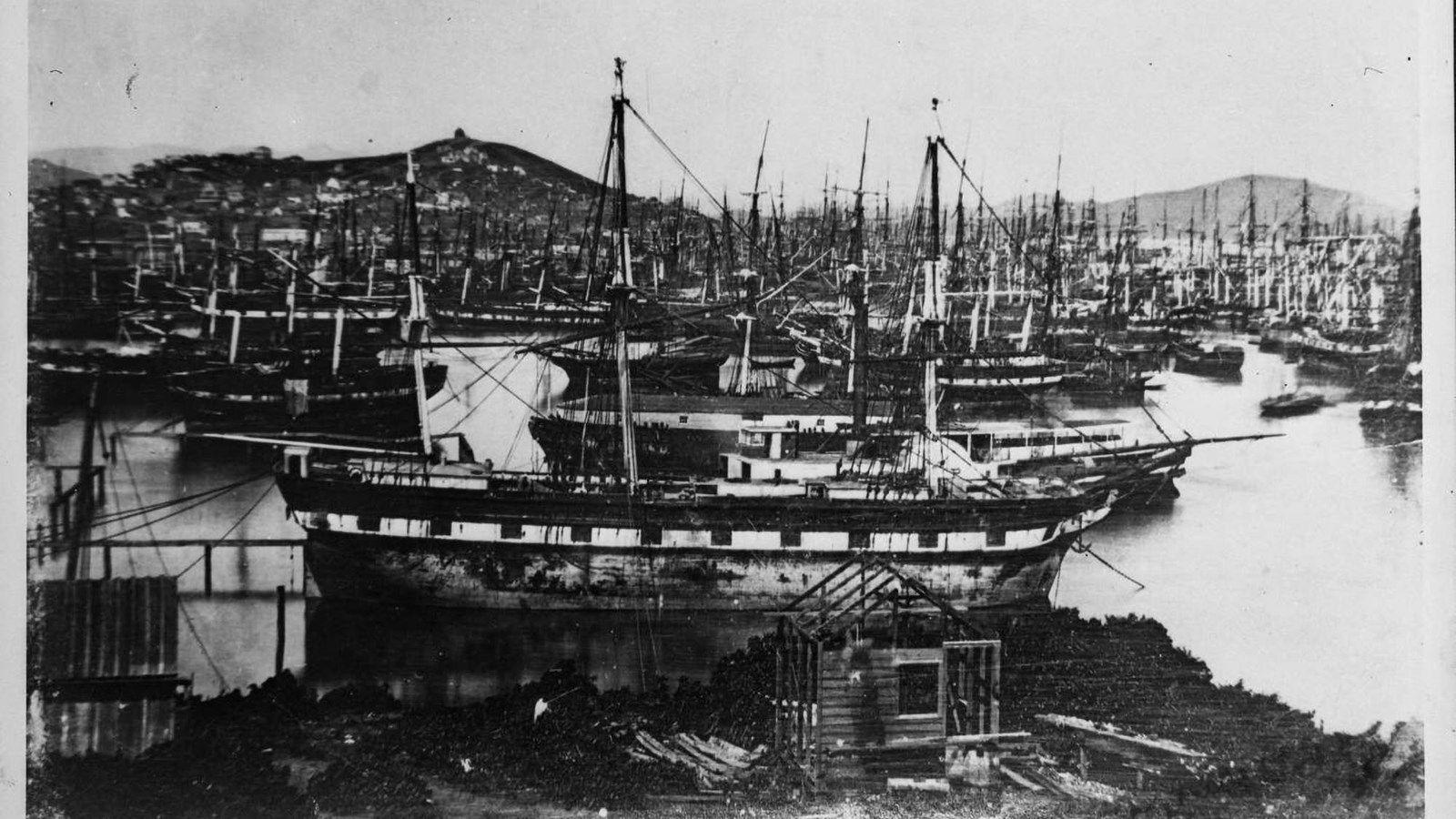
  • Images - early San Francisco - Below, we show an image from the National Park Service of ships in the marina. Many were abandoned as crews went after their fortune. We will look at some of these tales, including ones known about personally. 
  • Images from businessinsider.com - This site offers images from over the years, including early paintings of the area. 
There is not a shortage of photographs to review. However, it was reported that San Francisco had many ships that had been left and were taken apart. That's a story to look at. 

Gold Rush changed San Francisco

In our normal fashion, we will identify links to New England as we expand upon this theme. 

Remarks: Modified: 05/29/2023

05/29/2023 -- Jedediah met his fate along the Cimarron River in KS in the same year (1831) that young William arrived in S.F. from Hawaii.


Wednesday, April 19, 2023

San Francisco

TL;DR -- San Francisco stands as an icon in the American psyche for several reasons. There was sufficient traffic from the east to the area to warrant regular routes which started as mere trails. The railroads closed up the gap as they offered the speedy delivery not attainable by the sea routes. Whereas, in 1859, Horace Greeley's route to the city was by stage coach after Kansas City, MO. But, in 1906, San Francisco had a quake. We will have that as a regular theme (reach of New England). 

---

San Francisco has been mentioned many times in our posts, as it is a well-known destination by land and by water on the west coast of the U.S. And, it is old. Somewhat. Yesterday, we mentioned Horace Greeley's one-way trip out in 1859. He returned by sea. And, he sent dispatches back to his publishing company that were collected into a book which is currently available on-line. 

In our post, we mentioned Gen. A.W. Greeley who is a cousin of Horace's. Too, we brought up the link twixt two Thomas Gardner descendants with the Artic rescue of Greeley by team that included Capt. George William Coffin, a graduate of the Naval Academy. Turns out that the General is also a Coffin cousin of the Captain through his grandfather, Stephen Greeley (aft 1769-1830) of Essex County who was a descendant of Tristram Coffin, Sr. of Nantucket. There are many other New England families in the pedigree of the General. 

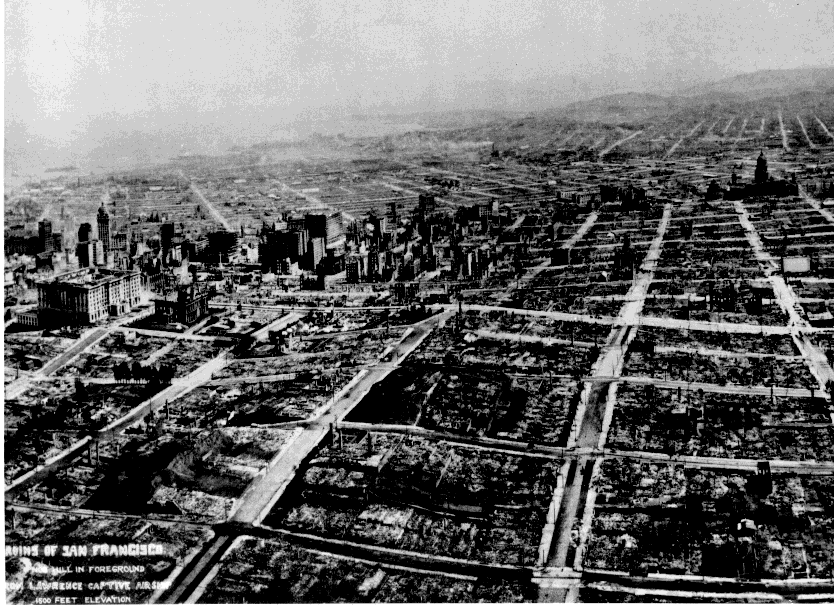
The General features briefly in this post's look at San Francisco (SF). On April 18, 1906, there was a devastating earthquake in the city that destroyed a large percentage and resulted in several thousand deaths. The U.S. Army was local and available to assist in relief efforts. 

This photo was of several taken from kites looking over Knob Hill. 

From USGS, photo
of San Francisco after the
1906 quake

There are many sites with photos and reports which we will look at from time to time. This photo tells many tales of the destruction near the area of Post and Grant which is near to Union Square. 

1906 damage near
Post and Grant

We will put that on our calendar to remember. Earlier, we learned more about the Salem, MA fire of 1914. The old city of SF was mainly of wooden structures that were leveled. But, brick building burned, as well. Fortunately, the Presidio of San Francisco was not damaged and was able to support the population. Gen. A.W. Greeley was involved in the relief effort and reported that they were feeding 250,000 per day. A tent city was put up at the Presidio and another area close to Golden Gate Park. 

On a personal note, John remembers descending by car in April of 1962 from a dreary ride across frozen northern U.S. and through Donner's Pass which was a tunnel of snow into the green valleys of interior CA and then onto the Presidio. That would have been the new city which cropped up as people recovered from the quake. 

With respect to the Presidio, we had an earlier post on Jonathan Letterman, MD who was there later in his career. We mentioned the Dr. in relation to his work with battlefield medicine. The effort to clean up after the battles of Antietam and Gettysburg included handling the injured from both sides of the conflict. The Army Hospital in the Presidio was named after Dr. Letterman. 

There are many stories about New England's reach to San Francisco that we will look at in the future. But, the early years before and after the Gold Rush will continue to be a topic, as well. 1906 is a good demarcation point for splitting the old and the new. 

Remarks: Modified: 05/14/2023

04/29/2023 -- The Fairmont Hotel is visible in the first picture. It has an interesting history, being constructed at the time of the quake. It passed the test. They fixed it up and finished the work. ... We, of course, will pay more attention to the history of the Golden State. 

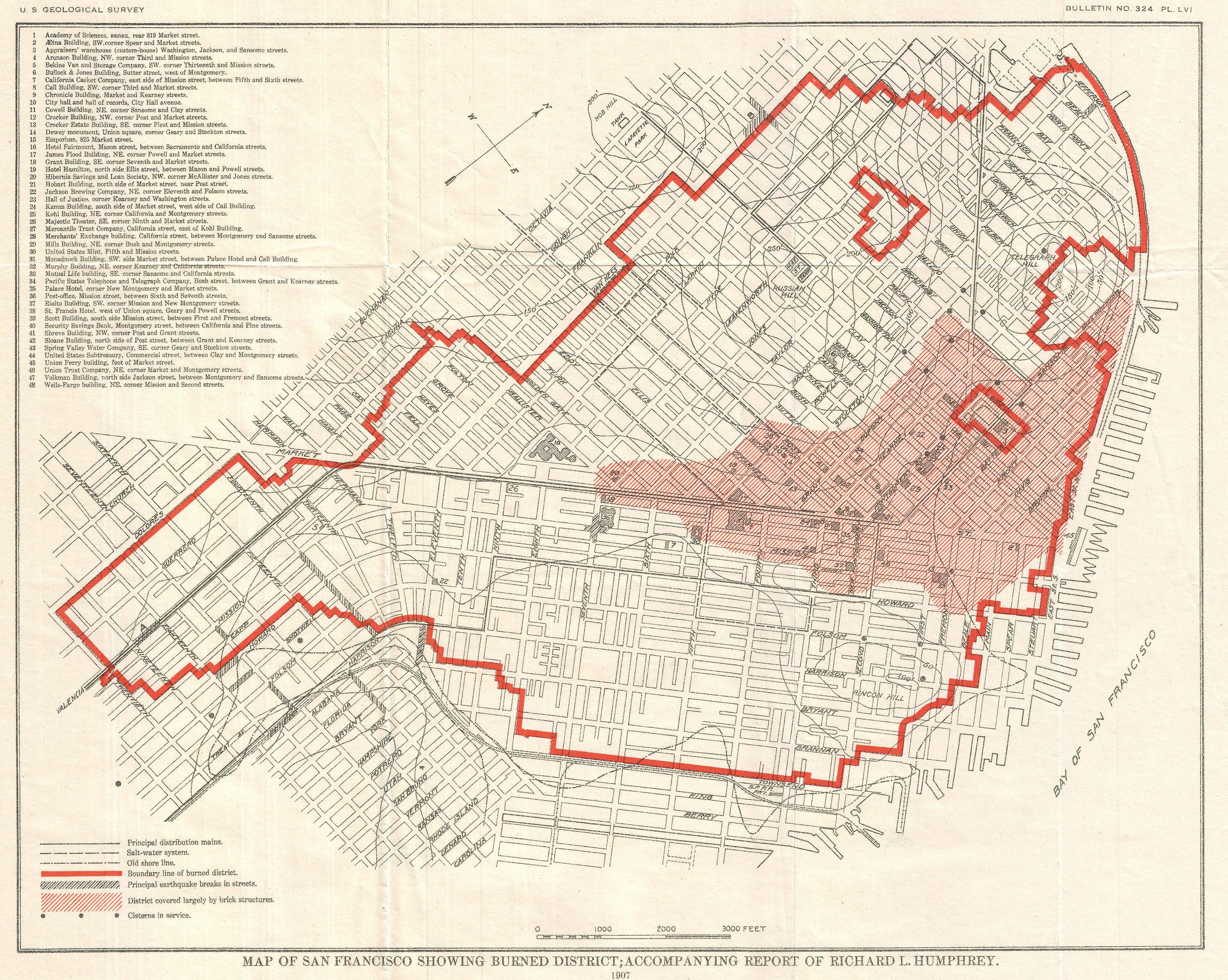
04/30/2023 -- The Geological Survey has a nice map with a legend of the extent of the fire. The legend shows the area of the Fairmont Hotel and the Flood Mansion, both of which still exist.  

05/14/2023 -- Added link to the fire area outline. 


Tuesday, February 20, 2024

Alta California

TL;DR -- As our initial focus was New England, New France came into focus early. But, after the start of the U.S. and the beginnings of the movement to the west, New Spain became the theme of research. Our early looks at this were about Los Angeles and San Francisco around the start of the 20th century.  As we step back in time, Portola's efforts come into view with interesting history to consider. We can start by considering the 1776 beginning of the Mission San Francisco de Asis. 
 
---

We had mentioned Spain in earlier posts while discussing the times before the Cape Ann expedition. Several countries were fishing along the eastern seaboard. It was being more efficient in providing products from the yearly fishing efforts that precipiated the colony focus. 

Our first reference to New Spain was with our look at Jedediah Strong Smith's journey from the east coast through St. Louis, in the 1820s, out to the west coast. Our post on Jedediah covered his wanderings which are of note. Hence, he has been mentioned many times. With respect to Spain, Jedediah went south and west through the Mojave Desert, in summer. His appearance in the LA area was a surprise. Luckily, Jedediah was able to talk his way to freedom and continued up north and then back toward the east. He met his demise in the wesern area of Kansas. 

In the time of the pandemic and its isolation, we spent a lot of time researching the middle of the country. Okay. That was part of the Louisiana Purchase. Both France and Spain had been involved in the exploration of the area. We had looked at New France first, as it was the other side of the conflict before the Revolutionary War. Many use the French-Indian Affair. The friction was between France and its Native Indian allies and England via New England; as well, there was conflict in Europe and at sea.  

As we start to look at folks who had ventured all the way to the west coast, we realized that we needed to look at New Spain more closely. For instance, Coronado was close to where I am in 1541. In Texas and in the southwest, New Spain was the principal colonizer. California sites have been given lots of attention in the blog of late. There are several reasons for this. We're looking at the long reach of New England. And, John went to school and worked in both Los Angeles and San Francisco. 

Of late, he has been look at Bunker Hill West which is part of the downtown LA area where we can see changes over several periods, such as the early arrival, the mansion period, commercial focus, and the modern status of high-rise island in a sea of sprawl. The web is offering lots of incentive to research by allowing systematic publication of photos across time. As well, the social media spaces (such as Facebook) are providing means for like minds to compare findings. 

We will continue with the themes of California as it allowed the start of the series and will expand into all of the regions where New England families settled over the past 250 years. Part of this effort is looking at the rivers and waterways that supported the development of areas. 

Now, today's theme ventures back up north. Last year, we did several posts on San Francisco, some of which dealt with the impact of the major quake from the early 1900s. We actually looked at the region in our early days due to tracking the history of a barque Bostonian that had been built and used by a Gardiner for whom a town is named in Oregon. We learned a lot from that exercise which generated more questions than answers. 

Along that line, the Bostonian was in San Franciso at least two times. But, that brought up other visitors to the area, such as Judge Thompson who helped establish Montana as a State. He was there around the time of the Civil War. Later, we see the railroad coming into play with faster and more reliable transportation across the wide expanse of the country. 

But, let's step back, again. As we can look at the establishment of the San Francisco region by New Spain. Facebook has a group with the title, Alta California, which follows Portola's expedition up the coast.  Portola's group built missions and forts. Of the later, we have the Presidio of San Francisco which we have mentioned several times. 

Of the former, this photo is of the Mission San Francisco (St. Francis) de Asis. A mass was celebrated on 9 Oct 1776 for the laying of the cornerstone for this mission. 
 
Mission, St. Francis, Assisi
in San Francisco, CA

This post is cursory as it skims over a lot of history with regard to Spain's explorations and colonizations. We will begin a series with a closer look at California's start. 

Remarks: Modified: 02/20/2024

02/20/2024 --  


Wednesday, June 2, 2021

St. Louis MO to San Francisco CA

TL;DR -- New England has a long arm as there were two centuries along the East side prior to any attempts at expanding west. For most situations, one can find newly arrived families as well as those of various older lineages. In particular, we will focus on individuals including their business activity. A case is Butterfield who was Yankee and quite active out west. In his life, we see the impact of the Civil War. Too, we see progress via technology, such as the telegraph and the train. Butterfield did other things, but he designed a system to transport people, mail, and goods overland from St. Louis to San Francisco sweeping down through the southern regions. This was a regular activity for more than two years and deserves attention, for many reasons. 

--

The 250th of the American Revolution gives us a chance to relook at history. One thing to note is that the rebellion was the onus of the 5th Generation. Post the conflict, the 6th and the 7th were involved with the fulfillment of Manifest Destiny. Of course, we will look at that, too. But, in this context, we are looking at particular periods leading up to the 20th century whereby the U.S. slowly got its bearings. As we follow the populace, we will note the state of technology and more.  

Earlier, we mentioned the Butterfield Overland Express which went from St. Louis, MO to San Francisco, CA by swinging down south into Texas, ran across the bottom of NM and AZ (Tucson), went along the southern border to Los Angeles, and then up to San Francisco. We can do that trip easily now, all by Interstate Highways. The image shows the modern look with about 40 hours estimated for the trip. That means that drivers switching off would make the trip in two days (see map, courtesy of Google maps). 

As an aside, flying now from STL to SFO is a little over four  hours. Also, there are faster modes by air.

Even though part of the Butterfield route ran from 1849 until 1882 when the railroad offered a better means, the Civil War interrupted the pattern in 1861. This was a regular run by a system that employed people and animals and required equipment. The organizational work must have been mind-boggling with little communication means beyond telegraph. The Schedule for Sept 16, 1858 (available on-line) laid out the route, the time, and discusses some of the particulars (see following image) about the company and its mission. 

Butterfield: Miles, Hours
(from SF to StL)

On digging deeper, we found that John Warren Butterfield (WikiTree profile of John) was the owner. Too, he came from New England stock which raises our interest. The part of this route that ran from West Texas to Southern California had been established by another New Englander, George F. Giddings, of the Ipswich, MA family. 

On looking further at John, we found that he was involved with the start of American Express, too, with two other New Englanders, Henry Wells (WikiTree profile of Henry) and William George Fargo (WikiTree profile of  William). Yes, Wells and Fargo established Wells Fargo (their motif was a stagecoach with horses) in San Francisco during this period. 

As the country expanded, the need for business communication increased all around. Too, the U.S. Postmaster General had the responsibilities for mails and used companies. AmEx started in Buffalo, NY in 1850 but established itself in Manhattan, NY before too long. It's focus became financial express. 

As people spread west, there was a corresponding need for personal, as well as business, mail. And, delivery was a growing business. Another business model involved moving people with coaches. Hence, the need for the overland express. Of those available at the time, the Postmaster General decided that Butterfield's express was the most capable. 

At the time, there was a more northern route (Central Overland California and Pikes Peak Express Company) which included the Pony Express. This was the means that Mark Twain used to go west and that he wrote of later. We will look further for comparative views on this subject from those who were there. The southern route, though longer, was preferred due to less hassle related to snow issues. However, in the summer, there was the opposite as part of the route was labeled El Camino del Diablo.

The Civil War interfered with the business success of these express companies. Some of the routing was moved up north while the southern route was abandoned. Fortunately, the rail system became a little transcontinental in 1869 thereby offering an improved method for this type of express from Kansas City to San Francisco and all points between That is, there was one line running across the country. Leland Stanford led these choices. It took another couple of decades to get more rail installed. These three maps indicate the rail lines in red. The west is without rail in the 1860s. Then, we see the one line of the 1870s. Finally, see 1890s which still has lots of open space in the west. 

So, things were booming prior to the Civil War as the new nation got its legs. Then, the war was a huge disrupter across the board. It took another generation or two to recover. That, too, is part of the U.S. story. 

We think that the western stories need to be brought to attention. For the 300th, the ceremonies were mainly east coast. However, it was not long after WWI. In 1890, the largest concentration of red is in IL showing the prominence of Chicago and its access to the Lakes. The slight red around the lower Mississippi is due, in part, to the river being so useful for transportation. Notice eastern Texas as opposed to its western counterpart. Again, that is due to the flow related to the shipping industry of the Gulf. 

Reminder, we looked the Unfoldment. Notice the change of the population pattern through time. 

Remarks: Modified: 08/23/2026

06/19/2021 -- Very old St. Louis in the State of Missouri. 

10/06/2022 -- Have used this post in many posts, newsletters and comment. Updated the error for the URL for the post on the Gidding's route: West Texas to Southern California

12/23/2025 -- More on the Butterfield stage as representing the U.S. government's concern for handling Overland Mail. There has been lots of research about the trail from St. Louis MO to San Francisco CA. 

08/23/2026 -- Image of schedule disappeared from Wikipedia. Swapped in a snap of the divisions of the route which covered almost 3,000 miles and took almost 600 hours. 


Tuesday, October 30, 2018

The Gardiner that was

Note: 11/13/2018 -- Note the log at San Francisco, August 1850, with ships seen in the southern Pacific and the links to information about these ships (being updated) including corroboration of being at Pitcairn Island in June of 1850. What cargo was obtained in New Zealand? Other questions abound.

--- original post ---

The following comment was left, today, at this page: The Gardiner that was. We left one in 2014, but it never appeared. So, we're trying, again.

The town got its start with material on the boat plus salvage of the boat, itself. They ought to be interested in who funded their beginnings.

We intend to re-write the paper.

--- comment ---
    We first wrote a note (here) in 2014 (it never appeared) when the query first came in (from an Oregon resident) to Gardner Research. Who was this Mr. Gardiner?

    In 2014/15, after researching the topic, we published an article on H.D. Gardiner (his brother, C.F.) and their barque, Bostonian. They were, in part, shipbuilders, so they had many vessels. As well, we had a little information about H.D. and his family.

    As one looks around, there are lots of different tales. We are trying to pull all of these together.  After four years, we have a lot of gathered material to look at. And, we ought to get the story in a better mode. In fact, we want to start a specific page for H.D. so that people can read about this incident as well as the following events.

    The barque left Boston in July of 1849. It arrived in San Francisco in January of 1850. It was carrying liquor which we learn from an ad in the S.F. paper. But, we also know this as it was noted in Boston prior to departure. In April of 1850, the barque was in New Zealand picking up supplies. We know this from the Southern Cross. It was remarked that they did that jaunt in only 45 days. We have a timeline of the barque's activities prior to its leaving Boston. It was speedy and set some records.

    A couple of official reports note that Captain __ Boyling was commanding. There were casualties in the area. One report gives their name. After the wreck, but still associated. Some reports note Snelling as commanding whom we have researched, too. He was on the Kate Heath when it returned to S.F.

    Recently, Coffin was mentioned as he also is in some reports. All of these are of New England, so we are interested.

    The reason for this note, in part, is that we want to update the article with the additional information. In doing so, we would like to hear more about this story.

    An overview: https://thomasgardnerofsalem.blogspot.com/2016/03/more-on-gold-rush.html

    Sponsored by Gardner Research of the Thomas Gardner Society, Inc.
    --- end of comment --- 
Remarks: Modified: 12/29/2018

11/06/2018 -- As I mention, I have a slew of material gathered about this subject that will be of use at some point. We have had contact with the family. In general, the western expansion studies will continue.

11/07/2018 -- We attempted to contact interested parties via the Wikipedia page for Gardiner, Oregon (see Talk page). So, today, I pulled the sections together, pointing here. There might be different motivations. We came at this due to a query from an Oregon resident about Mr. Gardiner. And, we had to look at the ship, too. The site has a history that needs to be looked at further.

For starters, let's look at  images from different sources. Some of these will have already used in this blog. Others will be new. As well, we need to look at the overall context of this research.

As this shows, the Bostonian brought a supply of alcohol. It says that in August of 1850, this had been on board since May of 1849. The ship left Boston in July of 1849. The passenger list was published. See Henry D. Gardiner (Remarks: 03/17/2015)

This is a timeline that we put together that was published in late 2014 in The Essex Genealogist. The image is from the manuscript for The Gardner Annals, Vol. II, No 1. There are other reports that will be published as this work continues.

In March of 1848, there were duties paid in Boston on nine thousand gallons of liquor. So, the load to San Francisco would not have been the first. That load was picked up in May of 1849. The barque left Boston in July of that year and arrived in the January of the next year. See Sourced timeline for barque Bostonian, dated 7 Apr 2015.


This is the context: A History of the Pacific Northwest as well as the extent of the gold fever along the west coast.

11/08/2018 -- We want to detail some of the issues related to the loss. We see that three men died in the area. As reported by the captain of the Kate Heath. However, losing a ship is costly, itself, upon which is piled the cargo. Then, one has to consider lost revenue. Thirty some years earlier, lots of families had major losses due to the War of 1812 which devastated some east coast companies. C.F. and H.D. lost a later ship through its foundering while trying to rescue the crew of another vessel.

11/09/2018 -- List of passengers on the Bostonian: 23 July 1849 (Monday)
  • “In the Bostonian, for San Francisco, R L Hinckley, MD, of Belgrade, Me; Messrs Thos B Cushing [Thomas B Cushing] and Moses P Hubbard, of East Boston; Walter M Elliott of Exeter, NH.” 
We will research each of these gentlemen.

---

The captain of the Kate Heath got back to S.F. in December of 1850. His vessel was the first to come upon the shipwreck'd Bostonian. Note, he reports that Captain Boyling was commanding. Also, Snelling is among the passengers returning to S.F. It has been reported that Snelling was related to Gardiner and was in charge.

Aside -- Around the Horn: The Journal of a Voyage to San Francisco. William De Costa. Book review and some content, courtesy of The Missouri Review, 1 Mar 1992. In the case of the Gardiner shipwreck, there was no journal that we know of so far.

11/10/2018 -- The Bostonian, a schooner. This is reported in Volume 19 of the Oregon Historical Quarterly, page 24.

Captain Coffin and George Snelling are mentioned.

Notice that Snelling is on the Kate Heath when it returned to S.F. in December. Also, it does report deaths, after, but in the area. We need to identify the men.

---

Coming up will be some information about the principal players, including more about H.D. and his brothers.

For instance, who were the four passengers on the barque Bostonian when it left Boston? We know their names and their areas of residency. What became of them in S.F.?

---

A nice overview of the era, from the shipping view, is Arthur Hamilton Clark's The Clipper Ship Era. Chapter 7 is titled: The rush for California.

---

This 1851 report notes that Boyling was in command of the barque when it wrecked.

The captain of the Kate Heath gave his report after he arrived back to San Francisco in December of 1850.

---

1994, National Register of Historic Places Continuation Sheet (PDF Section 8, Pages 8, 9, 21). Mentions both George Snelling and Coffin as captains of the Bostonian. Also, says Henry Gardiner "owned most of the cargo."

---

Discussion on ancestry[dot]com: about George Snelling (UK variety).

---

1853, U.S.P.O. Directory (George at Gardiner OR).

Letters to Joseph Lane (Oregon's Governor, Congressman) from George L. Snelling (13 May 1854 to 29 Jan 1855 (5 items). Index does not show where the letters originated (by this time, George was in Massachusetts).

---

Some of the letters are on-line. Joseph mentions that George left Oregon and married. There are references to business exchanges from Massachusetts.

---

Summary: George was born in 1827 to John Snelling and Charlotte Swain. George L. Snelling married Anna Crocker on 24 July 1854 (Mass Vital Records) in Cambridge. Rev. Abbott Smith did the honors.  George is in the city directory (Boston) in 1856. He was with Crocker & Co. George died in 1900 in New York City. He was recorded as a Sea Captain. ...

11/12/2018 -- A puzzle. 1848, Chapter 319 - Massachusetts General Court: George Henry Snelling may take the name of George Lester Snelling. Need to sort this out: there are two George Ls; is this the George? There is, at least, one other case of name change related to this study that I saw four years ago and will go back and pull out.

Now that we have Lane's letters and established that George returned to Massachusetts, we can get the Vital Records for him, Anna, and others. We will be updating the article after we settle issues. Then, another whole view is apropos as the story has interest from many perspectives. For instance, what was the barque Bostonian up to from Jan of 1850 until Sep of 1850?

---

George remarried in 1861. That is, there is a George L. Snelling with John & Charlotte for parents. This, again, is in Mass Vital Records. The groom was 34 (so 1827). The couple were married in Somerville, MA.  What happened to Anna?

George was initiated into the Masons in Dec. of 1855, Hiram Lodge in Massachusetts.

His mother, Charlotte, was daughter of William and Miriam Swain of Deer Isle, Hancock, Maine and was born in 1802. His parents married 06 Jun 1824 in Boston.

---

Back to Gardiner. We have a lot more information on H.D. and his brother, C.F. For instance, this look at one of their products: Looking at Gardiner’s Rheumatic and Neuralgic Compound. This post mentions C.F. quite a bit. The link to Dr. Silvester was correct. The lineage of C.F. and H.D. is mentioned in the book written about the descendants of George Gardiner of Rhode Island. H.D.'s grandfather, Gideon, was first cousin of Dr. Silvester who was a loyalist. H.D. dropped his first name, Silvester.

---

This we see from the Daily Alta California, Volume 1, Number 195, 14 Aug 1850 (will get a better transcription, this one was automatic) ---
  • Per barque Bostonian, Mar. — Lat. 4 18 north, long. 147 50 west, ship Wm. C. Nye, [Samuel] Rose [Captain], of New London, 10 mos out, 1700 whale, 45 sperm, pound to N. W. coast; April 11, lat 32 05 south, long 176 27 east, ship Swift, [Frederick] Vincent, of New Bedford, 9 mos out. 280 bbls sperm; George, [Arthur H.] Clark, N. B., 28 mos out, 600 sperm; barque Sol[omon] Saltus, [James C.] Stafford, Fall River, 24 mos out, 500 sperm; June 27, Pitcairn's Island in sight, barque Hoogly, of Warren, R. I. 10 mos out, 40 bbls sperm at Bay of Islands, ship Sally Ann, [Jethro] Brooks, N. B. full, sailed for home, April 21; April 24, left do, schr Alfred, [JP] Davenport, N, B., 300 sperm, for Sydney to refit, thence to this port, whaling and freighting; May 30, at Port Nelson, N, Z. Am ship Orion, Ray, for this port.
The ship went south to New Zealand. Evidently the liquor was still on-board, but it picked up other material. Ships signaled each other and reported their sightings when in port. So, in the log, ships recorded were by time: March - William C. Nye (Rose); April - Swift (Vincent), George (Clark), barque Sol Saltus (Stafford); May, Orion (Ray), Alfred (Davenport); June barque Hoogly (); Sally Ann (Brooks). The log indicates that the barque Bostonian was at Bay of Islands in June.

---

11/13/2018 -- Cleaning up the transcription. Also, for each vessel, a bit of additional information has been identified.
In terms of the Orion which the Bostonian saw in May, by 1 July 1850, it was in San Francisco about to  be auctioned off. Did the crew abandon ship in order to pursue the hot item of the time, gold? 

---

Now, let's go the southern media of the time. The image on the left is from The Southern Cross, 23 April 1850. The article provides 2nd hand information about the barque Bostonian. Then, it scoffs.

Social media by wind speed was no less of a problem space as we find with the light speed mode. The purpose was to obtain timber and potatoes.

The image on the right is from The Southern Cross, 26 April 1850. Or, three days later, the sighting is confirmed. The article turns to discussing trade with California which makes things interesting.

The same issue notes arrival of prisoner ships.

In reading the newspaper, one cannot help but think that a Brit brain was languishing in the southern areas and was bored to tears. On the other hand, it is nice to read the flowery and flowing verbiage.

---


HD's grandfather was Gideon. His father was John. HD dropped Silvester from his name.

---

Futures -- We'll have a re-look at the Gardiner family. Also, there needs to be some collection of things to change, such as the database sponsored by the Nantucket Historical Society and a list of on-going items needing more research. Will start a new article for the next issue of The Gardner Annals that will include an update to H.D. plus add in Snelling, Coffin and others. All of these are our cousins. Need to look further at Boyling. Finally, the ship met at sea with 'wind' time as a type of social media. At least, they did not abandon the barque Bostonian and take off for the oil fields. There were many ships left to drift in the area. One estimate said hundreds. Boston, itself, sent over one hundred ships to the left coast.

12/29/2018 -- Several examples of historic puzzles. Interesting.
Tuesday, April 18, 2023

Go West, wrote Horace

TL;DR -- Supposedly, the phrase associated with "Go west" is attributed to Horace Greeley. While researching, we found that Horace had gone west, prior to the Civil War. He did it cross country and wrote of the journey in detail. This information pertains to our current time and issues; as such, it is worthy of our attention. 

--

In an earlier post, we looked at two cousins, one of which was Adolphus Greeley and the other was USN Captain George William Coffin. They met in the Artic as the latter rescued the former who had been stranded with the crew of his Lady Franklin Bay Expedition. 

A generation earlier, we have another name, Horace Greeley who shares ancestors with Adolphus. Too, Horace journeyed west prior to the Civil War. We ran into his correspondence while researching the historic weather of Donner Pass with respect to the California Trail as this topic is part of our interest in the western expansion and the related trails that crossed the vast interior of the country.  

As an aside, this winter's total snowfall will set a new record. 

Before getting into the gist, we provide profiles for Horace (WikiTree, Wikipedia) and Adolphus (WikiTree, Wikipedia) Greeley. Also, we provide more information on George William Coffin who was a graduate of the U.S. Naval Academy and served in the U.S. Navy. 

---

Along with information about trails and passes, we ran into an on-line copy of Horace's book on his trip: An Overland Journey from New York to San Francisco (1860). His journey started in New York by rail and boat until he reached St. Joseph, MO. Until others who headed off west on the trails, Horace went down to Kansas for a Republican Convention at Osawatomie, KS. He mentions going through Lawrence which whose settlement was supported by The New England Emigrant Aid Company. The Convention was on the 18th of May in 1859 (Miami County). This chapter of the book was submitted from Atchison, KS on May 15th. 

His book has thirty-four Chapters of which more than ten are on Kansas, the Plains, the Desert, and gold. These will be of interest as we pursue the history of the U.S. and its interior. He heads west out of Denver by jaunting up to Fort Laramie (Chapter 16) and then west to Utah. Several Chapters deal with Salt Lake City and the area. And, he provides several views of California (Chapters 27 to 33). His final Chapter looks at traffic into and out of San Francisco and discusses the need for a railroad. 

In our post, St. Louis MO to San Francisco CA, we describe the route from St. Louis down into Texas and across the southern border to Los Angeles, CA and then up the coast to San Francisco. The 1860 portion (top) of this graphic shows the transportation status when Horace went west. 

Horace Greeley returned by boat. For this book, his last Chapter was posted on the 9th of September of 1859. 

----

Of note, this was no virtual trip. We have to match this effort up with that of the comedic guy (Samuel Clemens), later. As said, we had several posts on this theme (starting with the mountain men). 

----

This story has several points of interest related to our work. This applies even to our current interest in technology and its historical impact, especially as activities of our times may portend to the future. 

Remarks: Modified: 06/14/2023

06/16/2023 -- Added "Horace" to the title. He went himself.  

Saturday, December 20, 2025

Overland mail

TL;DR -- Bunker Hill West was on our sights early as we looked at the progress of New England's influence into the west coast. We noted that a coach company had facilities there and that the journey for some arriving had started in St. Louis and was going up to San Francisco. That route was covered in both directions. There is a group that has been documenting the company and its involvement. One of the investors was of a Gardner family. We went to look for information about him which we will report. This post is an introduction to Overland Mail as an initiative of the U.S. government starting early. 

--- 

As earlier posts mentioned, we used the isolation of the COVID times to pay more attention to the interior of the country. We got started with the naval activities, such as coastal attempts at colonies, fishing in the waters over here every year with the expectation of going back with some dried fish, and more. Too, the naval history of New England is rich prior to the Revolution which is facing its 250th lookback and after with the proliferation of companies related to shipping. 

In those earlier times, western movement didn't go much beyond New York. Though, early on, locations like Ipswich MA sponsored migration as best they could. Except, there were the wanderers even prior to the Revolution. Northern movement down to the area of Arkansas was going on about the same time that northern New England was getting its start. Even the west saw Europeans coming into the area even before Lewis & Clark's venture. 

Once the U.S. was born, it took a generation for activity in the west to reach a level of interest with St. Louis MO as a focus area. Much of the western traffic moved through that area, partly due its proximity to where the Ohio river joined up with the Mississippi. But, there was naval access to the west coast, as well before the Gold Rush of California. Some of this was due to Hawaii being a stopover point for sailing the Pacific. We intend to look further into that theme.

But, with land movement, we can map out areas and time frames. Jedediah Strong Smith was a focus due to his going out west through St. Louis (1820s when MO became a State) and then his extensive journeying in the west, including a stint in the LA area when it was still under Spanish rule. 

It was about then that we bcause aware of the St. Louis to San Francisco (LA_SF) coach route. Our focus was mostly about LA due to it being a stopover on the trail going to  San Francisco. The image shows DTLA in 1900 which a view toward what became known as Bunker Hill West which was named by a displaced New Englander. 

1900 scene, of Bunker Hill West
where Overland Trail coaches
came in, for relief of passengers
and sources (horses)

Recently, we noticed that there have been more publications on a website on the subject with information related to the LA_SF jaunt. More information has also been provided about the TX to SF part of the trip. Now, the eastern portion has better coverage is getting attention: Missouri, Arkansas, and Oklahoma (with respect to the Overland Mail). For instance, AR is mountainous. One thing passenger were requied to do was get out and walk with the coach as it was slowly moved through the hilly areas. 

States in the area. Kansas had a lot of east west traffic. One research provided lots of information and commentary on that state's support for Overland Mail  (as it is seen in KS). That is now the name of this activity which denotes the main purpose plus the involvement with the U.S. government. St. Louis had heavy activity as the country was divided and sold throughout the west. 

Other states involved were TX, NM and AZ in the south. We will be looking at other views on Overland Mail as the Pony Express came to be for that specific purpose and ran across the northern states.  

People? The group devoted to the history and preservation of the Overland Mail route (that is associated with Butterfield - who never put his name on the venture) (The Historic Butterfield Overland Trail in Arizona) has done remarkable research. We are fortunate in that area. One of their latest ventures is to identify the employees who saw to it that the coach made it from MO to northern CA. The infrastructure was astoundingly complicated. 

In terms of comparison, we have a post that shows how the 21 days (3 weeks) of one way of this journey compared to other situation. For instance, the same amount of time was taken for a portion of the trip by wagon train from Independence MO (across KS and NM) to Sante Fe NM. Fort Lanerd KS is on the trail and 3 weeks away from the start. 

We made contact with the Butterfield group. There was a query. One of the investors was named James V P Gardner. Who was he? On a quick look, we identified one resource from the late 1800s that suggested that he was from a New England family. James V P Gardner (son of Daniel (6) - James Van der Poel Gardner -- as descendant of George of Rhode Island) would be a cousin of the Gardiner for whom the city in Maine was named. Too, he would have been related to the Gardiner who owned the ship that wrecked off the coast of Oregon in 1850. 

We will post what we know about James V P Gardner as a preliminary report from which we will build something adequate to serve as a truthful basis for information about him. 

The information from TGS, Inc. efforts is being provided now with the caveat that we need to look further into sound/solid provenance of the sources that are used. Bringing in another factor? Technology of late has seen itself contributing more to disinformation than to information. The theme is on our watchlist and is (will be) an actual focus for the TGS, Inc. at all levels. 

John likes to use this example: From the top, we have folks of huge cachet for whom History has lots ot say; getting modern, we have the top-level offices of the G-Suite (military) and the C-Suite (the industrial/commercial part of the activity); then the huge middle management realm; down to the workers and users of whatever the economy is about in terms of keeping the modern life viable. At each level, there is no one truth that can be said to be accurate from top to bottom. Or from bottom to top. 

The computer has both helped and hindered attempts at briding the gaps. Of late, things have been more problematic than necessary for various reasons. John jokes about buckets'o'bits and their misleading clouds, though many are working to make things more stable and sustainable. We all can help. 

So, with respect to our research and reports, we will keep the "shining light on the hill" (Winthrop) in mind. Too, our site will be "bespoke" for many reasons with the goal of providing a "portal to truth" which notion comes from the mid-2010s as we incorporated in order to organize future efforts.  

About sources? We have them. For Gardner Beacon issues over the fifteen volumes, we started with a Bibliography and Source page. However, we started to provide links from the issues to posts from this blog. However, we are looking into a better organization of our several blogs for proper curation of sources. 

Note 1: The information about J V P Gardner and his life looks good, even though we need to check the provenance of the pedigree. There are many extant documents that will support this work. This Note will be updated when the post about J VP Gardner is published. 

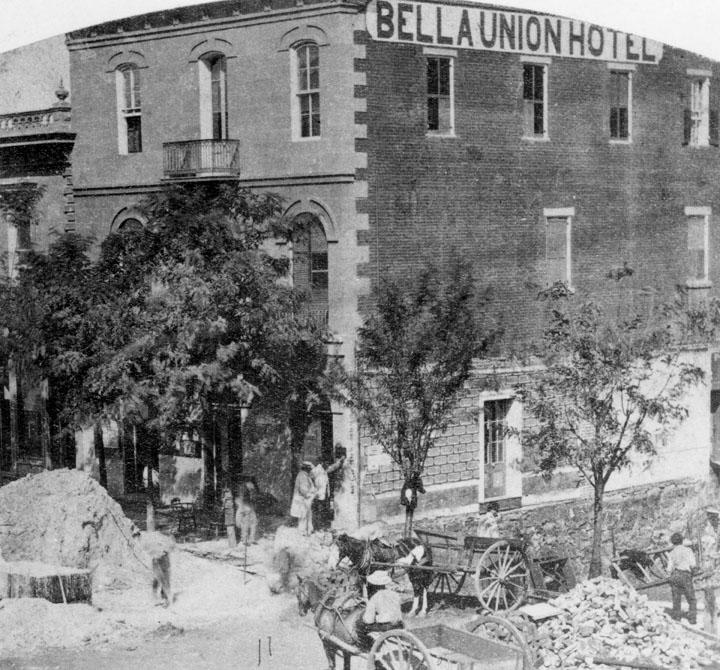
Note 2: The following photo is more apropos being from the correct period. The Bella Union Hotel had roots back to the 1830s. The Wikipedia page has some of the history. 

This is east of Temple and Main Streets. Temple runs up into Bunker Hill West. 

Remarks: Modified: 12/23/2025

12/23/2025 --


Wednesday, September 30, 2026

Butterfield, again

TL;DR -- The 250th even was, mostly, ink on paper. The turmoil was mostly after that day (though, we have the earlier times to remember, too). Later in the history of the country, technology brought ideas. Like, going from St. Louis to San Francisco (through the south, of course) and back. This post briefly looks at the segment that ran through the Choctaw Nation. This is our first of many coming posts on the eastern side of that long trek.  

--

One thing that we expect is that as time goes on from the 250th start, we will be seeing stories related to the history of the U.S. and its people and events that start to have a more personal touch. 

We have mentioned in several posts about the regular coach run from St. Louis, MO to San Francisco, CA. Today, we just saw a post on FB (Diamond Station) about the first run of the coach, westward. It left St. Louis on 16 Sept 1858. As we have mentioned, it went down to TX and across to El Paso and then across lower NM and AZ into CA. Sometimes, it ventured into Mexico. A major stop was LA at the bottom of Bunker Hill West. Then, the coach went on up to San Francisco. After a quick breather, they turned around to go back, carrying people, mail, and small freight. 

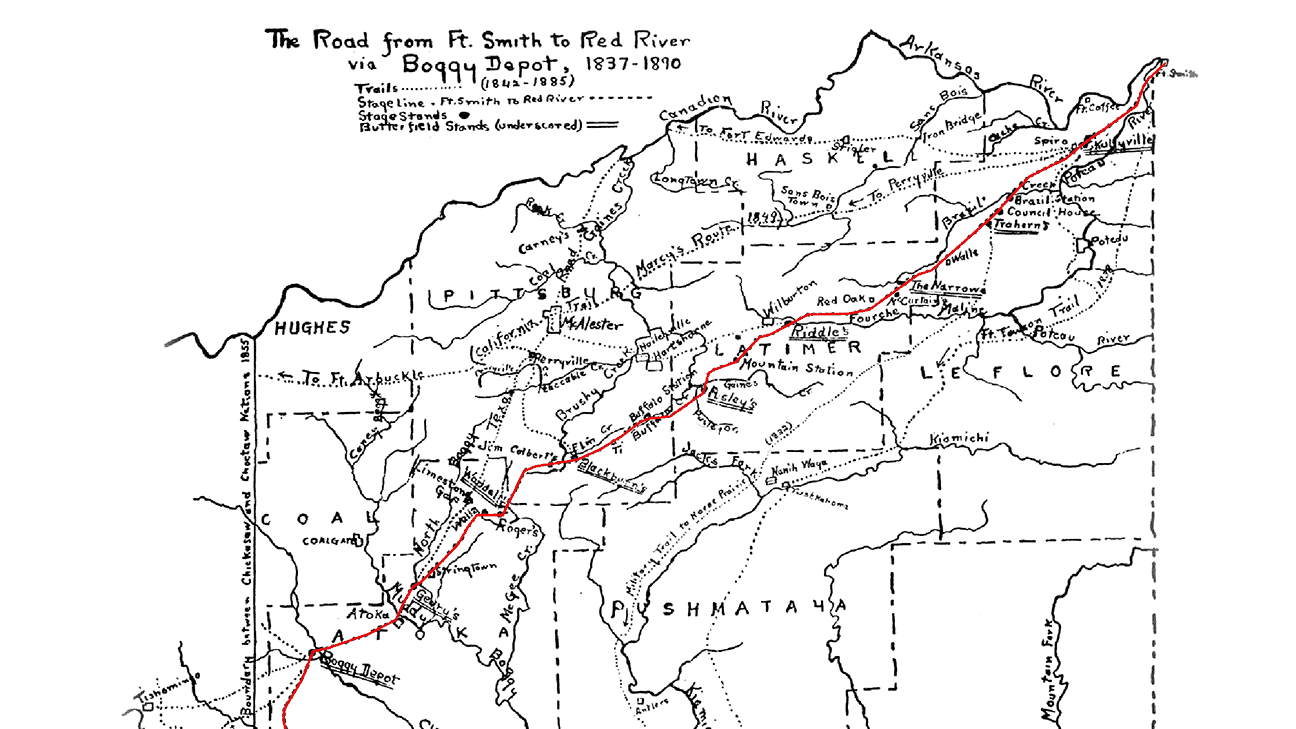
This map is of a recent post about the route through the Choctaw Nation. The route went from Ft. Smith, AR to the "Red River" in TX via "Boggy Depot".That segment was 192 miles of the total distance of 2,800 miles of arduous travel. Most of our posts have been of the western side and mostly from El Paso onward. It will be a great change to look at the eastern portion. 

Butterfield route,
from AR to TX

We will be looking more closely at this segment with respect to the logistics of the times. This post sponsored by the Choctaw Nation of Oklahoma provides a lots of important information. 

Remarks: Modified: 09/30/2026

09/30/2026 -- Butterfield was of an old New England heritage; the line by him and his associates joined up with a regular route out of Houston that went through El Paso and west which was, again, of new England (kin). Butterfield's company had a station in LA in the area where the Mirror Company established itself; the eventual Times-Mirror Company published the LA Times. Details? Similar to what we know of the Pony Express, there was regular change of horses/mules (and wagons - as needed). The people traveling had little comfort. In fact, Mark Twain went out by a similar route over the northern landscape that was set up after the Civil War started (and stopped the Butterfield route - 1861), but took a ship back to the east coast. Whereas, by the time that R W Emerson went out, the railroad's line to the west coast had been established. Just considering the realities of the travel ought to be fully described to compare those days against our own. 

Thursday, April 27, 2023

Fairmont Hotel

TL;DR -- Technology allows many types of reports not possible in the past. This will be a continuing theme as progress continues. We look at San Francisco by two views, one old and the other of the modern marvels. The Fairmont Hotel stood the test and was finished. It has an interesting story of old and new families coming to the U.S. 

---

Earlier, we noted the 1906 earthquake and fire in San Francisco, CA which city features heavily in our look at history. The Presidio was established there at the same time as the American Revolution was getting ready to fire up. So, we're talking concurrent events from 250 years ago. Or, in terms of generations, the fifth's grand entry into the world. 

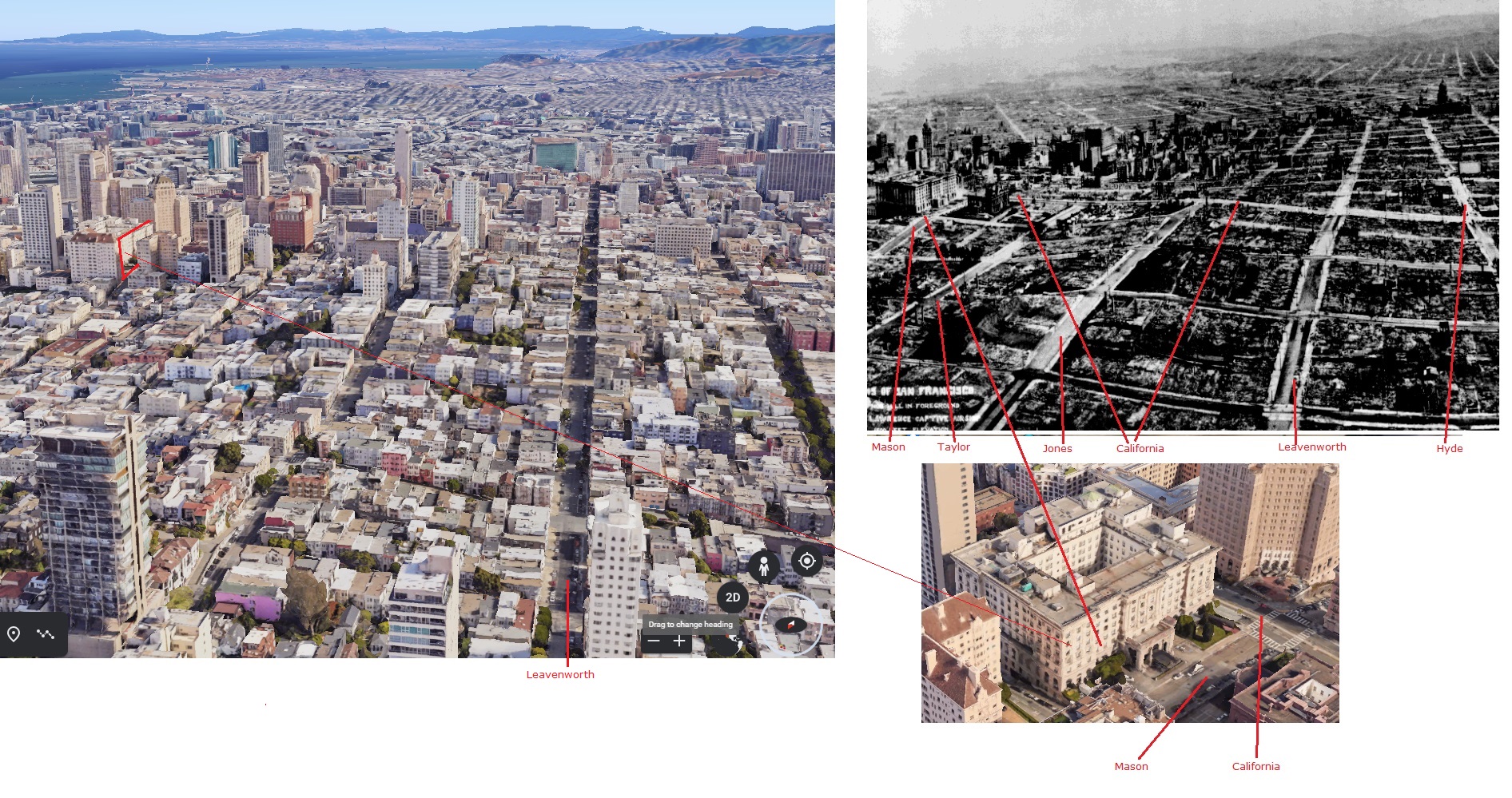
So, we have lots of links from New England and the U.S. to the city on the Bay. In that last post, we included two photos. We are taking the first one and comparing it with Google Earth's view (wait while the system switches to the view) of the city. The Fairmont Hotel is the focus. It was under construction at the time and withstood the test. It was cleaned up and finished to become the remarkable lesson that it is. 

San Francisco, 
1906 and Google Earth 2023

This post is to show benefits of technology. The original photo had been obtained using a kite. Several books would be required to go over all of the basis for Google Earth. It is more than the computer parts as lots of mathematics was required. But, we have that on our plate, as there is commonality with these techniques and those being used for AI. 

Our thrust will offer grounds for discussing how we can have maturity with request to technology, starting with software being more than a mere playground for those who can. Frankly, what happened in November of 2022 was the precipitation of an unnecessary trial whose characteristics are unknown (opinions range from glee to gloom, depending upon several things). One might also use awe and angst or any other pairing of concepts. 

Stay tuned, as we get the ball rolling with this effort. 

Too, John lived and worked on Hyde for over a year. The street is visible on the upper right as on[e] of the longitudinal lines cutting across the landscape. 

The Historic Hotels of America provides information: The Story of The Fairmont Hotel. It was named for Senator James Graham Fair who came from Ireland. In looking at the extended family, there are many threads of interest to follow. A daughter married into the Vanderbilt family which represents New Netherlands. 

Remarks: Modified: 08/08/2023

04/30/2023 -- The Geological Survey has a nice map with a legend of the extent of the fire. The legend shows the area of the Fairmont Hotel and the Flood Mansion, both of which still exist.  


Sunday, December 11, 2022

19th Century details

TL;DR -- Earlier we took a look at transcontinental travel in the early 19th century and its ardors. There was nothing easy about the ordeals, but people took up the gauntlet. Here we look at one site where travelers made their presence known and link to a map that has local details of interest. 

--

We have had several posts on trails. Recently, we looked at a well-known trail (to Santa Fe) as it was the terminus of another trail in New Spain which provided other trails such as that which provided a route used by the Butterfield Overland Mail Company in carrying mail, freight, and passengers from the east coast, through St. Louis and to San Francisco. This was pre-Civil War and was interrupted. Further north, the Pony Express went from St. Joseph, MO to California carrying mail. Butterfield established a new route up north using coaches. Mark Twain wrote of his journey on this route. 

There was another Butterfield in that area who was not related and who had a  Butterfield Overland Dispatch (using a post at the Legends of America site) through Kansas. Both of these Butterfield gents had investors back east. The amount of stations, equipment, horses and people required to have regular routes was tremendous. As we know, the rails of steel were going to play havoc with these routes. But, that was enough later for history to be made. 

As a reminder, at the same time, there was regular traffic from New England which moved south by sail to the area of Panama which involved going across land from ship to ship and then sailing back north. Of course, one could go around South America. We looked at this briefly when writing of the Bostonian (barque) that wrecked along the Oregon coast in 1850. The barque left Boston in July and arrived at San Francisco the following January. It was later seen in New Zealand and, evidently, carried goods to San Francisco before venturing north to its fate. Gardiner, OR resulted from that incident. The overland trails had as many dangers; but, even without those happenstances, the travel was arduous. 

Besides looking further at the specifics of these overland efforts where we find the two Butterfields, we want to bring in more detail as is required for doing history of the events better and for considering the people involved in a more respectful light. Also, the area in the center of the U.S. was very busy. For comparison, we looked at a railroad town and its specifics from the early 1900s (see KATY - western railroad). 

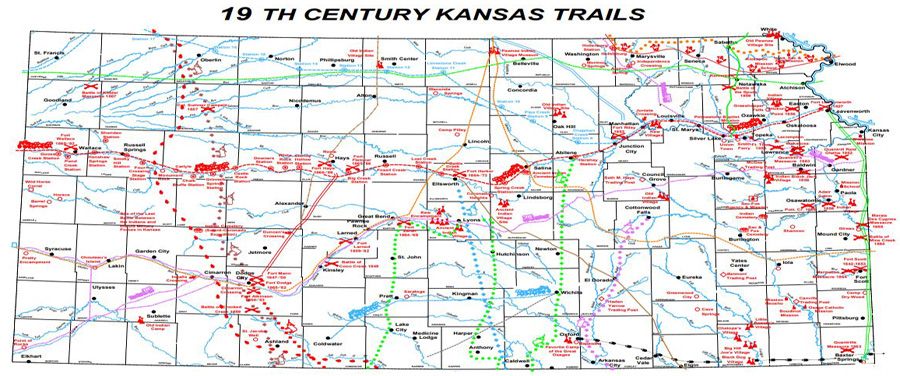
Let's start with a map that comes from KDOT (see 19th Century Kansas Trails). Notice that the Santa Fe and Oregon Trails come into the area in the northeast corner. The Oregon Trail splits off and heads northwest. Another trail in that area is the Butterfield Overland Dispatch which terminated in Denver, CO. The other Butterfield route would have been north of this area. 

Click for detailed 
map from KDOT

The map includes other trails of interest including those used by indigents and that related to the cattle trade where heads were brought as herds to a rail terminus for loading. As one looks at images, the wild west was in this area (see Dodge City). "Hell on the plains" might apply to our few decades of the web. 

Looking at some of the details, there was a military road (double green) that went from Ft. Leavenworth to Ft. Scott and further south. This was there early. We mentioned a Mission in the southeast corner (see Memorial Day 2022). Nathaniel Boone (son of Daniel) was in the area. Col. T.W. Higginson was in Lawrence and Topeka. Lawrence was founded as part of the abolitionists' interest in keeping Kansas free. Take a close look and note a trail (blue dashes) from Leavenworth which was originally for supplying Army posts as they expanded westward but ended up with a California connection. 

In a recent post, we looked at how Ipswich MA got Ohio going. That was not long after the Revolution and was similar many ways with what happened later out west. In fact, we included a graphic (map) showing both areas. So, we could look at this type of detail across the whole of the region. 

One of our interests is the long reach of New England. Both Butterfields were from New England (their relationship, if any, needs to be researched). For the most part, we will be taking time to link with both genealogical and historical information (see Lorenzo and Peggy). As well, we have a technology interest and want to include specifics of the reality of the earlier times. After all, everyone here had forebears who were alive then. The particulars of the American west are such that we can see the transitions clearly over the frontier century's span. We mentioned it before, but this map brings up the fact: going from the northeast (Kansas City) to Ft. Larned (south central, look for Great Bend) took three weeks of daily work on the Santa Fe Trail. 

One more detail, Jedediah Strong Smith was last seen in the area of Point of Rocks (lower left - southwest). He was killed by an indigent part. 

Remarks: Modified: 12/12/2022

12/11/2022 -- 


Monday, January 7, 2019

Gems of Salem

Gardner Research started in 2010 from a blank slate, more or less, using the wonders of the www; in other words, trolling the waters of the internet to see what we could find. The result? Lots of stuff, some of which we have organized. And, there is a lot more work to do.

As we have seen, records get digitized and come online. Sherborne, Dorset is an example as their records allowed us access to lots more about Margaret and Thomas. See the discussions on WikiTree. Notice two things: this is a profile of Thomas sponsored by a Great Migration Project using Anderson's book (1986); Margaret is given as Thomas' spouse and mother of the children. As well are records coming on-line, people write.

A very good example, that is relevant, is salem.wickedlocal.com. Early on, we saw an article by John Goff: Looking at Salem’s beginnings: The White and Gardner family contributions. This article published in 29 Dec 2007. That was eleven years ago; we saw it four years later and noticed that it mentioned Rev. John White.

One of our first activities was to start the Thomas Gardner (planter) page on Wikipedia and have added several other pages or links. A good example might be when there were news stories about Amelia Earhart's plane. Gardner Island was mentioned; so, we had to look at that (as we have with other areas: Gardner Junction, Gardner, CO, Gardiner, OR). And, John got into that story, too.

I well remember John's first email. He congratulated us as he had run across our Wikipedia tagging (put link to Thomas Gardner's page in that of Gideon Gardner). I do not know if he wrote about Gardner Island, but we did discuss Gardner's Beacon. And, John was kind enough to contribute articles as well as provide other information to support our research (thank you, John). I thought that it might be a good task to itemize John's work, especially as it relates to Gardner studies. See the list below which is provided as a reminder to us to look further into the articles. On the list, too, are Salem articles that mention Gardner.

First, though, here are a couple of examples of overlap interest. On our Gardner Gate page (portal to truth), we just did a summary of some pre-arrival information (1 March 2013 - the 2nd most read post) pulling information from a series of Gardner's Beacon issues. Then, I just found this article by John -- Salem’s forgotten French heritage (7 June 2008) -- in which he details French activities in the area that became Salem. He mentions the discussions with the American Indian. There are several articles that we will look at further.

But, another example, is the work that we did to track down information about the owner of the barque, Bostonian, that wrecked (Oct 1850) at what became Gardiner, OR (update - 30 October 2018). The original work was done in 2014 with an article published in The Essex Genealogist. The owner was a descendant of George of Rhode Island, though, two of his wives were descendants of Thomas Gardner of Salem. But, as well as the family information, there is a whole lot to discuss about the time (More on the Gold Rush 31 Mar 2016).

Here, I see that John wrote about a response to a query (1990s) from San Francisco (NAUMKEAG NUGGETS: Salem in the California Gold Rush 5 Jun 2015) about a ship that they discovered. It had been built in Salem.

From what I have seen, hundreds of ships were abandoned as crews rushed off to pan gold. That makes the Bostonian different in that not only did it bring supplies from Boston to San Francisco (July 1849 to January 1850 voyage - only four passengers - it was loaded), it went then to New Zealand (that was interesting, verifying that part of its journey), returned to San Francisco, and wrecked in Oregon is October of 1850.

Many went to California by land. We have researched that avenue, as well, due to our interest in the western expansion. Too, New England (and Salem) had the reach of a long arm. A third way to the gold fields was boating down to Central America, trudging across, then boating back up to what is now known as the Left Coast. This went both ways (many lost their fortune in that journey).

There are other examples in an endless set of things to research. So, gems, indeed. Finally, to a partial list of John's Gardner touch. Each item is marked by date; there is no obvious order, yet.
Remarks: Modified: 08/27/2022

02/08/2019 -- Recently, we got registered with Google as non-profit and have put a search facility on the sites. They are (will be) ad-free, once I get the administrative stuff completed. On the search page, I mention our manual effort at indexing. Now, we can get more serious. I extended the above list with some hits from searching on John Goff.

02/08/2019 -- Put photo of John Goff from 5 Jun 2015 article, Naumkeag Nuggets.

09/03/2019 -- Like the way John writes (see image). He mentions Sidney which is good. Dr. Frank and his sister, Lucie, picked up Sidney's work after he stopped his Essex wanderings and writings. This is an example of John's view (seen after I had, more or less, determined the same thing).


It was in this house where Thomas and Margaret enjoyed Cape Ann's wonderful life (posts search on Cape Ann).

04/20/2021 -- John mentioned in a Melissa Berry article (with reference to Richard Davenport). On New France and New Spain. We see it more out west.  ... Added link to page of Gideon Gardner, who was namesake of Gardner Island (by either Joshua Gardner or Joshua Coffin). 

08/27/2022 -- Finally, added John to the Descendants of Richard. Just for the record, search results on John Goff  (23 posts) in this blog.