Monday, August 17, 2020

Descendants of Sarah

 Descendants of:


We have had a few posts about the first few generations. Then, we looked, briefly, at later generations. Of late, we looked a Sarah, again. She was one of the first ones featured as she married a son of John Balch who was with Thomas Gardner.

Last fall (Nov/Dec), we started a post for each of the children, where the earlier one on Sarah was reused.
So, before we go to the next child (no decision yet), let's cover some things of interest about Sarah and her offspring. Say, a list of descendants. These are taken from the Wikipedia page about Thomas and are in chronological order.
  • Benjamin Balch (c. 1730s) – first Chaplain, Continental Navy. 
  • William Balch (c. 1770s) – first Chaplain, U.S. Navy. His father was first chaplain of the Continental Navy; his grandfather had been a chaplain in the Royal Navy. 
  • Stephen Minot Weld, Jr. (c. 1840s) – General, American Civil War hero.
  • Adolphus Greely (c. 1840s) – American Polar explorer, recipient of the Medal of Honor.
  • Charles G. Dawes (c. 1860s) – 30th Vice President of the United States.
  • George Swinnerton Parker (c. 1860s) – founder, Parker Brothers.
  • Emily Green Balch (c. 1860s) - Noble Peace Prize (1946), Professor of Economics (Wellesley College).
  • Gilbert Hovey Grosvenor (c. 1870s) – first editor of the National Geographic Magazine.
  • John Henry Balch (c. 1890s) – United States Navy, World War I, Medal of Honor, Lieutenant, World War II.
  • Heather Wilkinson Rojo (living) -- Nutfield Genealogy. Her blog is referenced in an American Ancestor article (Fall 2021). Her list of genealogy blogs
G. H. Grosvenor
at the National Geographic Office
DC, 1914
We started with Sarah and will add in other children while going through list of Thomas descendants on the Wikipedia page. Until further notice, we will use trees at WikiTree or Family Search (Example: Gilbert H. Grosvenor) to assess the claim of the descendant.  

Remarks: Modified: 12/28/2021

08/19/2020 -- Added in a few links and an image (for the portal to truth). Also, did a quick re-check of some names on the list.

10/24/2020 --  Added list of children. 

12/28/2021 -- Added Heather Wilkinson Rojo. 

Thursday, August 13, 2020

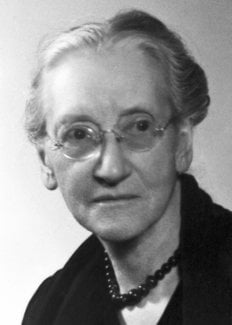
Emily Greene Balch

TL;DR - Focus, descendants and their child of Thomas and Margaret.

--

Emily Greene Balch received the 1946 Nobel Peace Prize.

Today, while reading book reviews in the WSJ, we saw Emily mentioned. The theme of the books being reviewed dealt with the upcoming celebration of the 19th Amendment of the U.S. Constitution.

Given her surname, we wondered if she was a descendant of Sarah (Gardner) Balch who lived in Beverly, MA. It turns out that she is, as shown in this WikiTree profile. Somehow, we missed her in our earlier survey and have added her to the list of Thomas Gardner descendants on Wikipedia.

Her parents were Francis Vergonies Balch and Ellen Maria Noyes. We will be looking at the family a little closer as well as getting more into this, and associated, subject matter. Her peers would have been of the generation of Ann's grandmother who was a Suffragist.

---

Of late, we have started to look at the U.S. generations with a New England reference. We know that Virginia was here prior to Plymouth. As well, we will consider the experience of other countries.

Emily would have been the 8th or 9th generation of the Massachusetts variety.

The 5th took the brunt of the Revolution with some of the 4th were still here as the older generation. It was the 7th generation that  began to obtain the rewards of the new country in established areas with others extending the country through trials of frontier living. We can look at the later generations, too.

Though it may seem that we are considering the good times, we recognize that major problems still existed over this time period whose solution would come later or is still pending.

Remarks: Modified: 0313/2022

08/14/2020 -- Jane Addams was the first American woman to win the Nobel Peace Prize in 1931. Her ancestor received his land grant from William Penn. Jane's parents moved to northern Illinois in 1844.

08/16/2020 -- On doing some research on Emily, I see that her ancestor's page has been edited. It is an example that we could follow: John Balch. Notice that these early Profiles are being driven by the Great Migration Project. We, the TGS, are helping edit the profile for Thomas (see right menu).

03/13/2022 -- Bryn Mawr was the alma mater of Drew Gilpin Faust.  It also welcomed Emmy Nother to the U.S. after her family fled the Nazi madness. Her brother went north to the Soviet Union and was killed by the powers that be. 


Tuesday, August 11, 2020

Reasons ... for New England

TL;DR - Why did people come here? That is, to this side of the pond. Lots of reasons. Boone is an example of a later arrival who made good.

--

Recently, we revisited the topic of Origins and Motivations. In that post, we listed earlier posts dealing with the subject. As we proceed, we will be pulling posts from the past, into some type of cohesive view as this allows us to reflect on what we have seen as well as think about the future. And, we need to consider post-virus realities, for various reasons such as our sanity.

Speaking of reasons, we had a query about the motivations for New England. Our response went along this line which follows what we have run into the past decade.
    Rose-Troup (she researched the Dorchester Company in England for years), Albion's Seed (nice look at the paths that led to the U.S. from England), and on Dorset (great countryside).
However, let's broaden the scope. As a first step, we can look at the view of the Revs. White, Winthrop, and Higginson. At The Winthrop Society's site, we find this document: "Reasons for the Plantation in New England". It has a list of Reasons and then some Objections. We will go back through these, but let's look at one Objection.


In the introduction, we are told that the author is not known but that later edits were done by John Winthrop. The changes are in the hand of his son.
    Redacted and introduced by Marcia Elaine Stewart.

    The following document was found among the papers of Governor John Winthrop. Other abridged versions are known, and variously ascribed to Rev. John White, John Winthrop or Rev. Francis Higginson. While the true originator may never be known, suffice it to say that this copy was written in the hand of Forth Winthrop, son and sometime secretary of the future Governor, and has marginal notes by the elder Winthrop, dated 1629. It was evidently a widely distributed and influential piece of propaganda in furtherance of the proposed settlement of Massachusetts Bay, judging from the number of copies in various forms which are still extant, along with numerous responses pro and con penned by various interested worthies of the day. The Rev. John White probably conceived the initial nine arguments, but we suspect, due to the legal style of its arguments, that Winthrop has here substantially amplified it to its present form with the addition of the objections and answers. In any event, it is surely an expression of Winthrop's own views on the subject, and is of great significance in revealing the motivation of the colonists.
Now, we picked this objection since we have looked at the topic, example: The First Year. We quote Anne Bradstreet's reaction to the new environment. Now, why mention this? As people went west, or to any of the newer areas, it was the same thing (like Yogi said, deja vu, all over again).

Too, though, this type of material allows to discern some of the thinking of the time, especially since there is more of a meditative tone than the modern mind might like. Yet, are we missing something?

Remarks: Modified: 08/28/2020

08/28/2020 -- Daniel Boone will be a focus, for a while. Quaker family that came into PA pre-Revolutionary times. 

Monday, August 10, 2020

Scholars, in general

TL;DR - Earlier, we saw a Middle School reference some our work, indirectly. Looking at later material, it is nice to see U.S. history lessons. In particular, geography can help us understand what people went through, especially in all of the goings and comings on land (post Lewis & Clark and Boone). Water. Necessary. Can be a problem, at times.

--

Back in 2011, we read that a Middle School in Peabody had Thomas Gardner on a list of colonials for the students to study. Part of the material came from our publications. Later, the post disappeared.

Of late, we have been looking at the western expansion using Cumberland Gap as a reference point to discuss the realities then of moving from one place to another. Motivation for that came from looking a families in the south, many of whom had come down from New England. Post the U.S. Revolution, there was an upswing of interest in the west. Consequently, there is a lot of material to cover.

But, one factor was the waterway. We noted from the group that went from Massachusetts to Lawrence KS traveled part way on foot through terrain that might have been less severe than people would find out west but was still difficult. As mentioned, going from the Kansas City area to Fort Larned on the Sante Fe Trail (a mere few hours now by car) was almost three weeks of daily grind. We looked at some of the issues in a recent post: Cumberland Pass (which is near a mountain named for Harvard).

The travelers had to go over divides, albeit in a lesser mode than one would require if there was not a choice. Say, a pass that is 12k feet in height is quite different than what was required for traversing the Cumberland Gap which was still work. As we mentioned in an earlier post, this summer, a woman talked of leaving her infant behind a bush as she helped her husband get the wagon up a steep climb. They were using horses which had to stop to get a breath. Well, the wagon needed to be chucked to relieve the strain on the horses. After they got to the top, the woman would go back down, get her infant, and come back up.

And, then, it was down the hill until the next rise. That's why we mentioned the ford near Lawrence KS as training. Same routine, albeit, less slope and distance. Lots of stories like that will come to the fore with events like the 400th plus the existence of technology for presentation of information on-line.

One huge divide results in the Mississippi River and its tributaries. Those were major obstacles. This get us back to education. There is a graphic of the Continental Divide on material used for 4th-Grade science which was interesting (first bullet). As well, the site provide coding opportunities. Yes, adults need to get their heads in that mode, too. So, looking further at the posts that can be found on this divide, there is a report on traveling the Trail Ridge Road in the mountains near Estes Park. It has wonder photographs (second bullet). So, taking that further, and coming up on the scholar's view, there are other types of faults. An Earth Science post shows us the triple divide (third bullet). That leads to the more general view which would include the Laurentian Divide. The photo on the right is from this Wikipedia article (fourth bullet).
So, we have a new series to talk about: on-premise, cloud, mobile. That is, these refer to the types of platforms and presentation options related to the modern distributed mode. As in, the TGS, Inc. will be at the forefront of illustrative material being offered which can cover all of the intellectual levels.

In the prior posts, we showed the Mississippi watershed. However, look at the yellow line. That's the initial barrier that gave Daniel Boone fame. And, going north, we had divides up there, albeit we lost Canada in the U.S. Revolution (never had it, even Maine wanted to split off).

Remarks: Modified: 08/28/2020

08/10/2020 --

Saturday, August 8, 2020

Beverly, MA

We have mentioned Beverly a few times, but have not ventured over the river, as of yet. So, it's time due to a query about Sidney Perley's look at the town. In his History of Salem, he presented his walkabout (pg 415page 416, pg 417 has the lot names, the map is on page 417i). As well, this is Sarah (Gardner) Balch's town.

While starting to research the town, we found a page with lots of maps (provided by Robert Raymond). He also has offered Sidney's Beverly in 1700.

This bird's eye view that is available from the LOC is of Beverly, MA in 1886.


Remarks: Modified: 12/13/2020

12/13/2020 -- Descendants of Sarah

Friday, August 7, 2020

Cumberland Pass

TL;DR - East and west has to be our scope; that is, the totality of the American experience over the four centuries.  Oh yes, a mountain named Harvard. It's in an out-of-the-way place but close enough to Cumberland Pass, in the Rockies. There is another pass in the east through Cumberland Gap. Some went through the eastern pass on the way west; in those days, the travelers would have skirted those higher area as the travel was hard enough without needing extra thrills thrown in, as we see now with technology providing the facility for frivolity.

--

This is a little diversion, related to western movement: 3 trails, Final migration, and more. We have two passes out of many that those migrating west had to handle with a similar name: Cumberland Gap and Cumberland Pass. The former was a training pass out of North Carolina, associated with Daniel Boone leading people west. He ended up in Missouri, early. The latter represents much higher elevations (11k more feet). Fortunately, even out west, there were choices found that alleviated some of the agony of the work required in those days. One consequence of moving was that record keeping, many times, lagged seriously leaving gaps, many times filled with effort but also becoming brick walls.

We wrote of Cumberland Gap, earlier. The pass through this gap allowed movement toward Tennessee and Kentucky and then all points west. Even with a height of a mere several hundreds of feet, traversing the gap would have required arduous work. The use of 'training' suggests that anyone starting out with this pass on the way to Oregon still had lots work to accomplish of a type of daily grind.

Also, quoting Wikipedia:
  • The passage created by Cumberland Gap was well traveled by American Indians long before the arrival of European-American settlers. The passage through the gap was originally created by herds of woodland buffalo that traveled across it over thousands of years, drawn by the abundance of salt in the region. The earliest written account of Cumberland Gap dates to the 1670s, by Abraham Wood of Virginia.
Now, the other pass? It's in the Rockies, in Colorado's Gunnison County, to be specific. Now, this pass was not on any of the major trails that were heavily used. For the most part, there were easier passes (comparatively, to each other, but still requiring hard work, endurance, and carefulness) for those who were heavily laden. Taking a look at passes on the Oregon Trail will give some idea of this.

Cumberland Pass is in the Sawatch RangeTincup CO is on one side of the pass; on the other side is Pitkin CO. Both of these are mining towns which is a type of pioneering effort. For the past few months, we have been looking at pioneer families which is why Cumberland Gap was mentioned. Then, we remembered the other Cumberland pass. Both are named for Prince William, Duke of Cumberland. Both too show the influence of England and New England.

For instance, Mt. Harvard is in this range which includes several mountains that are over 14k feet in height. One interest in this area is that it pinpoints the Continental Divide. As the map shows, with the Mississippi's drainage, we had people leaving the right side, heading to the left. Not only were there rivers to cross, each had many tributaries of various sizes.

So, this pass in Colorado is near where the flow changes. We will have a little more to say about rivers. We mentioned Gardner River which goes to the Pacific. This is further west and north of Cumberland Pass where the Snake (Columbia) and the Gardner River (Missouri) start, ending up in two different places.

The watershed of the
Mississippi River
cut the land through
which the pioneers
had to travel.
With regard to the 'training pass' mentioned above, we noted in a post (Final migration) the report of the group who left Massachusetts and traveled to Kansas. They founded Lawrence (and KU) among other things. But, they mention coming out of the Kansas City area on foot, camping by the Wakarusa, fording it and getting to what became Lawrence. As has been noted, this little river required techniques that became handy in the western mountains: tear down the wagon, lower, get it across, and back up, reassemble, gather everything that had been ported across. Time and again.

This map is to suggest how many times that sort of thing would have been necessary. And, storms, snow run-off, and such would have made crossing turbulent waters part of the concern. So, no interstates and air-conditioned cars. Too, follow the North & South Carolina line to Oregon (lower right to upper left - almost diagonal).   

Note: In the movement west, official recordings always trailed (lagged behind) the edge of the wave. How long this happened varied? There are lists that show when each location started to get regular in recording but that as elastic, too. Never did it just pop into place overnight. There would have been a transition period. So, genealogists with their lead feet? Oh yes, they like to talk as if their need for a document gives being to the ancestors of people who might have, now, holes in their paper trail. Guess what? That is categorically stupid (even Bayes would agree with that). So, what to do? Get more clever about filling in the pieces. Do this without due diligence? No, just stay out of the way and let the story be told as it is pieced together.

Remarks: Modified: 06/24/2022

08/07/2020 -- In this post, we are looking at two disparate spots that share a name, however there are many points in-between. Like Eudora, KS. Where "The Wakarusa meets the Kaw" is on their history site and is an example of local lore getting some attention. See "Along the Western Trails."

08/08/2020 -- Cumberland Pass in the west has the same name as that in the east known as the Gap. However, they represent the movement across the country which established the country. So many stories. Too, they created instances like poor Chloe being dissed by Plymouth people squatted in eastern Massachusetts. It's a large country out here, folks. So, I have now seen oodles of families with the same problem from the tip (Canadian border) all the way to the lower part of Texas. Has anyone really awakened to this? Not that I can see, otherwise I would not have the need for this type of post (Genealogy and Bayes).

08/08/2020 -- Following up on the theme of the difficulty of the cross-country trip, here is another view which is the Google-planned trip from North Carolina to Oregon. The little insert is a map of the Oregon trail which went through Gardner, KS. Later, the travelers went up the Missouri to where Omaha is and then ventured west meeting up with those who came out of Independence, MO.

Modern route,
courtesy of Google Maps
It is interesting how the modern highway system matches up with that the people settled on guided by those who had traveled trail. Reminds us of Jedediah's mapping of the California Interstate System.

08/28/2020 -- Having been researching some of the families of the frontier, it looks as if we ought to pick some as archetypal. For now, let's use Boone and Pike.

02/27/2021 -- Changed to using American Indian. 

06/24/2022 -- Updated links to Eudora's website as topic continues to be of interest: A Ride to Kansas
               

Tuesday, August 4, 2020

Origins and motivations

TL;DR -- As we go forward, we want to keep ties with older material so as to have a cohesive view always in place. From time to time, that type of review would be published via The Gardner Annals. However, a focus is providing constant entries via a portal to truthful tales of the past and to a discussion of their current relevance.

--

We have had several posts on two subjects: origins and motivations. The former subject covers several areas, especially issues related to 'whence' (that is one huge thing to learn about Thomas and Margaret). The latter considers all of the factors that might have resulted in reasons to leave. Of course, we have the work of Frances Rose-Troup to look at, albeit an update is in order.

All of our posts accumulate, and contribute, toward a growing knowledge base, using the modern parlance. That is, we have such an intent. With several years under the belt, we can, from time to time, look at a topic with regard to its relevance and to concerns over the years of our study. That is, we might be more regular and looking at status and focus.

These four posts are of interest.
  • Black death (Nov 2012) -- In the 1300s, the plague killed 50% of an area in Weymouth which is located in the southwest. There were outbreaks in the 1600s and the 1700s. Of course, there were issues in the New World, too. But, we need to remember this contributor to turmoil
  • Plus or minus the arrival (Mar 2013) -- As we get more attuned to the look backs, we will also keep aware of what was going on back in the Old World. For instance, Baruch Spinoza was born in 1632 which is two years post the arrival of John Winthrop. We can remind ourselves of events along the whole of the timeline. 
  • Origins - motivations (Mar 2013) -- There are many ways to slice various looks at the past which is what can make history interesting. We now have technology that allows even more types of variety in presentation
  • General crisis (Mar 2019) -- Globally, the 17th century was stressful in several ways that bear some attention. This post was a year prior to our recent experience with COVID-19. In the 19th century, we had the Spanish flu; before that, about 200 years, we had an epidemic in New England. 
A huge theme for us is the pending 250th of the U.S. which fits nicely into the other areas of concern. Along with that major event, we have to focus on what went on before, especially from the viewpoint of Cape Ann and Massachusetts; as well as, we can provide a means to look at how the U.S. has unfolded over the past two decades with the expectation of contributing to necessary analysis and change.

Remarks: Modified: 08/11/2020

08/11/2020 -- We have used categories in the post. We also have used pages which allow some structure. Then, we have the other media to consider. One thing is definite, we will have lists of important topics. On these, we will find Origins and Motivations.