12/05, 06, 07/2025 -- Zenodo reading requires a login. Changed the calling sequence. See records via this: https://zenodo.org/records/17670478. DTG changed the section on Sir Christopher. We will focus on this for a while. He's like Nathaniel Eaton, first head of Harvard. Misunderstood. GGP of Ann and many others.
Tuesday, December 2, 2025
Research, using the internet and AI
Wednesday, October 5, 2022
U. S. and Harvard, II
TL;DR -- We can split the group of Heads into three eras by a major event. The Revolutionary War (Declaration of Independence) ends the Colonial period. Then, we go until 1900 covering a century of frontier living with respect to the interior. From there, we stop at 2000. We have looked at some of these periods, already having spent some time roaming the interior, with the last two being restricted to virtual looks.
--
We had an earlier post on this subject (U.S. and Harvard, I) that was motivated by History of Harvard (ours) in the 1900s. Another interest behind the stop and look had been our experience in looking for the pedigrees of these folks, many of whom are of New England families. A few were new arrivers.
This time, we are looking at generations using fuzzy founds, which result in three categories: Colonial, Revolutionary War to 1900, and, then, post 1900. Let's look at each of these and identify the Heads as they relate to the period.
- Colonial - The fifth generation was heavily involved with the war that ended this period, however the fourth provided crucial leadership. After all, they had been trained by the Crown to fight in the French-Indian affair.
- Revolutionary War to 1900 - This period saw the U. S. Civil War which was an affair of the 8th generation. C. E. Eliot (21st) came in right after this conflict and was there until the end of the period. There were seven Heads from the turn of the century (1800 or pre-Lewis/Clark) until the Civil War. This is a period of huge adjustment. Was that later one (from the Civil war on) larger?
- From 1900 to 2000 - A period of huge changes, all around. We have not touched upon this as of yet, due to privacy concerns. As in, going to 1900 excludes most of the living who are in the sets of interest (Cape Ann, Essex County, Massachusetts, New England, U. S., where this series applies to both space and time). But, we can research and protect the living (the Census waits 70 years - data from the collection of 1950 recently released; we can be a little more current).
Remarks: Modified: 10/07/2022
Saturday, September 17, 2022
John Winthrop (educator)
TL;DR -- John Winthrop's post is imperative. He served twice, before and after the term of Samuel Locke, while he was a Professor, as well.
---
- History of Harvard (ours);
- History of the Presidency (Harvard);
- graduates of Harvard (list initiated by Hoar); and
- Harvard in the long history of the U.S.
09/17/2022 -- John Winthrop, like some of the others, is kin which will be an interesting bit of study. 'kin' covers both aspects, blood and collateral (say, in-laws). This is a common occurrence in New England that provides endless amounts of research which could only happen with technological assists.
Saturday, August 13, 2022
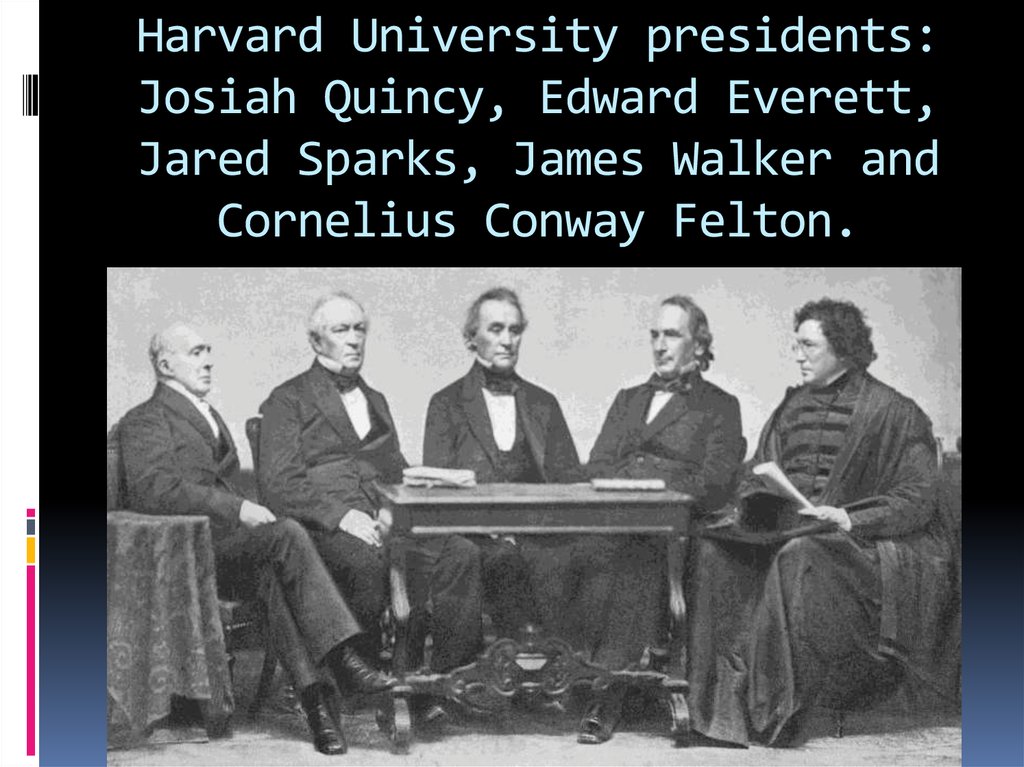
Cornelius Conway Felton
TL;DR -- With Cornelius Conway Felton, we are at the start of the U.S. Civil War. By this time, too, we had the western expansion in full swing. Post the conflict, the railroad started to cover the whole of the country. One of Felton's brothers was involved in those events. So, our theme of Harvard and the U.S. continues.
![]() |
| Quincy, Everett, Sparks, Walker |
- History of Harvard (ours);
- History of the Presidency (Harvard);
- graduates of Harvard (list initiated by Hoar); and
- Harvard in the long history of the U.S.
Friday, July 22, 2022
Rev Nathaniel Eaton
TL;DR -- The year of 1636 followed Winthrop's arrival closely. There are many factors to consider with respect to those times and their interests to the problems of today. We have another go-around coming up with a new twist, technology. Going forward, new ways to know will be emerging; yet, reflection on history will be a continuing theme. We will continue to look backward and forward.
--
Our Heads of Harvard (Wikipedia) work is progressing. It was only recently that we thought to bring in Nathaniel Eaton (Wikipedia, WikiTree). We now know sufficiently enough to discuss him and his times. Of late, Nathaniel came to fore while we looked to add Edward Holyoke to our list.
![]() |
| Portrait of Nathaniel Eaton accidentally painted on a John Harvard Olympus Cigar label in place of Harvard's founder John Harvard |
- History of Harvard (ours);
- History of the Presidency (Harvard);
- graduates of Harvard (list initiated by Hoar); and
- Harvard in the long history of the U.S.
- Edward was also associated with changing the "intellectual climate" through several means such as having a focus on merit rather than pedigree, stressing scholarship, and removing flogging (which was a very much unanticipated theme). With regard to the last, Eaton ran into issues due to being abusive. In her article titled "The Dilemma of Corporal Punishment at Harvard College" that appeared in the History of Education Quarterly ( 1974, Cambridge University), K. C. Moore looks at the issue which is easy to "pass over" for several reasons. With respect to the Eaton incident, one might make comparison with other situations such as the U.S. Navy (and other organizations of the like). We have an eye witness account by Richard Henry Dana (Two Years Before the Mast), who had been at Harvard, of a flogging at sea almost two hundred years later.
Tuesday, June 28, 2022
Edward Holyoke
TL;DR -- We now have the Heads covered up to the time of the Revolution and beyond. Everyone is gearing up for the celebrations (DAR, SAR, and others). We can look at that first period more closely now, say from the beginning to the split with England. Then, there will be a couple more periods: 1812's continuing conflict with England, the frontier (including the Civil War), and the latter part of the 19th century. We have already seen that Harvard's experiences match up well with our generational view that will be in the focus for a bit.
--
As we finish our look at the Heads of Harvard (Wikipedia), we will start to pull together a timeline that includes the threads here in terms of generations and add in information related to major themes which are influential today. Bringing in Edward Holyoke (Wikipedia) will allow us to look at the period before the Revolution. But there is an unexpected category to discuss: corporal punishment (see below).
Edward was of the fourth generation (WikiTree) of a family with a New England pedigree. His family had gone west and helped start Springfield in Hamden County. Edward went to Harvard and was associated for a couple of decades with a church in Marblehead (Essex County). Samuel Cheever had invited Edward to come be a Pastor.- History of Harvard (ours);
- History of the Presidency (Harvard);
- graduates of Harvard (list initiated by Hoar); and
- Harvard in the long history of the U.S.
- Samuel Adams (A.B. 1740), James Otis (A.B. 1743), Jonathan Mayhew (A.B. 1744), Thomas Cushing (A.B. 1744), James Bowdoin (A.B. 1745), John Hancock (A.B. 1754), John Adams (A.B. 1755), Joseph Warren (A.B. 1759) and Josiah Quincy Jr. (A.B. 1763).
Monday, May 23, 2022
Oldest universities, New England
![]() |
| Some U.S. Universities |
Monday, May 2, 2022
Legacies of Harvard
TL;DR -- Recently, President Bacow released a report by a committee that looked at Harvard's involvement with slavery. The report is about the first phase of an on-going project that associates with our interests in Harvard as an archetype, of sorts.
--
Legacies? There are many. This post deals with a recent report which is very much apropos for further discussions about the History of Harvard (our look). But, there are many other legacies to note, many of which will deal with the U.S., in particular, while others are of a more universal flavor.
![]() |
| Report by Harvard Radcliffe Institute |
The site's concern is the first phase of a project for which it provides a message by Bacow and identifies the Committee. There is other information available such as the following:
- List of Human Beings Enslaved by Prominent Harvard Affiliates
Sunday, April 24, 2022
Cambridge
TL;DR -- We have been looking at the History of Harvard as a way to study the history of the U.S. Several times, we have mentioned older universities. This is the first post dealing with the subject where we note that both Oxford and Cambridge have had ties from the beginning, back to Rev. John White and before.
--
One of our research thrusts has been to parallel Harvard's experiences via looking at the Heads (with Benjamin Wadsworth and Urian Oakes as our latest entries) over the centuries with that of the U.S., its colonial beginning, and post Civil War accomplishments. But, we realize that we have to consider the old country in our analysis, so we will start to look at the Universities (Oxford, Cambridge) with respect to U.S. history.
For instance, "Cambridge is the UK’s leading university for graduate studies in American History" and offers regular seminars to the public on the subject. On the other hand, Oxford claims "particularly strong connections" to the U.S. We have mentioned comparing events at Harvard over the years with its peers in the old world without being specific. Now, we are looking to use both.
For instance, Rev. John White's education is of Oxford. On looking at his extended family, there are many from Cambridge, including Ann's ancestors. John Harvard was a Cambridge man; Harvard was modeled on Cambridge.
The alumni list of both schools include many of the U.S., including modern day scholars. Of interest is, that of the first class of Harvard (1642), the majority went back to England. One of these was George Downing the namesake of Downing Street. They went back to an England in turmoil. Nathaniel Brewster studied further at Trinity College, Dublin and served under Henry Cromwell, son of Oliver.
As well as current-event issues, technology will be a focus. One of our tasks is to follow technology over the four centuries as it evolved here and over there with quite a bit of disparity until after the Revolution. Too, we will look at classes and trace the influence of graduates.
Reminder: Count Rumford about whom we will have further discussion.
In the arts, we can point to Ezra Pound who was at all three places. In academia, the first Head of Harvard, Henry Dunster, studied at Cambridge. Stepping back to a subject still pending some attention, the prior Harvard Head, Nathaniel Eaton, was a Cambridge graduate who later earned MD and PhD degrees from the University of Padua. Those are samples from the modern era and from the beginning with lots of time in-between to fill in.
Remarks: Modified: 12/20/2022
Wednesday, February 9, 2022
Leonard Hoar
TL;DR -- As we walk the halls of the Heads, our fashion is not random but sensitive to the current research theme. The last Head was in his role during the turmoil prior to the Revolution. This post looks at an early Head who was before the time of insanity, namely Leonard Hoar. He was the first to be a late entry.
--
There are not many Heads of Harvard (Wikipedia) to cover, so this series has a limit. But, our interests are several:
- History of Harvard;
- graduates of Harvard (list initiated by Hoar - see below - the Catalogue);
- Harvard in the long history of the U.S.;
- and more.
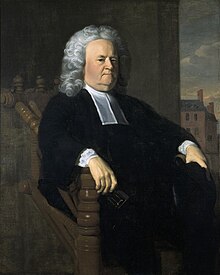
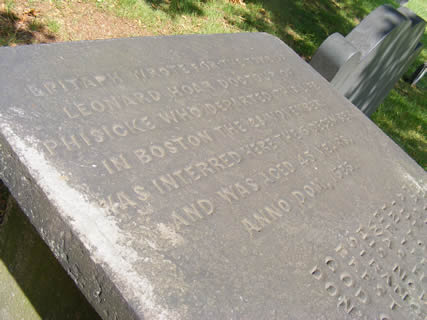
![]() |
| Leonard Hoar FindAGrave |
Now, we step back and look at the earlier times and a training ground, of sorts. Leonard Hoar (Wikipedia, WikiTree) was the third Head. Or the fourth, if we count Eaton. This post will begin the presentation of the case of why Nathaniel is important to the History of the U.S. Hoar followed Chauncy and Dunster. The thing to note is that Eaton, Dunster and Hoar incurred some type of controversial reactions by those of the time.
The image on the left is from the 2nd catalog and shows a lot of familiar names, one of which has been mentioned here with respect to the Revolution: Rev. John Wise.
It is that theme that leads to the "training ground' statement. Not long after Hoar's death, we had the witch hunt. One colleague of Hoar's participated, namely Cotton Mather. In short, those who disliked Hoar shunned him; he had a reaction which needs further study. A little look at the controversies over the years.Oh yes, the witch hunt? We know lots more about that now due to recent research that filled in details related to the persons involved. That type of historical perspective will continue to progress and offer us a much fuller sense of the reality.
Leonard Hoar was a late comer, so to speak. He actually had been a student at Harvard, left the country, and came back. And, he was of noted abilities. Lots to look at as we proceed.
Remarks: Modified: 06/28/2022
Thursday, January 6, 2022
A(bbott) Lawrence Lowell
TL;DR -- A(bbott) Lawrence Lowell served as President of Harvard after Eliot and before Conant. He changed the focus to be more scholarly and collegial with decisions like having the dormitory experience cut out the 'Gold Coasting' that had become the New England way, say as we saw with Boston Brahminship.
--
We have been adding Heads of Harvard (Wikipedia) to our list (History of Harvard) while taking a brief look at each with respect to time and affiliations, such as family and connections to New England. Our research started with a recent President (James Bryant Conant) who followed Lowell, and we have done a few more. For each of those chosen so far, there was a motivation involved which we will document.A. Lawrence Lowell came to our attention due to his family ties. He has a large New England pedigree (Lowell- 642) according to the researchers at WikiTree. We will be checking that. However, we noticed, too, that not much has been written about Lowell. We have seen this of several Presidents.
So, on looking further, we found that there is a page at the Harvard site titled "History of the Presidency" at which one can learn more about each person. Lowell helped move the culture such that a common spirit might develop. We learned that early classes were ranked by the social status of the family of the student.Lowell built dormitories and emphasized the need for students to live in these. Prior to that, how the student lived was, again, according to social status. One might say, the infamous 'Gold Coast' of the Boston Brahmins which had been encouraged by the prior President, Charles William Eliot. An example is the Adams House which became a dormitory - its website.
Like the others, Lowell's time had its ups and downs. Example: Writing the Wrong (2005). Also, Lowell had accomplished siblings (Percival Lowell and Amy Lowell) and cousins (John Lowell Gardner).
---
As we have gone through our look at the Heads of Harvard (Wikipedia), we have put together the following list of pointers to foster discussion which we are adding to the early posts after our first which was on James Bryant Conant (dated - 26 Aug 2021).
- History of Harvard (ours);
- History of the Presidency (Harvard);
- graduates of Harvard (list initiated by Hoar); and
- Harvard in the long history of the U.S.
Sunday, December 19, 2021
Yellowstone, plus
TL;DR -- In our research, we emphasize real people, their families, and events related to their lives. And, sometimes, one finds biographies that are truthful. There have been videos with the same characteristic. However, fiction reigns. So, getting more information about one dealing with areas around Yellowstone, we went to look at what we've researched the past couple of years and have listed the posts. As usual, the main theme is the long reach of New England across the U.S. and the world. And, Harvard fits in there, too, as its history is parallel with that of the country.
---
Frankly, as we mentioned in looking at Harvard, we want to see the influence across the great land of the U.S. and beyond. Harvard? For the pampered? Our note on John Gardner and the Merrimack surveying crew might provide a hint on our view. Perhaps not.
We'll have to relook at that, since Harvard started up, again, in 1640 after a bit of closure post the Eaton deal. So, at least, we can say that John was learning something as he worked with the older guys. Brings up a lagging bit of work which is looking at the classes through the generations. We'll start to sample that. One key one is the big gpp, Rev. John Wise (big in several ways).
So, expect the theme to continue that relates to the blue and red today. Those on the coast; those in the large interior; of course, with perturbations causing permutations everywhere. Now, we're about to the subject. It has to do with some fiction, on TV. So, we're not reading it; rather, it's the thing of having people extant now portray those of the past through events that might have happened. Or not. It's like the Games of Thrones; we find that very tedious and erroneous since those involved with what the theme is were real flesh and blood. Perhaps, respect of sorts might happen someday, maybe not.
The other side of this is that people then get a warped view since they are not get a true representation. But, so what? It's fantasy. Well, in the case of this show, they use a house that is real. We'll look at the owner who is out of New England. You see, folks, New England is the core, many ways. Yes, and in the Civil War, Massachusetts was prominent, especially in Gettysburg.
Finally, to the theme? Let's see. We're continuing this theme: Harvard, in the west. Nowadays, sure, there are students from all over. But, we're talking 200 years ago. And, Harvard was going through some changes that need some attention. As in, we can provide a mirror to lift up to the institution, perhaps.
As we come through time, we will note the changes in Harvard. Early on, the focus was on ministers or teachers. The Adams family can be a good example, say the two Johns (politician and the mountain man). The latter had no education (Grizzly, of TV fame). The former's father (John married to Abigail) went to Harvard. His grandfather did not, however a great-uncle did. There can only be so many preachers in a family. Someone has to do real work.
Grizzly's ancestors were of the sea which does not quite go with the terrestrial life on campus. There was no remote learning in those days. One might say that the potential influence of Harvard grew with them. The more students, the likely the remote touch. And, New England had a long reach, as we will be showing.
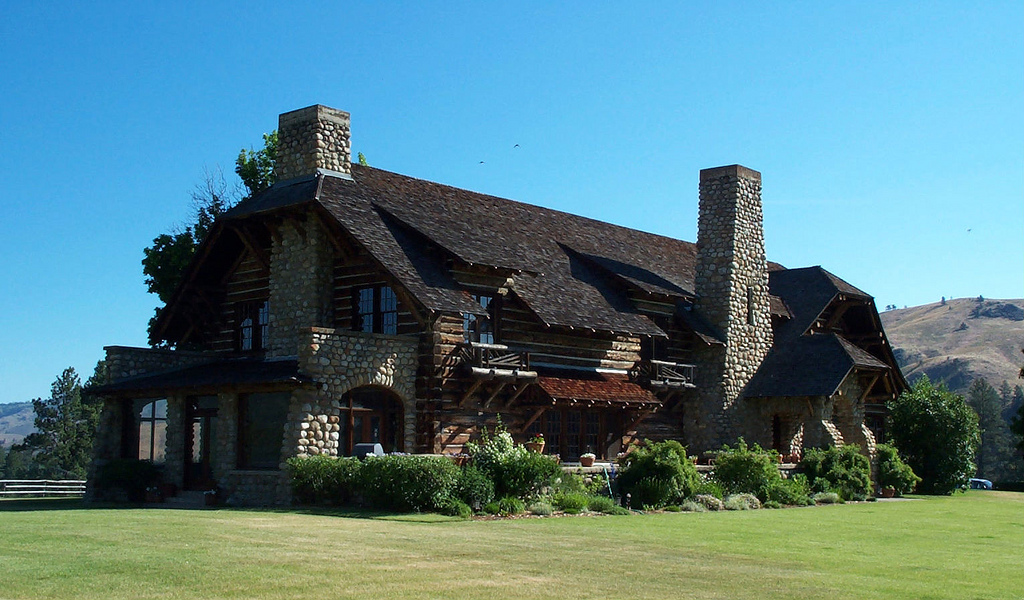
![]() |
| Built for Howard Clark Hollister and William S. Ford |
In the below, we provide pointers to material and to our posts (in order) on the subject so as to pull them into one place. Oh yes, from the east, it's a huge trek to Yellowstone. From the west, accomplished by sea to the coast, it's no big deal. There was regular traffic (American Indians and the French and Spaniards).
Let's start with a map, that comes via Harvard.
- Map of the Yellowstone and Missouri Rivers and their tributaries -- this map, from the 1860, is great for a few reasons. It's can be panned and zoomed. Too, the 1860 timeframe is a demarcation line for us with respect to visitors and travelers. The early ones have had our focus, for a while. The later ones we are getting to as the expanse after the Civil War really accelerated. In both case, we have started to research families.
- Expedition of Harvard students -- this points to the journal of Henry F. Keyes who was out with others (1899) under the auspices of the Geological Department of Harvard. Have not read this yet.
- Jedediah Strong Smith -- have to add this since the Montana view ignores the guy who was there way early. Died in KS in 1831. The JSSS is out of the UCBerkeley area. No one back east cares?
- Gardner River -- we had not paid attention to The Revenant (movie) until we noticed the theme and saw that New Englanders (and southerners) were involved. We will be looking more closely at these individuals and their history.
- Cumberland Gap -- coming back a little in time, about the same time as Glass and his type were out there, people were coming west following Daniel Boone (real guy). Lots of those families are still around, scattered across the west. The Boones got to Missouri which is a focus for several reasons, including St. Louis' roles in the expansion of the west. Some claim that Daniel got out to Yellowstone as an old guy.
- Gathering of the trappers -- some came out of the east; some from the south, including the southeast; some from the coast. Again, St. Louis was a center for fur trade.
- Research: Rivers - having been out there several times, recently, we started to look at the mapping, especially with respect to sources. Say, the Missouri River, with tributaries that started west south of Yellowstone, coming around and heading to the Gulf of Mexico through a long trek. Nearby, the Snake collecting itself to head west. Then, the southern movement headed to the Gulf of California. The Grasshopper map is wonderful.
- Two different times -- looking at two times and the people involved. There were recent imports and older families early on. In fact, the Revolution's Patriots are, many times, only a generation or two from arrival, as opposed to being the Fifth Generation from New England (Massachusetts, of course). But, many were both old and new. That is one beauty of the country.
- Upcoming celebrations -- we do not have a 'west' focus or favor the wild places, such as Texas. We can really talk 100-year periods where, at any point, we can consider, looking back, events that were 100, 200, 250, 300, and 400 years ago. The 250? Yes, see SAR/DAR.
Remarks: Modified: 04/07/2022
Saturday, December 11, 2021
Henry Dunster
TL;DR -- Henry Dunster is the 1st Head of Harvard, coming in not long after Nathaniel Eaton's tenure was ended. Dunster had fallings out with the Puritans, as well.
--
We have been adding Heads of Harvard to a list while taking an initial look at each with respect to time and affiliations, including family and New England. Our research started with a recent one, comparatively, and we have done a few more. But, we missed the first one and are correcting that oversight with this post. As mentioned, we mostly are using links, in our posts, to Wikipedia and WikiTree for the first pass and will be diving deeply into the term of each along with our review of U.S. history from the time of the revolution until the time that the frontiers were mostly settled. That get us from 250 years ago (plus or minus a few years) to the early part of the 20th century.
Well, our list of heads is in our post titled History of Harvard. We were adding numbers to show where there are still gaps and noticed that we ought to include #1, Henry Dunster to anchor the list. Dunster held the position from 1640 to 1654. He took over after Nathaniel Eaton found himself facing the first American cancel culture. We need to discuss that and will, at some point.Dunster came over in 1640 after teaching for a time. He earned his bachelor's and master's degree from Magdalene College, Cambridge. Dunster experienced some controversy in conflict with Puritan views which led to him leaving the position in 1654.
Henry Dunster (WikiTree - Dunster-36) requires a little work on his Profile. But, that there is a lack of interest in researching seems apparent for some of these profiles (we have only looked at a small set of the total).
We will get back to his term as we look at a few more profiles and establish a framework for our study. We started this review with Count Rumford's contribution as a key item. However, going back before the U.S. Revolution will require more concern about English culture and its influences.
Remarks: Modified: 12/15/2021
Friday, October 1, 2021
History of Harvard
TL;DR -- Over the decade of research, we have run into Harvard lots of times. And so, we need to collect those things seen and written about in a sequence that depicts several things. One of these would be the influence of the times upon Harvard and vice versa. The 1600s got us bogged down. We will be at this for a while updating this post and creating others.
--
This is one of our quests related to the upcoming 400th. We have some time but need to get to work early since there is a lot to do. Harvard has several histories. This one is from the view of the families here for 400 years with members related to Harvard several ways which will be further categorized as we find material. Anyone interested in helping, please contact us.
We will start with this brief list in a temporal order. It follows, somewhat, the order in this Quora article titled: What is the coolest obscure historical fact you know? We chose the topic of Harvard having a parallel history with the U.S.
- 1600s - We have seen much material but no coherent overview. Nathaniel Eaton was the first known head according to Wikipedia. However, on the Wikipedia page, his educational experience is out of order. There are several posts in this blog that refer to Nathaniel: search in blog on Eaton. A search in Google (hasty pudding - Nathaniel Eaton) will bring up lots of repeats of the story. On the other hand, this look at the man by the Eaton Families Association needs to be added to the pile (starting on page 13 - A Discussion of Nathaniel Eaton’s Reputation as Seen by History). A few more views: Hanging Crepe in Trump Land—It’s Harvard’s Birthday, Boston 400/Harvard, ... Moving on: Harvard’s First President: “A Man for All Seasons”. On Dunster. ...
- 1700s - Loosening morals and more. Revolution baby. He helped Transcendentalism to transcend. Rumford Chair of Physics.
- 1800s - Long century of activity on the interior. Post mid-century, as the civil war loomed, most southern students left when Cornelius Conway Felton was President. The turmoil occurred during Thomas Hill's period. C. W. Eliot began his reign in 1869.
- 1900s - Several topics want attention. Let's start with testing.
- 2000s - Harvard releases report on its involvement with slavery.
![]() |
| Count Rumford See our first look at the guy |
- 03/09/2022 -- Obama joins list of seven presidents with Harvard degrees. The other seven were: John Adams; John Q. Adams; Rutherford B. Hayes; Theodore Roosevelt; Franklin D. Roosevelt; and John F. Kennedy. ... Amid the Old Burying Ground. Gosh, buried there are Dunster, Chauncy, Oakes, Leverett, Wadsworth, Joseph Willard, and Holyoke. ... Gripes between bites. Starts with " defeatin' Eaton over eatin' " and continues. Like that. ...
- ...
12/06/2021 -- Add Eliphalet Pearson. Changed pointer for Eliphalet to Wikipedia. ... Add in Samuel and Joseph Willard.
12/10/2021 -- Add Nathan Pusey who followed James Bryant Conant.
12/11/2021 -- Add numbers, format, add Henry Dunster (kin). Add John Winthrop as acting at two different times.
12/15/2021 -- Add link for Joshiah Quincy, III. His mother is hugely of New England pedigree.
12/24/2021 -- The feed finally provided me with a page. Had been looking at the Hasty Pudding material. Harvard material on Rumford and his daughter.
01/06/2022 -- We'll have to build a source list, starting with Richard Norton Smith's The Harvard Century: The Making of a University to a Nation (1998) and Elizabeth Tucker's Campus Legends: A Handbook (2005) (quote: Goat's dung and mackerel guts rival modern "fast food" legends in the degree of disgust that they inspire. From this account and others, it seems clear that America's first college students enjoyed telling stories that highlighted -- and probably exaggerated -- the most shocking details of their miserable meals at college) which can be previewed. ... Add Charles William Elliott.
01/17/2022 -- Add Samuel Webber. There is conflicting information about him published. So, we will check that out. Too, he's of a family that is little known, comparatively. Then, his mathematical interests are appealing, for several reasons.
01/23/2022 -- Add Charles Chauncy who followed Henry Dunster. It was in Chauncey's term that the first Native American graduated, in 1665.
02/05/2022 -- Add Samuel Locke. We are now talking about periods related to the Revolution (250th coming up).
02/09/2022 -- Add Leonard Hoar. He initiated the Catalogue.
02/16/2022 -- Add Increase Mather and put in link for Samuel Locke. Add a little verbiage for the 1800s.
03/09/2022 -- Add Drew Gilpin Faust. First woman President. Next up will be to get the narrative up to date. Started the topical list (nice to know of the Gazette). Add John Leverett.
04/05/2022 -- In preparation of bringing in another Head, changed the list to have three per line, for now.
04/07/2022 -- Add Benjamin Wadsworth whose time was of the early transformation to modern moral declination (complexity, our forte).
04/18/2022 -- Add Urian Oakes, the 4th Head.
04/24/2022 -- As we involve Harvard in our look at the U.S. through time, we will bring in the English aspect via comparative views about Oxford and Cambridge.
04/29/2022 -- Add Edward Everett. #16 of 29 or so. Not quite the middle, but close enough.
05/02/2022 -- Add link to Harvard's report on slavery.
05/17/2022 -- Add John Rogers.
06/28/2022 -- Add Edward Holyoke. Corporal punishment pops up?
07/16/2022 -- Add Samuel Langdon, D.A.R. Patriot. Irritated Harvard Tories.
07/22/2022 -- Add Nathaniel Eaton.
08/13/2022 -- Add post on Cornelius Conway Felton.
08/31/2022 -- Add Jared Sparks.
09/01/2022 -- Add James Walker.
09/17/2022 -- Add John Winthrop (twice in an interim role).
10/15/2022 -- Add Thomas Hill. This brings us to the 1930s, or 300 years. That's enough. Let's go back and start with the interesting folks and their times.
10/31/2022 -- Add Derek Bok. Now, will do the two final ones (Rudenstine and Summers). We want to help make the 400ths a time of reflection and regaining of knowledge.
07/30/2025 -- George Washington stayed at two houses related to Harvard during the Siege of Boston.
Thursday, September 30, 2021
John Thornton Kirkland
TL;DR -- So, research got us to looking at Transcendentalism with respect to a continuing topic of concern which led to people and their connections, per usual. Of course, Emerson goes without saying. However, the Head of Harvard was instrumental, to boot. And, turns out that he was there when the Count Rumford monies came to be. Ah, many tangled twists to look at.
--
For some time, we have looked at various characters who were on this side of the waters during the last 400 years and who contributed to the great nation that we now see (U.S., if you must ask). Then, as we consider the characters, we look at their pedigree for various reasons that we will explain. For one thing, we look to see the New England connections, such as a relationship with the goings on in Massachusetts.
For instance, after we got familiar with the early days where Essex County was the focus, we looked at how people and families ventured out of the area. Some of that was in the context of a church's mission efforts. This type of movement started early and accelerated after the split (the 250th of which is coming up in 1776). On a close look, we can find 'lost' generations. Along with that type of thrust, we had those who wandered by nature, such as the trapper/mountain men. Take Jedediah Strong Smith, as an example. Later, we had those involved with organizing the carving of the country.
But, with the whole of the American experience at hand, we had to include academia in its various roles over the period. Say, even Harvard, from Eaton's time on. This will become the subject of this post as we leave in abeyance a lot of other material of interest.
Last month, we ran across a later head of Harvard: James Bryant Conant (see Heads of Harvard and History of Harvard). Interesting guy and life, to say the least. Kin. Right now, we mention him due to his time and its importance. Hundred years ago we saw WWI and the Spanish Flu. Also, the start of massive testing of people. So many topics that just slid by without much consideration being given to the ins and outs. Oh yes, a while ago, in the context of 100 years ago, we ran across Count Rumford and his Harvard connections. A kin of his wrote of him in The Massachusetts Magazine which published early last century. But, on the note of heads of Harvard, the story of his money is interesting. BTW, Loyalists sensitivities, as well, are a topic that we touch upon now and then; tempering, somewhat, of the expected mania of the 250th. Who recalls much from 1976?
Okay, technology is a focus. Both Conant and Rumford are known contributors there. But, we need to look at mathematics, too. Peirce, any one? Father and son, by the way. One thing that needs to be resurrected is some notion of how philosophy and mathematics might mix and do it well. Take transcendental numbers. Nice name. Basically, it is used to note that algebraic modes cannot apply.
But, we know Transcendentalism was of New England. Without going into discussion as they can be tabled for now, we can drop names like Emerson (kin) and others. An unknown might be that the Unitarian effort of Harvard is associated with this thinking. And, of the time, the head of Harvard was John Thornton Kirkland. He married a Cabot but has his own New England pedigree.
This is what is shown at WikiTree: John Thornton Kirkland (1770 - 1840). That would make him a son of the Fifth Generation which bore the brunt of the Revolution. His wife was the daughter of Hon. George Cabot. George is a descendant of Thomas Gardner and Margaret Fryer, so we will be looking at Kirkland further.
For one thing, he is kin of A. Lawrence Lowell through the family of Rev. Francis Higginson who arrived before Winthrop but after Endicott and who is from an old family of Cambridge University.
---
As we have gone through our look at the Heads of Harvard (Wikipedia), we have put together the following list of pointers to foster discussion which we are adding to the early posts after our first which was on James Bryant Conant (dated - 26 Aug 2021).
- History of Harvard (ours);
- History of the Presidency (Harvard);
- graduates of Harvard (list initiated by Hoar); and
- Harvard in the long history of the U.S.
Remarks: Modified: 09/23/2022
12/11/2021 -- Added links to Heads of Harvard and History of Harvard.
09/23/2022 -- Added list of links. Noted relationship with A. Lawrence Lowell. While researching how families interleave, Kirkland came up. The family relationship could be step or in-law. The former was normal as people died early and their spouses married. The children could then be from any of the pairing where four spouse was not uncommon.
Thursday, August 26, 2021
James Bryant Conant
TL;DR -- A New Yorker article was looking at diversity with respect to the smarties of the land. That is, who gets into Harvard. They bring up James Bryant Conant who also got into the Roxbury Latin School on testing. He was a chemist. On looking further, there wasn't any good information about his New England lineage (both sides). So, we started to make the links. Oh yes, that got us to Cape Ann, Count Rumford (whose money Harvard loved to get), JB being trained as a chemist at Harvard as part of their practical education, the SAT (and its influence by the AGCT), and more. Turns out that JB being under the radar is good for Gardner Research. We'll lift him to awareness as it allows us to have a focus on how Harvard behaved over the 400 years.
---
Several times, we have mentioned someone who ought to be better known in a genealogical sense but who is not. One reason? No descendants to remember the guy or gal. So, if they are not famous, who will do the research? But, JB is noted (as we see below).
We can use Joseph Gardner and Ann Downing in this regard. Ann was the owner of that which became the Bradstreet house. She married Bradstreet after Joseph was killed in a conflict with the American Indians. And so, the house got Simon's name associated with it.
Today, we were reading about diversity versus meritocracy in college, and James Bryant Conant came up. So, Conant? That's Cape Ann. Too, he was head of Harvard for a long while. And, he introduced the SAT which type of testing was pioneered by the U.S. Army (John started this page after a bit of research post retirement) as it tried to cope with the massive inflow associated with the WWI draft.
So, per usual, after browsing Wikipedia, we went to find out about JB's pedigree. Nothing. What? So, we have provided a link from him (Conant-639) to his grandfather (Conant-1769) on WikiTree and will fill in the missing generation.
Here are the steps that were taken. James Scott Conant was mentioned in Wikipedia and in WikiTree. However, there was not much found on the web about JS. Well, there is a Conant Book via Google Books: A History and Genealogy of the Conant Family. Turns out that JS is mentioned. And, JB is penciled in. Only his oldest sister is mentioned. But, using the book, one can track back to Roger.
This image does that as well as provide the Mass VR Project record on JS as son of Thomas.
Remarks: Modified: 09/11/2023
08/27/2021 -- With regard to JB Conant, Frontline did a show on the subject: A Brief History of the SAT. They used a photo of JB and described his influence in getting the testing industry set up. ... With respect to not much being documented about JD's family's history in the U.S., it looks like a subject worth pursuing. He worked on mustard gas as a chemist. As mentioned, he was trained at Harvard which would have him as a beneficiary of Count Rumford's money which was given to Harvard to establish something other than counting angels on a pinhead. We'll go into that more.
08/29/2021 -- JB can be a good example of how to handle Cape Ann descendants with respect to the 400 years that followed their arrival. We need to gather the names and start to start a close look at these families.
08/30/2021 -- In the TL;DR, changed Boston Latin School to Roxbury Latin School where JB got entry through his test scores.
12/11/2021 -- Added link to Heads of Harvard and History of Harvard.
04/07/2022 -- Changed Native Americans to American Indians.
04/12/2022 -- JB penciled in under James Scott Conant, Google book.
05/05/2022 -- We started the series after reading of the cuz and learned a lot by looking at the perspective of 400 years. As a 17-year- old, the one posting this was in the U.S. Army in the time period right after the Korean incident where the U.S. was licking its wounds. On the other hand, Conant who was precocious hung around Harvard while young. He was well behaved, obviously. Back to Eaton (1st head - more educated than most of his peers of the time), for a moment. Let's compare then with this time of JBC's being in the vicinity. Not with judgment; rather, autodidact humanity studies coupled with computers and physical sciences might be the framework. First, look at the original complaints, with respect to the myriad ships that were afloat at the time. Then? Consider the treatment of the regular sailor (if you don't know this, we'll explain). Also, we'll get more detailed as needed. But, "much ado about not much" comes to mind. As the poster has noted earlier, John Gardner's time out with the surveying crew was cotemporaneous with early Harvard experience. That's another type of comparative study. Conant, though, served militarily. He was involved with some of the modern methods that need types of review, too. It's interesting that besides bringing in testing, Conant is associated with the movement of the institution from serving the pampered of the U.S. to looking for all of the "best and brightest" everywhere. That is, from the pseudo-Brahmin (all societies have this) to the real thing. For now, here are three links, mainly for markers. Conant is not alone in the 400 years. Lots to look at.


.jpg)