Showing posts sorted by date for query flagg. Sort by relevance Show all posts

Wednesday, December 28, 2022

Charles Sanders Peirce

TL;DR -- Our technology focus will get regular attention. Today, we mention the role that a cuz had in the development of some of the logic that drives computing, especially that which models complex systems. His family has been mentioned in several posts. It was time to feature CSP, himself. 

---

This post is overdue and is motivated by current research related to the TGS, Inc. focus on technology is all of its aspects, particularly that which requires advanced computational support. We have had a few posts on the theme (results from search on 'technology' includes "How dumb is AI?"). As we have mentioned, our scope on this is a broad as is the Gairdner's handling of their medical research. The computer is more than merely ubiquitous, it's a phenomenal basis of sorts. 

Too, we have featured a few individuals, so far. This year, we noted Emmy Noether for several reasons. We have looked at Jedediah Strong Smith and some military people, such as Gens. Worth, Greeley, and a lot more. We considered the lives of religious folks. This is a continuation of that thrust. 

We mentioned Charles' father, earlier (see search results for "Charles Sanders Peirce", Benjamin is at the top). The early motivation was to focus on Thomas Gardner descendants, then we extended that to the collateral families. But, then, lots of in-law situations abound (that includes those events that lead to the "step" sibling). Then, we have friends of the family, such as Charles A. "Flagg" who worked with Dr. Frank on The Massachusetts Magazine. 

The motivation? Poking around the bowels of mathematics and logic (and their children, ala computational modes) will be an imperative chore, forever. It's about time to recognize this. And, arguing 'black' box opacity? AIn't (our little icon for AI ain't) gonna happen that this is allowed. We can sit back and reverse engineer thinking and hypothesize. Eventually, we'll get close. It's guaranteed. Oh? You bet. This is where CSP comes in. 

BTW, Wolfram's deal (his language and Mathematica and more) plus Lenat's several decades work (Cyc) are going to be on the plate as examples of how to do things. Anyway, Wolfram was, like everyone of late, reflecting on his long road. It was interesting that he used 'C' (the Bell Lab language) but worked sophisticated extensions (Lisp M-expressions). Part of Lenat's systems uses Lisp. There were good arguments for this approach. Wolfram was noting the logic modes that he supports (uses) and mentioned abduction. Well, CSP 'coined' that as he described sufficiently ways to work this (remember, he is from the late XIX century) so that Alfred North Whitehead was impressed, after the fact. 

Strange names? We'll set up a site to handle these discussion. Here, we're noting that CSP does not have Thomas Gardner as an ancestor. There are links to WikiTree material, below. Too, TAG was one source. And, WT did additional research. We have not considered the specifics, yet, but will weigh in at some point. In the meantime, CSP is still cuz via other families. 

Let's look at the guy through some bullets with comments. 

  • Charles Sanders Peirce - he worked in philosophy and mathematics. Actually, he was a true polymath. But, our interest in the beginning are his thoughts about things relating to cybernetics long before people even dreamt of control systems or computers. Then, he was a major force in several areas, with some thinking he was the greatest of American brains til then and probably a long time after. A. N. Whitehead, British mathematician, came to Harvard where he had access to CSP's material. There is an organization for him (The Charles S. Peirce Society). 
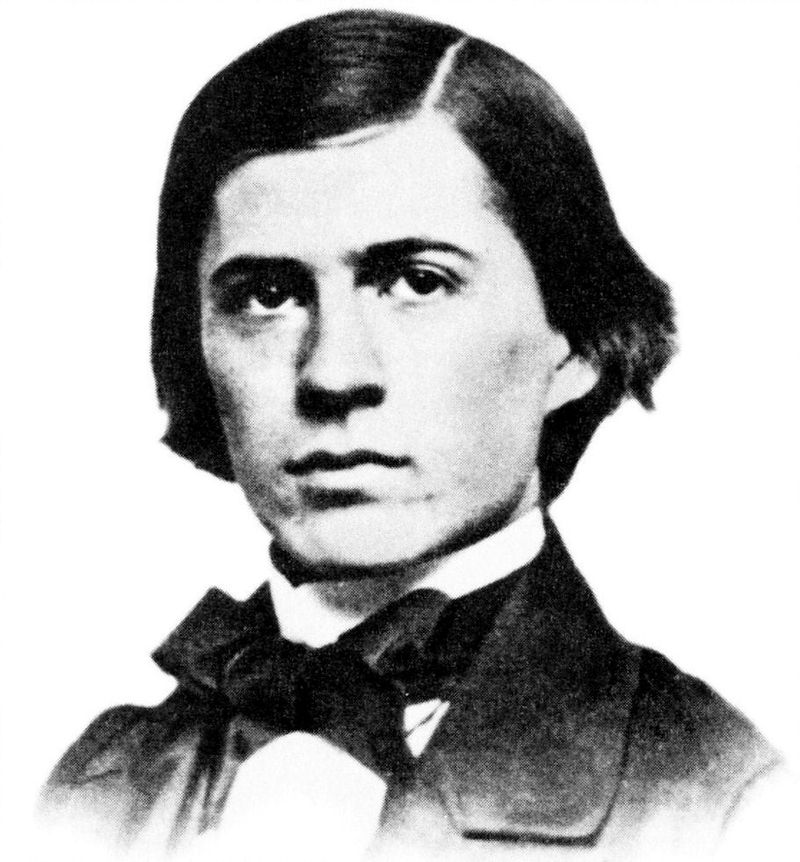
  • Pragmatism - Let's note what Stanford says: Encyclopedia article. There are many more to chose from. 
  • Mathematics - St. Andrews (UK) has a nice take on him. Lots of papers have been written on his work, but this one deals with his logic emphasis which lead to the conceptual/existential graph of Sowa.  

With respect to his wok, Wikipedia hosts an extensive bibliography (as a good example of its capability). We feel somewhat remiss in that the effort to collect and present this material started in 2006, and we just found it the other day. Has to do with focus and viewpoints, where there is no overarching view that encompasses all (one might say, no theory). Frankly, that CSP still gets attention in the modern world is appropriate. His worth will grow when we tame computation and their misuse of "metrically transitive operators." 

---

Now, it was Benjamin's Memoir (see post) that noted the Thomas Gardner connection which was picked up by Dr. Frank. We went to look at the WT information on CS Peirce. There was a note about a G2G (study by genealogists) activity that established a different mother rather than the granddaughter of Thomas. As said, we have not reviewed this work, as of yet. On an initial look, per usual, there was not a complete edit/update with the new material. In fact, due to the discussion, the final decision was different than that proposed, at first. But, then, that is how these things go. 

There is technology related to genealogical studies (including those dealing with biological issues), but our focus on technology is across the board. Somewhat, we are pursuing a thrust dealing with truth engineering as being a necessity in the computer age. Nothing new here as the computer has been evolving for decades, now. It is more the case that how things unfold make the need obvious from certain viewpoints. 

Looking at CSP's life show parallels with what we see now. In fact, one wit said that the 'whole family' was crazy (perhaps, jokingly); yet, dynamics related to knowledge and its use are not new to us. We just have the advantage (or misfortune) of being around when things got more gnarled than anyone thought could be. 

---

Note: There will be more information, in the technical forum, about Wolfram (Mathematica) and Lenat (Cyc). The parentheses provide a link to their work via Wikipedia.  

With respect to CSP, he and his wife had no offspring. So, they are on our growing list of those forgotten ones that we will pay attention to, going forward. 

Remarks: Modified: 12/29/2022

12/29/2022 -- Added in pointer to the bibliography on Wikipedia, started in 2006.  Benjamin was at Harvard (Class of 1829) and is listed as one of the few mathematicians from the USA in the XVIII Century. A cuz at Clark University has created a chronology of mathematics which will be useful for a quick look at the generational aspects. 


Tuesday, November 22, 2022

Lydia Maria Child

TL;DR -- Over the 400 years of our interest, we will be looking at people and events, here, there and everywhere. That goes with the long reach of New England. This post looks at someone from the seventh generation who was involved with several matters of long-standing concern. L. M. Child is of long New England pedigree as is her husband.

---

Book reviews can be a great resource. We don't always pay attention, as life is full of multiple areas of concern that need attention. But, the WSJ (weekend edition of the Wall Street Journal) has been a constant supplier of reviews of good books, that is, ones pertinent to our interests. For this post, we can point to three of these. One is that the childless can become lost as who pays attention down the pike? Lydia and her husband had no offspring. We have mentioned this interest several times, say with respect to Joseph and Ann - see Aunts, Uncles, Cousins which is from 2012 and needs some updating. Note, though, others have been added, such as Charles Alcott Flagg, friend of Dr. Frank and contributor to The Massachusetts Magazine. 

There are a couple more interests of many which we will itemize and discuss next year being motivated by the next 100 after the 400th commemorations cease, down the pike. The other two interests deal with identifying Essex County (Cape Ann) influences over the U.S. and the world, even today. So, that entails recognizing names of New England families in various contexts and looking for the specifics. The other is to find family associations within the large collection related to Thomas and Margaret (Fryer) Gardner. In this case, we have already found some but will keep those particularities out of focus for later. 

WBUR (news station, Boston) provides the following quote. 

BTW, we are finding that becoming stale is the norm for the web links and their offspring. This usually is only an inconvenience until one considers that what gets into place after the target of the scale link disappears. That can be problematic and will be covered under the topic of technology going forward. 

Here's the quote: 

  • Lydia Moland: "Lydia Maria Child: A Radical American Life" tells the story of what brought Child to this moment and the extraordinary life she lived in response. Through Child’s example, philosopher Lydia Moland asks questions as pressing and personal in our time as they were in Child’s: What does it mean to change your life when the moral future of your country is at stake? When confronted by sanctioned evil and systematic injustice, how should a citizen live? Child’s lifetime of bravery, conviction, humility, and determination provides a wealth of spirited guidance for political engagement today. 

The Frugal Housewife
by Lydia M Child
Information about Lydia Child is available many places (Wikipedia, WikiTree). She is the author of a popular poem; too, she wrote The Frugal Housewife, an early example of self-help. Her parents were Convers Francis and Susanna Rand. With respect to point #1, WikiTree does not have her heritage filled in as it could be since she does had New England families in her tree. So, we'll look at that. 
 
It ought to be an interesting bit of research. We can start here, with the VR of Medford which is in Middlesex County under the "Francis" surname for which there are several entries. 
  •  Lydia, d. Convers and Susanna, Feb. 11, 1802. ["took, when baptized, the name Lydia Maria" [w. David L. Child, Esq.] "the author of several valuable works," PR13]
The 'Francis' surname appears in Barnstable, Berkshire, Bristol, Dukes, Essex, Hampden, Middlesex, Nantucket, Norfolk, and Worcester Counties of Massachusetts. Okay?

---

We have looked a little at Lydia and her family. Let's stop to consider the times that she was born into. Recently, we did a look at veterans throughout the time of the U.S. (see Veterans Day) and showed a graphic of the conflicts. According to that source, the Revolution ran from 1775 to 1783. Lydia was born 21 years after the end of the revolution. The next conflict started in 1812, so she would have been aware of that war. Also, we had next the Mexican War and the Civil War. Now, Lydia was an early abolitionist as was her husband. We will get back to that as the extended family had a lot to do with the opposition to slavery. 

As an aside, Great Britain started the anti-slavery effort which we will look into. The U.S. had some involvement in the industry of slavery but pulled out of it. Needless to say, slavery still exists in our world. We really need to give credit to the folks of New England (they are legion) who worked and gave their lives for the effort, as we continue the efforts toward a more just life for everyone.   

So expect that we will continue our efforts at identifying abolitionists and other positions to be applied to new material about new people plus we will be going back for another look at what has been done so far in this regard. 

---

On the other side of things, 1804 was the year that Lewis & Clark got their sojourn going. They went down the Ohio River to St. Louis before running up the Missouri River. People were already going west, mostly for fur trading and exploring in the beginning. Boone himself was doing interesting things. We will be touching upon these themes as we continue our research. 

One category to keep in mind as we go forward deals with generations. The fifth were the core of the Revolution. The sixth were born but too young. The early seventh is where we would place Lydia. As we fill in more information about her, we will post updates. 

We will look at the family of Lydia's husband as well as that of the Francis family using the time of Lydia as a reflective point. 

Remarks: Modified: 12/29/2022

12/29/2022 -- Ipswich, MA led the way in settling Ohio post the Revolution.  

Thursday, August 5, 2021

Michigan, 200 years ago

TL; DR -- Dr. Frank's TMM had a regular column on Massachusetts Pioneers to Michigan which we knew about but did not probe deeper. Now, we get a chance as it took longer to get areas east of the Mississippi settled than it did Missouri and Arkansas. So, we will look at both sides of the big river for a bit including a look down south with Louisiana and Texas. Per usual, we relate things to the event of 250 ago after which the developments under study occurred. And, to lessons not learned yet; the context for these change with the times; will we ever learn? 

--

In The Massachusetts Magazine (1908 to 1918), C.A. Flagg, of the Library of Congress and friend of Dr. Frank, wrote of the Massachusetts pioneers to Michigan. We did not really pay attention to this until now. The last post (Practice for carving) mentioned that there were two situations, as we might think, namely east and west of the Mississippi River. Our focus has been on the latter. Now, we have a chance to step back and look at the former. 

One motivator is the event called the Toledo War which was a verbal conflict between different parties for a strip of land that bordered Ohio and Michigan. Michigan State University provides several maps in their paper part of which are in this composite. 


Another motivator is running across a family one of whose ancestors bought land in the Michigan Strip, according to the records of  the Bureau of Land Management which records we used for studying Missouri. As the west was carved, there was paperwork to be done. Too, surveying was a big time business. One early practitioner was New Englander Silas Bent. His son was at several meetings with the American Indians with respect to peace. So, that is a topic to look into, as well.

All of this relates to the long reach of New England, across the interior and the seas. As an aside, in terms of families, the non-logical genealogists have dissed all sorts of families. We will get to that, as it is John's area. Not genealogy. Rather, modeling, problem solving, philosophy of mathematics and science and the related subjects including deep knowledge of computing (all aspects) and that wannabe called AI which has raised so much mania/angst and glee/euphoria through fairy dusting that comes from too much SciFi, fantasy, and sheer unrestrained imagination. 

That is one of the major TGS subjects for research. One might add mental health with a nod to the pair who fled the UK for the US last year. 

In any case, we will pull out the Flagg articles so that they can be used. One family was in the same spot but was, over the years, in Louisiana (lazy mode, we suppose) and then two counties in Iowa. Same goes for the Strip. And, we have not looked yet at the many other States that were populated after the colonies split from the Crown. 

For those being dissed, many died young, like the case for the Mayflower where a stepmother came along and muddied the waters. Then, the father died young, too, leaving his infant (whose mother had died early, too) with the woman who ran off, but her uncles saved the day. Then, a modern mind touting its genealogical expertise (a scientist, to boot) could not rectify the facts. This is too much of a general problem, folks. John has now 10 years experience of bouncing against this mind set. Too, those who look are talking the general problems of computing and knowledge, especially that at the higher relams where people really ought to know better. 

BTW, note that Anderson of NEHGS had everyone thinking of three wives for Thomas. Okay? Look at WikiTree. We now have it back to two (Margaret and Demaris) with some work being done to fill that picture in further. 

Oh yes, Missouri was settled in 1821, somewhat, though it took a while for the counties to shuffle to their modern definition. The Strip was still being contested (conflicted) until 1835. That would have been about the time that Texas was rumbling with respect to north and south, as in, European cultures over here with their pissing contests. We will be stepping down there, to boot. Got to love Texas, people. 

Michener, in his research, noted that the Mexican War was really a training ground for the Civil War. Dr. Frank noted that the Crown trained the U.S.ers in the conflicts with New France and its American Indian allies (so called French-Indian affairs) so that they could rebel. And, we are now approaching the 250th of that. Lucky us. We see that New England's experiences will be needed to keep things straight due to so many opinions based upon things of little to none provenance. We have to correct that over time in order to frame a better story for future generations. 

Remarks: Modified: 12/16/2022

12/16/2022 -- Finally got around to looking at the first steps west which were driven by Ipswich MA. Also, Rutland VT was involved. See Perspective, a necessity. 


Wednesday, July 28, 2021

Practice for carving

TL;DR -- We were looking further west but have to take the time to look at prior conditions. From the French-Indian affair through the War of 1812, a lot of time passed. And, then, New England did not cover much territory. It was looking at western Ohio recently where we realized the oversight and stopped to take those matters into consideration. 

--

As we look at the details related to the 250th of the U.S. start, we have to consider lots of angles, such as before and after. Today, let's relook briefly as the "Carving of the land" that happened after Jefferson's deal. Starting with the area just east of the Mississippi, people settled. And, more came. Til now, we mainly were looking at land west of the Mississippi. Today, we will take a look at an area further east which was known as the northwest (albeit, before Oregon came on the scene). 

This map gives an overview of the status around the time of the Revolution. It shows the areas controlled by New England (red), New France (blue), and New Spain (orange). That whole area of the middle and leftmost was the topic in several prior posts, such as State of Missouri, 1821. For instance, most of the left coast was claimed by New Spain, except for some of the northern region. 

North America in 1750

Our interest is that families moved to these areas all of the time during the century of the frontier, including moving to many states. And, that left holes in the paper trail that genealogists love. We will have some posts on the fact that genealogists are not logical. Lots and lots to do. 

Now this next map is where we were going. Having followed some families out west from the time of the Revolution and also taking the lineage back to the beginning (400 years ago and so), we now see that we need to look more closely at the lost generations between the Patriot (SAR and DAR) and the generation about two after. Earlier, we mentioned that the fifth generation did the Revolution. The sixth and seventh got things going. Then, the eighth? Got the reward? Not really, as we still had decades and decades of hard work to be done. 

In Frank's magazine (The Massachusetts Magazine), there was regular column about Michigan. By C.A. Flagg, first of series was Vol. 1, No. 2, pg 73. 

It never really sunk in until of late. Our focus had been the southern route, where northerners came west through the Carolinas into Tennessee and west. Imagine tracking a family through that. 

This next map is great as it shows the colonies around the time that we (the U.S.ers) were being trained by the Crown militarily as we supported the conflicts with New France and its American Indian allies. Those colonies are on the right coast. Now, look left. 


Notice, New England states were ceding property. We had an earlier map that showed Virginia claiming land to the west out to the Rockies (not in this map). Great country? Right? We just saw this video of people (in other countries) watching another video that talked about the size of the U.S. both geographically and economically. Things are huge. 

With, it might be added, the vast majority of the population being on the coasts. Imagine that? The good life is in the interior. In any case, We had to go back to Massachusetts for the start of a family that then was spread over this region and west. 

Here's where we are heading. When we first ran into the problem, we knew too little to have an informed opinion. But, after running into a pattern time and again, we will say this. Lots and lots of American families have been dissed. John thinks that it stinks; he has no axe to grind since his lineages are all post the Civil War. As we look at the events that led up to the Civil War and many other conflicts such as with the American Indians, lots of things call for attention. Abstracted history throws out such details as if of no consequence. Genealogists with their plodding (a mere paper chase, with little reasoning going on). Time to talk advanced logic, okay? 

If you look at the map of Missouri (above link), in 1821, when the State got started (paired with Maine's entry in 1820) with a slave/free balance, there were few counties covering the state. Some of them huge. Then, these split over time. One of our tasks was looking at Bureau of Land Management records with respect to the opening of Missouri. Since then, we have looked at other states. 

Another thing to note. We have seen, time and again, the mother dying young. The recent one, a mere 20 years old. Then comes another wife. In one case, the step-mother split when her husband died leaving a youngster (wasn't hers anyway; step child) to be raised by the families (uncles, in this case, who did a good job). The thing that grates was one established organization, y'all can see it here, dissing this poor thing. 

Yes, this'll be discussed ad infinitum until the great minds (yes, genealogists, you) come to some type of awareness that we can assess being without relying to much on paper. Sheesh, I just saw a Census that is screwed up. It's not an issue yet. We'll document it to let people know that this can happen. Too, though, as one looks at that map (2nd one, okay?), depending upon the time of the document, it could have any of those labels. So, there ought to be a way, with technology now, to do errata that persists. 

Actually, we have just begun the necessary work. 

Remarks: Modified: 06/11/2025

09/03/2021 -- See Michigan where carving was early. 

04/07/2022 -- Change Native Americans to American Indians. 

06/11/2025 -- Changed image for the American claims. 


Saturday, February 27, 2021

New Spain

TL;DR -- New Spain covered more area than New France. And, it had land that the U.S. wanted later than did any other country. Finally, a look at the situation. 

---

We finally are getting to New Spain after spending some time looking at New France.  Doing these other areas does a couple of things, at least. For one, New England dealt with others who were European and who were over here but outside of New England. It will be good to get a closer view of the events and activities where we can 'flesh' out the situation; this type of work makes the study of history to be more human oriented. 

The other thing is that the areas involved outside of New England were much broader in scope which we saw with the Louisiana Purchase. We backed into this study through looking at families that had gone west from both the northern and the southern parts (Virginia and surrounds) of New England. As we were getting familiar with details, it became obvious that we needed to stop and acquaint ourselves with the other colonialist's views. Jefferson did the Louisiana deal with New France, but the area had been under New Spain, too. 

Let's use Wikipedia. There are several maps on the New Spain page, but we like this one for several reasons. It shows the total scope of New Spain. The darker blue region is the original coverage. There is a medium blue region that New Spain got from New France. 

New Spain, colored in blue

Stopping for a minute, we can look at St. Louis, MO. It was founded by French trappers, as we would expect. However, the area had been visited by people from both New Spain (1500s) and New France (1670s). In 1764, New Spain got the area from New France who got it back later, prior to the sale to Jefferson. In the map, the light blue areas were obtained from New France. 

Except, there had been exploration along the left coast as shown by this map which is of the Pacific Northwest. 


In the southwest, New Spain ventured in from the coast. To wit, Santa Fe, NM was an early post. Coronado covered a lot of area which we will be looking at further. Reminder, we are talking 1540 which was the time of Thomas Gardner's great-grandfather. It was about the same time that de Soto ventured up the Mississippi to just south of where St. Louis is now. It was 100 years later when New France ventured into the same area arriving by a totally different direction from the Great Lakes. 

Coronado and his scouts

Lewis & Clark came through the St. Louis area in their 1804/5 trek. The fur business started to explode. And, then we had the early explorers. Missouri, as a State, had entrants on a regular basis prior to 1820s. As well, all of the characters that we have taken some interest in  (such as Jedediah Strong Smith) were in St. Louis at some time or the other. 

Even after the Jefferson deal, New Spain covered a lot of area. Those familiar with the modern maps can see Florida, parts of other southern States, Texas, New Mexico, Arizona and California across the bottom (others, such as Colorado, were above these) as parts of New Spain. At the same time, there were wanderers from out of New England, in the area. Some of these were early pioneers who planned to put down roots. 

New Spain, 1819

One thing that we can do is pick a few families for a focus. Francis Alcott Flagg had a long series about pioneers to the western front. You know, his research was related to Ohio, Michigan and Wisconsin. The area was considered the northwest (hence Northwestern University). Far west? 

We will (continue to) look at the total breadth of the emigration across the U.S. And, bringing in geography allows us to see the reality of the situations. 

Caveat: Using Wikipedia's  maps. If anything seems out of order, let us know. Meaning, Wikipedia is a volunteer effort and needs editors to keep information accurate and up to date. 

Remarks: Modified: 02/27/2021

02/27/2021 --  

Monday, January 25, 2021

Maine

TL;DR -- Maine, scene of some early activity and part of Massachusetts for a long while, will be on our radar, for the most part.  

---

One of the first groups that we ran into, after NSDAR, was OFFME (Order of the First Families of Maine) which had been founded in 2003. Perusing their Eligibility page was another learning experience. Early on, all of our work was focused on Essex County, MA and then extended out to other areas of Massachusetts and then New Hampshire. So, Maine was new territory. But, data seemed sparse, at least, that which was digitized at the time. 

The most recently seen issue of the American Ancestors Magazine has a section on the 200th (1820 - 2020) of Maine. One article listed resources for learning about the area and its people. We started with the Old Kittery (Stackpole) book which represented a lot of research. It turns out, as most know, that this work was an example of efforts by researchers that happened throughout the whole area starting after the inception of the NEHGS. 


In fact, Dr. Frank started his work (1907 release) on Thomas Gardner back in the latter part of the 1800s. 

We have had several posts related to Maine and have open research going on with respect to the area. 
We will be looking at the State further as we continue our research. We commend the NEHGS on having the two-hundred year focus. 

Remarks: Modified: 11/25/2021

11/25/2021 -- Maine, first Thanksgiving (see Remarks, 11/25/2021), 1607?


Tuesday, January 19, 2021

Wikipedia I

TL;DR -- About the Wikipedia page(s) which need some attention.  

---

One of the first things that we did back in 2010 was start the Wikipedia page for Thomas Gardner (planter). To be exact, this is the first issue of the page on 10 Jan 2010. 

1st page - Thomas Gardner (planter)

It was short and quoted Dr. Frank. As well, we updated pages for Gloucester, Cape Ann and the Dorchester Company to reflect the existence of Thomas Gardner. And, of course, we mentioned John Lowell and Isabella Stewart Gardner. Since then, there have been lots of updates. We have created several supportive pages, such as Great House (Cape Ann). 

We actually started this work in 2009, on ancestry. Later, a DAR Registrar mentioned the problems with that approach, so we started our own approach which needs some attention (having millions of bits of data). But, we'll start with Wikipedia which will be updated this month to be more in agreement with the Wikipedia requirements. For instance, some of our work was new though the web was full of stuff. Lots of the resources did not meet standards, even Dr. Frank's book. So, we will shift to using Anderson's look at the Great Migration, with updates. 

For our work here, we decided to use WikiTree since it uses the Wiki paradigm. Note some of the benefits of that in the image. We have been slowly editing the pages for Thomas and Margaret on WikiTree, after establishing our credentials via work at that site. We will be going into more detail this year.  

About Wikipedia, from the beginning, it stood out on the web. There is a lot that could be discussed, but, for most subjects, Wikipedia offered a perfect summary overview, many times written by experts. It's the first choice for our work, here, in most cases, even if we pick it off of the Google offerings after a search. With respect to technology and knowledge (that order, by choice), Wikipedia represents a worldview that is essential. Lots to discuss with regard to this.  

Early on, many academics argued against the approach for many reasons. One of these was the open edit which allows 'graffiti' of various natures, but that can be controlled. Too, lots of opinion has been expressed on the site. But, over the past decade, concerted effort with regard to reviews and such has paid off. 

With respect to changes, we will use CA Anderson's work with updates. Some of these have already been suggested on WikiTree to the Great Migration Project team who has demonstrated an approach that is sorely needed given the free-flow of fluff that one finds on ancestry and the like. 

We will be getting back to ancestry, somewhat using it as a means of demonstration to support the work that will be the focus of our portal (TGSoc.org). 2021 will have a heavy technical focus. As we move along, some requirements will become more in amenable to discussions about tasks. Right now, we are thinking of GitHub as a means for providing a project overview. There are other options. 

Those are configuration issues. Content will continue to grow in size and scope. For instance, one example of many deals with the descendants which has common interest. On WikiTree, all of the children have been represented. Some more sparsely than other. But, that work has to be done by Thomas Gardner descendant who care about the quality of the data. As we mentioned before, one tactic will be to reflect across DAR's view. To the rebellion, we're talking 250 years. Then, we have 150 years to cover before that. 

Now, there has been work done for over two centuries on these subjects. We want to have a bibliographic that is as inclusive as we can make it. We already started that. For instance, thank Rev. Hubbard for making the first reference to Thomas; had Rev Hubbard's manuscript (from 1680) been lost, we would be really deficit. On the computer, work started way before the internet was let loose by DARPA who is finally realizing some mistakes and thinking of the need for a 100-year outlook. 

Want an example? The B52 which is still flying (designed in the 50s). So, we had pre-web stuff. Then, the web stuff can be seen by its generation. We want to map that out. And, we will pull information that can be supported into a common view where WikiTree is only a part. After all, that graphic mode of ancestry does not make for a proper presentation that will survive across decades. 

Now, with respect to that, we might not see some of this come about, but we sure can set up the framework for continued work. If you look in this blog, you'll see our reference to the dude who spent his career at the Library of Congress and did genealogy on the side. When he died, there was some issue about how to support the continuation of the work and site. Fortunately, the NEHGS picked this up. BTW, we just has a post last month on CA Flagg who was at the LoC in the time of Dr. Frank and who contributed to The Massachusetts Magazine and a lot more. 

Remarks: Modified: 01/19/2021

01/19/2021 -- Followed this look with an update from two weeks later, 31 Jan 2020.


Monday, December 28, 2020

Revolutionary experiences

TL;DR -- Some Patriots and the Rhode Island event.  

---

So, finally, to the work of the other day after a few diversions: Recognition of Dr. Frank, Charles Alcott Flagg, and, then, Thomas Franklin Waters. These three were related to the motivations for this post which includes looking around for details that might be of interest. 

Below is a collection of entries related to service during the Revolution that was  documented after the fact. Partly, this is motivated by the interests of DAR and SAR, but there are larger issues that we wish to address, in the future. There are entries from the records of two individuals. The records start in 1775. There are several entries for one of the individuals. Finally, we end up with the Battle of Rhode Island and after. It may be interesting to note that there were three more years to go. The conflict went until 1783. 

Too, this is a cursory look which is meant to suggests where we will put some attention, since we can no longer ignore the details. For one thing, the 250th is coming up. So, we would like to be prepared. Then, as we mentioned earlier, history is told by the upper crust. Looking at some details related to other folks is something that can now be facilitated by the computer.  

In our work, we would not look through related documents such as Dr. Frank did with his study of Massachusetts regiments. Unlike Dr. Frank's day, we now have printed or digital records to access, thanks to those forward-looking people who got this work done. Too, like the RI event, we need to stop and consider what the record entry was referring to. Given that, our focus will be on the individuals, who will not be identified in the beginning.

The examples are 1) an older Major (Essex Co) and 2) a younger Private (Plymouth Co) who became a Corporal, both lived in Massachusetts. 

  • Ipswich. Major, Col. Henry Jackson's regt.; Continental Army pay accounts for service from Jan. 1, 1777, to July 9, 1778 ; reported resigned July 9, 1778;
    also, return certified at Camp near Morristown, April 30, 1780, of officers and men belonging to Col. Lee's, Col. Henley's, and Col. Jackson's regts., and men belonging to Massachusetts in Col. Henry Sherburne's regt., who were incorporated into a regiment under the command of Col. Henry Jackson, agreeable to the arrangement of April 9, 1779; rank. Major; residence, Ipswich;

  • Pembroke. Private. Capt. Freedom Chamberlain's co., Gen. John Thomas's regt.; muster roll dated Aug. 1, 1775; enlisted May 3, 1775; service, 3 mos. 6 days; also, company return dated Roxbury Camp, Oct. 6, 1775; also, order for bounty coat or its equivalent in money dated Camp at Roxbury, Nov. 9, 1775;
    also, Private, Capt. Amos Turner's co., Col. Titcomb's regt.; service from April -, 1777, to the middle of June, 1777, 2 mos. 6 (also given 2 mos. 7) days, including travel (120 miles) out and home; company detached from militia and marched to Tiverton, R. I.;
    also, list of men mustered by James Hatch, Muster Master for Plymouth Co., to serve until Jan. 1, 1778, or during the war, endorsed " July -, 1777;
    " Col. Robinson's regt. ; enlisted by Capt. Stowers ;
    also, Corporal, Capt. Seth Stowers's co., Col. J. Robinson's regt.; enlisted July 1, 1777 ; service, 6 mos., at Rhode Island;
    also, descriptive list of men raised in Plymouth Co. for the term of 9 months from the time of their arrival at Fishkill, agreeable to resolve of April 20, 1778;
    Capt. Bonney's co., Col. Cushing's regt.; age, 19 yrs.; stature, 5 ft. 11 in.; complexion, light; residence, Pembroke; arrived at Fishkill June 10, 1778 ;
    also, list of men returned as received of Jonathan Warner, Commissioner, by Col. R. Putnam July 20, 1778 ; engaged for town of Pembroke ;
    also, Private,Capt. John Turner's co., Col. John Jacobs's regt. ; enlisted Sept. 4, 1780 ; discharged Oct. 30, 1780 ; service, 1 mo. 27 days; regiment detached from militia to reinforce Continental Army at Rhode Island for 3 months.
Both records specify the organizations that the person was associated with. The records in the enlisted example indicate multiple musterings, through time which agrees with the history of the organization (Wikipedia). We see several things to research further: Massachusetts Line was used for the military organizations of that state; Morristown, NJ was considered the headquarters across the colonial States; the relationships, and how closely they might be, as we continue our studies of collateral families.

This was a brief look at military records as detailed by the Massachusetts project. From that, we can consider other details of the individual's life. For instance, taking the private, what did he do between his militia stints? And, in the locations where the service is depicted, what were the events? How did the locals fare? 

There is really no end to what can be considered of interest. McCullough, with others, has shown us that. And, we have on-line resources with which to do the work, including publishing research results. 

Remarks: Modified: 12/16/2022

12/16/2022 -- Changed pointer on the Battle of "Rhode Island" to Wikipedia. 

Friday, December 25, 2020

Thomas Franklin Waters

TL;DR -- About Ipswich, MA which was the hometown of T. F. Waters and the subject of his research.  

---

T.F. Waters was the first editor of The Massachusetts Magazine (first issue was January 1908) that was started by Dr. Frank and friends who were Charles Alcott Flagg (last post), Albert W. Dennis, Lucie M. Gardner, and others. We will spend a little time looking at some of the details concerning the publication of the TMM by looking at those involved, including their lives. 

In an earlier post (Sings of the times, 2014), we were discussing research in Ipswich and mentioned a few families that were in focus. We heard from Gordon Harris who does several things, including work to restore properties in Ipswich about which we will write more. But Gordon has a website that is loaded with information (Historic Ipswich) in which he has a list of houses. His earlier note mentioned one house that was connected with the families that we were researching: 5 County Street. 

Today, we looked at that more thoroughly as we are going to concentrate on the time around the Revolution which is coming up for another memorial (250th). And, that will involve  looking at the related properties. As we were enjoying the look at the writeup on the house, a map was shown that is reminiscent of what Sidney Perley did in Salem and elsewhere. 

But, the author of the map was T.F. Waters. That got our attention. He was a major writer on Ipswich and will feature more in the future as we expand on the expected themes. 

Ipswich - land grants

As we mentioned before, it was the 4th and 5th generations which saw the Revolution through by enduring the turmoil and hardship. 

Remarks: Modified: 12/26/2020

12/25/2020 -- 

Wednesday, December 23, 2020

Charles Alcott Flagg

TL;DR -- Correcting oversight of old friend of Dr. Frank's who contributed regularly to The Massachusetts Magazine.  

---

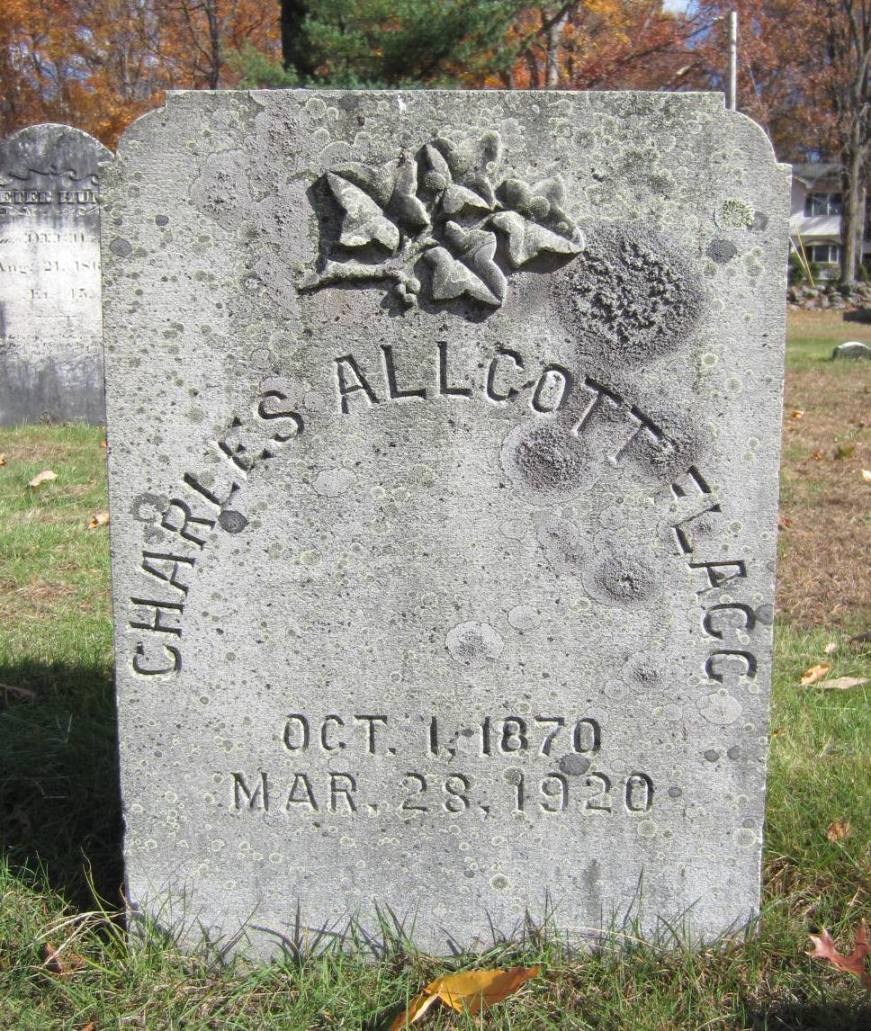
Charles A. Flagg (1870-1920), C.A., is an example of someone with no progeny who is forgotten. We ran across him first within the context of The Massachusetts Magazine. He was a regular contributor starting with Vol. 1, No. 2 with an article on "Massachusetts Pioneers in Michigan" that we will look at further. 

In our last post, we mentioned that C.A. gave a nod to Dr. Frank's in the introduction of his book, Alphabetical Index of Revolutionary Pensioners Living in Maine, with respect to Dr. Frank's work on Massachusetts regiments. 

Two things motivate this post. 

  • C.A.'s work is quoted in the SSP of Maine (soldiers, sailors) quite extensively. However, there is also this little note by the editors (curators) of the work: 

      This list is full of errors. It contains names of men who did not serve in the Revolutionary War. The ages are wrong in many cases, as are the dates of death. 

    This SSP work was published in 1982 which was decades after the work of C.A. Too, technology was quite a bit different in the two periods. There is another factor, next bullet. But, this comment was done by the General Genealogist of S.A.R. (sorry bunch of guys?) who ought to have known better. It's one thing to make such remarks (which are without any foundation) in private; to leave them in a reference that is expected to get attention is another thing (very unprofessional).

    Reading the comment gave us pause. What was that? Why? We didn't know how to respond at the time. But, since then we have done a little research. We give a little bio of C.A. after this pause here. Plus, the image shows some of his work that is on-line. C.A. was the librarian for American History at the Library of  Congress, among other things. BTW, in favor of the S.A.R. folks, they did note that other people had errors and corrected them. Okay, editors are for that purpose, for one thing. We could go on but won't. 
  • A couple of years ago (January of 2018), we noted that it was 100 years before that "The Massachusetts Magazine" published its last issue. At that time, we surmised about the Spanish Flu, especially in how Dr. Frank would have been busy. Very much so. There was also the drain of resources and funds related to WWI. But, then, we looked at C.A.'s biography and saw that he had died in 1920. We will look at the specifics, but it is very likely that the publication of his work was after he died. The S.A.R. folks could have looked that up. Also, given that it was within the period of the flu, did he have complications related to the pandemic? 
Anyway, C. A. Flagg's work stands on its own. He was a graduate of Bowdoin. Then, he did post-graduate studies in Library Systems. We are talking the latter part of the 19th Century, so it would be interesting to see what was involved. But, C.A. served as a librarian at the New York State library in Albany, NY. Too, he spent time at the Library of Congress in DC. There he was the expert in American History. Then, C.A. went to Bangor, Maine and was librarian there. That is where he did a lot more research, some of it resulting in the index of pensioners mentioned in this post. 

This graphic lists some of C.A.'s work (from uPenn). 


We'll get back to work looking at specifics of the Revolutionary period. History is told top down by the victors and mostly ignores the small people. Technology, now, can revert that and lift proper views to focus. That's one of our goals. Or, from another view, events from 400 years ago and 250 years ago can still have relevance to our lives. 

There ain't nothing new under the sun, essentially. 

Remarks: Modified: 08/05/2021

12/25/2020 -- C.A. was part of the editorial board for the TMM from the beginning. T.F. Waters was the Editor. 

08/05/2021 -- We will be using the work of CA as we study the History of Michigan and surrounds. As well, here is the Find A Grave record for CA. 


Recognition of Dr. Frank

TL;DR -- Run into C.A. Flagg while researching a Patriot who served in Maine.  

---

We were researching in the context of DAR and SAR and stumbled upon a nice surprise. Fortunately, the focus was Massachusetts and its derivative, Maine. Though, we have researched other states and will (ought to) do more of this. But, Lexington and Concord is taken as the origin of the turmoil that went on for several years. It may be that we do not appreciate that effort. Lots of history is told top down, by the victors. There is some bottom-up work, such as McCullough's look using Col. Hodgkins and his letters to his wife. The connection there is that he is the brother of one of Ann's GGPs. Sometimes, we have diaries. One diary connected to Gardners that we have mentioned is that of Nathaniel Knapp. But, this was from the prior conflict, the French-Indian affair, where the King trained the colonial leaders to rebel and to do it successfully. 

With technology, we can do a better job of telling the tales, many of which have relevance today. And, lots of resources are on line with which to do this work. Let's look at some. 

  • SSP of Massachusetts - This 17-volume tome was addressed earlier (Resources and more, timeframe of Sept 2013). We included a link to all volumes in a post. The SSP link goes to the volume that has the Gardners (pages 254 to 282). Each of those entries tells a story. We will look at a couple examples, one Gardner, one not. 
  • SSP of Maine -  This volume is the work of SAR. Some of the entries are also in the MA books as there is overlap. We look at an example below. Now, one of their sources is a book by C.A. Flagg who researched Revolutionary pensioners living in Maine (next bullet).  
  • An Alphabetical Index of Revolutionary Pensioners Living in Maine - C.A. Flagg's 1920 publication that is fully readable, thanks to the University of Southern Maine. In his forward, C.A. mentions Dr. Frank with whom he worked on The Massachusetts Magazine. C.A. was a librarian at Bangor, ME, NY State Library in Albany, NY, and the Library of Congress in DC. 

We will take a specific look at CA Flagg this year, especially his contributions to The Massachusetts Magazine where he had a regular column dealing with Massachusetts pioneers to Michigan. CA died in 1920. One wonders if that was due to some lingering impact of the Spanish Flu. He would have been 50 years old. 

The next post on this subject will look at a couple of examples of Revolutionary War service as detailed in the SSP of MA and SSP of ME. We'll use a time frame that maps to service events over several years, using some actual records. After MA and ME, we'll drop south and look at a couple of states there. This is, somewhat, carrying on for Dr. Frank. 

Remarks: Modified: 07/30/2021

12/23/2020 --

Thursday, November 30, 2017

Gardner's Beacon, Vol VII, No 2

This issue of Gardner's Beacon gives additional reporting on our research activity. Too, we have the first print of The Gardner Annals in which issues of Gardner's Beacon (Vols. I, II, III) are provided in an appendix. This print edition included Vols. I and II of the TGA.

GB Vol VII_No2
In the current issue of Gardner's Beacon, we continue to look at The Massachusetts Magazine. All of the issues have now been reviewed with their Table of Contents reprinted. Too, we have looked closely at a few articles that are pertinent. Both Dr. Frank and his sister, Lucie, were regular contributors to the magazine. Too, Charles Alcott Flagg, of the Library of Congress, wrote a regular series on western pioneers from Massachusetts to Michigan.

Col. Thomas Wentworth Higginson was an early advisory editor. He will be one of the TMM supporters who will be featured in Vol. IV, No. 1 of The Gardner Annals which is undergoing preparation. A descendant of Count Rumford provides a short article in the TMM about efforts related to honoring the gentleman. We will take a closer look. Vol IV will print with Vol. III in the next printing to be ready in early spring of 2018.

The current print version of the TGA (Vol I and II) and GB (Vol I, II, III) can be obtained through emailing for instructions: publications@TGSoc.org.

See Vol. VII, No. 2 of Gardner's Beacon for the issue (PDF).

Remarks: Modified: 12/01/2017

11/30/2017 --

Monday, May 25, 2015

The Massachusetts Magazine

Context:
-----------------

On the Talk Page of the Wikipedia article about The Massachusetts Magazine, we have a link to all of the volumes hosted at archive.org (prefer their reader). We will be reviewing the whole series for several reasons.

For starters, this image shows the Contents from 1909, Volume II (start page of first article by Number: #1 - 3, #2 - 59, #3 - 123, #4 - 191).

Contents, 1909, The Massachusetts Magazine
In this Volume, the contributors were Benj. L. Noyes, Herbert M. Sylvester, Charles A. Flagg, George Sheldon, F. A. Gardner, M.D., John N. McClintock, Lucie M. Gardner, Thomas F. Waters, Caroline Rogers Hill, Edward J. James, Booker T. Washington, Daniel S. Jordan, and Cyrus Northrop.

In this volume, we have Booker T. Washington, et al, on Charles William Eliot on the occasion of his retirement as head of Harvard.

---

In looking at this periodical, it was 100 years after the first attempt which was rather avant garde, given the timeframe which was still during the American Revolution which carried over until the early 1800s.

As well, Sidney Perley's The Essex Antiquarian was winding down. We, of course, can look now to see what is on the landscape. What was there at this time, 1909?

---

Jumping ahead to 1914, the year of the start of WWI (start page of first article by Number: #1 - 3, #2 - 51, #3 - 99, #4 - 147).

Contents, 1914, The Massachusetts Magazine
Contributors were: C. Crozat Converse, Charles A. Flagg, Judge Francis M. Thompson, Frank A. Gardner, M.D., Anne L. Page, and James J. Cotter.

Remarks: Modified: 03/14/2019

05/25/2015 -- It is interesting that up through 1912, Lucie (Dr. Frank's sister) reported on "Family Genealogies" and meetings. Also, in 1912, Numbers 2, 3, and 4 were printed together. Charles A. Flagg had his 10th in a series dealing with Massachusetts pioneers (as in, those who moved to other states).

05/26/2015 -- I have all of the Contents from the volumes. As well, there has been efforts at documenting early efforts at publication. From that, we can see that John N. McClintock and Co. published The Bay State Monthly from Boston, from 1884-1886. John was a contributor and an editor for The Massachusetts Magazine.

06/07/2015 -- Research examples, such as General Danielson (featured in an article, TMM, Vol. II, No. 2).

07/01/2015 -- TMM, Vols. I and II. TMM, Vols, III and IV.

12/17/2015 -- Frank A. Gardner, Regimental Histories, ..., last issues.

04/02/2016 -- Added context.

12/18/2016 -- Article about the TMM published in The Gardner Annals, Vol. III, No. 1.

02/16/2018 -- The last issue of The Massachusetts Magazine was in January of 1918. There were several factors that contributed to the demise of the periodical, such as WWI and the draft. As well, we will look more closely at the Spanish Flu which peaked in the fall of 1918 with Boston as ground zero.

03/14/2019 -- Added image to the index on our portal to truth.

Wednesday, December 19, 2012

Aunts, Uncles, Cousins

1675: December 19 - Captain Joseph Gardner, who set out from his home on the present site of the Essex Institute, is killed. (pg 28, Chronicles of Old Salem, F.D. Robotti).

On that day, the colonists lost a lot of officers. The Great Swamp Fight was an engagement in the King Philip war. At this particular fight, 220 colonists were killed or wounded. John Goff and Julianne Jennings wrote about King Philip and the conditions that led to the war, earlier this year. As we noted, the Gardners, and others, had peaceful relations with the American Indian population on Nantucket.

---

Looking at family history, and genealogy, can by transitivity be seen as obeying the 5th Commandment. In a more full sense, that would include all of the children of a couple. Many folk do not have progeny who are here now that would remember them. So, we'll be sure to start that, perhaps as a meme.

So, given the honoring of those without issue, we would have the aunts and uncles. Perhaps, by extensions, cousins without issue would be remembered, too.

Finally, friends of the family deserve attention, as we show below, with one example.

---

Gardner's Beacon featured Joseph and his bride, Ann Downing, in the Valentine's issue. The couple lived in a great house that they received as a gift from her parents, Emanuel and Lucie (Winthrop) Downing. Joseph and Ann did not have issue.

When he died, Joseph left a widow, Ann. As the Beacon issue noted, Ann was very well educated. Yet, she, and her house, are now mostly known as having been associated with Gov. Bradstreet. It's interesting to note that Ann, prior to her second marriage, presented Simon with what was essentially a pre-nup. Was this the first of its kind on this continent?

---

We have mentioned many times the fact that Thomas and Margaret have been written out of history (my take, personally -- various motives will, eventually, be conjectured for this). The tone of the current post is remembrance. One friend of the family is John Tylly who came over with Thomas and Margaret to Cape Ann. John was a co-leader. He was killed in 1636, as an early casualty of conflicts with the American Indian population.

---

Genes and memes seem to be topics of increasing attention nowadays. Perhaps, the interest might be cyclic, such as the up rise in publications at century markings. Around the 300th anniversary of colonial times (plus or minus, of course), books on family and genealogy came into vogue and appeared in droves. Any large library has several thousand of these. We are coming up on the 400th anniversary. It'll be interesting to see how celebrations of the event unfolds.

Memes (to be discussed further) will be one key thing, IMHO.

Remarks:

12/23/2020 -- One might say, friends, too: Charles Alcott Flagg.  

06/25/2019 -- We have a few more examples of the forgotten. Of late, there was Lt. Benjamin West who was killed at Bunker Hill and forgotten. Prior to that, we were trying to count the number of lost graves in Essex County. Then, we have the travelers out west, such as Jedediah Strong Smith, except he did post some reports back east by courier. There were many lost a sea over the years.

01/18/2019 -- Add to the image index on our new site: TGsoc.org

03/11/2014 -- anceSTORY mentions that what is referred to as the Governor Bradstreet house (Simon's will says that he had a pre-agreement with Ann prior to marriage) has another story than suggested by Perley (and a study of Essex Registry of Deeds). Need to check this out.

12/24/2012 -- Thomas, unlike Conant, was not overshadowed in the world of being. We'll spend some time characterizing this fact and what it means to reasonable folks.

12/22/2012-- We need to differentiate between Old Planters of Beverly (see The Old Planters of Beverly in Massachusetts, 1930, Alice Gertrude Lapham, The Riverside Press) and the Old Planters of Massachusetts. One could even talk, Old Planters of New England.

Modified: 04/23/2021