Showing posts sorted by relevance for query charles sanders peirce. Sort by date Show all posts

Wednesday, December 28, 2022

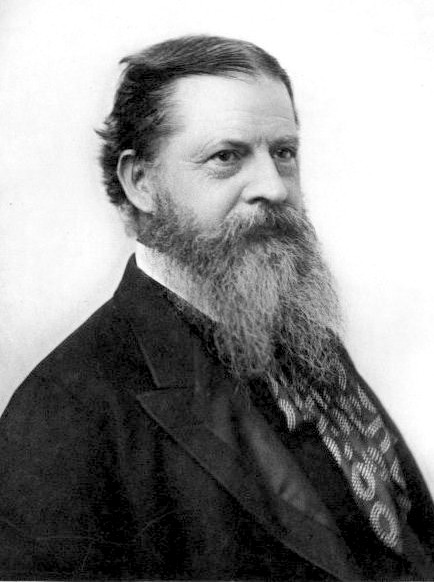
Charles Sanders Peirce

TL;DR -- Our technology focus will get regular attention. Today, we mention the role that a cuz had in the development of some of the logic that drives computing, especially that which models complex systems. His family has been mentioned in several posts. It was time to feature CSP, himself. 

---

This post is overdue and is motivated by current research related to the TGS, Inc. focus on technology is all of its aspects, particularly that which requires advanced computational support. We have had a few posts on the theme (results from search on 'technology' includes "How dumb is AI?"). As we have mentioned, our scope on this is a broad as is the Gairdner's handling of their medical research. The computer is more than merely ubiquitous, it's a phenomenal basis of sorts. 

Too, we have featured a few individuals, so far. This year, we noted Emmy Noether for several reasons. We have looked at Jedediah Strong Smith and some military people, such as Gens. Worth, Greeley, and a lot more. We considered the lives of religious folks. This is a continuation of that thrust. 

We mentioned Charles' father, earlier (see search results for "Charles Sanders Peirce", Benjamin is at the top). The early motivation was to focus on Thomas Gardner descendants, then we extended that to the collateral families. But, then, lots of in-law situations abound (that includes those events that lead to the "step" sibling). Then, we have friends of the family, such as Charles A. "Flagg" who worked with Dr. Frank on The Massachusetts Magazine. 

The motivation? Poking around the bowels of mathematics and logic (and their children, ala computational modes) will be an imperative chore, forever. It's about time to recognize this. And, arguing 'black' box opacity? AIn't (our little icon for AI ain't) gonna happen that this is allowed. We can sit back and reverse engineer thinking and hypothesize. Eventually, we'll get close. It's guaranteed. Oh? You bet. This is where CSP comes in. 

BTW, Wolfram's deal (his language and Mathematica and more) plus Lenat's several decades work (Cyc) are going to be on the plate as examples of how to do things. Anyway, Wolfram was, like everyone of late, reflecting on his long road. It was interesting that he used 'C' (the Bell Lab language) but worked sophisticated extensions (Lisp M-expressions). Part of Lenat's systems uses Lisp. There were good arguments for this approach. Wolfram was noting the logic modes that he supports (uses) and mentioned abduction. Well, CSP 'coined' that as he described sufficiently ways to work this (remember, he is from the late XIX century) so that Alfred North Whitehead was impressed, after the fact. 

Strange names? We'll set up a site to handle these discussion. Here, we're noting that CSP does not have Thomas Gardner as an ancestor. There are links to WikiTree material, below. Too, TAG was one source. And, WT did additional research. We have not considered the specifics, yet, but will weigh in at some point. In the meantime, CSP is still cuz via other families. 

Let's look at the guy through some bullets with comments. 

  • Charles Sanders Peirce - he worked in philosophy and mathematics. Actually, he was a true polymath. But, our interest in the beginning are his thoughts about things relating to cybernetics long before people even dreamt of control systems or computers. Then, he was a major force in several areas, with some thinking he was the greatest of American brains til then and probably a long time after. A. N. Whitehead, British mathematician, came to Harvard where he had access to CSP's material. There is an organization for him (The Charles S. Peirce Society). 
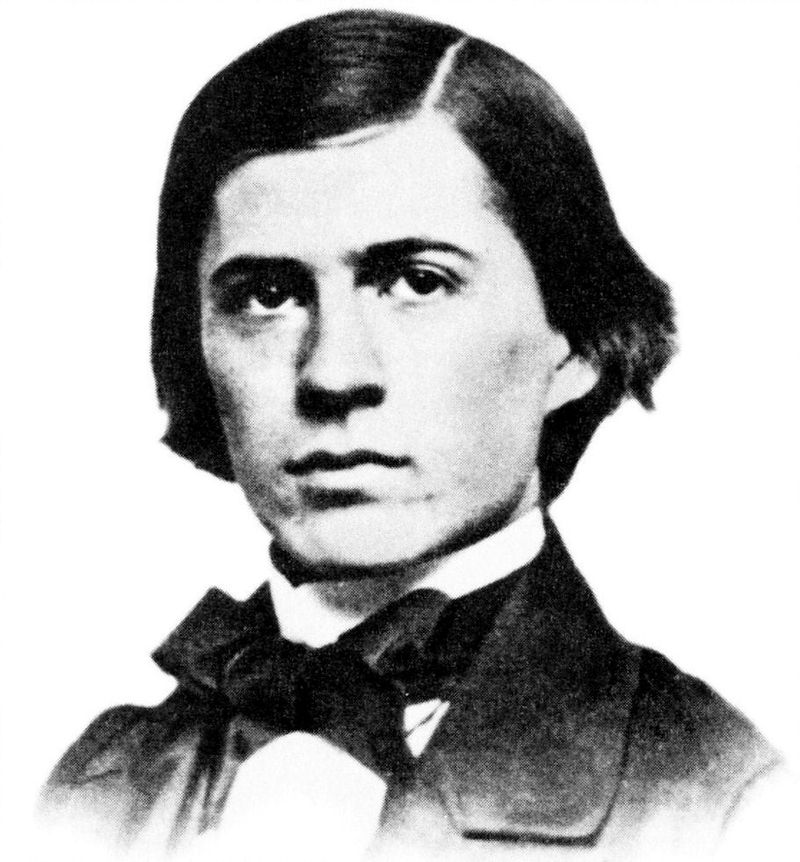
  • Pragmatism - Let's note what Stanford says: Encyclopedia article. There are many more to chose from. 
  • Mathematics - St. Andrews (UK) has a nice take on him. Lots of papers have been written on his work, but this one deals with his logic emphasis which lead to the conceptual/existential graph of Sowa.  

With respect to his wok, Wikipedia hosts an extensive bibliography (as a good example of its capability). We feel somewhat remiss in that the effort to collect and present this material started in 2006, and we just found it the other day. Has to do with focus and viewpoints, where there is no overarching view that encompasses all (one might say, no theory). Frankly, that CSP still gets attention in the modern world is appropriate. His worth will grow when we tame computation and their misuse of "metrically transitive operators." 

---

Now, it was Benjamin's Memoir (see post) that noted the Thomas Gardner connection which was picked up by Dr. Frank. We went to look at the WT information on CS Peirce. There was a note about a G2G (study by genealogists) activity that established a different mother rather than the granddaughter of Thomas. As said, we have not reviewed this work, as of yet. On an initial look, per usual, there was not a complete edit/update with the new material. In fact, due to the discussion, the final decision was different than that proposed, at first. But, then, that is how these things go. 

There is technology related to genealogical studies (including those dealing with biological issues), but our focus on technology is across the board. Somewhat, we are pursuing a thrust dealing with truth engineering as being a necessity in the computer age. Nothing new here as the computer has been evolving for decades, now. It is more the case that how things unfold make the need obvious from certain viewpoints. 

Looking at CSP's life show parallels with what we see now. In fact, one wit said that the 'whole family' was crazy (perhaps, jokingly); yet, dynamics related to knowledge and its use are not new to us. We just have the advantage (or misfortune) of being around when things got more gnarled than anyone thought could be. 

---

Note: There will be more information, in the technical forum, about Wolfram (Mathematica) and Lenat (Cyc). The parentheses provide a link to their work via Wikipedia.  

With respect to CSP, he and his wife had no offspring. So, they are on our growing list of those forgotten ones that we will pay attention to, going forward. 

Remarks: Modified: 12/29/2022

12/29/2022 -- Added in pointer to the bibliography on Wikipedia, started in 2006.  Benjamin was at Harvard (Class of 1829) and is listed as one of the few mathematicians from the USA in the XVIII Century. A cuz at Clark University has created a chronology of mathematics which will be useful for a quick look at the generational aspects. 


Monday, August 26, 2013

Benjamin Peirce

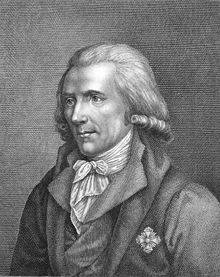
TL;DR -- We note the memoir of Benjamin Peirce which gives a little of his heritage on which he put Thomas Gardner as well as other New England families. We were familiar with the work of his son, Charles S. Peirce, and looked further at Benjamin who graduated from Harvard in 1829. Benjamin was later head of the mathematics department. Also, he was there when the inheritance from Count Rumford was processed and helped determine the decision on expenditure of the gift.  

---

We have Benjamin's son, Charles Sanders Peirce, the logician and pragmatist, on our descendants list. I had run across the work of Charles in my younger years in an academic environment and found his work to be useful throughout my working years. So, Charles had to be on the list when I ran across his name while doing descendants searches a while ago.

Memoir of Benjamin Peirce
Essex Institute Historical Collections
Today, while researching the Quaker involvement of the Gardners (note earlier John Goff article), I ran across this memoir by Charles' father, Benjamin Peirce. The memoir can be found in the Essex Institute Historical Collections. Benjamin Robert S. Rantoul read this memoir at the May 16, 1881 meeting. Here is a link to the digitized version (points to pg 172, where the charts start) of Memoir of Benjamin Peirce [1881, Essex Institute Historical Collections], at Google.

The image shows part of page 172 which deals with the earliest generations in colonial New England. I thought the whole chart to be interesting due the familiar families. But, the Gardner part of the tree is especially interesting.

I'm doing this post to add to the material related to the early Thomas Gardners (see last post). In fact, there may be several of these as we look at what is behind the different viewpoints and assess how to clarify the matter for future researchers.

---

Aside: I recently ran into an error that is in a known book. This error has been propagated widely. Now, I have established the problem. From a brief search, some know of the problem; many others seem to not to have stumbled upon it. But, you know, those who have skirted the problem didn't leave any marker for later travelers. Why do we have to let people fall into the quicksand themselves? There ought to be some published errata that is available for access (perhaps it exists already somewhere). Of course, web-based presentation is implied here. I still rankle at the notion that Gutenberg's technology is the forever means for publication. It may be that people are saying that fluidity is only one state of matter; as in, we need to solidify things (which is what print does) now and then, even if it just allows a snapshot of a point-in-time state of knowledge.

Remarks: Modified: 12/29/2022

08/29/2013 -- WDYTYA episode has an estimate of 1000 person hours having been used for research.

07/15/2015 -- We have a project that is looking at Sherborne, Dorset (note references to records of a marriage of Thomas and Margaret plus baptism of the kids - also, note reference to abductive reasoning which Benjamin's son, Charles, helped establish) as place of origins. As one would expect, there have been many views on this subject over the past 350 years. One of these is expressed in the above image, from Benjamin's perspective. It has son, Thomas, as the one whose wife was Margaret Fryer (see Number of wives and John Farmer's view). ... Not only is Benjamin a descendant of Thomas through his first son, he is also a descendant of Seeth (see Table IV, pg 175). ... An analog of the required method might be paleoichnology (large tales from little data).

08/03/2017 -- Benjamin Peirce was instrumental in getting the Harvard school of science and engineering started when Jacob Bigelow resigned as the Rumford chair.

12/03/2017 - Benjamin died in 1880. The Memoir was read by Robert S. Rantoul. We will see him, again, as he was a contributor to Dr. Frank's The Massachusetts Magazine.

12/29/2022 -- Charles S. Peirce, Benjamin's son, was featured in a post about TGS, Inc. plans to focus on technology. Benjamin was at Harvard (Class of 1829) and is listed as one of the few mathematicians from the USA in the XVIII Century. Benjamin could not afford to go to Europe for further education and stayed in the area. Eventually, he got back to Harvard where he was head of the mathematics department. But, from our view, his life is even more interesting than earlier as this is the time of the western expansion driven, largely, from New England. It will be nice to have a Harvard tie in. 

Wednesday, August 2, 2017

Count Rumford

This post continues to look at the periodical that Dr. Frank published, from 1908 to 1918, with his friends and deals with Count Rumford and Charles Crozat Converse.

First, who is Charles? My question, exactly.

Well, in Vol. VII, No. 1 of the Massachusetts Magazine, Charles wrote an article titled "Thompson in Connecticut" which is about an American who became Count Rumford. There is a seat at Harvard by that name. More on that, below.

Back to Charles, first. Godey's Magazine, Vol. 134 (pg 80) had a nice article about Charles. He was a lawyer and a musician with several known hymns. Also, he is written up on Wikipedia. And, some of his ancestry is covered in J. J. Putnam's book on Joseph Convers of Bedford. Also, see C. B. Harvey's Genealogical History of Hudson and Bergen Counties, New Jersey (pg 459) for a brief bio. In his TMM article, Charles mentions his family's effort to place a statue of Count Rumford in Boston (it is now in Moburn).

As an aside, Godey published the The Lady's Book from 1830 to 1878. That is a long run. The article on Charles (see above) is quite good.

Benjamin Thompson.jpgNow, to Count Rumford. He was born Benjamin Thompson in 1753 in Woburn, MA. Being a Loyalist, he ended up in Europe and had quite good success. Benjamin was an early thermodynamics researcher: Rumford’s calorific and frigorific radiation. Also, he has wide influence. For the Rumford Medal that is given by the Royal Society, we see a whole lot of illustrious names. For instance, Michael Faraday received the award in 1846.

Benjamin, also, left funds to Harvard for the Rumford chair that was first held by Jacob Bigelow. When Jacob resigned, Benjamin Peirce (father of Charles Sanders Peirce - more on this later due to some interesting connections) got involved as a replacement was considered. Eventually, Benjamin Peirce got the Rumford chair rolled into the new ‘practical’ school (Science at Harvard University) related to science and engineering (that is, getting away from counting angels on a pin head). There is a lot to know about Benjamin Thompson (The Life and Legend of Count Rumford).

Note (12/24/2021) -- Harvard material on Rumford and his daughter. Also, Encyclopedia [.] com.

---

Commercial site with links to information about Count Rumford.

Remarks: Modified: 12/24/2021

08/03/2017 -- Turns out that Benjamin's money gives us a chance to look at Harvard, its history, it roles, and its dreams (hopefully, more than exultation on endowment size). The platform? Quora: What is the coolest obscure history fact you know?

Another side of the story, Charles W. Eliot was supposed to get the Rumford chair in 1863. It went to Oliver Wolcott Gibbs.

10/21/2018 -- Used Benjamin in the context of meritocracy or not: Does Affirmative Action hurt Asians?

08/10/2020 -- How did I miss this jewel from Streets of Salem: Rumford Roasters.

10/10/2021 -- The Count features in our history of Harvard (a special project dedicated to Nathaniel Eaton). 

12/24/2021 -- Added link to Harvard material. 

Saturday, June 18, 2016

Gardner's Beacon, Vol. VI, No. 1

The current issue of Gardner's Beacon starts to look at upcoming 200th anniversaries. More people went out west through the various trails (Westward Ho) than arrived both in northern New England and its southern counterpart. In those early days, there was motivation to go west. For one, claiming land would keep out settlers from other countries. In that case, there were conflict with the American Indian population and with other countries.

By the time of the end of the long American Revolution, people were ready to go west. Lewis and Clark helped capture the imagination. Families took the long trek to Oregon and California. During the gold rush, many 49ers went out by the trails.

An older trail, to Santa Fe, provided the starting point. But, as more people gathered, there were issues, such as a cholera outbreak, that establish another starting point, present-day St. Joseph, MO. Too, the 49ers were in a hurry and wanted to take some days off the trip.

The story would not be interesting without the people. That launching point for western expansion turned out to be where early conflicts started between pro- and anti-slavery proponents. "Bleeding Kansas" was more than a name.

And, New Englanders were heavily invested in the area, in terms of money and blood and sweat.

Of late, DNA has been put on the plate and will be getting more attention. Lots to discuss.

Charles Sanders Peirce (his father, Benjamin) did some marvelous work without much attention. He died destitute. He was the first to look at abductive approaches (see DNA above). Also, he was probably the best mind of that generation, though Eliot of Harvard did not think much of him.

---

See Vol. VI, No. 1 of Gardner's Beacon for a review of research to date. Sources: Oregon-California Trails Association (Trails, again).

Remarks: Modified: 04/23/2021

06/19/2016 -- Switched to larger font, two pages, and introduction to Charles Sanders Peirce.

Sunday, September 21, 2014

Diversion, Gloucester - Charles Olson

First, how could Gloucester be a diversion? In fact, it is where the Cape Ann crew, led by Thomas Gardner (1624), spent their "almost" idyllic time. And, it is from there that the crew, now led by Roger Conant (1626), went to Naumkeag, soon to be Salem. So, the area ought to be of interest to the TGSociety.

Further, the area was visited by people from Winthrop's boat (1630) when they were partying in celebration of making a successful voyage. Notwithstanding that, the place (Essex County's southern shore) was seen as disagreeable, so the power core moved west. Those who partied at Cape Ann, picked, and enjoyed, the fresh strawberries (extolled by Anne Dudley Bradstreet) of June. And, there are many more stories to tell.

Speaking of which, in the context of earlier research, I ran across Charles Olson (Worcesterite by birth, but Gloucesterite by choice) a couple of times. Then, I ran across him, again, today on another topic. This time, I stopped to look more closely.

And, the look motivated several things, a couple that we follow up on here. The following links are a good introduction. The first link is to a guide; the last two are a description of a meeting and a book review. The other three are to Charles' own writings (small sampling).
Having run across this, the notion strikes me that we need to encourage, support several types of works that would relate to Thomas and the Cape Ann crew. And, this approach would allow for a better presentation of insights in a persistent manner (not talking technology). 

Now, that is a fairly open bit, yet, we'll contrast it further (below). However, there is enough given to motivate (I might dabble myself).  

[Note: 07/15/2015 -- see Remarks] As opposed to some more logistic/numeric approaches (consider, if you would, the emphasis on DNA (and similar studies) to fill in our being as it has been framed and given to us by the collective of our ancestral mix), we need to not lose our soul, so to speak (no disrespect to genealogy's attempts to make itself more empirical). Too, though, the above suggestion would help in creating emergent views from the minimal basis (see earlier reference to Tabla Raza). We also used paleoichnology as an example; principally, the ability to use knowledge, plus limited data, to develop a reasonably founded view of a complex system, such as were the dinosaurs.

This is sketchy, from certain aspects. It is not from the tone of someone such as Charles.

Aside: Essex County, of course, is the principal focus, where we let Salem (rightly or wrongly) shine (Gardner's Beacon has many meanings). We mentioned Ipswich, earlier. As it were, Gloucester was as important in that research (adjointness). So, we are giving it more attention. But, there will be more to come: Newbury and the other northern "buries" (several); Lynn, of course; Andover, well, we did mention that; and more.

Remarks: Modified: 04/23/2021

09/21/2014 - Idyllic? No church, no state, benign leader, adults surviving, effectiveness on display. First occurrence within the English culture? Albeit, short of duration. As Roger brought John L. and more. When Roger came, the boisterous group was not cowered by the elements nor by the American Indians. ...

07/15/2015 -- Paleoichnology deals with "trace fossils" which have been found. Some findings have more to tell us than others might. However, the sparsity of the fossil has not impeded conjectures that, then, allow modern models to come about. And, some of these are fairly elaborate. ... Do we not, as a public consumer, take a lot of these at face value? Oh, how would we be critical if not an expert? ... Now, similar techniques can get various labels that are more pejorative than not. Say, "wishful" thinking of families about their ancestors. Reaction to that has caused over-emphasis, we will show, on supposed "empirical" methods (even though, the deepest look ought to make one aware of quasi-empirical concerns). ... So, in our new work (Sherborne, Dorset), we will be using abductive means which were legitimatized by a Thomas descendant, namely Charles Sanders Peirce. ... Stayed tuned.

08/29/2016 -- More on Cape Ann, 1623.

06/06/2018 -- Need to prepare for 2023/4. Some, of literary inclinations, have looked back 200 years: American Jeremiad. But, we need to go back to the Cape Ann times and before.

01/05/2019 -- About the same time as I wrote this, a site via WordPress appeared: Enduring Gloucester. How did I miss this? I guess, the focus on the western expansion that still has tales needing telling. There are posts on Charles Olson.

01/13/2019 -- Left a comment about this post at the Gloucester post.

Wednesday, October 21, 2020

Descendants of Seeth

 Descendants of:


This series will go through all of the children and identify some descendants. The list originally was on Wikipedia's page about Thomas Gardner (Planter). We'll put a header into each so that these can be linked, easily.

For these lists, we will be adding more names. Chronological order:
John Albion Andrew

We looked at Seeth, briefly, last year and need to dig deeper into her life and progeny.  

We will do Miriam next. 
    
Remarks: Modified: 04/12/2022

10/24/2020 -- Added a notice for CSP as descendant of  Thomas as well as of Seeth. 

04/12/2022 -- Updated information about Joshua who married the daughter, Christian, of Richard More.  

Monday, October 24, 2022

Time lines

TL;DR -- The U.S. and its time lines and those of the world. Our timeline was prepared by the pre-school  of colonial life. This was unique when viewed properly. And. New England, in this sense, has a long reach which we have been discussing. The 400ths will allow us some markers with which to organize the information by, arbitrary as such might seem. 

-- 

This post covers an area of concern that will be in focus for a long while. We will mention Immanuel Kant, for one thing. That is 200 years ago, or so. One thing we will do is put events and people into perspective with regard to the 400 years on these shores. This will cover the broad scope due to the influence of New England and the U.S., but we have already started with mathematicians and philosophers. Those folks are of interest since the military and political people get lots of attention. And, we are picking up technology as our area of focus. We summarized part of this in our Gairdner Foundation post. Incidentally, both types deal with thinking and being smart humans with the math'ians being more practical many times, as mathematician, philosopher and cousin Charles Sanders Peirce showed. His work in logic is still very much apropos to this day and age's problems, as is the pragmatic view.  

Then take Spinoza, for instance. He has been mentioned in three of our posts: Spectral issues, Web'ing, and Origins and Motivations. Also, we mention Descartes and others. Mention? As in, name dropping? Nope. The mechanized age (though, Einstein showed us relativity) of the computational idiocies has thrown out the old timers. Why? Oh, digitize all of text, parse, model, and then spit out what humans will marvel at. 

We are not kidding, folks. This is what is happening. 

Any human knows the power of words; others know that that power does not come from mere textual manipulations even if what we see is somewhat syntaxy in mode. Consider that a brief reminder, like a blurb from advertising - oh, those folks, of something that needs serious attention. 

Paul Carus
Which brings us to the main theme, Kant. We will address this from one of his translators whose native tongue was German but who came over here and let down roots. That is, Paul Carus (introduced to C.S. Peirce by Judge Francis C. Russell - New England name) not only did a good job on Kant's Prolegomena, his commentary contributes to the discussion. Mind you, we are talking over 100 years ago. That is ancient to the Silicon Valley mind, it seems, though Stanford University (and Berkeley) is right there. 

If you look at Prof. Carus' profile on Wikipedia, one name pops out: C. S. Peirce (mentioned above). There was another name that we saw from New England with respect to translating Kant, Henry Cabot Lodge. BTW, earlier, we noted that young folks liked to translate Spinoza's Ethics which was written in Latin. One of those? George Eliot who worked from a German version. One New England contact there is R.W. Emerson who had been influenced by Kant. 

This post deals with occurrences before and around that which the 250th will commemorate. Kant's life was from 1724 to 1804. We will look at the generations that he spanned. Too, though, we can go back and look at things of influence. We already mentioned Winthrop's 1630 arrival as one milestone to use. Before that was reconnaissance according to the writer of Albion's Seed. And, we can come forward toward the explosion of knowledge and ability leading to the 21st century and its marvels.

But, with hapless souls, one might think, looking around. Using the timeline of the U.S. and its pre-school time, we can relook and learn, perhaps, things that were missed; or, we can recover things lossed in the shuffles that are always the case. 

Note: Carus' overview of Kant's look at his 2nd Critique is a good example of Kant's influence. It seems that you either love Kant or hate the guy's thoughts. 

Note: This is apropos. We will put a link to recent article that listed Americans (norte, U.S.) who are related to the Queen (QE II). There are two lists (more are possible) given in the article. One is of those who have common ancestors (the list is long, having families like Washington, Lee and too many to list). The other list? Those who are closer as a U.S. ancestor is shared with the Queen (QE II) and King Charles, in some cases, Lady Diana, too. Ann has ancestors on both lists. This happened as a colonial (or someone later) went back. For instance, Downing's Street namesake is a cousin-in-law. 

Remarks: Modified: 10/24/2022

10/24/2022 -- 

Thursday, January 5, 2023

Research and learning

TL;DR --  A machine might learn, can it research? People do both. Comparisons of this nature will be even more commonplace as we see ML hit new milestones, so to speak. The question is still open depending upon many factors, of which one is knowing what is going on. That is one thing to address; bring the information out so that general discussion can ensue. On the other hand, people forget more than does the machine? Not really. But, we look at an important figure as an example of our future work. Charles Thomson was the Secretary of the Continental Congress for years. Knew all of the players. He was childless, so forgotten in some senses. Who was his family? We ask since collateral relationships have included new entrants to the country over time, ceaselessly. 

---

It's a strange time that we live in. There is an article in the latest ACM Communications (The End of Programming) by someone pushing ML which is now considered the basis for AI which I see as AIn't for good reason. In fact, this current thrust of technology needs attention with more urgency going forward than many might imagine. Hence our interest arose, somewhat motivated by an earlier example (Gairdner Foundation). 

The gist of the ACM article is that we see the progress. Say, in games from stumbling at chess a few decades ago to the recent collective of wins (and draws). Somewhat, there were examples of brute force bullying. Too, there was the conquering of Go by not having any limits such as things thought of as normal which were learned from human. In other words, the machine made choices that people might have ignored because they were considered silly. But, realize this, folks, please: the thing did this with huge iterations where the algorithm played against itself in some type of metrical scheme that would be equivalent to 100s of human lives (or literally, so many games to go over a lifetime; we can get specific). Too, in doing so, the system pulled loads and loads of electric power off of the grid while running through an expensive collection of computers (networked, of course) almost non-stop for a period of time. 

About Charles Thomson
It's like the chess, Jeopardy and other wins. What we saw was one human with talent against a collective of hardware/software plus the handlers keeping the thing going. So, fairness needs to be discussed, always. Too, fragility is latent far beyond what humans might have. One hope is to get the thingees to be able to move the use of their learning from one situation to another. This is difficult due to the close mapping of learning to the associated data used for training. There are lots of things to discuss. 

Yes, we can be prepared for this. Can it actually be a non-profit's goal to help hone the dynamics or even to help handle truth issues? Why not? 

Now, another thing is that the computer is being used  by humans in unexpected amounts (scale is a watchword) and ways (it's more than ethics; humans do have rights; being creative in reasonable senses is one of them - AIn't has not seen anything yet). So, take looking at families and history. Lots of confusing information is around and about. One would hope that not having provenance shown with regard to sources would inhibit reproduction of some bit of information or that we would discuss the issues and work to hone that process. Are those matters getting worse?

At the same time, we see that genealogy is for those with offspring. Whereas, we have used Joseph and Ann Gardner as an example of people to remember. They had no offspring. This has been a common thing all the way through our history. We touch upon one guy below. Not long ago, we did a post on Lorenzo and Peggy. And, have mentioned others in posts here and there (gather these). So, one might expect that the 400th will be like the 300th and motivate people to look at their past. Too, one would expect lots of this research to be presented for our use, say as hints to foster more work. 

There is another thing to mention out of many left on the table. When we were looking at the Gardiner barque, Bostonian, that wrecked after an interesting bit of voyaging, we were interested in finding out the New England connections. But, in doing so, we found conflicting stories. Which to believe? We have on our plate to go back and look. 

As I work, I always check even if I don't list references. We will get to that. Right now, consider all of this material as a large table of content with varying amounts of comments to guide future work. In some cases, we use pointers to other material in our posts but do need to improve our bibliography. The one that Wikipedia did for Charles Sanders Peirce is a great example. BTW, CSP was childless and on our list. Back to Gardiner OR. Gosh, it was four years ago that we pulled all sorts of information into a post (The Gardiner that was) with the purpose of clarifying some of the issues. Tracking down the information was facilitated by the technology of today. By now, we would need to do a sweep again to gather later material. 

Oh yes, back to the first paragraph. The approach is to use data and model so as to find associations using mathematical means. One way to look at it is that the system (to be defined) maps connections which can be a fairly large set. To get an idea, connections relate to what we might think of parameters (knobs) which for humans usually are small. Of course, a TV remote with its partner that handles other media can get tricky to handle. Wrong push and the TV won't go on, sort of thing. Well, hold on, as now, one approach that has digested all of digital stuff (almost) - or ate a library - came up with 175M parameters (something like that, again - we're being purposely fuzzy here as that whole bit of notions will come back into favor - Zadeh, if you must know). And, one thingee (not naming names) can write text that looks good. The old thing of mismatched English (same for other languages) is gone. But, to me, the stuff reads like the double-talk of political realms. Which is fine. 

The issue is that anything that is artificially enhanced ought to fall under truth in advertising or under the guise of responsible press. Like, at one time it was considered okay for some simulated (pre-recorded) bit of TV to be announced as 'live' which was unsettling. That sort of thing improved; now, we're back to the days of not knowing (and being snowed by falsity - to be discussed). 

---

That was a brief preliminary statement. To the purpose of the post. This was seen in an article in an Iowa paper (on-line, of course). It was about someone related (supposedly) to our subject that had the thought to help bring him to the attention of interested parties during these time of remembering the events of 250 years ago.  

Charles Thomson (Wikipedia, WikiTree) came here with his father and brothers from Ireland where he had been born. His father died before (actually, almost right on) the arrival. At Baltimore, Charles was taken in and worked. His brothers were taken elsewhere. Eventually, he got through law school. And, when the turmoil of the split with the Brits struck, he got involved. This Harvard article does the best job that I have seen of looking at his work: Course of Human Events blog - November Highlight: Charles Thomson. The brothers? We're looking for them; at least one has multiple claimants for membership to D.A.R. However, even for those with progeny, we have see differences of opinion about who begot whom. 

Too, Charles has many who claim to be related to him, as well. 

This cursory introduction touched briefly upon a subject that will come up again and again while we cover the many aspects of intelligence and its future. Back to beginning of this post and the ACM article? The author had been an instructor of Harvard. Last year, we looked at their summary position on AIn't. It is nice to see the positions being taken and described in order to have a more full debate.  

BTW, that lament in the quote reminds me of the Old Planters Society's attitude from 120+ years ago about the injustice involved. 

Remarks: Modified: 08/26/2023

01/06/2023 -- Clean up and add pointers. Do a post for Charles

01/08/2023 -- We had another icon (Charles Thomson) come up for our 250th (1774, Continental Congress) and 400th (Cape Ann as one of the first of the capitalization attempts of history). 

Saturday, April 27, 2024

More than STEM, we need MSET+

TL;DR -- STEM ought to be MSET+. Too, we see science in practice everyday. A Thomas Gardner descendant was recently honored at LSU. On the other hand, an old name from Harvard is apropos to analyzing the times and their turmoils with respect to computing. It's time to raise the level of discussion. 

-- 

The conglomeration of Science, Technology, Engineering and Mathematics (STEM) has gotten a lot of press, of late. Magic ensues when one considers the potential based upon the proficiency of the practice. 

Wait, nope. Nope. AIn't is all of the evidence that we need. The main mess is attributable to mathematics. You know, the sequence ought to be this: Mathematics, Science, Engineering, Technology (MSET). Okay? 

So, this post is to start a discussion and the followup actions, over a large scale. First, though, we will mention two parties. Second, we will have a brief look at how the two mix in this day and age. 

------------

In this photo, we see Alfred L. Gardner, Ph.D. giving his acceptance speech for the award. To the right is the Dean of the College of Science, LSU: Cynthia Peterson. The award dinner was held on 19 Apr 2024, at the Baton Rogue, LA campus.  

LSU COLLEGE OF SCIENCE CELEBRATES
20 YEARS OF HONORING TRAILBLAZERS
IN RESEARCH AND EDUCATION

Alfred is Ann's twin brother; they are descendants of Thomas Gardner and Margaret Fryer and are 1st cousins of Dr. Frank in being descendants of Samuel. Alfred has been supportive of our efforts with regard to accomplishing the mission of the TGSociety. 

-------------

The second person is Benjamin Peirce (SEP article) whose son, Charles Sanders Peirce, we have paid attention to. Today, we honor Benjamin, himself. We have had lots of posts on technology over the last decade and many just from the last year. GenAI and its foibles were the theme. Mainly, the problem is that AI is not some creature. Look, we are dealing with buckets-of-bits. Even if there is the robotic side of things, those are buckets-of-bolts, albeit plastic many times. 

So, let's clarify the issue using Benjamin's work. First, observing over the past two decades has shown a decline all around. Quality has gone away. The only way to find it now is with the "bespoke" methods that are custom done by those who care. Companies are whole-hog adopting AIn't with deleterious results that can be seen all around. 

They are forcing their customers into untenable situations. Actually, they are treating their workers even worse. And, at some point, the illusional mindset that is allowing this will burst its bubble. We'll see tears all around. 

So, may we prepare? No less an authority than Bourbaki noted the importance of the Peirces. As said, we ran into C.S. Peirce long ago in the context of computational intelligence. But, his father is noted as being instrumental in taking Hamilton's notion (quaterions) and bringing it forward. Look, this was in the mid-portion of the 1800s. What happened since then? We will look at that. 

For now, here are two sites offering Benjamin's paper: MAA Mathematical Treasure; Linear Associative Algebra. We will focus on Benjamin and his son, for a bit, as we get the situation described. 

Benjamin and his son are Thomas Gardner descendants, too, with two children in their pedigree: George and Seeth. So, we will be looking at that further, too. 

----

Now, to a brief bit of the necessary discussion, our last post was the forebear of the message: map-territory. That is partly philosophical in nature. But, mathematics threw out the old way. Let's bring it back. 

The reason for these two being tied together stems from our interest in truth engineering which will be another piece of work on the table for taming AI which is computing and mathematics going aground. That is, they got grounded but in an improper way. 

Remarks: Modified: 12/21/2024

04/28/2024 --  Added pointers: Quora article on quaternions; the SEP article on Benjamin. 

12/21/2024 -- Updated quaternion image (the old one had disappeared). 


Wednesday, August 19, 2020

Descendants of Thomas

 Descendants of:


We just did the descendants of the first daughter, Sarah. Like with Sarah, we are taking these from the list built on Wikipedia almost a decade ago. On reviewing the Sarah list, we had a chance to re-check some of the relationships. We will do a post for all of those on the list. Plus, we can start to add more as part of the effort to document the first few generations.

For these lists, we will be adding more names. Chronological order:
  • Ebenezer Gardner (c. 1740s) – American Revolutionary patriot (Col. Benjamin Foster's Regiment), builder of the Gardner House, Machias, Maine. Ebenezer is also a descendant of Samuel, forebear of Dr. Frank. 
  • Charles Jackson Paine (c. 1830s) – Union General, American Civil War.
  • Oliver Wendell Holmes, Jr (c. 1840s) – American Jurist (with his father, members of the Dudley-Winthrop family).
  • Nathaniel Bowditch (c. 1770s) – autodidactic mathematician
  • Nathaniel Ha(w)thorne (c. 1800s) – American author, descendant of John Hathorne. Nathaniel is also a descendant of George through daughter Ruth who married John Hathorne. 
  • Charles Sanders Peirce (c. 1830s) – philosopher and mathematician. CSP is also a descendant of Thomas' and  Margaret's daughter, Seeth. We have mentioned CSP and his father in several posts. 
C.S.Peirce
As we modify the page on Wikipedia to bring it up to date and within standards, we will move the descendants list to another site (our server). Too, we will use WikiTree and Family Search to check the pedigrees. At some point, we will institute our own verification scheme based upon our experiences with several members of the Heritage Society Community plus D.A.R.

Remarks: Modified: 12/13/2020

10/24/2020 -- Added list of children. 

12/13/2020 -- Early look at Thomas

Wednesday, June 3, 2020

Modes and protocols

We are about three months into a new world. A young guy, weeks ago and before the reality really set in, mused that our world had changed, in ways that we could not yet see. Since then, in that milieu, protocols have been put into place that are somewhat onerous.

Like everything human, 'knee jerk' comes into play. Lots of this really is just the effect of that old mode of playing against the average. So, there cannot be smoothness until things are ground down like peanut butter which then can spread everywhere in equally. Except, that would be the 'smooth' type, whereas the nutty type would have its lumps. But, we don't handle those well.

Look closely, and you'll see that the higher order, say medicine, might put people through the paces in terms of the gauntlet needed for access and completion, yet, day to day, it's peanut butter.

Want an example? I was put under the 'scope' today in terms of the new mode's emphasis on one's temperature for rating go or no go. Too high, go away; within the limit, go forward. So, I score almost 2 degrees (F, of course, we're talking this side of the pond with celebration of independence coming up soon) higher than my normal which is still above normal but below the upper threshold.

As an aside, if we take some number as the average, there will be those who are above and below this number. How the spread goes is of importance. People argue these points; unfortunately, with the computer's prowess, one sees 'knee jerk' adoptions of modes, where a deeper look might suggest caution. Want a parallel here? Two things: Bayes and genealogy, Benjamin Peirce (consider his son, Charles Sanders Peirce - about whom we will hear more in the future).

So, we have the notion that there is an average about which we can make decisions; the most recent example of this is the quick assessment of people with respect to their being under the influence of some viral infection while making decisions that could have impacts beyond those seen by the 'mode' definers.

Okay, was there some decision today that was deleterious? Nope. The contributing factor was my having waited outside an office (new protocol) in heat approaching three digits (in the shade). I said, let's wait a few minutes. Retest. The number was a couple of digits lower which is the norm for myself and others that I know. Cool cats? At the same time, I pointed to another spot and said, measure there. A digit higher. Yes. The forehead was picked for various reasons, mostly due to  maximizing operational ease. However, what of those whose temperatures are above normal, by nature?

And, remove the attention from the screening now being done and consider all of those types of things from which decisions are made. We've made a mess, actually. But, those things will be discussed, in time. Just like, I might add, we will be back to Olson (see Diversion, Gloucester -- Charles Olson).

More immediately, if one surveys all that goes on under the name of genealogy and history, one can see lots of areas where further discussion might just be warranted. On a search, I saw one paper that brought Bayes to the fore. There will be more. But, professionals, are you really doing all that you can and ought to? BTW, vanity genealogy  might be making some people some money, however we definitely need to rise above that age-old dynamic.

We, at the Thomas Gardner Society, Inc., want to see these types of things discussed. Computing (and its muddy cloud) are more than a mess. The future will necessitate that these issues be regularly addressed.

Remarks: Modified: 06/03/2020

06/03/2020 --

Tuesday, August 7, 2018

Margaret, anew

From the beginning, we have used Thomas and Margaret, following Dr. Frank. An example is looking at the 'great house' that John Endicott had brought over to Salem from Cape Ann: Thomas' house. About the same time, Gardner's Beacon, Vol I, No. 3, looked at Margaret, in particular, and I used "Margaret's house" in terms of that structure.

We were newbies, back then, but I had noticed that some later genealogist actually agreed with Dr. Frank, too. However, the Great Migration Begins of R.C. Anderson suggested another wife who was the mother of the children. I got several emails pointing that out to me. So, I dug in and pulled out those things being referenced. Someone has to do this now and then, as many citations follow someone else (many times, without doing their own verification).

Gardner Research will go back to first principles, if you would.
  • My first response (Sep 2012) - About Margaret - as the next bullet shows, the argument mentioned a 1639 entry in the church record. But, to me, it was Margaret; Thomas didn't align himself until 1637. Their kids were growing up, so they had to smooth the way.
  • My second response (Nov 2012) - How many wives? This post puts TAG side-by-side with the Great Migration material. The conclusion was that the NEHGS was looking at 1000s of people. The Gardners would dig into one or two, with regard to this issue. And, in the meantime, we would honor good old Dr. Frank. 
Now, in 2014, John Cook came across the marriage record of Thomas and Margaret at which point we put out the blog post. Too, I went to WikiTree as there was a profile for these two (Thomas Gardner) or should I say three? As, 'unknown' was there. At that time, I did a few things and went on as I was writing several articles (The Essex Genealogist) which have given us ahnentafels for Dr. Frank (his father's side, I now have his hand-written lineage on his mother's side which I'll key in) which includes Benjamin Brown Gardner and Lucy Foster Wilson. We're first cousins, in that sense. 

Too, I got involved in getting further informed about England and that whole environment. Of late, I got back to looking at Sherborne, for several reasons (son, John; Folger; Dr. Frank, and others). Or, I ought to say Dorset. King John loved his Corfe Castle. Queen Elizabeth is shown in a painting being carried by noblemen at Sherborne Castle (the painting is there). 

I also stopped by WikiTree to see what was happening. Well, a query had been made in 2016 as to whether the kids ought to be taken from Margaret's profile and moved to that of the unknown. So, I weighed in and mentioned the marriage record from 2014. And, I mentioned the arguments for this: Sherborne, Dorset. I mentioned the Peirce family (for more than Charles Sanders Peirce) as many families have been poking around. We are trying to gather all of this stuff. Like that of the Paine sisters. This will all be documented, and we'll put a link to the material (shortly).

As well, we need to look at references to Thomas and Margaret. One known first reference is 1827 by Felt, working in Salem, who talked to a lot of people. We may find more. Too, records are being scanned in all of the time, transcribed, and indexed. So, that will help.

Margaret Friar, baptism
After seeing the discussions, I went back to look at my records and found that John Cook had sent to me a baptism record for Margaret (see image), the marriage record of her parents (close enough in time to be her parents), and the will of Margaret's father which mentions her plus a few other things. However, her father died in 1610 so the will mentions Margaret Friar not Gardner. But, we also have birth/baptism records for the first three kids with the names matching. As an aside, we will be looking further at (introducing here) Walter Friar and Grace Mullins of Sherborne. 

About WikiTree. I found out that the genealogists hang out there. Too, they are trying to stay true to the NEHGS work plus newer stuff, as the entry on Thomas dates from the 1980s. So, the Gardner Research work is considered to be after that. 

Essentially, there was an agreement that this is the Margaret and Thomas. But, there are lots of other questions to look at. I set a time frame of five years or sooner as that would match up with the 400th of the 1623 entry. A major researcher noted that first year over 100 years ago. That is, a boat arrived in 1623 with a crew that overwintered; another came in 1624. Margaret was on the later one, according to Dr. Frank. 

Still things to settle. 

But, the purpose for this post? Well, it has been decided to merge unknown and Margaret together. So, the profile for Thomas will have Margaret and Damaris as his wives.

Again, everyone. Use, please, Thomas and Margaret without worrying about being dumped on. 

That is a first step. One of many to come. So, please stay tuned. 

Remarks: Modified: 09/23/2018

09/23/2018 --  Recently, the profile changed to having only two wives. The profile is managed by the Puritan Great Migration Project which is sponsored by NEGHS. 

Thursday, April 25, 2024

Royce in America

TL:DR -- Wild people coming into America and going west. We look at one family. The parents venture out to California where the Gold Rush was starting up. They both die there. Their son ends up in UC and then goes back to Johns Hopkins. Then, he goes back to Berkeley to teach and transfers to Harvard. At the time that an LLD was conferred upon him, Royce gave a series of lectures where are pertinent to today's turmoils of technology. All of this because of the importance of the concept of the map not being the territory. Or, better, the territory is never the map.  

--

In pursing our theme of technology, from all angles, we were tracking down the path of map-territory's (Wikipedia) domain and all of its characteristics. There were lots of articles over the years which have touched upon the subject. But, none of these expressed anything to do with "being" and its importance. 

Before going further, let's pause to look at related posts that are attributable to our work: 
These post cover our own thoughts about how the topic applies to the themes of the post. The post at FEDaerated was motivated by Alan Greenspan's book on the topic. Now, we are addressing the concept from the totality of AIn't and the problems related to its appearance in Nov of 2022. Whicn means that we will be looking, in depth, at computing and its mathematical bases. 

--- 

Actually, later, we found one reference to "being" in the Wikipedia article. It pointed to this reference of a series of lectures given at a College in Scotland. 
On looking at the article, we saw a reference to early California: California, from the conquest in 1846 to the second vigilance committee in San Francisco [1856] A study of American character. This book was published in 1886 by Josiah Royce

Per usual, we went to look at his family and summarize their journey to the West Coast. 

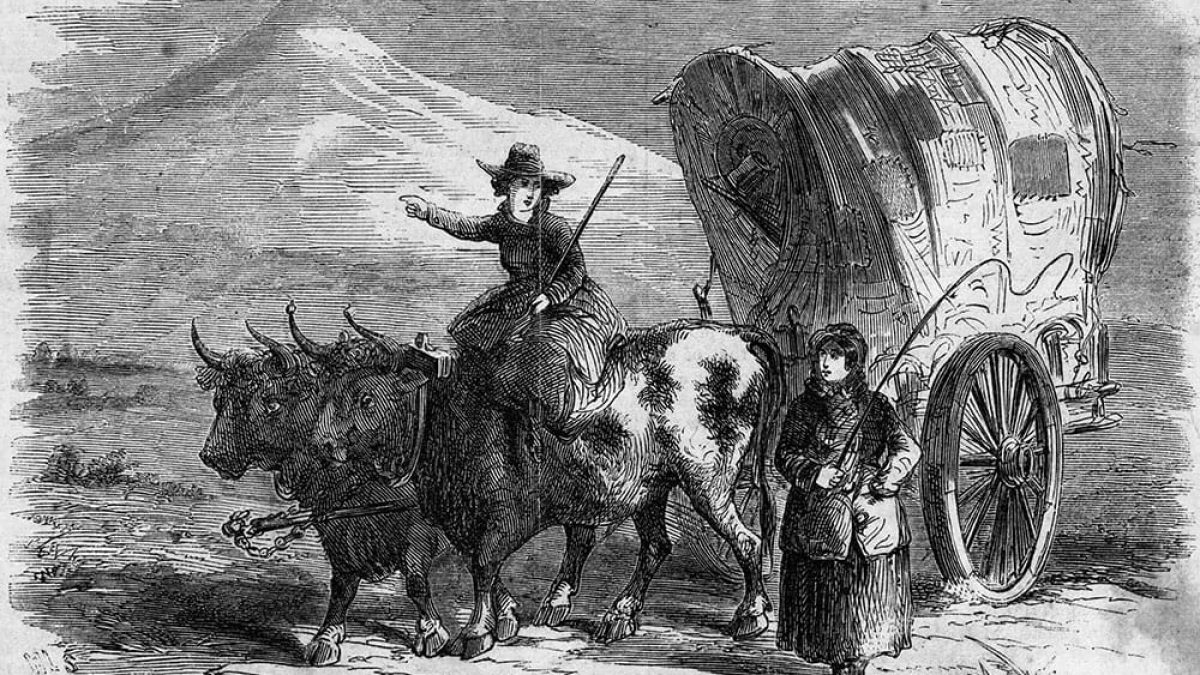
Josiah's parents were Sarah Bayliss (1819 - 1891) and Josiah Royce, Sr. Sarah was born in England and came over with her parents when she was "six weeks old" where she went to school. She and Josiah (who was an immigrant, as well) married in 1847. They headed west and got to Iowa in 1849 but trailed the wagon train of Gold Rushers (who were in a hurry). This got them into the "desert west of the Great Salt Lake" in October of 1849 and got caught in the winter of "the Sierra Nevada mountain range." They were rescued and arrived in before snow closed the pass. 

Josiah, Sr died in 1889. Sarah kept a diary and wrote Pilgrim Diary ("republished in 1932 as A Frontier Lady"). This work "chronicled her family's journey to California during the gold rush." Sarah died in 1891. 

The Royces had three children, one of which was Josiah, Jr who became a philosopher and taught at Harvard. 

Wild Woman of the West:
Sarah Royce

Now, about their son, we have lots of material to refer to. Harvard wrote of his death. He attended UC Berkeley and Johns Hopkins. He started to teach at Harvard in 1892 after a stint of teaching at Berkeley. An LL.D "was conferred upon him" by the University of Aberdeen where the above-referenced Lectures were given. He also received honorary degrees from Yale and Oxford. 

The Stanford Encyclopedia of Philosophy (SEP) provides an in-depth review of his work and thoughts which could involve lots of time. But rather than wander that road, let's consider his view on the map-territory concept and some indication of its use. Namely, technology brings the issue to fore: When the map becomes the territoryAlfred Korzybski and Gestalt Therapy

---

Connections? His advisors included William James and Charles Sanders Peirce, both of whom are of New England, related various ways, and about whom we have written. Especially, on Peirce and his father

Remarks: Modified: 04/27/2024

04/27/2024 -- Referenced this post in terms of MSET+.   

Saturday, December 19, 2020

Web'ing

TL;DR -- Look at a 25-year-old blog dealing with a deep subject which is modernizing.  

---

This is a little aside dealing with technology, in particular how the web was, is, and will be (including ought to be). Our last post on technology dealt with Ethics and AI and had some pointers to earlier posts (several). The main reason for that is the importance of AI and how it will impact everything (and everyone). 

A good analog is 5G which deals with communication. But one does not have to go far, and one runs into the internet of everything which deals with computing at the edge whose results will be an inundation of data which will drive us crazy (and be ignored) or will be of some use (perhaps a lot if we are smart about choices). Lots to discuss; however, we can punt this down the road, for now. 

This post will have a collection of example sites that are full of content yet without the flash that presupposes the need to cover up for no substance. As in, these are not those empty shells that we see, some of which are purely plagiarizing material for the purpose of wrapping ads as if mostly for nefarious purposes. 

The first two show the leaning that applies to our goals (TGS, Inc.). It'll be interesting to see how many more will be added. 

  • Theories of Aether and Electricity -- Baez's blog as an effort to report on mathematical physics, his findings thereof. He started early and carried the same textual (enhanced with graphics) mode for years. We always pointed to it as a favorite site. Then, Baez moved to an updated format: Azimuth. It still maintains the clean, simple look offering the most information on the most fundamental of knowledge being studied. 
  • nLab -- Baez, again. Not sure of his current involvement, but he got it started. nLab has several functions but is, generally, an example of how web'ing ought to be. 
  • Math Central -- Just ran into this while tracking down some sources. Nice format, if you look closely, there use of CSS and JS, as well as implementing some of the basic notions of HTML. 
  • ...

We will have more on other subjects. The motivation? At our portal (TGSoc.org) which we see as an example of 'portal to truth' (several modes) there is some discussion of our sites. The first attempt was in the ASP world until the damper of Office 365 came about. We looked around (2012 timeframe) and went with our own hack (HTML and some images scraped from the Microsoft offering). But, then mobility became Job'influenced, so CSS came forward. Finally, JS. 

We have found lots of sites that are minimal in that sense. Too, they remove some of the onus of worrying about the heavy foot of the boss (buy a package and get their oversight - it's not ethical - but the web never was - alas). 

It's encouraging to see that some semblance of sanity and decency is still around. 

Remarks: Modified: 12/29/2020

12/28/2020 -- Gardner's Beacon Vol, X, No. 2 points to this post. Let the discussion begin on how to have sustainability and how the TGS, Inc. can demonstrate/discuss issues/alternatives as well as explain how we got to where we are. 

12/28/2020 -- With respect to progress here and there, we can use Thomas' time here to map to there. We already have mentioned Spinoza and Descartes as cohorts of Thomas. Now, We need to add Pascal. He developed a calculator to help his father with his tax work (France). That is when Thomas and crew were working on getting over here. You know, I don't think that it was until Charles Sanders Peirce that we had someone over here getting intellectual attention over there. Tell us if we are wrong. 

01/25/2021 -- Added image for our portal (https://tgsoc.org). 

Monday, December 6, 2010

More progeny

As mentioned in the earlier post, the descendants list would be very large. That earlier post used Frank A's first book (1907). A later book (1933) covered George Gardner's line. The latter book, in part, looked at the John Lowell Gardners.

Following the same approach as before, there are several families who have gathered this information. One example is the Larson tree which shows the Weld, Lowell, Pickering, and Peabody relationships. Another is the Dowling tree which we have seen several times before.

Now, in terms of RD, there are several in this tree, starting with Mary (Gye) Maverick and Percival Lowell both of whom are on the gateway list. It would be interesting to pick through the tree to find all of the possible RDs.

We might try that sort of thing when we do a post on Frank A. (see Remarks, 12/06/2010) that will provide one thread for Thomas/Samuel. Frank A. has several interesting RD nodes in his Gardner tree.

---

The search will continue for more information. At some point, comments will point out missing pieces or, hopefully, will actually offer additions. One goal may be a data base that has been scrutinized, rated, and made available for reference.

---

As we saw earlier, George, Thomas' second son, had eight kids. It is interesting to see this expansion of daughter Hannah's descendants (Larson family). We will be collecting more of these.

Remarks:  Modified: 10/25/2020

12/15/2010 -- Ran across the Larson tree, at this site which will be used again. Larson has descendants for these kids of Thomas (in order of the list): Sarah, Thomas (error?, note marriage to Lucy Smith), George, John, Samuel, Richard, and Seeth.

12/16/2010 -- Note that Charles Sanders Peirce (Wikipedia) is on the Seeth list. Edmund Wilson (Wikipedia) is on the George list. Both added to the descendants list.

12/16/2010 -- Conover's site is pointed to from the at wargs site and has an expansion for Seeth/Conant (Joshua). Here is another for Joshua for comparison. We'll be see trees from these two families as there is overlap with the Dr Frank A tree.

02/01/2013 -- Update for rootsweb reference for Larson tree.

02/08/2011 -- Saw a notice at NEHGS that William Addams Reitwiesner died in November of 2010. His site, at wargs.com, is being maintained by his literary executor.

12/23/2010 -- Would be derelict if I didn't mention, and use, this site by Roderic A. Davis, 2nd.

10/11/2018 -- One goal is to have the first five generations documented in one place. We are looking at WikiTree for that.

12/07/2018 -- Dr. Frank and WikiTree. Using his hand-written notes, we filled in his mother's line this past summer. Too, we are going to focus on filling in the gaps

10/25/2018 -- We have a new look: TGSoc.org. And, we are using WikiTree (example of Samuel/Abel) with the goal of getting the first five generations documented. Some of these links may be stale (will be checking). 

10/25/2020 -- Descendants, finally. We're getting back to work.

Thursday, August 10, 2023

Knowability

TL:DR -- This post introduces a topic of long-standing debate which pertains closely with how we ought to consider technology and choices related to it. 

--

Can we know it all? Can any one? Or any thing? That latter case? One might point to the new approach to AI which is doing just that, albeit the source for knowledge is the collection (of stuff, over about three decades) on the internet. A good look at that might get one to realize one huge issue: how much is believable?; or, knowable, for that matter? 

And one consequence is that we see failures and have since one major release in November (ChatGPT). Of late, the six months of experience (with multitudes making updates and supposed improvement via learning) brings out another observation: failures are increasing despite an attempt at training by the public. 

We might add, you cannot train out the crap that was originally introduced. 

Earlier, we mentioned Charles Sanders Peirce and his work which will become more usable. There are other Americans of note to bring into the discussion. We learned of one yesterday: Frederic Brenton Fitch (Wikipedia). He was a mathematical logician and is the maternal grandfather of D. Brenton Simons (Wikipedia) who is CEO and President of the NEHGS (New England Historic Genealogical Society) which we all know and love. It's been around for a while having had an illustrious start in the 1830s. The NEHGR is a phenomenal publication providing historic and genealogical information that has been verified, somewhat.  

This is brief, but Prof Fitch is known for his paradox about knowability. There are many sides to this issue. We will look at each of those. Why? They are interwoven with the debates about computing and what we have been calling "AIn't" since there is more promise than actual realization with the current approaches. 

Aside: Fitch, too, had a Paradox: (1) Possibility (blog of Bas van Fraassen). Simons mentioned him in his commentary in the summer (2023) edition of American Ancestors

One dynamic is business versus academic. Or rather, proprietary information versus science. Who owns knowledge that is applicable to us, generally?

Another aspect of S. B. Simons' background is that he has New Amsterdam heritage (van Deusen). We will look at that. Too, he has an ancestor who was born in Lawrence KS (E. L. Simons) and went to TX and became a paleontologist of note dealing with primates. Notice the drifts that we will be considering. S. B.'s ancestor visited seveal continents in his pursuit of knowledge. 

Earlier, we mentioned a Thomas Gardner descendant who was a field biologist with many publications and species named after him. 

But, technology and computing? They are inseparable. As said, we are picking this up as our operational interest with regard to all aspects some of which get little consideration in today's environment of rah-rah money chasing, silly boys rushing and breaking things, issues related to undecidability being shouted down by the bullying environment, and other things best left for later.  

Remarks: Modified: 08/09/2023

08/09/2023 --