Showing posts sorted by relevance for query noether. Sort by date Show all posts

Sunday, August 25, 2024

Technology - basis

TL;DR -- Trust? Computers? Mathematics? Somewhere and someone is worthy? Or not? We can tackle that in our focus on technology theme. 

--

So, we asked, Trust whom? Since the question is not easily answered, let's discuss a few things about the situation in order to shed some light on alternative choices and how to decide between then. 

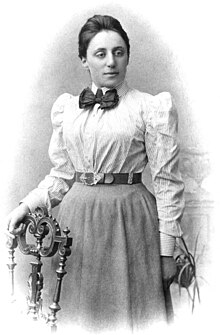
To do this, we will mention a source that might be unexpected to some: Emily Noether. Ms Noether came to the US due to WWII and taught mathematics at Bryn Mawr. We will look further at her family and at the contributions of one of her students: Bartel Leendert van der Waerden. After WWII, Mr van der Waerden taught at Johns Hopkins in the U.S. but went back to Amsterdam. 

The theme of the post is "Technology - basis" which goes with our new focus. Mr. van Der Waerden wrote a definitive book on Modern Algebra. In particular, our interest is Volume II (available via archive[.org]) which deals with some of the mathematics being used in computing, especially the advanced methods associated with machine learning.   

Our intent is to cover artificial intelligence from stem to stern and from top to bottom. We started that effort a few years ag and now accelerate due to the recent infusion of AI into the culture everywhere. Despite arguments that deny this statement, we can know what's behind the covers of computing and explain it so as to make it availabe to public consumption. 

And, as we see with the University of Cambridge, AI is everywhere (as this search shows). Now, we picked Cambridge since lots of the early folks in New England were of that institution. Too, Ms Noether figures since the mathematics goes back to the early 1900s. Hence, the studies of her students and their students are apropos for attention. 

On a broader scope, modern physics makes use of the insightts of Ms Noether. This paper by Prof Baez of the University of California, Riverside shows: Getting to the Bottom of Noether’s Theorem

Remarks: Modified: 03/09/2025

08/25/2024 --  

Sunday, March 13, 2022

Emmy Noether

TL;DR -- Following threads, our looking at a theorem got us paying attention to a mathematician who came over to Bryn  Mawr. We will skip over the technology piece of the matter, for now, and look at what Bryn Mawr offers us. We have already written of two graduates. Bryn Mawr history goes back to William Penn who was born in 1644 and was a cohort of the children of Thomas Gardner and Margaret Friar. Besides Emmy Noether being a professor, so too was Woodrow Wilson who went to head Princeton and while doing so appointed Horace Kallen as a teacher. We look at connections with the family. As well as look at technology connects later, we will follow north-south colonial links which culminated, somewhat, in the Civil War.  

-- 

This month, we have had posts with a Women's History Month as the theme. Today, we were looking at the life of Emmy Noether, for several reasons. She ended up at Bryn Mawr as a professor of mathematics. We knew of that college due to a family member attending and thought to look at the specifics of the college. After a brief look, we thought to mention one other professor and look at a couple of graduates. 

In 2020, we had a post about Emily Greene Balch. She is a descendant of Sarah who won the Nobel Peace Prize in 1946. At the time that we were writing of her, we saw that the first woman to receive the Prize was of a family who had received land from William Penn, too. Emily was a graduate of Bryn Mawr which was founded on a farm built upon land provided by a grant from Penn. 

Beyond that connection, we are talking Pennsylvania and the Quaker movement. We have had several posts on the theme of Quaker lives in the American colonies. Thomas married a Quaker widow. Several of his children were Quakers including the two whose lives on Nantucket are of continual interest. 

Emmy Noether
via Wikipedia
Another graduate was Drew Gilpin Faust who was the first female Head of Harvard. She grew up in Virginia as a descendant of the South. Her special scholarly interest was the Civil War. She also had northern roots part of which goes back to The Downings, in-laws of Joseph Gardner. We will look at her pedigree further. 

Now, switching back to the professors, Emmy came over to Bryn Mawr as the Nazi movement was taking hold on Germany. We will be looking at her work in detail with respect to technology's influence on our lives, especially in the troublesome manner that seems to want to always manifest itself. Another professor was Woodrow Wilson prior to his stint at Princeton and then the White House. He appointed Horace Kallen who was a graduate of Harvard as a teacher at Princeton. Horace is known for his work in American pluralism

Remarks: Modified: 03/25/2023

03/25/2022 -- Emmy was mentioned in several post this past year. 

Wednesday, December 28, 2022

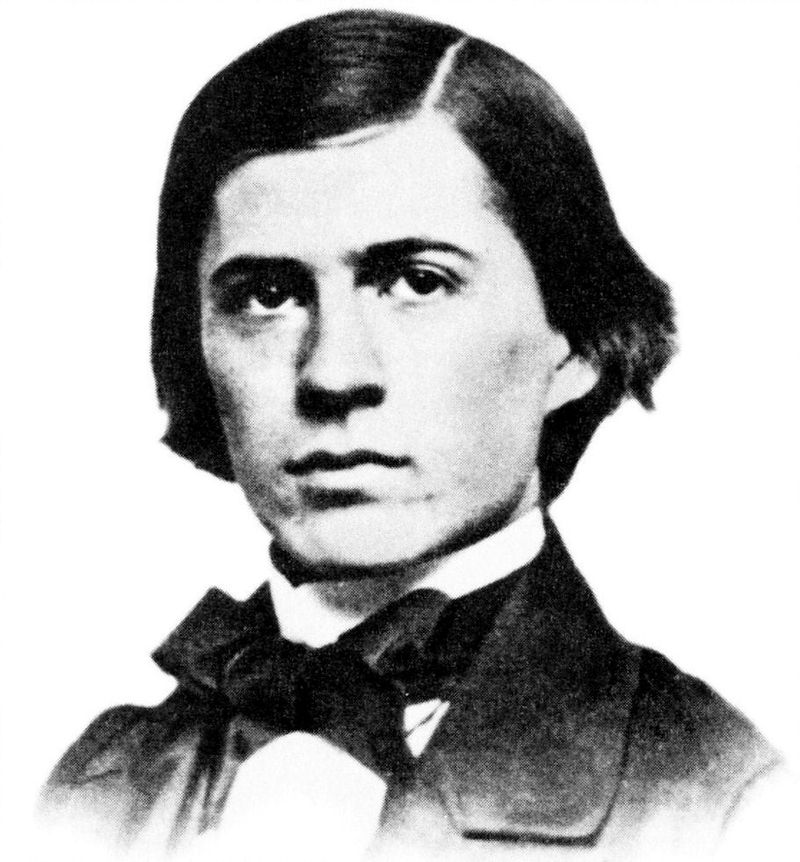
Charles Sanders Peirce

TL;DR -- Our technology focus will get regular attention. Today, we mention the role that a cuz had in the development of some of the logic that drives computing, especially that which models complex systems. His family has been mentioned in several posts. It was time to feature CSP, himself. 

---

This post is overdue and is motivated by current research related to the TGS, Inc. focus on technology is all of its aspects, particularly that which requires advanced computational support. We have had a few posts on the theme (results from search on 'technology' includes "How dumb is AI?"). As we have mentioned, our scope on this is a broad as is the Gairdner's handling of their medical research. The computer is more than merely ubiquitous, it's a phenomenal basis of sorts. 

Too, we have featured a few individuals, so far. This year, we noted Emmy Noether for several reasons. We have looked at Jedediah Strong Smith and some military people, such as Gens. Worth, Greeley, and a lot more. We considered the lives of religious folks. This is a continuation of that thrust. 

We mentioned Charles' father, earlier (see search results for "Charles Sanders Peirce", Benjamin is at the top). The early motivation was to focus on Thomas Gardner descendants, then we extended that to the collateral families. But, then, lots of in-law situations abound (that includes those events that lead to the "step" sibling). Then, we have friends of the family, such as Charles A. "Flagg" who worked with Dr. Frank on The Massachusetts Magazine. 

The motivation? Poking around the bowels of mathematics and logic (and their children, ala computational modes) will be an imperative chore, forever. It's about time to recognize this. And, arguing 'black' box opacity? AIn't (our little icon for AI ain't) gonna happen that this is allowed. We can sit back and reverse engineer thinking and hypothesize. Eventually, we'll get close. It's guaranteed. Oh? You bet. This is where CSP comes in. 

BTW, Wolfram's deal (his language and Mathematica and more) plus Lenat's several decades work (Cyc) are going to be on the plate as examples of how to do things. Anyway, Wolfram was, like everyone of late, reflecting on his long road. It was interesting that he used 'C' (the Bell Lab language) but worked sophisticated extensions (Lisp M-expressions). Part of Lenat's systems uses Lisp. There were good arguments for this approach. Wolfram was noting the logic modes that he supports (uses) and mentioned abduction. Well, CSP 'coined' that as he described sufficiently ways to work this (remember, he is from the late XIX century) so that Alfred North Whitehead was impressed, after the fact. 

Strange names? We'll set up a site to handle these discussion. Here, we're noting that CSP does not have Thomas Gardner as an ancestor. There are links to WikiTree material, below. Too, TAG was one source. And, WT did additional research. We have not considered the specifics, yet, but will weigh in at some point. In the meantime, CSP is still cuz via other families. 

Let's look at the guy through some bullets with comments. 

  • Charles Sanders Peirce - he worked in philosophy and mathematics. Actually, he was a true polymath. But, our interest in the beginning are his thoughts about things relating to cybernetics long before people even dreamt of control systems or computers. Then, he was a major force in several areas, with some thinking he was the greatest of American brains til then and probably a long time after. A. N. Whitehead, British mathematician, came to Harvard where he had access to CSP's material. There is an organization for him (The Charles S. Peirce Society). 
  • Pragmatism - Let's note what Stanford says: Encyclopedia article. There are many more to chose from. 
  • Mathematics - St. Andrews (UK) has a nice take on him. Lots of papers have been written on his work, but this one deals with his logic emphasis which lead to the conceptual/existential graph of Sowa.  

With respect to his wok, Wikipedia hosts an extensive bibliography (as a good example of its capability). We feel somewhat remiss in that the effort to collect and present this material started in 2006, and we just found it the other day. Has to do with focus and viewpoints, where there is no overarching view that encompasses all (one might say, no theory). Frankly, that CSP still gets attention in the modern world is appropriate. His worth will grow when we tame computation and their misuse of "metrically transitive operators." 

---

Now, it was Benjamin's Memoir (see post) that noted the Thomas Gardner connection which was picked up by Dr. Frank. We went to look at the WT information on CS Peirce. There was a note about a G2G (study by genealogists) activity that established a different mother rather than the granddaughter of Thomas. As said, we have not reviewed this work, as of yet. On an initial look, per usual, there was not a complete edit/update with the new material. In fact, due to the discussion, the final decision was different than that proposed, at first. But, then, that is how these things go. 

There is technology related to genealogical studies (including those dealing with biological issues), but our focus on technology is across the board. Somewhat, we are pursuing a thrust dealing with truth engineering as being a necessity in the computer age. Nothing new here as the computer has been evolving for decades, now. It is more the case that how things unfold make the need obvious from certain viewpoints. 

Looking at CSP's life show parallels with what we see now. In fact, one wit said that the 'whole family' was crazy (perhaps, jokingly); yet, dynamics related to knowledge and its use are not new to us. We just have the advantage (or misfortune) of being around when things got more gnarled than anyone thought could be. 

---

Note: There will be more information, in the technical forum, about Wolfram (Mathematica) and Lenat (Cyc). The parentheses provide a link to their work via Wikipedia.  

With respect to CSP, he and his wife had no offspring. So, they are on our growing list of those forgotten ones that we will pay attention to, going forward. 

Remarks: Modified: 12/29/2022

12/29/2022 -- Added in pointer to the bibliography on Wikipedia, started in 2006.  Benjamin was at Harvard (Class of 1829) and is listed as one of the few mathematicians from the USA in the XVIII Century. A cuz at Clark University has created a chronology of mathematics which will be useful for a quick look at the generational aspects. 


Thursday, March 9, 2023

Margaret, equal partner

TL;DR -- 100 years ago, Margaret got some attention. Then, modern research threw her out. We got her back. Now, we'll make her presence ubiquitous (normally used for computing, of late). Too, the women of Cape Ann will get attention this month to establish a basis for future work. The order goes, Cape Ann --> Essex County --> Massachusetts --> New England, and then a long reach across the U.S. over time and a huge interior. All having been noted here will be further explored. 

---

As time goes by, so too do the Awareness Months. March is Womens History Month. So, this month, we are continuing that theme as we started last year by bringing women into the discussion. We will be looking at another mathematician later, as we did last year with Emmy Noether. Too, we will be adding a post about a Native American tribe that Yankees going west encountered. 

Today, we think that it's time to bring Margaret some attention. Hence, we have changed our header at both sites (traditional, portal) to read as this image says. 


It notes that the Society is "For ... Thomas Gardner (implied &) Margaret Fryer ... Planters (Cape Ann, Salem)" as both were instrumental in getting the thing done. We're here. Also, we will be looking deeply at the history of Cape Ann and its families (many modern sites with photos of paintings done in the area of Gloucester will be linked below - coming soon).  

Too, after looking at Gloucester's 400th commemoration activities this week, we started to research possible topics to represent what the Society is about. And, per usual, Roger Conant's theme came up which was the focus 100 years ago. He is mentioned in a huge plaque plus some smaller ones in the Gloucester area. Too, he is in lots and lots of write ups as the first name of the effort. There was the theme of Beverly Planters as an example.

That is, in terms of history, we pinpoint a few to carry forward the message. But, some, like Rev. Hubbard, actually talked to Thomas Gardner and mentioned him and John Tylly. Lots of the pruning was due to technology and other limits. 

So, our theme being technology, we have to think about how we can tame the beast for the future where a sustainable mode is left for the progeny. Can we do it? Yes. But, pondering all of the possible stories, we settled on featuring Margaret, mother of the children. BTW, there is no issue with Conant taking the heat. That let's us do our own truth assessment using means outside of the normal. 

After all, Roger is on Ann's ancestors' list. Too, Seeth married a son of Roger and had a child. He married a daughter of Richard More, that puzzle of the Mayflower mindset. Other stories abound some of which we have covered in posts, like James Bryant Conant of Harvard. 

But, back to Margaret, she had another wife on board with her. Roger was here, single. Thomas Gardner and John Balch brought their families. Margaret, the mother of nine children (start with Thomas and follow the links), eight of whom had progeny. Sarah (Gardner) Balch's mother-in-law came with Margaret on the same ship in 1624. 

We are researching progeny of each child, for Sarah:
  • Benjamin Balch (c. 1730s) – first Chaplain, Continental Navy; William Balch (c. 1770s) – first Chaplain, U.S. Navy. His father was first chaplain of the Continental Navy; his grandfather had been a chaplain in the Royal Navy; Adolphus Greely (c. 1840s) – American Polar explorer, recipient of the Medal of Honor; John Henry Balch (c. 1890s) – United States Navy, World War I, Medal of Honor, Lieutenant, World War II. 
Seeth (Gardner) Grafton married (first) Joshua Conant, son of Roger Conant. Their sister, Miriam (Gardner) Hill married twice. One of her progeny was the namesake of the Haskell Indian Nations University in Lawrence, KS about which we have written a lot. 

There were later arrivals in time before Endicott came over. Some of these families went over with Salem. We'll be looking more thoroughly of pre-and-post-Massey's Cove in more ways than merely noting that Cape Ann was close to paradise or the Glory of Cape Ann

Remarks: Modified: 03/13/2023

03/13/2023 -- See "New not old planter" post with regard to research findings. Thomas and Margaret have children registered in England until 1633. 


Saturday, March 9, 2024

Women's History Month, 2024

TL;DR -- March is the month to look at the women's history in all of its aspects. 

--

March is Women's History month in the U.S. and many other parts of the worlds. We have had a post for this the past two years. 

Each post links to other articles on the subject or on something related. 

The below is a list of current material from sites or periodicals which are becoming broader in scope. 

Next post, we will go back through our posts since 2010 and pull out those about a woman. An example would be our posts in 2022 on Emily Noether and on the Wartime Quartet. Or, our various posts on Elizabeth Gardners (several generations). 

Remarks: Modified: 03/15/2024

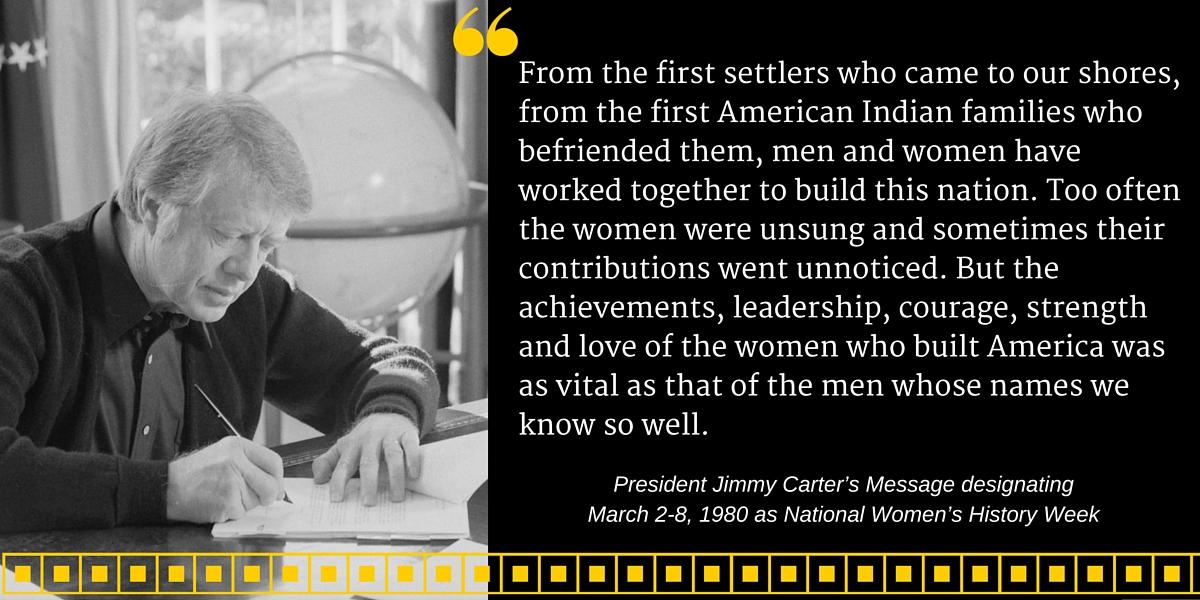
03/15/2024 --  Added photo of Pres. Carter signing a Proclamation in 1980. 

Wednesday, December 14, 2022

Wartime Quartet

TL;DR -- WWII gave Oxford (and Cambridge) the opportunity to focus on the women students. We point to four who were known as the Wartime Quartet. The subject? Philosophy. The context? Say, FB to Meta? Is this something of value and what type? Or not? Our focus on technology puts this type of discussion squarely on our table that is 400 years in the making. But more, underlying issues of consciousness and reality are where the issues lie, for many. Not for all. How do we lift this bit (pun) of shambles into some mature, rational framework?

---

One focus that we have deals with all aspects of technology; we are taking up the challenge in a vogue similar to that which the Gairdner Foundation used as they supported research for many years, in biomedical research. And, technology in this sense is much more than the 'T' of STEM. 

Of late, we have been looking at various computational modes that marvel the minds of people and that brings up discussion about consciousness and intelligence using an endless gauntlet of material that accompanies any attempt to adequately consider how technology has not only changed our lives but also can easily be seen to portend troubles in the future. At some past point, science split from philosophy though physics was known once as natural philosophy. Same goes for mathematics which is a core entity (almost foundation in its scope) and which has little room for philosophy. 

Discussions of a necessary nature have been on-going the past century and were there earlier. Take the topic of consciousness, there are loads of opinions that abound with regard to what is involved with this phenomenon with which we are all familiar, but there is no real theory extant, yet. Will there ever be? 

Or, we find ourselves stuck in the mode of demonstrative prowess which has been the most common approach that we have seen. Power orientation arises from this. Granted, technology when it works is great as, again, we all know. When it does not? Oh yes, let's talk that, later. 

And, examples are there, too, say Google's offspring doing things that marvel the like of which when coupled with marketing suggest something like the 'second coming' (this concept is very much part of the worldview associated with how the U.S. came to be). In other words, miraculous events pend (are anticipated) due to perceived (or the expectation of new) potential lurking, waiting around the corner. Yet, is the stuff real? Lots of it is not, unfortunately. We can deal with that. Ought to.  Have to given the state of the web/cloud/internet.  

John will say this (does not apply to robotics which has a different set of dilemmas) with regard to huge portions of what is called machine learning: AIn't can't Kant. This will be one of many memes. Should the reader want to add to the list, let us know. 

Now, again, examples? Take the morph of FB to Meta. This is a very sketchy overview, but FB is a 'soc med' type of system that is about eighteen years old, has billions of users worldwide (those in the U.S. are a small percentage), is there 24/7, has led the way in both good and not-so-good ways (will not talk 'bad' as we really are dealing with science and its responsibility beyond twiddling with quantum bits or dreaming of cosmological takeovers), and a lot more. In 2022, there was a change to have a focus that merges augmented reality, virtual life, 3D modeling of an extreme manner, artificial intelligence (all types), and development of a commonality which bridges all of these silo'ic modes into something integrative, useful, and, perhaps, even of great power for the world and its people. 

Aside, you all know of the crypto bust of late. Also, that approach is hugely expensive and not by any ilk to be considered mature. Yet. It ran and reigned minds. What came from this event of late will be discussed? Seriously, we need viewpoints that encompass the totality as much as we can. Science is disparate in nature, by choice, How can it get back to a healthy state? 
 
Reminder? Philosophy used to be an assistance. It has not gone away. Now, that things have become so murky with respect to who is doing what, why, and 'is it real' are only a small set of a large space of confusion. America (norte) started this stuff. It is this culture that will recognize the consequences and work to make it much better, for everyone. 

Publications of a philosophical nature quote from the older crowd that is familiar, say the Greeks and early Europeans, as well as with the names of those who thought of this stuff all the way down to the 20th century. Even later authors have weighed in. Being that this work has a technical nature, lots of the discussion does deal with mathematics and computer science as well as computer engineering. But, humanities, business and all of those realms? Yes, they are paying attention. 

In fact, one concern is that of late we find business types releasing 'machine learning' models upon the public, usually arguing that it's for their customers' and clients' benefit. Yet, take it from an informed observer, lots of these things are causing even more problems of a nature that is painful to watch. We had a post on this: Why is AI so dumb?  There have been other posts. But, our focus is not just on AIn't. 
 
For one thing, this issue does not deal with trivial subjects, by any means. As we know, there are loads of universities around the world with departments dealing all sorts of topics, and these represent 'knowledge' in some manner. Too, we have humans who can demonstrate expertise of other types that are not of any academic category. In short, humanity consists of almost unbounded talent which we see demonstrated from time to time. 

We, in particular, want to show how the 400 years since the colony started plus the 250 years of the U.S. can be used to establish threads for discussion that help bring technology into a proper light as required by accelerating expansion of technical modes. We are not in a simple world. Never were. But, we came from an older culture. We pick England as an ancestral hub, however the continent comes into play, too. 

Take universities? We wrote of the influence of Cambridge with a minor mention of Oxford. We will flip that in the following paragraphs. This year, we took a closer look at women's history month. One person of note mentioned was Emmy Noether. We will be getting back to her. 

As mentioned, there is active philosophical discussion now about computing, more than seen before. Some are looking at whether we are experiencing a Kuhnian paradigm shift. In this discussions, there was mention of a suggested change to the reading list on the subjects. 

See The women who brought philosophy into everyday life by Dr Clare MacCumhaill and Dr Rachael Wiseman as an example. Four women philosophers, listed below, were added to the list. Another example is the commemoration that the Durham University Philosophy Society did in their journal. 

BTW, the group was called the Wartime Quartet since they were women students at the time when most of the male students were off, involved with WWII particularities. In one of the overview essays, it was noted that the women did not try to outdo each other. Lesson for males? Rather, they tried to get to the bottom of problems and to look at solutions. 

Aside: that's the way in the business world where the owners set the pace; as opposed to the academic milieu's issues (observed many PhDs who worked in both environments). 

This is cursory, again. But, let's start with the names plus a little information about the scholars, especially noting that which applies to our themes with respect to history and technology. 

Mary Midgley --  quote: I do think that in normal times a lot of good female thinking is wasted because it simply doesn't get heard.

Philippa Foot --  granddaughter of U.S. President Grover Cleveland (needless to say, of New England heritage)

 Iris Murdoch -- Irish philosopher and author who studied at both Oxford and Cambridge. 

 G.E.M. Anscombe -- In 2010, philosopher Roger Scruton wrote that Anscombe was "perhaps the last great philosopher writing in English".

 This is more than an advanced post for next year's WHM. This quartet was brought up in a talk about whether we ought to follow Zuckerberg (FB, Meta) to his new environment. In that same discussion, Berkeley and Descartes were discussed. We didn't see Kant, except for some implicit reference. In any case, after reviewing material from the quartet, we are ready to bring them into the discussion as 20th century examples. Albeit Philippa is the only American, but these minds are of the culture that was the foundation of the colonies and the subsequent Nation; and so, this material needs more exposure. 

Oh yes, all along, we have talked about the internet and the new information modes and how they will help us improve the historical look at about any situation over the past 400 years. This is another example of that endless bit of tasks which will be on the plate going forward. 

---

Note: Where I saw the Wartime Quartet referenced. Video lecture from UMass: Should We Plug In To The Metaverse? 


Already, I like Mary due to her interchanges with Dawkins. 

Remarks: Modified: 12/14/2022

12/14/2022 -- 

Saturday, March 25, 2023

Hypatia

TL;DR -- Today, we reach far back. If we can do that with the military guys we can do so with an example of a woman who was a mathematician and was martyred for her beliefs. 

--

Why go back so far with respect to finding an example for Women's History Month? Well, last year, we looked at Emmy Noether who arrived before WWII and taught mathematics at Bryn Mawr. She had a serious influence on the modern view as seen by her Math Genealogy Profile. Many have not heard of Emmy and her work. 

Just like we did not know of the Wartime Quartet until December of last year. 

Hypathia is of the western tradition and fits within the major themes that we are looking at. Mainly, New England was the focus and continues to be a prime one. 

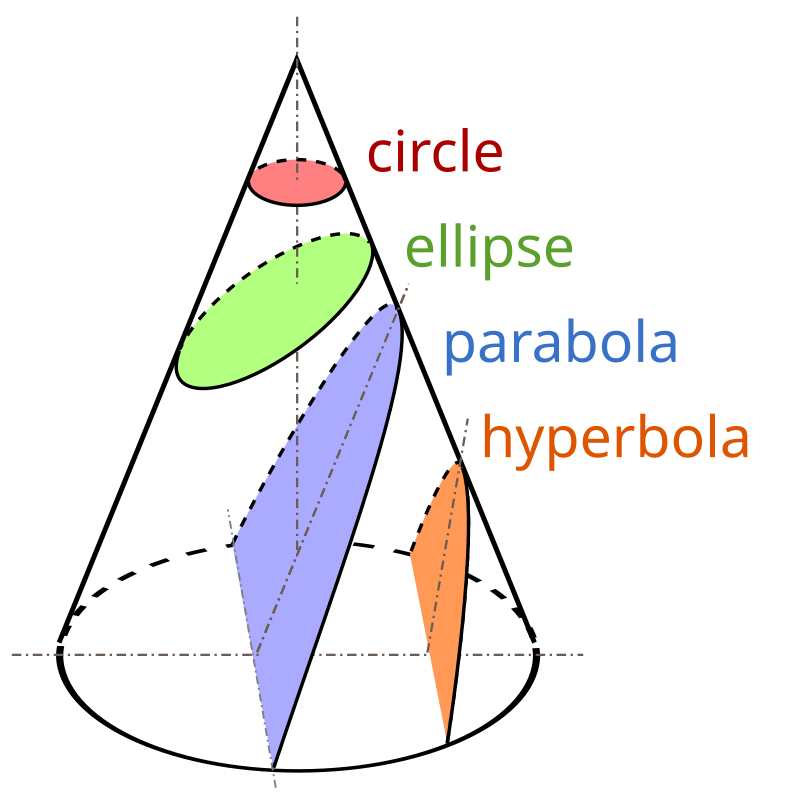
Hypatia wrote a commentary
on 
Apollonius of Perga's
treatise on 
conic sections,[34][133][134] 
but this commentary is no
longer extant.
[133][134]
So, like with the military interest which has no temporal limits, we ought to consider long ranges for technology and it intellectual heritage. Actually, as we look at Awareness Months over this year, we will continue the theme of each throughout. 

Hypatia lived AD (also known as CE) and can be considered a cohort of early civilization in northern Europe. We are talking the ancestors of Alfred the Great, for instance. She is in the "Ancient History" section of the Timeline of the Women of Science which would have been still during the Roman times who were in the London area and elsewhere. 

The Romans were not in Scotland long, though. See Hadrian's Wall. Wait, the military influence seems to always arise? Still, we need to mention this page: End of Roman rule in Britain. Incidentally, we will keep with the theme that transcends time with even more of a focus. 

Hypatia was an astronomer and mathematician. She was the daughter of a mathematician. She followed the ideas of Plotinus and was murdered for taking this position. Without going into the details, Hypatia is considered a martyr for the cause of technology; as such, she deserves to be remembered. Our focus on technology (again, AIn't is prime concern) will keep her in the discussions. 

Such as, oh yes, changes that need to be brought to bear will require a few philosophical issues to be discussed and kept in focus. Don't you think that this is about time? 

Remarks: Modified: 03/26/2023

03/26/2023 -- Changed the image to be more of an interest to modern technology. We live and work, still, even intellectually, in an Euclidean world. ... One change is that now we know where to start researching over the waters. See not Square one? ..., Too, we will rearrange the knowns and the discussion of the unknowns and what to do. Then, proceed from that place. We' ll put more effort into the 1st generation and the connection to the families of the time. 

Sunday, March 27, 2022

Women's History Month, 2022

TL;DR -- This month, the Gairdner Foundation announced a special award for a woman researcher who will be identified in early April. We had known of the organization since our own early research and went to find out about Women's History Month. We also took the opportunity to mention a few (via a post) of the women who will be subject to attention in our work. We have written many posts about the women of interest to 'All things Gardner' over the years and will index these references.  

--

Earlier in the month, we saw the Gaidner Foundation's post on Women's History Month on their Facebook page and wrote our own blog post. We had made reference to the non-profit organization over the years. The founder was of a family from Scotland who wanted to support medical research. He founded the organization in the 1950s. Now, it offers yearly prizes and keeps up the interest with a ceremony held yearly. To date, 97 of those who got an annual Gairdner Foundation award went on to obtain a Nobel Prize. That is something to look at further, especially in how to support technology and research of such which is our interest. 

Gairdner was going to announce a special award in early April for a woman researcher. We will be paying attention. Also, on their FB page, they have listed some of the female winners their prize. The first such recipient was Eleanor Zaimis in 1959.  

We had been looking at the history of Harvard, starting with a survey of the Heads of Harvard, for the purpose of matching up the histories of the U.S. and Harvard. There was a recent Head who was female and deserving of attention. Our focus had been at former Heads in order to establish themes and relationships. Many Heads were from New England. Some were recent arrivals. 

Drew Gilpin Faust was the 28th President. The current occupant of the office is the 29th. President Faust was from the American South but does have New England genealogical connections. She was one of the few Heads who was not a graduate of Harvard. Faust attended Bryn Mawr.

Speaking of Bryn Mawr, we stopped to look at its history in Quakerism. Turns out that one of its professors had fled Nazi Germany. She was a mathematician of note and is buried in the U.S. We are speaking of Prof. Emmy Noether who was from a mathematical family that was split. She will come back into attention, again, due to the mathematical aspects of some technology issues.  

Over the years, we have had many posts about women in the long 400 years from early New England down to the present day. One task will be to identify these as we get going in our 12th year.

Women's History Month has been declared for several years now but has a long history back to 1909. see details at the website for the National Women's History Museum. The early references relate to International Women's Day

Remarks: Modified: 03/25/2023

03/25/2023 -- The focus was on Margaret and Hypatia for 2023.

Sunday, January 15, 2023

American dream

TL;DR -- John W. Gardner, of Stanford and the west coast, represents several things about the U.S. He is the second (or first) generation of his family. His life was exemplary. We have mentioned others of the same background (as in, immigrant after the early start) in posts over the years. So, we will make this a category as we proceed preparing for commemorating the 250th, starting in 2024 with the attempt in Boston to use the Harbor as a tea dispensing device. 

---

We already have several posts in this category; there will be more. This post will list a few below. 

Today, we will look at John W. Gardner. He represents several things which we will expand up. First, though, his name got our attention as we were looking at an organization, in his name, that has been supporting social issues. There was not much in terms of biography with family specifics. We found his father and mother. He died when John was young. His mother has been referenced by several names, so we will look at that further. One report had her name as Marie Burns. One Census had a different name. Second, he is of the west, having been born in LA. He went to Stanford. His father had been born in England, we surmise after seeing him referenced as an English gentleman. 

Third, John's life? He founded Common Cause after several roles in the U.S. government. For instance, he was Secretary of H.E.W. under President Johnson. We are being brief now as John had a remarkable life and served humanity several ways. He had two daughters with his wife of 65 years who he met at Stanford. She was from Guatemala. 

Now, his organization reminded us of the Gairdner Foundation that we wrote of early last year. We have a task of finding this type of representative organization to write up specs for our future. 

But, back to the "American dream" which is an important topic. Let's start with a list of posts where we can address this theme more thoroughly. Of course, John (Wikipedia) will be there. 

It turns out that the 250th and the 400th are of the same timeframe, as in the revolution start and the commercial colony inception. That makes things interesting going forward with respect to the span and scale of research. 

Remarks: Modified: 01/17/2023

01/17/2023 -- Correct the link to  Common Cause. Added link to H.H.S. (Health and Human Services) which was H.E.W. (Health, Education, and Welfare) until May 1980 having been established in 1953.  


Wednesday, March 9, 2022

Drew Gilpin Faust

TL;DR -- We continue our look at U.S. history by way of the Heads of Harvard with a look at the first  female Head. Drew Gilpin Faust was from Virginia and a Historian of the Civil War. 

---

Our look at the Heads of Harvard (Wikipedia) has been quite useful with only a cursory look. We will be taking this theme as a regular meme while we continue the review of the U.S. through time. Initially, the interests were several, but we have started with this look: 
We are about 1/2 way through these folks. After completing the list, we will tie U.S. generations back to these Heads in terms of general happenings as well as specific family involvements through the 400 years.

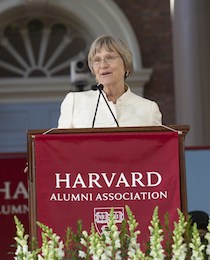
The first female president (and #28) was Drew Gilpin Faust (Wikipedia, WikiTree - her father, McGhee Tyson Gilpin). She was a graduate of Bryn Mawr and the first since 1672 to hold the position while not being a graduate of Harvard. She was in the office from 2007 to 2018 (News, President Faust), brought back the ROTC, and installed the first Muslim chaplain. 

Her biography at Harvard is the index (get direct link) of the archive.org collection. She was a Historian of the Civil War and from Virginia, a southern state. As well as looking at her accomplishments, we will look at the family history for connections to New England, north. 

Notes: 

1. We mentioned Drew in our post on Emmy Noether who ought to be better known and in the one on Women's History Month, 2022. Derek Bok was interim in the role prior to her time. 

2. ...

Remarks: Modified: 03/13/2022

03/13/2022 -- This was the first post of the Women's History Month theme. There is an in-law tie and several cultural ones. One pedigree line for Faust goes back to the Downing family which was connected to son Joseph. Culturally, both graduates and professors of Bryn Mawr have associations to look at further. 
 

Friday, March 3, 2023

Women's History Month, 2023

TL;DR -- For Women's History Month, we provide a link to a USA Today article on the subject with they provide information about milestones related to women serving in the U.S. Congress through time. 

--- 

We wrote of our interests in Awareness Months in the context of American history. Our post on Black History Month which was in February had a music and culture theme. Last year (2022), we did our first posts on Women's History Month in March with a look at two women. One was of a new family; the other had a long U.S. heritage. We were reminded about this focus by an article about the Gairdner Foundation which was offering awards to women scientists. For the month, we had several posts.  

One of them was a focus on Emmy Noether who came over here prior to WWII and taught mathematics at Bryn Mawr. Emmy's work will continue to be of interest as we pursue our studies of technology and culture. In that post we also mentioned Emily Green Balch who was a graduate of the college and won a Nobel Peace Prize. 

Another one was a brief look at Drew Gilpin Faust who was from the South but also had northern ancestors. She was Head of Harvard from 2007 to 2018. 

This year, we will start out with an article from the USA Today about the milestones of the Women of Congress. The article provided a graphic of milestones that also gave a bar chart of the percentage of women who were serving. The first woman was from Montana and entered the House of Representatives in 1917. She was Jeannette Pickering Rankin (WikiTree: Rankin-2418) which suggests New England heritage. The first woman elected to the Senate in was Hattie Wyatt Caraway (WikiTree: Wyatt-3262) who was from the South. She was elected while living in Arkansas. Two of her sons were generals in the U.S. Army. 

We will have more posts this year and throughout the year in all of the subjects of interest.  

Remarks: Modified: 04/16/2023

03/25/2023 -- We just did a post on Hypatia as an example of focus where we tie women and technology. 

04/16/2023 -- Updated link to post and image (at Gairdner site). Posting them here. 

Diversity and Excellence
in Science
Forum


Saturday, December 14, 2024

Josiah Willard Gibbs

TL;DR -- Josiah is a descendant and a well-known contributor to the development of a major theory in physics: thermodynamics. We will look at both his work and his pedigree. 


--

In our studies related to the Science of Technology, we will be running into many names. Some will not be American (such as Noether). Some will be American, and, of those, we will look for New England associations. The series on the Harvard Presidents is an example. We started this when we ran into a New Yorker article on James Bryant Conant. That got us to looking at all of the Presidents. 

Recall, one motivator for this work related to technology is machine learning (ML) masquerading as artificial intelligence (AI). But, in general, we want to follow the evolution of STEM along with the advance of the U.S. whose 250th is coming up. 

The Nobel prizes this year were a motivator,as well, with the focus on computation: Physics (neural nets); Chemistry (protein folding); Medicine (microRNA).  

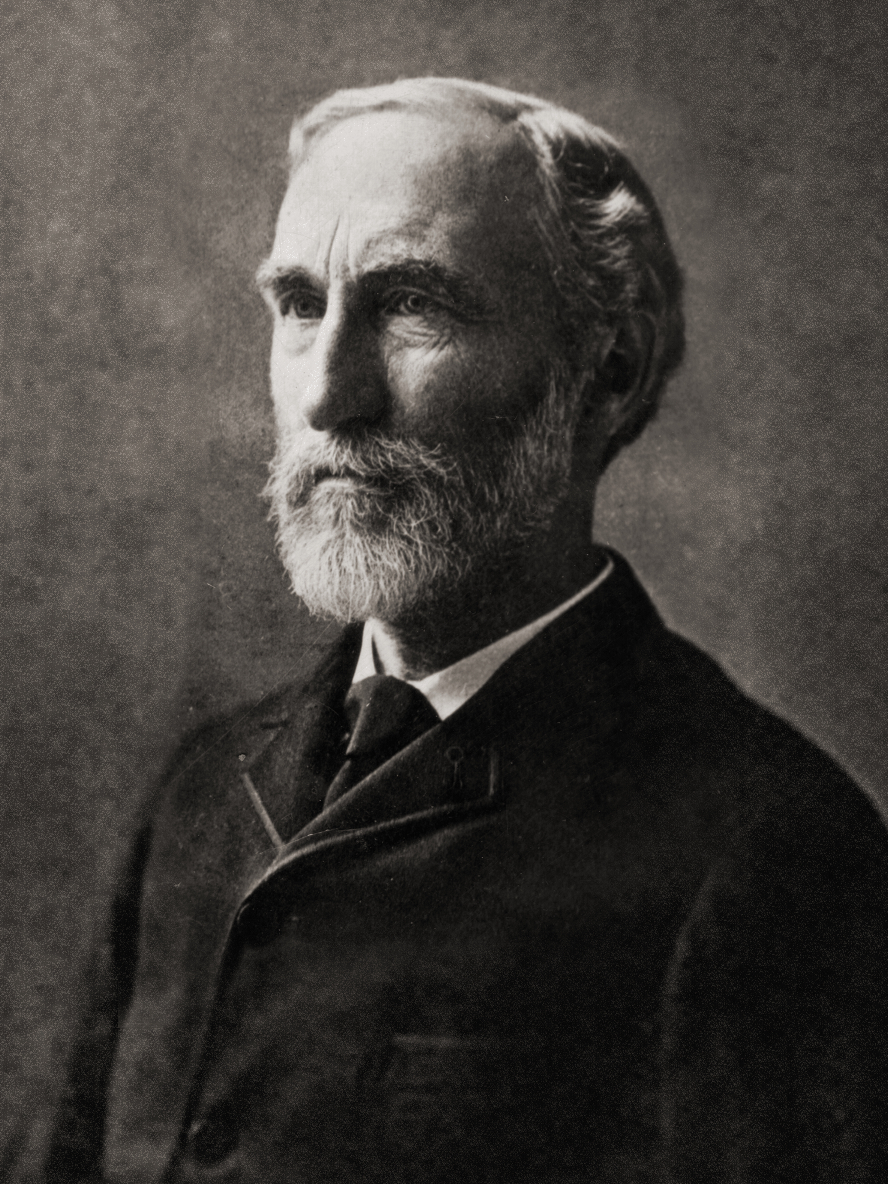
Now, back to New Englanders, some will be descendants of Thomas Gardner and Margaret Fryer. We ran into one this week. Josiah Willard Gibbs (WikipediaWikiTree). How did we get to him? In our technology studies, we are looking at the foundations of science. In that regard, thermodynamics is important. There are many other types of dynamics. Right now, we are considering those related to science and engineering but will broaden the scope as we go along. 

A well-known treatise on the subject was written by Max Planck (archive.org). Planck references several prior researchers, such as van der Waals. But, Gibbs is a frequent reference. On looking further, we found his association with James Clerk Maxwell (well-known contributor to mathemattican physics) and one of his detailed books on entropy that published his experimental work: On the Equilibrium of Heterogeneous Substances. We will use this work to leverage several discussions about knowledge and machine learning. 

So, Josiah will feature in future posts. He is a descendant of Thomas and Margaret via their son George. He is mentioned in later edition of Dr. Frank's book (1933: pg 63). 

Postnote: It is fortunate for us that we can use a Thomas descendant to scrutinize machine learning along several frameworks in our technology research. As such, this focus will cover both the U.S. and European contributions, indexed according to the times of the Nobel prizes with Planck's efforts as central to the discussion. 

Remarks: Modified: 01/25/2025

12/21/2024 --  Added Josiah to the "Descendants of George" list. 

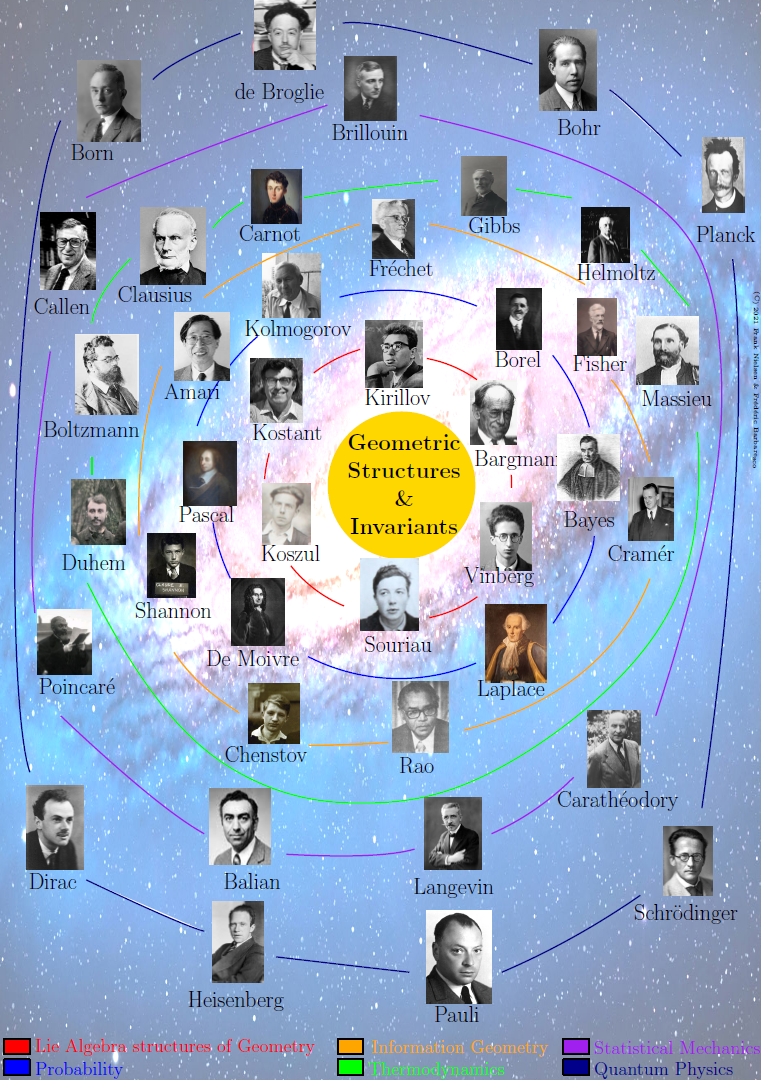
12/18/2024 -- Gibbs is on this graphic from the Geometric Science of Information site. 


01/26/2025 -- Gibbs was first in traisping through vector spaces: The Stargate Project