Showing posts sorted by date for query virginia. Sort by relevance Show all posts

Tuesday, October 13, 2026

People to know

TL;DR -- Today's subject comes out of a recent issue of The Economist. It about the descendant of New England families that went west into Kentucky, out of Virginia. One of them had gone south out of Massachusetts. Wendell Berry was 

---

The subject of this post came from a rambling bit of stuff. I saw an issue of The Economist recently and started to read due to the cover page. Yearly, I get the "Double Issue" at the end of the year which has the normal articles plus timely articles of length. The British way of seeing things is always nice to encounter. Too, the writers are referred to in the 3rd person. Some columns are regular topics: the U.S. (Lexington & Concord); European stuff (Charlemagne); ... 

The weekly covers the world, in more depth than with others which reminds us of our privileges. This issue looked at childbirth deaths, using information from Nigeria. Of course, technology is covered; we'll pay more attention to topics, especially MSET+ (or last post touched upon that - 12 Oct 2026). 

They have a memorial article every week. This one was very instructive. Wendell Berry lived in Kentucky on the land where he was born. Though, being a writer and professor, he traveled the world. But, he came back home. There is a lot that we can discuss about his life and work. 

For now, some particulars: 

Those last two links are to WikiTree where Gardner Research does our research. The family of both parents were early to Kentucky. We will look further at those pedigrees. Both families were out of Virginia which is New England south, to us. His father's line has families out of Massachusetts and Connecticut.  

As we go through the seven years of the 250th, we will be looking at families who have ties back to the era plus we will emphasize the 400th which goes on for a few more years up in New England north. Hence, "People to know" is an endless set that will unfold over the next few years. 

Interestingly, we picked childless couples earlier. An example was Ann and Joseph (of the house - she that married Simon - after he signed a prenup - Joseph had been killed in an early war with the natives). The reason is that those with children, many times, are recognized and represented via modern means, such as WikiTree. Those without are missing. We will go back and collect these posts in order have a continual theme to address. 

Remarks: Modified: 10/13/2026

10/13/2026 -- 

Friday, June 26, 2026

Early Road

TL;DR -- Right outside of Washington, D.C., is a lot of history. We like to pay attention to trails (becoming roads) and to rivers. An important road is on the VA side. Last year we mentioned that Gen. Braddock used it to get out west during the conflict that trained the US forces under the auspices of the Crown. 

---

This is a quick post to be filled in later. Last year, we looked at Gen Braddock and how he came through Northern Virginia up to northern New York during the Indian-French affair. Also, we looked at details of the earlier period. We like to consider the influence of roads and rivers (both a boon and a barrier) on the expansion of what became the U.S. of 250 years.  

The post emphasized the pre-1776 timeframe:

  • Lord Fairfax -- the focus was the Lord as owner. We mentioned Braddock since the beginning of his jaunt has been Alexandria VA which was about half-way to Mount Vernon of the Washingtons. Remember, this was of the earlier conflict where the colonials learned their military tactics under the auspices of the King's Crown.  
See Siege of Boston, about the colonials in 1775/6 not being a unruly crowd. 

Back to roads. The Vestal's Gap road was an animal trail and then used by the Native Americans and later by the colonials. Now, it consists of highways and even Interstate sections going from the Potomac port at Alexandria up over the mountains. 

Early in the 20th Century, Claude Moore bought land in Northern VA and worked to honor the colonial heritage through preservation.  

  • Vestal's Gap Road - By the late 1720s, the trail had been travelled enough to become a road. It eventually led to a gap in the Blue Ridge mountains, where an enterprising businessman named John Vestal operated a ferry crossing the Shenandoah River. A young George Washington used the road to travel to Winchester and points west, where he surveyed the Fairfax propriety for Lord Fairfax.
Lanesville Historic District

We have said that the 250th this year was of a conflict started earlier (even before 1775). So, on July 4th of 2026, remember please that the conflicts went on until 1783. 

Remarks: Modified: 06/26/2026

06/26/2026 --


Monday, June 8, 2026

Great Awakening

TL;DR -- Great Awakening. There have been several from one of which we got Princeton University. But, we can analyze the emergence of GenAI/LLM similarly with respect to the "animal"spirits related to its potential as boon or bane. There is the other side of the coin: great disappointment. 

--

The topic? It will be familiar to some. And, there seems to be a U.S. nature to this phenomenon, however we can look at these affairs from a more general framework and learn a thing or two. 

In this case, we are talking about GenAI / LLM which is known as "AI" now. Was that an awakening, of any kind? That is something to discuss which we will be doing while the fad rages on for a while and after the expected burst we can expect to participate in the analysis. 

Here is Wikipedia's take on the matter: Great Awakening. Apropos to the event's characteristics, there is a related phenomenon: Great Disappointment. The main theme relates to spirituality and religion, but there have been comments with respect to the psychological aspects: True-believer syndrome; Cognitive dissonance; and a lot more. 

Our interest is that Princeton University was founded in 1741 after the first of the Great Awakenings due to a conflict within the Presbyerian church. Tying this to the 250th which is coming up, John Witherspoon, president of the college from 1768-94, was a "signer of the Declaration of Independence".  Princeton is the fourth-oldest of the Colonial Colleges. The first three were Harvard (see our series on the Presidents), William and Mary (Virginia), and Yale. 

Colonial Colleges

Given what we have learned so far, our plate of topics is more full. For this post, let's switch the attention to the 'tAI'n't of recent years. Depending upon one's views, the 2022 entry onto awareness of OpenAI's ChatGPT was the greatest thing ever or the worst affliction cast upon humankind. We have seen plenty dicussion on both sides to the situation over the past three and 1/2 years. 

No doubt, those discussions will continue due to the lack of an theoretic basis with which to frame an analysis and to the shaky reports that have been provided during that same time. Each of the LLMs (which we will use for the class of systems) underwent changes over the years. Lots of that activity was undertaken in order to overcome some deficiency that was noted or to bring in missing pieces. 

Cutting this short, today I read the believers' accounts of the "agentic" approach that happened of late. Briefly, this is a model-based approach that takes output from several LLMs and determines some potential bit of action (truthfully established - questionably?) and then performs that action (which can be sensor/actuator based - or API-centric with respect to something somewhere and somehow accessed). You see, "agents" in the model are types with names and characteristics and functional ability. 

Nothing new, folks. That type of processing goes back to the early days of simulation many decades ago. Back to the beginning and even before the bunch of mathematicians met at Dartmouth in order to start "artificial intelligence" as an academic study. We can go into that at depth, as John was involved early with that thrust and continued to have involvement over his career in engineering support. 

From our viewpoint, there was work in the 70s, 80s and 90s that never got studied since this was done in the commercial/industrial environment that has goals and motivations that are not academically attuned, though many doing this work have advanced degrees. "engineering support" consists of the activities of scientists and mathematicians to support engineers in their problem solving. One aspect of this deals with tradeoff analysis which is the basis of modern approaches. 

Too, the computer has been applied in this arena from the getgo. There is much to discuss. The theme though: was the LLM emergence a boon (great awakening) or a bane (great disappointment). Per usual, we will most likely find some balanced view. Perhaps, the main lession will be just that: how to handle the complications related to modern problem solving in a manner that does not cause harm but provides support for our American Dream: life, liberty, and pursuit of happiness (for all citizens - not the brainy or rich or whatever other attribute of the priviledged state is applied. 

Remarks: Modified: 06/08/2026

06/08/2026 --

Thursday, June 12, 2025

Lord Fairfax

TL;DR -- Little known facts are around and about upon the landscape of the U.S. Our normal attention is west (west is best; east is least - sort of thing ;>). However, there has been and will be attention to the eastern activities as the western part came about 150 years later where the Revolution became a central theme. This post touches upon the time that Braddock came over. Evidences abound due to preservation efforts. Otherwise, the landscape has been abused (data centers abound, for instance). 

--

We had to mention the 400th (Jamestown, et al) so as to set a stage that will be permanent. We would not have had the 250th without the earlier phases. So, Fairfax? His name is all over northern Virginia as are others of the upper class (kin/cuz, as well). But, the main thread will be dual. For this post, let's use "French, Indian affair" which we have touched upon before. 

While researching people who went out west from the older east side of the country, we had to bring in other cultures, such as New France and New Spain. From each, the U.S.obtained land that had to be incorporated into the Union. Too, there had to be maps that to allow reasonable control of land use (or misuse). We looked at some of this in a post titled Practice for carving about the work that went on for decades, starting in St. Louis. 

Now, in the interior, we usually think about things that happened after Lewis & Clark and the War of 1812. However, there was earlier activity out there by Europeans, for the most part related to involvement as trapper, trader, and rancher. In that regard, prior to what we are now celebrating (the 250th anniversary), there was the conflict that trained colonists for the coming Revolution. 

Namely, we consider the French, Indian affair which seems to have been mostly forgotten. Dr. Frank wrote about this conflict in his series on the Regiments that were at the Boston Siege. But, stepping back, we have had posts on this affair.  A grandpappy kept a diary that was later published: Nathaniel Knapp's diary about his time with the Louisbourgh Expedition. Some who were involved participated in the later Revolution, many times in a leadership role. 

--- 

With the French, Indian affair, we have taken a New England focus since Quebec was the principal establishment of New France. But, the conflict involved all of the colonies. An example is Virginia. 

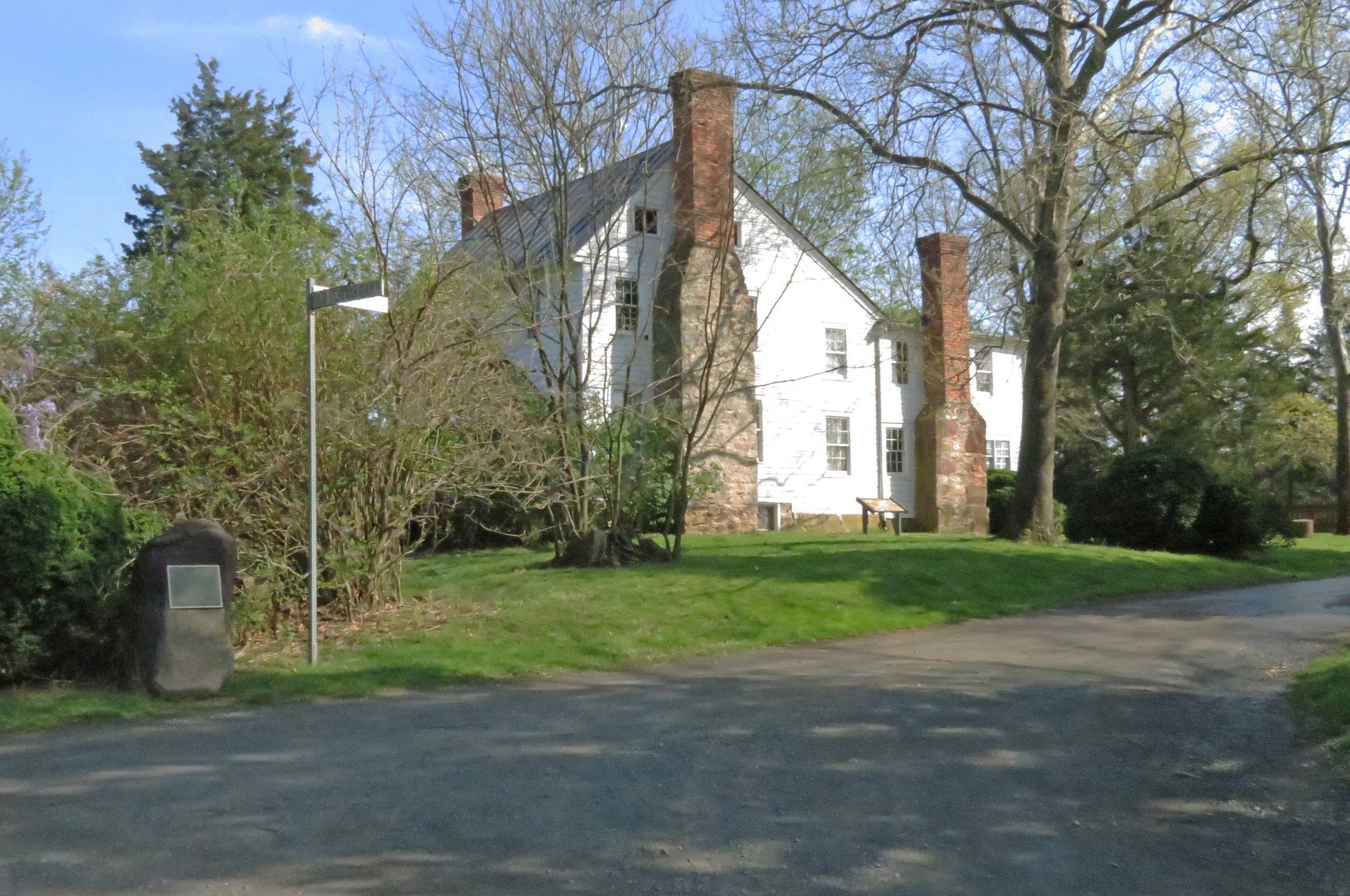
Today while at a park, we read a historic sign. It mentioned Braddock. But, being in Virginia, there were two other names of note: George Washington; Daniel Boone. We last mentioned the former (Washington) here in this blog in a post on Col. John Glover who was featured in the series by Dr. Frank. But, Washington mapped and surveyed the Potomac River which we have to consider further. This post is a start as we have covered many of the rivers of the west. 

Now, the latter (Boone) has been mentioned many times in posts about the early settlement of the west. Boone, well-known explorer: opened a pass; served in the French, Indian affair and the Revolution; settled areas from the east to western Missouri; ventured out into the west.  

---

Washington was also involved with a conflict between the British and the French. The resentments that led to the Revolution are thought to have resulted with the arrival of Edward Braddock  and the reaction of the colonists to his methods. One of Braddock's early campaigns involved a planned attack on Fort Duquesne, French facility, near the start of the Ohio River. This expedition did not go well which left lasting impressions on both Washington and Boone. Braddock was mortally wounded which meant that he had no say in subsequent matters nor in the trashing of his reputation. 

---

Braddock arrival into Virginia was near Hampton Roads. After some meetings in Virginia, there was preparation for the attack on the Fort. Now, accomplishing this required going over a moutainous region that impeded traffic. Washington was familiar with the area due to his duties with the surveying crews that mapped the Potomac. 

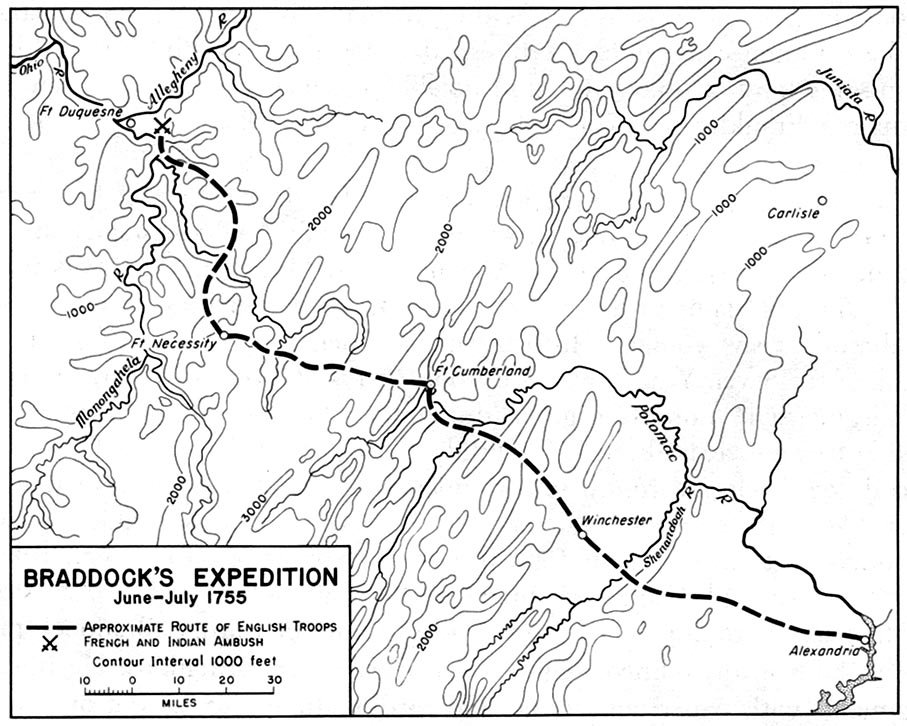
But, let's look at the route that was set up for Braddock's forces by using a couple of images. 

Braddock's route from 
Alexandria, VA to Braddock, PA

Braddock's route from
Cumberland, MD to Braddock, PA

The first images shows the "approximate" route from Alexandria (on the coast) which is on the Potomac to the final destination near Fort Duquesne. It passes through the interior of Northern Virginia and climbs up into the Blue Ridge mountains. This map gives us the elevations. At Cumberland, the elevation is much higher, and we see the route through western Maryland into Pennsylvania. 

---

Braddock's route went through the Keyes' Gap which is over 900-feet high. Formerly, that route from Alexandria to the mountains was called Vestal's Gap. Parts of the trail can be seen in eastern Loudoun County of Virginia. This area is near Dulles Airport outside of Washington, DC. 

The route follows an old Indian trail which is 65 miles in length from Alexandria to the  mountains. 

---

In terms of historic preservation, Loudoun County has provided historical markers with notes in the area. Too, they have a website which is of interest. This is an example of the web/cloud being useful to education at several levels. One example (2019, LoudounNow): 
  • In Our Backyard: Preserve the Vanishing Vestal’s Gap Road - property of Lord Fairfax, originally, almost 400 acres are preserved surrounded now by heavy residential and commercial development including Dulles International (and recently, the heavy foot of data centers trample the countryside). Pieces of the trail still exist (with an interest not unlike those remnants that we can see of the Santa Fe and Oregon trails in the middle of the country. 
We have written of New England (south) for several reasons, such as people from New England (north) going south. As well, the culture is the same. The south was more swashbuckling and plantation driven, not that the north was heaven on earth, let alone a beacon as desired by John Winthrop. 

Now, finally, for this post, the Native trail ran from the coast up into those things called the Blue Ridge mountains where we find things like the Shenandoah River and artifacts related to the Civil War that was mentioned on historical markers too. Right by the above-mentioned site runs a modern highway that was prototyped (real life) in the early 1800s since the traffic was heavy. It bears the name, in areas, realated to one of the early towns. 
  • Leesburg, Virginia - county seat of Loudoun County. Town of the Carters, Lees, and Masons. was in an area that was good for farms and plantations. In the War of 1812, federal documents were brought from DC for safety. 
As we proceed being involved with the eight years of the 250th and then the long trek to 1820 and Boone's western influence taking hold, there is no end to the topics to cover. One theme will always relate to the influence of New England and it families that contributing to the establishment of the U.S.  

Remarks: Modified: 06/26/2026

07/31/2025 - One of the Lord's American cousins was George Washington. We need to look more closely at the relationships between those here 400 years ago and those of the 250th being celebrated.

06/26/2026 - Updated URL for the Wikipedia image (one change - number of pixels). 

Thursday, February 27, 2025

Robert Charles Anderson

TL;DR -- Robert Charles Anderson was a Fellow of the Society of American Genealogists. We look at his lineage and then one ancestor in particular. As well, the American Dream? What of the English-American basis that set the tone 250 years ago? On this side, we kept the interest in the Magna Carta whose 800th of the original sealing was observed in 2015 and which is again in focus. Last time, it was King John; this time it will be his son, Henry III. In this context, we look at President Carter's lines. That gets us back to Anderson's connection with Thomas Cranmer, Archbishop of Cantebury, who assisted Henry VIII in establishing the Church of England. Many Americans, like Anderson, descend from his brother. These long threads of lineage speak of many things, many of which pertain to modern issues and choices to be made. 

--

This post is the first of a new series and honors a recently deceased member of the NEHGS who worked in genealogy and heritage: Robert Charles Anderson (WikiTree). He was the lead in their Great Migration Study Project (Wikipedia, American Ancestors). This project produced several volumes of biographical and historical information. 

The Puritan Great Migration project at WikiTree is atempting to capture the pedigree and descendants of each of these immigrants. That effort and the NEHGS continue their research as indicated by this post at the Vita Brevis website: Everything You Need to Know About the Newest Great Migration Book.

Anderson also joined the American Society of Genealogist and served as President from 1989 to 1992. This obituary is from the SAG site. 

We will look at one of Anderson's ancestral family (in the time of Henry VIII) below. Before that, we will touch upon a few topics such as the Magna Carta, President Jimmy Carter's lineages, and some of the Magna Carta folks who will feature the rest of the year. 

---

We really do need the theme of American Dream, even as we have thought. You know, over the 400 years, lots of folks came here, so there would be a dream per lots of people and lots of family. We somewhat look at the cardinality of that number of lots and lots below. 

We can broaden the view and concentrate on English-American dreams and stories. At some point, the focus of the scope will be European. There will be stories that will look at the 400+ years in terms of a person, their heritage (lineage), up to the arrival (400 years ago), and then back to the origins. For now, we will limit the go back to King John's time and that of his son, King Henry III using the theme of the Magna Carta. Have you heard of that?

We supported the 800th anniversary of the 1st sealing (in 2015). This was a big deal to those who wrote the foundational materiall for the U.S. (250 years ago). Now, ten years later from 2015, there will be celebration of John's son Henry III taking an interest in the Magna Carta document. 

Note: we recently mentioned the Magna Carta in our writeup of Presiden Jimmy Carter (The Carters). We had a link to this report (Magna Carta (800th Anniversity). Ancestors who carried the Magna Carta lineage have been put into a "gateway" category. The Magna Carta project at WikiTree has been verifying at least one lineage of each person in the category. Using that resource, let's step through research results. 

  • Category:Gateways Ancestors - We know that President Carter's ancestor was Thomas Carter of Virginia (WikiTree). But, let's go to Famous Kin (caveat: all claims need scrutiny which is what the WikiTree project for Magna Carta is all about). Presiden Carter has these links: John Fitz Robert; William Malet; Gilbert de Clare; Saher de Quincy; Roger le Bigod; ...   

Gilbert de Clare (Wikipedia) was of a family (de Clare) that came over with the Norman Conquest of William the Conqueror who was a kinsman. There were 25 Sureties who took up the onus of seeing that King John kept his agreement. The history from that point to now is very much of interest. 

Having completed the look at President Carter, let's get back to Anderson and his heritage. 

---

Using the WikiTree information, we can look at one line of Anderson's through his third-great-grandfather Howard Gay. Of interest was that Ander was related to one of the Archbishops of Cantebury, Thomas Cranmer, through his brother the Archdeacon. Cranmer was burned at the stake by Mary, Queen of the Scots. 

Lineage thread from Anderson
to Thomas Cranmer,
Archbishop of Cantebury,
showing 15 generations

We ran into this martyr early in our research and noticed the open issues that needed resolution. We didn't venture far into those issues as there are many Americans who descend from Thomas Cranmer (see Foxe's Book of Martyrs). These things are best worked correctly (our latest open question deals with origins - not in terms of location but of the logistics involved - how many times did Thomas come over here?, was it only once?). But, having this linkage back to Cranmer confirmed by Anderson's work has a lot of meaning for us. 

That is some of the type of work that the SAG does. We will be using Anderson's lineage to look at other issues related to questions needing this research. 

---

The American dream, again? The English connections go much further than than the generations around the efforts to establish colonies in New England. We have our shared heritage which needs to be brought to awareness. We have been trying to do that sort of thing. Needless to say, the type of research that will be requied will use technology (such as, computer modeling) which then fits well with our themes. So, expect us to pay more attention to technology in and of itself as well as its usages, including discussions of what the U.S. is all about. 

Too, the phenomenal world of people and their generations carries a lot of informaton through time in ways that we have not been allow study due to various factors. Those factors? We will address them philosophically in a manner necessary for smart living. Why? Because of the change in the dynamics that we see with the 21st century, we have to go back and considered what we did not learn as we ought to have in the 19th and 20th centuries. 

We might add, quite frankly. As, generations of people  represent being and real matter. From that dynamic, humans evolved to where we are now. The past two centuries have seen acceleration along several fronts which we need to look at. One huge area needing attention is mathematics. How long thing analysis will take is anyone's guess. First? Demonstrate the necessity of such an effort.  

Remarks: Modified: 02/28/2025

02/27/2025 -- 


Monday, January 13, 2025

The Carters

TL;DR --  Many families have long ties of family history going back over the 400 years. Then, the Revolution came 150 years later. Recently, President Jimmy Carter passed on. We got motivated and looked at his ancestry and that of his spouse. They have New England ancestors from the early times. They have cousins, too, the singing Carter family one of whose members married Johnny Cash. There are many families that we can consider as we did with the Adams family (of the 2nd President of the U.S.). And, there are other groups and evnts to commemorate. The U.S. has many organizations devoted to keeping this type of history alive. With technology, things will get even more interesting. 

--

We have always paid attention to collateral families. With WikiTree, many families can trace a relationship map that goes beyond blood connections and in-laws. One can see cultural ties through time that will become more visible as people become aware, via technology, of them and their importance. 

The 250th of the U.S. (which starts in April of this year and goes until the 250th of the end of the Revolutionary War) will be several years in duration and will generate interest in research. The Carters are an example family that we can pay attention too. Our ancestor, Thomas Gardner, was in north New England. The ancestors of the Carters was of the New England of the South (Virginia, &c.). There are ties between the regions and families that have already been touched upon. We'll pull those together this year as we pay attention to the 400th families who continued here until they helped the U.S. get started.

Just as we did with the Adams family (Another Adams), where we associated Pres. John Quincy Adams with his later cousin "Grizzly" Adams (of TV fame - except that was an actor playing a role - Grizzly Adams was a real dude), we can look at the Carters. Johnny Cash married June Carter (Wikipedia) who was a descendant of Thomas Carter. This family was hugely successful in music. 

These Carters have many cousins in the U.S. and elsewhere. People might talk of the distance of the relationship, but relattionship can have meaning in terms of the U.S.  

Recently, President James Earl Carter (Wikipedia) was in the news, having died in December with a recent Day of Remembrance being held in the U.S. in which there was a service at the National Cathedral in Washington, DC. According to WikiTree, President Carter has an interest family tree. His ancestor, Thomas Carter, came into Virginia in 1635. There was major amount of arrivals in the north in that year, too. 

For now, putting that aside, let's look at the First Lady: Eleanor Rosalyn Carter, has a New England pedigree, as well: Wikipedia; WikiTree. We will start with her as she has Patriots that have been proven for membership in the Daughters of the American Revolution who has, with others, been working to organize remembrance of the start of the U.S. for several years now. We will look at those activities as well as what is needed to carry on the work. 

The First Lady Carter had these Patriots (quick survey, so not complete).
D.A.R.'s records represents the work that goes into proving history and genealogy which represents lots of hours spent by volunteers. 

---

Additionally, there is an organization that has a broader role than D.A.R. with many other organizations as members. Named The Hereditary Society Community (HSC) of the United States, this collection of groups meet yearly in Washington, D.C. and are another example of continued interest and research. 

Of interest is one historic event that the HSC honors and which influenced the U.S. Namely, we will see a reflection this year on one (in 1225 AD) of several attempts in old England to establish a Magna Carta. 
Most attendees at HSC meetings from the U.S. have heritage back to the 400-years-ago arrival as well as having an ancestor who was at the 1215 event at which King John sealed the deal. These were barons who were to see that John behaved. Up to 2015, there was a major effort to document these folks on Wikipedia. As well, WikiTree had a project to prove the ancestors on this side of the pond. 

---

President Carter was a definite technologist. Too, he had different views that we can discuss. His willingness to pick up a hammer at an old age tells a lot about his character. 

The past two years of GenAI have brought to the fore issues needing discussion and resolution. Our take on that matter is that there is a balance to be attained. We would like to phrase it in those extremes of the modern time: screen or hammer. If that does not make sense, we definitely have some work to do to establish the definitions of the imperatives that living successfully and sustainably requires. 

Remarks: Modified: 01/13/2025

01/13/2025 --  

Thursday, June 27, 2024

README and more

TL;DR -- README! Such a minor thing. It's age old. We don't seem to know where it started. But, it relates to the world of code. It's nice that GitHub, old ways being new with the internet and worldwideweb. In any case, now AI has put its wannabe head into code from various positions. We have payed sporadic attention and thought that it deserves a more regular focus. 

--

We have mentioned GitHub (Wikipedia overview) several times since around the 2020 timeframe. Our latest post was motivated by an email feed from the GitHub team that related to an article on those who maintain code. That role was always seen as less important than the "cowboy" roles of the developer. 

Stopping a minute. GittHub is an on-line example of what can be termed code management. This type of facility/utility evolved over the years until it's a fairly robust addition to good business practices. Some have used CMS for this type of work. However, we have had lots of posts about Content Mangement and will continue. AI modes will require extra efforts at curating. So, stay tuned.  

Now, back to the "cowboy" (apologies to the real type). Guess what? Lots of developers put stuff out and strutted off the stage like the stud. Oh, btw, this is an old guy writing who has seen this stuff for decades. And, after strutting off, the stud left the errant traces of his work for other to clean up after. Much like the mother after her kids. 

Mixed metaphors, I know. But continuing. I'm working with a project that will try to incorporate AI modes (we'll be more specific later) into a new system which is supposed to revolutionize the economy, as a whole. Large piece of pie to bite from. Anyway, I will still blog though I'll be going to other blogs and linking from those back to here. 

Another bit of interest? GitHub and OpenAI have been working for awhile on a Copilot which is supposed to aid in developmenr or general code management. This joint work started in 2021 which was a year before the general release of ChatGPT. BTW, if you are wondering what this is about, see a brief history of GPT. The author writes about research on AI (mainly machine learning). 

Again, back to the subject. Today's mail pointed to this discussion: How are AI coding tools changing the way developers work? This is from the maintainers group referenced above. In reading the text of the discussion, there were some things that stood out. One was this: AI might not write a book, but it can write a good paragraph. 

Before proceeding, though, a couple of words. Yes, one can drive a small nail with a sledge hammer. But, it's a mismatch of need and what's being used to fulfill the need. Too, AI (GenAI, in particular) is hugely chewing up resources. For what? They need large data centers that requires an unwarranted amount of energy. Too, they need water for cooling. And, more. They're noisy. They make the landscape other than desirable. Go look at those that surround the lovely Virginia countryside of Dulles (IAD). 

So, reading the article was interesting. I went to look at their site and saw that this group started to publish in April of 2023. That would have been when the reality of ChatGPT and its kin was sinking in which was a mere five months after the release. As a reminder, OpenAI went viral and got millions of people to sign up for the free ttrial. Too, lots of folks bought in, including companies. 

All of that will eventually be analyzed. I started last year in another context: Knowledge Systems Center, Sperry Univac. As mentioned in the last post, I have been off helping to support a project as it gets off the ground. So, there are pending tasks that will be picked up again. 

Now, the effort at GitHub is called The ReadME Project. Coders have used a README forever, it seems. Software usually had this text file that included some documentation, or information about using the software, and more. So, does Wikipeda say anything about the README? Yes. 


Now back to the GitHub project. Here is a little bit of the notices sent since they started. AI itself has only come into focus the past few of these. 
  • 06/26/2024 - AI is here. How is it changing the way developers work?
  • 05/23/2024 - Maintainer Month: The joy of open source
  • 04/17/2024 - Getting started in a career in platform engineering
  • 03/12/2024 - Intelligent uses for AI in coding
  • 02/13/2024 - Best practices for open source maintainers
  • 01/09/2024 - Creating technical content
  • ...
  • 08/01/2023 - Getting started with edge computing | The ReadME Project Q&A
  • 07/13/2023 - How to make your first open source contribution
  • 07/10/2023 - How to handle programming paradigm shifts | The ReadME Project Q&A
  • ...
  • 06/13/2023 - Non-code contributors: The unsung heroes of open source
  • 05/25/2023 - Elevating contributors into maintainership | The ReadME Project Q&A
  • 05/09/2023 - Is it still "open source" if you don't accept contributions?
For an old timer, seeing all of this progress is a pleasure. There are several caveats which come from doing this for years including stints in the plush offices dealing with management and its science (if there is such). Evidence of this is becoming apparent to me. People, the key resource, are being driven to distraction and worse being slaves of automation. Oh, I would write more and will. Not just now. 

This year, I saw USDOD mention that people and their intuition ought to be the focus, not the computational twin that is a wannabe, many times over. All of this may seem new. It's not and has been going on for a long while. What's new? We can't hide the realities so much under proprietary cloaks when the evidence are huge monoliths traipsing along our skyline and blocking our rightful views ;>). 

Remarks: Modified: 12/28/2024

12/28/2024 -- See updates in GB, XIV, 1 for 2024 updates. 

Tuesday, June 4, 2024

NEHGS Events

TL;DR -- We like the NEHGS which has been there since the 1830s and had many illustrious members, such John Quincy Adams. So, NE is in its name. But, it has been extending its reach. Okay, we like that. Let's compare notes. 

-- 

This post looks at several events so as to tie together what might be disparate research but really is cohesive, or will be in the longer run. We have noticed ads about the types of events events offered by the NEHGS from time to time. Some have raised thought of joining. Have not yet. But, we have attended several meetings of various groups of the  Hereditary Society Community which meet in the spring in D.C. 

Now, the recent three events scheduled by the NEHGS shown here are very much appealing. For one thing, we have had lots of posts mentioning both Northern and Southern California. Both of us have lived in the State and have family in the area. The history of both of these areas shows lots of New England influence. There is more on that later in the post. 

The NEHGS meetings in CA will be in Oakland (June 8th) and Los Angeles (June 9th) this weekend. The LA event will be held in San Marino. That specific reference is necessary due to the sprawl of LA. 

NEHGS in CA 

NEHGS has been slowly expanding its reach out of New England over the past decade or so. This is reflected in their databases. For instance, it was nice to see information brought forth on Virginia and the Northwest (which is really the mid-west). Now, with CA on the radar, we can expect to see more focus on the large interior that was covered in the frontier century. 

The reality is more than the flyover country that became popular, recently, brought by the technology of aircraft. In the areas between the coasts, we deal with real people. But, just as that theme comes up, we see that the NEHGS has found one of the libraries in the interior. 

Independence, MO

In August of this year, they'll be in MO where the trails came through the trails came through. The library has been a great assest to the region where, btw, Harry S. Truman's Presidential Library can be found as well as other historical notions that ought to be remembered. 

Like, across the Missouri River in KS is where we find that John Brown caused some turmoil. Kansas was a Massachusetts which can be seen in Lawrence. John had supporters in New England. Thomas W. Higginson wrote of his visit to the area before the Civil War. 

-----

Let's get back to LA and defer more discussion to a later time about CA and SF. A recent post continued our look at Bunker Hill West (US History, details) we brought up the theme of details of someone's existence that is not related to the paper chase of genealogy. We will continue on that theme as it relates to our interest in technology and how it's being abused of late. 

But, technology is great, as well. Let's just use good old curated publishing as an example. Lots of the research to date has been looking at things known personally. Like, John lived in the Bunker Hill area for a while as a young worker. Given the work of the TGS, Inc. which has a focus on Essex County, for one thing, we have followed families as they went west. Too, the influence of New England is of interest and seems to have no end. 

Along that line, we can use Wikipedia's work to stop, look and listen (that's an old adage with regard to train tracks in the west - out where signs may be minimal). 

    • Downtown Los Angeles (DTLA) - this page has been seriously updated with new information since 2020 which is partly due to COVID. People were home and wanted to do something. In this case, the History section has increased significantly. We will go through this more thoroughly, but it does provide names of thsoe who were there at the time. We see missing names. Say, Butterfield who ran a stage-line from St. Louis, MO through upper TX and along the southern border (through Tucson, AZ) to LA. His stages stopped near the building that housed the LA Times for whom John worked while going to UCLA. (see post Mirror Building). Part of Butterfield's work met up in El Paso with a southern line started by someone from the Giddings family of Ipswich, MA. Like we noted, the stories are endless. 
    • El Pueblo de Los Angeles - several buildings exist from the New Spain era. La Iglesia de Nuestra Señora la Reina de los Ángeles is an example. We had a post about the area with LA City Hall in view in one of the photos (see post Old LA and the U.S.. One can also see the City Hall (which was remarkable for its time and was the limit for buildings - the high-rise phenomenon came about when that was repealed) is also visible from Olvera Street
    • Bunker Hill (we added the "west") as it's named for the Boston landmark and cultural icon of the U.S.) - fortunately, photos exist that were taken at various times throughout the history. Now, the southern part of the Hill is high-rise laden. The Hill itself was scarfed several times but seriously so in the 1970s to make way for the skyline makers. Yet, there were elegant and quite remarkable buildings in the area. At least, the Angels Flight rail was saved through a dismantle, store during reconstruction, and then put back into place. 
    • St. Vibiana - this was an early Cathedral whose building from the 1870s still stands. There had been some earthquake damage, but mostly it's there as an events center. There is a newer building up on the Hill (appropriately along Temple Avenue): Cathedral of Our Lady of the Angels that has remarkable architectural features and serves the role of the former building. 

This post looked at NEHGS's work and then pulled the focus to LA specifics. We'll do the same for San Francisco, later. When we do that, the original look will be at the Presidio which is of New Spain. 

Remarks: Modified: 06/04/2024

06/04/2024 --

Friday, December 22, 2023

Dartmouth '99

TL;DR -- So, a new role? Nathaniel Fick's position is of interest, for several reasons. For one thing, he was at Dartmouth. Post the AI meeting, of course. Still. It has been a year now since he had his new role. We can start to look at the consequences of his work and of computational things, in general. 

--

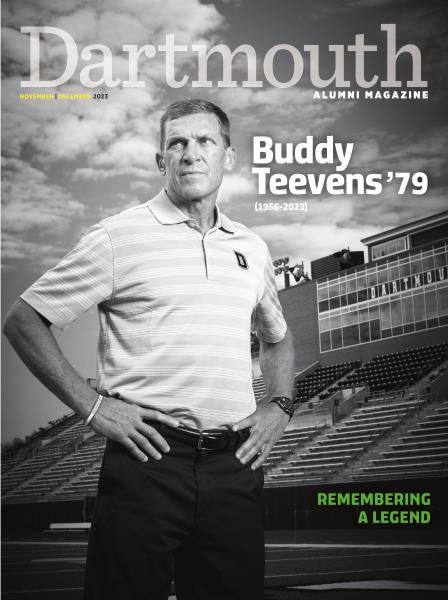
He has graduate degrees from Harvard. He is of Darmouth, 1999. Who? 

  Dartmouth Alumni  Magazine - Nathaniel Fick '99

Going forward, we will not have a strictly technical focus with respect to technology. So, where to start? The Technical Czar of the U.S. He was appointed last year by President Biden. 

He did ROTC at Dartmouth enough to get a commission out of college. It's interesting that he picked infantry for his service area. At that time, the web was bulging, ready to burst. And, it did. But, the crucial event of 9/11 was right around the corner. 

So, our interests are several, starting with technology as there have been recent announcements of late of the adults waking up and getting involved with the sandboxy affairs of AI et al. Someone has to take responsibility. For one, those doing anything "AI" now without proper attribution to the methods and their sources will have egg on their face in the future. But, also, pushing out crap-trained systems can be thought of as idiotic, for several reasons. 

But, there are New England connections. There was one part of the family that came into Virginia prior to the Revolution. Then, his family went west post the Revolution. We have not looked at this too closely, yet. 

For those wanting to research further, his parents were Nathaniel Crow Fick and Jane Ella Stimola. 

The office: Ambassador-at-Large for Cyberspace and Digital Policy. Confirmed: 09/15/2022. Two months later? OpenAI's ChatGPT. A little bit later, 100M plus users for the chatty generative thingee. 

Remarks: Modified: 12/22/2023

12/22/2023 -- 

Tuesday, October 31, 2023

Little Essex, town and county

TL;DR -- One might say, Halloween thoughts. But, no, we're talking the eve of All Saints Day. Nutfield Genealogy mentioned, as will be eternal, Essex of Essex County, that little place. And, the theme was of the time. So, we looked at Essex and what we have researched, with lots more to do. Then, there is a comment that brings things forward to now. As in, the 400 years of progress has not been in vain. 

--

Per usual, we ran across a post that was relevant to today, the eve of the All Saints Day as well as containing seeds for future research. Let's recap a few things and follow that up with a few things that need more attention. 

"Little Essex" refers both to a town and a county. Essex County contains Salem and surrounds. Also in Essex County, one finds Essex the town. We have written a little about both. Here are a few examples. 

  • Essex County, then and now (Aug 2022) - Shows a graphic (map) of the area as it was in 1692 and as it is now. 
  • Shipbuilding in Essex (Sep 2022) - This was an interesting find. We had not thought of that sized vehicle being made in that area.
  • Newbury Essex County MA (Oct 2022) - Later, we went back and looked at this area which handled much larger vessels. 
  • USS Merrimack (1798) (Jun 2012) - This may have been the ultimate find which pertainted to a gift from the folks of Newburyport to the new country.  
  • Shipwrighting (Jun 2021) - Interesting technology. We were impressed by the capability of the group that came very early, into Popham, established a colony, and built a boat (Virginia) that was seaworthy sufficiently to cross the Atlantic several times. Maine has been featured in a post.
As an aside, we have been fascinated by the big iron ship work in Bath, ME and almost went that way. However, it was the ships of the sky that was our lives where weight is a major concern. We will get back to these topics from a technology perspective. 

--

With respect to the times, we point to a post that was at the Nutfield Genealogy site in Apr 2010: Body Snatchers 1819. Our first post was in Sep of 2010. Several things caught out attention. For one, John Wise was of Essex (Chebacco Parish of Ipswich - see image). We have featured Ipswich quite a lot (Ann's heritage is full of families in Essex (all over the place). More below on Rev. John.

But, it's of interest to dive into the details which we will gloss over except for this. The person involved was banned and went to DC. Oh, how timely? That's not political. Then, his efforts led to what is now the George Washington University down there by the Foggy Bottom and other stations of the Metro of the area. 

BTW, notice that some places have gotten more attention, like LA of late and San Francisco and the large interior of the US, as these are where we lived or spent working time. Ann grew up in Essex County (Salem, of the day, too, to many - we think Andover) and went west. John grew up in the middle of the country and lived mostly in the west with some east coast times thrown in. We would like to feature more about places with Gardner descendants (or those of Essex County or MA or New England) live now and how they (or their families) got there. Ann's work with D.A.R. has helped us fill in some pieces of the puzzle. And, mentioning D.A.R? The 250th of the US is coming up; so too, Gloucester (little site of great expanse) of little Essex County MA looked at its 400th this year. 

---

Rev. John Wise was an Indian wrestler. There is, at least, one story of his prowess. But, he was also a farmer and a Harvard graduate and a minister. Too, he was the inspiration for the Declaration of Independence. This influence came though he lived over 150 years prior. Technology would come into the discussion. In the time of the turmoil (say of Samuel Adams), Rev. John's books were republished. Our final bullets relate to this. One is from this blog. The other comes from the Ipswich MA site. 

Remarks: Modified: 10/31/2023

10/31/2023 -- 

Tuesday, May 23, 2023

Memorial Day, 2023

TL;DR -- Memorial Day represents many things. We will have this as a focus along with other themes as we go forward. This post looks at our thoughts, in May, for the past XII years. 

--

We have had a regular postings about Memorial Day since 2019 when we matched up a grave site of a Civil War veteran with his family. That is, using the new means, we got links in place to support further work. As we mentioned in the last post (Three years ago), we are in the post-Covid period where recovery looks to have started, many uncertainties still remain, and we all are watching how the future will develop. 

Normal human affairs, one might add. Carrying on with the review of the past decade's activities, we will look at a post from the month of May for each year. 

  • Memorial Day, 2022; Memorial Day, 2021; Memorial Day, 2020; Memorial Day, 2019; 
  • Old friends, 2018 -- we wondered what led to the demise of The Massachusetts Magazine which ceased publishing in 1918. We saw two possible factors: WWI; Spanish flu. In two years, we were to find out more about the latter from personal experience. 
  • May, 2017 -- we had a couple themes to look at. For one, Dr. Frank's sister, Lucie took over for Sidney Perley who had been involved in Essex County research. As well, we looked at the beginning of The Atlantic in Boston. 
  • Virginia, 2016 -- we called the settlement, New England south. There are interesting parallels including the emphasis on the west which was to become a regular focus in a couple of years. 
  • May, 2015 -- we had several research themes going from the Magna Carta, to the activities involved with the War of Roses. Finally, Rev. Hubbard got some attention. 
  • May, 2014 -- we incorporated and kept origins in mind. 
  • May, 2013 -- we considered an early writer, John Farmer. 
  • May, 2012 -- we looked at Col. Worth, namesake of a city in Texas, plus Hawthorne's Merry Mount. 
  • May, 2011 -- we had seen Prince William and Catherine marry which motivated looks at England. Who were the Gardners? But, a visit to Salem had us asking this question: where was Thomas? 
Before 2019, we had plenty of catching up to do with respect to Essex County of Massachusetts and the families involved in its founding. We expect to recognize the patterns of life as we continue our work adjusting the view to meet new data. 


Was Thomas at Cape Ann? See "In summary" for a discussion. 

Remarks: Modified: 05/23/2023

05/23/2023 -- 


Friday, April 28, 2023

California, Golden State

TL;DR -- Our first bit of tasks dealt with learning about New England, especially little Essex County of MA. Later, we considered movement away from that area either to the south or to the west. And, by water, too, as that traffic had been constant from the beginning. After the Revolution and Lewis & Clark's journey, the expansion started in earnest. However, the interior of the U.S. is huge and took a while to be carved up. Travel across the country took time by land. And work. Too, water travel was full of its travails. With the 400th from the beginning, the 250th coming up relates to the U.S. being populated. California will get a little more focus as it is first by many categories. 

---

Our first mention of the Golden State was in 2015 which is the sixth year after the blog had its first post. It was a brief mention as we researched the Barque Bostonian owned by Henry Gardiner that wrecked in Oregon. The ship had been in San Francisco prior to that. But, we found out that it had also been in New Zealand and a number of other places. 

Then, about that time, while being at a lavender farm near Lawrence, KS and realizing that the trails had passed through that area, the thought was: did the students up on Mount Oread see the trekkers as they labored past? The post: Gardner KS (11 Aug 2015). We had seen signs while traveling but were overwhelmed with learning New England particularities. Even little Essex County was unknown to us and took some time for study. A year later, we started to update the information dealing with the western movement (Gardner Junction).   

Of course, given the drive to get to the gold rush as fast as possible, the CA traffic dwindled after the young guys figured that going up the Missouri River past St. Joseph saved them a few days. Rather than the circuitous route into upper KS and then heading northwest to NE, they just got off the boat and joined the trail goers after a shorter jaunt. But, traffic to the southwest (Santa Fe) still went through Gardner, KS as did some going to CO first and then joining the OR/CA trail in Wyoming. 

That deals with movement by land. While researching the early venturers (mountain men, trappers), we looked at CA, too, principally. Though, Jedediah Strong Smith got there in 1826 and was the first European to go across the Mojave desert (even doing so in the summer). Then, he mapped out the Interstate system with his wanderings before coming back to meet his demise in the Great Plains region. Along with and after him, there were other travelers that we looked at. 

But, there is an area that we have avoided, to dated. How did CA end up with its 1850 entry into the U.S.? For this historic portion, we will use documents published by the U.S. By 1847, the area of California was home to 150K indigenous people plus about 14K folks of European ancestry. Most of the Europeans lived south of Monterey, especially Los Angeles. San Francisco (then Yerba Buena) had a scattering, until after the 1848 discovery of gold at Sutter's who had arrived in 1838. In 1849, 100K additional people arrived from the U.S. and Australia, New Zealand and Hawaii. 

We will back up and look further at New Spain in California. Mexico had won its Independence in 1821. As well, we will look into the lives of the indigenous folks prior to and after the arrival of the Europeans. 

There will be more posts on this and other states. As well as New England States and Missouri, we have looked at Virginia, Kentucky, Ohio and Michigan which got started after the Revolution, mostly by restless veterans. So, we will cover the States, interior and along the coast lines. 

Remarks: Modified: 04/28/2023

04/28/2023 -- 

Sunday, January 22, 2023

U.S. hills and valleys

TL;DR -- New England has a long reach, as we have noted time and again. But, it also is the origin point for lots of movement that went north, south and west. We look at how names for places came about in New England. This will carry further as we review how the country filled. 

--

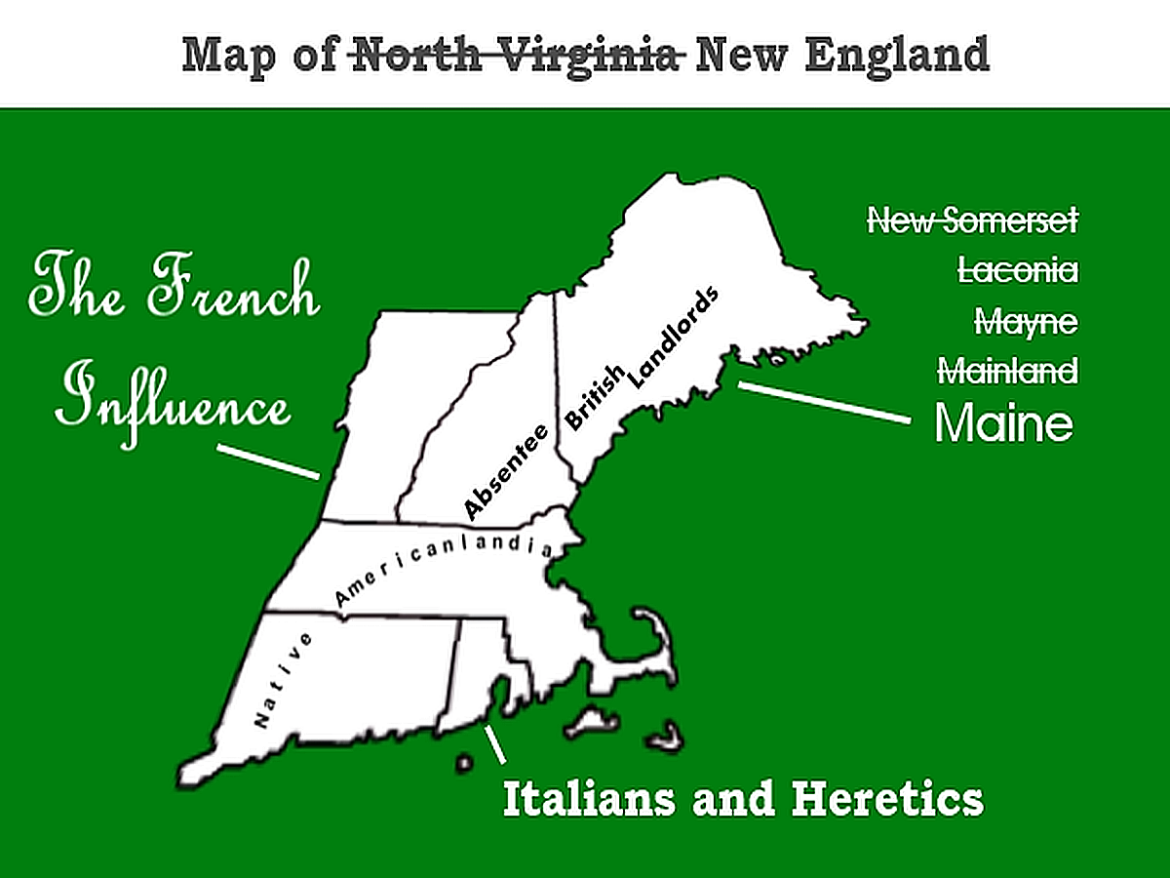
We do this post for several reasons. One is to familiarize ourselves and our readers about New England, given the 400th is now being observed by Gloucester in MA and Portsmouth in NH. The New England Historical Society updated, recently, an article with the title of  "HOW THE NEW ENGLAND STATE NAMES CAME TO BE" which had this interesting map. 

Another reason was that several names came from those used by American Indians. For Massachusetts (MA), the name refers to the Great Blue Hill whose elevation is over 600 ft. Looking at that geographic site brings up the subject of comparative heights, not only in New England but in other regions. 

Let's take a look at the numbers remembering that those of the east went west. And, we know that the heights are much more in the western areas. But, what about other areas of the country, such as the South. We will also take a look at the middle parts that trekkers going west had to pass through, as the interior of the U.S. was filled? 

As we proceed, we will consider the highest point in terms of mountains. For Massachusetts, this would be Mount Greylock at 3,489 ft. Looking north, Vermont's name is for the Green Mountains as they were marked on a map by Samuel de Champlain (of New France). The highest peak in that State is Mount Mansfield at 4395 ft. Before moving on to another region, New Hampshire was named for an old English county. It's highest peak is Mount Washington at 6,288. 

Moving on and looking at New England south, we change a little for reasons that are apparent soon. For these States, let's list its highest point plus a prominent city to indicate the differences: Georgia 4,784', Atlanta 738'; Virginia 5,729', Charlottesville 594'; Maryland   3,360', Frederick 302'. 

Virginia stands out, being the home of both Presidents Washington and Jefferson. We have done a few posts on the area and will continue as we move toward the 250th of the Revolution. The focus of the conflict moved south as time went along. Too, we mentioned the Cumberland Gap and Boone several times as we looked at the migration that picked up after the Revolution. Both Atlanta and Charlottesville are fairly high as they touch on the plateau of the Appalachians. Frederick features in the Gettysburg battle which we will get back to and was on the middle route out of the east to the west. A few posts ago, we looked a Ohio as a destination from that area and New England. A continuing theme will be the areas east of the Mississippi River.  

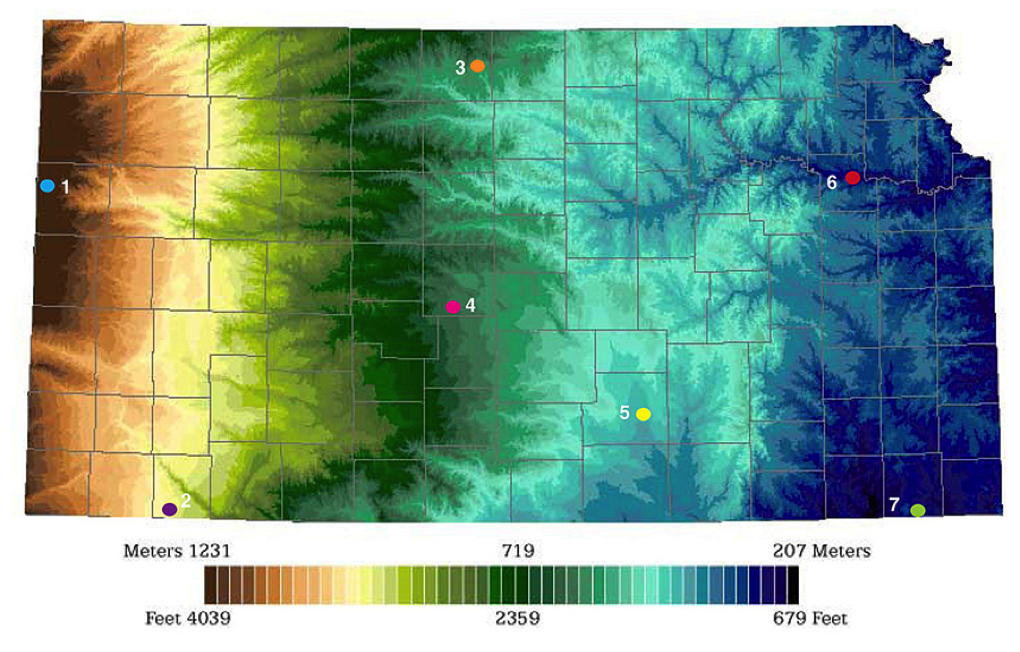
Elevation,
Kansas
Leaping west, let's look at few States that were on the route. First, though, the image is an elevation map of Kansas which we looked at in December in terms of traffic and events through the period of the Frontier Century. Think back to those times which we have covered in several posts. But, as the map show, there is serious elevation change from the east to the west. The amount of change is almost as much as those peaks of the east. In Kansas, that is, as definitely getting to Denver brings in a new level that exceeds the east. 

The complaint in the age of the auto is that Kansas is flat. Well, it's not. That's illusion; plus, the car is doing the work in order to allow lazy evaluations. Why say that? Expectations and interpretation are huge issues with how technology influences us. We'll get back to that theme, regularly. 

But, here are the states in that area (same format as above): Kansas 4,039', Kansas City 909'; Arkansas 6,581', Little Rock 335'; Oklahoma 4,974', Oklahoma City 1,198'; Missouri 1,772', St. Louis 466'; Texas 8,751', Fort Worth  653'. 

Tying back to the former list, note Texas's highest peak. That is due to the fact of it being almost beneath Denver. Kansas City is higher than St. Louis and Little Rock as it is on the Missouri which flows down to the Mississippi. Oklahoma is even higher. Forth Worth, south of Oklahoma City, is lower as it's on the route of water going to the Gulf of Mexico. Why look at this? Remember, water was either a boon or a bust. We see it now. But, then, it either helped the movement or was a hindrance. Just look around at bridges and consider traffic if they were not there. We see that from time to time as bridges collapse, through accidental damage or neglect (a topic to bring up, as well). 
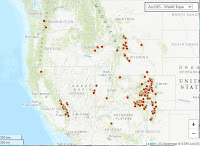
Click image
for interactive map
So, we're right in the middle. Those considering ancestors who went on, yes, it was a lengthy and hard row to hoe. But, many made it. Lots were buried along the way. Some were lost forever. 

To wind things up, we look at the highest peaks in the western continental U.S. with a map. The query could be, how many are over 12,000 ft? This site has 178 rows showing that we have many over 12K and 13K and 14K. This does not include Alaska. 

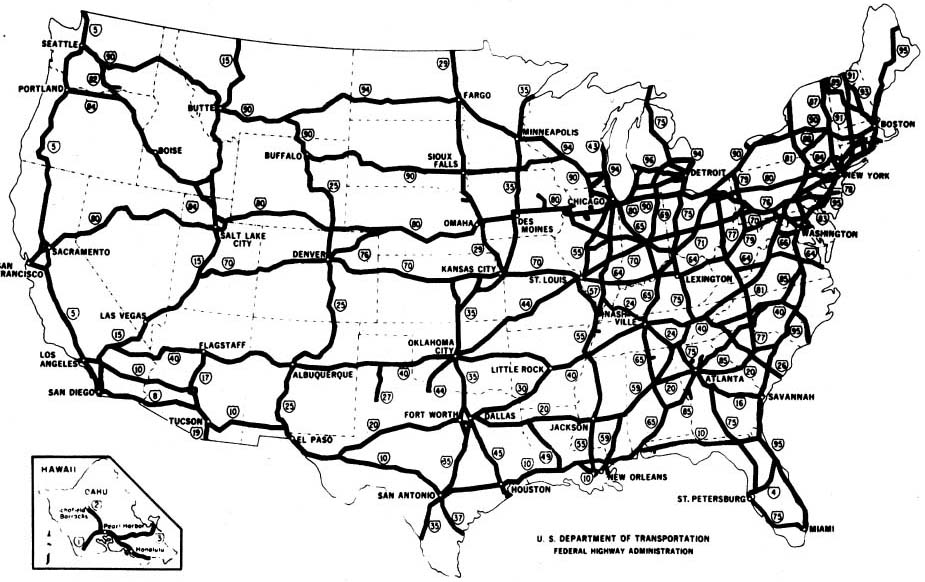
As we consider this overview, note the dots and then look at the trails which smartly tried to stay away from the impossible. Or, the dots aren't impressive? Consider this, the State of Nevada which has only two names on this list has over 130 mountains that are over 10,000 ft. Notice, there is no north-south Interstate highway in Nevada. The red dots had a huge influence on how this system was designed. 

The Dwight D. Eisenhower System
of Interstate and Defense Highways

The 400th commemorations and the 250th will allow us to get familiar with our country from stem to stern and left to right. Ought to be fun. 

Remarks: Modified: 01/25/2023

01/25/2023 -- Added link to New France. 

Thursday, December 1, 2022

Perspective, a necessity

TL;DR -- Ipswich has been a topic from time to time. It had shipwrights. Of course, different size of vessels were handled. There were no biggies like Boston (MA) or Bath (ME) or Norfolk (VA). Other examples of industry and technology can be used. But, Ipswich led the way to the expansion across the interior that we saw for over a century. We will be looking at that, as after all, New England has a long reach. Ipswich has done well for itself. 

---

As technology runs toward the future, we always get to states where we get locked in. We cannot go back. Technology is great, except for when it doesn't work. If the problem is solvable, then we have a glitch and a correction. If the problem is systemic or not resolvable within a reasonable timeframe and costs, we have adjustments rise as imperatives. Learning drives technology; unlearning drives recovery from technology's failures. 

The U.S. is about the best example that we have for several reasons. We have already addressed technology as being our main focus. We have 400 years of data to ponder, in this regard. But, just those pieces of evidence from the past 250 years is worthy of study, too. And, commemorative moments, such as we are having now which will last decades are a time to reflect and learn from the past. We are surely in a different mode than the generation of the recognition of the 300ths. 

Today, we are featuring Ipswich which does not come to bear until later, but it does involve Essex County. Reminder, Cape Ann (Gloucester) has their moments in 2023.  It was from Ipswich that a group went west. Gen. Rufus Putnam (Wikipedia, WikiTree) was one of the leaders of the effort. Let's look at some particulars. 

Historic Ipswich is a website that has been quite a motherlode of information. Of course, we are interested due to the many families in the heritage who had Ipswich connections. For one, Rev John Wise has an interesting bunch of  events in his life that we can learn from. We have been looking at shipbuilding in little Ipswich as well as similar work in the County (see Newbury Essex County MA).

The website has looked at Putnam's effort: Ipswich to Marietta, December 1787. First, they show the result of contention between the States with regard to this unsettled land to the west. We mentioned that in the last post about Family Search and their great support for research. Then, the post has the photo of a plaque that notes the endeavor. What? That got our attention, as we have been looking at the western expansion and its frontier century, including lost generations that plague genealogists who have no imagination. Why say that? These people were. Some were newcomers, true. Many were representative of the long reach of New England. Along with technology (and its specifics), our interest deals with identifying the examples of that reach plus the evidence now of its continuing existence. 

Then, the post looks at an effort in 1937 to redo the trek while documenting the effort. For one thing, they provide the map that gives details of the geography. That was great to see as we have looked at the west and its rivers and its great expanse and the carving that was inevitable. Lots of this was with a focus on St. Louis, the gateway. Putnam kept a journal. There were other reports written. In short, it was a great find that was more special since it involves little Ipswich (influence a huge multiple of its size). 

Now, let's look at perspective. Technology makes people lazy; oh, managers will say that it increases productivity. In terms of the former, heard of AI? It's a huge scam which we will show as we go along. Yes, balancing mathematics with knowledge with respect to culture that the broad history of U.S. allows. After all, we are a nation of immigrants. Luckily, we have two broad scopes, related to the colonial times versus later. Too, we have cultural associations with the old countries, for the most part. The list goes on and on. So, expect this theme to be recurrent. BTW, that which is being touted as AI is merely fancy math being exploited by computational prowess that came via modeling founded on (guess what?) mathematical modeling and the detailed work over the centuries. Yes, we will to touch upon all of that. 

For the time being, we will present the following map with some commentary afterwards. 


This graphic shows a map from the prior post which has one view of the partitioning before the carving that was involved in establishing the States. 

1) deals with the Michigan Territory (again, the prior post) that we just offhandedly dismissed as practice for the carving. Our only excuse was that we were dealing with the broad expanses beyond the Mississippi River, but that was not correctly assumed. We have to step back given that the focus of DAR/SAR is the upcoming 250th of the U.S. Besides, we have to give generations credit. This deals with the fifth and the sixth where the latter is the first of those that were heavily in the lost side of things. 

After all, people moved and did so quickly, once the way was set. Say, thanks to the likes of Daniel Boone and Jedediah Strong Smith. The former was doing his exploration prior to the Revolution. The latter was directly connected with St. Louis and its influence. We will go into that deeply. 

A point to make is this: that trek from Ipswich was difficult. Hence, there were real reasons why it took months. In fact, it was practice for the challenges of going even further which was all the way across the continent. On the right is a modern image with routes and times. Even today, travel is difficult. Try driving diagonally across West Virginia. It's fun; but, don't expect to make record time (except, perhaps, max time which is open). Those mountains run further north. By the time that they would use the Ohio, they had already trekked some distance. 

We will take the time to go into this further, since it does set the stage for later developments out west. 

2)  This view trails the other by only a couple of decades. Missouri, the starting point, was a State in 1821. By then, most of the issues related to the green area had been resolved. But, it was 1804 when Lewis & Clark did their venture from D.C. through St. Louis to the west coast. At that time, mountain men (trappers, explorers) and American Indians were mostly in the area. Except, that had been activity from the west coast in (New Spain), some of which got away from the coast. Too, the northern explorers had been more adventurous than those of New England. Boone in the south went further west than did those up north. Lots to discuss. 

Taking the same approach, notice that we are now in the middle of the country covering only a fraction of the area. Here, the issue is that folks would have followed a similar path down the Ohio River to the Mississippi River and then St. Louis and finally the Missouri River west. But, that was on to a starting point. There were several trails. This example uses that which went to Santa Fe in New Spain. One thing to note is that Santa Fe was the terminus of another trail that came up from the south. Too, there were trails out of the east through Texas to consider. 

But, taking that one small portion which involved about four hours of driving now, it took three weeks for a wagon train to cover that area with a daily grind of a few miles. Notice, too, that we are talking the plains portion which is supposedly flat. It isn't. You can still hurt yourself by falling off of a cliff at various places.  

In all of this travelling, rivers were both a barrier and a boon. In these graphics, they are not shown with any clarity, but, even recently, we have seen examples of traffic snarl ups due to bridge damage. One time, we were across the river from where we wanted to go. Okay. There was no ferry. This is a form of technology to note. So, the solution, since we didn't have a helicopter that would pick up the car and deliver us to our destination, was to backtrack to where we could follow a road that went over the river and then get back to where we needed to go which was a stone's throw (well now, as it was broad). 

During the times before bridge technology really advanced, one waited out water. Incidentally, here in the west, there are uncountable number of places where high water will stop traffic. And, in many others, the water comes up to the edge of the road. One hopes that the road engineers did a good job with the base. And, that's not mentioning storms such as we will be seeing with winter setting in. It does not even have to be like the recent dump on Buffalo, NY. A few inches can be catastrophic. 

 Oh yes, real examples. There is a method to that madness. AI and other computer has gone off the rail since a proper basis was lost. Yes indeed. We have seen so many examples of modeling gone wild (like the kids at spring break) due to a lack of grounding which comes about for several reasons. One of these is a lack of respect for the need. Some of that might be generational; a lot of it has to due with the computer being too new for us to really have a grasp of how truth engineering is necessary. Too, what John von Neumann wrought will bitt us until we learn several lessons that have been pending for a long time. 

You know, we are looking at the U.S. and its growth. But, at the same time, the world of thought was changing. There and here. Say, for the latter, Charles Sanders Peirce. But, parallel to the U.S. and its experiences, the world was changing, too. There is not end to that type of analysis. 

Remarks: Modified: 06/08/2023

12/16/2022 -- Rutland VT is hosting the Smithsonian's roving display:  The Smithsonian comes to Rutland. They are reading and discussing McCoullough's book The Pioneers as Rutland is on the pathway west. 

06/08/2023 -- Updated the URL for the Historic Ipswich post. It was originally dated in 2019. The 2022 update removed the older post. One of the technical concerns is that source linked by an URL can disappear or have some other issue, like the information changing drastically. Or, as we might wish not happen, contain undesirable information. In this case, an easy fix.