Showing posts sorted by relevance for query lexington. Sort by date Show all posts

Saturday, February 28, 2026

Nearing the day of Evacuation

TL;DR -- 1776 is the official year. July 4th is the day. Of the start of the U.S. Prior to that, 1775 was full of activity which wound down in March of 1776, however the conflict went on for several more years. 

---

We are nearing the end of the months from Lexington & Concord to the Battle of Bunker Hill and then to the Evacuation Order. Lots went on during that time from sheer boredom to heavy work to training and some conflicts. An example of work is Knox's movement of cannons from Fort Ticonderoga to the Boston area. 

We can use Siege of Boston for this period which goes from the altercation at Lexington and Concord. During the past eleven or so months, we have had many posts with themes of events from 1775. 

This post is to close out February and open up March where we can then expect July 4th to  kick off the 250th which runs for several years. The topics to look at are unending. An example might be our look at the Southern Campaign during which the Revolution was completed successfully and the final wrappings were put upon the peace agreement. 

But, people are the main interest. Col. Thomas Gardner who was killed at Bunker Hill was a descendant of the Thomas Gardner of Roxbury who was of unknown relations with Thomas Gardner of Salem. The progeny of both of the men spread the Gardner name over the country. The image shows the names of Gardiner and Gardner families here at that time. 

Mass Soldiers and Sailors

Finally, our interest will be in the people and families of the 250th as well as the issues of origins that need a clear resolution to remove confusion and conflicting opinions. We look at the Roxbury family as Ann is a descendant of this Thomas as well as the one of Salem. 

Remarks: Modified: 02/28/2026

02/28/2026 -- 

Tuesday, December 17, 2024

Battles of Lexington/Concord, MA

TL;DR -- This post has a 250th theme. Our work of fourteen years has generated a lot of data. With this anniversary, we will go back and connect with that done over 100 years ago. 

--

The title refers to the conflict in Massachusetts in April of 1775 between the military forces of England and the militas of New England. One might say that the 250th of the U.S. celebration can use that as a starting point. England's troops were pushed to Boston. And, later were allowed to leave that area, too. 

Now, in a real sense, the 250th started before. There were meetings several years in advance. We will name names as we look at the historical/genealogical aspects. Some events were well known: the Boston Tea Party. 

Where could the English troops go? North to Canada, for one thing. BTW, "troops" would include several types of military resources that the old country had. The whole of the time of the Revolutionary War has been researched and written about by historians. Our interest goes further as we have the genealogical and family historical aspect to cover, too. 

For instance, one of our tabs is "TMM" (The Massachusetts Magazine) which was an effort of a Thomas Gardner descendant. As an MD, he was a medical officer with a group in Salem MA; but, he did a lot of research which was done during the time of the late 1800s and early 1900s. We honor his work and will continue referring to it. 

On looking at the first issue of the TMM in 1908, we counted the number of refernces to Lexington. Every Issue (Quarterly) had an article on a military group (Regimental History Series, background and motivation) that had been at the Boston Siege. Most of these were at the earlier event, as well. 
  • See TMM tab and look at TMM, Vol I, 1907 provided by archive[.]org. Each Volume had four Issues. 
So, over 100 years later, in 2025+, we can continue the research with lots more facilities available. For one, the computer is now quite capable. We have more sources that are digitized (offical records; eye witness accounts; &c). In terms of personal experience, pensions were offered. Much of the data consists of application data. 

Regimental History Series, background and motivation

In terms of interest, the Thomas Gardner Society, Inc. has a mission related to honoring the start of Massachusetts, particularly after the establishment of the Plymouth colony. That is a 400-year view about which we have spent time and effort doing our own research. Now, we have the 250th arrive related to the Revolution and the start of the U.S.

At the same time, we have added Technology as a special interest. In particular, computational systems in all of their aspects will be the focus especially with respect to knowledge systems dealing with particulars from the specifics of mathematics up through the 12-floors of science using physics as an example, such as Gibbs and thermodynamics. 

Remarks: Modified: 12/18/2024

12/18/2024 --  Put in a link to the Gibb's post. 

Thursday, September 18, 2025

Southern campaign

TL;DR -- Lexington & Concord got things going in the spring of 1775. Hence, we have the 250th started this year. The Siege of Boston was still going on (would be until March of 1776). By 1778, the Brit strategy was to go south and perhaps find friendly folks. The events of "Southern theatre" run by General Nathanael Greene starting early in 1781 helped settle that issue. Lord Cornwallis surrendered to General George Washington in October of 1781. The 1783 date aligns with the signing of the Peace Treaty. 

---

As expected, the looking back over 250 years to the Revolution can be a daily thing. We are still in the Siege of Boston which started in the Spring at Lexington & Concord, included the Battle of Bunker Hill and other skirmishes, and will go until March. We wrote recently about Henry Knox bringing cannons from Fort Ticonderoga to an area outside of Boston where the Patriot troops were not visible to the British in Boston. This period will end with the British leaving Boston and going to New York. After not finding success in that area, the focus of the conflice went south. There were still events in the north, but the whole focus changed.

This is where General Nathanael Greene comes in. He had been Quartermaster General for several years. In 1781, General Washington put NG in charge of the war in the south. We got involved with studying this by doing research about the southern troops. In the north, there had been regular militias. As Dr. Frank noted, the leadership had been trained by serving the Crown in the French & Indian affairs. 

Lord Cornwallis had hoped that the southern portion of the country would be more amenable to staying loyal to the Crown. That is something to consider as we review over the next few years.  


Called the Southern theatre (or campaign), this series of battles started in 1778 which was two years after the Declaration of Independence and three years after the first shot was fired in 1775. Having started in early1781, NG won and lost battles. Yet, the War of Revolution was over by October of 1781. The year of 1783 is used since that is when the peace treaty was signed. Between 1781, there may have been continuing conflict, but the main focus was forming the country. 

There is a lot of ground to cover, such as a look at the timeline of the Southern theatre and consider of how what particular areas had a major role in the conflicts and their outcome. 

---

One theme will be Loyalists and what happend to them. For example, see this post -- Henry Gardner, the Loyalist. He left his property in control of an agent in Salem and went north where he had a reputation of being fair, and friendly, with American prisoners. He came back after the war and resumed his life and business. 

Remarks: Modified: 09/18/2025

09/18/2025 - 

Monday, December 23, 2024

250th and more

TL;DR -- 250th and 400th will resonate through the coming decades as we learn more about then and what might have been missed in the history taught as a general principle. 

---

Let's start by pointing to two private groups on Facebook. These two links are to public information about the groups. After this introduction, we can discuss the two anniversaries that are the focus of the groups and which have current attention. 

The focus of the first group deals with the start of the U.S. 
  • 250Years America's Founding (link) -- We have mentioned the 250th for some time. Organizations, such as D.A.R. have had this as a focus for over a decade. But, the time is coming up fast: Battles of Lexington/Concord. This part of the turmoil began on April 19, 1775. This group has been presenting information about the times before the turmoil. An example is that the Boston Tea Party was about a year before. After Lexington/Concord, the focus shifted to Boston where the British troops had settled surrounded by the patriots. And, a date that is honored every year is the July 4th signing of the Declaration of Independence. 

In a post this summer, the site offered the report, of General Gage who lead the British troops, about the battle of Bunker Hill. Prior to the opening of those hostilities, the General offered everyone a pardon except for two individuals, Samuel Adams and John Hancock. One we remember via beer. The other had the elaborate signature. 


 The second group goes back further to the first arrival on these shores of people attempting to start a new life. One might say that this is in regard to New England north however it covers most of the colonial activity along the east coast. 

  • New England Family Genealogy and History (link) -- This group has been around for nine years and helps with research in the New England of the northern colonial states. The group's purpose: Sharing Research, Stories, Photos & Family Data about New England (Maine, Massachusetts, New Hampshire, Vermont, Rhode Island and Connecticut). As such, it covers families from colonial times to the present. Here is an example recent post: Nutfield Genealogy. 

For both of these groups, the initial effort was before the anniversary to celebrate; work carried (or will carry) on after the anniversary. There is no end to this type of focus which will allow us to bring to bear the facilities of modern technology to fill in where history, as an industry, fails to take note. 

Remarks: Modified: 01/18/2025

01/13/2025 -- President Carter and Rosalyn both descend from New England (south). We look at a few of The First Lady's patriots. 

01/18/2025 --  Pageant of Salem is an exmple of the events from 1924. It provides a good view of the thinking at that time. Now, 100 years later, we know more since we have digitized copies of old documents coming on line. See this post: 250th and more for our research and pending edits. As well, this post is an example of what we will focus on: Mary (Gardner) Boylston.  


Monday, April 14, 2025

Where was Salem?

TL;DR -- The first battle is rapidly approaching. Salem MA has already weighed in. We will pay attention and keep pointing back to earlier research work that bears significance. 

--

The Lexington & Concord turmoil is coming up with respect to its 250th (19th of April). We have written of this event, several times. As things go forward from here, we have until 2033 to observe the revolution as never done before. 

We can start with a post at the Streets of Salem blog. 
  • Salem is a No-Show at Lexington and Concord -- great article full of details. Technology is great when it works. So, expect that the 250th and the 400ths of various sites will be fleshing in history as never seen before. 
We used this as an opportunity to point to our work. In particular, Dr. Frank was editor and supporter of an effort at publishing the history of Essex County of Massachusetts. He wrote a series of the Regiments who were at the Boston affair that followed this one. Officers of each organization are identifed with some information being provided. 

This is an image of my comment to the post. 


Remarks: Modified: 04/14/2025

04/14/2025 

Friday, February 21, 2025

U.S., 1820

TL;DR -- New France has always been on the mind from school days. Later, we found that the officer corps of the generation (5th) that drove the Revolution had been trained by the English Crown during the French & Indian affair. The Revolution is coming up for commeration of its 250th. For the 400th, northern New England started these in 2020. Coming up will be Salem MA - 2026. Some of our themes will continue to be rivers, carving the interior, and more. 

--

During the Covid times, we had time to do a lot of research, some of it related to families who came into (or passed through) the middle part of the country after the Lewis & Clark trip and report plus there was study of simultaneous activities in other than the New England part of the country. Mountain men, like Jedediah Strong Smith, were exploring. He went west through St. Louis which became a hub of activity. Jediediah got through the Mojave Desert and arrived in the Los Angeles area where the Spaniards took notice. After that he went up to northern California and was headed back to New England when he met his demise in the area now known as Kansas. 

See these posts as examples: State Missouri, 1821; U.S. Interior; and New Spain. There are posts covering later times before and after the Civil War: St Louis MO to San Francisco CA; Trapper, trader, rancher; and Old L.A. and the U.S. Our focus is across the board and 400 years: Boone, himself; Two different times; and, even, Josiah Willard Gibbs. That last one deals with serious early reserach in thermodynamics that got the attention of Maxwell, Planck and countless others. 

----

We have followed a Space in Quora that deals with Spain, including people and events related to New Spain's ventures on the American continents. And, we have a particular interest in California with family involved with New England's long reach across the interior. Too, the writer of the post lived (and worked, studied) in CA, including dwelling on the Bunker Hill area of DTLA for a while.  

Today, we saw this map in a post on Quora (next section) which got our attention. The Adams-Onis Treaty was signed under the adminstration of John Quincy Adams (kin - see Mary Gardner Boylston) and represents the increase in activity that followed the Revolution which is coming up this year for recognition. 

Frankly, we like the map as it represents one of the views of the time. Also, we already have noted that New Spain (see New Spain span) has not gotten the attention that we saw with New France. So, we will be paying more attention, starting with the left coast side of things. 

--- post in Quora Space -- 

In the post, which is an answer to a Quora question (Who founded Los Angeles and in what year did California become a state?), there are interesting historic details including photos. The Quora Space has been a good resource. Our post is to recognize its importance. 

---

And, we have two views to balance: the 250th - Lexington/Concord imminent; the 400th - Salem is next year - 1626 - Massey's Cove. 

We would like to point to more information on New Spain in those same times. 

---

We will get back to this topic after more review of those early years of the U.S. For completion, we cannot ignore the great state of Texas (Juneteenth; Pre-Civil War, San Antonio TX to San Diego CA). This map is from a couple of decades later which is pre-Civil war. 

U.S. Territorial Acquisitions

Other topics will include the U.S. Interior and Carving the land. 

Remarks: Modified: 02/21/2025

02/21/2025 -- 

Sunday, May 18, 2025

Bunker Hill, I

TL;DR -- We're in the time of the Siege of Boston with the Bunker Hill incident on the horizon. But, the Siege went on until March of 1776. So, we have a few more items to look at prior to the hubbub of the Declaration of Independence whose inspiration was, in part, brought by kin from almost 100 years prior.  

---

Siege of Boston

The first thing to remember is that we are at the 250th of the Siege of Boston. Earlier, we looked at an event that led up to this: Lexington and Concord. This start of the turmoil on April 19th attracted support of able-bodied men in the area, except for Salem troops under the command of Col. Pickering (Where was Salem?).  

In our research, we ran into the battle of Bunker Hill (17 Jun 1775) early on through reference to Col. Thomas Gardner who was killed in that conflict. His 25th Continental Regiment was involved in several engagements. 

This brings up Dr. Gardner's look at the Regimental history through a series of articles that appeared in each of the issues of The Massachusetts Magazine. In the first article, he discusses the Siege of Boston and notes that the revolutionaries were not solely rebels. Many officers had served the Crown in early conflicts. 

The Siege was almost a year, going to March of 1776. We have time to look further with respect to our themes. 

---

Los Angeles (LA) of California (CA) has a neighborhood that is called Bunker Hill west. We have had several posts on the area which represents the history of LA from the time of Spanish rule to the current age of skyscrapers that have populated Bunker Hill West area. Early English involvement the area was in the 1830s. After that, many New Englanders showed up in the area. We have been researching this influx and have reported on some families. 

A stage line came into LA from Arizona (AZ) that was part of a freight/mail business with an eastern terminal at St Louis of Missouri (MO). Pre-Civil-War activity on the line followed a tight schedule and was supported by stops along the way through several current States, including Texas (TX). The area in LA where the line had their stop and supporting businesses, such as those that provided horses, stage maintenance, and more, was at the bottom of Bunker Hill West. 

The Butterfield Express, and many other Express companies, were New England in origin. Of interest is that many of these are still in existence. 

---

The Revolutionary War started in 1776 and went until 1783. So, we will have several years to look at this history in all aspects including families and their genealogies. So, let's remember Rev. John Wise of Ipswich, MA who was seen, almost 100 years later, as the inspiration for the document normally associated with the War, the Declaration of Independence. The Col. Gardner mentioned above was related to Rev. John through their Gardner lineage. Both are kin. 
 
Remarks: Modified: 12/13/2025

12/13/2025 - More on Bunker Hill, per usual. 

Sunday, June 7, 2015

Research examples

The recent edition of the American Ancestor magazine had an article by the researcher/author of the "Embattled farmers" book about Revolutionary soldiers of Lincoln, MA (twixt Lexington and Concord). See this public Facebook page (Embattled Farmers). On reading the article, several things struck me. For one, there is still a lot of work to be done in terms of research, not only in the era of the U.S. start but through the whole of the American experience to now.

A lot of this research needs to be done by those who have the interest and time. Meaning? Some of this has to be by labor motivated by more than money.

Naturally, we would point to the goals of Gardner Research. Recently, we took Dr. Frank as a focus and published his paternal line (grandparents: Benjamin Brown Gardner and Lucy Foster Wilson) in essay and ahnentafel forms.

Too, we started to look further at the Massachusetts Magazine (TMM) which he helped start. The magazine was mentioned by Perley whose antiquarian work was winding down about the time of the TMM start.

In each issue of TMM, Dr. Frank provided a military monograph on a particular subject (see below). As well, in the early editions, he offered additional information with commentary in another section of the magazine.

TMM had a quarterly publication schedule so Dr. Frank's effort was exemplary given that he was a practicing physician (and father) during this same time period.

Both Wiggin (author of the above book) and Dr. Frank mentioned Mass Sailors and Soldiers. The multiple volume set is a great resource. I consider it to be an index and brief encyclopedia. For each of the patriots (only some of whom are in the D.A.R. database), there ought to be further information added.

Aside: One of our intents is to start a list of patriots who are (can be) proven (not yet D.A.R. recognized due to no application having been submitted, at this time). Too, we will review each of the works provided by Dr. Frank, and other authors, in TMM.

---

Titles, by Dr. Frank A Gardner, in the first two TMM volumes (with Wikipedia links).

    1908, Vol I

    No 1
      Pg 14 Col. John Glover's Marblehead Regiment
      Pg 51 Department of the American Revolution
    No 2
      Pg 85 Col. John Glover's Marblehead Regiment
      Pg 103 Department of the American Revolution
    No 3
      Pg 149 Colonel William Prescott's Regiment
      Pg 195 Department of the American Revolution
    No 4
      Pg 235 Colonel William Prescott's Regiment
      Pg 278 Department of the American Revolution

    1909, Vol II

    No 1
      Pg 11 Colonel Ephraim Doolittle's Regiment
      Pg 45 Department of the American Revolution
    No 2
      Pg 69 Colonel Timothy Danielson's Regiment
      Pg 101 Department of the American Revolution
    No 3
      Pg 141 Colonel John Fellow's Regiment
      Pg 168 Department of the American Revolution
    No 4
      Pg 191 Captain Jonathan Haraden
      Pg 203 Colonel Ebenezer Bridge's Regiment (see John Trull, referencing this article)
      Pg 234 Department of the American Revolution

Now, for each of the volumes, we will get the contributions by Dr. Frank and build an index with comments about context. Too, we will look for citations and such. The initial look will focus on the military monographs with the goal to be done by July 4th of this year. But, all of the other contributors ought to have some appreciative look, as well.

---

The last TMM publication was in early 1918 (WWI). Hopefully, we can find some material dealing with motivation for the magazine (Perley's comment) and with the work related to publication (all aspects).

For many volumes, Lucie (sister of Dr. Frank) published genealogies and reports about family groups and their meetings. Perhaps, looking at these would be a good next step.

Remarks:  Modified: 12/26/2021

06/07/2015 -- Updated the Colonel (Major General) Timothy Danielson (Yale graduate) page on Wikipedia. ... Comparison of TMM and MMS coverage of the guy.

08/18/2015 -- Change "m" to "ph."

12/18/2016 -- Articles about research status published in The Gardner Annals, Vol. III, No. 1.

 12/26/2021 -- General Glover and Washington using TMM articles. 


Saturday, January 18, 2025

Mary Gardner Boylston

TL;DR -- People. A proper focus. As we will show. The internet will allow this to come forth. On the other hand, records have been kept for centuries across the world. With respect to the U.S. which has its 250th coming up, we can go back to the 400th before. And, for some, back across the waters to the never peaceful Old World. We look at a couple of example families in which a tie-in with the 2nd President is featured. That type of threading can be done across many other countries. The computer? It's more than a seat for generating mania about "abstracted nonsense." 

---

This post continues the theme of the 400th and 250th which relates to the founding of the U.S. This year has a major date for the 250th: Lexington and Concord. This battle led to the Boston event a month later. But, leaping forward, the conflict continued until 1783: Treaty of Paris. This type of post will have three topics covered. One will be an event. Another will be some details with respect to people involved. The third will deal with family or as some might argue, genealogy. Now, fortunately, Wikipedia has kept improving over the years, so their pages will feature heavily. This link goes to a timeline that is remarkably demonstrative of how to do things (I may be an editor, but there is no bais here). 

----

When we started the Thomas Gardner Society in 2010, we knew a little about history and genealogy having started in the work in 2009 after retirement. Our first post was in 2011 (25 Sep 2010) after we had done some work, including a successful application to D.A.R. (DAR) (250th of the Revolution coming up in April) and for a few societies of the Heritage Society Community of the US (HSC) (400th of New England). One might say that we showed what we learned by going through the scrutiny of the organizations. 

But, many HSC applications have more generations to cover than does that of DAR. By our count, we say that the Revolution was done by the fifth generation. Below, we will look at that generation after considering the second generation. Below we will look at two families: Gardner; Adams. For a while, we will do all of our charts using the female side. The reason for this will be apparent at some point. 

---

We have looked at the Adams family more than once: 

  • Adams cousins -- looks at President John Quincy Adams and his cousin from the frontier, Grizzly Adams. 
  • Another Adams -- looks at a generation or two later with respect to the development of Los Angeles and California as well as a tie into several modern firms, such as American Express. Business is a proper occupation of the New World. 

Mentioning the Revolution, the first U.S. President was George Washington (whose birthday is celebrated in February). The second was John Adams. Later, John's son, John Quincy, was President. There will be time spent on looking at the pedigree of many prominent individual as we did with the Harvard President collection (see History of Harvard). We started that after reading of a cousin and decided to go through the list so as to know the lineage of eacn. 

--- 

Now, we would like to look at an example which includes several families. For each, the 1st generation would have come over the waters 400 years ago. Of course, there was a continual stream of immigrants over the centuries. We will look at the complete period from inception to now as we do these posts. 

2nd Generation -- In the 2nd, there were two sisters in the Gardner of Roxbury family with other siblings. Here is a pointer to the WikiTree profile for each. 

Mary was older and married a Boylston while Abigail married into the Wise family. Abigail's husband, Rev John Wise (1652 - 1725 -- Harvard graduate), is known as one inspiration of the Declaration of Independence. 

5th Generation -- Coming forward in time to the 5th, Mary's line had John Adams (1735 - 1826. Her sister-in-law, Sarah (Boylston) Smith (1642 - 1711), was the forebear of Abigail Quincy (Smith) Adams (1744 - 1818) who was the well-known wife of John Adams. 

In that same 5th generation of John and Abigail Adams, the family of Mary's sister, Abigail Gardner Wise, had Susanna (Wise) Swasey (1744 - 1821) who was married to Major Joseph Swasey (1750 - 1816). Their daughter, Abigail (Swasey) Hodgkins (1774 - 1822) married Joseph Hodgkins (1768 - 1825). His uncle, Joseph Hodgkins (1743 - 1829), was featured in several publications.

  • Joseph Hodgkins - Wikipedia: The letters between Hodgkins and his wife, Sarah, have served as an important historical footnotes since the early 1900s[2] for understanding the Revolutionary War and have been featured in such books as the Library of America's The American Revolution: Writings from the War of Independence, David McCullough's 1776, and Ray Raphael's A People's History of the American Revolution.
Abigail Wise (Hodgkins) Graves (1803 - 1879), daughter of Joseph Hodgkins and Abigail Swasey (6th generation) was the 3rd great-grandmother of Alfred L. Gardner (11th generation). 

Nine generations
---

With respect to the HSC, John Wise (1652 - 1725)  was the grandson of Alice Freeman Thompson Parke who is the ancestor of many American families of note: Firestones, Fords, McCormicks, Rockefellers, Tiffanys, Whitneys, and J.P Morgan. In Alice's progeny, we can also note Princes William and Harry through their mother, Princess Diana. 

We have an interest in technology which of late has filled the news space with advanced software which is, supposedly, heading toward an artificial general intelligence. Expect that theme to be regularly discussed. Genealogy and history are properly candidates for technology assists. We already see that. This example of a research paper on Alice's children and their offspring is a look at four generations.   

An underlying lack of the sense of foundations is our prime concern where the mathematics involved in the modern systems needs more attention paid to its use. Making decisions about the future using systems and processes that are not understood ought to raise a flag not unlike what Ralph Nader did back in the 60s with regard to an automobile. 

---

We expect the next eight years to be fun. One hundred years ago with the 300th anniversay (see Remarks: 01/18/2025 - below), WWI was a damper. We will look at that further. Too, current technology has helped research to improve from what we saw 100 years ago. Hence, we have newer information to incorporate in our database which will necessitate updates of existing documention some of which can be 150 years old. There is no end to the work. 

But, technology brings problems, too. This is an old theme which generates interminable interest. 

With respect to the marketing of AI, there is a cultural split almost everywhere one looks. That is, bifurcations seem to be natural. An important one today is the gap between science/engineering of computing (which spawned GenAI in a troublesome manner) and marketing which has almost diametrically opposed views. 

From a truth engineering sense, both are errant. What is the common ground that if defined can be spread around for more clarity on issues of a complex nature (such as, what's at the bottom? Chaos?). 

Remarks: Modified: 09/11/2025

01/18/2025 --  Pageant of Salem is an exmple of the events from 1924. It provides a good view of the thinking at that time. Now, 100 years later, we know more since we have digitized copies of old documents coming on line. See this post: 250th and more. 

09/11/2025 -- Did a summary post on Rev. John Wise. 

Tuesday, April 19, 2022

Lexington & Concord

TL;DR -- Only three years remain before we can revisit for several years the origins of the U.S. from the early times of Cape Ann and of other sites. Looking forward to it. 

--

The 250th is approaching. Today's D.A.R.'s page on FB (requires a login) pointed to this conflict (image pulled from that site). We have had several posts related to the subject but wanted to emphasize the work needed to keep up our research related to Cape Ann to Patriot. D.A.R. and the NEHGS are focusing on Passenger to Patriot and Pilgrim to Patriot, respectively. 

We also want to know of Loyalists. The Two houses post is an example of one such story. 

Remarks: Modified: 09/14/2022

09/14/2022 -- Original image went away. Using Wikipedia's. 

Monday, May 26, 2025

Regimental Series

TL;DR -- Bunker Hill is around the corner. The 250th starts eight years of rememberance and learning. 

--

The Battle of Bunker Hill is a well-known historical event which started with the turmoil at Lexington and Concord. This time around, we are at the 250th. Even the Memorial Day program by PBS last night emphasized that anniversary, with regard to the Army, Navy and Marines. 

Earlier we wrote that Dr. Frank had included a part of his series in each of the issues of The Massachusetts Magazine which published from 1908 to 1918. 

He also provided his thoughts that the American side was not an armed mob. 


Our addition might be that the 5th generation did the deed as we bring the whole of the U.S. history to bear at any moment.  

Through the next eight years from now, we will cover each regiment with respect to the activities (by time and place) of that year. Dr. Frank gave us the roll of each regiment plus information about the service of each officer. 

He starts the series with the Regiment of Col. John Glover (Wikipedia) of Marblehead. George Washington chartered his schooner, USS Hannah, to be a privateer. Hence, it may be considered the "first vessel" of the, soon-to-be, U.S. Navy.  

Context:
Remarks: Modified: 05/26/2025

05/26/2025 - 

Saturday, January 10, 2026

Small world, literature

TL;DR -- The Economist does a double issue each year right before the Holidays. This year, one of the extra articles dealt with Jane Austen. We saw that her birth was 250 years ago in December. We want to pay attention to the Old Country and thought to do it various ways. This is an example of one method. 

---

The U.S. has a 250th this year which really started in the spring of last year with the Lexington/Concord conflict. We have posted on that theme for a few years. Now, we are approaching date of the Declaration of Independence and started a series, in the last post, based upon events in people's lives. We want to continue that theme. 

The Economist's Holiday double-issue had a piece on Jane Austen who was borrn in 1775. The article looked at her publications and compared the economic realities of her characters with a chart depicting a fictional annual income: How Jane Austen revealed the economic basis of society. Never having read anything of Jane, the article reminded me of the ties that were across the water which were somewhat severed by the split that followed the Revolution. That points to possible stories about families and histories of locations of interest to the New England colony. 

Too, I am reading (again, as I first went through the novel years ago) Irving Stone's "Those who love" which is a novel about Abigail and John Adams. Abigail was of Quincy heritage; we will look at her later. John was cousin of Samuel (of the beer) and a farm kid who got into Harvard. Later, he became a lawyer. And, we know him also as the 2nd President of the U.S. Stone's handling of characters and conversations does very well in protraying the times and ordeals experienced by those there. 

Ignoring that until later, we have had several posts on generations. For instance, we wrote earlier that the 5th generation did the Revolution with leadership being provided by the 4th. John and Abigail were of the 5th. And, their son, John Quincy Adams, is, like Jane, a member of the 6th generation. So, we can pay attention to this generation's existence over the beginning and early years of the U.S. 

By the way, the 8th generation was the core of the U.S. Civil War. We mention this as there are threads from the beginning (the 400th) by the entries during the colonial period to the major, internal conflict. 

Getting back to the 250th, the internet/web will allow publication of information from families and other sources that were never pulled together into something cohesive. Of course, technology now will be more of a hindrance and asset for several reasons. But, provenance as a keything will help and will definitely be necessary. 

Remarks: Modified: 01/10/2026  

01/10/2026 -- Modified font, at this section. 


Wednesday, August 27, 2025

St. Michael's, Trenton, NJ

TL;DR -- We mentioned General Washington and General Knox, earlier. One night and day versus several months of daily ordeal. Now, we can tied these together and continue our look at the 250th and remind everyone that we will be doing this work until 2033. Even then, conflicts with the Brits and US will be there for several decades. 

--

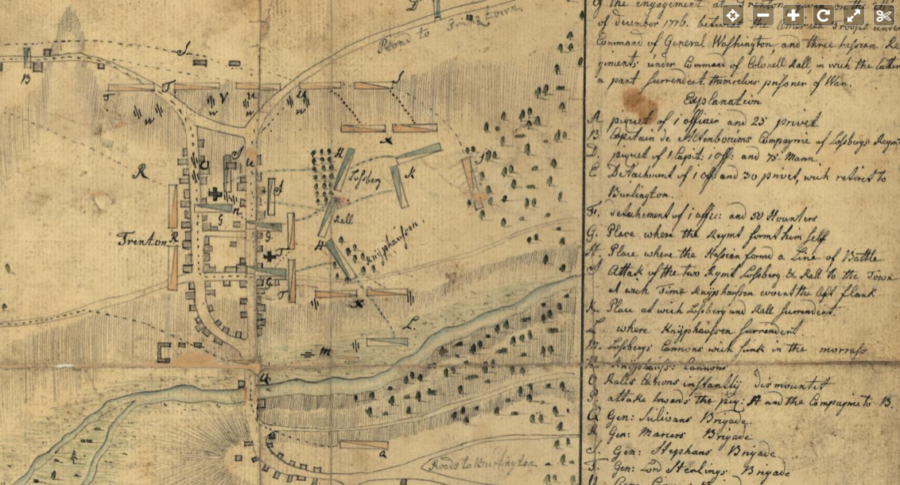
A few posts back, we referenced indirectly the area of Trenton, NJ while noting a major event related to the Siege of Boston - which was still going on until March of 1776. The theme was looking a little closer at Knox's transfer of cannons from Fort Ticonderoga to Boston in the fall/winter months of 1775.  

Cannons from Ticonderoga -- My comment: 

We hear of Washington crossing a frozen river to surprise drunken soldiers. 

This is way more significant in many ways. From the fact of Ethan Allen (sells furniture) to the long trek of Knox and his crew on a frozen lake and then across western MA to a little hill outside of Boston.

The prelude to the 250th celebration started earlier this past spring. We have had regular posts and expect them to be continual the long period of remembrance until peace returned (1783 - to be celebrated in 2033). Our focus has been Massachusetts with Lexington & Concord starting things out and then with posts on local happenings. 

We had expected to cover the whole of the colonial span, especially since most of the activity was outside of Massachusetts after the British moved out of Boston. One thing that we will look at will be the contributions of General Nathanael Greene's troops. He died young. His papers were finally organized in the 20th Century and published in the 1970s. 

---

Today, we look at some of the area in Trenton, NJ where George Washington's troops tangled with the Hessians. We will use a focus on the St. Michael's Episcopal Church, site of some of the fighting.

William Trent, namesake of Trenton, was a member. The Church has a project to get a stone made for Mr. Trent. Another member was David Brearley who is buried in the cemetery. 

The David Brearley Heritage Foundation (Friends of Old St.Michaels Trenton) is organization with this mission: 

... act as the umbrella for the transformation of the St. Michael’s facility into a community educational hub promoting a knowledge of our shared past, New Jersey’s role in the U.S. Constitution, as well as a renewed faith in the role of religion in society.

This post is a brief introduction. We will look further at the history of the Church and at details related to its involvement in the American Revolution.  

The cross at the upper left is St. Michael’s ... 

Quote from their material: 

St. Michael’s saw many different faces of the Revolution. The Continental and British armies occupied the church. The Hessians, the German mercenaries who fought with the British army, used the church as a barracks and stable, and stored their artillery in the church yard while they occupied Trenton. When George Washington and the Continental army surprised the Hessians on December 26, 1776, some of the fighting of the Battle of Trenton happened in St. Michael’s church yard. There was hand to hand combat with swords, muskets, and bayonets on church grounds. Later in the war, the church was used by George Washington’s Continental Army as a hospital.

---

And so, we have over seven more years to tell the tales overlooked by history which usually has little focus on local details that are of the type that get overlooked for many reasons. Those reasons? We will discuss that as well as we deal with technology and knowledge, in particular advanced computational systems. 

Not to belabor the point, but there were conflicts for the new country over several decades beyond 1783, of which that of 1812 is on the radar of most Americans. We can leap over that bit of growing pains and also start to research the growing affinity between the two countries of cousins. 

Remarks: Modified: 08/26/2025

08/26/2025 - As we go along, we will relook at the crossings. There were several. And, Knox was part of this operation, as well. We'll use Wikipedia's article. In that first winter, Washington had to overcome several problems related to operational effectiveness. Southern troops arrived on the scene and helped attain victory. Future president James Monroe was a participant. 


Wednesday, December 23, 2020

Recognition of Dr. Frank

TL;DR -- Run into C.A. Flagg while researching a Patriot who served in Maine.  

---

We were researching in the context of DAR and SAR and stumbled upon a nice surprise. Fortunately, the focus was Massachusetts and its derivative, Maine. Though, we have researched other states and will (ought to) do more of this. But, Lexington and Concord is taken as the origin of the turmoil that went on for several years. It may be that we do not appreciate that effort. Lots of history is told top down, by the victors. There is some bottom-up work, such as McCullough's look using Col. Hodgkins and his letters to his wife. The connection there is that he is the brother of one of Ann's GGPs. Sometimes, we have diaries. One diary connected to Gardners that we have mentioned is that of Nathaniel Knapp. But, this was from the prior conflict, the French-Indian affair, where the King trained the colonial leaders to rebel and to do it successfully. 

With technology, we can do a better job of telling the tales, many of which have relevance today. And, lots of resources are on line with which to do this work. Let's look at some. 

  • SSP of Massachusetts - This 17-volume tome was addressed earlier (Resources and more, timeframe of Sept 2013). We included a link to all volumes in a post. The SSP link goes to the volume that has the Gardners (pages 254 to 282). Each of those entries tells a story. We will look at a couple examples, one Gardner, one not. 
  • SSP of Maine -  This volume is the work of SAR. Some of the entries are also in the MA books as there is overlap. We look at an example below. Now, one of their sources is a book by C.A. Flagg who researched Revolutionary pensioners living in Maine (next bullet).  
  • An Alphabetical Index of Revolutionary Pensioners Living in Maine - C.A. Flagg's 1920 publication that is fully readable, thanks to the University of Southern Maine. In his forward, C.A. mentions Dr. Frank with whom he worked on The Massachusetts Magazine. C.A. was a librarian at Bangor, ME, NY State Library in Albany, NY, and the Library of Congress in DC. 

We will take a specific look at CA Flagg this year, especially his contributions to The Massachusetts Magazine where he had a regular column dealing with Massachusetts pioneers to Michigan. CA died in 1920. One wonders if that was due to some lingering impact of the Spanish Flu. He would have been 50 years old. 

The next post on this subject will look at a couple of examples of Revolutionary War service as detailed in the SSP of MA and SSP of ME. We'll use a time frame that maps to service events over several years, using some actual records. After MA and ME, we'll drop south and look at a couple of states there. This is, somewhat, carrying on for Dr. Frank. 

Remarks: Modified: 07/30/2021

12/23/2020 --

Sunday, June 22, 2025

Bunker Hill, II

TL;DR -- The Siege of Boston continues until March of next year. This past week, there was an effort by the British to dislodge the patriots (or provincials as known in London) which didn't work. We will have to look at what the next nine months entailed for both sides, in MA and elsewhere. Speaking of which, "Bunker Hill" has been used a lot in naming over the 250 years. We compare the MA one with that area in DTLA with the name, again. But, will look at some others, ,worldwide. 

--

Right now, we are in the period that was associated with the Battle of Bunker Hill with a main skirmish happening on 17 Jun 1775 with the first piece of the action happening at the locale of Lexington & Concord in Apr of 1775. Bunker Hill Day is a regular holiday in Boston on Jun 17th. 

At this time, in 1775, the British were still surrounded. The Siege of Boston continued. The next day of commeration will be the Evacuation of Boston that happened on 17 Mar 1776. 

As we mentioned, the Massachusetts Magazine had an article on the troops that participated in this Siege with some information about the officers. There was an article in every issue, 1911 to 1918. 

And so, we will look at events and people over the coming years as the 250th lookback unfolds. 

----

May we change gears? Bunker Hill is a little over 100 feet high and is in the Charlestown neighborhood. There is a monument for the event on Breed's Hill which has a lower elevation and where most of the activity took place.

At the time of the Battle, the British owned the waters as Boston was across the Charles River from where the Battle took place. The whole affair is quite strongly resident in the American mind. In fact, Bunker Hill has been used as a name in many places. We will look again at Bunker Hill West which is in Los Angeles and about which we have had several posts. Today, we look at the lay of the land. 

But first, here is a London map of the situation in 1775. 

Printed Aug 1775, London

Before transitioning to the west coast, we have to mention the last surviving veteran of the incident: Ralph Farnham (1756-1860). He is of the upper part of Massachusetts now known as Maine and is cuz as are many. We will look at him, again, as the whole of the Maine experience needs more attention partly due to the case of the southern entity, Boston, was more prevalent in historical accountings. 

---
 
Now, Bunker Hill West? The name has been used in many places: the Wikipedia list. Notice that Los Angeles is on the top of the list. Our interest was first brought to the area as this is where the stage coach route from St. Louis arrived after an arduous trip down into Texas, across the souther border (wandering into Mexico), and then ending in Los Angeles. That was not the terminus, as with some refreshment of resources, the stage line then carried passengers and freight up to San Francisco. Where, the process started again on the way back to St. Louis. 

Mind you, folks, there are several things to consider: logistics (compared to the Pony Express, this was much more of an intricate maneuver; we are talking pre-Civil War however some of the western States had been defined (such as Missouri in 1820 - added along with Maine to balance the north-south  issues; in terms of Bunker Hill in DTLA (Downtown Los Angeles), though, the terrain was entirely different as we will be pointing out. 

The lowest point in DTLA was about 59 feet. The hightest was the hills to the west with Bunker Hill (BHW) topping 350 feet. DTLA is many miles from the ocean. In terms of survival, being in a sheltered, inland cove with fresh water from the mountains would be more appealing than the environment now associated with being encrusted by salty waters. 

In the latter part of last century (post the 1950s), there was an effort to knock BHW down which seems to have been successful. They flattened the basis for the high rises that rose and that are now photogenic against the background of Nature's display of mountains. 

Here is an example. I marked three things. 1) On the right, the line points to where City Hall pokes its head up proudly. This 1937 building was the limit for heights until later in the 1900s. We can be more specific. There are early photos from Bunker Hill showing the top of the spire of the City Hall. 

Now is the time to mention one other thing. In the center, the tannish (round) building behind the white (square) one was the first building to penetrate the old limit. The developers used the opportunity of the LA Library having experienced arson and selling its airspace to get funds to recover as a means to start the trend that gave us the high-rise look. 


So, speaking of the Central Library, they recovered physically and bought replacement books. But, there was another instance of arson later. To me, on any of these photos, I look for the bank building and figure out where the library is nestled (having spent many hours there; across the street; the base of the bank building is on higher ground along the elevation of BHW). 

2) and 3) These have to do with old DTLA from the time of New Spain onward. In the middle, the text says that if we jump (or fly like superman) over the buildings we would find the Old Plaza Church. Several of our posts have photos of this building from various time periods. Yes, it was there when Butterfield came in with his stage line. In terms of the beauty of DTLA, the Train Station which is a remarkable example of SoCal architecture is across the street. 

So, now we can consider another church. Not far from the Old Plaza Church and the City Hall is the structure that was St. Vibiana, a Catholic cathedral. That old building dates from the 1870s which is new from the west coast view point (reminder for those looking from the east). An earthquake caused some damage but not enough to destroy the building. It now is an event center of some note. 

The cathedral was moved to the left side of the photo where US 101 and the 10s intersect. We can figure out the lingo, but the area has been visited by tourists with many photos extant. This view shows the extent of the high-rise area. And, the larger buildings are clustered there at BHW. 

---

There are early photos (1870s) showing that people started to try to tunnel from the getgo. Several tunnels were completed with many still operational. As well, there were steps put up for people having to go up to the buildings on the BHW or over to the other side. And, the Angel Flight configuration of a rail car exploited the arrival of electrical power. Fortunately, through many periods of reconfiguration such as the scraping down the elevation, people saved the old mechanism which is now more of a tourist event rather than operational. 
 
---

What's next for looking at the namesakes of Bunker Hill? 

Remarks: Modified: 12/23/2025

12/23/2025 -- More on the Butterfield stage as representing the U.S. government's concern for handling Overland Mail. There has been lots of research about the trail from St. Louis MO to San Francisco CA. 

Sunday, May 31, 2026

250th, 400th

TL;DR -- 250th? It's comiong up. We have looked for this for over a decade. Usually, a commemoration is an ending. The day comes; then the morrow bring reality back to mind. However, be aware that we have been doing post for the last year (having started ealier); the 250th will be the start of deeper dives into the history and events, with respect to people and families. That is, the door opens for a period that runs until 2083. 

--

A year ago, we started to have more posts on the 250th as we mentioned the U.S.Army. Before that, we wrote of the Battle of Lexington and Concord in 2024. 

In 2021, we had a list of celebrations, from 400th and then the 300th down to the 100th. For us, the 250th in July starts long years of review and recall as we contemplate the contributions of Patriots (say as defined by D.A.R and S.A.R. 

Earlier, we had a map that showed the changes over those long years of the Revolution which we have brought into this post. Since the web/cloud technology is a superb platform for information, we will cover a slew of topics with respect to families and their contributions to the founding of the U.S.


We have to end the day with a nod to the Marines: 250th, U.S. Marines. There are many themes to cover, and we will be back on a regular basis.  

Remarks: Modified: 05/31/2026

05/31/2026 --