Showing posts sorted by relevance for query jedediah. Sort by date Show all posts

Tuesday, July 10, 2018

Jedediah Strong Smith

We commented on the wonderful job that is being done for the Mayflower events and mentioned the work being done by the NEHGS. That will be something to watch. Of late, after reading of Judge Thompson spending time out west, we have been paying attention to events of the past 200 years. As, we have the opportunity to celebrate those while the 400th stream of fetes rages for several decades.

The Judge's sojourn to the left coast and back, plus Col. Higginson's travels out to the wild west, are examples from a long period of history leading to now. We were just digging yesterday into the 'Sooner' events that were associated with the 1893 Land Rush where the Cherokee Territory was parceled out to a greedy bunch of people. There are tales to tell; fortunately, the www allows people to publish what they know. The usual caveats are in order, albeit that the Thomas Gardner Society would like to be involved with efforts a providing a 'clean, safe' web source.

You see, from the research mode, there are many things to discuss. However, a triad of culture, history, and genetics/genealogy rises to fore, in our opinion. These will be discussed further, as we go along. Culture is a human trait of long-standing interest. So, in a sense, memes trump genes? Well, lots to look at, however history does have a huge role. Actually, it deals with people and their dealings. People, of course, are the major players, but each generation comes and goes. We have to look at the broader scope of things. Humans have many cultures, most of which are age-old.

Both Thompson and Higginson were late, comparatively, to the subject guy. They were around during the pre-Civil War times. And, both were heavily New England in pedigree. One thing to remember is that after the Revolution, we had lots of people coming here. In fact, D.A.R. has many members whose patriot ancestors came sometime in the 18th century prior to the uproar. But, we also had the Spanish here for a few centuries by that time. And, people came from all over.

Just like now. And, given some of the discussions that we see, we really need educational thrusts related to the hidden history of the U.S. So, let's go back a few decades prior to these two guys. One of the early explorers, a mountain man, was out west in the 1820s. He started in St. Louis working in the fur trade business. Then, he went west and covered a whole lot of territory. He took notes, drew maps, and even wrote letters. And, he has a New England pedigree which needs to be researched further. We looked at some reports and provide a brief list of families: Smith, Strong, Partridge, Mather, Ingersoll, Langley, Adams, Kilborne, Foote, Eddy. Like many, he has oodles of cousins.

Jedediah did not have descendants, but his siblings did.

---

Now, let's switch to an example society that is doing very good work. In 1957, a group in California decided to found a group to research this guy and others like him and more. This is their website.


It's partly based in Berkeley (CA). They use WordPress nicely. But, their research work is real nice. There is some discussion, below. But, they have a Rendevouz that is planned and allows people to walk in Jedediah's steps, if you would. And, he covered a whole lot of western states, as an early traveler. We will look at one, below, a little.  

Being brief, just like the NEHGS helps lead the way, the JSS shines, too. Jedediah Smith
Area where Jedediah
was killed, 1831
 was born in 1799, so he's a post-Revolution baby. His parents were in New York. They both have New England pedigree. By 1822, he was in St. Louis. Mind you, this was before the trails kicked in (see Gardner, KS at the split). After that, he went many places. He helped establish the Oregon Trail's route.

As we look at the filling in of the middle of the U.S., we can look at what was going on in New England. Like we know of Higginson, that he was one of the secret supporters of John Brown. By that time, there was regular publishing in eastern papers of articles sent from the west. Jedediah was before any of that.

His death was in 1831, in Kansas. There is a river that runs out of New Mexico into Colorado and then wanders east until it meets with the Arkansas River that comes out of Colorado, too. He was killed while drinking water from the Cimarron River during a parched time. His body was never found, however reports of his death traveled back quickly. In that area, they were laying out the Santa Fe trail.

---

It might be of interest to mention, now, that Jedediah and his crew were the first U.S. citizens to cross the Mojave Desert. And, this was in the summer.

After being detained and questioned by the New Spain Governor, Jedediah went north.

Jedediah maps out
the Interstates
We had to include this map, which came from the JSS website. For those who may be familiar with the area, the long south to north line is, essentially, today's I5. Then, in the lower area, we see what is now I15. And that northern line is I80 which goes across the whole continent ending up in New York City.

There are similar maps of other areas created by researchers who have been studying Jedediah and his times.

---

As an aside, the JSS still uses checks for their membership payment and contributions. They have a nice newsletter, too, and published papers.

---

Jedediah was forgotten for a long while. One article is noted as having been written in 1922 by a grand-nephew who lived in Kansas not far from where Jedediah was slain. But, once the JSS was formed, it has been in action to get Jedediah recognized.

---

We see a similar role with regard to Thomas Gardner and the Cape Ann crew, especially with regard to the Old Planters Society. That is, do not let the world forget early New England. Lots of research has been done the past 100 years or so. Too, there is a huge stack of pending research. Using the www for coordination goes along with its purpose and facilities. 

Remarks: Modified: 12/11/2022

07/17/2018 -- Continuation of the theme: culture | history | technology.

02/26/2019 -- A couple of decades later, in the same area: Lost '49ers.

11/05/2020 -- The Wikipedia page has some additions, such as the image. 

02/13/2021 -- We will use Jedediah as representative of this time (see Gardner River about things of this time). We always thought coming this way, but we need to step back and look at New France. And, the Joliet/Marquette journey (1673 venture to the Mississippi from the Great Lakes region) will be key, representing the time of Thomas's death.  

04/09/2021 -- We continue to research Jedediah. So do others. His Wikipedia page has a lot more information than it did three years ago. 

06/24/2022 -- Wagon Bed Spring, KS is a well-known waterhole in the area where Jedediah disappeared. Legends of American has collected facts and created stories about the west and some of its characters. They add material constantly as this graphic shows. The Daughters of the American Revolution recognized the site in 1906, placing a marker in 1961. The Santa Fe Trail Research site provides research articles such as DAR Marker Locations in the State of Kansas. 

12/11/2022 -- We have a nice map (PDF) which can zoom provided by KDOT titled "19th Century Kansas Trails" (Point of Rocks is shown). 


Sunday, May 21, 2023

Left coast, by water and land

TL;DR -- From and to New England, there was regular traffic from the beginning. Land movement started early too with the lure of the west. San Francisco has been related to many posts that we have had, with travelers arriving there by land or by water. We recently looked in detail about the changes after the earth quake of 1906. Too, we have been researching the early periods. This post provides links to further information and to images created over the timeframe. In one case, we find a close New England relative there early (1831), by water. Too, we have more information on involvement with the Gold Rush. 

--

Technology, especially that related to or supported by computing, allows new ways of looking at things, one of which is an emphasis on numbers as seen in the emphasis on measurement, for one. So, take the cloud (internet), ever notice how every possible metrical view is offered? A new field, called data science, likes to facilitate this approach to viewing the world around oneself.

In our context, probably of all cities in the U.S., San Francisco would show up as having the most hits. We will do a search sometime. But, that "city by the bay" (from a song, know it?) figures for several reasons. Wanderers from the east, including Canada, were out there before New Spain, one might argue. We do not know the real early Europeans on that scene, but they got there two ways. One was by water. The other was by land. Some might have come up from the south which we pay attention to. 

But, our initial take on the matter was those who got to the left coast from New England. At some point, we will collect these names, but here are three: Jedediah Strong Smith (Jul 2018), F.M. Thompson (Jun 2017), and Grizzly Adams (Nov 2020). The month/year is for the post on that subject. F.M.Thompson was first in our studies as he wrote of his travels in The Massachusetts Magazine. Then, we got to Jedediah when we started to look at the vast interior of the country. Finally, the post on Grizzly was of the Covid time which will be an upcoming theme as we approach the U.S. holiday of Memorial Day (29 May 2023). 

We spent more time looking at San Francisco in reference to the Barque (Bostonian) that wrecked off the coast of Oregon, in 1850. There are many stories pending on that theme which we will get to, at some point. In the meantime, let's continue with the best of the west. 

The following links are to material dealing with San Francisco before the Gold Rush. As well, we wanted to find photos from the period before the quake of 1906.

  • San Francisco History - Index - The timeline at this site from the Museum of the City of San Francisco covers it all with five major themes. They start with the Gold Rush. The first category is from then to the Civil War. With respect to the three gents mentioned above, we have three periods: Jedediah was there in the 1820s/30s when it was New Spain territory; F.M. was there for a few months during the early stages of the Civil War; Grizzly showed up after the Civil War.  
    • San Francisco - Before the Gold Rush - This section has lots more information about the early years. It reports that William Heath Davis (WikiTree) visited in 1831 having come by a ship that was from Boston. William, born in Honolulu, was a descendant of Thomas Gardner of Roxbury. William's presence offers a chance to consider comparisons with Jedediah's experience. By water and by land, each has their purpose and perils. Jedediah died in mid-country on his way back to St. Louis. William lived to see the 1900s. 
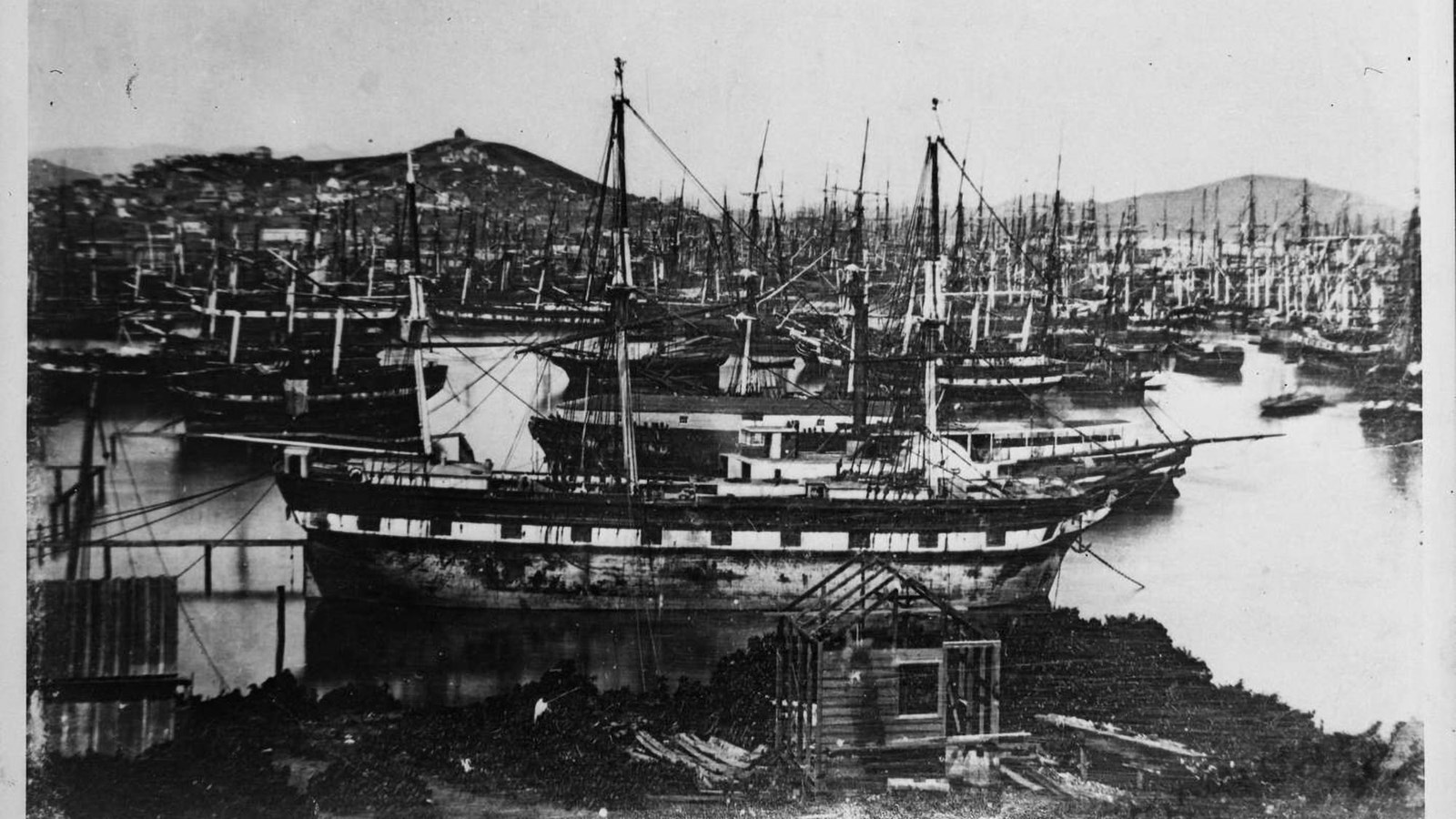
  • Images - early San Francisco - Below, we show an image from the National Park Service of ships in the marina. Many were abandoned as crews went after their fortune. We will look at some of these tales, including ones known about personally. 
  • Images from businessinsider.com - This site offers images from over the years, including early paintings of the area. 
There is not a shortage of photographs to review. However, it was reported that San Francisco had many ships that had been left and were taken apart. That's a story to look at. 

Gold Rush changed San Francisco

In our normal fashion, we will identify links to New England as we expand upon this theme. 

Remarks: Modified: 05/29/2023

05/29/2023 -- Jedediah met his fate along the Cimarron River in KS in the same year (1831) that young William arrived in S.F. from Hawaii.


Thursday, April 8, 2021

Border conflicts

TL;DR -- Earlier, we went west, looking at pre-and-post Civil War movement across the country. Too, we started to look at the players beyond New England (north and south). New France and New Spain were here too, all of the time. So, seeing some of the activity of New France got us looking at the west prior to Jefferson's deal. Too, Lewis and Clark saw some of the activity. So, we will look into these matters until a few questions are satisfactorily answered. 

---

In looking at the western movements earlier, we wrote about Jedediah Strong Smith, considered the other parties (such as New Spain and New France), got more into other early travelers like the trappers, and kept looking at information that is available. And, we can see that more information is now being available which does indicate that the web has some benefit in research as it was supposed to have. 

Jedediah covered a lot of area. But, where he was has significance for the U.S. as we see it now. There is more information about his death now on Wikipedia. Too, he went west out of St. Louis which we will look at further. One reason to use Jedediah is how many places he went and early on which means not long after Lewis and Clark's trek became well known. Jedediah dealt with Great Britain in the northern regions as things had not settled. Oregon was still a dream. He had a run-in with Spain in the lower part of California. He was killed by American Indians in territory that belonged to New Mexico. 

His peer list is long including many well-known names that we will get into, such as Bridger, McLoughlin, Ashley, Glass (Revenant), and many more. A couple of Gardners were in the area which we are researching Also, Jedediah was mauled by a grizzly bear and lived. 

For now, here a some links to additional information. 

  • Lewis and Clark - Early commerce seen by them on their trek. 
  • Lewis and Clark - Early Missouri fur trade. 
  • Oregon Country - New Spain was there plus New France. We are looking at the territory prior to the final resolutions that created the borders of Washington and Idaho. 
  • Hudson's Bay Company - Though started in 1670 back east, the HBC was involved in the west early on. They established a line from Fort Vancouver (now British Columbia) to London. 

Remarks: Modified: 09/25/2021

04/09/2021 -- Used this in a look at the Rendezvous which lured the trappers to a meeting.  

04/09/2021 -- Added the TL;DR. 

09/25/2021 -- We can look further at Oregon, by water and by land. 

Tuesday, February 20, 2024

Alta California

TL;DR -- As our initial focus was New England, New France came into focus early. But, after the start of the U.S. and the beginnings of the movement to the west, New Spain became the theme of research. Our early looks at this were about Los Angeles and San Francisco around the start of the 20th century.  As we step back in time, Portola's efforts come into view with interesting history to consider. We can start by considering the 1776 beginning of the Mission San Francisco de Asis. 
 
---

We had mentioned Spain in earlier posts while discussing the times before the Cape Ann expedition. Several countries were fishing along the eastern seaboard. It was being more efficient in providing products from the yearly fishing efforts that precipiated the colony focus. 

Our first reference to New Spain was with our look at Jedediah Strong Smith's journey from the east coast through St. Louis, in the 1820s, out to the west coast. Our post on Jedediah covered his wanderings which are of note. Hence, he has been mentioned many times. With respect to Spain, Jedediah went south and west through the Mojave Desert, in summer. His appearance in the LA area was a surprise. Luckily, Jedediah was able to talk his way to freedom and continued up north and then back toward the east. He met his demise in the wesern area of Kansas. 

In the time of the pandemic and its isolation, we spent a lot of time researching the middle of the country. Okay. That was part of the Louisiana Purchase. Both France and Spain had been involved in the exploration of the area. We had looked at New France first, as it was the other side of the conflict before the Revolutionary War. Many use the French-Indian Affair. The friction was between France and its Native Indian allies and England via New England; as well, there was conflict in Europe and at sea.  

As we start to look at folks who had ventured all the way to the west coast, we realized that we needed to look at New Spain more closely. For instance, Coronado was close to where I am in 1541. In Texas and in the southwest, New Spain was the principal colonizer. California sites have been given lots of attention in the blog of late. There are several reasons for this. We're looking at the long reach of New England. And, John went to school and worked in both Los Angeles and San Francisco. 

Of late, he has been look at Bunker Hill West which is part of the downtown LA area where we can see changes over several periods, such as the early arrival, the mansion period, commercial focus, and the modern status of high-rise island in a sea of sprawl. The web is offering lots of incentive to research by allowing systematic publication of photos across time. As well, the social media spaces (such as Facebook) are providing means for like minds to compare findings. 

We will continue with the themes of California as it allowed the start of the series and will expand into all of the regions where New England families settled over the past 250 years. Part of this effort is looking at the rivers and waterways that supported the development of areas. 

Now, today's theme ventures back up north. Last year, we did several posts on San Francisco, some of which dealt with the impact of the major quake from the early 1900s. We actually looked at the region in our early days due to tracking the history of a barque Bostonian that had been built and used by a Gardiner for whom a town is named in Oregon. We learned a lot from that exercise which generated more questions than answers. 

Along that line, the Bostonian was in San Franciso at least two times. But, that brought up other visitors to the area, such as Judge Thompson who helped establish Montana as a State. He was there around the time of the Civil War. Later, we see the railroad coming into play with faster and more reliable transportation across the wide expanse of the country. 

But, let's step back, again. As we can look at the establishment of the San Francisco region by New Spain. Facebook has a group with the title, Alta California, which follows Portola's expedition up the coast.  Portola's group built missions and forts. Of the later, we have the Presidio of San Francisco which we have mentioned several times. 

Of the former, this photo is of the Mission San Francisco (St. Francis) de Asis. A mass was celebrated on 9 Oct 1776 for the laying of the cornerstone for this mission. 
 
Mission, St. Francis, Assisi
in San Francisco, CA

This post is cursory as it skims over a lot of history with regard to Spain's explorations and colonizations. We will begin a series with a closer look at California's start. 

Remarks: Modified: 02/20/2024

02/20/2024 --  


Saturday, January 27, 2024

Longhunter

TL;DR -- Boone was there, in the times of the French-Indian affair, the Revolution, and after. He was of a type that can be known as longhunter. They wandered and brought back information. And, turned around and led people west. This post is of the 250th theme. We are about two years away from that celebatory event. 

---

Four years ago, COVID became a reality. There had been little glimpses earlier. People were talking about an illness in China. We came home from a regional jaunt and heard, on the news, that people had been identified in the area where we had bee as being diagnosed with the disease. Okay, not long after, there was the respite put into  place. Rather, it was lockdown with rules put into place which went on for a few months. 

We had already been supporting history and genealogy work. Some of this had the flavor of finding paths taken by families as they went west. Or, from our perspective, as they came west. Earlier, we had seen entry into flyover country from several directions. The Ohio River ran from PA down to MO. But, it was Daniel Boone (see post Boone himself and search results - Boone) who figured in a large way. He was involved in the Revolution. Prior to that, though, he had explored westward our of the southern states. 

As we had noted, our focus was on the coast for a long while as we caught up with the 400 years that had passed by. Dr. Frank's work was a launching point bot from the family research and The Massachusetts Magazine which printed for eleven years and was discontinued when the Spanish Flu hit as well as WWI came about. But, we had done some work with families who went west. See Flyover Country, for one. As an aside, we are considering how to update Dr. Frank's work with respect to recent findings brought to us by technology. 

Fortunately, about the time of the pandemic, we were getting more inquires with regard to people coming west. Here are some examples (these posts are not in chronological order): Jedediah Strong Smith; Judge Thompson; Col. T. W. Higginson; and St. Louis as the site of the partitioning efforts. Too, though, we tracked several families that followed Boone west. He, BTW, ended up in MO with his son coming further into KS. 
Boone, wandering

Now, let's look at Boone and what he represented. He was a longhunter. These guys went out on their jaunts for months at a time. And, during that period, they were self-sufficient. When they returned, they brought back information and some artifacts, such a pelts. 

We are talking about the area, for the most part, that was east of the Mississippi River. There were explorers out further west, some from the Candian regions. Jedediah was out in California in the 1830, by foot both his and his steeds. He passed through St. Louis on his way. Later on, as we know, two massive killing periods happened out west: beaver; buffalo. 

The numbers of venturers was small. But, where Boone was, a Cherokee chief by 1769 was complaing about the influx of the long hunters. Mainly, they were noisy. And, other stories abound. 

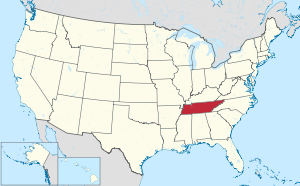
But, getting to our interests, we are finally concentrating on Tennessee. It is a huge state. All together, it touches nine states. Its northern neighbor, Kentucky, touches seven states. We follow families who went west through both of those areas. Too, their border was a dividing line during the U.S. Civil War. We have not discussed that topic in detail, yet, but intend to at some point. Since we're in KS, there is a pre-civil-war history involved with families in the area. 


Back to the longhunters, they are similar in spirit to those who sailed the seas as we saw with New England. We had an earlier post (Final migration) that quoted authors on the subject. There were many trails west, as the railroads later showed us. Jedediah, in CA, had travels that map out the current highway system. Culturally, we would point the travels of the Native Americans over their long time on the continent. 

Other types of early travelers have been touched upon during our research. About a century before the area depicted in the Flower Moon movie, a mission was established in SE KS to aid the Osage and, eventually, other tribes brought into the area. Several local sites were the local for negotiations and treaty agreements. 

Back east, the history goes back 400 years. In the interior, we are talking the long reach of New England over a 250-year period. A lot of families arrived later; but, many carry the history int heir genes over the entire period. Both require attention. So, there's no end to research. 

Lately, we have had a focus on CA, for several reasons. Some of the interest has to do with family being there early. But, we have seen lots of older photos being brought to the fore. Recently, we did a post about a photo taken in downtown LA in the 1880s. We have one from this week to add. But, the area of the photo was where Butterfield had his stage coming into the area prior to going up to San Francisco. His first arrival was in the 1850s. Change is on theme. Some things remain. Many, most do not. 

Society needs its adventurers. Of late, there are new types that we will be discussing. Despite that, we still need the old ways for many reasons. 

---

Example? Technology has developed a thrust and lust for the virtual. That theme needs constant attention for several reasons. One deals with the respect for the land and the people involved across all of the time frames that will be associated with the U.S. and its history. 

Now, AI and even AIn't? History can be retold in more interesting ways using technology. Yet, the truth of the matter remains an open issue that hopefully we'll be able to address more fully if we determine the necessity as we ought. 

Remarks: Modified: 01/27/2024

01/27/2024 -- 


Tuesday, February 16, 2021

Gathering of the trappers

TL;DR -- Paintings by Remington and Jackson give a good flavor of the times. 

---

There were several ways to start this post, however using Remington is very much apropos. Picked this photo up from the page about Jedediah Strong Smith on the Legends of America site. We got to Jedediah through articles by Judge Thompson in Dr. Frank's The Massachusetts Magazine where the Judge wrote of his journey out west (over land, to the left coast, and back) in the early days. However, he was in a later time than that of the mountain men who were associated with the fur trade.  


We had not paid attention, but a movie (The Revenant, only saw the ads and read a few brief reviews) was showing in the 2015 timeframe. A little later, while we were trying to identify places that have Gardner in the name, we came across Gardner River that flows out of the Yellowstone Park area in Wyoming merges into the Yellowstone River in Montana. The namesake of the river, a little eddy along the river, and a town turned out to be Johnson Gardner. He was of the cohort of Jedediah. The movie is about an event in the life of Hugh Glass. He had a comrade named John S. Gardner who was killed in the same incident as Hugh was injured in. 

These guys were working for Gen. Ashley of the Rocky Mountain Fur Company. Ashley, himself, was out of Virginia and went west before the Lewis & Clark journey. Lewis & Clark were of the official world. We hear of mountain men and expect them to be roughed individuals. But, an added aura is the realm in which they were roaming. The American west. The painting above depicts these individuals coming to a rendezvous which, it turns out, was something that the General got started. 

This next two paintings are from W. H. Jackson: a rendezvous and view of a wagon train. These are meant to show some of the cultural context as well as the scope/scale of what we need to do. Paintings can be seen in the Eye for History publication of the National Park Service. 


As we look at these, we can not help but think of the "flyover country" discussions that were never resolved. 

So, let's end this post and look at what is coming up in the next few posts. We will look further at this fur company, in the context of the long reach of New England. Notice that where W. H. Jackson was born is way upper New York and close to Vermont. To us, that implies the possible links to Massachusetts, perhaps even Essex. Ann's great-grands went out to that area for a while. But, we have another puzzle where the lineage is along that border, and the family names are right out of Essex County (and Nantucket). No end to the work to be done. 

Too, though, we will look again at rivers and their sources. The Yellowstone area is interesting in this sense as it spawns a number of waterways. There are many ways that rivers come into the picture. But, too, as we work details related to events and people and their families, we will be aware of earlier takes on the matter, both the historical and the informal looks. 

Remarks: Modified: 03/08/2021

02/27/2021 --  Looked at the rivers of Yellowstone and New Spain. Added the TL;DR line. 


Friday, July 8, 2022

8th generation

TL;DR -- We have several threads that relate families to events and their themes. For instance the 5th generation did the Revolution, guided by the 4th and assisted by the 6th. Post the Revolution, the western activity kicked into higher gear. The 7th generation was involve out west early. Now, with the 8th, we can bring in the Civil War and further looks at western activity. 

---

We have used generation often without much definition, example - Fifth generation (the Revolution). Then, we talked of others, such as the 4th (leadership during the Revolution) or later generations. Of course, this is a topic which will always be with us: "Generations" and its use, About generations. As well, we are using a thread about the History of Harvard to follow 400 years of the U.S. 

So, it's time to put 'generation' to work on a usual basis. Today, after looking at our post on Judge F. M. Thompson, we looked at his generation. F.M. contributed to the Massachusetts Magazine. Too, some of this material was collected into a book, Tenderfoot in Montana. Now, his mother was a Adams (WikiTree) so we will now use the Adams family to compare lives of cousins, like we did with those in the lineage of Grizzly and John Quincy and with Dr. Frank's book.  

In short, F.M. was of the 8th generation. As such, his western jaunt is of interest as this is the second wave where the first wave consisted of the earlier group, such as Jedediah Strong Smith. Jedediah's group were the early explorers out west; too, they got the carving of the land started with its result of a century of the frontier. If we were to pick a major event in the U.S. related to this generation, it would be the U.S. Civil War. 

Seal of the 
Territory of Montana
F.M. was in New England at the start of the conflict. He was on the west coast and at in-between locations for a lot of the duration of the war. We will let him describe his experiences for himself. For now, here are a few posts related to F.M. and his jaunts. 

We will be back to this post as we define more generations and their contributions. Generations overlap. So, we can talk a mid-point and spread. Then, how about some fuzzy logic, such as: mostly late 7th and somewhat early 8th? There are other methods that could be used. Too, we need to pick one of two choices: either the generation of Thomas and Margaret are in the count or not. We have mixed this a little, to date, and will get that issue settled before we bring generations further into our model for discussing dynamics of change in the sense of history. 

So, following up on John Quincy Adams, we find Mary Gardner (Adams) Quincy. On looking at the Gardner connection, she is a descendant of Thomas and Margaret of Cape Ann and Salem. In terms of Grizzly Adams, his son, Seymour Adams, served in the Civil War. That shows some credence for our counting this type of segregation. 

Let's check the Harvard connections. The two Presidents during the conflict were Cornelius Felton (1860-1862) and Thomas Hill (1862-1868). We have not looked at these two as of yet. For now, let's take Felton whose brother, Samuel, was a railroad engineer. He was President of the Philadelphia, Wilmington, and Baltimore Railroad during the "pivotal Civil War" era. 

Remarks: Modified: 09/29/2022

07/09/2022 -- Add NEHGS Proceedings entry for F.M. that appeared in the 1917 NEHGR.  

09/29/2022 -- Col. T. W. Higginson was of the 8th generation. 

Tuesday, August 25, 2020

Boone, himself

TL;DR - 1st and 2nd generation on his father's and mother's, respectively. Fortunately, the guy was peripatetic and covered territory. MO, his last frontier, is of importance to a lot of discussion that will be going on.

--

We have all heard of Daniel; TV did him in. Of late, we have had a chance to get further acquainted with him and his times. We mentioned that it was the 5th generation that bore the brunt of the revolution. The 8th started to reap the reward which has been a continuing dynamic to now; this suggests, of course, that the 400 years of American experience are going to be central to a whole lot of studies and worrying about how to decide to have sustainable lives going forward. Nothing new, really, just that we're at one 400th, with others coming up, and at 100ths and 200ths.

100th, for one, would be the Spanish Flu and things associated with that. We looked at how that influenced The Massachusetts Magazine. 200th? Well, we have mentioned Jedediah Strong Smith who went all the way coast to coast, from New England to LA and above and partly back. Was killed along the Cimarron River (lower part of the green section on the map) that flows out of the CO mountains and heads east toward the Mississippi. Never makes it as the Arkansas River intervenes.

Before that, Boone got people out of the eastern seaboard via the Cumberland Gap. Himself? He got all of the way to MO.

Note: using the USPS abbreviations to approximate areas - we know that boundaries were fluid and controversial for a while. Do we need to remind New Englanders that ME got its panache as free when MO came in as non-free?  In the below map, we are talking the yellow area.

U.S. and Missouri

A couple of years ago, we were looking at an area just west where Col. Thomas W. Higginson visited to support free-staters. But, earlier, it was the point of the trails splitting off. People came into the area from the east by river, if they could. Otherwise, it was on foot, horseback, or wagon. In any  case, we are talking 200 years ago. We are talking 1820 for the ME/MO deal (did it just go by without much notice). Well, in 1799, Boone was to the eastern side of the yellow region. He was first generation American on his father's side and second generation on his mother's. He knew how to be peripatetic.

Note: This was a mere 10 years after the "European arrival" in Australia.

During the 1820s, there were people moving west toward the green. The fact is that the east side of the yellow was the Mississippi. Boone used that as he went down to LA (not the city in CA). One could navigate, like Lewis & Clark to parts of the green. They actually made it to the light green section. Jedediah made it to the far reaches of the green and went up to the light green. A friend of Col T. W. Higginson did the trick a little later. The significance? Prior to the transcontinental railroad, it was real work.

Lots and lots to look at.

Remarks: Modified: 08/28/2020

08/27/2020 -- The significance of this area is that there was early activity by the Spanish and French. Like we mentioned in the 400ths, Coronado was around and about in the mid-1500s. But, most activity was on waterways. Boone's significance, on the other hand, deals with establishing settlements in landlocked areas. A cohort of Boone will be looked at, too, in the context of the west and how it was settled: Zebulon Pike (he after whom is named the Peak in CO). 

Thursday, October 2, 2025

States and watersheds

TL;DR -- We have lots of themes to research. Rivers will be a constant. Today, we look at watersheds, again. Too, we consider a map showing the findings of Powell as he explored the west. American would not be the same without its rivers. 

--

We saw a map today that got our interest. Perhaps, at some point, we'll link to all of our posts that present a map as we continue our look at the history of the U.S. and its first colony of New England (mainly north) being respectful of the Native American culture as well as the incursions of New Spaiin and New France both of which left placenames in their language. 

Rivers are the focus today. We have many posts in on rivers and some on watersheds. And, we mentioned the Arkansas River in an earlier post today. Before making a few more remarks, here is a map related to the discussion. 

The United Watershed States of America

On the page providing this map, one can click on the map and get an enlarged view. The Arkansas River goes from Colorado, through Kansas, Oklahoma, and Arkansas before it flows into the Mississippi. It was this location where explorers out of New France (north of New York) saw artifacts from New Spain. 

It's worth mentioning that New Spain explorers were in the northern Kansas area in the middle of the 1500s. This trek was to find the cities of gold. We have a town El Dorado not far from the route taken by the Spaniards. 

Back to the map, it shows the route taken by John Wesley Powell in 1869. This was post-Civil War when the traffic to the west increased. 

Another reminder, Jedediah Strong Smith was in some of these areas in the 1820s. Having gone from New England to St. Louis, he went west and ventured into the moutains near Gardner River. He went south into the desert of Nevada and crossed the Mohave in the summer (first European to do so) ending up in LA where he was the "guest" of the Spanish Governor. Once released, he went north and east. He met his demise in Kansas at a site along the Cimarron River. 

Later, Judge Francis M. Thompson toured the area. Tour, of course, meaning on foot and horseback. Like Jedediah, he got to the left coast. On the way back, he spent time in Montana and helped the State get is legal footing. 

In all of these journeys on the land, we talked of rivers as means for transportation (Lewis & Clark) or barriers to progress. An, example might be the Lawrence, Kansas-bound group that founded the University of Kansas - they had to cross the Wakarusa having come from Massachusetts. That meant, breaking down the wagon, lowering it, getting across, raising it back up to high ground, putting it back together and then continuing. The Wakarusa was fairy tame compared to the wild western rivers that those of the Santa Fe and Oregon Trails coped with. 

We can now consider another aspect of rivers. There are many more aspects, but the watershed aspect is important. An example are the irrigation canals of the west, such as those in Utah and Idaho which supported agriculture. Of course, we learned to tame rivers for milling and transportation of goods. Our post on the Gardner mill of Salem, MA is an example of a multi-purpose mill. The canal laid out by George Washington and his crew along the Potamac is another early example. General George Washington was at the Siege of Boston and became the first President. Even Betsy made it up to see him. 

Remarks: Modified: 10/02/2025

10/02/2025 - 

Thursday, May 27, 2021

Trapper, trader, rancher

TL;DR -- Movement to the west started early, hence the conflict with American Indians ensued which resulted in attempts at treaties. One of these attempts was at a meeting near the Little Arkansas River in 1865. The major tribes of the Plains were represented. The foremost negotiator for the U.S. was of New England. Also present was Kit Carson and William S. Bent who had an Indian wife and had spent several years in the west.  Like early treaties, this one did not take. Subsequent treaties resulted in a lessening of land available to the Tribes. 

--

Recently, we wrote of the frontier century that began after the trek of Lewis & Clark and continued until the early 1900s. The early part of the century gave us Jedediah Strong Smith and his peers. They interfaced out west with American Indians and people from New France. In this case, the movement west had been across the middle of the country. A couple decades later, there was more area covered, and we saw settlement taking hold. Some were already old, such as St. Louis MO. Others sprang up along the way and over time. For all of these periods we have identified families to research noting location and routes which included rivers. 

However, we also have looked at the time before the interest of New England changed the west. Turns out that Wikipedia is thinking along the same lines: American Frontier (article was started in 2016). 

This post looks at William S. Bent (1808-1869) who was a trapper, trader, and rancher. He built several posts along the Santa Fe trail. William was born in St. Louis, however his father, Silas Bent (1768-1827) was born in Rutland MA which is in Worcester County. Silas is of the generation too young to be a Patriot but his father was one. We will look at Silas later as he was educated in Wheeling WVA (at the time, VA) and became a surveyor of the Louisiana Territory. As can be seen, Silas shows an interesting part of the migration patterns out of New England where he had a deep pedigree. 

Missouri saw European influence early on but became a State in 1820. The image shows the Santa Fe Trial going across the middle region. William S. Bent built a fort along the northern route of the Trail in southeastern CO in 1833. The southern route of the Trail continued in KS in OK and then NM. It was along this route that Jedediah was killed. 


William was out in CO for several years and had a ranch. He bought land near Kansas City MO in 1858. He married the daughter of Cheyenne leader. There will be a lot more to look at as that whole area boomed over the next decade and one-half. 

In 1865 as the Civil War was dying down, the U.S. government developed a Peace Treaty with the American Indians and organized a signing ceremony. The tribes involved were the Apache, Arapaho, Cheyenne, Comanche, and Kiowa. This meeting took place near current day Wichita KS. 

William Bent was there for the signing of the Little Arkansas Treaty which is named for a tributary of the Arkansas River that originates in CO. William had been involved with the American Indians for several treaties: 1840, 1848, and 1861. There were many more in succeeding years. 

The treaty's text is available via Yale's Avalon Project: Treaty with the Apache, Cheyenne, and Arapaho; October 17, 1865. The Daughters of the American Revolution placed a marker in 1925 to honor the event (more details later). 

We wanted to mention a few of the others who were there representing the U.S. due to their connection with New England, both north and south. As we read of this, we saw a Sanborn name pop up, so that got our interest. 
  • John B. Sanborn - born in New Hampshire. John went to Dartmouth and ventured out to Minnesota in 1854. He served with a Minnesota military unit during the Civil War. After that, he got involved with the western frontier. 
  • Kit Carson - was born in Kentucky to a Patriot of the Revolution and 1812. His family moved out to MO and were friends with Daniel Boone. By 1826, Kit had gone west on the Trail and was all over the west. Even a summary would be too long for now. So, we'll look at him from time to time. 
  • William S. Harney - served in the U.S. Army from 1818 to 1863. President Johnson appointed him to the Indian Peace Commission. He was born in Tennessee in 1800, but his father was an officer in the U.S. Army.
  • Jesse Henry Leavenworth - born in Danville VT, he was the son of General Henry Leavenworth who was born in New Haven CT. 
 American Indian leaders who were there are: 

Remarks: Modified: 06/19/2021

06/03/2021 -- Added the TL;DR. 

06/19/2021 -- Very old St. Louis in the State of Missouri. 


Monday, June 20, 2022

East meets west

TL;DR --  One thing that technology will allow us to do is keep up with the times and its events; too, though, if done right, we can tie together stories about matters in ways not possible before. In fact, as we have seen, we will be able to recreate (Meta's one good attribute, so far) events, and do so in ways that are almost real. On the other hand, we will see tragedy as well as triumphs. This is a case of the former. 

--

We will have several themes which will be described as we organize our work. Technology will be an important one. In fact, we will have a separate blog for posts of a detailed nature. But, technology is also cultural, so we'll address those aspects here. This week, we saw Yellowstone River flooding in the area of Gardiner MT due to the combination of snow melt and heavy rain. On flat ground, we would say 'flash flood' which comes unexpectedly and is gone before you notice (unless you are in its path). What is noticed is the aftermath. Gardiner MT has an 'i' and is where Gardner River feeds the Yellowstone. 

Gardiner MT
before the Gardner River
went on a rampage

In that area, there are lots of New England names, such as Conant Creek, Harvard Mountain, and more than we want to look at now. Fly over the region with Google Maps and see what I mean. In most cases, what you are looking at was seen or even had footsteps put on by the early wanders. 

We wrote of the Gardner River under our theme of the early western life as influenced by the long arm of New England. We had been looking at U.S. rivers in toto, especially with a view to the major carving of the land that was managed, in part, out of St. Louis. We noted that Jedediah Strong Smith, an early guy, passed through that little burg. Johnson Gardner was of the same timeframe. The movie, The Revenant, is about another Gardner, but Johnson Gardner was there. We will explore more about these fellas and their peers, some of whom left their names on the landscape in a larger scope. Actually, the following generation was of Bridger, Pike, and a whole lot more. 

Before going on, here is material related to Johnson Gardner, the so-called Mountain Men, Gardiner MT, Jedediah (WikiTree; Jed has a huge following out of Berkeley CA), and more, such as Grizzly Adams (cousin of the ones who were husband to and son of Abigail). 

In this post, several names have been mentioned. We show family information via WikiTree when we can. Besides technology, and the early west (say, Lawrence KS as project of Massachusetts), we will look at nautical themes (the Carolinas, say). There will be more discussion about this. 

Following up, though, the Smithsonian wrote about Gateway Towns and what this flooding may mean. 

Remarks: Modified: 06/20/2022

06/20/2022 --

Friday, April 19, 2019

General Lafayette

The 400th season has started with Plymouth which kicked off with activities this year. Gloucester is planning for 2023. There may be others already at work.

At the same time, we need to look at the 200th which would have been the activities post the Revolution, the Quasi-War, and the War of 1812. We had movement west, such as seen with Jedediah Strong Smith.

The 300th had lots of activity about which we can ferret out information: Pageant of Salem. This time around we will have the web and will leave all sort of tracks.

And example is The Lafayette Trail which is following the travels of General Lafayette in the U.S. As this story tells us, a French Geographer has gotten attention and support for tracing Lafayette in his tour of America. Jedediah had already passed through St. Louis before Lafayette got there.

In his magazine (The Massaachusetts Magazine), Dr. Frank had authors who were involved in U.S. events during early and middle nineteenth century. One example is Judge Thompson who ventured west and returned to New England where he was a Judge. Franklin Benjamin Sanborn wrote about several of the earlier personalities.

As the 400ths unfold, we can follow the 200ths, as well, as raise the awareness of things forgotten or left behind.

Remarks: Modified: 04/26/2019

04/26/2019 -- Added image to use in the index at our portal to truth. 

Sunday, July 22, 2018

Another western movement

Since an earlier post (and several others) mentioned western movement, we need to pause and look at the environment in the 1830s. Jedediah Strong Smith went west as a young man from New England (of course, our main focus) a little earlier. As such, he was an early explorer and lived the life of a mountain man. Before Jedediah went west, we had the conflict with England. One person to study further will be Hector St. John who wandered, as a foreign visitor, at that time and went home to write about it.

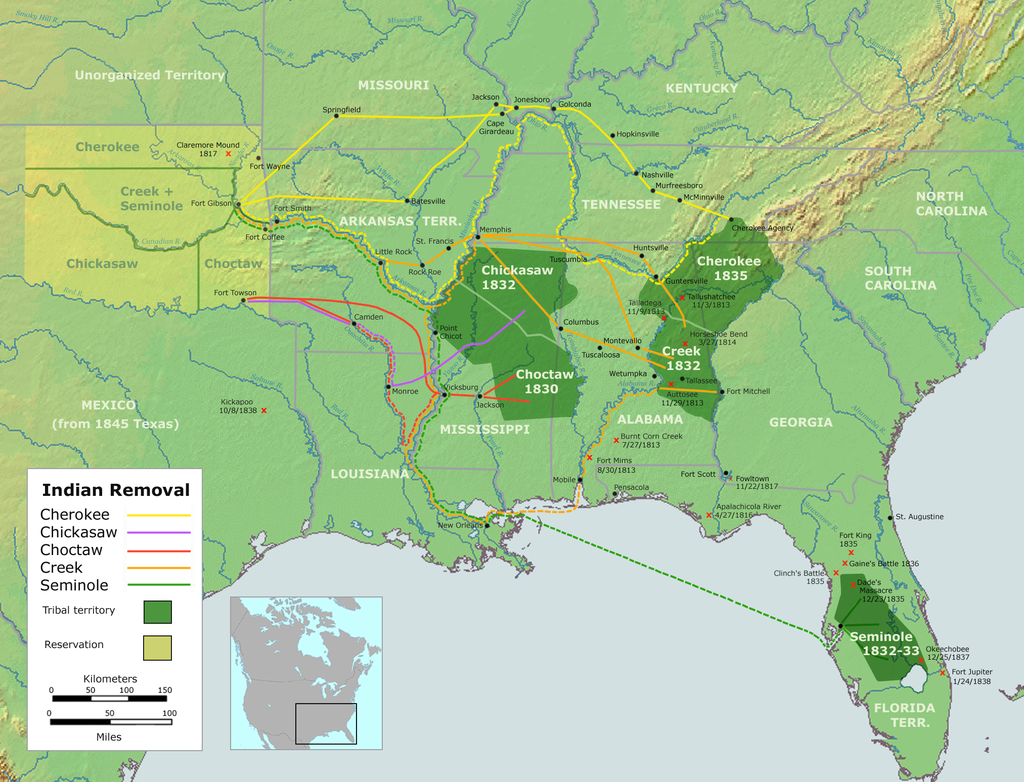
Turns out that there were others of such capability. Namely, the American Indians already on the continent. This post looks at events in the south, which was populated from England. However, many from New England went south, too. We will be looking at that (one of many examples). Then, some went west from the south.

A lot of the west has strong New England influence. Related posts: Gardner Junction, Final Migration, Gardner CO.

Today, we want to present the words of a American Indian leader. The words come from the address of George W. Harkins to the American People dealing with removal of the American Indians (related legalese).
  • It is with considerable diffidence that I attempt to address the American people, knowing and feeling sensibly my incompetency; and believing that your highly and well improved minds would not be well entertained by the address of a Choctaw. But having determined to emigrate west of the Mississippi river this fall, I have thought proper in bidding you farewell to make a few remarks expressive of my views, and the feelings that actuate me on the subject of our removal.... We as Choctaws rather chose to suffer and be free, than live under the degrading influence of laws, which our voice could not be heard in their formation.
Western movement, example
Popularly, people talk of the Trail of Tears. But, it deals with much more than that. Notice his words about wanting to be free of degrading laws. Does that not sound American?

---

Our theme, again: Culture, History, Technology (of which are the gene related things). In our broad sweeps, we will be sure to gather information about interaction with the American Indian. Thomas had peaceful relations, as did Richard and John in their leadership roles on Nantucket. But, we know issues are not simple. Yet, the stories will be told, especially given the web. We can have a more in-depth coverage from time to time.

Remarks: Modified: 05/28/2022

02/27/2021 -- Changed to using American Indians.  

05/28/2022 -- Memorial Day, 2022 - An Osage Mission. 

Monday, December 2, 2019

Gardner River

This river flows into the Yellowstone River near Gardiner, MT. As such, these waters flow into the Missouri River and then the Mississippi. Yes, that is a long waterway. Lewis & Clark went back up the other way. Post that, more people went west. One of them was Johnson Gardner for whom the River and the area were named.


Gardner River: Starts in Yellowstone Park, at 10K feet, flows 25 miles, but has a 202 sq mile basin.

Johnson Gardner was a cohort of Jedediah Strong Smith, Hugh Glass (read about The Revenant which names some of the characters), John S. Gardner (killed in 1823 when Hugh Glass was wounded - letter from Gen. Ashley) and others. We are researching families related to these folks.

We started by looking for places with Gardner in the name (and will look at other associations): Gardner, KS, Gardner, CO, Gardiners Island, Gardiner, OR, and others. We'll pull these together some time. The idea is that we might be seeing the 400th recognized; however, the 200th covers a whole lot more territory in more ways that one.

On looking further at Johnson Gardner, we find out that he is out of Virginia. We will be looking further at that.  But, we want to consider the New England influence as we see via all of those names that come out of the area (starting with Cape Ann) and are found in the huge western expanse.

Here's a quick example which will be written further in its own post. Not far from where Gardner River starts, there is a change due to the Continental Divide. And, we find Conant Creek (Wyoming - known as Berry Creek) that flows into the Snake River (History of the Teton area). There's another Conant Creek in Idaho that flows into the Boise River that flow into the Snake River.

This water goes to the Pacific. The namesake of one of the Creeks arrived in the area in the latter part of the 1800s. We will look further at the family history.

Roger Conant is a gpp of Dr. Frank.

Further reading: Human influences on the Northern Yellowstone Range, ...

Remarks: Modified: 04/11/2026

02/15/2021 -- We are looking further at rivers as means of transportations as well as being barriers starting with the Mississippi River system. Shortly, we will update this with regard to how the Gardner relates to the other two flows from this area that do not go to the Yellowstone River. 

02/16/2021 -- There was another Gardner in the area who was with the Gen. Ashley group. We will look at all in that party. The Rocky Mountain Fur Company had been founded by Ashley. It employed Jedediah Strong Smith. We will look at the North American fur trade, in general. 

06/20/2022 -- Recent flooding due to snow melt and heavy rain. Clobbered the area. 

04/11/2026 -- Changed (missing) photo of river with one from Wikipedia. 

Wednesday, June 2, 2021

HMS Resolute

TL;DR -- Over 400 years, a lot happened. At first, there was the Crown as the dominant factor. At the 250th split, we had two interests, namely the U.S. and the U.K. Of interest was presence in the northern regions. A U.K. attempt failed. Rescue efforts failed leaving a U.K. ship abandoned which was found later by a U.S. whaling crew. The ship was returned to the U.K. Later, Queen Victoria had furniture made from its wood. A desk made from the wood of this ship is in the White House and still in use. Later, the U.S. Army tried to establish a northern site. That failed as did early rescue efforts. Later, another rescue was attempted jointly by the U.S. and the U.K. The lost team was found, after they had spent three years in the remote region. We have lots to look at in that regard. 

--

In our early years, we were trying to match up Thomas Gardner descendants. We still do that but have expanded to include Cape Ann families and Essex County finally getting to New England which has a long arm across the nation since the end of the Revolution. Prior to the events that led up to Lewis & Clark's jaunt, that west was New France's or New Spain's. New England had continual sibling conflicts with the former. Dr. Frank noted that this allowed the colonists to be trained under the auspices of the Crown in order to get their moxie to become independent. 

There might have been the Paris deal of 1783, however conflicts with those ones over there continued. We know of the War of 1812. There were other little frictions mostly involving Canada. When we read about characters in The Revenant arguing about who could be where, it was due to the borders being fluid. The Revenant? Why did this get attention? It's the time of Jedediah Strong Smith who was in the area. Too, those characters were either New England (north and south) or New France. The time was the 1820s. Of course, the mountain man was there until later, such as that Adams character (shown on TV) who was a cousin of John Quincy Adams. If you go west, note the names (mostly New England). 

Except, a pause. The American Indian's experience will feature in our work. 

So, we had the ruffians out west and the elite back east. Was that all? Well, St. Louis comes to fore. Jedediah Strong Smith was there for a bit. Lewis & Clark passed by. It was out of New France and old. A crew came down to there from the Lakes, namely east of Montreal. How? Around Green Bay, they started to travel up [stream along] the Fox River and later did a portage (a minor distance) to the Wisconsin River and then came to the Mississippi which took them south. Their tale says that when they got to where the Arkansas came into the big muddy, the American Indians had New Spain trinkets. So, turn about was the choice. Guess when that was? About the time that Thomas as an old man. 

St. Louis will feature in several themes due to its age and to the roles it plays with the west. At the same time that the mountain men were out west, we had the organizing elements coming into the area. One example is Silas Bent who did surveying for the Louisiana Purchase among other things. His son, William, was a trapper, trader, and rancher. He was at the 1865 Peace Treaty signing along the Little Arkansas River with American Indian leaders and many from New England. 

So, that introduction shows the interplay of time and region. It's a huge subject that can be filtered somewhat by concentrating on families rather than big themes/memes. Partly. An early example was Gen Adolphus Greeley (at the time, a Lt) and Captain (USN) George William Coffin. The former is a descendant of Sarah (Gardner) Balch; the latter is of Richard Gardner and Sarah Shattuck. The latter was of the crew that saved the former after he and his men were stranded in the Artic for three years with little to no equipment. The rescue attempt included U.S. and U.K. ships. 

Imagine that? Greeley's wife got the support for another attempt after there had been several with no success. Greeley's expedition had been to the areas of the Franklin Bay. At the time of that post (2011), we didn't take a further look, so this post is a continuation. 

Recently, we heard of a desk in the White House that came from a ship, the H.M.S. Resolute. It had been abandoned and found by a New Englander. Well, the H.M.S. Resolute was one of the ships used by the group that went to rescue Sir John Franklin. He and his crew had been lost. This has to do with trying to find a Northwest Passage. 

Later, Greeley was there to try to establish a base for the U.S. Army. We are talking the 1840/50s for the Franklin effort and the 1880s for Greeley. 

The ship [left by the Franklin rescue crew] was discovered by a whaling crew out of New London, CT. It had been abandoned. When found, its contents were in a pristine state, and the Captain (Budington) got it prepared to sail home [to CT]. At the time, there was some discussion about what to do [with the ship]. A decision was made to refit the ship and present it to England. The motivation was to show good will as the two countries were having family spats. 

Queen Victoria was pleased. Later, she had the ship decommissioned and broken down. There were three pieces of furniture made with this wood: the desk, a writing table, and a smaller desk.  The first went to the President at the time, Hayes. The Queen kept the writing table and gave the smaller desk to the widow of one of the crew that went to rescue Sir Franklin. 

That smaller desk was later acquired by the New Bedford MA Whaling Museum. 

The gift from Queen Victoria was received in 1880. Our relations improved, and the U.S. got great allies via the U.K. It was not long after this that the U.S. needed help to rescue the Greeley group. 

Remarks: Modified: 09/09/2021

06/03/2021 -- Pushed this to the FB Cover for TGS and used the Greeley|Coffin photo for the Profile. 

09/09/2021 -- Typo changed which was found during a quiet review. 


Thursday, April 8, 2021

Rendezvous

TL;DR -- Borders were fluid for a while in the western part of the U.S. But, that didn't keep the mountain men from their work. The fur companies pulled the guys together to trade. The characters? Some are well known, such as Jedediah Strong Smith whom we picked due to his being a northern New Englander (his family). But, there are many more to consider. 

--

Rendezvous sites
Our last post looked at countries involved in the west of what became the U.S. as borders were fluid for quite some time. We have mentioned a few times that we want to look at the early activity out west in relation to what was happening back east. As well, we will look at the families of those who were the early travelers. And, for early times, we are talking post the Louisiana Purchase and before the massive movement started two decades before the Civil War. Of course, after that early time, there will be several of points of history to consider with respect to the middle of the country. 

The Fur Trade site has an interesting collection of photos and text related to the subject. The site's owner (O.N. Eddins) lives and works (Veterinarian) in Wyoming and has been active participant in historical research related to the area.  Prior to the establishment of the Rendezvous, trappers took their pelts back to St. Louis. This was facilitated by the Missouri River. However, it was a shorter trek to the Oregon coast. There were 15 years with a Rendezvous. By 1840, the traffic both to Oregon and to Santa Fe by the Trails was becoming regular. 

Beaver, which supplied the prime pelt, became rare due to too much harvesting. As well, the fashion tastes in London changed. 

Travels of
Jedediah Strong Smith

Remarks: Modified: 04/23/2021

04/09/2021 -- The free-spirited ones of the early west were from several places. For those from the U.S. (this is post the Louisiana Purchase, though boundaries were still being settled), many were from the south. We're looking for New England connections (Smith, Trask, Wyeth, and a few more). There were a few from the middle region, like PA. The folks from New France were out there earlier than the rest. Then, we had lots of guys coming in from Europe. So, the American West? There is no other counterpart on the planet, and that whole experience can use further attention. ... Added the TL;DR line. 

04/23/2021 -- After being reminded via comment, we started a series of posts related to the interests of the American Indian.