Showing posts sorted by date for query nehgs. Sort by relevance Show all posts

Wednesday, August 26, 2026

Modern techniques

TL;DR - Techniques related to research will continue to changte along with technology as it progresses by whatever means drives that energy. So, with respect to "origins", we are seeing an LLM used to ferret out information from that time based upon records that were digitized. Of late, information about the children was discoverd in recently digitized records. On the other hand, there was a house associated with Thomas Gardner. A proxy for this? Of course, the Fairbanks House, oldest wood structure in the US.  

--

Some background on the "Announcement" today at the Thomas Gardner (of Salem) Profile of WikiTree. 

Back in the beginning, I puzzled about missing information. Say, as compared to some families with respect to origins. The NEHGS series (Anderson) had come out before our time. Some of the information in that series conflicted with what we saw with Dr. Frank's efforts. We had started there, as he was 1st cousin of a grandfather. 

But, we had more than those 2 books, we had the articles in The Massaschusetts Magazine (principally from Dr. Frank's sister, Lucy Marion Gardner - Lucie following Sidney, May, 2017) where she picked up the work of Sidney Perley, the great walkabout of Essex County. There was more. Having started in 2010, the internet had only a few years of Web 2.0. Older material was there. I have pointers based upon general trolling back when the "search engines" were behaving. Too, there were notes from families about the material that they had accumulated (some living in the UK, and even near to Dorset). 

Early on, we knew that there would be the 400th. We'll look at that. How would it compare to the 300th and the Pageant of Salem (6 Jun 2018)? As we went to look at that effort where people of Salem played roles from 300 years prior, we added the Label of OpEd (Opinions count?, Dec 2023) as we explained after the 2023 reveal of data from Sherborne, Dorset, UK.  

As an aside, we added "OpEd" to this post in order to associate it with the ongoing research. Okay, to the gist of the matter. We look at two items which represent a slew of potential work and information. It's a matter of work. 
  • Let's start with Gardner Family Trust (Apr 2026). In late Mar of 2025, we heard from DTG about his work with one of the GenAIs that had come on the scene in late 2022. 
    • I was not paying close attention to that crowd (and still consider the release to be premature). The 400th of Gloucester was approaching and we were considering what to do. Having finally settled on the notion of featuring Margaret (wife of Thomas Gardner and mother of the children that we know), we were working on that set of material. On 1 Feb 2023, I heard of that release from a friend and went to look (mainly focusing on ChatGpt and Bard).This is all documented. 
  • So, I knew of the AI/ML hype (biological pipedream); due to having known this stuff for decades I was amazed and appalled at the uses that people were discovering. So, mark that up for human creativity and the US as founded by those ones of Cape Ann. Anyway, DTG's work was along this line. He had found lots of information from digitized records in the UK; retrieved the scanned data, used OCR to transcribe, and then even worked translations (from Welsh, Latin, et al). It was remarkable. ... A little later, after some scrutiny, it was hard to tell the reality with most of the content being fictional. ... We discussed matters and decided for him to start over while concentrating on provenance. 
  • Of late, DTG has switched to Gemini/Gemma. As such, he has been verifying the information. He confirmed the news about the Gardner involvements at Bosworth and Richard III's demise. There has been a lot of information on the London side of the family. Too, he found Thomas of Sherborne. ... Now, keeping this brief, for now, one bit of information deals with a bankruptcy of the Dorchester Company in which Thomas Gardner is involved. That has my focus, right now. 
  • Thomas was here, at Cape Ann. Now, was Margaret and the three boys here. If so, John was born here. The family went back. Or if he came alone, she had John in the UK. His baptism was delayed until Thomas returned. We favor that the family came over. Thomas and family then came back with the children except for Seeth who was born in Salem. 
Now, technology will be the key. We are doing this right. Who knows what data will come to fore. The information of the births was a nice surprise as John, himself, said that his father had told that they came from Sherbourne. Sure enough. The response of WikiTree? The two person split is okay, for now. But, as we find out more, we'll make sure that it is published. 

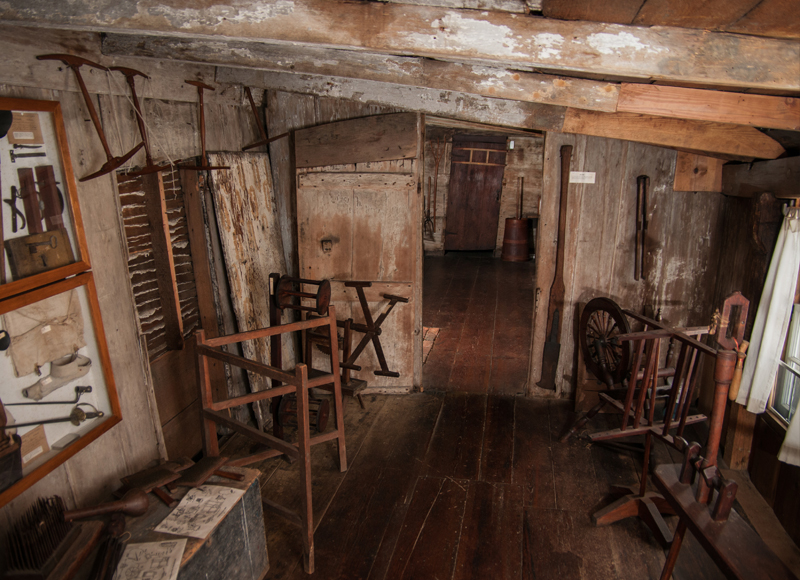
A recent post looked at the Fairbanks house which is in Dedham, MA. It dates from the 1630s. The image is from the website for the Fairbanks House. 

Jonathan Fairbanks (WikiTree) came to Boston in 1633, stayed a few years, and settled in Dedham in 1636. 

Remarks: Modified: 08/30/2026

08/30/2026 --  Minor correction, will be back for more. 

Friday, September 26, 2025

TEG in DB of NEHGS

TL;DR -- We published in The Essex Genealogist (TEG). The NEHGS printed a listing of TEG in their NEHGR. Later, the NEHGS made a database for the TEG issues and are now up to Vol 37 which published in 2017. 

--

First things first. This is the announcement by the American Ancestor publisher of the NEHGS about their making issues of The Essex Genealogist of the Essex Society of Genealogists available via their database. We already tried it today with respect to our last article. 

The Essex Genealogist: Volume 37 (2017) now      

In the middle of the 2010s, we published a few articles in The Essex Genealogist. Later, we published the same article in The Gardner Annals. The following is a list of posts related to those publications. 

Essex Society
of Genealogists

The last one was about the barque Bostonian which was built in New England, roamed the world, and then wrecked along the Oregon border. The owners were Henry D. Gardiner and his brother. 

At the time, we had lots of material related to research along several topics: the captain at the time of the wreck; passengers on that voyage; the town of Gardiner, OR which was founded at the spot; and, of course,  more about the Gardiners who were descendants of Gardiner of Rhode Island. 

This work got us, landlubers, familiar with some naval issues and terminology. Looking forward to digging deeper. 

Remarks: Modified: 09/26/2025

09/26/2025 - 

Friday, February 28, 2025

E Pluribus Unum

TL;DR -- The NEHGS has a 10 Million Names project to identify the Americans of African descent who were here from the 1500s and 1865. D. A.R. has a project to identify and document Patriots of Color. The databases can be accessed at either site. 

---

Black History Month ends today. We report on recent work of the NEHGS and D.A.R. with respect to the identifying unknown patriots. 

  • E Pluribus Unum - "has been a motto of the United States since the earliest days of the Republic. But in practice, the history of the country has often overlooked the participation of certain groups, including the vital contributions of people of color and women to the War of Independence and the founding of the United States."
  • 10 Million Names -  "collaborative project dedicated to recovering the names of the estimated 10 million men, women, and children of African descent who were enslaved in pre- and post-colonial America (specifically, the territory that would become the United States) between the 1500s and 1865."
  • Daughters of the American Revolution: Patriots of Color, 1712 – 1888 database - "was originally released in 2021 on the DAR’s Genealogical Research System (GRS) website and is filled with more than 6,500 names of individuals of African, Native American, Iberian, Latin American descent, or of multiracial ancestry who served in or supported the American Revolution. The names and sources tied to the names can assist researchers in their quest to uncover important facts about heritage or more general information about the Revolutionary War."
  • American Ancestors Database News: Daughters of the American Revolution: Patriots of Color, 1712 – 1888 - "This database encompasses a less-examined aspect of the American Revolution: the Black, Native American, and mixed-descent participants. For the patriots that can be found here, the information available is extremely varied and comes from many diverse sources. There were both free Black and enslaved Patriots, and these entries sometimes only include a first name, or a first name and their enslaver’s last name as parenthetical information. Native American participants may be listed under their indigenous names and their tribal affiliation will be provided when known. These entries cover the original thirteen colonies as well as some of the frontier areas, such as the “Old Northwest,” which encompasses most of the Great Lakes region."

This watercolor from the American War of Independence is by Jean Baptiste Antoine de Verger (1762-1851). The watercolor shows the variety of soldiers fighting for American independence, depicting, from left to right, a black soldier of the First Rhode Island Regiment, a New England militiaman, a frontier rifleman, and a French officer. Public domain, via Wikimedia Commons.

Remarks: Modified: 02/28/2025

02/28/2025 -- 


Thursday, February 27, 2025

Robert Charles Anderson

TL;DR -- Robert Charles Anderson was a Fellow of the Society of American Genealogists. We look at his lineage and then one ancestor in particular. As well, the American Dream? What of the English-American basis that set the tone 250 years ago? On this side, we kept the interest in the Magna Carta whose 800th of the original sealing was observed in 2015 and which is again in focus. Last time, it was King John; this time it will be his son, Henry III. In this context, we look at President Carter's lines. That gets us back to Anderson's connection with Thomas Cranmer, Archbishop of Cantebury, who assisted Henry VIII in establishing the Church of England. Many Americans, like Anderson, descend from his brother. These long threads of lineage speak of many things, many of which pertain to modern issues and choices to be made. 

--

This post is the first of a new series and honors a recently deceased member of the NEHGS who worked in genealogy and heritage: Robert Charles Anderson (WikiTree). He was the lead in their Great Migration Study Project (Wikipedia, American Ancestors). This project produced several volumes of biographical and historical information. 

The Puritan Great Migration project at WikiTree is atempting to capture the pedigree and descendants of each of these immigrants. That effort and the NEHGS continue their research as indicated by this post at the Vita Brevis website: Everything You Need to Know About the Newest Great Migration Book.

Anderson also joined the American Society of Genealogist and served as President from 1989 to 1992. This obituary is from the SAG site. 

We will look at one of Anderson's ancestral family (in the time of Henry VIII) below. Before that, we will touch upon a few topics such as the Magna Carta, President Jimmy Carter's lineages, and some of the Magna Carta folks who will feature the rest of the year. 

---

We really do need the theme of American Dream, even as we have thought. You know, over the 400 years, lots of folks came here, so there would be a dream per lots of people and lots of family. We somewhat look at the cardinality of that number of lots and lots below. 

We can broaden the view and concentrate on English-American dreams and stories. At some point, the focus of the scope will be European. There will be stories that will look at the 400+ years in terms of a person, their heritage (lineage), up to the arrival (400 years ago), and then back to the origins. For now, we will limit the go back to King John's time and that of his son, King Henry III using the theme of the Magna Carta. Have you heard of that?

We supported the 800th anniversary of the 1st sealing (in 2015). This was a big deal to those who wrote the foundational materiall for the U.S. (250 years ago). Now, ten years later from 2015, there will be celebration of John's son Henry III taking an interest in the Magna Carta document. 

Note: we recently mentioned the Magna Carta in our writeup of Presiden Jimmy Carter (The Carters). We had a link to this report (Magna Carta (800th Anniversity). Ancestors who carried the Magna Carta lineage have been put into a "gateway" category. The Magna Carta project at WikiTree has been verifying at least one lineage of each person in the category. Using that resource, let's step through research results. 

  • Category:Gateways Ancestors - We know that President Carter's ancestor was Thomas Carter of Virginia (WikiTree). But, let's go to Famous Kin (caveat: all claims need scrutiny which is what the WikiTree project for Magna Carta is all about). Presiden Carter has these links: John Fitz Robert; William Malet; Gilbert de Clare; Saher de Quincy; Roger le Bigod; ...   

Gilbert de Clare (Wikipedia) was of a family (de Clare) that came over with the Norman Conquest of William the Conqueror who was a kinsman. There were 25 Sureties who took up the onus of seeing that King John kept his agreement. The history from that point to now is very much of interest. 

Having completed the look at President Carter, let's get back to Anderson and his heritage. 

---

Using the WikiTree information, we can look at one line of Anderson's through his third-great-grandfather Howard Gay. Of interest was that Ander was related to one of the Archbishops of Cantebury, Thomas Cranmer, through his brother the Archdeacon. Cranmer was burned at the stake by Mary, Queen of the Scots. 

Lineage thread from Anderson
to Thomas Cranmer,
Archbishop of Cantebury,
showing 15 generations

We ran into this martyr early in our research and noticed the open issues that needed resolution. We didn't venture far into those issues as there are many Americans who descend from Thomas Cranmer (see Foxe's Book of Martyrs). These things are best worked correctly (our latest open question deals with origins - not in terms of location but of the logistics involved - how many times did Thomas come over here?, was it only once?). But, having this linkage back to Cranmer confirmed by Anderson's work has a lot of meaning for us. 

That is some of the type of work that the SAG does. We will be using Anderson's lineage to look at other issues related to questions needing this research. 

---

The American dream, again? The English connections go much further than than the generations around the efforts to establish colonies in New England. We have our shared heritage which needs to be brought to awareness. We have been trying to do that sort of thing. Needless to say, the type of research that will be requied will use technology (such as, computer modeling) which then fits well with our themes. So, expect us to pay more attention to technology in and of itself as well as its usages, including discussions of what the U.S. is all about. 

Too, the phenomenal world of people and their generations carries a lot of informaton through time in ways that we have not been allow study due to various factors. Those factors? We will address them philosophically in a manner necessary for smart living. Why? Because of the change in the dynamics that we see with the 21st century, we have to go back and considered what we did not learn as we ought to have in the 19th and 20th centuries. 

We might add, quite frankly. As, generations of people  represent being and real matter. From that dynamic, humans evolved to where we are now. The past two centuries have seen acceleration along several fronts which we need to look at. One huge area needing attention is mathematics. How long thing analysis will take is anyone's guess. First? Demonstrate the necessity of such an effort.  

Remarks: Modified: 02/28/2025

02/27/2025 -- 


Wednesday, November 13, 2024

Miscellany

TL;DR -- We will have several of these. We bring back a couple of images and point to several themes, one of which is technology. 

--

Just updated this image at a 2014 post (Status and focus). 

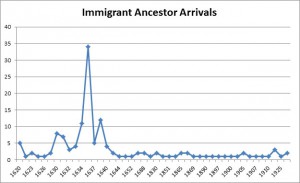
Arrival of immigrants
by year, Plymouth context

The image had moved around over the years. This was our fourth year of doing the blog for the Thomas Gardner Society, Inc. 

About this time, there were new attempts at what is called machine learning (touted as AI, known as GenAI) for several reasons. One was that the web was 20 years old or so. This caused lots of data to accumulate for both good and bad reasons. It was also 2 years after MicroSoft decided to move to the cloud pushing people off (see post (2012) thomasgardnersociety.org). In 2017, we moved the portal (to truth) to TGSoc.org to ease typing. 

Back to the image, it was used in a post (Vita Brevis, NEHGS, 2014) about what years the colonial ancestors of a group of people arrived. Another image relates to the length of the 5th generation of the Mayflower folks. When did it start and end? See the post (2019): About genearations. 

How long is a generation?

Finally, something about technology. The latest ACM Comm had an article on the problem of science that results from computer science not doing its job. This has to do with supporting needs of properties such as repeatability and such. The situation is dire and noway solved by GenAI which is more of a contributor to noise than not. But, we'll get into that as it's on the plate for the TGS to tackle problems of this sort. 

We have been at this blogging since 2010 and have collected a lot of data. So, with technology in mind, we need to reorganize everything. While we do that, we'll bring in changes with respect to two Thomas Gardners as suggested by the folks at WikiTree. While, at the same time, expecting that the two were one gentleman which we will discuss. 

Note our new Category: OpEd. 

Remarks: Modified: 11/13/2024

11/13/2024 -- 


Friday, September 27, 2024

Past and present

TL;DR -- The 250th of the U.S. will allow lots of research to get some air, as the attention goes to the history of the country. We will follow that thread several ways, including a deep look at technology of computing with respect all aspects that we know, to date. We can compare different areas. One of these one-up looks will be NYC and LA, in order by age. LA is comparatively a youngster. The dynamisms of the two difer quit a bit, too. 

--

Some locations kept good records via photographs of their change through time. At the same time, we have temporal issues such as Los Angeles being younger than New York City. Then we have technology bringing in abilities that can be pinpointed in time. For instance, we know that Gardner, the photographer, was active during the Civil War. We posted several photos from his era, including one from Lawrence, KS. We called the post with the photo "Frontier century" (April 2021); its themes were several: the great expansion in the middle after the revolution (deed done primarily by the 5th generation); families being lost in time as they escaped the heavy hand of documentation; and modern efforts at recovering evidence of their existence). 

We will continue to focus on the middle of the country but have, of late, been looking at Los Angeles and its Bunker Hill (west, we call it) that mainly appeared in the late 1800s and went away a century later to be replaced by high-climbing things that cast a long shadow. We have had lots of photos of the LA area and can be more intimate as we find older photos to match up with something recent. 

LA and NY City
across time

In this photo, the left side shows part of the train yard in LA at two different times. Reminder, LA was Old Spain and Mexico until the latter part of the 1830s. LA claims a start in the early 1780s which is associated with New Spain. The area settled is known, now, as Down Town LA (we'll use DTLA). A church built in the area in 1784 later burned. At that site, the Old Plaza Church (still standing) was built built in 1814.  

On the right of the photo, we have snaps of NYC's Manhattan starting with a photo from 1876. This an old area and was part of the colonies prior to the U.S. Revolution. With the 250th of that event coming up, we will have time to cover stories about all areas of the U.S. 

One of our themes will deal with the long reach (Mirror building; Settlements, temporary and otherwise; NEHGS events) of New England. There will be others, such as technology. 

Before moving on, we know that NY City has tall builidngs. Lots of them. The tallest now is the One World Trade Center at almost 1,800 feet. Wikipedia has a list of buildings taller than 600 feet (110 buildings). 

In DTLA, the tallest building is only 1,100 feet). The LA City Hall is 454 feet (it's shown on the left in photo) and is the 42nd largest building. The smallest (53rd in the Wikipedia list) stands at 352 feet. 

We mentioned Bunker Hill west. It got its name, of course, from the site of a Revolutionary battle. We will be looking more at that area in DTLA as it represents changes over time, as influx of population changes the dynamics of a location. With a great collection of photos from different periods, we find people taking photos from that same area and focus of direction. 

Related to Bunker Hill west is this one that show 101 early on and then later. In the meantime, St. Vibiana's was closed as a church (became an event's center) and moved up the hill from Main Street to the summit. Parts of that area had been lowered early. Houses and dirt were taken away to have proper foundation for buildings. One story to look at is the Central Library which experienced two fires by arson. During the time of recovery, maneuverings got the building limit raised from that related to the height of the City Center. So, the first one went up to cast a shadow over the library. The library sold its "air rights" as one means to fund getting back to its work. They had to replace $Ms in burnt books, for instance. 

LA Central Libray with its
"twin" (to the right)
U.S. Bank Tower

On the list of tallest, the "library tower" now is #2. 

Reminder: with respect to photos (such as we see from Water and Power Associates of CA), provenance needs to have special attention, always. How all of this influence from Gen AI plays out will be a thing to watch. The ease with which fakes can be generated will make the problems more diffficult to resolve, albeit there are known ways to attempt to obtain stable and safe environments. Technology will provide the means many times for its managment; a key choice concerns human involvement. Yes, we humans can handle the complexity. Unfortunately, we could have known more; that is to be discussed.  

Remarks: Modified: 09/27/2024

09/27/2024 --  

Tuesday, June 4, 2024

NEHGS Events

TL;DR -- We like the NEHGS which has been there since the 1830s and had many illustrious members, such John Quincy Adams. So, NE is in its name. But, it has been extending its reach. Okay, we like that. Let's compare notes. 

-- 

This post looks at several events so as to tie together what might be disparate research but really is cohesive, or will be in the longer run. We have noticed ads about the types of events events offered by the NEHGS from time to time. Some have raised thought of joining. Have not yet. But, we have attended several meetings of various groups of the  Hereditary Society Community which meet in the spring in D.C. 

Now, the recent three events scheduled by the NEHGS shown here are very much appealing. For one thing, we have had lots of posts mentioning both Northern and Southern California. Both of us have lived in the State and have family in the area. The history of both of these areas shows lots of New England influence. There is more on that later in the post. 

The NEHGS meetings in CA will be in Oakland (June 8th) and Los Angeles (June 9th) this weekend. The LA event will be held in San Marino. That specific reference is necessary due to the sprawl of LA. 

NEHGS in CA 

NEHGS has been slowly expanding its reach out of New England over the past decade or so. This is reflected in their databases. For instance, it was nice to see information brought forth on Virginia and the Northwest (which is really the mid-west). Now, with CA on the radar, we can expect to see more focus on the large interior that was covered in the frontier century. 

The reality is more than the flyover country that became popular, recently, brought by the technology of aircraft. In the areas between the coasts, we deal with real people. But, just as that theme comes up, we see that the NEHGS has found one of the libraries in the interior. 

Independence, MO

In August of this year, they'll be in MO where the trails came through the trails came through. The library has been a great assest to the region where, btw, Harry S. Truman's Presidential Library can be found as well as other historical notions that ought to be remembered. 

Like, across the Missouri River in KS is where we find that John Brown caused some turmoil. Kansas was a Massachusetts which can be seen in Lawrence. John had supporters in New England. Thomas W. Higginson wrote of his visit to the area before the Civil War. 

-----

Let's get back to LA and defer more discussion to a later time about CA and SF. A recent post continued our look at Bunker Hill West (US History, details) we brought up the theme of details of someone's existence that is not related to the paper chase of genealogy. We will continue on that theme as it relates to our interest in technology and how it's being abused of late. 

But, technology is great, as well. Let's just use good old curated publishing as an example. Lots of the research to date has been looking at things known personally. Like, John lived in the Bunker Hill area for a while as a young worker. Given the work of the TGS, Inc. which has a focus on Essex County, for one thing, we have followed families as they went west. Too, the influence of New England is of interest and seems to have no end. 

Along that line, we can use Wikipedia's work to stop, look and listen (that's an old adage with regard to train tracks in the west - out where signs may be minimal). 

    • Downtown Los Angeles (DTLA) - this page has been seriously updated with new information since 2020 which is partly due to COVID. People were home and wanted to do something. In this case, the History section has increased significantly. We will go through this more thoroughly, but it does provide names of thsoe who were there at the time. We see missing names. Say, Butterfield who ran a stage-line from St. Louis, MO through upper TX and along the southern border (through Tucson, AZ) to LA. His stages stopped near the building that housed the LA Times for whom John worked while going to UCLA. (see post Mirror Building). Part of Butterfield's work met up in El Paso with a southern line started by someone from the Giddings family of Ipswich, MA. Like we noted, the stories are endless. 
    • El Pueblo de Los Angeles - several buildings exist from the New Spain era. La Iglesia de Nuestra Señora la Reina de los Ángeles is an example. We had a post about the area with LA City Hall in view in one of the photos (see post Old LA and the U.S.. One can also see the City Hall (which was remarkable for its time and was the limit for buildings - the high-rise phenomenon came about when that was repealed) is also visible from Olvera Street
    • Bunker Hill (we added the "west") as it's named for the Boston landmark and cultural icon of the U.S.) - fortunately, photos exist that were taken at various times throughout the history. Now, the southern part of the Hill is high-rise laden. The Hill itself was scarfed several times but seriously so in the 1970s to make way for the skyline makers. Yet, there were elegant and quite remarkable buildings in the area. At least, the Angels Flight rail was saved through a dismantle, store during reconstruction, and then put back into place. 
    • St. Vibiana - this was an early Cathedral whose building from the 1870s still stands. There had been some earthquake damage, but mostly it's there as an events center. There is a newer building up on the Hill (appropriately along Temple Avenue): Cathedral of Our Lady of the Angels that has remarkable architectural features and serves the role of the former building. 

This post looked at NEHGS's work and then pulled the focus to LA specifics. We'll do the same for San Francisco, later. When we do that, the original look will be at the Presidio which is of New Spain. 

Remarks: Modified: 06/04/2024

06/04/2024 --

Wednesday, May 29, 2024

Maintainers

TL;DR -- GitHub has May as Maintainers Month where Open Source folks get together and compare notes as well as party. We say, maintainers are of all sorts, including those working what might be called legacy stuff. 

-- 

Maintainers? Who are they? What have they to do with TGS, Inc. and Gardner theme? 

Well, we are taking a technology focus. The NEHGS this month is touting how AI will change Genealogy. We say, wait a minute, folks. This stuff would work better if people knew what was going on under the covers. Right now, we have an uncertain situation due to choices by those pushing out this stuff. 

Take GenAI, please. The EU (yes, our European cousins) as telling OpenAI that their ChatGPT-4 is not suitable for real stuff. Myself? I looked at the latest verison and failed it with two questions. I wrote of it somewhere (will try to find this). Actually, folks, The Atlantic had it right in 2022 when the first release came about: toy not tool. 

Okay, the theme? We have had many post on technology. Some mentioned GitHub. So, that site is an example of handling code. What is involved with that? Well, code is developed. We can go into this but pass over it for now. When code is ready for use, it's executable plus there are copies of it in library form. That's the bailiwick of the likes of GitHub. One might say code management.

And, GitHub has May as Maintainer Month. In their version, the focus is on Open Source. That has become the norm where people keep a system/program going by offering their services, for free. Many of these people have jobs doing the same thing. John spent his career in code in a large variety of situations. "code maintenance" is important; its history is that the newbies get the task. 

But, as systems mature, more and more talent/experience is needed in order to keep it running and up to date. On the other hand, development of new stuff may be exciting. For a while, as no major system ever gets easier as it comes into being. Now, maintainign something that you did may be more fun. But, it's not easier, necessarily. 

So, we're nodding to code maintainers of all sorts. It'll be a necessary job now and into the future. Right now, "legacy" types are in serious needs of maintenance. 

Wait, GenAI as removing the need for people? Think again. Those doing that sort of thing, managers wanting something for nothing, will pay the price. Too, their customers will be impacted. It's too bad that there is a lack of maturity. But, we have to agree on how these things ought to be run. 

You know, GenAI is trained on code that has not been curated. Hence, errors are incorporated from the beginning. Let''s talk a realistic approach. Done right, it would go along the line of code "snippets" that John started doing long ago. As well, done right, we could track the history of major software and problems involved with such. That is, GenAI is a tool with insights that are artificial. It does not have insight which is the key deal. 

Remarks: Modified: 05/29/2024

05/29/2024 --

Tuesday, February 13, 2024

Now and then

TL;DR -- So, new and old; or, old and new. Technology has been around; it's a different flavor in the modern age. And, the past? In the U.S., we have the 400th and the 250th. We'll add another, the 100th. Say, IBM's picking up its new name. But, we mustn't forget the pandemic of 1918, either.  

---

This post brings together the old and the new. We have a focus on technology going forward as well as continuing with the themes of history and genealogy. We started with Dr. Frank's book and the growing accumulation of data that was becoming available with the web. In terms of genealogy, we follow the work of the NEHGS plus keep an eye on WikiTree which got our attention due to their Great Migration project.

Last year, there were two events that characterize the old and new. We summarized these in the lastest post: Current status. In short, we got more information via the modern copying methods that allowed Sherborne, Dorset, UK records to be accessible. Then, on the other end of things, we saw the LLM assisted by xNN making waves (that is, the large language model tied with machine learning of the neural network variety). 

The latest ACM Comm has an article by a cognitive roboticist (see bottom of post) which looks at the LLM/xNN approach from both the operational side of things as well as the philosophical aspects that apply. The ACM has made this public: Talking about Large Language Models. Later, we provide links with regard to technology including discussion of how robots might exhibit an attribute of the living (cognition).  

So, back to the old, we point to Harvard's Gazette and a 2015 article. We had several posts related to the Presidents of Harvard in terms of New England history and the associated heritages. We started this series in 2021 after we read of James Bryant Conant in the New Yorker. Today, we saw the Gazette article on an old burial ground in Cambridge. 

Another group that we follow is on Facebook: New England Family Genealogy and History. There was an article about a list of historic voyages from New England to California. We ventured into this subject when we learned of a barque owned by a Gardiner that wrecked along the Oregon Coast. There are still open issues to research: The Gardiner that was. 

---

So, to the new which deals with technology. IBM was named 100 years ago. It was decades before we saw the buckets-of-bits that are the reality now. We will discuss that. The Idaho National Laboratory is a little younger. It was one of the sites for nuclear research (reactors). 

Aside: The Spanish Flu was of 100 years ago, too. Plus, WWI, with WWII in the wings. Then, we had aviation coming about. Computation was a dream until about 50 or so years ago. 

ACM Comm has been covering the AI booms and busts for decades. Are we in a boom now? It might seem so listening to some of the rhetoric related to the xNN/LLM events of 2023. Actually, there was steady work that  accelerated after 2010. The approach is heavily mathematical using a scheme called linear algebra. Gaming over the decades helped evolve chips that could handle the processing fast enough to be reasonably effective. Now, other improvements are going to speed things up. 

But, there are limits to technology. Too, we have ourselves (old as we are) as examples with which to evaluate the endeavors. xNN/LLM's performance has resulted in some into thinking that we are witnessing cognitive states such as intelligence. Many argue against that notion. 

Let's look at robotics. The INL (see above) has worked on developing humanoid robots for years. There is a need to have tools that can handled dangerous materials and situations without endangering humans. The IEEE has a robotics group that is involved in the work and in publishing their results. This group has been studying issues related to robots exhibiting cognitiveness. 

Per usual, Wikipedia has a great coverage: Cognitive_robotics.  

Remarks: Modified: 02/13/2024

02/13/2024 --  Added image. 


Tuesday, December 19, 2023

New Frontier, 21st Century type

TL;DR -- Technology is one of our themes. History and genealogy are a couple of others. General interests in the 400ths and the 250ths are others. Like, Gloucester MA did its 400th this year. There will be others over the next few decades. And, the Boston mayhem on a ship is now 250th.  

--

We were toying with various avenues of research which are endless in the modern age of the "cloud" despite its shortcomings which are many. For instance, in the western movement, we have looked in the vast interior and along the coasts. CA was a theme last year: LA and SF. We have looked at the middle of the country several times, in terms of the frontier and its settlement. In every case, we try to tie back to New England. As well, we are building a timeline by people and events that emphasizes individuals who are not in historical accounts and their families. That type of work will continue. 

So, today, let's take Minnesota (MN) and Kansas (KS). Both are west of the Mississippi River. MN is north of St. Louis which is, for us, the focal point of the dividing of the land. KS is about the same level. The northern realm has a different dynamic which we have started to study, through the Michigan Territory. KS was on the way west. For instance, the trails run through the State. Lewis & Clark (1804) came up the Missouri River on their way west. 

Cottage,
Round house,
Frontier in the making 
But, we are looking much later, after the Civil War. The image shows three things: a cottage in MN; a round house in KS; news of a new frontier. 

In MN, the town of White Bear Lake is named after its lake. We have run into MN several times in our research and skirted around details. But, for today, let's look at a famous cottage (ca 1868). It was built for Charles Phelps Noyes. His wife was Emily Hoffman Gilman. They're kin of lots of New England families that we are studying. That is the right time frame for some reflection on the Revolution (which was the 5th generation's deal) and on current themes. One thing to note is that Mark Twain liked the area so it got some press. 

Aside: recent post on Little Exeter NH (where two esteems of technology - and AI - went to school. The Society of Cincinnati has a house of repute in the area. 

In KS (and elsewhere), as technology, which is our focus, improved, the railroad replaced earlier modes of transportation. Several lines ran through KS from both directions. But, the photo is in the extreme southeast corner, in the little town of Cherokee. There were strip mines for coal in the area. What did these old iron horses run on? The photo is of a round house (ca 1888) which served several purposed. For one thing, one had to change from north to south, etc. Go to San Francisco and see these in action as the rail cars get switched to return. So, we'll have lots more about that area of the country that became the flyover country, later. We have shown, and will continue to do so, that the history of the country runs through the middle. 

Now history and genealogy? We are talking about an organization whose membership included John Quincy Adams. We had an earlier post about his cousin, Grizzly Adams, and a few others. They are offering a webinar on Using AI in  Family History Research. 

What they meant to say is that they are going to show technology that can be put to use. We are going to use AIn't to keep the discussion going that this state of affairs does not offer sentience nor intelligence in the important sense. It is very easy for the imagination to run wild with respect to these things; that is a human trait that we can value. 

But, as the NEHGS (their real initial) adds, in this: 

She will also address aspects of AI that genealogists should be cautious of, such as accuracy and copyright concerns. Join us as we explore this exciting new technological frontier!  

Okay, we'll take that. But, let's go further. The tricks are being done in a manner that we can understand as it's applied mathematics. People have been lazy and have let things get too loose. We will not use "fuzzy" as that is a legitimate logic and algebra. We will touch on that more. 

In the meantime, our thrust over the past decade is to fill in the 400 years of all sides (New Spain, New France, New Sweden, ..., Native Americans, ..., New England). Plus, the 250th of the U.S. is coming up. What happened recently? The 250 of the Boston Tea Party. Nope, it wasn't with china and crumpets. 

No, we're talking illegalities. Dumping someone else's product in the water. BTW, Samuel Adams, cousin of John whose son is mentioned above, was a participant. You know, later, we had John Brown. Guess where he was? KS. Also, who were his supporters? New England. So, we have a post on that as the Secret Six had to hide out when the Uncle Sam found out that the rebel was being kept by a few brave souls, one might say. 

So, yes, we will do history. But, too, we will continue our support for discussing and using STEM plus. What is the plus? Kant, for one. If you don't know him, you'll hear from us. Stay tuned. 

Aside, again, some think that the revolution was done by rabble rousers. Well, not. If we look, the King trained the men who took him on via their support of his French Indian affair. That was the 4th generation who supplied the leadership for the most part. But, the 5th bore the brunt. 

Remarks: Modified: 12/20/2023

12/20/2023 -- Ramsey County History - Fall 1997 - The Women's Institute and How It revived Downtown St. Paul - 'A Beautiful, High-Minded Woman' Emily Gilman Noyes and Woman Suffrage. She was a daughter of Charles P. and Emily H. Noyes. 

Thursday, August 10, 2023

Knowability

TL:DR -- This post introduces a topic of long-standing debate which pertains closely with how we ought to consider technology and choices related to it. 

--

Can we know it all? Can any one? Or any thing? That latter case? One might point to the new approach to AI which is doing just that, albeit the source for knowledge is the collection (of stuff, over about three decades) on the internet. A good look at that might get one to realize one huge issue: how much is believable?; or, knowable, for that matter? 

And one consequence is that we see failures and have since one major release in November (ChatGPT). Of late, the six months of experience (with multitudes making updates and supposed improvement via learning) brings out another observation: failures are increasing despite an attempt at training by the public. 

We might add, you cannot train out the crap that was originally introduced. 

Earlier, we mentioned Charles Sanders Peirce and his work which will become more usable. There are other Americans of note to bring into the discussion. We learned of one yesterday: Frederic Brenton Fitch (Wikipedia). He was a mathematical logician and is the maternal grandfather of D. Brenton Simons (Wikipedia) who is CEO and President of the NEHGS (New England Historic Genealogical Society) which we all know and love. It's been around for a while having had an illustrious start in the 1830s. The NEHGR is a phenomenal publication providing historic and genealogical information that has been verified, somewhat.  

This is brief, but Prof Fitch is known for his paradox about knowability. There are many sides to this issue. We will look at each of those. Why? They are interwoven with the debates about computing and what we have been calling "AIn't" since there is more promise than actual realization with the current approaches. 

Aside: Fitch, too, had a Paradox: (1) Possibility (blog of Bas van Fraassen). Simons mentioned him in his commentary in the summer (2023) edition of American Ancestors. 

One dynamic is business versus academic. Or rather, proprietary information versus science. Who owns knowledge that is applicable to us, generally?

Another aspect of S. B. Simons' background is that he has New Amsterdam heritage (van Deusen). We will look at that. Too, he has an ancestor who was born in Lawrence KS (E. L. Simons) and went to TX and became a paleontologist of note dealing with primates. Notice the drifts that we will be considering. S. B.'s ancestor visited seveal continents in his pursuit of knowledge. 

Earlier, we mentioned a Thomas Gardner descendant who was a field biologist with many publications and species named after him. 

But, technology and computing? They are inseparable. As said, we are picking this up as our operational interest with regard to all aspects some of which get little consideration in today's environment of rah-rah money chasing, silly boys rushing and breaking things, issues related to undecidability being shouted down by the bullying environment, and other things best left for later.  

Remarks: Modified: 08/09/2023

08/09/2023 --


Saturday, July 1, 2023

247th of U.S.

TL;DR -- With the approaching 250th of the United States and the time of the year, the focus is on Patriots and their times as well as their progeny since then to now. This year is the 247th of the start of the revolutionary activity that was public. There had been prior activity that was taken by the ardent though at considerable risk to themselves and their families. 

---

In the colonies, here, there were stirrings earlier, but it was in July of 1776 when those there got to the notion of independence, what it might mean, and started the process. This was the time of the remaining of the 4th generation, the majority of the 5th generation, and the starting of the 6th generation. 

As we have noted, it was the 5th that bore the responsibility of establishing the United States. 

Today, we gather research material, such as Dr. Frank's writings to support future research work with regard to the three generations. Below, we provide information from the 1907 edition. The 1933 edition is about the family of George Gardner, who as a 2nd generation son of Thomas Gardner and Margaret Fryer. 

We point to The Massachusetts Magazine in which Dr. Frank wrote, for each issue, about the regiments that served at Bunker Hill. Works of Dr. Frank include the following:

In the 1907 book of Dr. Frank, the 5th generation starts with #87 Habakkuk Gardner (1707-1763) who died before the start of the Revolution. Next was #90 Capt. John Gardner (1706-1784) who served both in the French-Indian conflict as well as supported the Revolution. The last person in this generation in the book was #137 Samuel Gardner (1763-1796). 

Before we sample some of the Patriots from the 5th generation, let's look at other resources. Some of these will be by region, such as the original colonies that became States. Researching the Revolution brings one into contact with lots of information. Some States made an effort early to gather data from records with regard to their citizens. This list is from Massachusetts. There are seventeen volumes. Below we will be looking one of these, Volume 6 (Fr - Gy), where we will find information on the Gardners. 

Index to on-line volumes (thanks to archive.org - seventeen volumes)
Massachusetts Soldiers and Sailors in the War of the Revolution

       v1 (A - Ber), v2 (Bes - Byx), v3 (C - Cor), v4 (Cos - Dry), v5 (Du - Foy),
       v6 (Fr - Gy), v7 (Ha - Hix), v8 (Hm - Jy), v9 (Ka - Lsu), v10 (Lua - Mop),
       v11 (Mor - Paz), v12 (Pea - Raz), v13 (Rea - Sey), v14 (Sha - Sth),
       v15 (Sti - Toz), v16 (Tra - Whe), v17 (Whi - Z)

First, though, let's point to two other resources. The Daughters of the American Revolution (D.A.R.) and the Sons of the American Revolution (S.A.R.) both accept applications from descendants of Patriots. One of the contributions of these groups is that they help verify lineage. Right now, we are talking over 12 generations for many of the older folks up to 17 generations for the younger set. For the latter, D.A.R. has an organization called Children of the American Revolution. 

These are the research facilities offered by both groups which we will use below. 

Now, using generation five, let's look at those whose service was mentioned in Dr. Frank and link to the on-line information about descendants. Both groups will show lineage details except for the last three generations. 

Though both the fourth and the sixth generation have Patriots who supported the Revolution, our current study focus is on the fifth. 
We have used one book and have included only Patriots that are in the MS&S and the DAR database which means that a female descendant has applied successfully. In our research, we have found many Patriots who are not documented in the normal fashion. Then, some did not have descendants, or the descendants have not applied successfully. 

Using the 1933 book, we can add a few more Patriots. These follow the descendants of the daughters. In this case, we use information from Dr. Frank and MS&S and/or DAR and/or SAR. 
For this month, we will look more at Patriots after having a post that gathers all of the material about the Revolution that we had had so far in our thirteen years of work. 

Too, we will be looking at earlier incidents. We already have looked at the Crown's training of the officers via their involvement in the French-Indian conflict. But, some events like the Boston Tea Party are of interest. There is now an effort by the NEHGS to find descendants of the participants. 

Remarks: Modified: 08/26/2023

08/26/2023 --

Tuesday, April 25, 2023

In summary

Note (02/27/2024): See Current status. 

---

TL;DR -- Research continues on origins with a different focus. Now, we can look over the waters and see what happened over there during the time of the Dorchester Company. 

--

Recently, we found more information about 'origins' that shuffled the stack a little. As noted in the FAQ, we have found records about the baptism dates and place for more of the children of Thomas and Margaret. The indications are that most were born in Sherborne, Dorset, England. 

Earlier, we were able to settle the marriage issues. The Great Migration Project of NEHGS had proposed that Thomas had three wives with the mother of the children being UNKNOWN. In our research, we found that child John had noted that his father had told them about Sherborne being their prior home. Too, researchers had noted that Margaret Fryer had been mentioned over the years. 

As this icon shows, the marriage record had been digitized and indexed. A U.S. researcher found the record on AOL in 2014. See the post (Margaret, anew) which was written in the 2018 timeframe when WikiTree discussions led to having Margaret as the first wife and Damaris as second. 

We have changed the header graphic to remove Cape Ann. 

Thomas and Margaret
Planters of Salem, MA

Due to the recent work, there are now two profiles on WikiTree for Thomas Gardner. One is for the Salem family who seemed to have come over after the birth of Miriam who was born in Sherborn and that of Seeth who was born in Salem. 

The other profile is blank but for the Thomas Gardner who was here. Rev. Hubbard, and others, suggested that this was the same person. The Rev. is important as he talked to the principals and wrote of his findings, albeit his manuscript was two centuries in peril (went through the Revolution) prior to its publication. Too, some researchers in England noted that there was a relationship between the Thomas Gardner involved with the Dorchester Company's effort and a sister of Rev. John White. 

Many questions will be formulated and answered. If there were two Thomas Gardners, were they related? If so, how? 

Remarks: Modified: 12/28/2024

05/11/2023 -- A few typos corrected.  

12/27/2023 -- Add link for WikiTree Profile which has the details of this work. Don't agree with the interpretation nor the language of Joe. But, for now, we can work with the two records. 

02/27/2024 -- Added link at top for the "Current status" post. 

12/28/2024 -- See updates in GB, XIV, 1 for 2024 updates. 


Sunday, March 19, 2023

Square one?

TL;DR -- Hubbard was there. Talked to people. We need to research him. He mentioned that Thomas Gardner might have been there only one year. His tone seemed to indicate that he had talked to extant persons from what I have read. We can go back through the church records. Recheck. There were other earlier books, some of which have been digitized. We'll look at those. In the meantime, we can sketch out what is known and not. Anything not known, yet, can be considered (as long as it's noted to be conjectural). Even fiction will be welcomed. Square one? Not quite. What did we know of origins before? 

---

A week ago, we were considering how Margaret and the other ladies of Cape Ann could be featured in the 400th pages where they were asking for stories. There was a deadline with regard to getting into their book. Well, a day later, we saw the work at WikiTree where Bob Dunlap reported the results of his diving into the images of the early records of the Sherborne parish that were available on ancestry (we haven't seen these, yet). So, we will relook and extend the view to the region. 

Here are two links from the past week: Margaret (Fryer) Gardner; New not old planter. Bob's work changes the scope but in ways that are not the knee-jerk type. After some review of where we have been the last decade plus reflecting on the new information, we put this post: Old, and new, planter. We have barely started our reviews so patience is the virtue required. 

Too, we have researched all of our working lives in different contexts. We'll do this right with the help of those who would like to see some resolution. How long will this take? Who cares? That notion of schedule goes along with the ca-pital-sino's false predictions (show John that he is wrong) which have caused havoc on the economy's need for sustainability. 

So, we are almost (might appear to be) back to "square one," but not. Or, as the saying goes, back to the drawing board. But, before we relook at what we know and what we need to find out, we need to recognize some existing work that seemed to offer hints. 

And, our promise? We'll cover all of the bases. Our request? No leaping to decisions. Conjecturing, as long as it's noted as such? Bring it on (our take: paleoichnology - see discussion about 2/3 way down the page). 

This post looks at a few of those and discusses their importance.

Sarah Cushing Paine, Charles Henry Pope - in a blog post (Where was Thomas? - 27 Jan 2012), we noted that these ladies had been quoted in the Paine Ancestry book (from 1912) with respect to their Gardner Ancestry (see graphic). The book was on the family of Robert Treat Paine (WikiTree: Paine-195), Signer of the Declaration of Independence.

In this book, there is mention that Thomas may have gone back in 1626. Of course, when it was written 300 years later, and in the midst of celebrating Roger Conant, who would have been vocal about that. 

On WikiTree, there is some editorializing which ought not be. People, let's report what is known. Then, anything else is conjecture. Which we ought to love. Cannot live without them. 

Hubbard on Gardner 
Rev. Hubbard (from 2015) -- This post has a link to the Rev's manuscript as published 200 years later in the mid-1800s where he mentioned Tylly and Gardner. The latter? Hubbard noted that Gardner was here for "at least for one year's time" which comment needs to be put on the decision enabling list. Also, there are images from NEHGS' publication and from the Rev.'s manuscript with regard to who's first in New Hampshire.

The Rev. (we read somewhere) had talked to the principles. So, he would have talked to the Gardner extant during his research. That seems significant. 

Let's do one more as he is mentioned by Rev. Hubbard, too. 

Last year, John Tylly was featured in the NEHGR, finally. We had an earlier post on him in 2011 and noted that one of our interests is all of the families at Cape Ann.  

So, time can be a healer, so to speak. But, not necessarily. Having spent about three years now looking at the wide interior of the U.S. and considering the people who moved into the area, or through it, or who came back and forth, our thought goes toward a lost generation or two. We took two years to prove one person's heritage from the east coast (several place) to the Mississippi regions and then further west. Plenty remain open. The mother of one guy (who is gone now) was dropped off at a home in the mid-lands by her father who said that his wife had died and he would be back for her. Well, he never returned. The man searched all over. Prior to the modern mischief maker (the computer), he wandered and looked. DNA finally provided some possible hits. We have to check upon how that has gone with the family. 

But, like Thomas was unkown for along while, so are many more of that era and after. And, that still happens. Oh yes, cabbage patch comes up. Kid dropped in the middle of nowhere by magic. 

Our put is that technology might be great. But, it is not due to being a human affair. Doubt this with regard to computing? The reason that we picked technology as a focus is due to the problems that get over looked for cultural/social reasons. We can't trust. Verify? Not always possible without having a hand in all of the levels that pertain to some computational state.    

Doesn't matter? Well, from time to time, we get reminders that things are not copacetic. Do we pause and look? Not really. A decade later, lessons get unlearnt; things not supposed to happen again do. Won't mention the recent case as it's too new to really know. 

Which gets us back to the theme at hand. We're starting our relook. Want to help? Great. We'll begin by looking at what we know now and why. Then, anything thought known that isn't will be reviewed. Some of these have substance behind them which might give hints about an approach. But, some will remain unknown. 

And, the stories? Some of these may go way back. Blaming intermediate authors is not what to do. Can we approach this is a mature, research-oriented manner? There is no competition except, perhaps, against truth if we can pull it out of the hat. 

This site will be reorganized so as to emphasize research and progress (or not). Now, we have a focus with some support behind it. The stories over the years. Still of interest. Why? Humans and science.  

Remarks: Modified: 03/21/2023

03/20/2023 -- What we know? and FAQ will be updated. Too, we will be updating the Research posts and pages. Watch Sherborne research. 

03/21/2023 -- Mark up the image related to Hubbard's remark about 1 year. Emphasis added to the text. 


Tuesday, January 31, 2023

The Americas

TL;DR -- As we noted early last year, we have technology as a focus similar to another group's concentration on honoring research in biomedical fields. This post is about a biological thrust which has a couple of themes. One is that technology cuts across the board. We can use IEEE as an example of touching everything. Too, the post recognizes the life work of a Thomas Gardner descendant. 

---

We have mentioned New Spain several times, in the context of the United States. But, considering the extent of the U.S., there were other cultures, such as France, the Netherlands, Sweden and others. This will be a recurring theme due to perseverance of families through time until now. 

And, New Spain also is associated with most of the Americas outside of the U.S. and Canada. That might be the result of the usage of the Spanish language in much of the Americas. According to one source, there are 280-million English speakers in the American Continents compared to 418-million Spanish speakers. This is attributed to Spain being the first conqueror. New England did not conquer so much as slide into the area. 

Our last post mentioned the NEHGS which had a history and genealogy focus. These two utilize technology which is one of our interests. Of late, DNA studies have become more used. These types of results are becoming more frequently used in proving heritage. 

That is a biological focus which then leads to the use of technology, for supporting disciplines of the various sciences, and its mathematical understructure. And, so, we get back to computing and its contributions and plagues. We do this for several reasons which ought to become apparent through time. 

Natural History Museums (say Smithsonian, New York, London, and others) provide information about our world the study of which involves many disciplines, as we see with the Departments at Universities. Curators play a key role. Some in computing have brought this function to bear, say handling knowledge in terms of what a website might present. As with everything, interpretations differ as to what a curator does. The need seems to be recognized according to the rhetoric of the time. 

This post deals with the study of wildlife biology as it has grown over the past 150 years or so. We wanted to point to an example via the journal of the Mexican Association of Mammalogist. The first issue of Therya, Vol. 14 honors a New Englander who descends from many families, including that of Thomas Gardner, of Cape Ann and Salem. We had a post about him, earlier: Alfred L. Gardner, Ph.D.  

Note: Before going on, a technical aside is necessary. We, in the U.S., have benefited from awareness that can contribute to security and such. The 'wild west' start of the internet was a little perturbing to many. The marshals that came to town to clean up were varied, but they have helped. The below article is available via the DOAJ's website: https://doaj.org/about/. However, we point directly to the organization's site for convenience, though it does not use HTTPS. This blog (and its main site) put that into place a while ago for several reasons including Google's nudging. But, mostly, the push came from issues of FTP's security.  

The image shows part of the table of contents from the journal. There is the declaration of the Special Issue. Then, we have a listing of several of the articles, many of which have to do with Dr. Gardner's work. Not all are listed, but this quarterly publication is over 180 pages in length. 

The abstract (Special Issue in Honor of Dr. Alfred L. Gardner) provides links to 'full text' versions of the article (PDF or HTML) and gives references for the material in the article. One of the many publications of Dr. Gardner was Mammals of South America (2008) which is the first of three volumes. Our title suggests the integral aspect of the Americas, north and south. This is a subject needing more attention in terms of the long reach of New England. 

It might be helpful to point to information about Mammalogy (Wikipedia, Journal of Mammalogy, Encyclopedia of Life) which is part of Zoology, the study of animals. "Theria" is a subclass of the mammals. 

Incidentally, this post continues a major theme. An analog can be found via IEEE.org which involves the ubiquitous type of technology that which enables computing and everything else, in part. We need material sciences, as well. 

---

Forgive our focus on the 'artificial' when the subject of the post is nature and life. One curating task deals with establishing and preserving knowledge of provenance, through time and situations. Just now, I asked Google to give me something like this (asking ChatGPT about the provenance of its content). Got one interesting bit from The Atlantic: ChatGPT Is Dumber Than You Think (it's a toy, not a tool). Well, this type of thing will be a continuing theme (AIn't and more). 

Oh yes, Roots Tech is right around the corner. We have not paid much attention to that, except for using the various tools (love Family Search). But, it has been on the table for a while to address issues related to this type of thing. And, re-evaluating DNA (let's cut the hype) will arise at some point; for this topic, I am going back 100 some years to describe how computing in its current form came about; DNA work is heavily reliant upon computing; there is no theory for this (just practice); do we need a theory? Chemistry and its theory? Again, look around. Everyone is chasing a "theoretical" basis. Guess what? They all eventually get to computing. So, there it is. Computer science has no basis, at all. Of course, other computing labels have come up, like computer engineering. But, we're talking more than mere labels. Wait, ChatGPT appears to be shallow due to something similar? Stay tuned.  

Remarks: Modified: 02/10/2023

02/10/2023 -- There are lots of links with regard to Alfred. We'll start with these two: Special Report (Localities of Mexican Land Mammals), Tech Tech, 2020; Species he named.