Showing posts sorted by date for query origins. Sort by relevance Show all posts

Wednesday, August 26, 2026

Modern techniques

TL;DR - Techniques related to research will continue to changte along with technology as it progresses by whatever means drives that energy. So, with respect to "origins", we are seeing an LLM used to ferret out information from that time based upon records that were digitized. Of late, information about the children was discoverd in recently digitized records. On the other hand, there was a house associated with Thomas Gardner. A proxy for this? Of course, the Fairbanks House, oldest wood structure in the US.  

--

Some background on the "Announcement" today at the Thomas Gardner (of Salem) Profile of WikiTree. 

Back in the beginning, I puzzled about missing information. Say, as compared to some families with respect to origins. The NEHGS series (Anderson) had come out before our time. Some of the information in that series conflicted with what we saw with Dr. Frank's efforts. We had started there, as he was 1st cousin of a grandfather. 

But, we had more than those 2 books, we had the articles in The Massaschusetts Magazine (principally from Dr. Frank's sister, Lucy Marion Gardner - Lucie following Sidney, May, 2017) where she picked up the work of Sidney Perley, the great walkabout of Essex County. There was more. Having started in 2010, the internet had only a few years of Web 2.0. Older material was there. I have pointers based upon general trolling back when the "search engines" were behaving. Too, there were notes from families about the material that they had accumulated (some living in the UK, and even near to Dorset). 

Early on, we knew that there would be the 400th. We'll look at that. How would it compare to the 300th and the Pageant of Salem (6 Jun 2018)? As we went to look at that effort where people of Salem played roles from 300 years prior, we added the Label of OpEd (Opinions count?, Dec 2023) as we explained after the 2023 reveal of data from Sherborne, Dorset, UK.  

As an aside, we added "OpEd" to this post in order to associate it with the ongoing research. Okay, to the gist of the matter. We look at two items which represent a slew of potential work and information. It's a matter of work. 
  • Let's start with Gardner Family Trust (Apr 2026). In late Mar of 2025, we heard from DTG about his work with one of the GenAIs that had come on the scene in late 2022. 
    • I was not paying close attention to that crowd (and still consider the release to be premature). The 400th of Gloucester was approaching and we were considering what to do. Having finally settled on the notion of featuring Margaret (wife of Thomas Gardner and mother of the children that we know), we were working on that set of material. On 1 Feb 2023, I heard of that release from a friend and went to look (mainly focusing on ChatGpt and Bard).This is all documented. 
  • So, I knew of the AI/ML hype (biological pipedream); due to having known this stuff for decades I was amazed and appalled at the uses that people were discovering. So, mark that up for human creativity and the US as founded by those ones of Cape Ann. Anyway, DTG's work was along this line. He had found lots of information from digitized records in the UK; retrieved the scanned data, used OCR to transcribe, and then even worked translations (from Welsh, Latin, et al). It was remarkable. ... A little later, after some scrutiny, it was hard to tell the reality with most of the content being fictional. ... We discussed matters and decided for him to start over while concentrating on provenance. 
  • Of late, DTG has switched to Gemini/Gemma. As such, he has been verifying the information. He confirmed the news about the Gardner involvements at Bosworth and Richard III's demise. There has been a lot of information on the London side of the family. Too, he found Thomas of Sherborne. ... Now, keeping this brief, for now, one bit of information deals with a bankruptcy of the Dorchester Company in which Thomas Gardner is involved. That has my focus, right now. 
  • Thomas was here, at Cape Ann. Now, was Margaret and the three boys here. If so, John was born here. The family went back. Or if he came alone, she had John in the UK. His baptism was delayed until Thomas returned. We favor that the family came over. Thomas and family then came back with the children except for Seeth who was born in Salem. 
Now, technology will be the key. We are doing this right. Who knows what data will come to fore. The information of the births was a nice surprise as John, himself, said that his father had told that they came from Sherbourne. Sure enough. The response of WikiTree? The two person split is okay, for now. But, as we find out more, we'll make sure that it is published. 

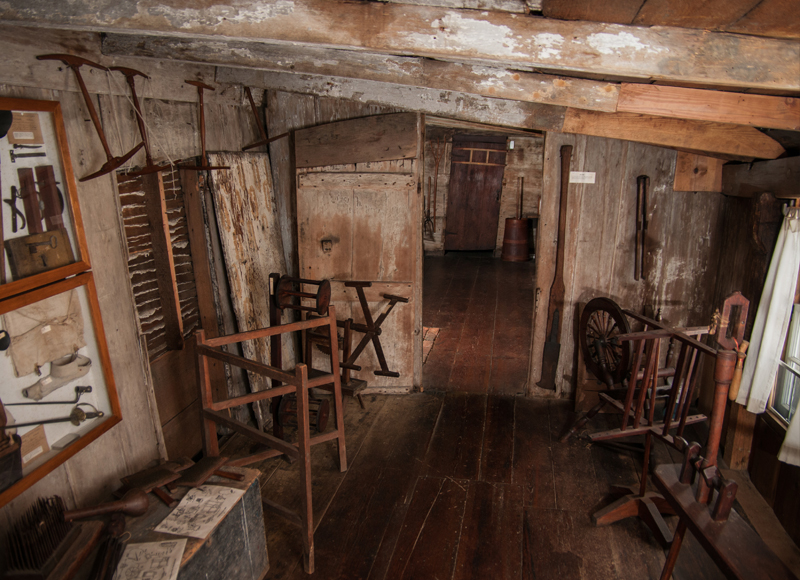
A recent post looked at the Fairbanks house which is in Dedham, MA. It dates from the 1630s. The image is from the website for the Fairbanks House

Jonathan Fairbanks (WikiTree) came to Boston in 1633, stayed a few years, and settled in Dedham in 1636. 

Remarks: Modified: 08/30/2026

08/30/2026 --  Minor correction, will be back for more. 

Sunday, April 26, 2026

Gardner Family Trust

TL;DR -- This post announces the Gardner Family Trust site and provides notice of the first post which deals with Gardiner, MT which is a historic site near Yellowstone National Park which saw a lot of history that we can and will study. But, the choice of this example deals with the history of the Gardner family over more than a millenium and is a U.S. example which represents continuing work in the history the U.S. presented in a modern way through progressive means. 

---

In an earlier post this month, we wrote of our joint efforts with David T. Gardner: On Gardners, redux. We here at the TGS, Inc. are fairly new to this work. David on the other hand as been at this since his youthful days. Prior to our contact with David, we had applied this adage to our work:

Americans need to focus on their side of the pond and get their several generations of genealogy documented to be correct. In other words, let the orginis be done by those over there. For one thng they have better access to records. 

Even though we had a late start, by that time the influence of the internet was growing as the industry kept the thing going while supporting work of millions of users. One large impact was that the ISPs were digitizing documents and records. Our results of our 2014 work on the marriage of Thomas and Margaret was a result. At the same time, we had posts on the subject of Origins and What we know (see FAQ). 

Recently, we looked at an organization started after the 2nd World War by members of the FASG (Society of American Genealogist). One of their members wrote the background whose first paragraph covers some of the historic dynamics as shown in this image (left - a page from the paper; right - transcription). 


---

In that same spirit, we are supporting the efforts of David to publish his work with respect to history and the Gardners: Gardner Family Trust. As we have mentioned, we had looked at the battle of Bosworth and about the death of King Richard III. The news at the time was loaded with reports on a body being found and identified. At the time, we loosened our American focus to provide information that we thought was pertinent to our work. 

Last year, David was able to start to use one of the GenAI/LLM to assist in his work. For one thing, lots of that work is transcribing old documents into a workable shape while ensuring that the fidelity of the representation is sound which task includes fixing things as necessary and then doing OCR on the updated image of the document. 

Along that line, the TGS interest in technology comes into play. We published an overview in December of 2025: Research, using the internet and AI. David has collected a lot of material. Our focus will be to help him with his analysis of provenance and general truth of the newly digitized as well as documents from earlier work. 

There is a lot to do which we will raise the priority on. So, going back to the theme of over there and/or here, we will take the latter for a while. As David provides new posts, we will be doing a regular walkthrough and discuss the ins and outs to emphasize, for one thing, the 250th and its significance. 

This post is an introduction. We will follow with regular reporting and commentary on methods and ways to handle the new information going forward in order to leave a proper legacy for Gardners and their progeny everywhere. 
   
----

For his 1st post, David writes of Gardiner, MT through which Gardner River flows. We have had many posts on rivers including Gardner River  and the area, Yellowstone, plus. It is a beautiful area with lots of history. We are grateful to have David's contributions. 

Gardner Family Trust
Gardiner, Montana: 
Still Operating in 2026


There were several reasons for chosing this site. We are dealing in endless history, in a sense, where technology will allow us new views to hopefully fill in missing information. But, the choice of this example deals in particular with the history of the Gardner family over more than a millenium and is a U.S. example which represents continuing work in the history of the U.S. presented in a modern way through progressive means where people rise to attention. 

Note: More detail will be forthcoming as we shadow David's work with the Gardner Family Trust with documentation of provenance, method, annd tradeoffs that might have been made. 

Remarks: Modified: 04/26/2026

04/26/2026 -- 

Saturday, April 18, 2026

Illegitimates, Royal family

TL;DR -- We ran across the one heritage group in the U.S. that claims the most stringent application process which keeps their membership small. We will use RBs here. After a brief review of technology of late, we look at heritage societies as they exist in the U.S. Many of these go back to the colonial era. At the same time, there is a huge chunk that goes back before the moment of "origins" into the far reaches of the History of Britain and of Europe. The 250th has direct bearing on those studies, such as the interest of the ABA in the heritage of the Magna Carta. Our contribution to history will be via the Gardner Family Trust with its focus of 2,000 years. 

--

We have seen so much sillyness the past few years that one might wonder if there is more or have we seen everything of that nature. There was a time when we took computation more seriously. 

But then, GenAI/LLM happened. It has been only a little over four years now, but the related work goes back one decade for the main focus and back to the 1950s altogether with interesting progress throughout the whole of those seven decades. 

One of those areas of work was Knowledge Based Engineering (KBE) the public awareness of which was never known or was lost in the shuffles of time. 

But, the lessons of KBE were not lost, as my survey over the past few years has shown. The phenomenal world contains lots of remnants from that period ('80s, '90s) in various shapes which include academic involvement and classes plus companies representing operational knowledge improvements of various types through their intellectual property and activity. 

Phenomenal? I use that a lot with a meaning related to things that we can sense in the world. That is, these are "real" and not our mental images. As if, their presence conveys that something is there in the world. Of late, there has been attention given to "twins" which are digital models of the "real" thing which is then represented in bits and heated moments by circuits processing such things. We call those circuit conglomerates computers. Much to discuss. 

---

Now with respect to this organization, we see people as phenomenal. They are here, have a history in terms of their genetic lineage, can name some of their ancestors, and then leave us (some having then a phenomenal legacy for us to consider). We have mentioned the Hereditary Society Community which consists of groups with different historic and genealogic focus. Each of these Societies have an application process and an associated list of people. If one is a descendant of one of those people, then one can join if an application shows direct lineage from the applicant to the person of the past. 

Many groups have a U.S. or colonial theme. Examples of this are the Daughters of the American Revolution, The General Society of Mayflower Descendants, The Society of Cincinatti, and such. With regard to the group honoring Cincinnatus, there are two houses that are associated with Ann's family: see TGS post, Two Houses

Some groups use "Gateway" to represent the bearer of heritage information that continues on the other side, as in prior to their immigration to the colonies.  We recently wrote of that: see post, Gateway Ancestors, redux. Here, the Magna Carta groups stand out. 

The rest of this post is about one of those groups. 

---

We recently were reminded of this group as they had their annual meeting in Washington, DC. We took a little time to look at their website (Illegitimates or RBs) and found an on-line tutorial about the application process involved which is one of the stringent. Many early members were associated with the Society of American Genealogists. So, it is no surprise that that they would start an effort to firm up the application process. 


Having done tons of applications over the years while helping people join societies, we are sensitive to the arguments which we will be looking at in more detail in later posts. Today we want to introduce the video that is quite interesting with its coverage of historical issues as well as the discussion of the research and documentation process as well as a look at how things are evaluated. 

The video --- Webinar: Finding Your Bastard and Your Line: Tuesday, November 18, 2025. 

Let's start with a discussion related to American History. In the video, go to 12:33 and find the first page of the "Background" overview. The story of Americans visiting England is quite instructive as those here were thought of as "rustics" mostly. Whereas, the list of Gateways shows that many families had a heritage worth looking into. Well, everyone's family has that quality. Rather, people here have the same genetic involvement with the history of England as do folks there.

But, the U.S. offered more which we expect will be more publicly discussed during the long run of the 250th celebration. Frankly, we are still over two months from the Declaration of Independence. After that, expect a continual review to be part of our days until after 2033. 

With technology and mature computing, the amount of new documention to be attained will be without limit, with quality material rising to the top of the heap of attention. 

---

The Royals (all over Europe) are (have been) an interesting bunch. With respect to "Gardner" and command/control, we have stumbled around the "origins" aspect for a bit and will be more focused with the advent of David T. Gardner's new site: Gardner Family Trust. His theme is "2000 Year History". 

Remarks: Modified: 04/19/2026

04/19/2026 -- Changed links that did not copy corrrectly: Two houses, Society of Cincinnati.  


Saturday, April 11, 2026

On Gardners, redux

TL;DR -- David T. Gardner has made progress in his work and now has a timeline that is interesting for several reasons. One is the scope, back to the BCE era. But, it brings up twists to Gardner history that are going to be fun to study. Say, one that ties Rome and London. 

--

We have mentioned the work of David T. Gardner a few times: Welsh poems; Research, using the Internet and AISir Christopher Gardner. These are from late 2025. There are earlier posts that will come into play, as well. 

After several false starts related to getting GenAI/LLM to act right, David has been working now bringing out the content of long-lost material that has been digitized. The tools from GenAI/LLM can be remarkable, from a distance. I say that since my computer career dealt with things requiring precision from the data side of things and from algorithms, especially routines supporting the form, fit, function requirements of engineering of critical parts for major systems. 

Then, loosy-goosy GenAI/LLM came along. The head of one prime company shrugged the other day when he was asked about his tool not being able to calculate time functions, not even to the extent of establishing the current time at a locale. That's one small issue; huge ones have been documented. 

On the other hand, David is pulling out materal, using OCR to get it digitized, and various analysis methods to determine the content, significance, and possible ramifications of the data. 

I have been watching loosely as the work progressed. David is keeping the necessary requirements in mind, such as establishing provenance. Anyone who works knows that it takes energy and is tiring. Even brainy work. And, long hours in surgery? (I know, having been introduced by working in the surgical side of an Army hospital in my late teens - in the operating room. But, I can talk about digging ditches and doing concrete - in the old days of manual labor.). 

David has produced a timeline: Guardians of Liberty: Kingslayers of the Counting House. Guardians? With a millenial view? Yes, consider the Latin phrasing and a new view of Gardner comes to fore. One of particular interest ties Rome to London in the early days of legionairre prominence. We will be looking more closely at this. 

Right now, I want to mention a couple of entries in David's timeline that we looked at earlier; when I saw the new material being brought out, it caught my attention. 
  • Sir Christopher Gardner -- 1625. 1630 on the timeline. Let's just say that the story from John Winthrop does not match up with some of the newer material. Pending further research on David's material. 
  • Johnson Gardner -- 1820s, 1830s on the timeline. Naturally, the movie Revenant got our attention. With all events and places in the interior of the U.S. over the 1800s, we look for potential New England or Gardner links. 
  • ... 
There are more events from the time of "origins" which are actively under study and from even before. We appreciate the breadth of David's scope in this regard. 


Remarks: Modified: 04/11/2026

04/11/2026 --  


Monday, April 6, 2026

April Awareness Day - English

TL;DR -- Awareness is a good thing. Days abound with respect to official recognition. Women's History month just completed. Black History month was before that. Besides looking at history and current affairs over the years, we can be aware of the reads that are taking place daily. 

---

We have been paying attention to awareness months for a few years. For each month of the year, the focus can be on many themes. For instance, one theme in March was Women's History (06 Mar 2026 post). We have a post that we will be updating each year: Awareness months

So, April has Mathematics/Statistics. But, it also includes the English Language Day on the 23rd which is related to the birth and death days of William Shakespeare. Another day is Easter Sunday was this past weekend but can occur as early as March 24th. In April, it can be as late as the 25th. 

---

Now, we would like to switch to another type of awareness which relates to readership counts with respect to our blog and other publications. The image comes from a snap of three views that are always updated with presentation of the information (position in image and title): Left - All time, popular; Middle - Recently popular; Right - Last week. 

Post read count
by period

In order to support our Portal to Truth (to be defined and described), we have been adding an image to each post. This helped us determine an icon for the post to use in lists. The order relates to the number of reads. Starting from the left, "All time, popular" goes back to the start of the blog. For a long time, the post "Posts of interest - 2011" was the most read. It summarizes the status of the blog at the end of the 2nd year or the 2st full year. But, in 2014, after the discovery of the marriage record for Thomas Gardner and Margaret Fryer, that post slowly crept up and has been most read for quite a while. 

In the middle column, "Recently popular" looks at the same collection of posts but only counts reads within the past month. It is a different list. Early on, there was an overlap between all time and recent. But, of late, things have changed so much, and we have new readership due to Linkedin posts, the lists are different. We are happy to show that "Women's History Month, 2026" is on this list. 

On the right are the posts most read in the past week. So, these are mostly topical. One that we want to call attention to is "Truth, what is it?" which is also on the "Recently popular" list and deals with technology's (TGS focus) recent influence that mostly caught everyone by surprise. Even the vendors had no clue. But, from our view, we immediately saw the potential unwanted side-effects. That is a long story which will be even more of interest as the hype gets tamed down a little. "knowledge" systems have been really effective from day one. That is AI with an emphasis on expert humans as opposed to a general search for machine intelligence that might compare with what humans do. 

There is a lot of work to be done in this regard. Our basis goes back to a project that accomplished the first digital design of a major airplane (this was in the '80/'90s - the Boeing 777). We will only touch upon a few details as our focus is not the plane; it's on the process that got the work done which resulted in a plane that astonished those who saw it up close (this we'll briefly touch upon, too). 

Jumping ahead, though this has already been expressed, the run after AGI and its issues would not have been troublesome at all had the "knowledge" proceeded a few decades ago. We will tell the tales in that regard about decisions and their ramifications. This will be from a general viewpoint mostly presented in terms of a "dialog" covering the whats and what ifs. 

In the "Last week" list as well are two older posts: Descendants of Sarah; Old Planters, Beverly. These relate to the Salem 400+ theme for 2026. Sarah married Balch who was an Old Planter. Some of Thomas' children and grandchildren married Conant. There were other families who intermarried, as well, at that time. 

There is a theme to readdress. Thomas was not on the "old planters" list. One family suggested that he had returned as some moved from Cape Ann to Namkeag. Other tales need some attention. Our recent work involves the timeframe for the family that will show that Thomas and Margaret had the time to come over here for the year plus. What are those specifiics? Well, finally, we have a starting point and will use that to begin again in looking at Origins.  

In terms of topic and focus, we will do a more regular periodic look at these lists this year. 

Remarks: Modified: 04/06/2026

04/06/2026 --


Saturday, March 7, 2026

Salem, 1626

TL;DR -- The 250th is well-known by now. So, it's time to get back to the 400th. 

---

The 250th is everywhere now getting attention which is great. We are not yet to the Day of the Declaration of Independence so ought to be paying attention to the events that came before July 4 of 1776. Our last post on "Knox Sunday" is an example. We will have more posts with the team but have been covering the 250th for over a decade. 

May we step back to the 400th? With regard to Essex County of Massachusetts, the initial settlement attempt was in the 1623/24 timeframe. Gloucester celebrated their 400th in 2023. 

As the story goes (told by many), the crew that came over with attempt of Thomas Gardner, for a couple of years, made a go of it without much success. For one thing, the land was not suitable for farming. Evidently the fishing and some planting/forging went well for subsistence. But being a commercial enterprise, the "money" behind the effort expected early returns. 

Roger Conant came to town to get things right but could not overcome the obstacles; he got permission to move to what became Salem. 

Roger and some of his crew did that move in 1626. So, we have been waiting for this year. We wrote of the transition earlier in a post about Massey's Cove in 2019. We included this painting which was done in the 20th century to accompany an article on the perils of this attempt. 


Of course, later there were various criticisms of the painting. For one, the houses were better configured than we know from reality. We wrote of that recently quoting the reaction of Anne Bradstreet as she got off the ship that was with the Winthrop Fleet. This was her introduction to Salem.  

Anne noted that some in London had mislead them: Hype, 1600s. What we got out of the stories was that Winthrop was feated in the "Governor's" great house. Anne and others went to Cape Ann to pick wild strawberries. The Governor would have been John Endicott who came in to replace Roger Conant. 

---

Where was Thomas? Evidently, he had returned after his intitial effort to London. He and his family returned sometime before 1635 as his last child was born here. At the time of Cape Ann, it would have been Margaret and the older boys. See "Themes that persist" to watch for particulars as we go along. 

We have mentioned Roger Conant several times and will relook at the start of Massachusetts this year as we continue with the 250. As the commemoration of the Revolution continues through 2033, we will step through the early years of Naumkeag which became Salem in 1629. The next year, Winthrop came through and did not like the area. So, he went further down the coast to Boston. 

So, for the next few years, we will focus on the origins of the crew at Cape Ann plus resolve the issue of the unkown Thomas Gardner who was a Cape Ann in light of the Thomas Gardner who came over in the mid-1630. Ann is a descendant of Roger both Conant and Thomas Gardner. Those relationships will be looked at as well, as we go forward. 

With technology as a major focus, we will use some of the modern stuff. Mainly, it would be to discuss the issues related to use and misuse which is a common characteristic of people and their involvement with all matters of life, it seems. 

Remarks: Modified: 03/21/2026

03/08/2026 --  Some correction of typos and phrasing mishaps (as in, touch typist - fingers walking the keys following ruminations in the mind - one reason that publishing processes have proofreading - rather than the know-it-all-ish nature ot the buckets'o'bits). 

03/21/2026 -- Made link with Salem 400+


Saturday, February 28, 2026

Nearing the day of Evacuation

TL;DR -- 1776 is the official year. July 4th is the day. Of the start of the U.S. Prior to that, 1775 was full of activity which wound down in March of 1776, however the conflict went on for several more years. 

---

We are nearing the end of the months from Lexington & Concord to the Battle of Bunker Hill and then to the Evacuation Order. Lots went on during that time from sheer boredom to heavy work to training and some conflicts. An example of work is Knox's movement of cannons from Fort Ticonderoga to the Boston area. 

We can use Siege of Boston for this period which goes from the altercation at Lexington and Concord. During the past eleven or so months, we have had many posts with themes of events from 1775. 

This post is to close out February and open up March where we can then expect July 4th to  kick off the 250th which runs for several years. The topics to look at are unending. An example might be our look at the Southern Campaign during which the Revolution was completed successfully and the final wrappings were put upon the peace agreement. 

But, people are the main interest. Col. Thomas Gardner who was killed at Bunker Hill was a descendant of the Thomas Gardner of Roxbury who was of unknown relations with Thomas Gardner of Salem. The progeny of both of the men spread the Gardner name over the country. The image shows the names of Gardiner and Gardner families here at that time. 

Mass Soldiers and Sailors

Finally, our interest will be in the people and families of the 250th as well as the issues of origins that need a clear resolution to remove confusion and conflicting opinions. We look at the Roxbury family as Ann is a descendant of this Thomas as well as the one of Salem. 

Remarks: Modified: 02/28/2026

02/28/2026 -- 

Saturday, January 3, 2026

Themes that persist

TL;DR -- The past few years have seen lots of changes. These will be handled in a more categorical manner with respect to our mission and the research that supports such. 

---

In late 2024, we posted a summary of the situation: Restart, somewhat. One theme dealt with the 2023 impact of GenAI/LLM. Another dealt with research that found that Thomas and Margaret had the marjority of their children in Sherborne. After some analysis, the WikiTree profile for Thomas Gardner (Cape Ann, Salem) was split into two: Thomas (Cape Ann); Thomas (Salem). We know little of the first one. The second one is the progenitor of the Gardners who were the original focus of the Thomas Gardner Society, Inc. We have expanded to cover Essex County, Massachusetts, New England and in some contexts, All things Gardner, with respect to the 400 years of the culture that celebrates its 250th this year. 

So, some reorganization of information will be forthcoming. On the other hand, there will be a broader scope which is expected to emerge in 2026, at least from a cursory sense. In any case, we will be paying more attention to Origins than we had before.

Also, the post "Renovation, plus" gives some perspective of the mix of themes and how they interrelate.  

----

Update on 17 Jan 2026. See Sherborne.html

After the above was written, we went to review the past three years. In doing so, we took a closer look at the records of the births. It turns out that there is sufficient time for Thomas to have come over in the timeframe described by Dr. Frank. 

There are two years and
seven months between
the births of John and Samuel

At the WikiTree profile of Thomas, we left this comment and will be researching this further. Needless to say, we do not agree with the two-Thomas view. That is, the arguments given three years ago go too far given the less-than-stellar strength of the data from the records. 

This is the comment at WikiTree:

If we look at the births, John appeared in Dec of 1624. Samuel (our guy) was born Jul of 1627.

---

In 2023, I got involved with the advent of GenAI/LLM on the scene for a bit which was distracting. But, I am back on this. Old notes, to be updated.

                      https://tgsoc.org/tech/2023/04/02/research-notes/

The following is preliminary (and conjecture, of course - based upon the short list of what we actually know), but the potential is what we are looking at, for the moment.

Given the lore, the 1624 crew would have left in the spring. The couple may not have known that she was in circumstances at that time. Too, there are ample references to a Thomas Gardner being here for a year or so.

Later, Thomas and Margaret slipped right into Salem when he came back. Their kids married kids of Conant and such.

---

Thomas could have come with Margaret and the oldest boys. John may have been born here, and the Sherborne records updated when they returned. From the research of the Paine family. 

So, we have two scenarios: Thomas alone; Thomas and Margaret with the boys. The second makes sense in terms of what was written, WikiTree's response notwithstanding. The first one would require more research with respect to who took care of Margaret while Thomas was gone. 

Myself, I prefer the second and intend to argue that the Thomas Gardner Society will follow that line unless we find something that is more clear about another alternative. Too, we will update now all of the records (which is less of a job given the obvious likelihood changes with a closer look).  

Paine family's research

Remarks: Modified: 03/07/2026

01/17/2026 -- Brought in an image snip from the Sherborne records. Also, pointed to the Paine record

03/07/2026 -- Comments on Salem, 1626 which needs attention even with the great focus of the 250th.


Friday, September 5, 2025

Fifteen years ago

TL;DR -- We started in 2010 with our website. The blog came about in Sept of that year. As we learned about history and genealogy, we custom built our website in a minimal fashion in order to spend more time on the domain knowledge. Time and technology has changed. The need for bespoke modes has not and will again be recognized. So, we'll continue down our nonAI approach. Pending research deals with origins. We touch upon the subject and our plan for the future. 

-- 

With the new world of computing being pushed upon us, mainly from the GenAI/LLM incursion on our thoughts in November of 2022 and the ramifications associated with its arrival, we are reorganizing our information. In fifteen years, we have ventured down many paths, made some discoveries, but found more questions than answers. We'll briefly look at origins and son John, because he and Richard were of Nantucket which kept good records.  

Our first post was on 25 Sep 2010 (Welcome). At the time, we had been using Blogger (later purchased by Google) for three years. According to our What's New page, our site was started in September of 2010. This was our first report on that page

09/01/2010 -- A blog will be started soon. Questions to ponder will be one topic, such as where was Thomas between 1626 and 1637 (freeman status)? Where is Thomas now (in terms of remains - or, at least, the stones of Abel, etc.) since pavement was put in over the old Gardner burial ground?

Just from the questions, one can see that we had already started to research. The Whereabouts of Thomas became a regular theme and is a now a meme of lost graves. But, number of wives was up there too. This we made progress on thanks to the internet and the appearance of digitized documents from Sherborne, Dorset, UK. 

Our site, originally, was on Microsoft's service of the time which we had for a couple of years. One reason for the choice was to use C# of Asp Net. MS provided their users with a nice tool for creating and managing the information related to small business. We liked that. But, MS decided to move to what became Microsoft 365. 

We decided to drop back to Linux given John's Unix background. But, it was clear. Given how much we needed to learn and organize, we had to spend lots of time on information (domain knowledge). There was little time for development and fiddling with the architecture or actions of the site. So, John snapped little graphics from the Microsoft site and use them in a new page where positioning was handled by the table facilities plus a little CSS. We are documenting this bit of activity (see "Requirement" on this page - technology and practice). Then, as we got better organized, we brought in JS to add actions to our site. 

Again, more time was spent above the floor of configuration and use for knowledge processing with the below the floor technology being done hurriedly. For a HTML editor, we used Sea Monkey. For JS and some HTML and CSS, we just picked up the file with Notepad. Testing was clumbsy in the beginning. But, Google's Chrome's support for the developer's needs improved through time. Once we got into the Google Development session, we were reminded of the full-blown workbench for the developer. 

However, that overload can interfere with proper focus on the knowledge involved. It's a case of hats with each dealing with some domain (technical or conceptual or ...), and the juggling of hats can be fun but eat a lot of time and energy. We'll be back on this topic due to LLM's (and its companions) influence on the environment of computing and on people's and user's understanding of such.  

 ---

On 13 Oct 2010, we mentioned the Folger family. Earlier that year, we had been in Salem, MA and saw a book on John, son of Thomas and Margaret. We have had several posts on John, such as this one: John Gardner and the Merrimack River. Here we asked the question: was John better off with the mathematicians who were doing the survey than his cohorts in Harvard learning about the number of angels on a pinhead? Or partying as we see higher-education affording the opportunity for youngster, many times for the first time. That type of question is as true now as it was then. 

So, we will look at John and the Folgers, primarily due to John's emphasis on the use of Sherborne on the Island of Nantucket. There is a reference to John saying that he heard of it from his father. For starters, here are two pertinent pages. 
As we go along, we will discuss a new format and how to structure it. AIn't is apropriate until we hear of substantive movement in the realizations from research. At the same time, we will lay out the basis for the current hype plus explain a working approach of which there will be many proposed over the coming years. 

Post note: Cannot let this post go without mentioning the 15 years of change. Quite frankly, we miss some of the sites that we saw in the 2010 timeframe that represented research by Gardner families over the years. Some sites are still there. Many are not. As we try to build a comprehensive database of Gardner information, we will attempt to disciover some of the older sites through services like the wayback machine (Intenet archive which we have used a lot). At the same time, we have to bring in the modern and futuristic modes being talked about and done. Quite frankly, maturity seems lacking in a lot of these approaches. But, that's a side issue. At regular points, we'll review our progress and trace the pros/cons. Right now, we see no reason to not continue with the bespoke approach. Anyone who wants to touch code can help. Tools? We have minimal but that can change. Vibe coding? Prompts? Some of that is reasonable. But, people are the core of interpretation and judgment. Not machines. Yet.  

PS (sort of thing): With the huge Rorschach Test thrown upon us about three years ago (Nov 2022) and the ramifications seen and potentially realized, I never went with the offer of LLM's enticement of  purty prose. Nope. Actually, except for spelling, these posts will not be checked except by human editors without tools other than pen (real or imaginary). Too, we retain the right to update grammar, et al, as time pases. All edits will be noted within remarks as we have been doing from the beginning. ... People are going to be the focus.   

Remarks: Modified: 09/06/2025

09/06/2025 - Spelling correction. PS added. 

Tuesday, June 3, 2025

Arkansas River

TL;DR -- The Arkansas River ought to get some attention. Hernando de Soto saw the river. The French saw it back in the 1500s on their journey out of the northern regions through the Great Lakes and then the Fox and Wisconsin Rivers. Cattle drivers saw the river on their way from Texas to the railroad yards of Kansas for shipment of their product to the eastern markets. 

--

The Arkansas River has been mentioned a few times so we need to look at it specifically. Hence, this post will spawn many others. One early mention was about the French crew who came down from the Great Lakes but turned around when they got close enough to the Gulf to see the Natives having goods from Spain. Then, we looked at Zebulon Pike's journey and work in the early 1800s with respect to him passing through the area of the Osage Mission of southeast Kansas. Jedediah Strong Smith was killed in the Arkansas River basin in southwest Kansas.  

As an aside, Hernando de Soto saw the river in his exploration of the area.   

Since we have more than 250 years to cover, we thought that we would look at cattle and its influence. The drives from Texas up to the rails had to cross the Arkansas River. Let's let the FB group, Be Texas Proud, be our source for material about things cattle, ranch, and more. 

Chisholm Trail (brown)
bifurcates, twice
courtesty of Be Texas Proud

They had recent posts on the Chisholm Trail that passed through Wichita, KS.

On This Day in Texas History – May 27, 1870
The Kansas Daily Commonwealth made the earliest known printed reference to the Chisholm Trail, the now-legendary cattle route that helped shape Texas and the American West.

 Named after trader Jesse Chisholm, who originally blazed parts of the route for wagons and trade—not cattle—the trail became the backbone of a booming cattle drive era. Between 1867 and the early 1880s, millions of Texas longhorns were herded up this trail to railheads in Abilene, Ellsworth, and Dodge City, where they were loaded onto trains bound for eastern cities.

There were several "ford" areas for the Arkansas River in or near Wichita, KS. Depending upon the weather, the water was low enough for easy crossing. However, storms could raise the water level very quickly. 

Quoting the The Chisholm Trail – Herding the Cattle

The long trips up the trail from Texas were hazardous for the cattle and the cowboys. The trip took two to three months as the drives crossed significant rivers, including the Arkansas and Red Rivers, and traveled through canyons and low mountain ranges. In addition, the drovers also had to be concerned about Indian attacks, outlaw cattle rustlers, and cattle stampedes.

Further posts will look at origins and the trail of this river as it runs from the Rocky Mountains to the Mississippi River. 

Remarks: Modified: 06/03/2025

06/03/2025 - 

Thursday, April 10, 2025

A trillion cuts by GenAI

TL;DR -- We saw a Chrome report which featured Gemini with respect to Gardner KS and its role in the trails west, one of which was the Oregon Trail. And, the report was not right. "Who cares?" has been my response to having Gemini spout off. I ignored it like I am very good at doing with ads. But, today, I read and saw errors. Okay. What to do? There is no method now. People are training these things. I say, you will not train out the crap. Okay. I wrote this post as an intro and was going to snap the Gemini report and mark it like a teacher would do an exercise. Oh, Gemini, my sweets, you left without telling me. What?  

---

Our purposes are several. An important one we have named as All Things Gardner. There are lots of families with the name Gardner. "What's in a name?", we asked once: Amelia Earhart

We have been at this genealogy and history work since 2010, learning as we go. On the other hand, we have decades of advanced computing experience under our belt (mainly, situations requiring precision). So, our work here has been largely abetted by computing which has changed in so many ways in the past 20 years (2 decades of decline in some areas). 

We have striven to be correct as to former work. But, we know that is not sufficient. Technology has aided in the digitizing of old records which have been analyzed via human effort and mechanical means such as OCR. A case in point is that we do not know the origins of Thomas Gardner about whose progeny we know a lot due to records over the past 400 years. So, that is an issue to resolve. 

As we work the solution, we have adopted a category: OpEd (category). That will be used to label any of the former posts that touch upon the subject. The information will not be entirely wrong. So, when we figure out the corrections we will make them. Until then, someone can still follow our approach and analysis as we looked at new material. 

Aside: the genealogy crowd split Thomas Gardner into two guys, one who was at Cape Ann with the Dorchester Company and one who is the ancestor of a whole lot of folks. Myself? I think that they are the same guy or were father and son. Both of those alternatives have some basis. The intent will be to find the truth: A Thomas here and a Thomas there

And, we would like technology to be of assistance. And, it can. See Bosworth and Gardner, with new revelations coming about of late through use of the facilities of Grok. How well this will stand up though remains to be determined. The battle settled the 100-year war (some use, War of the Roses - I say, cousin war - needless bickering). 

Anyway, this post will look at Gemini which we have liked. But, it is now on the top of a search report. And, I was trying to look at Gardner, KS being right this minute not far from that place. We have had many posts on the little town which we have buzzed by on I35 for countless times. 

---

Now, that was an intro. Here is the gist of the post. This image was snapped from a Chrome query today. ... Wait, did not snap the earlier search. Now, Gemini has disappeared from its featured position. 

Inserted as placeholder 4/11/25 0457 AM CDT
--- 

Note (04/11/25 0458 AM CDT): the absence stopped the flow. "How to handle?" was the question. The following text is from the post from last night. The image was to show what Chrome was presenting. 

---  

Actually, earlier, when I read the Gemini summary, I scrolled and found this first on the list which is from the National Park Service. Gardner was a stop on the earlier Santa Fe trail which was largely commercial going from St. Louis as the gateway to New Spain. 

That trail passed through Independence MO. So, Oregon traffic followed that same route to Gardner and then turned to the north and west going by Lawrence KS which is the site of the University of Kansas which was founded by a group of New Englanders who came out, including women, by that same trail through Gardner KS.

Later, young bucks in a hurry figured that they could take the Missouri River north from Independence past St. Joseph MO into Nebraska and head west from there. Guess what? They eventually met up with the travelers who had come up through Gardner. What did the folks in a hurry gain? Maybe, two days, perhaps a little more. 

But, gold gets the blood boiling. Like? Things easily hyped. 

Note (04/10/2025 2100 CDT) - On going to the Google development mode, I see that there is a new button ("Vibe") which I have been reading about. Sometimes, I might add as it sounded like the usual affair of misdirected enthusiasm. Whatever is going on in the background with this problem will settle down. Then, I'll use this topic for a deeper look. In any case, running into a "tantrum" however invoked does not make for stable knowledge processing. 

Remarks: Modified: 04/11/2025

04/11/2025 (about 0500 CDT) -- Put in proxy of the expected image and a note to explain. Something related to "Who moved my cheese?" (when did that become normal?). 

04/11/2025 (0738 CDT) -- It's back, AI Overview. But, buried under a label. The only quibble is the use of intersection for a split. I dealt with precision in highly technical engineering support work (computational modeling). 

Kudos, somewhat. Let's talk.


Thursday, February 27, 2025

Robert Charles Anderson

TL;DR -- Robert Charles Anderson was a Fellow of the Society of American Genealogists. We look at his lineage and then one ancestor in particular. As well, the American Dream? What of the English-American basis that set the tone 250 years ago? On this side, we kept the interest in the Magna Carta whose 800th of the original sealing was observed in 2015 and which is again in focus. Last time, it was King John; this time it will be his son, Henry III. In this context, we look at President Carter's lines. That gets us back to Anderson's connection with Thomas Cranmer, Archbishop of Cantebury, who assisted Henry VIII in establishing the Church of England. Many Americans, like Anderson, descend from his brother. These long threads of lineage speak of many things, many of which pertain to modern issues and choices to be made. 

--

This post is the first of a new series and honors a recently deceased member of the NEHGS who worked in genealogy and heritage: Robert Charles Anderson (WikiTree). He was the lead in their Great Migration Study Project (WikipediaAmerican Ancestors). This project produced several volumes of biographical and historical information. 

The Puritan Great Migration project at WikiTree is atempting to capture the pedigree and descendants of each of these immigrants. That effort and the NEHGS continue their research as indicated by this post at the Vita Brevis website: Everything You Need to Know About the Newest Great Migration Book.

Anderson also joined the American Society of Genealogist and served as President from 1989 to 1992. This obituary is from the SAG site. 

We will look at one of Anderson's ancestral family (in the time of Henry VIII) below. Before that, we will touch upon a few topics such as the Magna Carta, President Jimmy Carter's lineages, and some of the Magna Carta folks who will feature the rest of the year. 

---

We really do need the theme of American Dream, even as we have thought. You know, over the 400 years, lots of folks came here, so there would be a dream per lots of people and lots of family. We somewhat look at the cardinality of that number of lots and lots below. 

We can broaden the view and concentrate on English-American dreams and stories. At some point, the focus of the scope will be European. There will be stories that will look at the 400+ years in terms of a person, their heritage (lineage), up to the arrival (400 years ago), and then back to the origins. For now, we will limit the go back to King John's time and that of his son, King Henry III using the theme of the Magna Carta. Have you heard of that?

We supported the 800th anniversary of the 1st sealing (in 2015). This was a big deal to those who wrote the foundational materiall for the U.S. (250 years ago). Now, ten years later from 2015, there will be celebration of John's son Henry III taking an interest in the Magna Carta document. 

Note: we recently mentioned the Magna Carta in our writeup of Presiden Jimmy Carter (The Carters). We had a link to this report (Magna Carta (800th Anniversity). Ancestors who carried the Magna Carta lineage have been put into a "gateway" category. The Magna Carta project at WikiTree has been verifying at least one lineage of each person in the category. Using that resource, let's step through research results. 

  • Category:Gateways Ancestors - We know that President Carter's ancestor was Thomas Carter of Virginia (WikiTree). But, let's go to Famous Kin (caveat: all claims need scrutiny which is what the WikiTree project for Magna Carta is all about). Presiden Carter has these links: John Fitz Robert; William Malet; Gilbert de Clare; Saher de Quincy; Roger le Bigod; ...   

Gilbert de Clare (Wikipedia) was of a family (de Clare) that came over with the Norman Conquest of William the Conqueror who was a kinsman. There were 25 Sureties who took up the onus of seeing that King John kept his agreement. The history from that point to now is very much of interest. 

Having completed the look at President Carter, let's get back to Anderson and his heritage. 

---

Using the WikiTree information, we can look at one line of Anderson's through his third-great-grandfather Howard Gay. Of interest was that Ander was related to one of the Archbishops of Cantebury, Thomas Cranmer, through his brother the Archdeacon. Cranmer was burned at the stake by Mary, Queen of the Scots. 

Lineage thread from Anderson
to Thomas Cranmer,
Archbishop of Cantebury,
showing 15 generations

We ran into this martyr early in our research and noticed the open issues that needed resolution. We didn't venture far into those issues as there are many Americans who descend from Thomas Cranmer (see Foxe's Book of Martyrs). These things are best worked correctly (our latest open question deals with origins - not in terms of location but of the logistics involved - how many times did Thomas come over here?, was it only once?). But, having this linkage back to Cranmer confirmed by Anderson's work has a lot of meaning for us. 

That is some of the type of work that the SAG does. We will be using Anderson's lineage to look at other issues related to questions needing this research. 

---

The American dream, again? The English connections go much further than than the generations around the efforts to establish colonies in New England. We have our shared heritage which needs to be brought to awareness. We have been trying to do that sort of thing. Needless to say, the type of research that will be requied will use technology (such as, computer modeling) which then fits well with our themes. So, expect us to pay more attention to technology in and of itself as well as its usages, including discussions of what the U.S. is all about. 

Too, the phenomenal world of people and their generations carries a lot of informaton through time in ways that we have not been allow study due to various factors. Those factors? We will address them philosophically in a manner necessary for smart living. Why? Because of the change in the dynamics that we see with the 21st century, we have to go back and considered what we did not learn as we ought to have in the 19th and 20th centuries. 

We might add, quite frankly. As, generations of people  represent being and real matter. From that dynamic, humans evolved to where we are now. The past two centuries have seen acceleration along several fronts which we need to look at. One huge area needing attention is mathematics. How long thing analysis will take is anyone's guess. First? Demonstrate the necessity of such an effort.  

Remarks: Modified: 02/28/2025

02/27/2025 -- 


Tuesday, February 18, 2025

Charles Horton Cooley

TL;DR -- The Economist is British and published weekly. We like their humor plus their take on matters across the globe. But, given that England is a large part of our history, we appreciate their in-depth reports on things over here. Recently, they mentioned Charles Horton Cooley. Per usual, we went looking. Hence, the following. And, the implications of all of this? Stay tuned. 

---

A recent issue of The Economist had an OpEd on the origins of  "soc med" and provided some details about engineering and science, in a humanist sense, and the messes of the internet gone bad. We like The Economist and read, at least, their double issue that is published in late December of each year. But, we sample issues from time to time. 

Charles Horton Cooley was born in Michigan. His father, who was the Chief Justice of the Supreme Court of Michigan was born in New York. WikiTree did not show data past Charles' grandfather. However, records at FindAGrave (follow links for parents at each generation) suggest that Charles is a descendant of early New England pioneers. That is of interest to our research from the historical sense. Too, Charles was a sociologist. He coined "social media" in 1897. 

Reading further, Wikipedia has an article (that needs a little TLC) on the "Looking-glass self" of Charles which considers how the concept applies to social media (his neologism) especially of the type that we see now, over 150 years later of meddling with life by science, engineering, and technology. 

---

Staying with the times, here is what Gemini (becoming a drag on Google - tsk, guys - I really liked Bard and its representation choices) says:

  • Charles Horton Cooley is credited with the term "social media," which he coined over a century ago in 1897, even though the concept of social media as we know it today didn't exist at the time; this is significant because his work focused on how individuals perceive themselves based on how they believe others see them, which aligns with the idea of how people present themselves online through social platforms. 

---

Now, we have been pursing the study of computing, since Kant, through mathematics, science and engineering without consideration of the "social/personal" sciences. Even though, we might add, that we see people as more complicated than anything that physics deals with in its fantasy (cosmology) or destructive modes (reductionist's grappling with wannabe particles and/or waves). 

About Kant? He was before the expansion of mathematics that happened in the 19th century. But, there was general increases in most areas of study during that time. We need know about that. Too, we are fortunate to have the American experience as a provider of threads for research. 

So, knowing things of his time (coincident with our Revolution), he stressed that we need to look at Reason as source of our abilities to know a priori and to cogitate from that in his analytic sense. All else is synthetic. Too, Kant was right on the target as he showed what modern theorem provers know: we cannot prove the existence nor the non-existence of God via logic (Kant's Prolegomena and Logic). It is a matter of choice. Right there? Free will. But, we will save this discussion for later. 

For now, please understand (Kant's emphasis) that the 400 years of the colonies that started the U.S. 250 years ago gave (give) adequate support for a new basis. Note, we are not using new science as did Wolfram. We just started to dig and can name four names of note in the American contributions: Count Rumford; Nathaniel BowditchJosiah Willard Gibbs; and James Bryant Conant. We could pick more (Peirce - father and son - Benjamin and C.S.), 

Notes: 

  • 1. See Charles Horton Cooley. The Social Self -- 1. The Meaning of "I", Chapter 5 in  Human Nature and the Social Order (Revised Edition). New York: Charles Scribner's Sons, (1922): 168-210.
  • On education, see our post on the Nobel influence. We will get more into that as the colonies (U.S.) took up education, in general, early on. There lots of things that were done in the U.S. of note beyond running after optimization which is freedom taken to an extreme and stupid as hell. 
  • 2. John's education was classical in scope (four years of Latin, mathematics, and science - ages ago, in high school). As such, he strongly thinks that education ought to be Liberal Arts and Sciences (and engineering - get those ones involved in learning about the world before they screw it up, please). This cursory remark will be expanded over time as we deal with the 250th and the various 400ths before that. The American Dream is more "light on a hill" than ruling the world. 
  • 3. Now, that the C-Suite is running after the illusion of GenAI wholehog, what can we do? Look at "humanist mathematics" for one thing. That is, we have to persevere in pursuit of truth across levels from atoms up to the ethereal. By doing so, we will get science and engineering back on track, as well, one might hope.  
Remarks: Modified: 02/18/2025

02/18/2025 -- 


Sunday, April 14, 2024

Bamford UK

TL;DR -- A photo pulled one into research which got back to an old theme of William I's time which is way back. So be it, as we're looking at origins, more thoroughly. 

-- 

One of the irritants of the new way fostered by the errant release of TCPIP is a provider who pushes out photos for whatever reason. Usually, they don't say. Thankfully, I have mine filtered down to landscapes. So, it seems to be a game of: do you like this place? Loaded question. Well, after a few years, the thing has learned to not include people in the scene. And, location choice has been honed. 

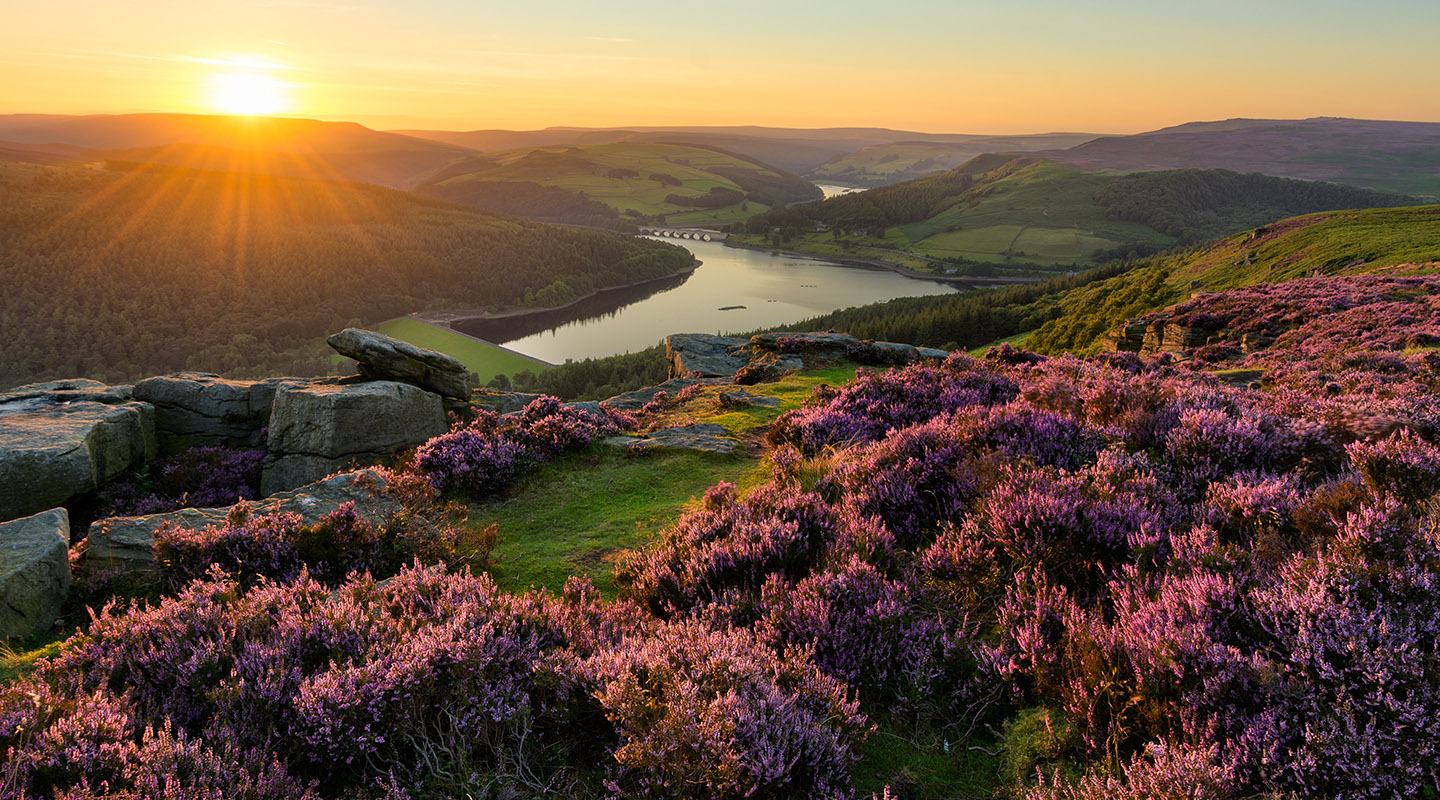
Today was a charmer for several reasons. It was titled "Bamford UK" which looked to be north. So, I went to Wikipedia, first. The content was rather staid as I suppose we expect from an older English culture.

Bamford UK

What caught my attention was that the place had been included in the book of William I when he surveyed the land in order to rule better; one impact of this was the distribute his supporters across the land. Eventually, through his progeny, that came to include Scotland, Wales, and Ireland. And, too, we will have to look at the impact on the Continent. 

But, the main name was on the lists that I see of ancestors. Okay, what of the area? Well, Wikipedia, again, was ready to answer: Derbyshire Domesday Book - tenants. Of course, "in chief" is added as this was a land look not head count, specifically. Then, it was Banford. 

Again, lots of familiar names. We have addressed this effort of William before. This recent find is significant as recent events have changed our focus. We are no long only looking on the Americas. Now, we want to look at origins, in more depth, about which topic we have had lots of posts. 

Note, we know that Thomas Gardner was from Dorset which is in the southwest. But, there are lots of families in trees when going back that far, many of whom are from the north. And, we might like the beach. But, the northern mountains demand a little more attention. 

Remarks: Modified: 04/14/2024

04/14/2024 --  

Sunday, March 17, 2024

Boston first

TL;DR -- The 17th of March is associated with St. Patrick with green rivers, too much food, and parades. That same day in 1776 was when the Brits left Boston. The story is that they believed that the colonials had brought in firepower sufficient to be effective. We mention something that happened a few years later in Russia. Why? What's to believe? 

---

The Nutfield Genealogy blog noted that this day of St. Patrick's was when the British were run out of Boston: March 17th in Boston ~ Evacuation Day or Saint Patrick's Day? Hence, it is featured yearly. 

The post reports that a fake fort had been assembled on a hill overlooking the town. That motivated the evacuation. The departure of the British forces occurred on 17 March 1776. 

For us, we like to point to the series on the Siege of Boston that Dr. Frank published in The Massachusetts Magazine

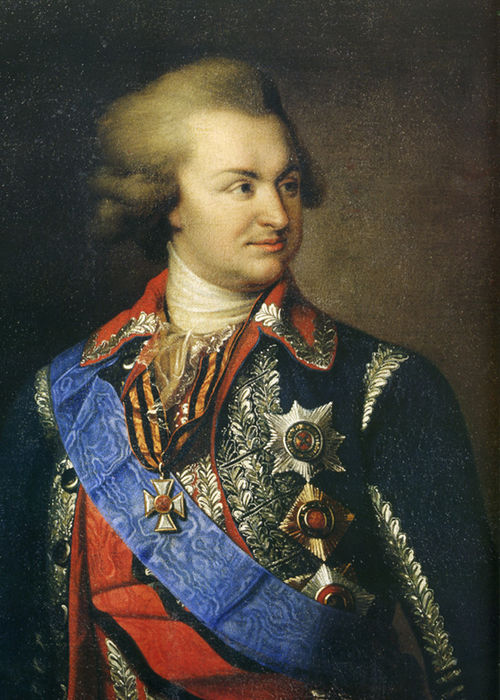
Potemkin
Now, a historic follow on? The Russian field marshal, Grigory Potemkin, was to show a region to Catherine the Great. This was in an area with which we have become more familiar of late. The tale told is that fake villages were set up along the route that she was to be taken. "Potemkin village" came to be. How much of this is fictional has been researched. 

But, Catherine's journey to the Crimea was in 1787. So, the fakery of the colonals preceeded that of the Russians. 

The topic? Now, we have witnessed several years of another type of fakery (AIn't's output). This deals with technology and its perils which we will be discussing further. 

Now, taking another view of things here. What we are dealing with is computational systems using sophisiticated mathematics in new ways with unexpected results. None of this is magical in origins. Rather, some choices were made with immature minds that impacted all of us. Major tsk on that. In the meantime, we can control the situations involved to some extent. Human nature, on the other hand, fortunately is not merely endless St. Pat's Day frolicking. 

Remarks: Modified: 03/16/2026

03/16/2026 --  Refreshed the Wikipedia image of Potemkin. Wait, this might apply to AIn't? What of the wannabe Irish? 

Friday, February 9, 2024

Current status


TL;DR -- Two major things happened last year. Both dealt with technology. One had to do with the future as it might be influenced by computing. The other had to do with the influence of the computer on the past in terms of records. Then, we have all sorts of other themes at hand to consider. 

--

This post has the purpose to get the current status of the Thomas Gardner Society, Inc. on the table. There were two major things that happened last year. Then, we reacted to another change in the on-line environment. 

Caveat: This will replace the "In summary" post of last spring. 

First, the two things, as in order with respect to our focus, of note last year were: 

  • We became aware of the xNN/LLM maneuvering in late January and did a post on Febuary 1: ChaptGPT. Prior to that time, we had taken a hands-off approach to AI for reasons that are documented in later posts last year and before (actually). We knew that there was money involved with big names getting into action. But, it's a mess, folks, which we intend to bring to the fore as our major project. Let's table that for a bit. Too, there was the 400th of Gloucester last year (next bullet). Then, there is the upcoming 250th as noted by D.A.R. and S.A.R. which we spend a lot of time supporting. With respect to our research, see our category of the "Long reach of New England" which as been a theme for almost a decade. It got more attention when we considered that those on the Oregon Trail (some of them) had passed by the foot of Mount Oread which hosts the University of Kansas. And, that there had been a major effort on the part of New England to keep Kansas slave-free. Col. T. W. Higginson was out here. So was John Brown; we just had a post on his armed conflict with some people of out the south who were using Missouri as a staging ground for creating havoc with pioneers. Stay tuned on that. The other theme can be found after the next bullet.   
  • Okay, we were getting ready to write about Margaret Fryer the wife of Thomas Gardner. This was due to the fact that the 400th was collecting stories. And, our research had been effective is getting Margaret on the map. Anderson, and friends, had dissed her, essentially. But, then. We ventured to WikiTree which has been our research vehicle (for many reasons) and saw that someone had gone through the digital files of Sherborne, Dorset and found records for about all of the kids of Thomas and Margaret. Except, we might add, for Sarah who was known to have been born here in Salem in the mid-1630s. And, we saw that the WikiTree folks had split Thomas into two people. The one Thomas was the husband of Margaret. The other is an unknown. To us, we see these ones as the same. Thomas was here and went back. Hubbard suggested that. And, he was of the time and talked to the principals. Whatever turns out to be the fact, we'll adapt. But, right now, Thomas was at Cape Ann. Nothing really shows otherwise. But, how did we miss this? See the first bullet. Besides putting ChatGPT through its hallucinatory paces, we looked at others. Frankly, Bard of Google excels. We'll explain. The gist of the matter is that we can research from Salem to now. And, origins? Full of open issues which it is time for us to tackle. 
Another theme had been the west coast, principally San Francisco as we were looking at the quake and the aftereffects. But, Los Angeles got into the mix due to seeing that Butterfield (and others) had stopped in the Bunker Hill area to reprovision for further effort going north to San Francisco. Arriving there, they turned around and headed back to St. Louis by a long, arduous route. But, lots and lots of photos from various times started to crop up which made this theme even more important. 

This is cursory by purpose, as we'll have this research as a regular theme from now on. 

So, origins, for the most part, were not followed closely by us. We had concentrated on the generations from Thomas and Margaret until now. There are reaons for this. One dealt with the fact that research in the Old World was ongoing and best handled there. We, over here, have our own axes to grind. 

That was okay until now. We are henceforth taking origins to be a regular feature of our work. 

Remarks: Modified: 07/12/2024

02/13/2024 --  Added image. 

07/14/2024 -- Why is 2024 so quiet?