Friday, April 5, 2019

History of New England

There were several early tales from New England. In our Bibliography (which is a continuing bit of work), we have tried to collect links to on-line versions of these. Below is an incomplete list that has only some of the earlier ones. We'll pick one, in particular, for this post.

The motivation comes from adding in more text from The Gardner Annals, Vol. I, No. 1 in which we collected entries from various issues of Gardner's Beacon to our portal. The first introduction of this included entries from Thomas' birth (1590s) to his death (1674). Lately, we added in more from the period of 1675 to the present. The last entry was 2009 and related to the work of John Goff. While editing the text, I noticed reference to a 1747 work by Neal. He mentioned Joseph Gardner. So that precipitated a review.

From the bibliography:
This time we want to look at Neal's book. To set the stage, in 1887 a book looked at early works from which we could learn the history: Narrative and Critical History of America: The English and French in North America by Justin Winsor. The author mentions Cotton Mather's The Ecclesiastical History of New England from 1620 to 1698 (which is not on our biblio, yet) and says that Neal was a successor to Mather. Except, Neal was never here and wrote from material available to him in England. Hence, he took his knocks from later researchers. 

However, my attention was drawn to his description of the campaign in which Joseph was killed. So, let's look at the book in terms related to our themes. In Volume 1, Neal reports on a survey of Christian activity. He quotes a letter from John Gardner of Nantucket who wrote in 1694 (pg. 255) about the churches in the area. Neal was reporting this same activity throughout Massachusetts. Neal also spent some time describing the experience of the Quakers. He got criticized for this by later authors. However, the amount of material that he had access to was remarkable, given the times. Of the letter by John, to whom was this addressed? In this first Volume, Neal lists the prior work. So, we'll have to go back through that and expand the coverage to the other colonies, such as Plymouth.

Volume 2 starts out after the first forty peaceful years with the conflict with Philip. Hubbard, as well, wrote of these troubles. Neal references the book, so he must have seen the manuscript. Again, Neal is quite descriptive. The troubles were experienced out in Deerfield which is far afield. On page 13, Neal begins a look at conditions before Joseph's death with five others.

While reviewing the material, I saw one footnote regarding the Pequot War, which was earlier, that led to this book: Relation of the Pequot Wars (1660) Lion Gardener (we took a brief look at this family, earlier - Gardiner's Island). He does not mention Joseph, in particular, but he does have the viewpoint of a participant that ought to be of interest. 

Remarks: Modified: 04/20/2019

04/20/2019 -- We have looked at The 1st Year. Also; Gloucester is planning their 400th.

Wednesday, March 27, 2019

Collateral families

This post reviews various types of puzzles that we can encounter. We first addressed the issue of errors in October of 2010: Stories and unwindings. Then, again, in December of 2010:  Family traditions. The first post mentioned the variations on the theme that one gets in reading material on the internet. A later post looked 'Historic puzzles' which dealt with conflicting information on the web of differing age and provenance. To where does one turn after resolving an issue. We published two articles in The Essex Genealogist related to that theme (TEG, Vol 34).

With respect to Thomas and Margaret, we have addressed some of these. The FAQ is a start on an approach that might be reasonable. That was motivated, in part, by trying to assess what we really knew then (or know, at any point). One reason for the 'Remarks' section on these posts is to link to information known down the line. The 'What we know' post has additional comments dated from 2012 to 2018. Many posts are being updated as we add images for our index.

As would be expected, origins are a huge theme of interest. We found more information about Margaret. There have been many other viewpoints presented. Our intent is to gather these; eventually, we will publish them with some commentary. Examples: Neville in the tree?Thomas' sister Rachel?Who was on the boat?; Common query: Am I related to Thomas?; and more.

The work of Gardner Research will not be without interesting puzzles and knots. On the other side, we do not want to introduce more complication. Some errors have cropped up. They may have been typos (a couple of places, the wrong year for the publication of the 'Gardner Memorial' book). Others were not following up on sources (see below). Some were oversights (or new information came about). We address this issue on the Publications page of our portal and will be thorough in our handling of this type of change.

After we wrote a brief article about Dr. Frank back in 2015 (The Gardner Annals, Vol. II, No. 2), we created a record on findagrave for him. We found a grave record for his daughter, Pauline. In the article, we mentioned that her burial was in Whitefield, ME. It should have been Sheepscot Cemetery in Newcastle, ME.

Pauline's husband was Philip Stone Donnell. As we will see with his story, Philip S. was an officer in the U.S. Army and an administrator with the WPA. He published an article in The Technology Monthly of MIT about his years doing coast surveys: This article was later published in The C.I.T. Journal (June, 1921).
 
Remarks:  Modified: 07/20/2020

07/20/2020 -- Updated links to Philip's article. Changed the image to MIT's journal.

Tuesday, March 26, 2019

General Crisis

The title comes from a series of articles dealing with The General Crisis. These were published in 1954 by a British Historian. The topic dealt with turmoil and troubles in the 17th Century, globally.

Earlier, in terms of motivation, we touched upon the topic of Plus or Minus the Arrival (1 Mar 2013) when I was still a newbie in this type of work. I think of this as the smoking cigarette post, due to the image that shows the Royal reigns during Thomas' years. Earlier, I had looked at a topic that relates to the General Crisis which was the Black Plague (18 Nov 2012).

Then, we started the 'annals' look with Gardner's Beacon (Vol. II, No. 6). I have been looking at these items which were carried into the first edition of The Gardner Annals. And, of late, they are presented on our new portal in random order with the intent to scroll. That got me to reading these to identify necessary changes which is pending.

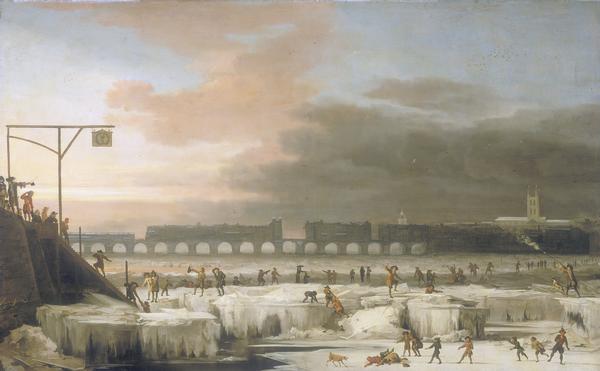
Another of the events was a Little Ice Age. The Thames froze as depicted in the painting. Crops failed. I have run across accounts about life in New England during the time.

Several other events that will be of interest: the Thirty Years' War, the English Civil War, several areas lost a large percentage of the population, climate change.

Remarks: Modified: 03/26/2019

03/26/2019 --

Thursday, February 28, 2019

Another twist

We have unclear situations on both ends of Thomas' curriculum vitae (so to speak). Part of our effort has been an attempt at filling in pieces. We have more information about Margaret, now. But, 'whence' is an open issue. We have summary that will be updated from time to time. We have figured out that Thomas' remains were lost: Gardner's Beacon, Vol. IX, Vol. 1.

We know that Margaret and Thomas lived in Sherborne where they married and had the first of their children. Records suggest (absence of such) that the family moved. The children's name match those of the Cape Ann couple: Sherborne, Dorset.

In a discussion, I heard about a case in the Singapore where graves were dumped in a river to make room for a road. The families complained, to no consequence.
users.rc.com

So, while looking at whence issues today, I ran across this blog post: These Forty-one Puritan Gravestones. It talks about gravestones being moved without the bodies. It happened to these stone twice.

Ah, New England was Christian? Or money hungry?

The significance with this post about the 41 graves are several. Trask is a Cape Ann family. Too, Sidney Perley mentioned that some graves had been moved from Gardner's burial plot to the Trask plot which was almost adjoining. That motivated this New Twist post.

Remarks: Modified: 05/16/2019

03/02/2019 -- No, forty-one was minor. Now, it's 200 or so. That's not counting those interned at Gardner's Hill. All in little Essex County.

05/16/2019 -- The map that compares Sidney's walk-about with Google is way off. That is because I was looking at landmarks and not paying attention to details, like distance. So, see this update: How close is close ? II. Here is the updated graphics.
Oh yes, we are now honing into the area. 

Thursday, February 21, 2019

Gardner's Beacon, Vol IX, No 1

This issue of Gardner's Beacon looks at the last ten years and considers our next steps as well as future activities.

Then, we address the issue of "Where is Thomas?" from the framework of several years of research. We feel that this is an important issue that needs to be addressed, finally. And, we intend to follow this project through until enough is known to 'put it to bed' in a reasonable manner.

For more detail on the map that is on Page 2, see this post: 29 December 1674. That is the day that Thomas Gardner died. The post summarizes a few things and suggests that this issue of Gardner's Beacon was in development. Last year, we summarized several years of queries: The Remains of Thomas. We will be doing another summary, soon, in the context of a continuing project and what we know so far.

We provide a little information about Abel Gardner, who was the grandson of Thomas and Margaret that owned Gardner's Hill and the Gardner burial plot after his father, Samuel, died. He is an ancestor of Dr. Frank and Ann and her siblings. So, this is the issue strikes close to home.

After that, we'll plan how to establish a permanent memorial for Thomas (and the others who were re-interned, at that time). Included will be discussions about a virtual experience of Gardner's Hill and the burial plot being developed.

---

See Vol. IX, No. 1 of Gardner's Beacon for a review of research to date and more. Sources.

Remarks: Modified: 02/28/2019

02/23/2019 -- Put in link to prior post, concerning the original internment. A few minor edits on the PDF and image files. Note about Abel Gardner.

02/28/2019 -- Update link for Sources. Will put a post, henceforth, related to each issue, as we did with Gardner's Beacon, Vol. VIII, No. 1.

Tuesday, February 19, 2019

Black History Month

We are a little late in doing this post, however we will have a couple more soon. One of our efforts, now, is to get a scrolling timeline view established on our site that is related to Thomas Gardner, the Cape Ann crew, and the U.S. over the past 400 years. The Gardner Annals Volume I, Issue 1 published our first attempt at collecting this type of information. Those annals entries had been first published in several Gardner's Beacons (see Volume II, Issue 6 for the first of these) and were interleaved for the TGA collection to report several events by year. In the TGA issue, we organized the entries into 'Before 1592', 'Between 1592 and 1674', and 'After 1674' which puts the focus on the life of Thomas Gardner.

The idea is to take these entries as an index (even Table of Contents), with additional information, and make it a learning device. Let me tell you about a case in point. Since the beginning, we have been working as if New England did not have any hand in the slavery issue. Beyond, we must add, providing the impetus for the abolitionist's efforts. We have written a lot about the long arm of New England, as in, Kansas is a State started by New Englanders for the express purpose of being an example of non-slavery life. John Brown spent a bit of time there, under his own and an assumed name. However, on reading Nutfield Genealogy, we see that Samuel and Moses Maverick were slave traders. Professor Gates, in his Finding your roots, recently had a descendant of the Mavericks who is a TV personality.

Yesterday, USA Today, in a topical article, had a side bar that was a timeline related to the African American experience in the Americas. The involuntary migration started early. I did not find this timeline on-line but found one that is as good: Key Moments in Black History. The first entry is 1619 and deals with Virginia. The USA Today timeline started post Columbus. So, we will be looking for other timelines on this subject.

Heather, of Nutfield, then mentions the 1779 Slave Petition. On further search, other sites came to fore, such as: Slavery in New Hampshire. Not picking on the State of Rev. Bachiler; we're just getting started. There have been several books on the subject of slavery in New England. I referred to one instance that dealt with Harvard.

Another book dealt with events in New Hampshire, including the petition for freedom by slaves of the well-known families, such as the Whipples. The Whipple slave was with his master when he signed the Declaration of Independence. The chapter concludes with a story of General Washington trying to get back a slave of his who had fled to New Hampshire.

So, given our themes of Culture, History and Technology, we will look at all aspects of life over these past hundreds of years, especially with an eye toward things that are still pertinent but overlooked (or, are unknown).

Remarks: Modified: 02/19/2019

02/19/2019 --

Reprints, Dr. Frank's books

While browsing today, for another post (to be published after this), I saw that there were books of Dr. Frank's for sale on e-bay. On a closer look, these were reprints and are fairly recent. So, for now, here are the links. There were three books that caught my eye, originally. But, on closer look, I see that there have been more reprints. So, let's start with these three to see what's up.

In the modern age, many have gone back and brought classics forward. So, it is good to see this effort. We will do a review after some study of the situation. As, one of our goals is a redo of Dr. Frank's work. However, we would use modern referencing methods and cover all of the children.  Too, we would look more closely at the collateral families. Dr. Frank did an excellent job given his time and the technology available.

  1. Thomas Gardner, Planter (forgottenbooks.com) - this consists of an extract of pages from the 1907 book. The page provides buttons for 'Download', 'Read', and Amazon. Here is the Ebay link.  
  2. Thomas Gardner, Planter (Cape Ann, ...) and Some of His Descendants (bookdepository.com - Andesite Press - Ebay link) - the overview says "This work has been selected by scholars as being culturally important, and is part of the knowledge base of civilization as we know it." Amen. 
  3. Thomas Gardner, Planter (Cape Ann, ...) and Some ... (bookdepository.com - Franklin Classics - Ebay link) - Same as before. Different ISBN number. But, continuing: "Scholars believe ... that this work is important enough to be preserved, reproduced, and made generally available to the public." Again, cannot disagree. 
We will survey some of the other publications and continue this theme.

Remarks: Modified: 02/27/2019

02/27/2019 -- Note left on FB on 02/19/2019:
    In following up on some research, I ran into some material about reprints of Dr. Frank's 1907 work. So far, what I have seen concerns the 1907 book and not the 1933 one. That might be due to some copyright constraints. Have to look further.

    One of our projects is to get Dr. Frank's work up to date. And, that would include a rewrite of the former material with notes added to bring in the modern view as well as introduction of new material. If we put in an image, it would be for effect.

                (link to this post)

    This post is a start at looking at the reprint phenomenon. They do image enhancements, essentially. There is a lot to discuss. We can, actually, get started on this now, after some work on ways as well as mean. Along with this work would be continuing upkeep of the website plus the blog (or two or three). We could have a lot accomplished before 2023/3 comes along.
02/28/2019 --