Tuesday, January 4, 2022
Current challenge
Thursday, October 28, 2021
How dumb is AI?
TL;DR -- The title may be self-explanatory. Hype has reigned for a while now. Let's correct that.
---
This is the 2nd post of a series and looks at some articles from the recent IEEE Spectrum. First, what is the IEEE? It's the Institute for Electronic and Electrical Engineers, now known by its acronym, which is over 100 years old. An old motto reminded everyone that for all of the technology events of the 20th century, some member of the IEEE was there. That is due to the pervasive influence of power generation and management. With the computer, the tie is even stronger.
So, the IEEE has had its ups and downs, as does any groups of humans. But, their collection of articles in the Spectrum of October of 2021 was phenomenally on the mark. We will pick a few articles for this post but will look at all of them eventually in our technology focus. The image on the right is from their cover showing a robot (nicely configured) and the headline: Why is AI so dumb?Now, AI has been around for more than 1/2 of a century and was almost named as a lark by John McCarthy. It is famous for having generated lots of interest during its life in a cycle of boom and bust. We are currently in a boom where AI is all over. Companies are piling on the heap of people trying to use. We see some success.
Mostly, though, we can say that it's far from expectation's ideal in terms of real modes of gain. Hence, the interest of the TGS, Inc. Every group needs some focus. We are taking technology in the perspective of people with 400 years of history under their belt. We have already started to look at these long threads of cultural experience and discussing how we need such in today's world. Expect that effort to continue.
In particular, we can look at historic fact. Genealogists have used the computer from the beginning. Then, we saw the genetic analysis project gain footing and ground. On the other hand, there are many open questions yet unanswered. In fact, they have not even been asked. When you see commercial outfits piling on something, watch out. AI is like that; so, too, can be genealogy efforts; as well, we can look at the whole of the industry, given enough time.
But, back to the Spectrum. There were several articles, such as the one looking at AI history. There we see that two views predominated: symbolic and connectionist. Of late, the press has favored the latter which got out of bed finally due to increases in computational prowess. We worked in this, hence the interest. Prior to that, the symbolic approach made some headway. IEEE had a brief history. There are more in-depth looks that we can purview. Specifically, the most recent work has been on tying these two approaches together. That is, as smart people have always done, the work will continue, in the spotlight or out of it.
Unfortunately, the spotlight perturbs things greatly. One might think that turning the damn thing off is how to go, except for those who want to act and play reality rather than do hard science and engineering. So, in that guise, lets look at three of the articles.
- An Inconvenient Truth About AI - IEEE calls this the third wave. In each one, the advances were noticeable. This time, we saw the AI win games thought to be too difficult for computers. Everywhere almost, we see AI systems handling customer queries for better or for worse. There are other examples of the good and the bad. Briefly, this technology is not ready for big-time replacement of humans and their talents. So, why the hype? This will need discussion.
- 7 Revealing Ways AIs Fail - Some of the attributes are discussed, such as brittleness, inherent bias, lack of common sense, and failure to handle mathematics as we would expect. In this latest round, huge stacks of data that came from the computer's existence allowed a focus on AI training itself. Some success got people to thinking of autonomous modes which did not really pan out as expected. But, typical to human endeavors, it took a while for the realizations to hit home. We all know the little engine that could. Just how little is the AI engine? Pun.
- Deep Learning's Diminishing Returns - One ignored factor has been that these new approaches are expensive in several ways. There is the hardware and then the energy. Then, there was the complexity that was latent. Scaling up is not an option. This AI thrust was leveraged by the general economic boost of the past decade. Profligate ways of business became almost the vogue which is not sustainable. As problems of the technology got more visible, the costs and their issues got attention. So, there is 'deep' here; the whole thing is in a morass with no real plan for extrication. The business and social aspects of AI will be an interesting bit of study. Even magic has its price.
Remarks: Modified: 12/03/2021
10/30/2021 -- Add the TL;DR.
12/03/2021 -- After some research, this seems in order. Will use this to set a basis: Practical issues of AI.
Wednesday, August 23, 2023
Alchemy and AI
TL;DR -- This post is about Dreyfus and his arguments about what computers can and cannot do from a philosophical position. Dreyfus was a student at Harvard. He taught at MIT and Berkeley. The post provides links to some of his material in the interest of future work related to technology.
--
We have a technological focus to pay attention to. Of late, the main topics have related to the xNNN/LLM approach that has been called "generative." In November of 2022, OpenAI released ChatGPT upon the public. It got acclaim and criticism. The former is still there as companies rush to make money on the idea, even though AI has had a troubled past in some cases.
Criticism range over a wide domain. For one thing, students got to using it to do their work. Again, companies have been using it where "fiction" is not an unlikely find. For instance, where PR doesn't have a firm basis. So, people came up with analogs, such as "lies" or "hallucinations" to describe the careless output. Well, actually, sophisticated, albeit misdirected, mathematics was doing the work.
A sister approach became quite adept at creating "fake" photos that could fool people. And, movies being a moving stream of photos, there were "fake" videos.
Since then, there is a newer version of ChatGPT. It has scored well on some tests. But, at the hard problems where guts and smarts are necessary, we still see low scoring. No one, in their right mind, would trust their lives being run by these new deals. Though, management decisions now are setting up the future for just that event.
Of all of the issues at hand, that is the one that really bears some attention due to its potential for errors. Oh yes, bias has come up in discussion as it seems to be inherent to the approach. There are many things to discuss, as said.
In the below, we will use "AI" to mean "artificial intelligence," in toto. We coined AIn't about two years ago with respect to the adulation being given xNNN (and its manipluative ways) which is only one aspect of what has been considered to be important to AI.
So, is any of the critical opinions other than new? You bet. The following is a summary.
- Hubert L. Dreyfus (1929-2017) is one example. He studied transcendental and existential phenomonology at Harvard and in Europe. He talked to some of the greats (Heidegger, Sartre, ...). He also was a professor at MIT which was the hotbed of the early development of AI. As we will see, he and AIers did not agree.
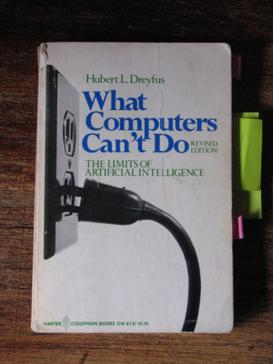
- While at MIT Dreyfus wrote "Alchemy and Artificial Intelligence" which was published by RAND and is available at the DOD site. Later, this paper became a book, What Computers Can't do.
- Later Dreyful publish an update since AI had made seeming progress. His new title was What Computers still Can't do. There is a "preview" available copy of this book at GDocs. In the commentary, there is this great quote about this work: ... was widely attacked but quietly studied. Dreyfus's arguments are still provocative and focus our attention once again on what it is that makes human beings unique.
- Hubert Dreyfus's views on artificial intelligence (at Wikipedia) has a great summary of the discussions and related themes. John McCarthy, early AI pioneer, mentioned that Dreyfus had good concerns, however his presentation and argument style was offputting. Which, in McCarthy' opinion was too bad as some necessary discussions were not to be.
thing that might be the result of this cycle of AI which has had several is that AI might now continue into the future as something that is recognized though without proper definition. It means different things to different people. But, over these decades, there have been many cases of AI involvment in progress and effective work. In fact, it's daily on the computer horizon and touches operational situations more than we might realize.
Remarks: Modified: 08/23/2023
08/23/2023 --
Thursday, June 27, 2024
README and more
- 06/26/2024 - AI is here. How is it changing the way developers work?
- 05/23/2024 - Maintainer Month: The joy of open source
- 04/17/2024 - Getting started in a career in platform engineering
- 03/12/2024 - Intelligent uses for AI in coding
- 02/13/2024 - Best practices for open source maintainers
- 01/09/2024 - Creating technical content
- ...
- 08/01/2023 - Getting started with edge computing | The ReadME Project Q&A
- 07/13/2023 - How to make your first open source contribution
- 07/10/2023 - How to handle programming paradigm shifts | The ReadME Project Q&A
- ...
- 06/13/2023 - Non-code contributors: The unsung heroes of open source
- 05/25/2023 - Elevating contributors into maintainership | The ReadME Project Q&A
- 05/09/2023 - Is it still "open source" if you don't accept contributions?
Monday, December 4, 2023
AI not solely ML
TL;DR -- AI is more than ML. For one thing, people need to be included. A bucket-of-bits oracle never was the goal for reasonable folks.
--
AI was pirated by the machine learning people. Forget AGI. AI is good enough if we remember that "intelligence" is more than we have seen represented on the planet.
Artificial intelligence, not solely machine learningToo forward thinking? Nope. We will get to discussing "truth engineering" at some point. ML optimizes without caring.
Engineeing and economics go hand in hand.
---
Aside: After posting the above article, there was a comment from Tomek which touts being an "AI" company. Will look into this further, but Tomek Venture came up with "whois" as well as several others who have Tomek as a name. With respect to the extension ".ai", Wikipedia is a good source. Have not been paying attention, though I did run into this earlier), ".ai" has been a popular extension, since 2009, for its possible association with "AI" the subject of the above article. Tomek is leveraging on that with an automated interface. Perhaps, will look at it further. Otherwise, doing a survey of this type of activity would be more beneficial as it's going to get more prevalent. GitHub's pilot is an example of enablers. To think, in 2012, I was looking at coding manually. Still will. See Content vs configuration. For now, AI, of all sorts digital, arises from buckets-of-bits whose latest magical behavior with respect to text processing has no intent behind it. We're talking a "stochastic parrot" (in the words of some) and similar. That does not mean that meaning may not formulate from the mix, whether good or bad. But, reasoning as enlightenment liked to tout? Not. On the other hand, knowledge-based approaches do a better approximation, with a good example being knowlege-based engineering (KBE).
Remarks: Modified: 12/30/2023
Monday, February 12, 2024
A year ago
TL;DR -- A year ago, the world was three months past the release of ChatGPT with millions signing up. What did that event pertail? We spent several months reviewing the various options as well as looking again at the history from Dartmouth onward. In this new year, one can sense a change. Will there be less hype?
--
By this time last year, we were catching up on machine learning. Much later, we wrote the first of a series: Artificial intelligence, not solely machine learning (or AI, not solely ML) We put a "Papers" folder to publish articles with respect to xNN/LLM. That's refers to the neural net approach plus the large language model. John was involved with advanced computing his whole career and did lots of algorithmic work including those related to artificial intelligence and to what was then known as evolutionary computing including machine learning. His finals decades were oriented toward modeling with a focus on engineering support.
So the following is a recap of the past year. After finding out about ChatGPT, we started discussions of the Director, Larry L. Walker, of the Sperry Univac Knowledge Systems Center (KSC). After some reflection, we planned a series of articles that would cover the history of computing and the related mathematics. The first thing that we published dealt with the decisions behind the KSC and with its accomplishments. The title was: Sperry Univac Pioneers Application of Artificial Intelligence – 1985-1987.
After that, Larry wrote of his experiences with computing from the early days of Control Data and to his knowledge systems (expert systems) work. Meanwhile, Larry and John discussed the technology involved with Knowledge-based engineering (KBE) which was central to Boeing's 777 program. Throughout the year, the research looked into what happened with KBE at Boeing, in subsequent years, and in the world, in general.
We have had some posts here on these subjects which we will collect. Late last year, the ACM Communications had an article by Thomas Haigh that looked at the history of AI and argued that there had been no AI Winter up to 1980 though the popular press seems to say that there was. In this regard, Larry talked of his having seen the AI winter of 1990. In the latest ACM Comm, Prof. Haigh published another article. This one is titled How the AI Boom Went Bust which agrees with Larry's assessment.
So, letting John chime in, he has seen no AI Winter. KBE? It is still part of some CAD systems. Now, we can argue that it is not to the expectation that was there in the 1990s. John would agree. However, in doing a quick survey, there are many other names that KBE continued as. The theme with that is to not associate with a failed system. But, digging deeply, most of the continuals that John saw reference KBE as being in their history.
Personally, for him? He worked KBE from the late 1980s until 2005 when he retired. Then, his focus became truth engineering which was spawned at Boeing and has continued in a research mode. Now, AI was created by mathematicians one of whom (John McCarthy) coined the term. Dartmouth was the site of a meeting on the subject in the 1950s. And, all along since the 1950s, there have been periods of excitement as people contemplate some creature emerging from the fog of computing ala Science Fiction's take on the matter.
Being adult about the situation? A closer look, under the covers, shows the mathematics at play. Yes, it is sophisticated. Taming the hype cycles will require some maturity. Part of that will be grasping that mathematics and bringing it out to public view.
Since that first paper on AI and ML, there have been two more which present the important factors that need to be discussed. A fourth one is in the works. After that, the focus will be on a discussion that is practical in scope. John will offer one example which comes from the KBE work.Essentially, some in the discipline of data science have been traveling the right path. Actually, there are many examples of computational systems providing benefits via services that we can respect as they offer results that have value.
The theme of utmost importance will be determined by people as the technology progress. And, the universal themes seems to have been conjured up through the efforts of a few. Local themes have been given little attention. AI gives us a chance for a better balance; in fact, such a balance would improve all humans affairs, including science.
Remarks: Modified: 02/13/2024
Sunday, January 26, 2025
The Stargate Project
- TheStargate Project -- joint venture with private money artificial intelligence (AI) technologies. Many know of AI as it has become a familiar topic due to activities of the past couple of years that brought machine learning to the foreground with mixed results. One example was ChatGPT of OpenAI who, recently, teamed up with Oracle and MGX (company).
- Advanced weapon concepts, including lasers,[4][5] particle-beam weapons, and ground and space-based missile systems were studied, along with sensor, command and control, and computer systems needed to control a system consisting of hundreds of combat centers and satellites spanning the globe.
01/25/2025 --
Wednesday, November 29, 2023
Science and AI
Sunday, February 16, 2025
Economics, 2024
- ChatGPT (Feb, 2023) -- We had written on AI for a long while, using AIn't for the most part. We are dealing with buckets-of-bits that are "warping our imaginations, clouding our intuition" (as we wrote elsewhere). But, notice that this post is about three months late, since OpenAI released their toy/tool in Nov of 2022. I had not been paying close attention to them. Since that time, there are several other posts. And, we have written elsewhere on the matter. Needless to say, in this interchange, we asked about Thomas Gardner. And, instructed it on what we knew then, or thought that we knew. Irony? At that same time, while I was looking at Wolfram's use (Mathematica) of ChatGPT (and others), some research work was being done via WikiTree (see Currrent Status). With that work, the TGS, Inc. foundations were shaken. We did not fall and are in a repair state. Sherborne, UK records show all of the kids, but Seeth, being born in England. Now, we are keeping to the notion of Thomas going back and forth and explain our reasoning.
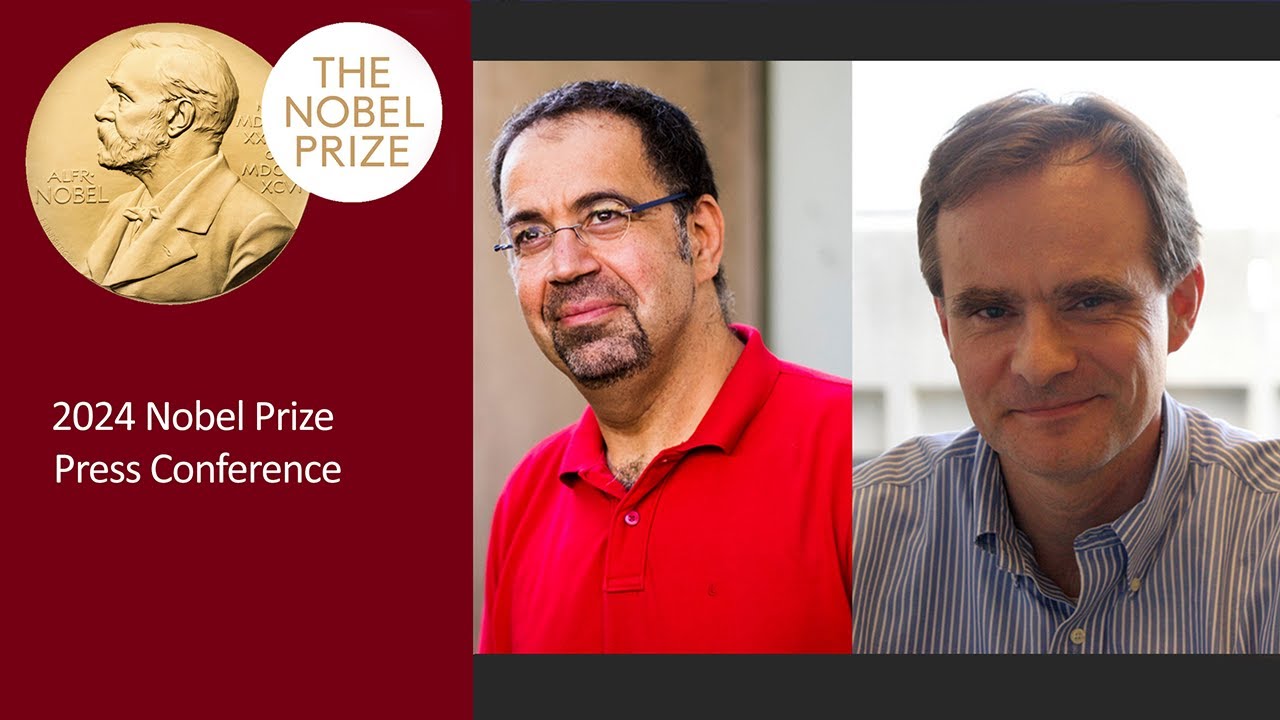
- MIT economists Daron Acemoglu and Simon Johnson share Nobel Prize -- The small reward (1%) does not support the hype or the ungodly amount of money and resources going into GenAI/LLM. Conversations are starting to emerge with more critical viewpoints being expressed.
- Drawing a line from colonialism to artificial intelligence -- We like this as our whole outlook pertains to carry the tales forward about the history of the U.S., especially with respect to the early days. Then, it was the fifth generation that bore the onus of the Revolution.
02/16/2025 --
Tuesday, December 2, 2025
Research, using the internet and AI
12/05, 06, 07/2025 -- Zenodo reading requires a login. Changed the calling sequence. See records via this: https://zenodo.org/records/17670478. DTG changed the section on Sir Christopher. We will focus on this for a while. He's like Nathaniel Eaton, first head of Harvard. Misunderstood. GGP of Ann and many others.
Wednesday, September 18, 2019
New infrastructure
Create or discover? Well, like the chicken and egg, which is first? I'm of both minds where 'discover' is given respect. So, Poisson's name is on stuff. He created this. Or, was he describing what he saw and we labelled it with his name as if the underlying ability came about with observation?
With the internet, we get to reason on these things, again, albeit with some practical focus as the intent is to use the thing properly, smartly, and to the best of our ability. I've put out a few posts about this. In July, it was Techie stuff. There were things before, say the technology blog. This started at WordPress[dot]com but, recently, moved to be under our 'portal to truth' (lots to discuss there). At that site, we have continued our blogging about decisions.
I have been working alone, for the most part, just following my intuition. 'Minimal' was one goal. Last fall, I mentioned some Google discussions that were right on (in this old guy's mind) and comforting, actually. Though, as an aside, they own this blog space. We're looking to pull it, too, under our portal.
In the meantime, AI is going bonkers. It's obvious, to me, that the black box can be tamed. It'll take us getting back to logic. What the hey? Minsky of MIT went to his grave arguing that the aNN (no matter the variations, thereof) as not the way. Not that I agree with him entirely, but he was not off the mark. Everywhere, we see AI this and AI that. Makes one wonder if some parts of the populace have lost their marbles.
As an aside, our portal thoughts make use of the fact that Thomas Gardner is almost a tabula rasa given that we know only a little but have the huge set of progeny to ponder. That means, in other words, the 'every man' is the theme or meme. We'll get back to that.
This blog has been going for 10 years. We started the WordPress one due to the details being handled with regard to choices. Of course, as we studied, we had to see where the crowd was going (below). And (yes, this is real), every time, we looked at what led to the current state (our's and the world of computing's) and tsk'd (want to know why? paying attention to the messes?). Sheesh. Do we ever get anything right? For anything of benefit, there are a slew of side-effects, costs (what have you) that are negatively imposing. This is without fail.
AI came on the scene, again, the past few years. Gaga time. This time, though, the older minds were saying, wait, let's talk: ACM, IEEE, etc. So, that's something else to discuss.
But, with regard to what the TGS needs, we have to develop. I have run across roll-your-own schemes. Guess what? The monied crowd does this to remove dependencies upon others. I'm stressing it due to issues of truth engineering. In any case, code will be to the fore. What? Yes, too many are being led down paths to perdition, it seems. We have been right so far in that assessment. I don't see glowing examples, yet.
As an aside, with regard to the below, we were doing Microsoft in the (mis-guided?) notion of going with ASPX and its way of the world. We'll mention this again.
But, the tools are there for us to do things better. Metrics, in other words, used wisely can be quite helpful. The benefits that have accrued properly to technology are examples. Lots of them. So, getting back to the theme of the post, here is an example.
This image comes from the source for a post that is worth reading: How WordPress Changed the Internet - 17 Facts about WordPress. I like it if only it shows that the old guy isn't off the wall.
Aside, content and configuration? These differ (the media is not the message).
I looked at WordPress, again, in 2014. Those prototypes had been done under our own server. In the new mode, I went and built under WordPress' site (in the beginning, there were no ads; they came later; hence, we're moving). But, in 2012, I fell back to HTML, tables, icons, and mouse handling. It worked. On the 2014 go around, I brought in CSS and some javascript. The latter was, finally, made more central as it builds the page.
Now, what was one problem in 2012? The database. Too much of it (let's discuss). We can go into this, but the TGS site uses Linux and files. Guess what? Recently, after reading some UBerkeley stuff on AI, I went to GitHub, finally. Ah, the choices, related to text or graphics, etc., were all there for daily discussion while people were, at the same time, doing useful stuff within their chosen framework.
Talk diversity. This is one type that we need and can handle. Though, there are always forces pushing for homogeneity. Mathematicians love this.
BTW, on the latest look at WordPress, as I was bringing it into our portal, I looked at the 'biz' aspects of its use. Nickel and dime'ing was my reaction; like the menu that is ala carte. Nice, but, I want to see what's under the cover (or hood or ... - we used to say). Too, I want more than mere parametric influences. BTW, that is one issue with DL and AI, right now.
Yes, again, anyone interested in machine learning in the context of TGS, pipe up, please.
Closing this out, we have lots of things pending. See this blog that will move (https://jmswtlk.github.io/GitHub-ing/) which will cover the deeper technical issues as we go along. So, indeed, we're talking infrastructure in a new sense, actually senses.
Oh yes, ASPX. Recently, I have been helping in a situation where this is the framework. Not as a developer, but rather as a late tester of a new process. Interesting. Some things I liked, others not. How to get the proper balance will always be a key thing? And, whose balance?
Aside, again. The earlier post pointed to a project management scheme that has gotten a lot of attention. It reminds me of the old Apple package that was card-based. That is, one had cards that linked in a manner that was fairly powerful (we're talking 80s, folks). I see it referenced from time to time. Lift the covers, and you'll find old routines still supporting the computing world. Trouble is, though, that it's in the GUI world. Most stuff is. Developers? Many stay away from that. Actually, WikiTree is balanced and a joy to use. GitHub is more textual with add-ons for the GUI'ness.
How ought we to go? Decisions will be made. None will be in concrete.
When looking at Drupal and Joomla, I also looked at Concrete 5. It's still around. The Army picked it. Okay. How does one decide in all of this? Want to know. Computational sustainability. That'll be a future topic.
Remarks: Modified: 10/07/2022
10/07/2022 -- Updated graphic on WordPress which had come from a survey. Put in pointers to survey. This week, decided to use WordPress to prototype our configuration.
Thursday, November 30, 2023
Technical review
TL;DR -- Since we are taking a focus on technology as a thing deserving of attention, we will have to be regular in posting information. Expect that more regularly in 2024 as we commemorate the arrival of Thomas and Margaret (or not, depending upon our research)
---
We ought to have these on a regular basis and will starting next year. For this post, we'll look at a New Yorker article, briefly. Then, we'll add in a comment about a recent post. After that, we'll show a graphic with regard to one of our web servers. Then, we'll start a list of the web presence plus gather all of the technical posts together under various categories.
Ambitious task? Yes, we'll start today and finish this up with a week. At the same time, we will consider how to do these and with what frequency.
---
AIn't and AI. We'll be more specific next year.
- The Godfather of AI - See the New Yorker, 11/17/2023. This is the main article and dealt with an interview of Hinton. There was a genealogical notion brought up. He is Brit and a descendant of Rev. Boole of the logic and algebra that we all love. After casting about for some direction, he picked neural nets. One early act was popularizing the Boltzmann Machine. As we all know, none of the machines/methods found so far is all-powerful. Subsequent work ended up with the back-prop algorithm. In a sense, this is similar to numeric processing oriented toward resolving a multiple-body issue. Definitely, constraint satisfaction applications need a good look. One interesting tidbit is that the author of this article used Kafka's worlview as the basis for an example. This was written up in an issue of the 1986 Nature periodical. To note, please. On seeing an interaction with ChatGPT, he was astonished so as to talk "level of understanding" and even uttered "alive" in the context. He has seen lower-level reality in that his later work deals with neuromorphic approaches.
- The Economist as example - See the last post: Science and AI. This was motivated by seeing an article in the 11/25/2023 issue of the paper (not a magazine, they say) in which a reporter hypes some good work dealing with rogue waves. Now, everyone ought to be interested as waves are everywhere and densely sought by thinkers. Yet, in terms of the seas, this is old research with lots of data. Too, people have done an exemplary job in trying to understand the data. So, the researcher used the neural net to look at some pre-processed data where the mathematical elements were emphasized. Okay. Good results. But, a genetic (to be discussed) approach was about as capable. The researcher had a disclosurer at the top of his report. Did not TheEconomist writer not see this? Too, there is discussion about next steps. Our gripe? The use of AI as it encompasses much more than machine learning. Now, the post? Links to the data and the paper and the code itself which is at GitHub. That is how things will be, more or less, as research goes further.
![]() |
| Related to: TGSoc.org/papers |
What we see are six metrics. The world has gone mad numerically, many ways. So, that, too, will be discussed. But, with respect to the flow of activity, the topic was motivated by OpenAI's little trick last November. They didn't do the world a whole lot of favors; rather, we will see, in less than two years, just how negative the impact might have been. Now, will subsequent activity on their part relieve some of this.
An adage is apropos: one cannot train out the crap that was trained into a system via machine learning.
At the "Papers" site, we put out an article in May and then followed in the latter months.
Friday, July 7, 2023
Year to date, 2023
TL;DR -- We have looked at Bard and ChatGPT. The latter had our interest while records at Sherborn were scrutinized. We found out unexpected data about Thomas and Margaret that was sufficient to raise questions about what we know. We had already started the FAQ way back. So, with these two subjects for work, we can deal with technology as we adjust the story to account for the new information. In short, that is not something to moan about; no, it's right in line with how work ought to proceed.
--
This is a continuation of the last post (Intro to Bard). Bard is the generative LMM approach being tested by Google. As we have said, technology is our interest which is a broad field. Of late, interest has gone with unbounded enthusiasm toward what we call AIn't; in particular, though, we will look more at ChatGPT which came on the scene in November of 2022.
This post recaps activity in two areas, but, first, here is a brief summary of posts related to the subject:
- How dumb is AI? -- this 2021 post reported on an article that was in the IEEE Spectrum. The IEEE.org is a technical organization that is over 100 years old and deals with the core of technology (namely, power and its meaningful use). AI and knowledge processing rely upon the work of IEEE folks to provide computational resources.
- Current challenge -- this 2022 post discussed several topics; one of these was the Harvard Business Review's look at AI. Too, at the time, the ACM.org which consists of folks from academia and from technical management was paying attention.
- A(rtificial) I(intelligence) researched properly - this 2021 post did a recap on the technology use of the TGS, Inc., since the beginning. This bullet is here as it is a parallel activity to what is discussed below.
- Two searches to support future work as references: AI (the theme of today's news); truth engineering (principles from engineering services related to computational systems and their issues).
- In February of 2023, we were asked about ChatGPT since there was a lot of discussion by educated folks about its abilities. By that time, the enthused had already run down the road with uses even to the extent of introducing packages using the system. On the other hand, we were more cautious as there had already been issues made known. There was a clever little phrase associated with the issue: hallucination. To us, the underpinnings are mathematics which we can lift to general awareness. So, some of the behavior is due to the way that the conversational aspect is tuned. Then, we have a positive tone that was assumed to be the right one for this type of interface. Know-it-all is what I think. Technically, we are talking a type of 'interpolation' and will be explaining what we see. But, there is another issue. The push to have unsupervised learning which is motivated, somewhat, by omniscience considerations (look at the Singularity arguments as a huge factor in this discourse). But, the input was crap for several reason. So, why would not the system trained on the bad data has issues, too? Somewhat, one could talk "liar" as the resulting paradoxical behavior except that there is no consciousness involved nor the choices related to that ability of humans. Frankly, it's a mess. Crap cannot be trained out after it pollutes the thing. The method dropped the limitations that might have been brought by supervised learning. Lots to discuss.
- At the same time that we were looking at ChatGPT and being involved in discussions, a researcher stepped through the Sherborne records and found that all of the children of Thomas and Margaret had been baptized in England. There were two things for us to look at. One had to do with Gloucester's 400th. If Thomas and Margaret were there, we needed to write this up. We had expected to use 1624 and were waiting for material that supported that year. The researcher reported his findings on WikiTree. Their response was to split the Thomas Gardner profile into two persons. The father of the children was married to Margaret Fryer. He was written up by Dr. Frank. The other profile has little information except for reporting the data and the two profiles. Research will fill in the pieces. How did we miss this work? Well, the involvement with catching up on ChatGPT took some time and attention. We were only a couple of weeks late to the show and made our remarks about the state of affairs.
Now, an interesting twist is that both ChatGPT and Bard have erroneous data. How do we make this known so that there is a change with supporting remarks left behind? We need to look at the whole affair and the technical details. So, we're working on that, too.
08/05/2023 -- The post on reseraching AI (3rd bullet, 1st list) has risen, of late, to being on the top-watched list. Too, we are working on GB XIII, 1 which will cover our work so far this year. ... With respect to Thomas and Cape Ann, we will adopt "new directions" as the theme.
08/06/2023 -- Pointed to the Getting Technical post which references work with Bard. Recently, we have give Bing's little thingee a run through. We want to do a little technical bit, on a subject that is newly framed, at each of these and do a comparison. One future theme will address how to get these things to settle down in order for them to help us hone our reason and understanding (ala Kant, for one). Right now? It's a mess, quite frankly.
Thursday, April 9, 2026
Some notes on AI/ML
- DeepAI -- this is their GitHub site which collects some of the offerings behind some of the work that we will be refrencing. GitHub is an on-line system for managing information that is continually be updated and managed, such as code (but some have used its facilities for a collection of technical, topical essays.
- What Kant and Spinoza can teach us about AI -- Two of Demis Hassabis’s favourite philosophers, Spinoza and Kant, help illuminate the conundrum: can AI turn chaotic data into intelligible, structured reality? ... I have mentioned these two philosophers quite a lot in posts on Linkedin of late. And, my use of AIn't comes directly from agruments by these guys. And so, there are discussions still pending.
- One view of many on Spinoza by an artist -- interesting take on things; lifting us out of the technical for its own sake.
- ..., will be splitting this list --- Spinoza (Wikipedia) ; Spinoza (SEP) ; Gutenberg (text) ; Gutenberg (Ethics) ;
- Mapping Spinoza's Ethics -- offers mean to visualize the "argumentative structure".
- DeepAI on Spinoza -- they have several philosophers covered which we will get to.
- Chat Spinoza -- when we first saw this, we thought that it was cute; but, we also like how things are interconnected so as to allow analysis.
- ...
![]() |
| Uriel de Costa |
Remarks: Modified: 04/11/2026
04/10/2026 -- Added words and links.
Saturday, December 12, 2020
Ethics and value
TL;DR -- The ACM which is an old computing organization takes on ethics and its absence from the everyday decisions.
---
We have had a few posts on technology. A recent one looked at an ongoing bit of discussion: content versus configuration (which is a type of recurrent thing that is so common). Then, we just relooked at a dilemma related to technology of a particular sort, namely that wild-west thing of the internet. Also, we noted that genealogists 'foot drag' which is fine. Nothing that we're doing here will harm anything other than egos.
Wait, was that just or was it harm causing? Or, was it necessary? Those types of things get ignored in the day to day, especially in the business world behind the doors. Oh yes, ethics is a subject that we can go on about without end but won't.
It is important, though. The latest CACM has an article on AI and Ethics. The ACM is an old group involved with computing from the beginning. They even had the opportunity to have an annual prize titled Turing Award. The 2020 winners - Hanrahan and Catmull - worked on 3D graphics (including getting Pixar going).
The article motivating this post is titled: Operationalizing AI Ethics Principles. Frankly, this is nice to see since many discussion about AI are seemingly unethical in the sense of the potential for AI to do harm (of very many varieties). One possible excuse might deal with complexity's hardness which is true. So, computing and ethics still have a lot of open areas needing discussion. One might say that's human nature.
Over the past decade, we have tread through the valleys, so to speak, even that one of silicon. Gosh, would the wild west of the internet have even happened if ethics were on the table? Of late, there seems to be an interest, so we'll pay attention. Not to get too deep now, let's close with pointers to ethics and a few topics.
- Ethics and blogging
- Ethics and genealogy
- IEEE Code of Ethics (thrown in as this group's members touch everything technical)
- ACM Code of Ethics (see image)