Showing posts sorted by relevance for query starving. Sort by date Show all posts

Tuesday, December 25, 2012

Gardner's Beacon, Vol. II, No. 6


See Vol. II, No. 6 of Gardner's Beacon for a look at the legacy of Thomas and Margaret () Gardner using an Annals format and being accompanied by a bibliography (with links to digitized versions of references).

---


In 1995, the Great Migration series had its first publication. Over the next few years, the early settlers (1620-1633) were covered in three volumes. If we take the first three "governors" and their coverage, we have this: Thomas Gardner (six pages), Roger Conant (eight pages), John Endicott (seven pages). This publication covers what is known about the settlers at this time.

As such, though, there is a lot of material that is not referenced. Too, a look back, such as the Great Migration one, can cover 1000s of people and cannot get into as much detail as we might want. We have to go elsewhere, and, frankly, the sum total of information that I have seen can be less than clear, for many reasons. One such controversy is how many wives that Thomas had. There are others.

For instance, on March 20, 1999, a talk at the ESOG (Essex Society of Genealogists) by David Goss looked at the Old Planters of Beverly (TEG, Vol. 19, pg. 123 -- our earlier take on the subject in 2011). He described how the term came about and to whom it applied. From the Beverly-group's perspective, the names are familiar as they've been used in many papers and books (Conant, Balch, Trask, Woodbury, Palfray). These were, in other words, the stalwarts of John White or the group led by Roger Conant (Reminder: the Beverly group did not get their land until 1635 - we need to talk about the time from 1624 up til then, more or less).

Along this same theme, we saw, in 1899, the founding of an Old Planters Society whose membership included those who had ancestors who came before 1630. That effort was led, in part, by Dr. Frank. A. Gardner. Dr. Frank A. is noted for his books on Thomas Gardner and his descendants using material that he had gleaned through a lifetime of research. It is of interest, that in the early 1900s, the group seemed to be a Balch/Gardner reunion (Benjamin Balch's/Sarah Gardner's descendants). The latest events have a flavor of the History of Beverly. The 1899 group talked about the injustice of history overlooking these early planters and wanted to correct the matter, ostensibly before the 300th anniversary. We're preparing now for the 400th.

---

David's paper, which I ran across recently, was the latest find during a three-year search and review, by the blogger, of all material related to the Cape Ann group. This long effort, essentially, looked in all corners and created a huge pile of material (searched with a very-wide net). Now, the task is sifting through the huge pile, developing a bibliography, laying out a timeline, and building a view that can go further as support for future research. That motive of this work is to honor Dr. Frank's work and to present a coherent, and as complete as we can, view of Thomas.

Too, many conjectures have been presented which do not fit the bill, otherwise there would not be the controversy (unless one expects that these types of things are not resolvable).

---

The current issue presents the material in a timeline by year, up until the present. In doing so, it hopes to show a view that makes sense. The timeline is not complete; rather, think of it as an outline from which we can define research projects that will clarify, fill in, information. If done correctly, this type of timeline would become more and more strong such that future people with interests in Thomas and Margaret can use it as a launch point.

That brings up a new view though. Thomas' crew put together a house their first year. Too, they did come prepared and were successful in establishing themselves. The only failure was not having sufficient output to send back to the capitalists in England. What White may have wanted was for them to send what they needed to sustain themselves, but reasonable folks do not do that without the threats of the taxman or strong arm (those who came here were not serfs, in other words).

When Conant showed up, he didn't find starving people. He found a boisterous group. The use of insubordinate shows White's failure (hey, the descendant of Thomas has White on the tree more than once). The effort was not a military expedition. It was a plantation building effort.

Here is the thing, though. When Conant and his group went down to Naumkeag, it was not an all-in-one trip. Whoever thought that has not had to deal with the real world. We're talking a trip that could be taken by a good man in a day. By water, the trip could be less in the right conditions (look at the image which shows an entry from Winthrop's diary - courtesy of Judy Jacobson - in which he talks of going to Salem, eating, then going to Cape Ann, for dessert, so to speak). Too, Thomas' group had established themselves at Cape Ann (which is a real nice place, by the way). There was the house and other dwellings. They had gardens. They had cattle. They could fish. There was game. Who the heck sees this as failure?

The movement over to Naumkeag took time and many trips. What ought to be considered is that Thomas had a presence at both places, but he was principally in Cape Ann. He could take care of (and feed) himself and his family very well. Now, when Endicott showed up and pushed Conant aside, he saw Thomas in the Cape Ann house. He liked the house and had it moved to Naumkeag.

Too, though, Endicott knew that Thomas was of the "Mr" variety. Hence, Endicott wrote about him (the 1629 meeting mention). Due to the lack of "press coverage" as we expect nowadays, Thomas might be considered peripheral by some, but so what? He was taking care of his own. Most likely, he helped other people, too. And, why would he follow Conant? Too, as said before, Thomas' proof of being is his progeny. And, being, folks, is still the reality (we have seen plenty examples, of late, of effective people who do not announce their deeds prior, or even ex post facto, to accomplishment).

Thomas was not a freeman (as if he needed someone to set him free) until 1637. He joined the Church the year before. But, he was signing things, like land grants, before this. In other words, he and Endicott got along, so Endicott gave him some responsibility. But, as we know how people are, the Church people noted that Thomas hadn't shown up (in modern parlance, took a boondoggle to Cape Ann to look at the crops when service time came around - okay?) so they had to rope him in. Also, Thomas knew that his kids would have to be of the social element in order to have any success. So, he deigned to join.

Not long afterwards, though, he married a Quaker. Do we hear of anyone threatening Thomas (Endicott would know better!) on this? We have not seen such documented. And, this type of thing would have been recorded. Also, it was not that Thomas was a bully causing people to fear him. Rather, his stature (I would presume from what I know of Gardners) was above normal; he have a solid, and large, character; and he was a man's man of the peaceful type (the American Indians loved him).

In other words, the preeminent individual so loved by Emerson (in his mind - by the time of Ralph Waldo, too many of the elite had ruined things for the rest - that is part of the Thomas story) was here within the first generation (actually was the first generation).

---

That first group, all of them, had remarkable characters. They did not fail at Cape Ann. When Endicott got here, he did not find starving, helpless people. But, guess what? Not long after Endicott arrived, here came boats of people (too many) who swamped resources. At this time, Thomas would still have been house-sitting where they were well-provisioned. He probably helped move the great house (1628/1629) from Cape Ann to Naumkeag (at least, he probably was able to do this - of the many that we read about, they would be about as effective as a slug for any useful purpose -- unfortunately, history's details are about such and not those who can get, know how to get, things done).

The winters of 1628 and 1629 were dire due to the influx of the unprepared, and the results were catastrophic. We'll have to touch on this in our research. By the time Winthrop arrived, though, things were going great again, though, due to efforts of people like Thomas.

---

Aside: Salem, the wallflower? This little city ought to be as beloved as is San Francisco, for many reasons. Why is it not?

References:  see Sources and Bibliography (further delineation, soon)  

Remarks:

03/27/2019 -- Image added to the index on our portal to truth.

06/15/2013 -- John Farmer wrote that Thomas was from Scotland. Origins are, and will be, a focus.

01/25/2013 -- By the way, we're going to document this more thoroughly on Wikipedia - Great House (Cape Ann). We have John Goff's expertise available to assist us. This house was the first of its kind in New England.

.01/08/2013 -- Added a forum to facilitate discussion, etc.

12/30/2012 -- 2nd edition, with changes, published today (see Afterthoughts & Modifications for this volume).

12/29/2012 -- In Afterthoughts & Modifications, mentioned the David Goss talk in 1999.

12/29/2012 -- Beacon issue uploaded with the start of a Bibliography with links to digitized versions of reference material.

12/26/2012 -- Someone else had the same idea: Balch Leaflets (1896): That Cape Ann was left utterly deserted at this time is very improbable; it could be plainly seen from their new abode and was distant but a few hours coast-wise by boat or canoe. ... There was a frame building there of considerable size and other property that demanded care. (This particular leaflet is dated 1877)

12/25/2012 -- The issue will be completed this week; this advance notice is a Christmas gift to Thomas descendants, and friends, who wondered about the times after Cape Ann.

Modified: 04/23/2021

Saturday, March 1, 2014

The glory that is Cape Ann

Did we miss something? Captain John Smith came over to New England in 1614/15. We're only two months into this period, so there is still time for Cape Ann to celebrate.

Yes, Cape Ann was named after this exploration.

Celebrate? Yes, in terms of the 400th anniversaries that will string along keeping New England in a jolly spirit for many years to come. The parties this time will make the 300th pale in comparison. However, our 1st cousin - Dr. Frank A. Gardner - was there for the Salem festivities.

---

For some reason, Cape Ann does not get the attention that it deserves. But, we can start to pull the research together now, 2014, as part of our effort at remembering (and honoring) what went on there in that seeding place.

The crew lead by Thomas Gardner got to Cape Ann about ten years later as part of a commercial fish and plantation effort under the auspices of the Dorchester Company which was headed by Rev. John White. There are connections with White and Conant. How Gardner relates needs further study.

In essence, we know Thomas and Margaret through their progeny.

One thing that would have been accomplished the first year was erecting the "great" house which would have been ready for their first New England winter. This house was later moved to Salem on the order of John Endicott.

John Winthrop beer'd and dined in this same house on his arrival at Salem in 1630; at this event, he enjoyed strawberries that had been picked that very day in Cape Ann (per his journal).

---

The next Gardner Beacon (Vol. IV, No. 1) will take a Cape Ann focus, especially in the period prior to the exodus. By the way, Thomas showed character when Roger showed up.

Many write of the Dorchester crew, under Conant, leaving that area to go to the area that became Salem. However, left at Cape Ann was the house and their plantings. Too, the distance is minimal. It would make sense to consider that Thomas remained active at both places. In the Salem area, he would have been involved with the settlement. In Cape Ann, he would have kept the house and the plantings in order. In fact, harvests at Cape Ann would have been brought to Salem.

We have no note that Conant found starving people at Cape Ann when he showed up. Rather, those there were boisterous and contended well with their Plymouth neighbors. In essence, the crew was fit and sound. Now, we know that they did not succeed in getting beyond subsistence. Hence, Rev. John White's Plea will follow us forever.

Thomas' name does not appear with the planters who were named explicitly (see Written out of History). Some have tried to enlarge the list (see Phippen plus). There was an effort before the 300th to form an Old Planters' society.

On further look, though, one might argue that Thomas did not have the cloud over his head that worried Conant and his guys. We know that he was there as Endicott refers to him in 1629 as Mr. Gardner.

---

But, we have other unknowns from the crew. For one, John Tylly needs some attention. If we take Phippen's list, for instance, we ought to document each of those guys and their families. Some are already well-studied (Woodbury, Balch, Trask, ...). For all, we need to create a lasting presence through publication and discussion.

Remarks:  Modified: 09/28/2014

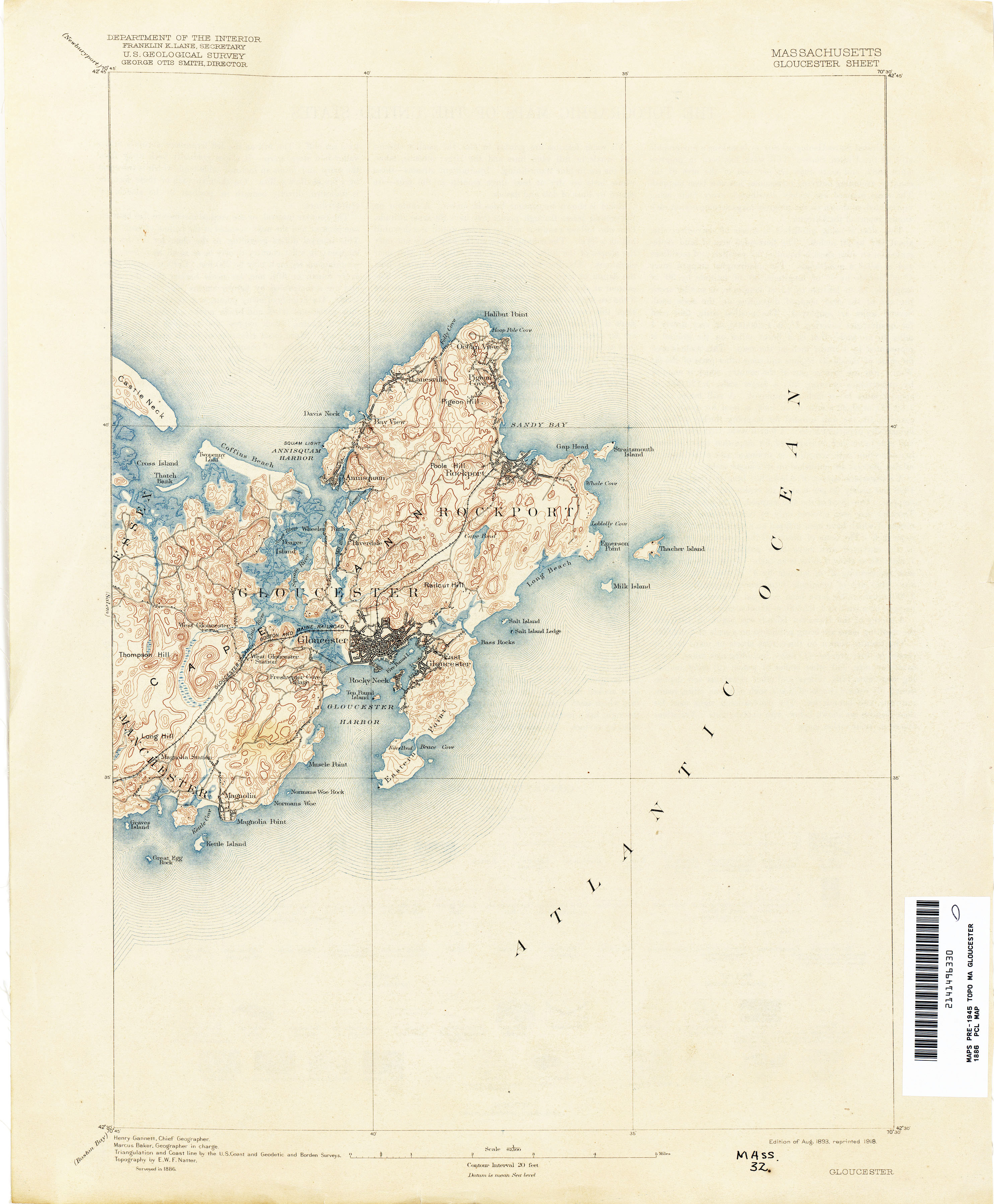
03/02/2014 -- Added piece of a topological map from 1886 (courtesy University of Texas).


03/18/2014 -- More thoughts on Cape Ann, Thomas and Margaret, and, not least, strawberries.

03/23/2014 - Cape Ann featured in Beacon Vol. IV, No. 1.

09/28/2014 -- A week ago, the record for the marriage of Thomas Gardner and Margaret Friar was discovered in Sherborne by John Cook of Minneapolis, Dorset files. This sets a type of focus. Looks as if some transcription work might be in order.


Thursday, March 20, 2014

(Not) far from idyllic

The prior post mentioned that the life on Cape Ann was comparatively good, almost idyllic. That usage of idyllic was very loose but does suggest that we take a pause to consider several things, again. When Conant showed up, he did not find starving people. Rather, they were healthy enough to be boisterous, albeit in a civilized manner.

Again, there was no failure at Cape Ann venture except that of not meeting unfounded expectations.

So, let's jump ahead to Endicott's early times. Then, we can consider the plight of some who came with  Winthrop. Mind you, Thomas and his crew did well due to effectiveness.

Endicott brought the military mindset. Winthrop brought that of the intellectuals. There is a scholarly viewpoint that points to English church-isms (of various sorts) as leading toward the emergence of the intellectual class (in some senses, ineffectiveness).

Just like the Popham venture, that was successful, the Cape Ann experience was similarly effective. They were so even as they bridged the areas of Cape Ann and Naumkeag. But, in the winter of 1629-30, Endicott lost several tens of people. Sure, some may have been sick. But, others died due to exposure from lack of proper housing. Mind you, at that time, Endicott had his great house.

Many died from improper diet, mainly from the fact that there was not enough food to go around. So, we can see Rev John's confusion as he finger-pointed to the Cape Ann crew as less than worthless. Even after Winthrop, the settlers had to send back to England for food.

What a change of events? Thomas' crew was self-sufficient, yet they have been beat upon and considered failures (by a warped type of history). We have to agree with Conant, and others, that the early crew did not get the recognition that they deserved for helping to settle the area.

---

Well, we can start the effort to tell the story of these folks who nowadays were overshadowed, in the national attention, by the ones who arrived off-course in the area to the south of Cape Ann.

Of course, we also must note that New England was shipping out excess product back to England within a decade or so. Rev. John may have been gone by then (or too old to care).

 ---

The image to the right comes from Kellogg's book on Anne Bradstreet (Thomas Nelson, Inc. 2010). The author remarks about the strawberries on Cape Ann. Also, he quotes Winthrop on the pleasant, garden smell that they experienced, when they arrived.

We will look more closely at cousin Anne since she was very young (eighteen) when she arrived. Also, her whole take is more true than Simon's (a whole set of discussions pending).

Now, looking ahead after the landing, we know that Winthrop didn't like Salem. Most who came with him, probably, were disappointed. Kellogg writes that "Anne and Simon ... were shocked to learn that they had no place" to put their belongings.

Evidently, the couple had been told that there were structures, in fact houses (well, there was Endicott's), in the new area prior to their leaving England. But, no. The reality was that a few meager huts were about. Some dwellings may have been built that were of more solid stature that the wigwam; no house would have rivaled that which Endicott had ordered to be brought over from Cape Ann.

One has to wonder if Thomas and Margaret helped by allowing a family to squeeze into their small place (as we now, not the Great House).

And just like Endicott's entourage earlier, Winthrop's people found out that there was a shortage of food to go along with the dearth of housing. And all this lack happened despite all the planning for a "multi-step approach to settlement" that had occurred in England. But, in hindsight, we can still counsel that these things happen today.

Fortunately for the new arrivals, there had been some structures (at least one with two rooms, up and down) built in the Charlestown area by Thomas Graves where Winthrop and his colleagues could go and plan their future (leaving their women, of course, in Salem's squalor - while enjoying their barracks, so to speak). We need to look further at Mr. Graves, as he, like Mr. Gardner, was of the effective type that knows how to do things. Graves had come over with Higginson a little after Endicott. For some reason, Mr. Graves returned to England, later.

--

So, for a brief period, we had on Cape Ann, something that exemplified what Winthrop named but could not see. That we are still in the process of unfolding the American experience, it only stands to reason that those events of 400 years ago ought to be part of the framework from which we live and with which we think (it would be about time).

And, re-telling the tales is one task even when we're faced with a tabula raza situation.

Remarks:  Modified: 01/05/2019

03/23/2014 - Cape Ann featured in Beacon Vol. IV, No. 1.

07/02/2014 -- Featured in Gardner's Beacon (TM) Vol. IV, No. 2.

06/06/2018 -- Need to prepare for 2023/4. Some, of literary inclinations, have looked back 200 years: American Jeremiad. But, we need to go back to the Cape Ann times and before.

01/05/2019 -- Fixed pointer to the articles on Bercovitch's work (#14, Sept 2014).

Friday, August 31, 2012

Written out of history

Foreword (or forewarn): This is one of the backbone series. The post is motivated by thoughts related to material used for the coming Gardner's Beacon issue, which will be on houses from the early start.

---

The effort at learning about Thomas and Margaret is about three years old. The main issue seemed to be that not much was known in the sense of mentions, in the writings, being sketchy, at best. That is, even though Thomas led the group into Cape Ann, not much was recorded. Mention of his effort came later with an early 18th century publication by Rev. Hubbard (saved from a fire, thank God for that!). John White mostly denigrated the crew (ah, we can write a bunch about that). What we hear about is the arrival of Conant (and Lyford), the move to what became Salem, and then post-Endicott times.

This message was apparent in retrospectives by several families, such as Woodbury, Trask, and more. The site for the John Balch house was a reminder. That is, on the write-up of this house, nothing is mentioned of Sarah, Thomas' and Margaret's oldest daughter. John's son came to Cape Ann with the party. As well, Sarah was born at Cape Ann (pre-Endicott Massachusetts). Sarah married Benjamin Balch. John Sr. gave the couple the house. Hence, I'll refer to it as Sarah's house.

Actually, the Beverly oversight (wake up!) is more appalling when you consider that John's wife came with him to Cape Ann. She and Margaret represented the females. And, they went through all of the same crap (perhaps more than) as did the men.

Also, we find this: When the company was recalled to England, the Balches, Roger Conant, John Woodbury, Peter Palfry, and others stayed in Massachusetts and moved south to Naumkeg, now Salem, in 1626.

Four families are mentioned here. Trask was left out. The 'others' would have included the Gardners. That story needs to be told; it's part of our task list. The Paine sisters, Thomas descendants, wondered if the family had gone back to England for some period of time. Had that been so, Woodbury, who did go back and forth, might have mentioned this. However, the Woodbury lookback doesn't mention Gardner, at all.

Too, Thomas' kids would have said something about going back. John, the Magistrate, would have known. So, too, would have his older siblings.

We ought to try to document the fact that, after the group moved, someone would have gone back and forth between Cape Ann and Salem. What is it? 17 miles or so? Look, the house was nice enough for Endicott to want it moved.

Too, and this is a big TOO, the group was NOT unsuccessful. Did Conant report that he found starving people? On the contrary, they were bolsterous enough to want to tangle with Standish and his crew. They had their food sources, dwellings (however meager), and themselves (true independent souls of the American which was to be).

What the group did not achieve was the capitalistic dream (and John White's, to boot) that, essentially, tries to get something for nothing. Yes, folks. The success of the model requires an unending supply of hapless exploitees. So, Cape Ann's little group was not able to ship back produce or seafood. But, they fed themselves.

In fact, that Thomas and Margaret got their nine kids to adulthood is evidence enough. They were very good parents. And, each of their kids was a healthy, and effective, adult.

---

Another topic deals with the regime, and regimen, imposed upon the freedom-loving people. We all know the stories. But, Thomas' life, as a focus of study, will allow a re-look.

In 1637, when Thomas deigned (yes, used purposefully) to get himself drummed into the group mindset -- freeman's oath -- he did it for his kids. His boys were adults and needed the social involvement. You see. That is a long time after the 1626 move. Thomas had class, abilities, and showed self-reliance long before Emerson wrote about it.

It's telling that Thomas was made Deputy to the General Court, with Major Hawthorne, in the year when he took the oath. People wanted his involvement since he was an elder by action and more. For some reason, post 1637, his effort was local to Salem and the area. We can, and might, speculate about why this was so.

Again: Not a descendant. Objective third-party. However, married to one who has a whole slew of these folks in the ancestral tree.

Remarks:

06/25/2019 -- We have a few more examples of the forgotten (early on, we had Aunts, Uncles, Cousins). Of late, there was Lt. Benjamin West who was killed at Bunker Hill and forgotten. Prior to that, we were trying to count the number of lost graves in Essex County. Then, we have the travelers out west, such as Jedediah Strong Smith, except he did post some reports back east by courier. There were many lost a sea over the years.

07/12/2015 -- Of course, when Roger brought his people to Salem, Thomas was not there. Why? He and Margaret kept the Cape Ann house. Of course, when John Endicott came over, he saw Mr. Gardner in his nice house. John said, that is mine. Take it over to Salem. So, by splitting his time (Salem is not that far), Thomas had an idyllic time with his wife and kids; too, he had time to get himself and his family settled in the new realm.

07/12/2015 -- Okay, turtle speed. But, we get there. Announcing a new project: Sherborne, Dorset. No doubt, it is about time. When finished with the data collection and analysis, we will present the strongest story (the prerogative of the family) that the facts, and abductive reasoning, will support. As such, we hope to demonstrate some very much needed research viewpoints. ... This is a case of two Quakers being ignored.

10/13/2014 -- Tabula raza, and more, will be of concern.

07/17/2014 -- The book about the Invisibles (the unsung heroes) offers another viewpoint. Of course, it is set in the modern context. But, we all know that history covers only a fraction of reality. What we see now is that technology will allow us suitable ways to go back and fill in the blank slates.

11/13/2013 --  Phippen would be part of the slate fill.

11/06/2013 -- While working on the next Beacon issue, I ran across some books. The one by Staloff was timely; imagine, I was wondering why the backbone series? Has the talented set ever allowed the lessors to have some semblance of a good life? Oh, you say yes? Winthrop, et al, were against this from the beginning. The stalwart of what could be (or could have been)? Thomas Gardner, of course.

09/09/2013 -- Forgot to update this earlier. But, the post related to Gardner's Beacon, Vol. II, No. 6, discusses that Thomas had no shadow over him as was feared by some old planters (would Dr. Frank, today, still want to include Thomas in the group?).

06/15/2013 -- John Farmer wrote that Thomas was from Scotland. Origins are, and will be, a focus.

02/10/2013 -- Having finished a book on the 1692 events and doing a post on the subject, I can add to this look at Thomas. I've mentioned that he didn't queue right up to join the church and that he was recognized by Endicott. As well, he married a Quaker without any repercussions that we know of. Of course, his sons left the area due to the Puritanical (hypocritical) mindset.

01/01/2013 -- David Goss' talk at the 1999 Essex Society of Genealogists gives a perspective that also motivates. See the TGS bibliography.

12/24/2012 -- Thomas, unlike Conant, was not overshadowed in the world of being. We'll spend some time characterizing this fact and what it means to reasonable folks.

12/22/2012-- We need to differentiate between Old Planters of Beverly (see The Old Planters of Beverly in Massachusetts, 1930, Alice Gertrude Lapham, The Riverside Press) and the Old Planters of Massachusetts. One could even talk, Old Planters of New England.

12/19/2012 -- Sarah married Benjamin, son of John.

11/27/2012 -- Let's itemize what we know, re-iterate some basics, and the proceed constructively.

10/28/2012 -- September issue had a theme of houses.

09/13/2012 -- About Margaret. We'll honor her as the ancestor, with Thomas, of the Gardner family.

09/01/2012 -- Vol. II, No. 4 of Gardner's Beacon deals with houses.

Modified: 06/25/2019

Saturday, March 22, 2014

Gardner's Beacon, Vol. IV, No. 1

As we approach the 400th, we can look back at the 300th. Then, Frank A. had his first book and was working on the second. There had been an effort to form and maintain an Old Planters' Society which had an illustrious membership. One focus of that group was to identify who was at Cape Ann and went to Salem. The list (via the Winthrop Society) included the following: Allen, Balch, Conant, Cushman, Gardner, Gray, Jeffrey, Knight, Lyford, Norman, Oldham, Palfrey, Patch, Pickryn, Winslow, Woodbury.

The list associated with Conant's move was small and did not include Gardner which brought up a lot of questions, such as where was he?

http://www.anamericanfamilyhistory.com/
We look at that in this issue. We don't know a lot about Thomas. But, we can surmise that he and Margaret were seminal to the success at Cape Ann. Success? They were beyond sustenance, in mode, even though they were not able to ship to England. When Conant arrived, he didn't find starving, derelict people. One might even say that, before the large influx, the situation was idyllic.

A mere three years later, Endicott lost 80+ souls due to improper preparation.

The Paine sisters may have thought that Thomas went back to England for a little while. But, no. He was in the Cape Ann house when Endicott arrived. He and Margaret had kept the property up from the departure of Conant until the arrival of Endicott.

---

Associated with all of this is the dearth of information about Thomas. We can be thankful for Rev. Hubbard who interviewed all of the players. Otherwise, those little bits would not be around. But, his manuscript was almost lost and was very much delayed in printing. So, we can thank the heavens.

But, it's not a tabula raza situation, as the information is there. We just need to pull it all together and organize the things. That we now have a cloud'd interface to a growing set of data sources portends to some good research in the future.

---

See Vol. IV, No. 1 of Gardner's Beacon for a look at the Cape Ann experience.

References:  see Sources (Current Issue)  

Remarks: Modified: 08/15/2014

03/22/2014 -- I ran across this site in earlier searches: An American Family. Today, I saw that there was this page on Priscilla Grafton Gardner and wanted to add a link as she was the wife of John Gardner (born, Cape Ann).

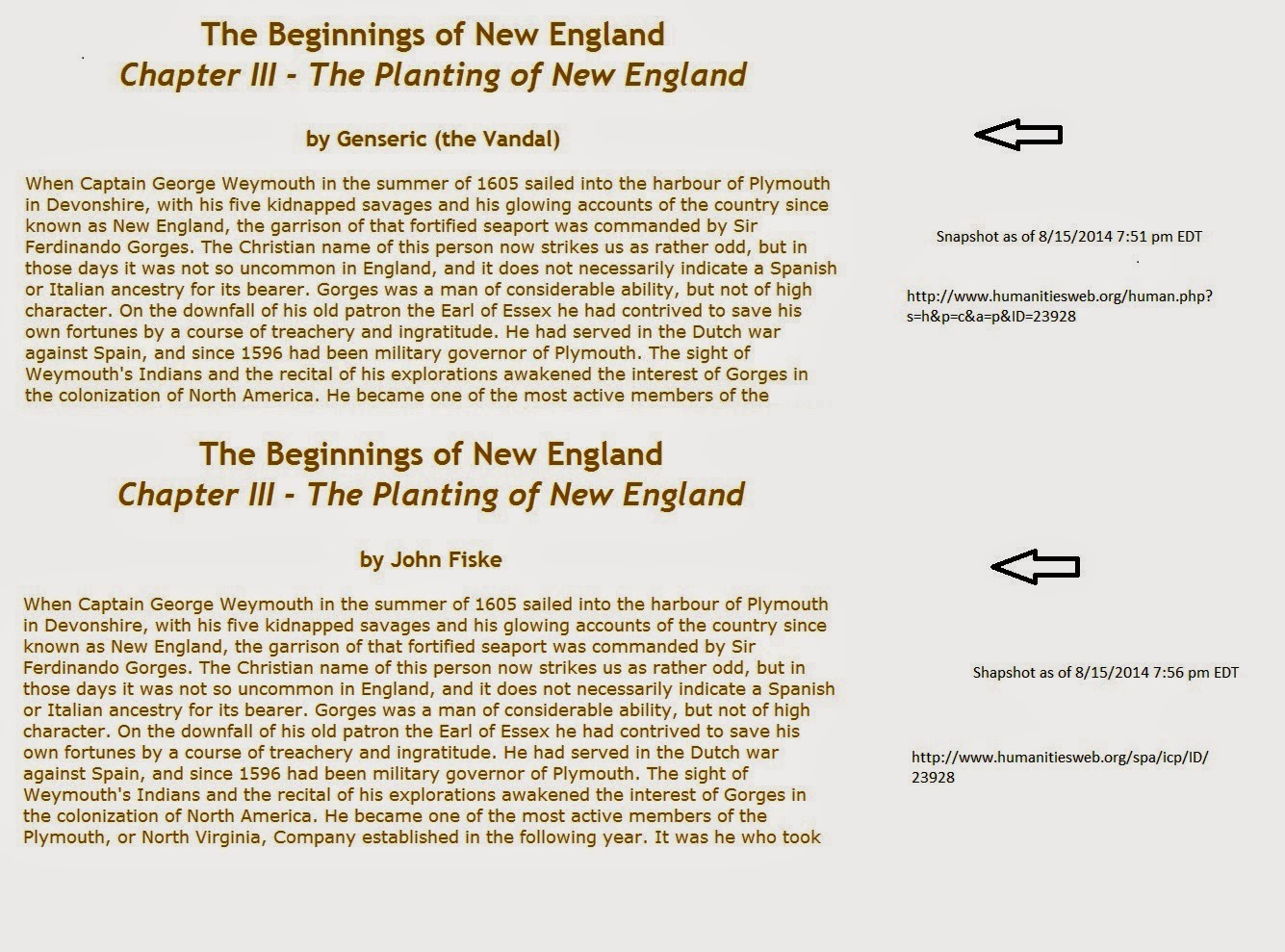
08/15/2014 -- See What's New, this date, for change in Sources for this issue. Namely, lifting John Fiske's work to view (it was being pointed to at Humanities Web - apparently lifted there, in its entirety with appropriate attribution - mea culpa, had been referenced, too, at the Thomas Gardner (planter) page on Wikipedia). --- Note: As I write this, the name has been changed. Actually, it looks as if an old pointer is around from an experimental method. Which was first? Was the "Genseric (the Vandal)" reference in some test mode? That I just happened to stumble upon and use? As I said, mea culpa. So, ..., let's some point make this a truth engineering moment.


Thursday, June 27, 2019

True stories

We are reviewing our material and looking at common themes, such as houses. While researching for Gardner's Beacon, Vol. IV, No. 1, we wrote this post: No shadow over Thomas. The gist of the matter was that a researcher was talking about the motivation for the land grant to the Beverly group, Conant, Balch, Woodbury, and Palfrey. It was noted that the gents were worried of losing privileges.

Thomas isn't recorded as having any reservations. So, we need to discuss that. Endicott called him Mr. Gardner. Whether we're talking strength of character, being knowledgeable, pedigree, or some combination of those and other factors, we have found no bad mouthing of Thomas. Well, Anderson noted the thing of some grave conflict. But, that was son Samuel's doing. Thomas was dead at that point.

So, what is this all about? Well, a recent comment, in a blog, says that Roger found a mess when he appeared at Cape Ann. What? They were quite well and taking care of themselves. From notes for Gardner's Beacon, Vol. II, No. 6.
    That brings up a new view though. Thomas' crew put together a house their first year. Too, they did come prepared and were successful in establishing themselves. The only failure was not having sufficient output to send back to the capitalists in England. What White may have wanted was for them to send what they needed to sustain themselves, but reasonable folks do not do that without the threats of the taxman or strong arm (those who came here were not serfs, in other words).

    When Conant showed up, he didn't find starving people. He found a boisterous group. The use of insubordinate shows White's failure (hey, some descendants of Thomas, such as Dr. Frank, have White on the tree more than once). The effort was not a military expedition. It was a plantation building effort.
We also addressed that, here Cape Ann, Retrospective and elsewhere. We need to focus on the events prior to 1623/24 plus a few years after. And, that means looking at the whole of the affairs.

Take Thomas Weston. Briefly, he is run up the mast several ways. The Maypole affair is associated with his group. But, this was a legit attempt at establishing a colony. We'll get back to this below.

First, there are several motivations, but we know of two that need to be re-addressed. Take Sir Christopher Gardiner. When we first read of him, we only saw the Winthrop-influenced take on the matter. Then, we ran into a re-write that is not generally used. And, found another. That is, the story that is told is not the right one. Propaganda?

Then, after we found out that Dr. Frank was a descendant of Nathaniel Eaton, we saw that he had not raised that to general awareness. Why would he? It's a mess, Harvard (and, we'll retell this story from the perspective of descendants). We have written several posts about this plus one summary overview of Nathaniel's life.

Okay, there had been several attempts prior to the Dorchester effort: Sagadahoc (1607-1608), Plymouth, and Wessagusset (1622-1624). Some minor ones will be added as we continue. And, we want to address these as well as other motivations. For instance, we have these notes for Gardner's Beacon, Vol. III. No. 3:
    Every March small ships of between thirty and eight tons, manned by crews of twenty to forty men and boys ... carried salt, provisions, equipment. Brought material for their boats. Took two months to get here. Put their boats together and fished.

    Split the work between fishing and salting. Fill the hold and return in autumn.

    Crews were gathered yearly by the master. Principally young, fifteen to twenty-five years old. Many were trying to get money to get established in their home area.

    At first, Newfoundland. Then, Gulf of Maine.
There were lots of reasons for people coming over. Whence, origins, and motivations will be a theme for further research for a long while.

Remarks: Modified: 12/29/2020

06/28/2019 -- Added image so that we can index.

12/29/2020 -- A few edits as this is on the image at FB with respect to this date in 1674 (death of Thomas Gardner in Salem, MA). 

Tuesday, May 1, 2012

Maypole

The day almost got away from me, but I ran across a Bing photo of a maypole in Wolznach, Bavaria, Germany. As we know, May 1 is celebrated throughout the world.

--

For this post, though, Nathaniel's tale (Maypole of Merry Mount) is the thing that we need to recall. Seems that some took their new-found freedom a bit too far. Oh, ever look at some college freshmen these days (as in, there being no 'in loco parentis')? The Johns, and others, did not like the 'so called' debauchery of the Merry Mount'rs.

The reason to bring this up here is that Rev White (uncle, of sorts) seems, from reading his stuff, to have characterized some at Cape Ann thusly. What? I always wondered about his motivation for this.

--

In short, here was a guy (Rev John), across the pond, casting judgment against a group who were braving the elements, attempting to survive, and trying to produce for the "fat cats" back home. Ah, just like modern office workers and managers who drive production workers by computer (sheer idiocy, in the 'optimization' context, when we think of the 'near zero' aspects). So, those back at home were expecting  more production. Ah, again, modern views of management that seem to think of obtaining something from nothing (very much analogous to hoping for a perpetual motion affair -- look, folks, all types of colonialism are just that -- Steve, you didn't pay attention? -- suicides related to modes for producing your product?).

In other words, arm chair quarter- backing (17th century style).

As history tells us, the expectations (as in mis-planning) were way off base.  Yeah, blame the workers. Too, New England did produce when conditions were right, for a long time.

--

In actuality, as said before, Thomas' character can be seen, in part, in his kids and progeny. Enuf said, for now, on that.

--

So, Thomas was not a Merry Mount'r. We'll have to attempt to sketch the proper picture, as I have not seen the tale told yet. I've thought up plenty of scenarios, though, that could have unfolded in those times.

Nathaniel (cousin that he is) did cover Roger (see, as well, Poor Roger gets no respect -- ggp, by the way). We ought to do something analogous in some postings, here (for Thomas, these will be under the Backbone category). Perhaps, the house deal was a practice piece.

Remarks:

02/09/2021 -- Larger picture: True stories, Fur traders

06/19/2018 -- Maypole that infuriated the Puritans. A month late, but this post has been updated.

05/02/2016 -- Recently, I caught a PBS conversation. The author being interviewed mentioned this occasion about which Nathaniel wrote. We need to take another look, this year, with regard to the current situations.

05/01/2014 - So, there may not have been the first hippies at Merry Mount, however we can argue this point. Cape Ann was ideal for a couple of years, perhaps longer: (Not) far from idyllic, Beacon Vol. IV, No. 1. The theme will continue.

11/06/2013 -- While working on the next Beacon issue, I ran across some books. The one by Staloff was timely; imagine, I was wondering why the backbone series? Has the talented set ever allowed the lessors to have some semblance of a good life? Oh, you say yes? Winthrop, et al, were against this from the beginning. The stalwart of what could be (or could have been)? Thomas Gardner, of course.

11/27/2012 -- Let's itemize what we know, re-iterate some basics, and the proceed constructively.

09/21/2012 -- Another Backbone post. As an aside, we didn't hear Conant talk about finding a starving people. Rather, they were doing well, locally. Actually, they were quite rambunctious.

Modified: 02/09/2021