Showing posts sorted by date for query technology. Sort by relevance Show all posts

Wednesday, August 26, 2026

Announcement

TL;DR -- Our cousin, DTG, has switched to another LLM with provenance on his mind. One area of focus will be Dorset in the time before and after the Dorchester Company's effort on these shores. 

--

Announcement, at WikiTree

This is the "announcement" mentioned in WikiTree as a Comment in the Thomas Gardner (of Salem) Profile. It pertains to the two-person choice and how we will proceed in our work using modern techniques. 

David Todd Gardner, for the past two years, has been working with one of the GenAI/LLMs (we'll reveal later). We had reported on his work with the Richard III incident. Was there a Gardner involvement? The TGS blog has posts on this topic. 

DTG noted by Mar/Apr of 2025, that that LLM (using the vernacular of those heavy into "agentic AI" which I will write about, too, having spent several decades in KBS/KBE where knowledge systems were powerfully effective with precision that engineers dream about. Of course, the approach was engineering support. What happened there? Essentially, for those interested, digital engineering came forth but is now being seen as messy. Lots to discuss there.) was more than 95% not verifiable. Actually, less than 2% was okay. 

Typical. Frustrating. ... But, on discussing this result, we agreed that DTG would start over and put more emphasis on provenance. How to do that is an ongoing task to figure out. 

How does this pertain to this Profile? Well, the US gave the world this stuff; the US ought to help clean it up. And, the US of 250 years (ink on paper, folks, the turmoil went on until 1783)? It was principally New England (south - VA and north - MA) that got it started. 

Back to DTG's work. He is now using Gemini/Gemma. And, DTG reports seeing records related to a bankruptcy of the Dorchester Company that references Thomas Gardner. Well, we knew a Thomas was here. 

Now, we don't need to conjecture, yet. But, on the coming over, being brought back from here to there for that review would bring an interesting set of conditions. 

Related post in the blog: Modern techniques. Also,we will report our progress in DTG's blog as well as our own. 

A whole lot of adjustment will become known with respect to this technology. How much real reward can result from the efforts? At least, the work will be entertaining.

Remarks: Modified: 08/30/2026

08/30/2026 --  Truth Engineering, a historic view -- post to summarize and to start to bring the old back to fore for several motivations. 


Modern techniques

TL;DR - Techniques related to research will continue to changte along with technology as it progresses by whatever means drives that energy. So, with respect to "origins", we are seeing an LLM used to ferret out information from that time based upon records that were digitized. Of late, information about the children was discoverd in recently digitized records. On the other hand, there was a house associated with Thomas Gardner. A proxy for this? Of course, the Fairbanks House, oldest wood structure in the US.  

--

Some background on the "Announcement" today at the Thomas Gardner (of Salem) Profile of WikiTree. 

Back in the beginning, I puzzled about missing information. Say, as compared to some families with respect to origins. The NEHGS series (Anderson) had come out before our time. Some of the information in that series conflicted with what we saw with Dr. Frank's efforts. We had started there, as he was 1st cousin of a grandfather. 

But, we had more than those 2 books, we had the articles in The Massaschusetts Magazine (principally from Dr. Frank's sister, Lucy Marion Gardner - Lucie following Sidney, May, 2017) where she picked up the work of Sidney Perley, the great walkabout of Essex County. There was more. Having started in 2010, the internet had only a few years of Web 2.0. Older material was there. I have pointers based upon general trolling back when the "search engines" were behaving. Too, there were notes from families about the material that they had accumulated (some living in the UK, and even near to Dorset). 

Early on, we knew that there would be the 400th. We'll look at that. How would it compare to the 300th and the Pageant of Salem (6 Jun 2018)? As we went to look at that effort where people of Salem played roles from 300 years prior, we added the Label of OpEd (Opinions count?, Dec 2023) as we explained after the 2023 reveal of data from Sherborne, Dorset, UK.  

As an aside, we added "OpEd" to this post in order to associate it with the ongoing research. Okay, to the gist of the matter. We look at two items which represent a slew of potential work and information. It's a matter of work. 
  • Let's start with Gardner Family Trust (Apr 2026). In late Mar of 2025, we heard from DTG about his work with one of the GenAIs that had come on the scene in late 2022. 
    • I was not paying close attention to that crowd (and still consider the release to be premature). The 400th of Gloucester was approaching and we were considering what to do. Having finally settled on the notion of featuring Margaret (wife of Thomas Gardner and mother of the children that we know), we were working on that set of material. On 1 Feb 2023, I heard of that release from a friend and went to look (mainly focusing on ChatGpt and Bard).This is all documented. 
  • So, I knew of the AI/ML hype (biological pipedream); due to having known this stuff for decades I was amazed and appalled at the uses that people were discovering. So, mark that up for human creativity and the US as founded by those ones of Cape Ann. Anyway, DTG's work was along this line. He had found lots of information from digitized records in the UK; retrieved the scanned data, used OCR to transcribe, and then even worked translations (from Welsh, Latin, et al). It was remarkable. ... A little later, after some scrutiny, it was hard to tell the reality with most of the content being fictional. ... We discussed matters and decided for him to start over while concentrating on provenance. 
  • Of late, DTG has switched to Gemini/Gemma. As such, he has been verifying the information. He confirmed the news about the Gardner involvements at Bosworth and Richard III's demise. There has been a lot of information on the London side of the family. Too, he found Thomas of Sherborne. ... Now, keeping this brief, for now, one bit of information deals with a bankruptcy of the Dorchester Company in which Thomas Gardner is involved. That has my focus, right now. 
  • Thomas was here, at Cape Ann. Now, was Margaret and the three boys here. If so, John was born here. The family went back. Or if he came alone, she had John in the UK. His baptism was delayed until Thomas returned. We favor that the family came over. Thomas and family then came back with the children except for Seeth who was born in Salem. 
Now, technology will be the key. We are doing this right. Who knows what data will come to fore. The information of the births was a nice surprise as John, himself, said that his father had told that they came from Sherbourne. Sure enough. The response of WikiTree? The two person split is okay, for now. But, as we find out more, we'll make sure that it is published. 

A recent post looked at the Fairbanks house which is in Dedham, MA. It dates from the 1630s. The image is from the website for the Fairbanks House

Jonathan Fairbanks (WikiTree) came to Boston in 1633, stayed a few years, and settled in Dedham in 1636. 

Remarks: Modified: 08/30/2026

08/30/2026 --  Minor correction, will be back for more. 

Saturday, August 22, 2026

Texas and its water

TL;DR -- As the 250th goes on, we will look at what we have done and discuss the future. One focus is technology. Part of that deals with real assets, such as waterways. This post considers Texas, and its rivers, briefly. 

--

This post reviews prior work in the context of the 250th this year. We have had many posts about the waterways of the U.S. Some of these served as a means for transportation (say, the Ohio from PA to MO and further). They were barriers, as any that is too deep for fording, even if only a certain time of the year. They were sources for food. And, definitely, human life and health relied upon clean water. 

Somehow, we forgot Texas. As the map shows, it has many rivers. All drain to the Gulf, from the Rio Grande on the west to the eastern rivers (such as the Red River) that head to the Mississippi River first. Everything is larger in Texas, as the map illustrates: 191,000 miles of rivers. 

Texas Truths and Tall Tales
FB (Meta)

The Trinity River starts north of the Dallas area and flows toward the southeast to the Houston area, emptying into Galveston Bay.  

Remarks: Modified: 08/23/2026

08/22/2026 --  

Sunday, August 9, 2026

Who pays for technology development?

TL;DR -- Who does pay? That will always be an important question. But, the 21st Century has already brought new factors to the table beyond what we thought that we knew last century. But, the 400th is here along with the 250th. So, exploring the roles of the US is always interesting. 

--

Of late, we have had a technology focus and will look for things on that subject to commemorate (the good, bad, and ugly of technology, let's say) under the guise of the 250th of the US. We have already had this but want to go back to 400 years. 

And further, in terms of the western philosophical views on mind and matter which is being brought to fore with the issues brought by the agentic ways (on a slop basic, GenAI/LLM). But, companies are hiring  philosophers now. So, we'll venture there already. 

Maxwell and Gibbs

We can show lots of posts on these subjects, here are three: 

  • Spinoza - he is from the 400th period but in the Netherlands. His Ethics will be the subject. 
  • Peirce - the son, C.S., who was instrumental in the logic that is applicable to computing of the type that AI will need when done maturely. 
  • Gibbs - early thermodynamics worker in the US. 

One focus will be taxpayer funding of advances that are implemented in a government or military sense. There are plenty of examples worldwide to use. And an agency of the DoD/W handles the administration of most projects of this type: DARPA (Defense Advanced Research Projects Agency). 

We will look at the influence that DARPA works has on our culture. There are plenty of examples. One that we will go into in depth is "truth maintenance" where DARPA paid for a paper and released this to the public. A Stanford offshoot developed it. John got involved with that and related technology. But, despite progress, the motivation for the work dissipated yet still has an impact. We can discuss how the lack of the notions brought by truth are missing in the approach that gave us the likes of ChatGPT and its brothers.  

That leads to this discussion: is the market approach better? Such an approach has a tendency to reward ca-pital-sino'istic thinking. That is, more effort goes into milking the system than into doing the work. Well, we have now seen examples on the other side of that spectrum in many places which deals with conflilcts of major world view. 

From an independent sense, we can discuss sustainability and economics which goes along tightly with technology and its pursuits. Too, the results of the past four years have already brought many discussions to the fore. As well, mathematical insights have both taken a hit and became broader. Not to mention, the legal ramifications are probably the largest set of unknowns. 

Yet, the benefit of technology is that things pale in the light of the technical details. At play are concepts related to higher-level classes after the post-secondary experience. So, these will need to be explained at many phases plus with respect to choices involved. 

Remarks: Modified: 08/09/2026

08/09/2026 --  

Friday, July 31, 2026

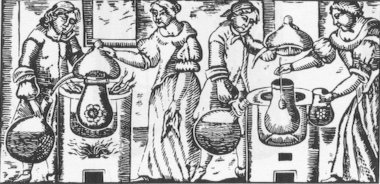
Alchemy

TL;DR -- For three years now, we have seen a chase after several things: AGI; scaled computing; lots and lots more. Alchemy was respectable for a long while. It still ought to be. 

---

The title? Some say that Aristotle so loved by science and pupil of Plato was the cause of the rise of this discipline. Heard of it? If not, alchemy is more than attempting to turn copper into gold in search of riches. Though, modern physics has altered matter. 

We are following another thread, though. You see, the search for AGI which we witnessed of late with the AIn't and tAIn't occupying our minds and computers while wasting gobs and gobs of resources is a modern example. And, it's here for us to study. 

On the other hand, wise engineers respect the efforts of alchemy which some say changed into modern chemistry. Here is an example reference from a College of Engineering. 

The Engines of Our Ingenuity (Cullen College of Engineering)  

The page starts with a quote from George Meredith:  

See ye not, Courtesy Is the true alchemy, 

Turning to gold all it touches and tries?

From asking if character (transformation thereof) might be an example of a proper pursuit for alchemy, the article looks at the history. Too, quantum mechanics is referenced as a modern example. For us, the work on quantum computers will be discussed under the guise of this post. 

We are also pursuing this since the LLMs seem to be falling apart. Companies pushed to bring this bad boy into the process of their company. Many times? Not finding the expected gains. 

Reminder, our theme is technology since the U.S. has lead in this area and will continue to do so. 


Alchemy has many concepts of note. For now, we can mention the active/passive pair. We will have a post about a new approach to designing Radio Frequency boards such as those in a phone. In that sense, the pathways of metal are passive with the flow and its control by components is active. One does not dominate the other. In another sense, geometry can be used as an example of the passive state; but, then one brings in the  algebraic parts of the system and active (via function) arises again. 

The search for AGI got lost. We will look at that. 

Note: As we proceed in discussing the complexities of STEM stuff, we will make use of the SEP. Here is an example in this context: Philosophy of Chemistry

Remarks: Modified: 07/31/2026

07/31/2026 -- 

Saturday, July 25, 2026

Ah, gaming as progress

TL;DR -- We picked technology. GenAI/LLM came along and offerer itself for analysis. Okay. But, let's drop to the chip level in order to set some groundrules prior to serious discussion. 

--

Gaming? That which wastes time of the youth. The lure of Hollywood. Busyness and the machinations that are to take money from your pocket. Which of these? 

We have to set the ground rules first. That will take some time. And today, we look at technology. 

We need to get a discourse going with respect to GenAI/LLM and how to handle the messes that have accumulated over the past three years. A discipline that has been ignored will get some attention. Namely, knowledge based engineering (KBE) and its high-performance computing cousin (HPC). These two need to make up in order to bring peace and order to things computational.

Our human cousin, DTG, will serve as the master due to his 50+ years of researching the topic of All things Gardner. DTG brought us clarity with respect to the dynamics of history related to King Richard III of England. Too, he has ventured along the long threads of Gardner as a name. 

But, technology first. Browse and ask us to clarify the relationship or whatever of the following:  


This is one of the progressive steps beyond what Nvidia is trying to wrought upon the earth. Notice that there are several subjects that we will be covering in more depth. "graphics" is obvious to the gaming crowd; our technology focus will concentrate on the geometric aspects of such. That is, structure is at the core of all things related to knowledge. 


How is this? To be discussed will be a patent in the context of this post. Essentially, it demonstrates modeling for filtering and smoothing data in areas requiring high precision. The above link mentions this topic too, as well as both GPUs (graphics unit) and HPC

The discussion will stress "jerk" and the differences being ignored by the biologist as they pursue power without proper insight. That is written thus to be a hint. 

Remarks: Modified: 07/26/2026

07/26/2026 -- Input links. 

Sunday, May 31, 2026

250th, 400th

TL;DR -- 250th? It's comiong up. We have looked for this for over a decade. Usually, a commemoration is an ending. The day comes; then the morrow bring reality back to mind. However, be aware that we have been doing post for the last year (having started ealier); the 250th will be the start of deeper dives into the history and events, with respect to people and families. That is, the door opens for a period that runs until 2083. 

--

A year ago, we started to have more posts on the 250th as we mentioned the U.S.Army. Before that, we wrote of the Battle of Lexington and Concord in 2024. 

In 2021, we had a list of celebrations, from 400th and then the 300th down to the 100th. For us, the 250th in July starts long years of review and recall as we contemplate the contributions of Patriots (say as defined by D.A.R and S.A.R. 

Earlier, we had a map that showed the changes over those long years of the Revolution which we have brought into this post. Since the web/cloud technology is a superb platform for information, we will cover a slew of topics with respect to families and their contributions to the founding of the U.S.


We have to end the day with a nod to the Marines: 250th, U.S. Marines. There are many themes to cover, and we will be back on a regular basis.  

Remarks: Modified: 05/31/2026

05/31/2026 --

Saturday, May 30, 2026

AI and AIn't or 'tAIn't

TL;DR -- So, we have seen three years of wannabe attempts, one after another, wasting, essentially, precious resources. When will it end? It will not for reasons that were known prior to this unnecessary excursion. Oh? That is a topic that will go longer than the eight years of war started 250 years ago. Yet, we will pause to honor the 250th (have for years now, look at the posts here of that theme). 

---

The title is not being silly as I have claimed with silly-con-valley. The TGS, Inc.. takes truth, knowledge, code, and such seriously for reasons that we have already discussed but will keep doing so. 

The goal? Bring the current AIn't and 'tAIn't toward something that is rationally sound. Many people are working in this area with valid viewpoints, yet there has been no success in any type of cohesion. That is, we can differentiate all that we want; it's the integration that provides the power. And, such has been the case almost from the start of computing.  

Okay, in 2001, I wrote a white paper with respect to what is known as truth maintenance (link later). As such, I had spent over a decade using the facilities of (KBE) knowledge based engineering to handle the complicated software dealing with nose to tail algorithms related to a large system, from its original thought all the way to being used (hint: 777 was the initial project). Along that line, being in engineering support (where physicists and mathematicians and such hang out), I touched upon a lot of the systems and worked to manage lots of the dynamics. 

For one, systems that are of the differential type (many modes) require serious management of the pre and post conditions. As an aside, we will address modal logics from a view of driving all of the activity via an axiomatic modeler (details to be brought out). As such, the efforts of KBE allowed the compan's superb mathematical and engineering libraries to weigh in to support (essentially immature) COTS stuff and did so with remarkable results. 

Also, there are almost innumerable other data and system activities all of which need to be tied together. Again, there are more mature notions now (we're talking four decades -- but, guess what?, I see issues -- humans have to be in the loop to notice, discover, ponder, and help tame the beasts of computing (recently, clear evidence of immaturity has spread itself around the world - ah, don't get me started here; I have blogged on this for 20 years now. 

In any case, this post throws out 3 pages. This will be discussed. The main note now? Some are venturing down what we can call the "agentic" ways as if it's new. Well not. KBE prototyped and pioneered that stuff in the '80s and '90s even to the point of having production systems running. Too, we even had our own internet with local, regional, national and international servers and systems tied to support the needs of the systems. TCP, that gift of the Uncle Sugar? 

Of course, it came along. Our stuff converted easily. Want to know something? I have complained since that time to how immaturity to hold. Oh, doubt me? You think that the "wild west" events where healthy which are still extant but drowned out by the noise of recent mischief. Again, this post has one purpose. All of that other stuff will be covered ever by bringing to attention prior work or pointing to recent activities. 

Needless to say, TGS picked up technology as a focus specificially since I saw this coming (even decades ago) and kept aware of changes, their ramifications, and important factors. At the same time? I kept my feet out of the slop - while partaking in crapology which is study of the slop (all aspects). 

The pages. There will be PDFs later. This is merely to get a browsable copy in place for discussion. 


There were many more activities during that time that need attention, as well. In fact, a few years ago, I found it hard to find any reference to KBE. Then, there started to be nibbles as people became aware. Now, I will state that KBE splintered into a millions pieces which then evolved into something that is of use now and doing well. 

Guess what? Everyone has heard tales of Xerox Park (need to check the  name) where things like the mouse and improved interfaces, and graphics of sorts, and more were developed. And, then these were used almost universally. Well, consider Jobs' gift of the little device that thinks that it's a phone. 

Well, KBE is even more of an example, as the algorithms have the qualities that we need for serious work. Not knocking gaming nor entertainment. But, when you fly, you expect a lot. That comes from good engineering. Right now, the computer is more of a baddie than a goodie. Okay? 

Remarks: Modified: 05/30/2026

05/30/2026 -- Let's focus on the issue of the "agentic" style which is all a rage right now with respect to the current basis for this approach which is a "slop" generator. What will come of that with respect to furthering the technology. Oh yes, which we pioneered and prototyped four decades ago. 

Natural progression led from the object-oriented methodology as it was exemplified by the Lisp Machine to "agents" almost without any second thought. We had the notions of web/connections and behavior and all of those type of things, minus one of importance. Which was? We had no motive to bring in the modern SciFI-addled pre-occupation with critters in the box and the anthropomorphic associations that arise from such thoughts. 
 

Sunday, April 26, 2026

Gardner Family Trust

TL;DR -- This post announces the Gardner Family Trust site and provides notice of the first post which deals with Gardiner, MT which is a historic site near Yellowstone National Park which saw a lot of history that we can and will study. But, the choice of this example deals with the history of the Gardner family over more than a millenium and is a U.S. example which represents continuing work in the history the U.S. presented in a modern way through progressive means. 

---

In an earlier post this month, we wrote of our joint efforts with David T. Gardner: On Gardners, redux. We here at the TGS, Inc. are fairly new to this work. David on the other hand as been at this since his youthful days. Prior to our contact with David, we had applied this adage to our work:

Americans need to focus on their side of the pond and get their several generations of genealogy documented to be correct. In other words, let the orginis be done by those over there. For one thng they have better access to records. 

Even though we had a late start, by that time the influence of the internet was growing as the industry kept the thing going while supporting work of millions of users. One large impact was that the ISPs were digitizing documents and records. Our results of our 2014 work on the marriage of Thomas and Margaret was a result. At the same time, we had posts on the subject of Origins and What we know (see FAQ). 

Recently, we looked at an organization started after the 2nd World War by members of the FASG (Society of American Genealogist). One of their members wrote the background whose first paragraph covers some of the historic dynamics as shown in this image (left - a page from the paper; right - transcription). 


---

In that same spirit, we are supporting the efforts of David to publish his work with respect to history and the Gardners: Gardner Family Trust. As we have mentioned, we had looked at the battle of Bosworth and about the death of King Richard III. The news at the time was loaded with reports on a body being found and identified. At the time, we loosened our American focus to provide information that we thought was pertinent to our work. 

Last year, David was able to start to use one of the GenAI/LLM to assist in his work. For one thing, lots of that work is transcribing old documents into a workable shape while ensuring that the fidelity of the representation is sound which task includes fixing things as necessary and then doing OCR on the updated image of the document. 

Along that line, the TGS interest in technology comes into play. We published an overview in December of 2025: Research, using the internet and AI. David has collected a lot of material. Our focus will be to help him with his analysis of provenance and general truth of the newly digitized as well as documents from earlier work. 

There is a lot to do which we will raise the priority on. So, going back to the theme of over there and/or here, we will take the latter for a while. As David provides new posts, we will be doing a regular walkthrough and discuss the ins and outs to emphasize, for one thing, the 250th and its significance. 

This post is an introduction. We will follow with regular reporting and commentary on methods and ways to handle the new information going forward in order to leave a proper legacy for Gardners and their progeny everywhere. 
   
----

For his 1st post, David writes of Gardiner, MT through which Gardner River flows. We have had many posts on rivers including Gardner River  and the area, Yellowstone, plus. It is a beautiful area with lots of history. We are grateful to have David's contributions. 

Gardner Family Trust
Gardiner, Montana: 
Still Operating in 2026


There were several reasons for chosing this site. We are dealing in endless history, in a sense, where technology will allow us new views to hopefully fill in missing information. But, the choice of this example deals in particular with the history of the Gardner family over more than a millenium and is a U.S. example which represents continuing work in the history of the U.S. presented in a modern way through progressive means where people rise to attention. 

Note: More detail will be forthcoming as we shadow David's work with the Gardner Family Trust with documentation of provenance, method, annd tradeoffs that might have been made. 

Remarks: Modified: 04/26/2026

04/26/2026 -- 

Saturday, April 18, 2026

Illegitimates, Royal family

TL;DR -- We ran across the one heritage group in the U.S. that claims the most stringent application process which keeps their membership small. We will use RBs here. After a brief review of technology of late, we look at heritage societies as they exist in the U.S. Many of these go back to the colonial era. At the same time, there is a huge chunk that goes back before the moment of "origins" into the far reaches of the History of Britain and of Europe. The 250th has direct bearing on those studies, such as the interest of the ABA in the heritage of the Magna Carta. Our contribution to history will be via the Gardner Family Trust with its focus of 2,000 years. 

--

We have seen so much sillyness the past few years that one might wonder if there is more or have we seen everything of that nature. There was a time when we took computation more seriously. 

But then, GenAI/LLM happened. It has been only a little over four years now, but the related work goes back one decade for the main focus and back to the 1950s altogether with interesting progress throughout the whole of those seven decades. 

One of those areas of work was Knowledge Based Engineering (KBE) the public awareness of which was never known or was lost in the shuffles of time. 

But, the lessons of KBE were not lost, as my survey over the past few years has shown. The phenomenal world contains lots of remnants from that period ('80s, '90s) in various shapes which include academic involvement and classes plus companies representing operational knowledge improvements of various types through their intellectual property and activity. 

Phenomenal? I use that a lot with a meaning related to things that we can sense in the world. That is, these are "real" and not our mental images. As if, their presence conveys that something is there in the world. Of late, there has been attention given to "twins" which are digital models of the "real" thing which is then represented in bits and heated moments by circuits processing such things. We call those circuit conglomerates computers. Much to discuss. 

---

Now with respect to this organization, we see people as phenomenal. They are here, have a history in terms of their genetic lineage, can name some of their ancestors, and then leave us (some having then a phenomenal legacy for us to consider). We have mentioned the Hereditary Society Community which consists of groups with different historic and genealogic focus. Each of these Societies have an application process and an associated list of people. If one is a descendant of one of those people, then one can join if an application shows direct lineage from the applicant to the person of the past. 

Many groups have a U.S. or colonial theme. Examples of this are the Daughters of the American Revolution, The General Society of Mayflower Descendants, The Society of Cincinatti, and such. With regard to the group honoring Cincinnatus, there are two houses that are associated with Ann's family: see TGS post, Two Houses

Some groups use "Gateway" to represent the bearer of heritage information that continues on the other side, as in prior to their immigration to the colonies.  We recently wrote of that: see post, Gateway Ancestors, redux. Here, the Magna Carta groups stand out. 

The rest of this post is about one of those groups. 

---

We recently were reminded of this group as they had their annual meeting in Washington, DC. We took a little time to look at their website (Illegitimates or RBs) and found an on-line tutorial about the application process involved which is one of the stringent. Many early members were associated with the Society of American Genealogists. So, it is no surprise that that they would start an effort to firm up the application process. 


Having done tons of applications over the years while helping people join societies, we are sensitive to the arguments which we will be looking at in more detail in later posts. Today we want to introduce the video that is quite interesting with its coverage of historical issues as well as the discussion of the research and documentation process as well as a look at how things are evaluated. 

The video --- Webinar: Finding Your Bastard and Your Line: Tuesday, November 18, 2025. 

Let's start with a discussion related to American History. In the video, go to 12:33 and find the first page of the "Background" overview. The story of Americans visiting England is quite instructive as those here were thought of as "rustics" mostly. Whereas, the list of Gateways shows that many families had a heritage worth looking into. Well, everyone's family has that quality. Rather, people here have the same genetic involvement with the history of England as do folks there.

But, the U.S. offered more which we expect will be more publicly discussed during the long run of the 250th celebration. Frankly, we are still over two months from the Declaration of Independence. After that, expect a continual review to be part of our days until after 2033. 

With technology and mature computing, the amount of new documention to be attained will be without limit, with quality material rising to the top of the heap of attention. 

---

The Royals (all over Europe) are (have been) an interesting bunch. With respect to "Gardner" and command/control, we have stumbled around the "origins" aspect for a bit and will be more focused with the advent of David T. Gardner's new site: Gardner Family Trust. His theme is "2000 Year History". 

Remarks: Modified: 04/19/2026

04/19/2026 -- Changed links that did not copy corrrectly: Two houses, Society of Cincinnati.  


Thursday, April 9, 2026

Some notes on AI/ML

TL;DR -- GenAI/LLM has been on the scene for over three years. Lots has happened which we have participated in and watched. Things are getting interesting on all of the sides to the story. This post stops and posts a few links related to using Spinoza's thoughts to ponder this modern puzzle. 

---

AI/ML (known too as GenAI/LLM) has been on the scene now for over three years. In terms of the total picture, the history and data are there for us to study. What's happened in 2026 is a type of acceleration. The split of 'yeah' and 'nay' is still there. But, other dynamics came into play that changed the game this year. 

We're still using "AIn't" to depict this wannabe attempt. I quit using any of these systems in early 2025 when the "agentic" came prominent. Why? We prototyped lots of the ideas of that approach four decades ago (in the "knowledge" era) and did good stuff within the constraints of the time. So, I will get to documenting that from my experience and according to what I observed. What we learned there is apropos. 

For instance, the NNN is known as a general function approximator. And, functions are a focus, say from the work related to the functional software approach (Haskell, et al - but, Lisp early, okay?); functions are mappings as we see with category theory; automated processes (basis for the web and SAAS) are from the knowledg era and encapsulated the behavorial/active aspects of objects/classes within the computational sphere; ...

What follows is a list of links related to technical and philosophical themes. These are not disjoint concepts. For each, there is a little comment. 
  • DeepAI -- this is their GitHub site which collects some of the offerings behind some of the work that we will be refrencing. GitHub is an on-line system for managing information that is continually be updated and managed, such as code (but some have used its facilities for a collection of technical, topical essays. 
  • What Kant and Spinoza can teach us about AI -- Two of Demis Hassabis’s favourite philosophers, Spinoza and Kant, help illuminate the conundrum: can AI turn chaotic data into intelligible, structured reality? ... I have mentioned these two philosophers quite a lot in posts on Linkedin of late. And, my use of AIn't comes directly from agruments by these guys. And so, there are discussions still pending.  
  • One view of many on Spinoza by an artist -- interesting take on things; lifting us out of the technical for its own sake.  
  • ..., will be splitting this list --- Spinoza (Wikipedia) ; Spinoza (SEP) ; Gutenberg (text) ; Gutenberg (Ethics)
  • Mapping Spinoza's Ethics -- offers mean to visualize the "argumentative structure". 
  • DeepAI on Spinoza -- they have several philosophers covered which we will get to. 
  • Chat Spinoza -- when we first saw this, we thought that it was cute; but, we also like how things are interconnected so as to allow analysis. 
  • ... 
Uriel de Costa

This post will be a reference for us, too, as we go forward with the 400th, 250th, and the history of the U.S. and technology (say remembering Gibbs, the American, who cntributed to thermodynamics and caught the eye of the illustrious James Clerk Maxwell of Scotland. But, taking things into the 20th Century, we will have to bring up Planck. Why? His early thermodynamics work that quoted Gibbs and also explained the basics from a chemical sense.  

Remarks: Modified: 04/11/2026

04/10/2026 -- Added words and links. 


Monday, April 6, 2026

April Awareness Day - English

TL;DR -- Awareness is a good thing. Days abound with respect to official recognition. Women's History month just completed. Black History month was before that. Besides looking at history and current affairs over the years, we can be aware of the reads that are taking place daily. 

---

We have been paying attention to awareness months for a few years. For each month of the year, the focus can be on many themes. For instance, one theme in March was Women's History (06 Mar 2026 post). We have a post that we will be updating each year: Awareness months

So, April has Mathematics/Statistics. But, it also includes the English Language Day on the 23rd which is related to the birth and death days of William Shakespeare. Another day is Easter Sunday was this past weekend but can occur as early as March 24th. In April, it can be as late as the 25th. 

---

Now, we would like to switch to another type of awareness which relates to readership counts with respect to our blog and other publications. The image comes from a snap of three views that are always updated with presentation of the information (position in image and title): Left - All time, popular; Middle - Recently popular; Right - Last week. 

Post read count
by period

In order to support our Portal to Truth (to be defined and described), we have been adding an image to each post. This helped us determine an icon for the post to use in lists. The order relates to the number of reads. Starting from the left, "All time, popular" goes back to the start of the blog. For a long time, the post "Posts of interest - 2011" was the most read. It summarizes the status of the blog at the end of the 2nd year or the 2st full year. But, in 2014, after the discovery of the marriage record for Thomas Gardner and Margaret Fryer, that post slowly crept up and has been most read for quite a while. 

In the middle column, "Recently popular" looks at the same collection of posts but only counts reads within the past month. It is a different list. Early on, there was an overlap between all time and recent. But, of late, things have changed so much, and we have new readership due to Linkedin posts, the lists are different. We are happy to show that "Women's History Month, 2026" is on this list. 

On the right are the posts most read in the past week. So, these are mostly topical. One that we want to call attention to is "Truth, what is it?" which is also on the "Recently popular" list and deals with technology's (TGS focus) recent influence that mostly caught everyone by surprise. Even the vendors had no clue. But, from our view, we immediately saw the potential unwanted side-effects. That is a long story which will be even more of interest as the hype gets tamed down a little. "knowledge" systems have been really effective from day one. That is AI with an emphasis on expert humans as opposed to a general search for machine intelligence that might compare with what humans do. 

There is a lot of work to be done in this regard. Our basis goes back to a project that accomplished the first digital design of a major airplane (this was in the '80/'90s - the Boeing 777). We will only touch upon a few details as our focus is not the plane; it's on the process that got the work done which resulted in a plane that astonished those who saw it up close (this we'll briefly touch upon, too). 

Jumping ahead, though this has already been expressed, the run after AGI and its issues would not have been troublesome at all had the "knowledge" proceeded a few decades ago. We will tell the tales in that regard about decisions and their ramifications. This will be from a general viewpoint mostly presented in terms of a "dialog" covering the whats and what ifs. 

In the "Last week" list as well are two older posts: Descendants of Sarah; Old Planters, Beverly. These relate to the Salem 400+ theme for 2026. Sarah married Balch who was an Old Planter. Some of Thomas' children and grandchildren married Conant. There were other families who intermarried, as well, at that time. 

There is a theme to readdress. Thomas was not on the "old planters" list. One family suggested that he had returned as some moved from Cape Ann to Namkeag. Other tales need some attention. Our recent work involves the timeframe for the family that will show that Thomas and Margaret had the time to come over here for the year plus. What are those specifiics? Well, finally, we have a starting point and will use that to begin again in looking at Origins.  

In terms of topic and focus, we will do a more regular periodic look at these lists this year. 

Remarks: Modified: 04/06/2026

04/06/2026 --


Saturday, March 7, 2026

Salem, 1626

TL;DR -- The 250th is well-known by now. So, it's time to get back to the 400th. 

---

The 250th is everywhere now getting attention which is great. We are not yet to the Day of the Declaration of Independence so ought to be paying attention to the events that came before July 4 of 1776. Our last post on "Knox Sunday" is an example. We will have more posts with the team but have been covering the 250th for over a decade. 

May we step back to the 400th? With regard to Essex County of Massachusetts, the initial settlement attempt was in the 1623/24 timeframe. Gloucester celebrated their 400th in 2023. 

As the story goes (told by many), the crew that came over with attempt of Thomas Gardner, for a couple of years, made a go of it without much success. For one thing, the land was not suitable for farming. Evidently the fishing and some planting/forging went well for subsistence. But being a commercial enterprise, the "money" behind the effort expected early returns. 

Roger Conant came to town to get things right but could not overcome the obstacles; he got permission to move to what became Salem. 

Roger and some of his crew did that move in 1626. So, we have been waiting for this year. We wrote of the transition earlier in a post about Massey's Cove in 2019. We included this painting which was done in the 20th century to accompany an article on the perils of this attempt. 


Of course, later there were various criticisms of the painting. For one, the houses were better configured than we know from reality. We wrote of that recently quoting the reaction of Anne Bradstreet as she got off the ship that was with the Winthrop Fleet. This was her introduction to Salem.  

Anne noted that some in London had mislead them: Hype, 1600s. What we got out of the stories was that Winthrop was feated in the "Governor's" great house. Anne and others went to Cape Ann to pick wild strawberries. The Governor would have been John Endicott who came in to replace Roger Conant. 

---

Where was Thomas? Evidently, he had returned after his intitial effort to London. He and his family returned sometime before 1635 as his last child was born here. At the time of Cape Ann, it would have been Margaret and the older boys. See "Themes that persist" to watch for particulars as we go along. 

We have mentioned Roger Conant several times and will relook at the start of Massachusetts this year as we continue with the 250. As the commemoration of the Revolution continues through 2033, we will step through the early years of Naumkeag which became Salem in 1629. The next year, Winthrop came through and did not like the area. So, he went further down the coast to Boston. 

So, for the next few years, we will focus on the origins of the crew at Cape Ann plus resolve the issue of the unkown Thomas Gardner who was a Cape Ann in light of the Thomas Gardner who came over in the mid-1630. Ann is a descendant of Roger both Conant and Thomas Gardner. Those relationships will be looked at as well, as we go forward. 

With technology as a major focus, we will use some of the modern stuff. Mainly, it would be to discuss the issues related to use and misuse which is a common characteristic of people and their involvement with all matters of life, it seems. 

Remarks: Modified: 03/21/2026

03/08/2026 --  Some correction of typos and phrasing mishaps (as in, touch typist - fingers walking the keys following ruminations in the mind - one reason that publishing processes have proofreading - rather than the know-it-all-ish nature ot the buckets'o'bits). 

03/21/2026 -- Made link with Salem 400+


Friday, March 6, 2026

Women's History Month, 2026

TL;DR -- We provide information about Women's History Month for this year as well as a link to an article on women of the Manhattan Project. 

--- 

March 8th is International Women's Day every year. We have had a post related to the theme of this day since 2022. The theme in 2022 was motivated by the Gairdner Foundation awards that year as well as their reminder of the day's focus. We also mentioned Drew Gilpin Faust and Prof. Emmy Noetther plus provided a link to the StreetsofSalem (blog) which listed "Books for Women's History".   A listing of our posts can be found later in this post.

 ---

This year we are pointing to the website for the primary organizing group. Plus we link to an article on the women scientist who supported a major project during WWII. 
  • Theme -- with a theme of 'Give to Gain' the focus is on the "power of reciprocity and support". 
  • Events -- a website allows search for events or for the registering of events. To quote the site, their intent is to "Support the Supporters" for "forging women's advancement worldwide". 
  • Manhattan Project -- written by a retired physicist, the work of many women is noted including that of Leona Harriet Woods (pictured second from right in the middle row). 
March is Women's History month in the U.S. and many other parts of the worlds. The following are our posts since 2022. 
---

Since the TGS, Inc. has a technology focus, coverage of work by women will be technical for the most part. 

Remarks: Modified: 03/06/2026

03/06/2026 --    

Sunday, March 1, 2026

IEEE 2874 - 2025

TL;DR -- In the midst of the hype and uncertainty, IEEE does its thing of standards definition and documentation. This latest one deals with AI (many aspects) and represents a very good start to keeping a focus on mature approaches to technology. 

---

We have talked about technology over the past few years as we adopted it as a theme for going forward. But, what is technology? We have had the topic discussed on a daily basis for a long while now. As technological improvements came about, the pace of change increased as did the talking. 

For the past three years, we have had an accelerated bit of declarations about progress or other state of affairs, seemingly disjointedly provided to us. People have reacted in various ways. Lots of the discussion came with flavors of what might be called hype while at the same time we saw people reacting as if we had a new being on the planet. Many saw the potential bad effects. 

Much of the above was related to the emergence of GenAI/LLM (AI/ML) in a manner that allowed free access to anyone with the knowhow to exercise the systems. OpenAI was first on the block with their efforts, of which ChatGPT got the most exposure. We look at it first in February of 2023 and reported on the experience in this blog. 

Since then, we have looked at other systems, one of which Gemini (formerly Bard) of Google. For a couple of years, we experimented, analyzed and wrote about the issues. 

One change in the past year has been the appearance of things related to "agentic" modes on the scene. This includes discussions as well as demonstrations.Our response, initially, was to fall back a few decades and bring forward information about earlier attempts that were successful, under the guise of KBS and KBE. We wrote several articles and have more planned.   

But, for now, let's stop, look and listen (as they did in the olden days for trains at unmarked crossings. While the attention went with the glories of AGI and such, work continued along the lines of progression that accompanies engineering. Last year, there were Standards agrees upon that pertain to the future of computing. This will involve the current modes but actually deals with new stuff that is more dream than reality which is fine. 

The IEEE 2874 - 2025 (The Spatial Web Standards) decision deals with what is called by some as Web 3.0. That usually goes along with the concept of the web of everything. But, actually we are dealing with the totality of what can be considered now. 

An organization with the purpose of seeing the new capaibilities developed was founded in 2025 and is known as the Spatial Web Foundation. We will be looking further at that. 

IEEE's Spectrum had an article about this in its latest issue: Here Comes the World Wide Web of Everything The Spatial Web standard connects devices, robots, and AI agents. 


As expected, we will have a historic view on all of this stuff while keeping up to date on progress. As such, the TGS will offer 400 and 250 year views of technology. After all, major thermodynamics work was done here (Josiah Willard Gibbs) as well as academic influence had a basis in the U.S. (Charles Sanders Peirce and his father). 

Those two examples are Thomas Gardner descendants. And, after all of this, is AIn't still apropos? Yes. Maturity is still a necessity; engineering knows this to its core. Biologists pushed the current craze. Lots to discuss. 

Remarks: Modified: 03/01/2026

03/01/2026 --    


Friday, February 20, 2026

Slop. How did this happen?

TL;DR -- What could have been great turned out to be similar to a stadium after a concert. What? Yes, there are many sides to the story which we will be looking at thoroughly as people consider ways to recover from the binge of bad choices. 

---

This post is informational, only. Somehow, the glories of mathematical computing descended into the state of a concert site after the tens of thousands depart (say even, Times Square on New Years Day). 

In 2026, in a mere two months, we have seen rapid change in the landscape of computing (in particular, that to which I have been referring to as AIn't and buckets'o'bits and such). The splitting of the fields of view are growing. 

We have those who are enthralled with the new way brought by advanced mathematical computing having the ability to supposedly communicate with us via our natural language. So, that is great for the creative bunch. Well not, as now we have mimicing brought to a new level. 

We have those who are not into computing at all and wonder about the hype. Except, go to about any company now and look at their website. After DAVOS (meeting of the uppers in the land of watches in Europe) this year, everywhere CEOs said, go AI big time. 

Except, go to the trenches. It stinks down there. But at the upper reaches of busyness? Ah, the glories seem to waft. From where? 

Then, there is a middle view that is lifting mathematics to view. That is interesting. But, people, let's go to the core and look at the issues that never get discussed due to the age-old aura of the mathematical discipline. Well, it took bad turns last Century. 


There are other views which will be the subject of discussion all year and beyond. The TGS, Inc. chose a few years ago to have technology as a focus motivated by the coming of this age of slop. We saw that a decade ago as an extension of foolhardiness of a decade or two before that. 

Maturity was thrown out the window for something related to what unrestrained young men want. Like one bragged, move fast and break things. Yeap, young guy, for us (the users), it has not been great (I have notes on this back to the beginning of the web's downfall). 

So, we'll use slop, as opposed to what some use with respect to crap (and the necessary crapology): The age of Enshittification; Wikipedia's page; ...

Poor choices? Matters of perspective? There are so many ways to view and unknowns to try to learn about. We have been using Linkedin to try to establish a reporting voice with respect to how the 250th of the U.S. might get us to relook at the history of technology. 

Remarks: Modified: 03/25/2026

02/26/2026 -- Recover image. 

03/25/2025 -- Denning of the Naval Postgraduate School does a good job of delineating the pros and cons of the LLM crowd. The Conundrum of LLMs -- With LLMs, the goods are really good and the bads are really bad.


Saturday, February 14, 2026

Hype, 1600s

TL;DR -- Anne Dudley Bradstreet is well known, as is her husband Simon Bradstreet. We can use her experience to consider hype over the centuries to the present, as we find now with technology. In Anne's case, she showed up on the Winthrop fleet in 1630 and found out that the colonial life in New England was not what she had told about (or experienced) in England prior to her departure. When she died after enduring several decades in New England, her husband moved into and lived in the house of his new wife which house had a history back to Cape Ann and which house came to bear his name. 

Anne Bradstreet
--

Hype? As old as mankind. Let's look at an example. 

Many know of Anne Bradstreet. She was a Dudley and came over with her husband, Simon. We have had lots of posts about the couple. There will be more as we start to explore a theme related to technology. So, please continue past this reflection on how we can learn from past times beyond the generalized view of the historical records. 

Simon and Anne came over with Winthrop in the 1630 fleet. Simon was heavily involved in the guidance of the development of New England and Massachusetts. So, they lived in Boston as well as Essex County. When Anne died in 1672, they were in North Andover. 

Subsequently, Simon married the widow of Capt Joseph Gardner, son of Thomas Gardner who is the subject of our research and namesake of the organization. Joseph had died in a military conflict with a local tribe of Native Americans. 

At that time, Ann Downing Gardner was living in the Salem house given to her and Joseph by her parents. We featured Joseph and Ann in a February 2012 post in which we mentioned that Ann had Simon sign a "what was essentially a pre-nup. Was this the first of its kind on this continent?" We also featured The Downings in 2022. Her brother is the namesake of Downing Street in London. 

Also, we have looked at houses. The Downing house was an extension of the original house brought by the Cape Ann crew. Our post on the 1st Year has images that show the progression in house technology over those decades in the 1600s. Ann Downing's family's house became known as the Bradstreet's Salem Mansion. 

Anne Bradstreet's
comments, 1630

That earlier post looked at what was available in those early years. Anne Bradstreet provided us a description of her first view of Salem, which gets us to the gist of the post. They arrived with more than could be handled in 1630 as they had been promised that there was a house ready for them. At the time, there was one house of substance which had been brought by the 1623/24 crew and assembled at Cape Ann. Later John Endicott had the house brought to Salem. The Downings did some renovation. 

What Anne saw, largely, would have been huts. Their configuration would have been a modified wigwam with the interesting addition of a stone fireplace which would have provided more structure.   

English wigwam
The Governor's Faire Mansion was the house that the Cape Ann crew put together which later was moved and then extended to the "mansion" that Ann and Joseph enjoyed until she became a widow and married Simon Bradstreet. 
Governor's Faire Mansion
Great House (Cape Ann)


Winthrop was feated in this "Faire Mansion" when he arrived with his fleet. Some of the party went to Cape Ann to pick strawberries. So, Anne would have seen the future. 

We will look further into the technology of the time as points in contrast to discuss modern variants of age-old issues. That is, we have the 250th of the U.S. But, we really need to understand better the colonial period from the perspective of the real people who lived through the involved periods and sent their DNA down to the present time. 

Remarks: Modified: 02/14/2026

02/14/2026 -- 


Sunday, February 1, 2026

Gateway Ancestors, redux

 TL;DR -- Hereditary societies co-mingle regularly. Technology comes in and complicates matters. We cope with whatever in this sense, but there are ways to ease the burden. We look at the update of the HSC website and its list of gateway ancestors. 

---

We have had a lot of posts dealing with things going back to former times as this search on "Hereditary Society" shows. Our first one was in 2013 (Hereditary  Society communities) when we had come back from attending meetings for the third year. 

There are two things to look at today. The HSC has a new website and an updated page for Gateway Ancestors. As we might expect with continuing research, their list has been and will be kept up to date. People are added; sometimes, they take a name off the list. 

Also, Heritage is nothing new to the U.S. or the colonies from which it sprang. A list of the organizations under the HSC includes one from 1637: Ancient and Honorable Artillery Company of Massachusetts (A&HAC). It's the oldest chartered military organization in the U.S. Last year we had a post on this organization.  

AHAC in London with
English Peers

1896
The A&HAC was founded in England in 1537 (during the time of the long bow) by a royal charter from Henry VIII under the name of Honourable Artillery Company (HAC). "It's the oldest regiment in the British  Army." And, it "can trace its history back as far as 1087." Many colonists were members before coming over and sought to preserve the heritage. 

An associated organization is the Order of Descendants of the AHAC which is open to males who have a genealogical lineage back to one of the original members of the AHAC. The group for women is National Society Woment Descendants of A&HAC. This is the list of the "eligible ancestors" from the colonial times. 

There are other organizations related to the start of the U.S. that we will get back to in the near future, such as D.A.R and S.A.R. The 250th of the Revolution has been in the news for a year. Come 2033, we will be looking for the start of peace which was broken by the 1812 event but eventually the two sides of the English heritage settled their differences.

Now, to the second item, way back in 2010 (in our third month of blogging for TGS), we had this post: RD example, using gateway. This is an old post and needs some update, but looking at the HSC's updates brought this to mind. The post mentions the Brookfield Ancestry Project which deals with the Magna Carta legacy. We liked this site. However, nowadays, one finds that on WikiTree, the Maga Carta Barons have been getting attention. The project has been proving "gateways" who formerly were identified by independent research and publication. Some of these books became out of date; many might be in need of some moderization. 

But, we can compare these two efforts, as in Brookfield and Wikitree side-by-side. We know of some newer names on the gateway list that come from recent findings. On the removals, there is no place to go to find out the final story. Right now, the HSC can be considered up to date. On the other hand, the in and out of the situation is situational. A publication on the Plantagenets, for instance, will have many who have a wide-range of ancestors. However, those who do not have as much right to look for confirmation via publication. 

With technology changing and the emergence of AI/ML (or GenAI/LLM), it will be interesting to see how things like provenance play out in terms of necessary source references. We are neutral on that at the moment and conform to the organization's wishes. 

But, we also did our "portal to truth" with respect to tackling now only the gateways, but heritages on this side of the waters. I got shot down for suggesting a national database. D.A.R. provides one with respect to their membership. And, they do have a "Passenger to Patriot" project (Mayflower). We started one titled "Cape Ann to Patriot" to go back further. 

---

As an aside, we looked at the Society of Cincinnati which is U.S. based and founded right after the Revolutionary War ended. We have had several posts on different subject. For instance, two of the houses of the organization are associated with Ann's family. 

Remarks: Modified: 02/01/2026

02/01/2026 -- 

Tuesday, January 27, 2026

Knox, again

TL;DR -- Knox and his crew spent 56 days in the late fall and early winter of 1775/76 bringing tons and tons of gear from Fort Ticonderoga to the Boston area. Of late, a large swath of the U.S. has seen winter weather which might make appreciation of this deed a little easier. The British left Boston, shortly after this. We have several years to look at details in the modes allowed by technology hoping that we do more of the good than badish (as evidenced by the past three years of AI/ML).

--

Anyone in the US who was under the long 2,000 mile storm of late ought to appreciate what Knox and his crew did. They left the Boston area so as to arrive in upper New York by 9 Dec 1775 and selected military equipment at Fort Ticonderoga to bring back to Boston. This equipment included 59 artillery pieces that together weighed about 120,000 lbs. 

The 56-day trek back to the Boston area was over 250 miles through rain and mud and snow and ice using boats, sleds, ox carts with oxen, horses, and men doing the heavy pulling. The last of this train arrived back in Cambridge on January 24. Then, the focus was to get the equipment in working condition. 

On March 4th, Knox placed his heavy guns on a hill overlooking Boston. Out of sight, he had armed many others. The Patriots fired some of these which covered "the sound of the construction, American cannons, besieging Boston from another location, began a noisy bombardment of the outskirts of the city." This the attention of the British. What resulted then, on March 17th is called the Evacuation of Boston

We wrote of this earlier which was before the start that is celebrated at the 250th this year. Also, we wrote of the ending through our recent study of General Nathaneal Greene who was so overlooked that the effort to gather his papers did not gain any speed unto 1976. That's 200 years of being ignored. 

1775 to 1783 or so? There were activities before. And, we all know of later, say 1812. 

But, there is a wrinkle now. We will bring provenance to the front of concerns and take extra care to keep the historical perspectives and facts thereof within the bounds of truth representations. 

Remarks: Modified: 01/27/2026  

01/27/2026 --