Sunday, April 12, 2020

Historical significances

We will start a series of these. Today's theme? Handel? He was the inspiration for several huge talents, such as Mozart, Beethoven, and others. He is known for one piece (next) that gets attention, yearly, but wrote a huge amount of wonderful pieces. As well, when was this dude around? Well, remember George I. He came from Germany to fill in for the absence of a true English (Scotish) line, thereby starting the dynasty that is still there. Handel decided that he liked the place.

While he was there, things were going on here. We'll pass over that, for now, but recall that a little later another George allowed us (U.S.) to cast off a yoke, at the same time we took on several more that we have not yet learned to manage.

So, the well-known piece? His Messiah. While browsing today, I ran across a video that was impressive (comparative note, below) which is only a few months old (14 Dec 2019). But, it was getting hits as people were listening to it over the Easter weekend (oh yes, more to discuss there, as the heritage is old). And, it was from Sydney.
Now, the comparative note relates back to New England. Many of the characters from the western development are from families that came over early, with some being way before George I came along. In any case, the western expansion is a major theme for us. 

But, my first exposure to this was in the Dorothy Chandler Hall (early 60s, was much younger). The performance was by the Mormon Tabernacle Choir and the Los Angeles Philharmonic. So, lots of trained voices and superb musicians, including six bass players. 

This work was first performed in Dublin in 1742. It's in English. Later, it was performed yearly as a benefit. In our annals scroll, we have some items that pertain to events across the waters, such as a few related to Shakespeare. We need to create a few more that associate what was happening in each place, through time, in terms of culture as well as in those other realms of so much interest (like knocking heads). 

Remarks: Modified: 05/07/2020

05/07/2020 -- Added image for scroll at portal.

Friday, April 10, 2020

Themes

Two themes pop out for this post. We are in a different time. A pandemic rages for the first time in 100 year. The last one was the Spanish Flu. We relate that to the end of the publishing of the Massachusetts Magazine. Probably, we could use associate and have things to discuss. The current mode of stay-home (social distancing) is meant to flatten the curve.

We mentioned the 'father of battlefield medicine' a little earlier. Post Gettysburg, he had a tent-city hospital put into place. We have seen that in NYC with both empty structures (to wit, the houses commandeered in the U.S. Civil War) being converted (one contributor of expertise was the U.S. Army Corps of Engineers) as well as tents being raised (Central Park).

So, a new reality, lots say. One new trend is the digital/virtual; that is, almost universal work from home taking place. Except, again, those who deal with the real issues do not have this choice. And, the techies can learn that 'robotics' will not replace need for human qualities, of which compassion is not the most desired. TLC in the context of doing things right is the huge factor that got ignored in the supposed progress of the past decade and one-half.

So, that's one theme. Another deals with the TGS, Inc. and the future. Research has been a key focus with lots of accomplishments (which are found discussed in these posts - see Timelines which will be extended). As we see with 2020, the Mayflower's arrival is (will be) celebrated, though the state of affairs with respect to a virus has had an impact. There is a long list of pending task related to our interest. As seen by Sidney, there is an absence of support and assistance, somewhat like we're seeing with the onslaught of demands upon the front-line medical folks. With regard to Sidney, he stopped the Essex Antiquarian work which was picked up by Lucie (sister of Dr. Frank). Then, Sidney went on to write the History of Salem.

BTW, the chapters on the witch hunt can be found at the University of Virginia. Mentioning this as someone expressed surprise on FB. Oh yes, FB. An example of the past decade and one-half that needs attention and will get it. But, it is an example of the new way mentioned above. Lots and lots of characteristics of the life of the early New Englanders have some applicability to this type of discussion. As in, the American experiment is not just related to the latest in-flow of those in need. Lots to discuss.

Too, though, history will be rewritten, many ways. We have seen glimmers of this. And, the U.S. and its experiences are a key item, starting from 400+ years ago and going back and forth in time. There are many technological approaches that will apply, some of which we have not seen due to improper foci by the parties involved. Oh yes, we have posts on that.

The past few months, we have had several posts here. This is the first for April, so that raised the question. How many posts have there been per month? Well, it might be better to look at the spread which goes from a min of 1 to a max of 12.  Those '1' months happened much more than we would want. The '12' months were from last year. So, the average varies by year. One thing brought by technology is the numeric overlay, but it can be carried too far (see above mention of the human element's forte - it's not number theory).

Remarks: Modified: 05/07/2020

05/07/2020 -- Added image for scroll at portal.

Sunday, March 29, 2020

Necessary but invisible

This post continues several threads related to the early times and now. Consider that one of our foci will be expansion out of New England. Today, we're looking at an area that also was in the sights of the southern New Englanders (VA and its surrounds). As well, we mentioned the forgotten before in another context. But, we will continue to bring to light activity that is essential yet very much under appreciated. Say, like hospital and their issues, until some catastrophe happens.

Let's look at early, first. As we noted, John Gardner (son of Thomas and Margaret) was with a crew that map the Merrimack. Winthrop had requested the work, so it was later than 1630. The Gardners were involved with very early surveying in Salem (pre-1630). One son, Abel, of John's brother, Samuel, married Sarah Porter. Their in-law was Putnam. This is one link; there are several Putnam-Gardner links that we can look at.

So, let's now see what got us to this point. While browsing music on youtube, a George Jones tune came up. It said that Curly Putnam had been the writer. On looking further (and, we have had a series looking at places and their names - where New England families are involved - to wit, the whole of the Lawrence KS area), we got pulled in. Anyway, Putnam also wrote 'The Green, Green Grass of Home' which was a hit in the '60s (Welsh singer, Tom Jones, for one). Also, Curly had been born on Putnam Mountain, in Alabama. Well, that's far south. But, we know that the enterprising New Englanders went everywhere. So, what Putnams are these?

Well, looking at this brought up several facts, however there was a slight redirection as a real gem came up. It is a history of a type of surveying by the Bureau of Land Management. This is in the Department of Interior. It may be that westerners are more familiar with this organization, however it was mentioned in Dr. Frank's Massachusetts Magazine in the context of the more northern area (Montana, et al). Can we relate that western with the southern?
First of all, it mentions Ohio. This where the work of the expansion was coordinated. Mind you, it is also on the western side of the Appalachian lines. These go to Alabama. Then, the history goes into the 'events leading to the passage of the first land ordinance' which is of the time of the Revolution. We have mentioned the 250th anniversary coming up. 

Then, the history goes through the periods which eventually get to western Georgia that was first covered by Mississippi. Alabama was split from that. Given this great effort, details had to be read and appreciated. We will get back to the changes in technology and how they influence the activity. This type of work continues albeit largely different than in those days of Jefferson. There is still the meridian issue. We see a joggle all of the time where a correction was made to a road (essentially, two 90 degree turns, in one case). 

Some topics need further attention. The first area was the Seven Ranges. After the land was mapped, the American government made choices. Early on, debt relief was a major motivation. BTW, Ohio became a state in March of 1803. It was the 17th. 

Who was one of the "organizers" of the Ohio Company? General Rufus Putnam. He is the "Father of the Northwest Territory." Remember, he is cousin of Israel, the General, as well as closely related to Ann Putnam of Witch Trial fame. 

Back to  Curly Putnam. He mentioned that his family had been in the timber business. So, we will look at that more closely. Too, though, the railroad went into that area. A few decades later, the U.S. Civil War came about. We are looking at the periods before that. 

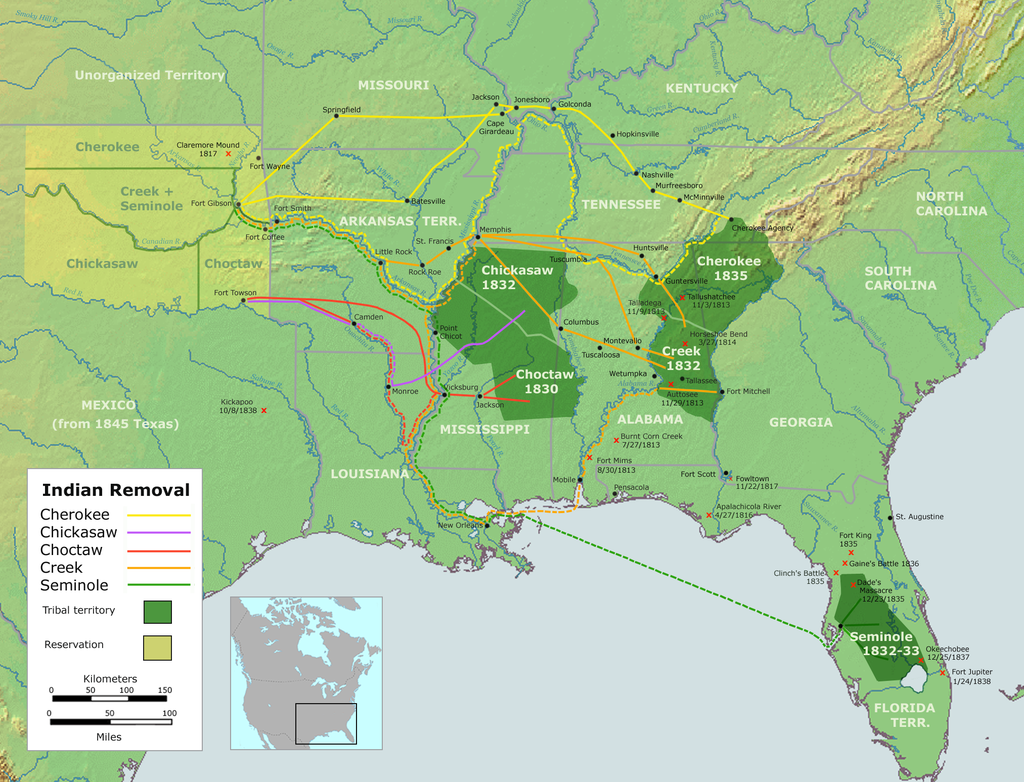
On another note, the Cherokee were in the area and forced west (Another Western Movement). We will look further in to that, as well. 

Remarks: Modified: 05/28/2022

07/01/2021 -- Now, looking at the gateway to the west

05/28/2022 -- Memorial Day, 2022 -- An Osage Mission

Saturday, March 21, 2020

Jonathan Letterman, MD

Everyone knows about the new enemy, Covid-19. This expression is meant to  suggest that we can learn from military experience. Given that the Army Corps of Engineers has stepped up to convert buildings in several cities into hospitals, we ought to look at that process and the players. The process involves meeting several requirements with respect to cleanliness and effectiveness. By way of comparison, this is a brief note about field hospitals which can be compared to the U.S. Navy's hospital ship that has been put into action.

In terms of context, we are talking the future where everyone is elated due to an initial flattening of the curve as they figure that we've won. Well, no. Down the pike will be recurrences. The current effort is to help handle those future cases. How permanent these need to be is unknown. Earlier this year, China put together a hospital in less than two weeks. These are consider temporary structures but met the requirement. What are the longer term necessities?

100 years ago, we had the Spanish flu. We have had a post or two about that (Ground zero). This coincided with the efforts at supporting Europe in WWI. So, there were lots of impacts from a reduction of the male population. England's ordeal has been covered quite well over the years. Now, we're seeing a resurgence of some type of threat that we ought not have lost sight of. Oh yes, inoculation? Cannot cover the basis. One contributing factor was technology and its child, globalization. So, there is nothing easy here.

Photo by Alexander Gardner
The interest of the TGS, Inc.? You bet. First, we will focus on Dr. Letterman. He is the namesake of the Army Hospital that was situated at the Presidio of San Francisco. So, lots of history. Too, Dr. Letterman is involved with the western movement. He was out in Kansas and other points west in the 1850s. This was before his real contribution. Which was? He is considered the 'Father of Battlefield Medicine' and is noted for his humane treatment of the wounded from both sides of the Civil War in the U.S. His introduction of improvements grew out of the experience of the Battle of Antietam. By Gettysburg, his contributions were seminal. There were heavy casualties. His methods saved a lot of people.

Dr. Letterman got his MD degree from the University of Washington and Jefferson in 1849. The U.S. Army offered him a commission. So, his career in the military and after will be of note. Hence expect several posts. He was later a coroner in San Francisco. This would have been after the wild times of the gold rush, however SF was a major port. Lots of tales there.

More information on Dr. Letterman.
---

We have taken several themes in the context of the groupings by year. As D.A.R. is telling us, we have the 250th coming up in 2026. So, we have that as a focus. Before that, we had the 100th of the coming over. Guess what? People were too involved in survival to celebrate, however we will look to see if any researcher/writer mentioned this. That was just a few years post the Salem idiocy (Andover ordeal). On the other side, it was post the Revolution and Lewis/Clark that we saw the major moves west. Some of this was by water; however, we need to look at those special situations related to moving by land (trails, et al). Dr. Letterman was further west (New Mexico). We can add efforts of the U.S. Army to our look at the western movement.

---

When I first got to editing on Wikipedia, I added information to Dr. Letterman's profile. We think of hospitals as permanent structures, but there are many times when a temporary structure is required. Say, post a tornado. I have seen many rise and function for a year or two while the rebuilding took place. The naval hospital ship has gone to many a port over the past decade or so.

Provisions have to be there, though, for future use which means warehousing. And, those things warehoused must be managed for replacement due to time, fatigue, or just orneriness by nature.

Personally, I remember that after Korea that the U.S. Army worked to improve the field hospital (think MASH). My role was in the operating room (surgical specialist) which consisted of a GP medium and small adjunct. All that was necessary was packed, judiciously. The joy of it? Going out into the fields and mountains in blackout conditions (vehicles and flashlights were limited light; tents had entry way with flaps to conceal ins and outs) and setting up the operating room overnight in all types of weather. And, that whole set of material fit into a 2 1/2-ton truck with a trailer. The overall hospital had several wards.

Oh yes, what tent went up first? The mess, what else? You have to take care of the workers.

--

We see that Virginia hospital is setting up a field hospital in a parking garage. Good thinking.

Remarks: Modified: 06/26/2025

03/29/2020 -- Today, I listened to a MD (Respiratory specialist) talk about his experiences with Covid-19, on a daily basis for a while now, in an environment with hundreds of beds in a highly stressful place (U.S.). His message dealt with contagion and other aspects that will be answered eventually. Right now, there is a lot of mania/hype on the internet and other media (TV). So, it was good to hear an expert speak. And, the result of listening to the guy? A calming effect. I'll forgo the details, but, for the most part, there are clear rules that will assist mitigation of the spread. Hopefully, those will become more clear and accepted. And, on the next go-around, we'll do better. Any chance that?

04/04/2020 -- With regard to this Spanish Flu, this video provides a very good overview of the times and the situations. The MD mentioned as identifying the problem early was Dr. Loring Miner.

08/08/2023 -- Mentioned Dr. Letterman with respect to the San Francisco quake and fire of 1906. The Presidio was supportive during the aftermath of this catastrophe. 


Wednesday, March 18, 2020

Long and short

We have been at this since 2009 (2010 conceptualization of the Thomas Gardner Society, later Inc.'d) and have watched the changes while continuously diving (some use trolling) into the huge bucket (seas and seas, in a sense). Along the way, we would find sites that stood out for various reasons. In some cases, they had lots of overlap of surnames being researched.

But, speaking of changes? Lots of these disappeared or seriously changed. In many cases, saved links became more than stale. Good example? The 'rootsweb' case a few years ago. After an initial launch by working on ancestry, we branched out and did our own thing. This approach ended up with a huge amount of stuff to be refactored at some point. Along the way, we pulled out material into posts with the intent of publishing, again, at some point.

We got a chance to write a few articles related to our work. The Gardner Annals grew out of that. BTW, Volume V is still being put together.

In any case, the web has been central both from the view of offering access to information and from the presentation side of things. Through time, additional stuff just came out daily. This was one reason that the Margaret study made progress. And, things did structure. WikiTree is an example of that. Too, the NEHGS now has a package and has linked to prior attempts which was a nice choice.

Anyway, in browsing after being off doing other work, for awhile, we ran into some old links. They still worked. You see, that is remarkable. You know how much the web software has changed over the last ten years? We have some technical discussions going in that regard and have taken to GitHub for a development view. Our portal is one mode for interface, albeit slowly coming along.

Going forward, we'll see two types being even more bifurcated. Setting aside the arena of website development (as, this has morphed several ways, to boot) and the browser wars, the world of the device provider has seen remarkable change, improvement somewhat. Now, those little things can run serious apps. And, the industry, in part, has worked to allow development with minimal technical knowledge. Yes, mind-boggling, as one company claimed that they had no serious software folks. No, the common user could just develop.

Want a parallel? Notice how the amateur has influence on genealogy? In fact, want me to take you down the paths of the internet and show you where there are problems both in the data and in its support structure? Everywhere, we are seeing this old/new dynamic. Nothing new there. But, it's more critical in computing. As we review the changes since '95, we cringe when we see the impact of choices made. At those decision points, we could have made other choices. No, we run along and, then, think that coping with consequences allows our talents to come forth and our smarts to be demonstrated. Not.

From time to time, we run into the work of some who are trying to have more sustainable ways. That is always nice to see. And, we want the Thomas Gardner Society, Inc.'s approaches to be of the more wise sort, albeit not much attention has really be applied to the necessary study and discussion.

But, getting back to sites, we'll look to getting back to having our own list. Many have tried this. In fact, it's a business model, somewhat. That is, folks make money doing the work; even if, many times, there are lots of issues (won't name them as it's obvious that the internet is a mess).

So, today's addition:
  • Ole Larson's Folks - ran into this early. It disappeared for awhile and came back. Now, there's a new look. 
  • Humphry's Family Tree - gosh, thirty-seven years of research. Like the site which comes from a comp sci view. 
Speaking of comp sci, we ran across a youngster who appreciates minimalism. He's not into genealogy, yet, however his custom/manual approach appeals. Much to discuss. 
  • Project Nayuki - really liked the clean work that comes out of the crafting the code (HTML/CSS/JS). As well, from the comp sci exposure (2007-2012), there is a great understanding producing results to be studied. In fact, his examples across several languages are the type of thing that a self-starter ought to really appreciate. 
As well as old/new, we need to look long, as well as, short. That latter has been the blinders; but, that can be seen as true with business, in general, many times.

A timely metaphor: biological perturbations, such as the latest virus, need continual attention; so too the world of the computational? You bet. People will be the focus (taming AI, for example) several ways; genealogy/history is a natural attribute of the more aware (not using woke) approaches.

Remarks: Modified: 05/07/2020

05/07/2020 -- Added image for portal scroll.


Thursday, March 12, 2020

The Commonwealth

The last post touched briefly upon Essex County and preservation. We have had several other looks at Essex. After all, that is where Thomas and Margaret came into the New World. Plus, Salem is still within the boundaries. So, we'll feature this little county lots and lots of times.
  • South (east and central) Essex County - This is from 2011. What did we know having just started our research in 2009? Not much. But, we were collecting source material like mad (still are) with the intent of having a good bibliography. Also, we had to get used to a County where the little towns covered the whole shebang. This is not like out west where some areas a lots and lots of empty spaces (Rt 66 comes to mind). 
  • Essex Institute - their Historical Collections was a great asset. Too, Sidney's work was central to a lot of research. 
  • Essex County -- Dr. Frank's The Massachusetts Magazine was based in the county. 
We have a lot more. Buy, let's switch gears a little. As, there was the Commonwealth in which Essex County was embedded. Rather, which grew around the county. We focus on Essex; several sites look at Massachusetts, New England, and the U.S. One example is 'Mass Moments' which we look at today.

On March 12, 1857, John Brown spoke in Concord. John was featured in several of our posts, such as the one on Col. T. W. Higginson who worked with Dr. Frank on The Massachusetts Magazine. In his talk, John mentioned Kansas which we have featured in our series on the western movement.


As we look at the American 100s (400th, 250th, 100th - as in Cape Ann, the Revolution, and the western swing), we will juxtapose views with Essex County being perpetually there. And, we have a huge collection of supporting material. On the broader scope, we will begin to collect similar support. Turns out that the 'Mass Moments' comes from the 'Mass Humanities' project. We will pay closer attention to this effort.

Remarks: Modified: 03/12/2020

03/12/2020 --

Tuesday, March 10, 2020

Essex National Heritage Area

We saw this while reading the FB feed which is a minute portion of the total possible posts that could be thrown our way. One always hopes that those things thought pertinent by technology match up with what we might expect.

E. B. Teele
2008 Photo Contest Winner
Wonderland, 3rd place
Well, this was a feed from the Gloucester 400 group which led to related posts, one of which was from the Essex National Heritage Area (ENHA). A few posts conveyed the importance of this work plus its extreme interest to us. Besides, technology's impact is demonstrated.

When did the postings start? Well, on a look-back, "November 13, 2008" came up. On that day, the winners of a photography contest were announced. Winner: Gregg Mazzotta. He captured a view of the Saugus Iron Works. There many great photos. This one of Strawberry Hill reminds us of Winthrop's arrival. He feasted in the 'Great House' of Endicott; people went over to Cape Ann to pick fresh strawberries.

The post on the next day pointed to the e-Newsletter of the ENHA (November 2008).

Remarks: Modified: 03/10/2020

03/10/2020 --