Showing posts sorted by relevance for query tabla raza. Sort by date Show all posts

Sunday, December 3, 2017

American manhood

Let's see, from the beginning, I have seen Thomas as an example of the American everyman. I gave him a title of the 'backbone' of the country. That is, his type represents such. There has been a whole series of posts related to this, such as juxtaposing John Gardner (son) being out with the crew that mapped the Merrimack with those of the early Harvard times arguing the 'angels on a pinhead' sort of thing. Too, Thomas appeared to be the first true gentleman of the Dorset effort. He stepped aside for Roger (ancestor, so no conflict there). Of course, he did get back the house when Roger and friends went over to Salem (see Cape Ann, of course and (Not) Far from idyllic). There are more posts on that theme. When John (Endicott) came over, the great house was in good shape, enough to be moved to Salem. So, Thomas and Margaret and kids, evidently, took great care of it.
Puritan couple

Now, switching perspective, of late, I have been studying Virginia. We did live there but did not pay much attention (you know, big DC across the river). Then, I started to research families who were both of the south and the north (Southern New England). Then, I read a book review recently that talked the early times. After all, did we not see the Mayflower celebration, again? So, who had the the First Thanksgiving over here. I remembered a book that I bought in DC way back in the '90s and never read. It covers the first seventeen years. Remember, they had their 400th in 2007 (as we ought to have seen in Maine, too, due to the Popham venture).

But, the new book being reviewed talked about martial law. Even the 'wheel' was mentioned. So, there will be more on this but, for now, look at this book from 2011 (New Men: Manliness in Early America). Hence, the title of this post.s

Also, consider the Wikipedia page on the time of Sir Thomas Dale. My thought was: now, that is something to be thankful for, that the martial law did not take. Subsequent literature suggested how this may have gone down, including the recent book.

But, the northerners were no angels, either. To wit (only one example), selling American Indian combatants into slavery in the Caribbean. They actually did this, to boot, with Quakers, including children.

So, there will be more on this topic. We have to look at all sides of the story (Thomas and Margaret left us mostly with a tabla raza, except for their children).

Remarks: Modified: 02/27/2021

03/01/2019 -- Added the image. We're building an index by images at our portal to truth.

02/27/2021 -- Changed to using American Indian. 

Sunday, September 21, 2014

Diversion, Gloucester - Charles Olson

First, how could Gloucester be a diversion? In fact, it is where the Cape Ann crew, led by Thomas Gardner (1624), spent their "almost" idyllic time. And, it is from there that the crew, now led by Roger Conant (1626), went to Naumkeag, soon to be Salem. So, the area ought to be of interest to the TGSociety.

Further, the area was visited by people from Winthrop's boat (1630) when they were partying in celebration of making a successful voyage. Notwithstanding that, the place (Essex County's southern shore) was seen as disagreeable, so the power core moved west. Those who partied at Cape Ann, picked, and enjoyed, the fresh strawberries (extolled by Anne Dudley Bradstreet) of June. And, there are many more stories to tell.

Speaking of which, in the context of earlier research, I ran across Charles Olson (Worcesterite by birth, but Gloucesterite by choice) a couple of times. Then, I ran across him, again, today on another topic. This time, I stopped to look more closely.

And, the look motivated several things, a couple that we follow up on here. The following links are a good introduction. The first link is to a guide; the last two are a description of a meeting and a book review. The other three are to Charles' own writings (small sampling).
Having run across this, the notion strikes me that we need to encourage, support several types of works that would relate to Thomas and the Cape Ann crew. And, this approach would allow for a better presentation of insights in a persistent manner (not talking technology). 

Now, that is a fairly open bit, yet, we'll contrast it further (below). However, there is enough given to motivate (I might dabble myself).  

[Note: 07/15/2015 -- see Remarks] As opposed to some more logistic/numeric approaches (consider, if you would, the emphasis on DNA (and similar studies) to fill in our being as it has been framed and given to us by the collective of our ancestral mix), we need to not lose our soul, so to speak (no disrespect to genealogy's attempts to make itself more empirical). Too, though, the above suggestion would help in creating emergent views from the minimal basis (see earlier reference to Tabla Raza). We also used paleoichnology as an example; principally, the ability to use knowledge, plus limited data, to develop a reasonably founded view of a complex system, such as were the dinosaurs.

This is sketchy, from certain aspects. It is not from the tone of someone such as Charles.

Aside: Essex County, of course, is the principal focus, where we let Salem (rightly or wrongly) shine (Gardner's Beacon has many meanings). We mentioned Ipswich, earlier. As it were, Gloucester was as important in that research (adjointness). So, we are giving it more attention. But, there will be more to come: Newbury and the other northern "buries" (several); Lynn, of course; Andover, well, we did mention that; and more.

Remarks: Modified: 04/23/2021

09/21/2014 - Idyllic? No church, no state, benign leader, adults surviving, effectiveness on display. First occurrence within the English culture? Albeit, short of duration. As Roger brought John L. and more. When Roger came, the boisterous group was not cowered by the elements nor by the American Indians. ...

07/15/2015 -- Paleoichnology deals with "trace fossils" which have been found. Some findings have more to tell us than others might. However, the sparsity of the fossil has not impeded conjectures that, then, allow modern models to come about. And, some of these are fairly elaborate. ... Do we not, as a public consumer, take a lot of these at face value? Oh, how would we be critical if not an expert? ... Now, similar techniques can get various labels that are more pejorative than not. Say, "wishful" thinking of families about their ancestors. Reaction to that has caused over-emphasis, we will show, on supposed "empirical" methods (even though, the deepest look ought to make one aware of quasi-empirical concerns). ... So, in our new work (Sherborne, Dorset), we will be using abductive means which were legitimatized by a Thomas descendant, namely Charles Sanders Peirce. ... Stayed tuned.

08/29/2016 -- More on Cape Ann, 1623.

06/06/2018 -- Need to prepare for 2023/4. Some, of literary inclinations, have looked back 200 years: American Jeremiad. But, we need to go back to the Cape Ann times and before.

01/05/2019 -- About the same time as I wrote this, a site via WordPress appeared: Enduring Gloucester. How did I miss this? I guess, the focus on the western expansion that still has tales needing telling. There are posts on Charles Olson.

01/13/2019 -- Left a comment about this post at the Gloucester post.

Friday, January 22, 2016

Thomas and Margaret, archetypal pair

We are now into our seventh year. The first few were involved heavily with research, trying to pull together disparate pieces. That is, continue the work of Dr. Frank after a lapse of about 100 years. One method to evaluate progress was a load of successful applications submitted under the context of the Hereditary Society Community.

Then, there was some effort at publishing findings. This effort is in an infant stage. The thrust of the first papers dealt with misinformation. However, that is a subject that will continue to need some attention.

Now, after all of that work, and stepping back, we can start to generalize. So, watch out. We will be applying expertise from various fields (interdisciplinary approach) to contribute to the coming 400th anniversaries in order to paint a picture that ought to make sense to Americans and, hopefully, help further the discussion toward more rational frameworks (in general).

We have mentioned this before, as Thomas and Margaret stand out. If we take Thomas as a focus, for now, let's see where this can go. Not that we are forgetting Margaret, but she will be even a larger subject for various reasons.

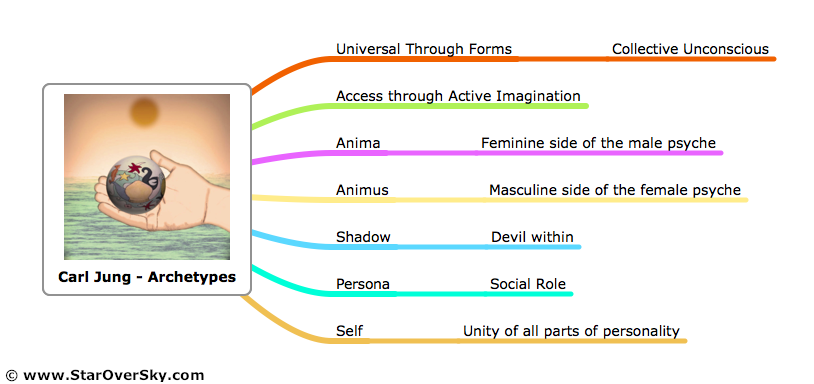
In short, we can propose Thomas as an example of an archetype (see the early backbone series, for one). Yes, of course, this statement alludes to the work of Jung (and, we'll discuss this). Too, we'll get more specific in all areas.

Part of the reason that we can do this is the Tabla Raza characteristic (see comment on history being silent), almost, which is due to the sparsity of data. Lack of information is not bad as it may sound; for one, it forces the issue of trying to interpolate (and extrapolate). We have a whole lot to talk there as my forte is modeling, measurement, metaphors of mathematics, and such.

That is, the experience was with real stuff that works against the constraints of nature (okay, engineering) which type of experience is willy-nilly being applied (misappropriated?) by business, the web (and its muddy cloudíness), and an errant STEM (run amok). So, we can use a broader scope to argue for more sanity.

All along, this was apparent; we are finally to where we can be more academic than anecdotal. It is our hope that Gardners and friends will help Gardner Research get Thomas and Margaret back into their proper places in American (and civilization's) history.  

And, one of the main media sources is the web (which, at some point, will have a more tame flavor).

For now, using an image from another blogger.

Comment: Not everyone is Jungian in leaning. Nor, has anyone shown to everyone's satisfaction that metaphysical notions (however slightly alluded to) are necessary. Our intent is to offer properly supported conjectures (along several lines) in order to foster discussion and further work. This is a point-in-time effort worked under the same provisos as we see with science, in general. Having said that, though, does not mean that a few toes, now and again, won't feel our heel. Let's get our heads out of the STEM-sand (all sorts of things to discuss here). 

Remarks: Modified: 01/22/2016 

01/22/2016 --


Wednesday, December 26, 2018

Culture, history, TECHNOLOGY

We have mentioned this theme before in several posts, such as Operations and actions. Culture comes first due to the people focus that is being demonstrated, suggesting, of course. a type of teleological framework. People and culture go together. History is several things, but there is what happened and what is written about. We all know that Thomas and Margaret were; not much was written of the couple at the time. We have no examples of pen on ink from Thomas. So, we can think, almost, tabla raza. One might say that we will see more instances of people-oriented history through time, mostly due to technology.

Which we take for granted? How many even wonder about the moment-to-moment miracles related to a mobile mobile-device moving through space-time, yet continuing its connection to the cloud (generic usage) with minimal disruption? If you complain of outages, etc., then, I would suggest looking into the technical details of what is going on. In many instances, we have problems arise that really have no solution besides some type of kludge, say moving to another area that might have less interference. We could discuss this all day.

Similarly, we have science projects running wild with computation and finding that their results cannot be reproduced in another setting, either immediately, or after some period of time. And, until lately, this was not even on the table for discussion. That is, computational resources, et al, will be very much part of any experimental scheme's explicit list (perhaps, even with experts whose job it is to resolve associated problems).

Beyond our scope? Not really. Of late, I have been toying with WikiTree due to several reasons. Yet, I am trying, at the same time, to keep the future in focus while dealing with the minutia of this type of computing. WikiTree will not even let someone come into the Great Migration Project area with their transition file (Gedcom, whatever). We see bad stuff out of ancestry all of the time. But, that's more of a management issue.

One technical issue deals with the underlying issues, which usually can be thought of as hardware and software, but is actually more nuanced. And, in hardware, it's interesting to see the changes over the past couple of decades. One of late was the need to adapt to the presentation approach of the 'smart' phone. That is, the old browser-oriented mode (starting in the time of Mosaic) was getting to be too onerous for the flexible way that was possible. Too, though, some went too far with SQL (and equivalent) where one had no idea of structure. A balance seems to have emerged.

So, it was that we did some adjustment a few times in an incremental fashion: Technology and practice (overview of ways and means). And, some of this was recorded in a post at our Technology blog (Friendly to the mobile crowd). We want to move the technology blog away from Wordpress (so, it's on the stack of goals and tasks). Essentially, when moving out of OfficeLive, I fell back to the old approach of tables and images. Buttons were just images (snapped from Microsoft) with links. To get into an adaptive mode, I went with HTML/CSS. Since then, some javascripting has been added.

You will be surprised about how powerful that is. I can show a 3D-graphic handler written with javascript that is impressive.

As we left OfficeLive, I looked at a bunch of alternatives that were available at the time (2012). Did not like their ways. Then, while doing the mobile-friendly look, I considered a slew, many top-of-the-line. Again, you give up too much. Of course, WordPress is nice. Perhaps, we'll run it on our own server (virtual). We'll see.

We have already tried several means for discussion, etc. Right now, FB is being used, somewhat. There has to be some means for research and commerce. The latest AARP warns the old folks that many who are offering web services are not to be trusted.

You know, when they started to monkey with browsers, it opened up the door for others to take advantage of the innocent. We all know the stories. Mostly, they seem to go into one ear and out the other. Not for the Thomas Gardner Society, Inc. We'll have safety and security high on our priority list as we proceed.

As said before, anyone who wants to get hands-on experience, in the Linux environment, we have more than enough work to be done. Is it possible to have roll-your-own in the future? Given how much trust been lost, I would say, why not?

I'll have a post that pulls together all of the posts related to this theme and an important aspect: content versus configuration. These are really two of many hats that have to be worn. Any major organization has these covered by a team of people.

Remarks: Modified: 11/22/2021

12/26/2018 -- For a long while, I pointed to this page as my favorite on the web: This Week’s Finds in Mathematical Physics. Later, it was changed to “This week’s finds.” But, for years, it was basically textual with graphs presented thus, with some graphics added in. Look at Week 118 (March 14, 1998). It was not until later in the aughts, that we saw serious changes. Here is an example from 2011 (a transition year). The old posts are there; a timeline shows post numbers by year.

Now, we have a new look: Azimuth. It’s interesting that the two current posts are on geometric quantization. And, the blog is using modern markup approaches. Oh yes, another example of the power of WordPress.

Still, I hope that the old posts stay around for comparative purposes.

11/10/2020 -- This theme is still of interest