Wednesday, August 26, 2026

Announcement

TL;DR -- Our cousin, DTG, has switched to another LLM with provenance on his mind. One area of focus will be Dorset in the time before and after the Dorchester Company's effort on these shores. 

--

Announcement, at WikiTree

This is the "announcement" mentioned in WikiTree as a Comment in the Thomas Gardner (of Salem) Profile. It pertains to the two-person choice and how we will proceed in our work using modern techniques. 

David Todd Gardner, for the past two years, has been working with one of the GenAI/LLMs (we'll reveal later). We had reported on his work with the Richard III incident. Was there a Gardner involvement? The TGS blog has posts on this topic. 

DTG noted by Mar/Apr of 2025, that that LLM (using the vernacular of those heavy into "agentic AI" which I will write about, too, having spent several decades in KBS/KBE where knowledge systems were powerfully effective with precision that engineers dream about. Of course, the approach was engineering support. What happened there? Essentially, for those interested, digital engineering came forth but is now being seen as messy. Lots to discuss there.) was more than 95% not verifiable. Actually, less than 2% was okay. 

Typical. Frustrating. ... But, on discussing this result, we agreed that DTG would start over and put more emphasis on provenance. How to do that is an ongoing task to figure out. 

How does this pertain to this Profile? Well, the US gave the world this stuff; the US ought to help clean it up. And, the US of 250 years (ink on paper, folks, the turmoil went on until 1783)? It was principally New England (south - VA and north - MA) that got it started. 

Back to DTG's work. He is now using Gemini/Gemma. And, DTG reports seeing records related to a bankruptcy of the Dorchester Company that references Thomas Gardner. Well, we knew a Thomas was here. 

Now, we don't need to conjecture, yet. But, on the coming over, being brought back from here to there for that review would bring an interesting set of conditions. 

Related post in the blog: Modern techniques. Also,we will report our progress in DTG's blog as well as our own. 

A whole lot of adjustment will become known with respect to this technology. How much real reward can result from the efforts? At least, the work will be entertaining.

Remarks: Modified: 08/30/2026

08/30/2026 --  Truth Engineering, a historic view -- post to summarize and to start to bring the old back to fore for several motivations. 


Modern techniques

TL;DR - Techniques related to research will continue to changte along with technology as it progresses by whatever means drives that energy. So, with respect to "origins", we are seeing an LLM used to ferret out information from that time based upon records that were digitized. Of late, information about the children was discoverd in recently digitized records. On the other hand, there was a house associated with Thomas Gardner. A proxy for this? Of course, the Fairbanks House, oldest wood structure in the US.  

--

Some background on the "Announcement" today at the Thomas Gardner (of Salem) Profile of WikiTree. 

Back in the beginning, I puzzled about missing information. Say, as compared to some families with respect to origins. The NEHGS series (Anderson) had come out before our time. Some of the information in that series conflicted with what we saw with Dr. Frank's efforts. We had started there, as he was 1st cousin of a grandfather. 

But, we had more than those 2 books, we had the articles in The Massaschusetts Magazine (principally from Dr. Frank's sister, Lucy Marion Gardner - Lucie following Sidney, May, 2017) where she picked up the work of Sidney Perley, the great walkabout of Essex County. There was more. Having started in 2010, the internet had only a few years of Web 2.0. Older material was there. I have pointers based upon general trolling back when the "search engines" were behaving. Too, there were notes from families about the material that they had accumulated (some living in the UK, and even near to Dorset). 

Early on, we knew that there would be the 400th. We'll look at that. How would it compare to the 300th and the Pageant of Salem (6 Jun 2018)? As we went to look at that effort where people of Salem played roles from 300 years prior, we added the Label of OpEd (Opinions count?, Dec 2023) as we explained after the 2023 reveal of data from Sherborne, Dorset, UK.  

As an aside, we added "OpEd" to this post in order to associate it with the ongoing research. Okay, to the gist of the matter. We look at two items which represent a slew of potential work and information. It's a matter of work. 
  • Let's start with Gardner Family Trust (Apr 2026). In late Mar of 2025, we heard from DTG about his work with one of the GenAIs that had come on the scene in late 2022. 
    • I was not paying close attention to that crowd (and still consider the release to be premature). The 400th of Gloucester was approaching and we were considering what to do. Having finally settled on the notion of featuring Margaret (wife of Thomas Gardner and mother of the children that we know), we were working on that set of material. On 1 Feb 2023, I heard of that release from a friend and went to look (mainly focusing on ChatGpt and Bard).This is all documented. 
  • So, I knew of the AI/ML hype (biological pipedream); due to having known this stuff for decades I was amazed and appalled at the uses that people were discovering. So, mark that up for human creativity and the US as founded by those ones of Cape Ann. Anyway, DTG's work was along this line. He had found lots of information from digitized records in the UK; retrieved the scanned data, used OCR to transcribe, and then even worked translations (from Welsh, Latin, et al). It was remarkable. ... A little later, after some scrutiny, it was hard to tell the reality with most of the content being fictional. ... We discussed matters and decided for him to start over while concentrating on provenance. 
  • Of late, DTG has switched to Gemini/Gemma. As such, he has been verifying the information. He confirmed the news about the Gardner involvements at Bosworth and Richard III's demise. There has been a lot of information on the London side of the family. Too, he found Thomas of Sherborne. ... Now, keeping this brief, for now, one bit of information deals with a bankruptcy of the Dorchester Company in which Thomas Gardner is involved. That has my focus, right now. 
  • Thomas was here, at Cape Ann. Now, was Margaret and the three boys here. If so, John was born here. The family went back. Or if he came alone, she had John in the UK. His baptism was delayed until Thomas returned. We favor that the family came over. Thomas and family then came back with the children except for Seeth who was born in Salem. 
Now, technology will be the key. We are doing this right. Who knows what data will come to fore. The information of the births was a nice surprise as John, himself, said that his father had told that they came from Sherbourne. Sure enough. The response of WikiTree? The two person split is okay, for now. But, as we find out more, we'll make sure that it is published. 

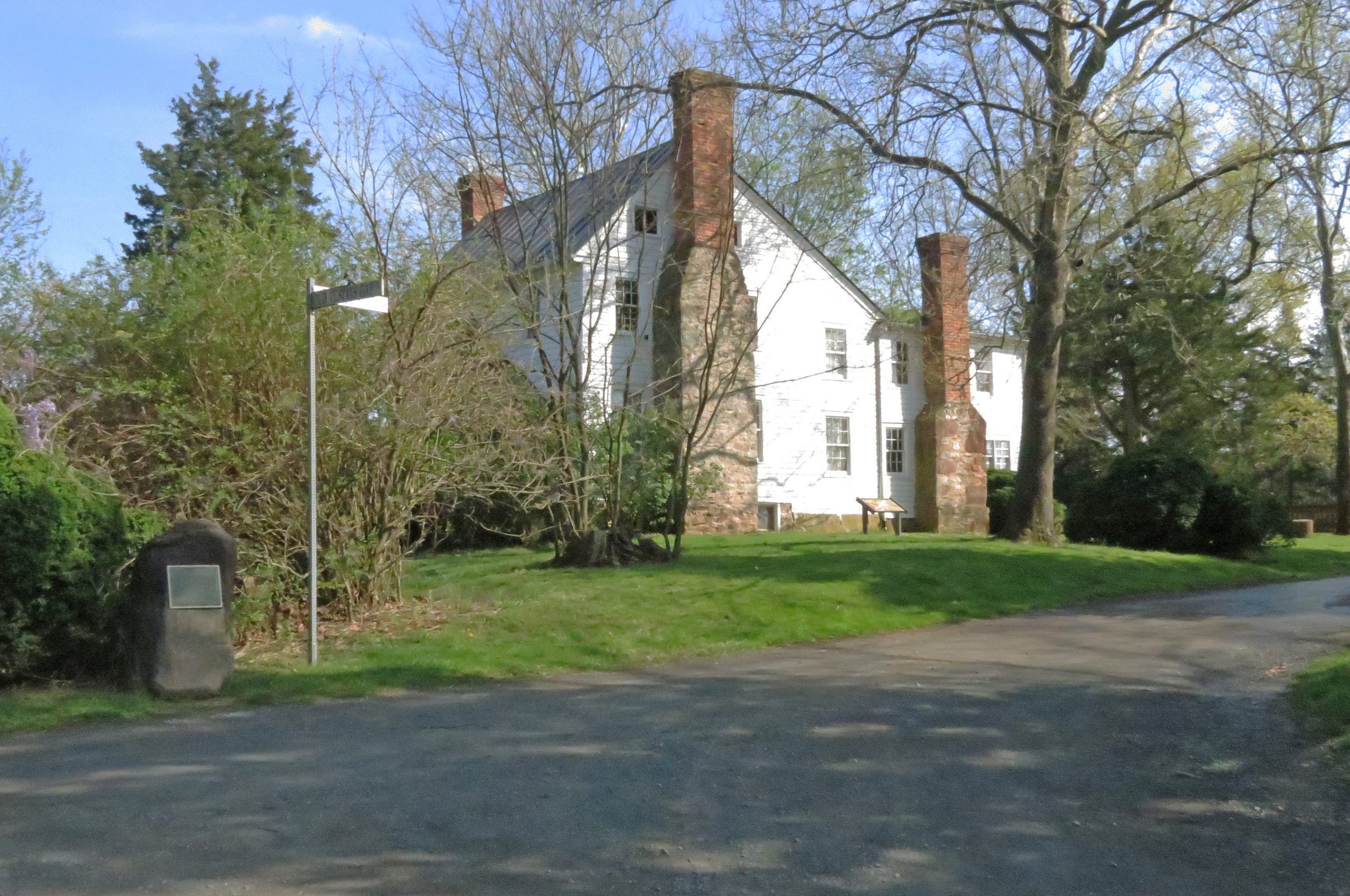
A recent post looked at the Fairbanks house which is in Dedham, MA. It dates from the 1630s. The image is from the website for the Fairbanks House

Jonathan Fairbanks (WikiTree) came to Boston in 1633, stayed a few years, and settled in Dedham in 1636. 

Remarks: Modified: 08/30/2026

08/30/2026 --  Minor correction, will be back for more. 

Sunday, August 23, 2026

Themes, categories

TL;DR -- We touched upon the rivers of Texas as part of our continuing theme of the rivers of the U.S. We have also looked at houses, including one brought over to Cape Ann in 1623. This was moved to Salem by John Endicott when he arrived. Winthrop then was feted in 1630 in the house when he showed up. He left Salem and went on to Boston. Today, we look at a house on the other side of Boston from Salem. It was built by the Fairbanks family and still exists in Dedham. 

--

Yesterday, we looked briefly at the rivers of Texas having covered some of the U.S. rivers that are central to the history of the U.S. and its settling of its interior out to the west coast. Texas plays heavy all around and will be in focus many times. So, that's a theme but has no category involved yet. A topic that is both a theme and a category? Houses. We had a post about the house brought to Cape Ann by the Dorchester Company crew. 

This was known as the The Governor's "Fayre House" (named such by John Endicott). This mention by the Bigelow Society will get more attention: 

It is well known from contemporaneous evidence that Capt. John Endecott, upon his arrival, had floated up from Cape Ann a frame house that had been erected there for use at the fishing settlement. This seems to have been the best house in the infant settlement, as the early cabins and cottages built by the fishermen from Cape Ann, along the shore of the North River in Salem, had all disappeared by 1661.

We have had several posts on that house. Thomas Gardner's crew brought the material from England. Later reports mentioned that it had been constructed and built for transportation. The Conant family was there for a while. After being moved to Naumkeag, it hosted Winthrop (see Hype, 1600s) in 1630 while he decided on whether Salem was suitable. Later, the Downings extended the house. Their daughter (Ann) married the son (Joseph) of Thomas Gardner; the couple lived in the house. Joseph was killed in a conflict with the natives. Ann married Simon Bradstreet. The house got his name. 

At some point the house was torn down; some buildings in Salem had been built with the wood. This link may have been lost in the Salem fire of 1914

Today, we look at another house which is in Dedham MA and appeared in 1637. This was built by Jonathan and Grace Fairbanks. Now a museum, the original house is there with extensions made over the years. In terms of location, Dedham is on the opposite of Boston from Salem and was incorporated in 1636, same year that Salem got its name. 

Fairbanks House
Bigelow Society

This area is close to where Thomas Gardner of Roxbury lived. In terms of interest, we start with CapeAnn and Salem and then Essex County. After that, Massachusetts is the focus along with New England. Of late, interest is being directed toward the 250th viewpoint, but we will be stressing the 400th and other mileposts along the way to the signing of the Declaration of Independence. 

Remarks: Modified: 08/23/2026

08/23/2026 --  

Saturday, August 22, 2026

Texas and its water

TL;DR -- As the 250th goes on, we will look at what we have done and discuss the future. One focus is technology. Part of that deals with real assets, such as waterways. This post considers Texas, and its rivers, briefly. 

--

This post reviews prior work in the context of the 250th this year. We have had many posts about the waterways of the U.S. Some of these served as a means for transportation (say, the Ohio from PA to MO and further). They were barriers, as any that is too deep for fording, even if only a certain time of the year. They were sources for food. And, definitely, human life and health relied upon clean water. 

Somehow, we forgot Texas. As the map shows, it has many rivers. All drain to the Gulf, from the Rio Grande on the west to the eastern rivers (such as the Red River) that head to the Mississippi River first. Everything is larger in Texas, as the map illustrates: 191,000 miles of rivers. 

Texas Truths and Tall Tales
FB (Meta)

The Trinity River starts north of the Dallas area and flows toward the southeast to the Houston area, emptying into Galveston Bay.  

Remarks: Modified: 08/23/2026

08/22/2026 --  

Sunday, August 9, 2026

Who pays for technology development?

TL;DR -- Who does pay? That will always be an important question. But, the 21st Century has already brought new factors to the table beyond what we thought that we knew last century. But, the 400th is here along with the 250th. So, exploring the roles of the US is always interesting. 

--

Of late, we have had a technology focus and will look for things on that subject to commemorate (the good, bad, and ugly of technology, let's say) under the guise of the 250th of the US. We have already had this but want to go back to 400 years. 

And further, in terms of the western philosophical views on mind and matter which is being brought to fore with the issues brought by the agentic ways (on a slop basic, GenAI/LLM). But, companies are hiring  philosophers now. So, we'll venture there already. 

Maxwell and Gibbs

We can show lots of posts on these subjects, here are three: 

  • Spinoza - he is from the 400th period but in the Netherlands. His Ethics will be the subject. 
  • Peirce - the son, C.S., who was instrumental in the logic that is applicable to computing of the type that AI will need when done maturely. 
  • Gibbs - early thermodynamics worker in the US. 

One focus will be taxpayer funding of advances that are implemented in a government or military sense. There are plenty of examples worldwide to use. And an agency of the DoD/W handles the administration of most projects of this type: DARPA (Defense Advanced Research Projects Agency). 

We will look at the influence that DARPA works has on our culture. There are plenty of examples. One that we will go into in depth is "truth maintenance" where DARPA paid for a paper and released this to the public. A Stanford offshoot developed it. John got involved with that and related technology. But, despite progress, the motivation for the work dissipated yet still has an impact. We can discuss how the lack of the notions brought by truth are missing in the approach that gave us the likes of ChatGPT and its brothers.  

That leads to this discussion: is the market approach better? Such an approach has a tendency to reward ca-pital-sino'istic thinking. That is, more effort goes into milking the system than into doing the work. Well, we have now seen examples on the other side of that spectrum in many places which deals with conflilcts of major world view. 

From an independent sense, we can discuss sustainability and economics which goes along tightly with technology and its pursuits. Too, the results of the past four years have already brought many discussions to the fore. As well, mathematical insights have both taken a hit and became broader. Not to mention, the legal ramifications are probably the largest set of unknowns. 

Yet, the benefit of technology is that things pale in the light of the technical details. At play are concepts related to higher-level classes after the post-secondary experience. So, these will need to be explained at many phases plus with respect to choices involved. 

Remarks: Modified: 08/09/2026

08/09/2026 --  

Thursday, August 6, 2026

Purple Heart Month

TL;DR -- Today is Purple Heart Day in the US. As the remembrances of 250 and the 400 years continue into the foreseeable future, we will increase our awareness of the commemorative events that ought to have regular attention. 

-- 

MacArthur's
version
We have been observing Awareness Months and add another month (August includes Purple Heart Day). 

Here are a few links on the subject of awarding the honor initiated by General George Washington in 1782: see "Purple Heart Day" (next) "Badge of Military Merit ... as a way to honor enlisted men deserving of recognition".

Purple Heart Day - Say thank you to those who sacrificed. 

Military Order of the Purple Heart - a congressionally chartered (Title 36 USC Chapter 1405) United States war veterans organization. 

Honoring Purple Heart Month - The mission of the Purple Heart Foundation is to enhance the quality of life of Purple Heart recipients and other honorably discharged veterans and their families. 

National today -- Purple Heart day - a solemn occasion to honor the profound sacrifices of U.S. service members wounded or killed in combat. 

Finally, Soldier's Angels Org. "Celebrate 250 Years of Service. Join us in celebrating America's 250th birthday by honoring those who have served." 

Remarks: Modified: 08/07/2026

08/06/2026 --  

Friday, July 31, 2026

Alchemy

TL;DR -- For three years now, we have seen a chase after several things: AGI; scaled computing; lots and lots more. Alchemy was respectable for a long while. It still ought to be. 

---

The title? Some say that Aristotle so loved by science and pupil of Plato was the cause of the rise of this discipline. Heard of it? If not, alchemy is more than attempting to turn copper into gold in search of riches. Though, modern physics has altered matter. 

We are following another thread, though. You see, the search for AGI which we witnessed of late with the AIn't and tAIn't occupying our minds and computers while wasting gobs and gobs of resources is a modern example. And, it's here for us to study. 

On the other hand, wise engineers respect the efforts of alchemy which some say changed into modern chemistry. Here is an example reference from a College of Engineering. 

The Engines of Our Ingenuity (Cullen College of Engineering)  

The page starts with a quote from George Meredith:  

See ye not, Courtesy Is the true alchemy, 

Turning to gold all it touches and tries?

From asking if character (transformation thereof) might be an example of a proper pursuit for alchemy, the article looks at the history. Too, quantum mechanics is referenced as a modern example. For us, the work on quantum computers will be discussed under the guise of this post. 

We are also pursuing this since the LLMs seem to be falling apart. Companies pushed to bring this bad boy into the process of their company. Many times? Not finding the expected gains. 

Reminder, our theme is technology since the U.S. has lead in this area and will continue to do so. 


Alchemy has many concepts of note. For now, we can mention the active/passive pair. We will have a post about a new approach to designing Radio Frequency boards such as those in a phone. In that sense, the pathways of metal are passive with the flow and its control by components is active. One does not dominate the other. In another sense, geometry can be used as an example of the passive state; but, then one brings in the  algebraic parts of the system and active (via function) arises again. 

The search for AGI got lost. We will look at that. 

Note: As we proceed in discussing the complexities of STEM stuff, we will make use of the SEP. Here is an example in this context: Philosophy of Chemistry

Remarks: Modified: 07/31/2026

07/31/2026 -- 

Saturday, July 25, 2026

Ah, gaming as progress

TL;DR -- We picked technology. GenAI/LLM came along and offerer itself for analysis. Okay. But, let's drop to the chip level in order to set some groundrules prior to serious discussion. 

--

Gaming? That which wastes time of the youth. The lure of Hollywood. Busyness and the machinations that are to take money from your pocket. Which of these? 

We have to set the ground rules first. That will take some time. And today, we look at technology. 

We need to get a discourse going with respect to GenAI/LLM and how to handle the messes that have accumulated over the past three years. A discipline that has been ignored will get some attention. Namely, knowledge based engineering (KBE) and its high-performance computing cousin (HPC). These two need to make up in order to bring peace and order to things computational.

Our human cousin, DTG, will serve as the master due to his 50+ years of researching the topic of All things Gardner. DTG brought us clarity with respect to the dynamics of history related to King Richard III of England. Too, he has ventured along the long threads of Gardner as a name. 

But, technology first. Browse and ask us to clarify the relationship or whatever of the following:  


This is one of the progressive steps beyond what Nvidia is trying to wrought upon the earth. Notice that there are several subjects that we will be covering in more depth. "graphics" is obvious to the gaming crowd; our technology focus will concentrate on the geometric aspects of such. That is, structure is at the core of all things related to knowledge. 


How is this? To be discussed will be a patent in the context of this post. Essentially, it demonstrates modeling for filtering and smoothing data in areas requiring high precision. The above link mentions this topic too, as well as both GPUs (graphics unit) and HPC

The discussion will stress "jerk" and the differences being ignored by the biologist as they pursue power without proper insight. That is written thus to be a hint. 

Remarks: Modified: 07/26/2026

07/26/2026 -- Input links. 

Saturday, July 11, 2026

2,000 years of history?

TL;DR -- DTG has been releasing under Gardner Family Trust. This post announces a recent one that has a long historical view. This hypothetical work has a basis that is beyond the current influences of SciFi that are so problematic. But, we have work to do in this area. 

---

With the U.S. government buying into what I have been calling 'tAIn't, and the DoW diving in big time, can we go wrong following them? Well, we ought to be be aware. So, here is an example that I have been paying attention to. 

David Todd Gardner contacted me in the early 2010s, about the time that the body of Richard III was discovered. Briefly, people reading historical documents used modern techniques to pinpoint where the body would be if it had not been moved according to contemporary accounts. 

That's the key here? Are there records that will influence the historical view? Suppose some might have been found in Wales? 

Let me make a comment with respect to the 250th. Last year, we went to reference the papers of General Nathanael Greene which were just recently published. The first efforts (about 1/2 of the amount) were published after the 200 (1976). The research began a few decades after the Revolution was over. Slowly, people gathered documens which were mostly related to northern New England. The rest of the material related to Greene's term as General was mostly about southern New England. 

And, Greene won the war by cornering Cornwallis in 1781. The treaty was not signed until 1783. And, this guy got no notice for about 200 years? Washington was the one who put him in charge of the Southern Campaign

As we go through the six years of the conflict after the Delcaration celebrated lately, we will find research pulling out lots of interesting information. 

Unfortunately, the likes of Grok will add huge amounts of uncertainty, of a new type. More on that. 

So, DTG published this post under Gardner Family Trust. 


Using Grok for certain functions, DTG has pulled out and published information that had been largely stored in Wales. Grok was great at transcribing, it looks like. DTG, used OCR for the text processing. Then, having trained his system, DTG had Grok match up his material with known material. 

That is the point. What is published is generally a small set of the total information. Additionally, the profession of history, like any other, puts efforts into finding generalizations that work. Too, as this type of work progresses, algorithms come to fore, many through identification of patterns. 


But, taken too far, there is no provenance trace for the majority of this work. So, the caveat would be to consider the work as conjecture. But, pay attention as it may provide something useful. We cannot handle that type of judgment a priori. 

And, if that is not understood, we, at TGS, will go into that as necessary. There is reason that some companies are hiring philosophers. But, my counsel to them is that they are looking for good old autodidacts who have waded through all of these fields looking for the nuggets. And, finding them. 

As such, DTG's Grok work deserves some attention which we intend to provide as we go forward. For one thing, auxillary topics will be discussed. One example, the hype of recent vintage seems to have been driven by marketing or even SciFi interest. Whereas the preferred modes ought to relate to science that has sloughed along for over a century.  

Remarks: Modified: 07/04/2026

07/04/2026 --

Saturday, July 4, 2026

Iron roads

 TL;DR -- Rails. Iron roads. Puffing motion. The early view. 

---

Wall Street Journal has had several articles on the 250th. Two days ago, they covered their view of the top inventions. We will go over this list. One issue had an image that we used in a post a while ago. Be mindful of the first year which was 1860, prior to the Civil War. By 1870, there was one thread out west. Then things boomed. 

Pace of change (29 Jun 2021)
Note comparison with the U.S. Post Office

Meanwhile, here are a few links to WSJ material. 

 As we have noted, the 250th needs to be in mind over the next few years, until the 250th of the 1783 peace treaty was signed with Britain. 

Remarks: Modified: 08/08/2026

07/04/2026 --


Tuesday, June 30, 2026

LinkedIn - its use

TL;DR -- We have pushed posts from this blog to LinkedIn. We have referenced LinkedIn posts from here. That will be regularly done with link both ways. This is about a new idea conjured up by scientists and philosophers. But, it's not so new. 

-- 

We think of this as the adult Facebook (Meta). People use it to find jobs. Let the world know about themselves. 

Several posts from the TGS, Inc. blog have appeared at the sight. This post is from LinkedIn. We made a comment and copy it below.  

Subject: 

A team of scientists and philosophers has suggested a new basic rule of nature that might help explain how many different kinds of evolving systems change over time. They call it the “law of increasing functional information.”

Link:

https://www.linkedin.com/posts/ratanak-roth-oeurn-kent-627b1974_in-the-news-carbon-under-pressure-forms-share-7477644560811290624-Rvw7/?

Our comment: 

Kant comes to mind (Prolegomena, where he defended his Critique of Reason clarifying his thinking for future researchers). 

Briefly, we only know phenomena and not their noumena (things in themselves). Quantum modes may break down to pieces. But those pieces we do not know in the sense of ripping them open as the biologists of old could dissect a specimen (so too, many a school child tortured a frog). 

Differentiation has been easy; integration? Not so much. 

Some barf at Kant's attempt to explain how we know phenomena where he uses "representation" (wait, model-based computing and lots of mathematics seem to agree, yet differences in viewpoint abound - ah, relativity). 

Kant wins. He proposed that we have noumena, too, and know it. Consider. 

Waiting in the wings: psychether; truth engineering (with the computer fully simpatico with ancient human ability that we can study through careful consideration of the thoughtful words left). 

Jump back to Spinoza and overlook his attempt at Ma Nature as being God. 

Knowing? Emotions are prime. We learn to manage them with reason which is sorely needed, sought, and difficult to attain. It is not the fancy marking in chaulk as we see with advanced science. 

Humans and their noumena? 

Notes: 

https://plato.stanford.edu/entries/kant-transcendental-idealism/

I use the Carus translation of Prolegomena.

https://archive.org/details/kantsprolegomen00carugoog/page/n4/mode/2up

Context - Insights from KBE within the phemenonal world of the 20th Century.

https://thomasgardnerofsalem.blogspot.com/2022/10/time-lines.html

Commentary: 

We have mentioned both Kant and Spinoza several times with respect to AIn't or what we are now identifying as 'tAIn't which ponts to the pending disasters that are on the horizons (we will get to this). 

One general comment. Philosophers are those who think deeply and write. I like Spinoza and Kant for the reason that they were prime examples. Spinoza had a career, optics - generating lenses. Kant taught Logic and wrote a book on the notes of his class. Or, he gave his notes to a student who wrote the book. 

As an aside, intelligence, reasoning and such with respect to AIn't. Well, not. Our strongest argument deals with the work of Spinoza who laid out the rationale for describing Emotions and their power. Our Reason develops in learning how to handle Emotions. 

What says that about buckets'o'bits? We are due to our humanity and long periods of evolution and learning. The machine tries to simulate use. In fact, that concept/notion is quite prevalent with some thinking that a mathematical system might behave so as to be like we humans. Good luck with that. 

Remarks: Modified: 07/22/2026

07/22/2026 -- Made local copy of the image which kept moving on Linkedin. 


Friday, June 26, 2026

Early Road

TL;DR -- Right outside of Washington, D.C., is a lot of history. We like to pay attention to trails (becoming roads) and to rivers. An important road is on the VA side. Last year we mentioned that Gen. Braddock used it to get out west during the conflict that trained the US forces under the auspices of the Crown. 

---

This is a quick post to be filled in later. Last year, we looked at Gen Braddock and how he came through Northern Virginia up to northern New York during the Indian-French affair. Also, we looked at details of the earlier period. We like to consider the influence of roads and rivers (both a boon and a barrier) on the expansion of what became the U.S. of 250 years.  

The post emphasized the pre-1776 timeframe:

  • Lord Fairfax -- the focus was the Lord as owner. We mentioned Braddock since the beginning of his jaunt has been Alexandria VA which was about half-way to Mount Vernon of the Washingtons. Remember, this was of the earlier conflict where the colonials learned their military tactics under the auspices of the King's Crown.  
See Siege of Boston, about the colonials in 1775/6 not being a unruly crowd. 

Back to roads. The Vestal's Gap road was an animal trail and then used by the Native Americans and later by the colonials. Now, it consists of highways and even Interstate sections going from the Potomac port at Alexandria up over the mountains. 

Early in the 20th Century, Claude Moore bought land in Northern VA and worked to honor the colonial heritage through preservation.  

  • Vestal's Gap Road - By the late 1720s, the trail had been travelled enough to become a road. It eventually led to a gap in the Blue Ridge mountains, where an enterprising businessman named John Vestal operated a ferry crossing the Shenandoah River. A young George Washington used the road to travel to Winchester and points west, where he surveyed the Fairfax propriety for Lord Fairfax.
Lanesville Historic District

We have said that the 250th this year was of a conflict started earlier (even before 1775). So, on July 4th of 2026, remember please that the conflicts went on until 1783. 

Remarks: Modified: 06/26/2026

06/26/2026 --


Wednesday, June 17, 2026

UAP or UFO

TL;DR -- UFO morphed to UAP. We even have a whistleblower. And, LLM is no longer the new kid on the block, we have plasmoid life. Even with football. American or other? 

--

With the quantum computer getting so much press, and the issues of energy usage there is about as bad as what we are seeing with data centers for AI/ML (GenAI/LLM), perhaps its time for a bit of information drop. As in, we are aware but think that humans need to be studied too. 

Without further ado, we'll switch gears here. Have we not heard enough about LLMs the past couple of years? We have seen the Dulles area (DC) host numerous (more than wise?) data centers, that ruin the landscape while drawing more resources (water, energy) than probably rationally supported. 

So, let's start with some links, starting with Wikipedia. What we are dealing with, too, is an old subject with a new name: Unidentified Anomalous Phenomena (Formerly known as UFO). Assuming that there have been UFO encounters (there have been a number of books on the subject - written by people who survived the event), perhaps, we might learn something. 
  • David Grusch, whistle blower - former Air Force officer notes that money has been spent on this subject without oversight. 
  • NASA hosted a team for this theme (2022) - this predates ChatGPT's emergence. Did it allow a cover or increase the potential usage? That LLM grabbed the attention of millions around the world, in Nov of 2022. I did not even wake up to the fact until Feb 1 of 2023. 
  • buckets'o'bits is how we can talk of LLMs. Now, if we have high-tech visitors, perhaps that would be ripe for learning a thing or two (or being lab subjects - whatever, it's SciFI laden which is too bad -- as science touts its abilities). 
Okay, there will be more. In the meantime, Grusch mentioned plasmoid types and alluded to attributes that would be interesting to study. So, what's not to like, as long as we don't fry ourselves interfacing with such. 

Remarks: Modified: 07/12/2026

07/12/2026 -- Retrieved the image. 


Wednesday, June 10, 2026

Twelve years ago

TL;DR -- A cousin blogger had an interesting post today. She went back a few years to bring a post forward that remembered an ancestor who was hanged in the events of 1692 in Salem MA. That is, hanged by the neck until dead. We have had several posts on the theme but reference two of them: the first image looks at a family wirh two hanged on the same day as several others; the second image is about a hypothetical meeting where all ancestors involved from any side (pro, con, critical, ...) is identified with their relationship established. That event was 334 years ago.  

---

Nutfield Genealogy, on FB, pointed today to a post from the blog dated 10 Jun 2017: Bridget Playfer Wasselbee Oliver Bishop, hanged as a witch in Salem. Going by today's date, we are talking 334 years ago. There was a question today on FB: Is there a victim of the 1692 witch trials in your family tree? 

Well yes. Lots and lots of families. So, first, we will look at one of them through posts with one of them from twelve years ago. Then, we will consider a slew of families who were on all sides of the controversy. 

A great-grandmother (Lucy Foster Wilson Gardner) of Dr. Frank (Gardner author) had two persons hanged in September of 1692. The Thomas Gardner Society published an article on Lucy's pedigree titled Trials of the Wilson Family that appeared in The Essex Genealogist and was accompanied by a Ahnentafel for Lucy

Later, we had posts about the family, such as Andover Ordeal, that recounted one generation which, after the witch trials, lost all of the children except one who had children one of which became Ann's forebear.  

The following image is taken from The Essex Genealogist (August 2014) and shows three generations of Wilsons. In Gen 1, Joseph Wilson married Sarah Lord. She and her daughter were imprisoned for several weeks but were cleared in 1693. For Gen 2, we see John Wilson, son of Joseph, marrying Mercy Wright whose grandfather was Samuel Wardwell who hanged with several others. In Gen 3, John Wilson, son of John, married Hannah Frye whose great-grandmother was Mary Ayer Parker. This widow of fifty-five years of age was hanged. One motive was getting her land as her husband had left her well off. Later, her sons were able to get their property returned. 

Now, switching gears, we had a couple of post dealing with a hypothetical meeting (Imagine a meeting). The intent was to bring back everyone who was involved in the incident, except for the victims. This table shows relatives of Dr. Frank as if we are talking two generations back (rather than a couple hundred years. 

Hathorne and Corwin were noted judges. For Dr. Frank, his grandmother was John Hathorne's sister who opposed her brother. Several jurors were grandfathers. One of the officiating ministers was an uncle. But another grandfather, graduate of Harvard (Rev. John Wise), was highly critical of the proceedings as opposed to Cotton Mather who was a cousin. 


There have been several posts on the subject. We will point to one: Meeting, again

Remarks: Modified: 06/10/2026

06/10/2026 --


Monday, June 8, 2026

Great Awakening

TL;DR -- Great Awakening. There have been several from one of which we got Princeton University. But, we can analyze the emergence of GenAI/LLM similarly with respect to the "animal"spirits related to its potential as boon or bane. There is the other side of the coin: great disappointment. 

--

The topic? It will be familiar to some. And, there seems to be a U.S. nature to this phenomenon, however we can look at these affairs from a more general framework and learn a thing or two. 

In this case, we are talking about GenAI / LLM which is known as "AI" now. Was that an awakening, of any kind? That is something to discuss which we will be doing while the fad rages on for a while and after the expected burst we can expect to participate in the analysis. 

Here is Wikipedia's take on the matter: Great Awakening. Apropos to the event's characteristics, there is a related phenomenon: Great Disappointment. The main theme relates to spirituality and religion, but there have been comments with respect to the psychological aspects: True-believer syndrome; Cognitive dissonance; and a lot more. 

Our interest is that Princeton University was founded in 1741 after the first of the Great Awakenings due to a conflict within the Presbyerian church. Tying this to the 250th which is coming up, John Witherspoon, president of the college from 1768-94, was a "signer of the Declaration of Independence".  Princeton is the fourth-oldest of the Colonial Colleges. The first three were Harvard (see our series on the Presidents), William and Mary (Virginia), and Yale. 

Colonial Colleges

Given what we have learned so far, our plate of topics is more full. For this post, let's switch the attention to the 'tAI'n't of recent years. Depending upon one's views, the 2022 entry onto awareness of OpenAI's ChatGPT was the greatest thing ever or the worst affliction cast upon humankind. We have seen plenty dicussion on both sides to the situation over the past three and 1/2 years. 

No doubt, those discussions will continue due to the lack of an theoretic basis with which to frame an analysis and to the shaky reports that have been provided during that same time. Each of the LLMs (which we will use for the class of systems) underwent changes over the years. Lots of that activity was undertaken in order to overcome some deficiency that was noted or to bring in missing pieces. 

Cutting this short, today I read the believers' accounts of the "agentic" approach that happened of late. Briefly, this is a model-based approach that takes output from several LLMs and determines some potential bit of action (truthfully established - questionably?) and then performs that action (which can be sensor/actuator based - or API-centric with respect to something somewhere and somehow accessed). You see, "agents" in the model are types with names and characteristics and functional ability. 

Nothing new, folks. That type of processing goes back to the early days of simulation many decades ago. Back to the beginning and even before the bunch of mathematicians met at Dartmouth in order to start "artificial intelligence" as an academic study. We can go into that at depth, as John was involved early with that thrust and continued to have involvement over his career in engineering support

From our viewpoint, there was work in the 70s, 80s and 90s that never got studied since this was done in the commercial/industrial environment that has goals and motivations that are not academically attuned, though many doing this work have advanced degrees. "engineering support" consists of the activities of scientists and mathematicians to support engineers in their problem solving. One aspect of this deals with tradeoff analysis which is the basis of modern approaches. 

Too, the computer has been applied in this arena from the getgo. There is much to discuss. The theme though: was the LLM emergence a boon (great awakening) or a bane (great disappointment). Per usual, we will most likely find some balanced view. Perhaps, the main lession will be just that: how to handle the complications related to modern problem solving in a manner that does not cause harm but provides support for our American Dream: life, liberty, and pursuit of happiness (for all citizens - not the brainy or rich or whatever other attribute of the priviledged state is applied. 

Remarks: Modified: 06/08/2026

06/08/2026 --

Sunday, May 31, 2026

250th, 400th

TL;DR -- 250th? It's comiong up. We have looked for this for over a decade. Usually, a commemoration is an ending. The day comes; then the morrow bring reality back to mind. However, be aware that we have been doing post for the last year (having started ealier); the 250th will be the start of deeper dives into the history and events, with respect to people and families. That is, the door opens for a period that runs until 2083. 

--

A year ago, we started to have more posts on the 250th as we mentioned the U.S.Army. Before that, we wrote of the Battle of Lexington and Concord in 2024. 

In 2021, we had a list of celebrations, from 400th and then the 300th down to the 100th. For us, the 250th in July starts long years of review and recall as we contemplate the contributions of Patriots (say as defined by D.A.R and S.A.R. 

Earlier, we had a map that showed the changes over those long years of the Revolution which we have brought into this post. Since the web/cloud technology is a superb platform for information, we will cover a slew of topics with respect to families and their contributions to the founding of the U.S.


We have to end the day with a nod to the Marines: 250th, U.S. Marines. There are many themes to cover, and we will be back on a regular basis.  

Remarks: Modified: 05/31/2026

05/31/2026 --

Saturday, May 30, 2026

AI and AIn't or 'tAIn't

TL;DR -- So, we have seen three years of wannabe attempts, one after another, wasting, essentially, precious resources. When will it end? It will not for reasons that were known prior to this unnecessary excursion. Oh? That is a topic that will go longer than the eight years of war started 250 years ago. Yet, we will pause to honor the 250th (have for years now, look at the posts here of that theme). 

---

The title is not being silly as I have claimed with silly-con-valley. The TGS, Inc.. takes truth, knowledge, code, and such seriously for reasons that we have already discussed but will keep doing so. 

The goal? Bring the current AIn't and 'tAIn't toward something that is rationally sound. Many people are working in this area with valid viewpoints, yet there has been no success in any type of cohesion. That is, we can differentiate all that we want; it's the integration that provides the power. And, such has been the case almost from the start of computing.  

Okay, in 2001, I wrote a white paper with respect to what is known as truth maintenance (link later). As such, I had spent over a decade using the facilities of (KBE) knowledge based engineering to handle the complicated software dealing with nose to tail algorithms related to a large system, from its original thought all the way to being used (hint: 777 was the initial project). Along that line, being in engineering support (where physicists and mathematicians and such hang out), I touched upon a lot of the systems and worked to manage lots of the dynamics. 

For one, systems that are of the differential type (many modes) require serious management of the pre and post conditions. As an aside, we will address modal logics from a view of driving all of the activity via an axiomatic modeler (details to be brought out). As such, the efforts of KBE allowed the compan's superb mathematical and engineering libraries to weigh in to support (essentially immature) COTS stuff and did so with remarkable results. 

Also, there are almost innumerable other data and system activities all of which need to be tied together. Again, there are more mature notions now (we're talking four decades -- but, guess what?, I see issues -- humans have to be in the loop to notice, discover, ponder, and help tame the beasts of computing (recently, clear evidence of immaturity has spread itself around the world - ah, don't get me started here; I have blogged on this for 20 years now. 

In any case, this post throws out 3 pages. This will be discussed. The main note now? Some are venturing down what we can call the "agentic" ways as if it's new. Well not. KBE prototyped and pioneered that stuff in the '80s and '90s even to the point of having production systems running. Too, we even had our own internet with local, regional, national and international servers and systems tied to support the needs of the systems. TCP, that gift of the Uncle Sugar? 

Of course, it came along. Our stuff converted easily. Want to know something? I have complained since that time to how immaturity to hold. Oh, doubt me? You think that the "wild west" events where healthy which are still extant but drowned out by the noise of recent mischief. Again, this post has one purpose. All of that other stuff will be covered ever by bringing to attention prior work or pointing to recent activities. 

Needless to say, TGS picked up technology as a focus specificially since I saw this coming (even decades ago) and kept aware of changes, their ramifications, and important factors. At the same time? I kept my feet out of the slop - while partaking in crapology which is study of the slop (all aspects). 

The pages. There will be PDFs later. This is merely to get a browsable copy in place for discussion. 


There were many more activities during that time that need attention, as well. In fact, a few years ago, I found it hard to find any reference to KBE. Then, there started to be nibbles as people became aware. Now, I will state that KBE splintered into a millions pieces which then evolved into something that is of use now and doing well. 

Guess what? Everyone has heard tales of Xerox Park (need to check the  name) where things like the mouse and improved interfaces, and graphics of sorts, and more were developed. And, then these were used almost universally. Well, consider Jobs' gift of the little device that thinks that it's a phone. 

Well, KBE is even more of an example, as the algorithms have the qualities that we need for serious work. Not knocking gaming nor entertainment. But, when you fly, you expect a lot. That comes from good engineering. Right now, the computer is more of a baddie than a goodie. Okay? 

Remarks: Modified: 05/30/2026

05/30/2026 -- Let's focus on the issue of the "agentic" style which is all a rage right now with respect to the current basis for this approach which is a "slop" generator. What will come of that with respect to furthering the technology. Oh yes, which we pioneered and prototyped four decades ago. 

Natural progression led from the object-oriented methodology as it was exemplified by the Lisp Machine to "agents" almost without any second thought. We had the notions of web/connections and behavior and all of those type of things, minus one of importance. Which was? We had no motive to bring in the modern SciFI-addled pre-occupation with critters in the box and the anthropomorphic associations that arise from such thoughts. 
 

Thursday, May 28, 2026

Interest and attention

TL;DR -- Interest is as old as the hills; the LLM brought attention to attention of late. So,we will pay attention. We allow our indeces for posts which are an iconic representation for the post to play the role of carrying meaning.  

--

Of late, or since 2023, we have heard a lot about attention which was brought into the public discourse by Google in the context of machine learning that became known via  ChatGPT, Gemini, and the like. And interest has been a concern for a while. 

In Apr, we had two post related to the subject. The last one (30 Apr 2026) looked at images related to the report on popularity that is on the "right" column of each post in this blog. In the image reporting the images, we compared two dates, namely the 3rd and 30th of Apr of this year. 

Contimuing this type of lookback for a while, we split out the three types of comparison: all time; recent; and last week. The following images are from those types. In the "all time", there was no change. That's understandable as those earlier post had a larger count. But, things do come along and shuffle their way into the top crowd. For instance, in the 3rd and the 30th, the posts were the same. But the order of general genealogy (royal types) versus the theme of "all things Gardner" switch. Generalities won out. How as this? Mainly through the efforts of David Todd Gardner (DTG) who has been working with a LLM on the documenation of the long history of Gardner and variants. 

Now, going with the next group (Recently popular), there was a lot of change. The attention on the Gardner Family Trust by DTG carried a few posts, such as Attainder grudge. Posts related to Memorial Day got more notice. Since are now back on WikiTree, the attention related to the "marriage news" came back into vogue. We will be doing more updates of the related material. 

Finally, at the weekly look, it might be considered as to be expected. The newer information would generate more interest. But some of these posts are older, such as Semper paratus which is about the 235th anniversary of the Coast Guard in 2025. Of interest to us was the role that Marblehead played which is in Essex County of Massachusetts. But an older post got attention, namely the "marriage news" which is from 2014. We also featured a hand edited, bespoke, site that transcribes local data so that it is availalbe on the internet. Remember that word, bespoke, which we will use a lot. 


This review was of a brief time period. We will dive deeper in the next goaround, as the 250th is a month away so that both interest and attention will be higher than normal. Except, as we mention, the 250th kicks off an eight-year perriod. That will be interestintg to watch. 

Remarks: Modified: 05/28/2026

05/28/2026 --

Monday, May 25, 2026

Genealogy Trails

TL;DR -- Memorial Day will be a main theme for a while, especially as the 8+ years associated with the 250th unfold in the foreseable future.  We ran into Genealogy Trails today (again) and were intrigued for many reasons that we discuss. Of course, we love the "retro" look which isn't; rather, this site has been consitent over the years which we hope continues. 

---

We may have run into this website before, in our 15 years of research. But, we honored there request for not using their data beyond personal research. Of course that brings up the question of including the site in the reference list. 

As described below, looking at an Honors list for a State with casualties expeience during the Vietnam conflict found this site and got our interest. So, here is a link to the site prior to further exposition here: Genealogy Trails. Also, we note that we found this link via searches and backtracked at the site back to the starting page. Too, we noted the 2026 update of the Copyright. 

Incidently, we love that they have continued the older format. Why? The cute methods brought by the use of 'tAIn't methods is irritating. Underneath, there are table-like structures that get filled in. Then, there is some rearranging (within limits) for some semblance customization. But all of the sites using the ML approach look and feel the same. Actually, the convergence to a norm seems to be an apropos description. 

On the other hand, our portal notes our intent to foster and support "bespoke" methods in software. So, we're slow about it. Well, that's the human way. Those that run after the quick modes allowed by computation are perpetuating something that will not be pleasant in the future once the underlying errors start to creep up and bear out their potentials for negative influence. 

Okay, this year the discussion on Memorial Day was about service during the time of the Vietnam conflict. In particular, known casualties were identified. And, "known" means classmate or other, as this is that time of year for classes from the past to meet (this year, it's the 50th of the class of 1966.

Where were you then? As we were searching using names, we were gathering reports, such as the "Honors" listings for Counties and their States. Given our normal approach, we then looked at New England heritage with a focus on Essex County of Massachusetts our ground zero. 

Will not point to anything specific yet, but as we looked at the names New England families popped up. Lots of them. Well, let's use one example: Katy - western railroad. That was motivated by a postcard from early in the 1900s which was prior to the horseless approach. And, some of the buildings in the view had legible names. One name (Holbrook) popped out as it's part of an extended familythat we know. So, we followed up and reported the name of the owner/builder. 

We will do the same for some of the Honorees that ought to get attention on Memorial Day. We might merely have a table of the name, location and the information from New England about ancestors. There is no specific plan as of now. This post is to raise the link to the site plus attempt to use it for research when we help people with the family history that matches up with names on the Honores lists. 

Site: Genealogy Trails - this is sponsored by the

Genealogy Trails History Group

Their search engine: Our Freefind Search Engine

Page we landed on when doing our search

U. S. MILITARY FATAL CASUALTIES OF THE VIETNAM WAR 

FOR HOME-STATE-OF-RECORD: KANSAS

---

This weeks
finds ...
Finding this site is encouraging for many reasons. My favorite site was one from UCalRiverside and dealt with "weekly finds in mathematical physics" which looked 1995ish for a long while. It's still there for reference even though a new site has taken up prominence with updated material handled wisely with updated methods. 

The new site (Azimuth) points to lots of modern discussions (What are atoms made of?) and new data points. 

---  

We will be using this genealogy trails site on a regular basis to check out material in the early stages of research where we would use Wikipedia and WikiTree early on just to see what work has been done on the topic. What we know of the modern computational system is that, done right, it will be a great boon. Unfortunately, there has been more bane than boon in my view for the past two decades. However, there are signs that some effort at maturity might be at hand. 

Remarks: Modified: 05/25/2026

05/25/2026 --


Friday, May 22, 2026

Memorial Day, 2026

TL;DR -- Memorial Day is just what it claims that it is. We try to do a task related to Find A Grave for a family during this time. This year, we follow up on an in-law family, the Kallens. 

---

Since 2019, we have had task of  updating FindAGrave for a family. Our first year for this, 2019, filled in some missing information about a Civil War vet buried near Logan International in Boston. His name was Walter A. Ingalls who married a Lunt in-law. As we were getting the links in order, we looked at the siblings of that generation and found their profiles. Too, we did several posts: Problems with Find A Grave; Resources and work; and Henry Lunt lot. That last post was to tie into the 1634 arrival of the Lunt forebear. But, we had seen many of these maps while researching Sidney Perley who walked around Salem and reported measurements so that we could look back at the 17th Century with facts from the 19th Century. 

The Jewish Herald
4 Mar 1938
A few weeks ago, we looked to document an American who went to Israel after the First World War in order to help build the country. Deborah Kallen was an educator and had audited classes at Harvard where her brother was a student as well as classes at Radcliff. We will be looking for more material, but add this article to today's post: Untold Stories, American Jewish Women in Yishuv and the Early State of Israel

In our post, we mentioned her brother, Horace Kallen, who was a philosopher. He spent some time in Israel which we will write about. But to set the context of his sister's efforts, this paper is an overview: Horace Kallen’s Expanding Vision of Cultural Pluralism: Nationality, Race, and Democracy on the World Stage, 1918–1939

The image is from an interview with Deborah who was visiting her brother and looking for support for her educational activity in Israel which was under a British mandate in the 1930s. She is asked about the Arab Uprising and its effect on her educational efforts. Deborah noted that "We need scholarships for our school --  American will provide them." She returned to Israel where we will pick up the story in a later post. 

We have found the grave profiles for her family. Deborah and her siblings are listed in the order reported in Horace's obituary. 

Our post for Memorial Day, 2025 has a listing of the prior posts. 

Remarks: Modified: 05/22/2026

05/22/2026 --


Thursday, May 14, 2026

Educational Pioneer, Deborah Kallen

 TL;DR -- After WWI brought the U.S. to the world's attention, organized activity spread from the U.S. to the world. This is one example. Deborah Kallen, ventured to Israel to found a school. We learn a little about her with some information coming via her brother, Horace Kallen. 

---

The Jerusalem Post, in 2023, had an article: Which American Jews helped establish Israel? 

In 1920 Deborah Kallen, sister of famed Zionist thinker Professor Horace Kallen, moved to Palestine. Prof. Hillel Blondheim was brought to Eretz Yisrael by his mother in 1928 for eight months. She enrolled him in Miss Kallen’s School. He wrote about his experiences in his autobiography. He told me once when we met, “Every week we had a trip somewhere in Eretz Yisrael near Jerusalem. As I walk around Jerusalem today, I see streets bearing the names of our guides back then.” Blondheim made aliyah in 1951 and lived in Jerusalem until his 100th birthday. He became a noted scientist and won many prizes.

Kallen’s goal was to establish the Parents Educational Association School. Immediately, housed in old Arab building in Jerusalem, she made her educational theories come to life through the creation of classes in painting, carpentry, and athletics. Daily gardening, crafts were part of the regular curriculum, and nature walks. Yigael Yadin, the world-renowned archaeologist, was one of her students.

This post, on Deborah Kallen, is introductory as we will have more information on her and her brother, Horace Kallen, the philosopher. 

Deborah Kallen
courtesy of The Forward 
JEWISH. INDEPENDENT. NONPROFIT.


For now, here is an article that provides information from several sources, including Horace talking about his sister. 

Nashim: A Journal of Jewish Women's Studies & Gender Issues

Deborah Kallen and the Palestinian Yishuv: The Personal Tragedy of an Educational Pioneer

DEBORAH KALLEN AND THE PALESTINIAN YISHUV: THE PERSONAL TRAGEDY OF AN EDUCATIONAL PIONEER Sarah Schmidt A Personal Note 

The first time I heard the name Deborah Kallen was in 1972, while interviewing her brother, the social philosopher Horace M. Kallen. Our subject was his contribution to the formulation of a specifically American concept of Zionism, and he began by telling me, with evident pride, of his most meaningful Zionist connection , his sister Deborah, who had moved to Palestine in 1920 and had contributed her American perspective to building the system of education there. A quarter of a century later I was teaching a course on "The Israeli Woman: From Myth to Reality" to North American students at Tel Aviv University and looking for material on American women who had contributed to building the yishuv, especially those American women who had tried to extend the American value system to the model society they assumed was then in the process of formation. 

Aside from works by and about Golda Meir and Henrietta Szold there was little to be found. And so I decided to look for Deborah Kallen.1 Nashim:A Journal ofJewish Women's Studies and Gender Issues, no. 4. © 2001197 Sarah Schmidt 

The Beginnings Deborah Kallen, born in Boston in 1888, was one of eight children in a large Orthodox Jewish family that had recently emigrated from Germany to the United States. She was educated in the public schools of Boston and, hoping to develop a career as a painter, as a young adult attended classes in drawing and painting at the Boston Museum of Fine Arts. As a way of rounding out her education she also audited courses on art and design at Harvard College and on education at its then sister school, Radcliffe. Her studies there proved to be the decisive influence on her life, for early on she became an exponent of a new system of art education for children, one that emphasized her conception that the key to character building lay in teaching young children the principles ofgood design. As a result, she was appointed to the staff of the Boston Museum of Fine Arts, responsible both for classes for children and for instructing other teachers in her methods of teaching design. 

In 1920 Deborah took a two-year leave of absence from the museum and accepted an invitation from the Va'ad hahinukh, the official supervisory body for education in Palestine, to help train students at the Zionist teachers' seminary in Jaffa and at the British government seminary for Arab teachers in Jerusalem. Since she had previously shown no particular interest in Zionism, what impelled her to take this step is not entirely clear. A contributory factor was surely the struggle she had waged in the United States to have art accepted as part of the elementary school curriculum. In order to prove the worth of art in the school curriculum as quickly as possible, many art teachers began by having their pupils copy pictures from textbooks, often without any consideration of the picture's intrinsic artistic value. Art instruction focused not on what the children saw but on what they saw in picture books, on exercises in copying without any aesthetic or creative contribution on the part of the student. 

Deborah Kallen developed her own system in direct opposition to this, stressing that children, rather than being required to copy, must be helped to develop their powers of observation. She considered this the most appropriate means to guide them in learning how to think critically and express an independent point of view. But she found herself waging a lonely fight, isolated in her perspective regarding what art education was about.  

Deborah Kallen and the Palestinian Yishuv Deborah had also come to realize that her goal of becoming an artist in her own right was unlikely to be realized. Her talent was not distinct enough, and she lacked the requisite forcefulness to bring her work to the attention of the public. Possibly most discouraging was the evaluation of her art teacher and mentor at Harvard, Professor Denim Ross, who (as she recalled almost a half century later) told her that he...

Several themes motivate this post. Per usual, we have the 250th and 400th as motivation as we look at American History from the start to now, while celebrating an important event. On July 4th, with the commemoration finally coming about, we will have seven years to review all aspects of the U.S., New England, Massachusetts, and Essex County with its Cape Ann. People arrived here over the whole time. Some left to go back to the Old World. Others took off for the interior or for any of the locations accessible by water since New England was a nautical region. 

Remarks: Modified: 05/23/2026

05/15/2026 -- Did post on Lunt in-law, Deborah Kallen on our Henry Lunt blog. 

05/23/2026 -- Minor edits.