Thursday, March 31, 2016

More on the Gold Rush

Last year, we published an article about a barque, the Bostonian, that wrecked off the Oregon coast in 1850. Near the wreck site, Gardiner, OR was founded. The barque was owned by H. D. Gardner.

The book, Seeing the Eliphant, that was published in 2010 was about his niece, Rebecca. She married James W. White. The couple was of those who ventured to California during the time of the Gold Rush.
Seeing the Eliphant

We are researching to determine how the couple went west. But, they went by either of the sea routes. Of late, we have been looking into details about the land route.

Remarks: Modified: 11/07/2018

06/17/2016 -- More on trails.

10/30/2018 -- We have a lot more information on H.D. and his brother, C.F. For instance, this look at one of their products: Looking at Gardiner’s Rheumatic and Neuralgic Compound. The article published in 2014/15 will be updated: The Gardner Annals, Vol II No 1 (first published in The Essex Genealogist - which comes out of Essex County of Massachusetts). Then, on the western expansion, itself, there seems to be endless studies possible. We hope to get the attention of the Douglas County Historical Society or of others who might be interested.

11/07/2018 -- On the image from S.F., it said August 1849 which was only one month after the ship left Boston. Obvious typo. Too, we are using this post (The Gardiner that was) to collect and show material.

Saturday, March 5, 2016

Gardner Junction

In the last post (Trails west), we looked at ways to get from the East Coast to the West Coast prior to the modern age. Of course, the choices were by land (below) or sea. In terms of the latter, one could cut across Central America or take the long journey around the end of South America. We can show examples of each of these.

Now, the American Indians were in all areas of the country prior to the arrival of the Europeans. Then, there were many mountain men and other explorers around and about. Lewis & Clark was the first organized party sent from the U.S. Spain had already ventured inward from the West Coast and from Mexico. Coronado ended up not far from Gardner Junction.

But, the Trails are, by right, the focus of many as they think of western travel. There were several ways to get to the KC area, but that was the launching point. And, not long after, there was a split at Gardner Junction which is just west of Gardner, KS. This map illustrates how the Trails went after the split.

 
It comes from the National Park Service site which provides three maps plus other graphics related to the subject. One of these deals with the advent of the railroad. With the transcontinental travel via rail being available, the traffic on the Trails ceased.

Remarks: Modified: 04/23/2021

04/02/2016 -- Map showing Gardner Junction and the split of the trails west of Gardner, KS

06/11/2016 -- We have 200th anniversaries coming up.

06/17/2016 -- More on trails

07/16/2016 -- Gardner's Beacon, Vol. VI, No. 1

06/29/2019 -- Example mountain man: Jedediah Strong Smith.

Thursday, March 3, 2016

Trails west

In 2014, we did some research related to the origins of Gardner, OR. An article in The Essex Genealogist (TEG, v 35, no 2) and The Gardner Annals (TGA, Vol II, No 1) provided details about the ship (barque Bostonian) that wrecked at that site, its owner (Henry D. Gardiner), and some genealogical information. Henry was a descendant of George of Rhode Island, but his wives were descendants of Thomas of Salem.

Prior to the time that the ship left Boston, it had run up and down the east coast and points further. In the same year of the shipwreck, the Bostonian had been New Zealand.

Last year, Philbrick's book about the whaling ship, Essex, that was out of Nantucket, was made into a movie. Recently, I read the book (only saw the preview of the movie). I don't know if the movie went into the cannibalistic events, however they are described in Philbrick's book. This gives one pause or ought to. But, we'll not go further into the subject. The book is exemplary due to its attention to detail plus to its copious notes.

However, there are some humorous notes. Philbrick talked about the loading process that preceded the voyage. Too, the crew had to be put together. Of course, Nantucket'ers were preferred but scarce. So, they had to cast a wide net to get the manpower. As you would expect, many on the crew would be newbies (tenderfoot out west - see below). Philbrick writes about the Captain having to be out on deck during departure so as to direct the crew. And, it sounded like it could be like Keystone Kops. So, embarrassing to the old salt.

You see, everyone on Nantucket would know when a ship was leaving. And, they would all be down to watch the spectacle. Now, a ship in full sail and under control is a sight to behold. Yet, that would not be the case. And, Philbrick wrote about the Captain being aware that those with long-glasses could watch the going-ons for a long while until the ship was out of sight.

The book is a good read.

Now, on another subject, the Bostonian went from Boston to San Francisco in 1849. It left in July and arrived in January 1850. That was the long way to S.F. by sea (if it were the only one open to the flower children, 1967 would not have happened). Another sea method was to go down by ship to Central American, cross over, and then back up the left coast by ship. That required two ships, at least. The journey across Central America was arduous. Also, there were things of concern, such as diseases, thieves, and other perils. Many lost their fortune on the way back after having found success in California's gold mines. Some disappeared.        

Henry D. Gardiner (and, Gardiner, OR)

---

But, there was another way to the west coast: moving oneself over land. Last year, we looked at Gardner, KS. Some say that it got its name from the Governor of Massachusetts (Henry Joseph Gardner - descendant of Richard of Woburn) at the time that a group of New Englanders came to the area. They founded Lawrence, home of KU.

Gardner is not far out of Independence which was the starting point for the trails. They were together until west of Gardner. Then, the Oregon (California) bound wagons went by Lawrence on their way west. The Santa Fe trail headed southwest.

One thing to note is that from Independence, MO to Fort Larned, KS, nowadays, can be done by car in the matter of hours. It is a little less than 300 miles. A lot of it can be done by Interstate Highway. Back in the days, the wagons took three weeks (as in, 21 days) to do that trip. And, it was constant work every day.

On the trails west were Thomas Gardner descendants. Many people stayed at locations that they passed. That was how some cities grew. All along the trails, we find little cities where people decided to stop and grow roots. The advent of the transcontinental railroad (1869 - last spike) saw the same sort of phenomenon.

There was another trail, though. That one was related the western movement of the Mormons from the area of Nauvoo, IL to Utah. Again, many of these travelers were from New England.

---

Why the interest? I have run across several diaries (published) from the time that we can look at in more detail. Many of the diary writers have ties back to New England and its roots. We have had an interest for some time to map out movements west. Some families have described movement to the south, first (Carolinas), before the western thrust.

Too, though, there are always reminders. New Mexico, as a State, was 100 years old just four years ago. It is one of the late comers in terms of statehood. But, it is a very old culture.

Coronado was there and in area of present-day Kansas, in 1541. That was long before there was New England activity. As we get toward the 400th, we will see lots of interest in regard to all of the different places and cultures that make up the current populace's history.  

Remarks: Modified: 06/24/2022

04/02/2016 -- Map showing Gardner Junction and the split of the trails west of Gardner, KS.

06/17/2016 -- More on trails.

07/16/2016 --Gardner's Beacon, Vol. VI, No. 1

08/13/2017 -- Posts on Lawrence (and surrounds): Trails WestWestward HoBlogging and suchFinal MigrationThomas Wentworth HigginsonKansas and Lawrence.

08/07/2020 -- In this post, we are looking at two disparate spots that share a name, however there are many points in-between. Like Eudora, KS. Where "The Wakarusa meets the Kaw" is on their history site and is an example of local lore getting some attention. See "Along the Western Trails."

06/24/2022 -- Updated links to Eudora's website as topic continues to be of interest: A Ride to Kansas


Monday, February 29, 2016

Leap Day, 2016

We started this blog in September 2010. So, this will be our second Leap Day. However, it might be interesting to see what was going during each of those earlier times.
    John and his friends
    2010 Two years into the 4-year cycle. The first few posts covered The kids, Related families, and Gardners.

    2012 In February 2012, we were asking this question: Where was Thomas? At some point, we will mark his various locations on a map. It is of interest that we do not know where he is: Where is Thomas? One place where he was, both alive and deceased, is the Gardner burial plot. However, many bodies were moved from that location in order to build a road.

    2016 In February 2016, we had finished several papers for The Essex Genealogist and were putting together The Gardner Annals, Vol. III. We started to look at the settlement of Virginia and get acquainted with the western movement. The Massachusetts Magazine was given a lot of attention over several months: Dr. Frank's monographs on the Siege of Boston. The Magna Carta was celebrated in June of 2015.

    2020 In February 2020, we started to look at other cemeteries in Salem. For example, the Howard Street Burial Ground was started earlier. Giles Cory was buried in the area. The official start was before that of Harmony Grove. We were still looking at Gardner places. Turns out that Gardner River has some bit of  history associated with it which we are still researching. 
    2024 ...
Remarks: Modified: 03/06/2021

03/01/2019 -- And, much more. Lots of activities over the years and months. Building an index of images on our portal to truth

03/06/2021 -- We missed this last year and are catching up. 

Saturday, February 6, 2016

Selfie day

Well, I missed this: http://www.geneabloggers.com/conferencekeeper-geneabloggers-proclaim-february-1-as-genealogyselfie-day/. February 1 (henceforth?).

So, now, before the good old ground hog puts his head out of his hole, will will have to watch out for self-absorbed genealogists stepping on his head?

Well, at least, we have a general place to look to find what is going on. Index, so to speak.

I have never taken a selfie. Don't really intend to. But, hell froze over for the Eagles.

Would Thomas do that? Seems to me that some manias are just modern representations of old-time issues.

Calling on all Gardner bloggers to post their selfie or equivalent.

Remarks: Modified: 02/06/2016 

02/06/2016 --

Friday, January 22, 2016

Thomas and Margaret, archetypal pair

We are now into our seventh year. The first few were involved heavily with research, trying to pull together disparate pieces. That is, continue the work of Dr. Frank after a lapse of about 100 years. One method to evaluate progress was a load of successful applications submitted under the context of the Hereditary Society Community.

Then, there was some effort at publishing findings. This effort is in an infant stage. The thrust of the first papers dealt with misinformation. However, that is a subject that will continue to need some attention.

Now, after all of that work, and stepping back, we can start to generalize. So, watch out. We will be applying expertise from various fields (interdisciplinary approach) to contribute to the coming 400th anniversaries in order to paint a picture that ought to make sense to Americans and, hopefully, help further the discussion toward more rational frameworks (in general).

We have mentioned this before, as Thomas and Margaret stand out. If we take Thomas as a focus, for now, let's see where this can go. Not that we are forgetting Margaret, but she will be even a larger subject for various reasons.

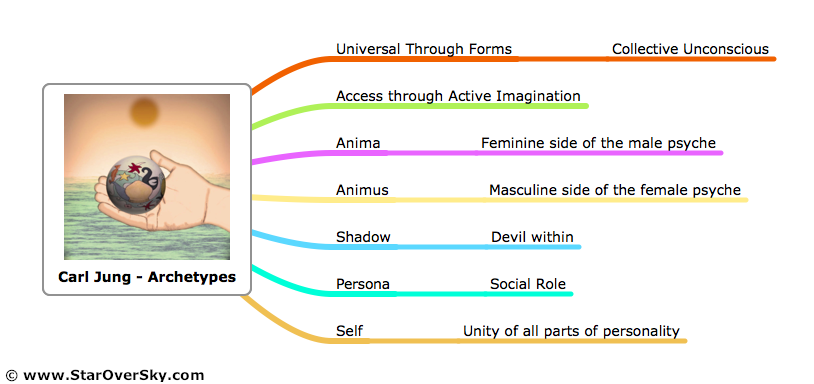
In short, we can propose Thomas as an example of an archetype (see the early backbone series, for one). Yes, of course, this statement alludes to the work of Jung (and, we'll discuss this). Too, we'll get more specific in all areas.

Part of the reason that we can do this is the Tabla Raza characteristic (see comment on history being silent), almost, which is due to the sparsity of data. Lack of information is not bad as it may sound; for one, it forces the issue of trying to interpolate (and extrapolate). We have a whole lot to talk there as my forte is modeling, measurement, metaphors of mathematics, and such.

That is, the experience was with real stuff that works against the constraints of nature (okay, engineering) which type of experience is willy-nilly being applied (misappropriated?) by business, the web (and its muddy cloudíness), and an errant STEM (run amok). So, we can use a broader scope to argue for more sanity.

All along, this was apparent; we are finally to where we can be more academic than anecdotal. It is our hope that Gardners and friends will help Gardner Research get Thomas and Margaret back into their proper places in American (and civilization's) history.  

And, one of the main media sources is the web (which, at some point, will have a more tame flavor).

For now, using an image from another blogger.

Comment: Not everyone is Jungian in leaning. Nor, has anyone shown to everyone's satisfaction that metaphysical notions (however slightly alluded to) are necessary. Our intent is to offer properly supported conjectures (along several lines) in order to foster discussion and further work. This is a point-in-time effort worked under the same provisos as we see with science, in general. Having said that, though, does not mean that a few toes, now and again, won't feel our heel. Let's get our heads out of the STEM-sand (all sorts of things to discuss here). 

Remarks: Modified: 01/22/2016 

01/22/2016 --


Wednesday, January 20, 2016

Nantucket sendoff

Today, I got a chance to peruse Philbrick's book and get a feel for it. I liked the layout of the Chapters. For each, there is a nice bit of reference material and comment. The index was quite nice. There were three Gardners mentioned that we'll look at further: Eben, Ferdinand, George Washington. Several other families are included, such as Coffin, Chase, and more. Philbrick, himself, is no doubt a Gardner cousin. The book looks as if it will be a great read. Too, it will be on many reference shelves. Philbrick included photos of artifacts related to Nantucket's whaling experience.

I picked one area to read that covered the preparation and departure of the Essex. Philbrick detailed the cargo. A whaler carried many barrels for oil; too, it had material on board with which to make more barrels as needed.

How many? He mentioned that one whaler (captained by GWG, above) came back with 2,000 plus barrels and may have set a record. Others got a few hundred barrels of oil despite being at sea a couple of years. All in all, Philbrick does a nice job of explaining what was involved with whaling.

It took several days to load the ship using smaller vessels. That is, the ship was provisioned off-shore. That must have been an interesting bit to watch. Then, there was the work of assembling a crew. Of course, Nantucketers were preferred. But, the crew also came from elsewhere.

As an aside, some were African American slaves. Philbrick noted that the Indian population that was suitable to being enslaved had diminished. Now, for all of Nantucket descent, remember that many of the perpetrators this enslavement were of Quaker descent.

Many times, the majority of the crew were "green" hands. And, the ship was not simple to handle with its complicated rigging and such. Of course, getting asea would be way to start to get experience. To do that, one had to get away from shore.

So, to the theme. As the time came for departure, Nantucketers would gather to watch. What other entertainment would there have been? The Captain had to be on deck during this event. Philbrick describes the scene as somewhat chaotic. Granted there were experienced people on board, but the whole crew was involved, hence on-the-job training for the greenies would have been the order of the day. Philbrick writes well of the hot-seat experience for the captain. That humiliation would have continued until the ship was out of sight of those with long glasses.

I don't know if the movie touches upon this subject, but lots of comedy skits might come to mind. In any case, it wasn't long before the Essex ran into a storm and suffered damage. So, that crew got a whole lot of experience in very short order.

Now, Eben Gardner was first mate on the Two Brothers which Pollard took charge of after the Essex. Ferdinand Gardner was involved with handling the affairs of the Globe after it ran aground. The Essex was able to pick up some supplies from him. The Essex had lost whaling boats in the storm mentioned above. George Washington Gardner's success at his whaling venture set the stage for subsequent whaling.

This book, and the event, ought to get a little more attention from us.  

Remarks: Modified: 01/20/2016 

01/20/2016 --