Monday, February 13, 2012

Where was Thomas? II

Earlier, we were looking at where Thomas and Margaret were for eleven years, starting about 1626. As well, we have asked, Where is Thomas?

There are many years to cover, but let's take one bit of data from Dr. Frank A.'s book. Dr. Frank (pg 10) says that Thomas, in 1641, would have lived on the north side of Essex Street between Beckford and Flint (see Bing map -- bird's eye view). To quote: This square was called in the Town Records in the second month of that year, "the field where Mr. Gardner is."

It is not far from where Joseph and Ann lived a little later which is now the location of the Essex Institute (Peabody Museum). Too, it's a stone throw from where he was originally buried.

We'll have to map out where Thomas owned land. Dr. Frank says that there was only one recorded sale during Thomas' life. Otherwise, he accumulated property. A lot of his land was bought by his son, Samuel, and was in the family for several generations.

One topic that we'll consider, which relates to both prosperity and property, will be the War of 1812 which seems to be overlooked, for some reason. Those who were in shipping bore a lot of the costs.

Remarks:

08/12/2018 -- Thomas, with others on Gardner Hill, was left where he was. Stones were moved over to Harmony Grove Cemetery. A few of those withstood the move, say that for Seeth. Most did not and are piled somewhere. At the burial site, though, the road was cut through. So, the remains? Well, moved to God only knows. Or, if the burial was away from the road, it is beneath some structure. Lots to think about. Reflect on. How to proceed into this mire?

06/26/2015 -- Where was and is he?

03/12/2015 -- Dr. Frank's 1933 book (pg. 22) does not mention the move.

03/28/2014 -- See Vol. IV, No. 1 for a discussion of the movement from Cape Ann to Salem.

07/11/2012 -- A recent issue of Gardner's Beacon looks at the War of 1812.

Modified: 08/12/2018

Thursday, February 2, 2012

Gardner's Beacon, Vol. II, No. 1

February has become associated with the mid-winter celebration of Valentine's Day.

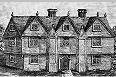
See Vol. II, No. 1 of Gardner's Beacon for examples of Valentine Day's cards from the 1880s. Also, we do a profile of a son, Joseph Gardner, who married Ann Downing. Their house had quite a history.

GB II, 1 (PDF w/links)
 
References: Felt, Joseph B. Annals of Salem 1827; Wikipedia, Valentine's Day

Remarks:

02/23/2022 -- Updated PDF with links for the sources. 

06/19/2019 -- Left comment at Salem, MA blog: First-period Fantasy. Also, will be updating all of the posts referencing Joseph and Ann (Aunts, uncles, cousins, King Philip, Joseph and Ann, ... ,, ...).

02/13/2012 -- Besides Joseph and Ann being a colonial Valentine story, we have Ann showing that a widow was more than a 'relict' (we'll go into that in depth at some point).

02/02/2012 --  Added in the house image. Thomas would have visited Joseph and Ann here. We can look at several other locations, by time, to fill in a story. 

Modified: 02/23/2022

Friday, January 27, 2012

Where was Thomas?

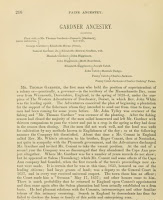
The book on Paine Ancestry (published 1912) has a Chapter on Thomas whose grandson, Samuel, son of George, married Elizabeth (Brown) Grafton, as her second husband; Thomas is, then, an ancestor of the author. We earlier showed descendants of Samuel (Hardin & Hall) when we started to look at the generations.

The book has a nice arrangement. It covers the Paine genealogy up to one person; as well, the collateral families are handled. For each, there is a lineage chart and some text. The book has nice words about Thomas, calling him "practically, a governor" as an example.
Paine sisters
conjecture
It brings up an interesting point, too. Where was Thomas, and Margaret, from 1626 (when Conant and the old planters - mind you, Thomas is not on that list -- went over to Naumkeag) to his 1636 entry into the church? The next year, Thomas became a freeman.

The book suggests that perhaps the Gardners went back to England and then returned later. If that were the case, there would have been ship records, perhaps. We're talking about a ten year gap.

Earlier, we proposed that Thomas deigned to join the church and register with the state when it was of benefit to his kids. When Conant, and crew, went over to Naumkeag, they left the house. Someone had to keep it up, as later Endicott had it moved over to the Salem area.

Cape Ann and Salem are close enough that regular trips back and forth are a great possibility. There were plantings sufficient in Cape Ann to sustain the group. It was [not] producing enough to ship back to England that was the problem. So, one could figure that farming work continued in the Cape Ann area.

As said before. Thomas was self-sufficient long before Emerson characterized the trait. And, he was educated. And, as mentioned in the Mary (Gardner) Coffin post, Richard, son of Thomas and Margaret, was said to be of considerable education. That, no doubt, came via his parents.

Another thing that happened in 1636 was John Tylly being killed in a conflict with the Pequot. Was that a factor? People gather in times of trouble. In 1637, after becoming a freeman, Thomas was on the General Court (Felt, pg 110) with William Hathorne.

There are many scenarios that we could offer with regard to Thomas' absence from the records for that ten year period. We could also search out anything that has already been written.

I think that this type of inquiry is legitimate for Thomas' descendants to look into. Even if it turns out to be a puzzlement, gathering all of the stories, categorized like this, would be of interest to future generations. As well, it would further Dr. Frank A.'s work which doesn't explicitly talk about the moving to Naumkeag. However, Dr. Frank does say that Thomas was mentioned in a London meeting in 1629 (Felt, pg 126).

Remarks:

03/21/2022 -- Article on John Tilley shows that he returned to England, married, and came back. As said (see 07/12/2015 below) earlier, why would Thomas and Margaret leave lovely Cape Ann?

01/12/2019 -- Add image from the book of the Paine sisters. Also, that allows a thumbnail.

01/04/2019 -- This topic will be followed more regularly this year (344th of 29 December 1674). We will initiate a discussion on WikiTree (see link in sidebar) in support of the research.

08/12/2018 -- Thomas, with others on Gardner Hill, was left where he was. Stones were moved over to Harmony Grove Cemetery. A few of those withstood the move, say that for Seeth. Most did not and are piled somewhere. At the burial site, though, the road was cut through. So, the remains? Well, moved to God only knows. Or, if the burial was away from the road, it is beneath some structure. Lots to think about. Reflect on. How to proceed into this mire?

07/12/2015 -- Of course, when Roger brought his people to Salem, Thomas was not there. Why? He and Margaret kept the Cape Ann house. Of course, when John Endicott came over, he saw Mr. Gardner in his nice house. John said, that is mine. Take it over to Salem. So, by splitting his time (Salem is not that far), Thomas had an idyllic time with his wife and kids; too, he had time to get himself and his family settled in the new realm.

03/28/2014 -- See Vol. IV, No. 1 for a discussion of the movement from Cape Ann to Salem.

09/09/2013 -- Forgot to update this earlier. But, the post related to Gardner's Beacon, Vol. II, No. 6, discusses that Thomas had no shadow over him as was feared by some old planters (would Dr. Frank, today, still want to include Thomas in the group?).

05/01/2012 -- If Thomas and Margaret had gone back to England, son John would have told the tale. Methinks that they might have shuffled back and forth, perhaps keeping the Cape Ann house in order until Endicott had it moved.

02/13/2012 -- Thomas was around here, in 1641.

02/03/2012 -- The period in question here is from the Cape Ann time to 1637 Salem. After 1656, we could answer this way, in part: Thomas was visiting Joseph and Ann in their house.

01/28/2011 -- There are several things to figure out. Dr. Frank mentions that a Margaret Gardner joined the church in Salem in 1639 (see Felt). Pope says that this Margaret was of Ipswich and married to Edmund Gardner. The Great Migration write-up says that Thomas' first wife may have died at the birth of Seeth in 1636.

01/27/2012 -- In reporting the death of Thomas' son, Thomas, the Annals (Felt, pg 246) seem to have some dates mixed up, though it does mention Margaret as the first wife. The Great Migration does not. 

Modified: 03/21/2022

Saturday, December 31, 2011

Posts of interest - 2011

Did a summary of summaries in December 2019. Started metrics a little later: the metrical.  

---

As a means (an attempt) to freeze a point in time (which we know is not possible), the last post of 2011 will list the top four posts in terms of having been read (well, views, anyway). Perhaps, this will be a yearly event.

Aside: As said in Mission and Method, posts are to contribute to a theme, though there may be divergent ones from time to time. Blogs allow categories, but these are problematic since they collect and present in a time order. From time to time, there ought to be a super-post that gives a more coherent view (here is an example - Truth, Fiction, and Finance). Perhaps, that type of thing will be done more often in the coming year.

Of course, I would be derelict if I didn't opine on why the interest.

Posts of interest, as of today:
  • -- Gardners and Gardners -- what's in a name? I have found off-spring for a lot of those on Dr. Frank A's list. Some writers have suggested relationships between these Gardners. Of course, there are some not in the book (they now appear in internet searches -- what would Dr. Frank A. think of the new resources?). One of our goals is to look further at these types of things. It cannot be done without going back across the water. Following paperwork can be problematic, as the genealogists know. Conjectures are nice, if supported; in fact, we'll have an example of that shortly in regard to Thomas and Margaret. There are too many gaps, in many cases. We can't just fill these in without some thoughtful reason. Some families have on-going research that is supported by DNA analysis. One that I found to be interesting is the Gordon family's work. 
  • Historical genealogy -- it is interesting that a very recent, and popular, series of books (at least, one of these was filmed) by a Santa Fe writer was based upon the War of the Roses. However, the tales were fantasized such as to appeal to the modern mind. Actually, just re-looking with a new eye ought to be very informative. That is one of our goals.
  • Welcome -- being a new blog, this post would still pop up. At some point, hopefully, another thread will supersede. Any predictions? 
  • Two generations -- we use nine children, as did the Great Migration study (six pages on Thomas). Some have added others. We will include all of the grand-children here, at least in a list, this coming year. We, inadvertently, had one featured this year: Ruth Gardner. That was due to my happening upon Frances Hill's book.  
Recaps: 2018, 2017 (missing), 20162015201420132012, 2011.

Remarks: Modified: 07/30/2021

12/29/2012 --  Summary - 2012.

02/26/2013 --  See Wikipedia for a discussion about William Gardner whose page has been deleted.

12/15/2018 -- Added in links to recaps from the beginning.

12/29/2018 -- This post is the 2nd most read of all time, after the post on the marriage of Thomas and Margaret.

01/12/2019 -- To support an indexing by thumbnails, we needed an image. This post was multi-themed, so none stood out. However, motivations are always on the table as is the 'whence' issue. The image is from a post in 2013, however this post is still on the most-read list and is a good marker for us in continuing our work. The post: Origins - motivations. We started this blog from a blank state; we found out in our research that Thomas is a hard nut to crack. He was here, left progeny, but never left us his writing (beyond a signature). But, he was supportive of Conant when he arrived, Endicott when he arrived, Winthrop when he arrived. But, Thomas could only endure one session of the General Court. That is a story to look further into (we will). Later, changed to the image of Archbishop Gardiner.

Thursday, December 29, 2011

Gardner-Pingree house (and murder)

This house is just east of the Essex Institute; actually, it is now part of the Peabody Essex Museum. Some of the features of the house, with a very nice description, can be seen at an arts blog: Part 1, Part 2.

In a brochure for the Hawthorne in Salem walking tour, the house is mentioned as the site of a crime whose trial caught the attention of Nathaniel (Thomas descendant) and everyone else in the area. Capt Joseph White was found murdered in the house in April, 1830. It turned out that the crime had been committed by a member of a prominent family; two brothers from another well-known family were involved in the planning. The prosecution was handled by Daniel Webster who, despite difficulty related to the case, got the jury to convict. The perpetrator had killed himself before the trial; the other two were hung after their conviction.

---

The Salem brochure says that this house was built in 1804. Then, it says that Joseph White bought it in 1814. Elsewhere, we see that John (descendant through sons, Samuel and George) and Sarah (West) Gardner were the builders. Too, we see that John bought the land from his father.

Then, we learn that the Gardners sold the house in 1811 because of financial difficulties. Which were?

Essentially, it turns out that these were due to losses incurred during events that led up to the War of 1812. John and his father lost several ships to the British. They didn't go broke; but John and Sarah had to sell this magnificent house. We will look at the details later, but John is covered as #162 (his father is #110) in Dr. Frank A.'s book.

Now, we learn further that John sold the house to Nathaniel West who was related to his wife. As well, they lived in the house until 1814, so they did get a chance to enjoy their effort in getting it put together. Then, when the house was sold to Joseph White, they moved.

---

John and his father owned land in several areas of Essex county. There were other Gardner owners, too. It might be interesting to pull these together. The Dr. Frank A. book might be a start as he did a thorough review of records.

---

Too, the interplay of families will be a subject worth pursuing. For instance, in this case, the two brothers were of the Knapp family. The perpetrator was a Crowninshield. How do the Knapps relate to Samuel?

---

Recently, the Smithsonian published an article about the trial.

Remarks:

01/07/2020 -- While looking for information on Joseph Gardner and Ann Downing, I found a reference that seems to conflate the two ladies: The murder that led to the murder of two Presidents. Need to look into that further. See Gardner's gate.

12/25/2019 -- Found out about the Lost New England blog, today (Gardner-Pingree House).

06/19/2019 -- Remembering pending research such as this one. Left comment at Streets of Salem: The Most Beautiful House in America (and the Power of the Place)

10/10/2018 -- This house was on land owned by Thomas. We are looking at where he was and where he is now.

07/11/2012 -- A recent issue of Gardner's Beacon looks at the War of 1812.

01/05/2012 -- John Sr was first cousin of John Gardner who was the grandfather of John Lowell Gardner, I.

12/31/2011 -- Kudos to Louise DuPont Crowninshield for her preservation efforts. Too, we have her to thank for the gardens.

12/31/2011 -- David Pingree bought the house from Nathaniel West (brother of Sarah) in 1834. The house was donated to the Essex Institute in 1933.

12/30/2011 --  The Pingree family preserved the house and donated it to the Essex Institute. 

Modified: 01/07/2020

Wednesday, December 28, 2011

Remembering Thomas

Today, we pause to reflect on the legacy of Thomas Gardner of Salem. Thomas, as an old planter, moved his family in 1626 from Cape Ann and helped to settle the area which is known today as Salem.

Thomas died on December 29, 1674 and was buried on Old Gardner hill in Salem. Some of the graves in that area were moved to the Harmony Grove Cemetery in the 1840s to allow re-routing of streets in Salem.

Remarks:

03/18/2021 -- After some research, there is a new view of the status of grave at Old Gardner Hill. Details gathered via research are reviewed in this post: 29 December 1764. We do not know the status of Thomas' grave (or any of the others, as, essentially, stones were move). However, Essex County has many more examples of the type of cemetery destruction that we saw in Salem. 

12/31/2016 -- Two days late. Lots to report: looking at Cape Ann; The Gardner Annals; Sherborne, Dorset; NEHGRAll things Gardner; ...

12/24/2012 -- Thomas, unlike Conant, was not overshadowed in the world of being. We'll spend some time characterizing this fact and what it means to reasonable folks.

05/01/2012 -- Backbone, in particular, this overview. Two things to be thankful for: Rev Hubbard's look back (his brief mention is sufficient) and the fact that the manuscript was not lost (otherwise, would Thomas had been even more unknown?).

Modified: 03/18/2021

Sunday, December 18, 2011

Gardner's Beacon, Vol. I, No. 5


Christmas has become an integral part of our modern society, though there are continuing efforts to lose some of its characteristics related to Christ. So, let us offer you "season's greeting" on this day. Tudor society did celebrate Christmas, as probably did Thomas' and Margaret's families. And, there were things related to the season that had old northern heritage.

So, what was Christmas, in New England, like at that time? We know that some effort may have already been exerted to remove the more 'pagan' influences. In fact, some may have wanted to ignore the season altogether due to difficulties in establishing Christ's actual birth date. Others wanted more spiritual modes to be followed.

The Christmas season helps start off the winter months during which there can be issues resulting from the cold. Those early pioneers had to actually show that the English could survive in that environment. And, many did demonstrate this.

See Vol. I, No. 5 of Gardner's Beacon for our perspective on those times and trials. Too, we take a moment to list some of Thomas' granddaughters, such as Mary (Gardner) Coffin.  

Expect that there will be a continuing threads on this, and related, topics.

References: Lambert, Tim  A World History Encyclopedia (Tudor Christmas); Wikipedia, Christmas; Nantucket Town  Nantucket Insurrection

Remarks:

12/19/2011 -- Added source listing from this page (scroll down). Will do this for all issues. 

Modified: 04/23/2012