The current issue of Gardner's Beacon starts to look at upcoming 200th anniversaries. More people went out west through the various trails (Westward Ho) than arrived both in northern New England and its southern counterpart. In those early days, there was motivation to go west. For one, claiming land would keep out settlers from other countries. In that case, there were conflict with the American Indian population and with other countries.
By the time of the end of the long American Revolution, people were ready to go west. Lewis and Clark helped capture the imagination. Families took the long trek to Oregon and California. During the gold rush, many 49ers went out by the trails.
An older trail, to Santa Fe, provided the starting point. But, as more people gathered, there were issues, such as a cholera outbreak, that establish another starting point, present-day St. Joseph, MO. Too, the 49ers were in a hurry and wanted to take some days off the trip.
The story would not be interesting without the people. That launching point for western expansion turned out to be where early conflicts started between pro- and anti-slavery proponents. "Bleeding Kansas" was more than a name.
And, New Englanders were heavily invested in the area, in terms of money and blood and sweat.
Of late, DNA has been put on the plate and will be getting more attention. Lots to discuss.
Charles Sanders Peirce (his father, Benjamin) did some marvelous work without much attention. He died destitute. He was the first to look at abductive approaches (see DNA above). Also, he was probably the best mind of that generation, though Eliot of Harvard did not think much of him.
---
See Vol. VI, No. 1 of Gardner's Beacon for a review of research to date. Sources: Oregon-California Trails Association (Trails, again).
Remarks: Modified: 04/23/2021
06/19/2016 -- Switched to larger font, two pages, and introduction to Charles Sanders Peirce.
Saturday, June 18, 2016

Friday, June 17, 2016
Trails again
These are links to material about the settlement of the colonies and the later western movement that the U.S. saw after the conclusion of the American Revolution and after the jaunt of Lewis and Clark under the auspices of President Jefferson. Lewis and Clark told the people about the large bit of land out west.
One theme of the upcoming issue of Gardner's Beacon deals with the west. The long arm of New England reached across the country.
Many more people went across these trails than came over by boat in the early days. The trip was arduous. Present day cities exist along the trails. Modern roads parallel their ways.
.png) In Kansas and immediate territories, the issues that lead to the U.S.Civil war were being played out as abolitionists left New England and helped found the free state.
In Kansas and immediate territories, the issues that lead to the U.S.Civil war were being played out as abolitionists left New England and helped found the free state.
Finally, from the genealogical side of history, people populated those cities and places in-between as they dropped off the traversing of the trail to settle down to roost. Many stories abound.
Trails (a mere sampling):
This effort is part of our bibliographical effort.
Remarks: Modified: 03/01/2019
07/16/2016 -- Gardner's Beacon, Vol. VI, No. 1
11/01/2016 -- On foot traverse.
03/01/2019 -- Added image. We're building an index by images for the portal to truth.
One theme of the upcoming issue of Gardner's Beacon deals with the west. The long arm of New England reached across the country.
Many more people went across these trails than came over by boat in the early days. The trip was arduous. Present day cities exist along the trails. Modern roads parallel their ways.
In Kansas and immediate territories, the issues that lead to the U.S.Civil war were being played out as abolitionists left New England and helped found the free state.Finally, from the genealogical side of history, people populated those cities and places in-between as they dropped off the traversing of the trail to settle down to roost. Many stories abound.
Trails (a mere sampling):
- Oregon-California Trails Assoc
Flying the Oregon Trail 1 (2006)
Flying the Oregon Trail 2 (2006)
On St. Joseph (early 1900s)
Johnson County, KS
Start in St. Joe (2010)
Missouri/Kansas (2013)
Summer journey (2010)
Mormon Traal (LDS)
Mormon Trail (Wiki)
Mormon Trail (National Park Service)
This effort is part of our bibliographical effort.
Remarks: Modified: 03/01/2019
07/16/2016 -- Gardner's Beacon, Vol. VI, No. 1
11/01/2016 -- On foot traverse.
03/01/2019 -- Added image. We're building an index by images for the portal to truth.
Wednesday, June 15, 2016
Blogging and such
The availability of blogging has encouraged genealogists (2013 list) and others. We find blogs on all subjects. I like to find blog-like entries from the past.
Gardner Junction and its role has motivated a closer look at the westward movement. This junction was on the southern route west. Of course, Santa Fe was southwest of Kansas City. But, Oregon was west. The early travelers took this southern route until they split and headed back northwest. Later, the greedy call of gold helped develop other ways to go west. St. Joseph had been a terminal for the Pony Express. So, too, it was a starting point for a trail that met up with that taken by the southern route.
Aside: There were more bodies that headed west over the migration period than arrived in New England, and the middle states in the early years of the colonies. Too, these folks came from the whole range of the east coast. Hence, our interest. Prior to this time, there had been movement to the middle portion, say Ohio on south. Some stayed there. Many moved, again, once the U.S. got its western expansion thanks to Jefferson.
Also, the Mormons had been forced west and came to these parts out of Illinois through Iowa. There were many families related to Gardner on that trek. One thing of the Mormon migration was that they used hand carts to bring along their goods.
---
Now, to the theme of the post. Some of those who made the trek kept journals. Many entries are blog-like. This little bit from a traveler discussed the origin of the name of Lawrence, KS. One can just see the writer condensing some conversation with a local. We will be looking for more of these.
Written by Albert D. Richardson, 1867: ... first town in Kansas.... Pleased with the name, they gave it to their nascent city. Their first Herald of Freedom - for a newspaper is mothers milk to an infant town - bears the date Wakarusa, Kansas Territory, October 21, 1854. But the settlers soon learned this romantic legend of the origin and significance of the name: Many moons ago, before white men ever saw these prairies, there was a great freshet. While the waters were rising, an Indian girl on horseback came to the stream and began fording it. Her steed went in deeper and deeper, until as she sat upon him she was half immersed. Surprised and affrighted she ejaculated Way-ka-ru-sa!(hip deep). ... On reflection, the settlers decided not to perpetuate the story, and changed the name of their town to Lawrence, in honor of one of its most generous patrons, Amos Lawrence of Boston.
This entry comes from a collection of traveler notes plus other material at oregonpioneers.com (OregonPioneers).
Amos Lawrence was of an old New England family. His family tree is full of collateral families that are interest to us.
The northeastern part of the Kansas Territory (KT) was settled by folks from New England, including many abolitionists. KT and Nebraska had been carved out of the Missouri Territory. By 1867, the turmoils of the Civil War had come and gone, except the whole issue of carpet baggers. Prior to then, though, the KT area was site of lots of armed conflict that we will look into. For the most part, New Englanders were involved. These events represent a crucial period of the U.S. history.
Remarks: Modified: 02/09/2020
11/22/2016 -- Final migration, flyover country.
06/17/2016 -- More on trails.
08/13/2017 -- Posts on Lawrence (and surrounds): Trails West, Westward Ho, Blogging and such, Final Migration, Thomas Wentworth Higginson, Kansas and Lawrence.
02/09/2020 -- A couple more names: Gardner, IL; Gardiner, MT.
Gardner Junction and its role has motivated a closer look at the westward movement. This junction was on the southern route west. Of course, Santa Fe was southwest of Kansas City. But, Oregon was west. The early travelers took this southern route until they split and headed back northwest. Later, the greedy call of gold helped develop other ways to go west. St. Joseph had been a terminal for the Pony Express. So, too, it was a starting point for a trail that met up with that taken by the southern route.
Aside: There were more bodies that headed west over the migration period than arrived in New England, and the middle states in the early years of the colonies. Too, these folks came from the whole range of the east coast. Hence, our interest. Prior to this time, there had been movement to the middle portion, say Ohio on south. Some stayed there. Many moved, again, once the U.S. got its western expansion thanks to Jefferson.
Also, the Mormons had been forced west and came to these parts out of Illinois through Iowa. There were many families related to Gardner on that trek. One thing of the Mormon migration was that they used hand carts to bring along their goods.
---
Now, to the theme of the post. Some of those who made the trek kept journals. Many entries are blog-like. This little bit from a traveler discussed the origin of the name of Lawrence, KS. One can just see the writer condensing some conversation with a local. We will be looking for more of these.
Written by Albert D. Richardson, 1867: ... first town in Kansas.... Pleased with the name, they gave it to their nascent city. Their first Herald of Freedom - for a newspaper is mothers milk to an infant town - bears the date Wakarusa, Kansas Territory, October 21, 1854. But the settlers soon learned this romantic legend of the origin and significance of the name: Many moons ago, before white men ever saw these prairies, there was a great freshet. While the waters were rising, an Indian girl on horseback came to the stream and began fording it. Her steed went in deeper and deeper, until as she sat upon him she was half immersed. Surprised and affrighted she ejaculated Way-ka-ru-sa!(hip deep). ... On reflection, the settlers decided not to perpetuate the story, and changed the name of their town to Lawrence, in honor of one of its most generous patrons, Amos Lawrence of Boston.
This entry comes from a collection of traveler notes plus other material at oregonpioneers.com (OregonPioneers).
Amos Lawrence was of an old New England family. His family tree is full of collateral families that are interest to us.
The northeastern part of the Kansas Territory (KT) was settled by folks from New England, including many abolitionists. KT and Nebraska had been carved out of the Missouri Territory. By 1867, the turmoils of the Civil War had come and gone, except the whole issue of carpet baggers. Prior to then, though, the KT area was site of lots of armed conflict that we will look into. For the most part, New Englanders were involved. These events represent a crucial period of the U.S. history.
Remarks: Modified: 02/09/2020
11/22/2016 -- Final migration, flyover country.
06/17/2016 -- More on trails.
08/13/2017 -- Posts on Lawrence (and surrounds): Trails West, Westward Ho, Blogging and such, Final Migration, Thomas Wentworth Higginson, Kansas and Lawrence.
02/09/2020 -- A couple more names: Gardner, IL; Gardiner, MT.
Saturday, June 11, 2016
Westward Ho
We already had the 200th of Lewis and Clark's venture west. They came through near where I was recently and spent three days resting and getting their supplies in order. Kansas created a park at Kaw Point to commemorate the event. Other locales established memorials over the length of the Lewis and Clark trek.
Remarks: Modified: 08/16/2025
06/17/2016 -- More on trails.
07/16/2016 -- Gardner's Beacon, Vol. VI, No. 1
11/01/2016 -- On foot traverse.
08/13/2017 -- Posts on Lawrence (and surrounds): Trails West, Westward Ho, Blogging and such, Final Migration, Thomas Wentworth Higginson, Kansas and Lawrence.
Coming up then, too, will be 200th anniversaries of the great migration to the west.
We will be doing more posts on this for several reasons. For one, a major point in the trek was the split at Gardner Junction where the Sante Fe trail went south and the Oregon trail headed north. For a long while, the Oregon and California trails were the same. Then, out west, some wanted to go to sunny California and the Spanish architecture. Others wanted to go to the gloomy north.
Go spend some time in Seattle to see what I mean. Nice places, though.
 Then, too, plenty of Gardner and related families came through this area venturing either way. We will get stories of these families and their ordeals.
A little further south, there was another set of trails that came out of Arkansas heading west.
 Then, too, plenty of Gardner and related families came through this area venturing either way. We will get stories of these families and their ordeals.
A little further south, there was another set of trails that came out of Arkansas heading west.
One important thing to remember is that even in this eastern region of Kansas, wagons had a problem fording rivers (say, the Wakarusa). For instance, near Lawrence, they had to dismantle wagons as much as they could in order to get the things down the cliffs and over to the other side. Of course, similar efforts were required for the wagon contents.
Consider, if you would, what was coming up for these folks as they went further west and experienced the terrain found in present day Wyoming, Utah, Oregon, and, even, Idaho.
Major work. Every day.
Do we ever think of that as we buzz down General Ike's (BTW, a Kansas boy) roadways - our current Interstate system?
Major work. Every day.
Do we ever think of that as we buzz down General Ike's (BTW, a Kansas boy) roadways - our current Interstate system?
06/17/2016 -- More on trails.
07/16/2016 -- Gardner's Beacon, Vol. VI, No. 1
11/01/2016 -- On foot traverse.
08/13/2017 -- Posts on Lawrence (and surrounds): Trails West, Westward Ho, Blogging and such, Final Migration, Thomas Wentworth Higginson, Kansas and Lawrence.
08/16/2025 -- Mentioned this topic in a look at the comparative flow of American Rivers. We will look at this topic further as an example of two roles of rivers: means of transport; barrier as was seen on all of the trails.
Tuesday, May 31, 2016
Admissibility
As might be surmised from the earlier post on DNA, genetic genealogists have been having a field day. People are finding cousins. D.A.R. has DNA in its process. Some want such tests to be sufficient. Families are doing grand studies about their ancestry. We all can see the entire sweep across time of human trekking. And much more.
Too, though, the former post started collecting links to technical material. A lot of these revolve around computational phylogenetics. That is part of the modern view and will even more so as we go along. Yet, lots of issues remain to be discussed.
So, we want to bring that to fore, for several reasons. For now, it is mainly to get the issues on the table so that reasonable adults do not run amok. For instance, we see lots of attention given to the y-haplogroup's use. It is a great way to match up paternal lines. However, there are lots of things to consider that might be awry, such as (one of many examples) male siblings or cousins not matching. A few of the reasons for this may be (quoting evolutionary biology graduate of Tulane): one of the Y chromosomes mutated independently in a manner that resembles another haplogroup (very slight chance, however); there can be instances of double Y chromosomes (or just remnants) in the genome but that generally results in infertility issues; the female may have inherited a small fragment (slightly more likely) of her father's Y chromosome; a type of chimerism.
In short, we have technical, legal, moral, and a whole slew of other topics to look at. Fortunately, DNA is a subject of interest of late. That is, we are a couple of decades from first use, several troublesome aspects have been seen and handled, things are getting even more complicated, etc.
Let's use a recent article in The Atlantic to gather material: The False Promise of DNA Testing. The article has a forensic focus, after all CSI (et al) has brought the potential uses to everyone's sight, but the lessons apply to genealogy. What we did not see were the mis-uses, that is, not until after the fact (except, perhaps via some probabilistic notion which usually underestimated the potentials for abuse).
So, this collection is an addition to the prior list which will be organized at some point.
There are many other steps in the DNA process to discuss, as all along there is computational assistance. We expect to lay out a bit of details about these.
Remarks: Modified: 12/18/2016
06/01/2016 -- Note the source of quote on replication issues.
06/10/2016 -- Genome Research
06/17/2016 -- Notes about review. Starting with Mendel's work, then insights about genes, chromosomes. Then, we get to modern lab processes with instruments that are enabled via computation. Marking and analysis, for example. We have foundational issues related to mathematics. On the interpretation side, there are local views and grand themes. Predictive-ness an issue. And, finally, memes and their analog ought to come into play.
11/23/2016 -- A recent ACM Communications (Sex as algorithm) had an article by a gene specialist (biology) and a computational mathematicians. There is a little remark by the authors that things are not as clear as many seem to think. "Gene: A unit of heredity and a region of the DNA that encodes a functional product. It is thought that humans have more than 20,000 of these. However, now that coding is known to be far more complex than originally thought, it is no longer clear how to define these units and their boundaries."We will look at this further in the upcoming The Gardner Annals.
12/18/2016 -- Article about DNA published in The Gardner Annals, Vol. III, No. 1.
Too, though, the former post started collecting links to technical material. A lot of these revolve around computational phylogenetics. That is part of the modern view and will even more so as we go along. Yet, lots of issues remain to be discussed.
So, we want to bring that to fore, for several reasons. For now, it is mainly to get the issues on the table so that reasonable adults do not run amok. For instance, we see lots of attention given to the y-haplogroup's use. It is a great way to match up paternal lines. However, there are lots of things to consider that might be awry, such as (one of many examples) male siblings or cousins not matching. A few of the reasons for this may be (quoting evolutionary biology graduate of Tulane): one of the Y chromosomes mutated independently in a manner that resembles another haplogroup (very slight chance, however); there can be instances of double Y chromosomes (or just remnants) in the genome but that generally results in infertility issues; the female may have inherited a small fragment (slightly more likely) of her father's Y chromosome; a type of chimerism.
In short, we have technical, legal, moral, and a whole slew of other topics to look at. Fortunately, DNA is a subject of interest of late. That is, we are a couple of decades from first use, several troublesome aspects have been seen and handled, things are getting even more complicated, etc.
Let's use a recent article in The Atlantic to gather material: The False Promise of DNA Testing. The article has a forensic focus, after all CSI (et al) has brought the potential uses to everyone's sight, but the lessons apply to genealogy. What we did not see were the mis-uses, that is, not until after the fact (except, perhaps via some probabilistic notion which usually underestimated the potentials for abuse).
So, this collection is an addition to the prior list which will be organized at some point.
- The Admissibility of TrueAllele: A Computerized DNA Interpretation System (2015) - a legal look at the use of scientific evidence in court, in particular one approach.
- Huffington's view (2016) - Basically, a juxtaposition.
- About Trueallele () - Product of Cybergenetics.
- MathWorks () - A little about the algorithm.
There are many other steps in the DNA process to discuss, as all along there is computational assistance. We expect to lay out a bit of details about these.
Remarks: Modified: 12/18/2016
06/01/2016 -- Note the source of quote on replication issues.
06/10/2016 -- Genome Research
06/17/2016 -- Notes about review. Starting with Mendel's work, then insights about genes, chromosomes. Then, we get to modern lab processes with instruments that are enabled via computation. Marking and analysis, for example. We have foundational issues related to mathematics. On the interpretation side, there are local views and grand themes. Predictive-ness an issue. And, finally, memes and their analog ought to come into play.
11/23/2016 -- A recent ACM Communications (Sex as algorithm) had an article by a gene specialist (biology) and a computational mathematicians. There is a little remark by the authors that things are not as clear as many seem to think. "Gene: A unit of heredity and a region of the DNA that encodes a functional product. It is thought that humans have more than 20,000 of these. However, now that coding is known to be far more complex than originally thought, it is no longer clear how to define these units and their boundaries."We will look at this further in the upcoming The Gardner Annals.
12/18/2016 -- Article about DNA published in The Gardner Annals, Vol. III, No. 1.
Friday, May 27, 2016
Bosworth and more
Context: New Science.
---
Earlier, we looked at the Richard III and Gardner. In our first year, we ran across the story of how the Tudors came to be. At that time, there were stories, even on Wikipedia. After some discussion (some seemingly vindictive), parts of the story were suppressed.
So, now, we will do a review. This is a start based upon recently acquired information.
This is a nice little site: Archeology Data Service. Let me quote one page: The Burgundian chronicler Jean Molinet chronicled the following “Richard suffers an ignominious death, trying to flee from the field, at the hands of a Welshman armed with a halberd (therefore presumably a lower ranking soldier), whilst attempting to flee the field of battle.” See this report on Bosworth Military History.
This brief review is about a 1991 book that covers some of the Gardner connection. Looking at this Maryland family allowed me to get into other Gardner families. We will be updating the list (Gardners and Gardners - second most-read post). Also, I have had the chance to get familiar with the southern region (Disclosure: Spent over three years in the NOVA/MD region of DC. Unfortunately, I have not spent significant time in northern New England, yet.). Northerners, be aware that there were two "Paul Revere" types of ride in the south, namely Virginia and South Carolina.
Before leaving, I need to show the other side: Supposed daughters of an Earl.
Again, Gardner Research (DNA, et al) deals with all things Gardner. Help us present to most-supported material as well as make available all of the alternative bits of information. After all, the world is fuzzy (yeah, Zadeh).
Remarks: Modified: 06/11/2019
07/09/2016 -- On Richard III and Gardners.
07/10/2016 -- Mission of The Richard III Society. It is good to see 500 years back being studied. We wish to do similarly for Thomas and Margaret.
07/12/2016 -- We need to be like those doing Ichnology. Added context to front of post.
12/18/2016 -- Article about the subject published in The Gardner Annals, Vol. III, No. 1.
10/10/2018 -- We just printed TGA Vols III and IV (available for purchase) which contains David T. Gardner's articles about the Gardners, Bosworth, and Tudors. As well, historical author, Douglas Richardson, has William Gardner in his books (Plantagenet Ancestry, Magna Carta Ancestry and Royal Ancestry) with his marriage to Helen Tudor (see Our Royal, Titled, Noble, and Commoner Ancestors & Cousins site).
06/11/2019 -- As mentioned, I have heard from about all of the Gardner/Gardiner families who have pre-Revolutionary ancestors both in northern and southern New England. Several times, I was able to help them identify their migrating forebear. Beginner's luck? On WikiTree, there was a question about Richard Gardiner, born about the same time as Thomas of Salem, who came into Maryland. I have various notes about this family that I need to collect. The WikiTree question was: Who were Maryland Immigrant Richard Gardiner's (b1592) parents? Not sure who asked. The date of the question was 24 Jul 2018. It was about then that we were discussing Margaret Fryer, wife of Thomas of Salem. I left a comment. We don't know much about Thomas, either. Recently, there was an answer by William Good. His research notes (on the Gardiners) can be found at rootsweb[dot]com. Also, this pertains to several themes, including existing material (books, et al) some of which are referenced above, in the FYI context. Evidently, I'll need to put up a 'sorting out' category, at some point.
---
Earlier, we looked at the Richard III and Gardner. In our first year, we ran across the story of how the Tudors came to be. At that time, there were stories, even on Wikipedia. After some discussion (some seemingly vindictive), parts of the story were suppressed.
So, now, we will do a review. This is a start based upon recently acquired information.
This is a nice little site: Archeology Data Service. Let me quote one page: The Burgundian chronicler Jean Molinet chronicled the following “Richard suffers an ignominious death, trying to flee from the field, at the hands of a Welshman armed with a halberd (therefore presumably a lower ranking soldier), whilst attempting to flee the field of battle.” See this report on Bosworth Military History.
This brief review is about a 1991 book that covers some of the Gardner connection. Looking at this Maryland family allowed me to get into other Gardner families. We will be updating the list (Gardners and Gardners - second most-read post). Also, I have had the chance to get familiar with the southern region (Disclosure: Spent over three years in the NOVA/MD region of DC. Unfortunately, I have not spent significant time in northern New England, yet.). Northerners, be aware that there were two "Paul Revere" types of ride in the south, namely Virginia and South Carolina.
Before leaving, I need to show the other side: Supposed daughters of an Earl.
Again, Gardner Research (DNA, et al) deals with all things Gardner. Help us present to most-supported material as well as make available all of the alternative bits of information. After all, the world is fuzzy (yeah, Zadeh).
Remarks: Modified: 06/11/2019
07/09/2016 -- On Richard III and Gardners.
07/10/2016 -- Mission of The Richard III Society. It is good to see 500 years back being studied. We wish to do similarly for Thomas and Margaret.
07/12/2016 -- We need to be like those doing Ichnology. Added context to front of post.
12/18/2016 -- Article about the subject published in The Gardner Annals, Vol. III, No. 1.
10/10/2018 -- We just printed TGA Vols III and IV (available for purchase) which contains David T. Gardner's articles about the Gardners, Bosworth, and Tudors. As well, historical author, Douglas Richardson, has William Gardner in his books (Plantagenet Ancestry, Magna Carta Ancestry and Royal Ancestry) with his marriage to Helen Tudor (see Our Royal, Titled, Noble, and Commoner Ancestors & Cousins site).
Wednesday, May 18, 2016
The almost forgotten
Prior to (northern) New England and its history, we had the southern "New England." Of late, I have had the opportunity to look further at that era and area. Not only did some come up north from Virginia, many New Englanders went south.
This movement started early. Below are a few tidbits that have special interest as they show parallels.
Remarks: Modified: 11/20/2017
05/30/2016 -- Bill O'Reilly's latest books has a story about the Swamp Fox (Francis Marion) and General Richard Richardson (findagrave). The former's harassment of the British down south helped Washington get things together in the north. 1780 was the time. Richardson was dead. His widow sent a son to war Marion about the size of a loyalist's unit. In retribution, Colonel Tarleton destroyed the widow's property after digging up her husband's grave.
08/26/2016 -- Of late, we have been researching Gardner families in the south. That would include PA and NJ as well as those areas further south, VA and NC. Of those southern Gardners, some went down after being in New England. Others came into the southern region. Then, there were families that came up through the Caribbean. This post looked at some similarities and barely scratched the surface. Soon, we'll post some thoughts on the times around Rev. John Wise's tax rebellion (IPswich, MA - peaceful albeit the good Reverend was thrown into the clink) and the King Philip War. Down south, we had Bacon's Rebellion.
09/09/2016 -- Seeing a writeup of the oldest bridge, in Philly, PA, got me to looking at the eastern King's Highway (Charleston to Boston). Being western by birth, the CA version was familiar (El Camino Real).
11/20/2017 -- We will be looking more closely at the south.
- --
As there was western movement early in Massachusetts, so too was there a western push down south. In Massachusetts, we can use the example of Ipswich Canada which was an effort sponsored by people in Ipswich. The ancestors of Susan Graves supported the effort. The first husband (Joshua Johnson) of her great-grandmother (Elizabeth Pushee) was killed. They had married in Groton. Elizabeth moved back to Ipswich proper.
In Virginia, we know about Jamestown (capital of Virginia Company) being founded in 1607. There was an effort to move west in order to claim land. Because travel is facilitated by roads, there were early efforts to clear paths just as there were in early Massachusetts. Dr. Frank writes of the work of Thomas and his sons doing surveying for this effort. In Virginia, one road was nicknamed "Three Notch'd Road." It ran from Richmond to the Shenandoah Valley by 1730.
By the early-1700s, there was regular correspondence between western counties and Williamsburg (capital of Virginia Colony). And, this facilitated expansion. James Madison's family moved out west in the 1730s. Monticello dates from the 1760s.
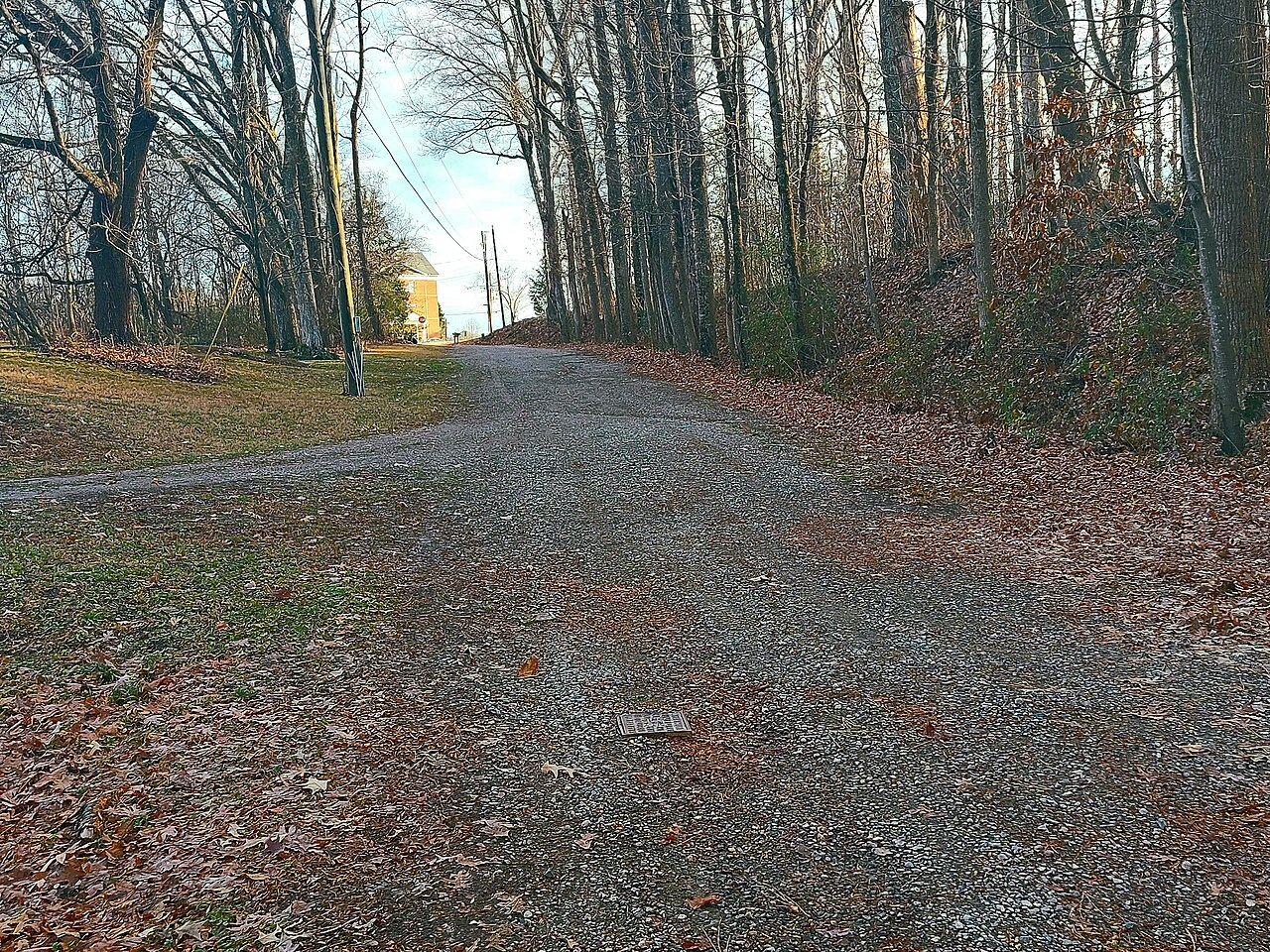
Jack Jouett did his ride of 40 miles in Virginia in 1781. Part of his ride was along the Three Notch'd Road. Lafayette, himself, was familiar with that road. We think of the Marquis as being up in the north; but, he did, later on, spend time in Virginia.
Remarks: Modified: 11/20/2017
05/30/2016 -- Bill O'Reilly's latest books has a story about the Swamp Fox (Francis Marion) and General Richard Richardson (findagrave). The former's harassment of the British down south helped Washington get things together in the north. 1780 was the time. Richardson was dead. His widow sent a son to war Marion about the size of a loyalist's unit. In retribution, Colonel Tarleton destroyed the widow's property after digging up her husband's grave.
08/26/2016 -- Of late, we have been researching Gardner families in the south. That would include PA and NJ as well as those areas further south, VA and NC. Of those southern Gardners, some went down after being in New England. Others came into the southern region. Then, there were families that came up through the Caribbean. This post looked at some similarities and barely scratched the surface. Soon, we'll post some thoughts on the times around Rev. John Wise's tax rebellion (IPswich, MA - peaceful albeit the good Reverend was thrown into the clink) and the King Philip War. Down south, we had Bacon's Rebellion.
09/09/2016 -- Seeing a writeup of the oldest bridge, in Philly, PA, got me to looking at the eastern King's Highway (Charleston to Boston). Being western by birth, the CA version was familiar (El Camino Real).
11/20/2017 -- We will be looking more closely at the south.
Subscribe to:
Posts (Atom)