TL;DR -- The 250th even was, mostly, ink on paper. The turmoil was mostly after that day (though, we have the earlier times to remember, too). Later in the history of the country, technology brought ideas. Like, going from St. Louis to San Francisco (through the south, of course) and back. This post briefly looks at the segment that ran through the Choctaw Nation. This is our first of many coming posts on the eastern side of that long trek.
--
One thing that we expect is that as time goes on from the 250th start, we will be seeing stories related to the history of the U.S. and its people and events that start to have a more personal touch.
We have mentioned in several posts about the regular coach run from
St. Louis, MO to San Francisco, CA. Today, we just saw a post on FB (
Diamond Station) about the first run of the coach, westward. It left St. Louis on 16 Sept 1858. As we have mentioned, it went down to TX and across to El Paso and then across lower NM and AZ into CA. Sometimes, it ventured into Mexico. A major stop was LA at the bottom of Bunker Hill West. Then, the coach went on up to San Francisco. After a quick breather, they turned around to go back, carrying people, mail, and small freight.
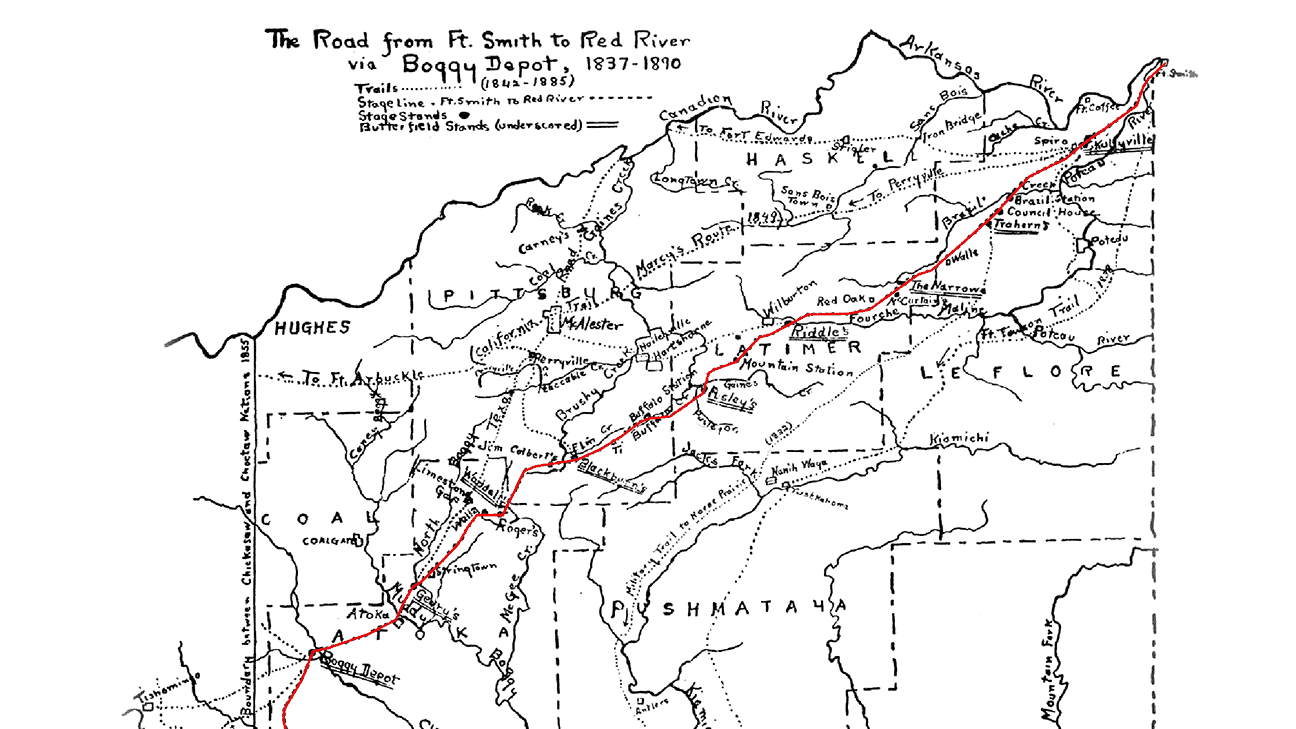
This map is of a recent post about the route through the
Choctaw Nation. The route went from Ft. Smith, AR to the "Red River" in TX via "Boggy Depot".That segment was 192 miles of the total distance of 2,800 miles of arduous travel. Most of our posts have been of the western side and mostly from El Paso onward. It will be a great change to look at the eastern portion.
We will be looking more closely at this segment with respect to the logistics of the times. This post sponsored by the Choctaw Nation of Oklahoma provides a lots of important information.
Remarks: Modified: 09/30/2026
09/30/2026 -- Butterfield was of an old New England heritage; the line by him and his associates joined up with a regular route out of Houston that went through El Paso and west which was, again, of new England (kin). Butterfield's company had a station in LA in the area where the Mirror Company established itself; the eventual Times-Mirror Company published the LA Times. Details? Similar to what we know of the Pony Express, there was regular change of horses/mules (and wagons - as needed). The people traveling had little comfort. In fact, Mark Twain went out by a similar route over the northern landscape that was set up after the Civil War started (and stopped the Butterfield route - 1861), but took a ship back to the east coast. Whereas, by the time that R W Emerson went out, the railroad's line to the west coast had been established. Just considering the realities of the travel ought to be fully described to compare those days against our own.

No comments:
Post a Comment